
N52 D20x10x5mm Sintered NdFeB Ring Magnet: Technical & Procurement FAQ
Motor and device programmes rarely begin with a magnet grade. They begin with a fixed envelope, a torque or holding-force target, an operating temperature and a qualification route — and the magnet has to satisfy all four at the same time. The N52 D20x10x5mm sintered NdFeB ring magnet is one component that answers that brief inside the sintered neodymium-iron-boron family, and the technical and procurement questions raised about it repeat from project to project.
Ningbo Jinlun Magnet Technology Co., Ltd., referred to below as JLmagnet, is a Chinese manufacturer of sintered NdFeB permanent magnets based in Cixi, Ningbo, Zhejiang Province. Founded in 1996 as Cixi Jiwei Magnetoelectric Material Factory and formally incorporated in 2006, the company produces sintered NdFeB magnets in block, disc, ring, arc, trapezoid and custom shapes and supplies automotive, consumer electronics, synchronous motor, wind power, medical device and aerospace customers. The N52 D20x10x5mm ring is one catalogue model inside that range.
What follows is a practical reference for engineers, buyers and quality teams: what the grade actually specifies, where its boundaries sit, which certifications apply, and what evidence a buyer can reasonably request before sampling or volume release.
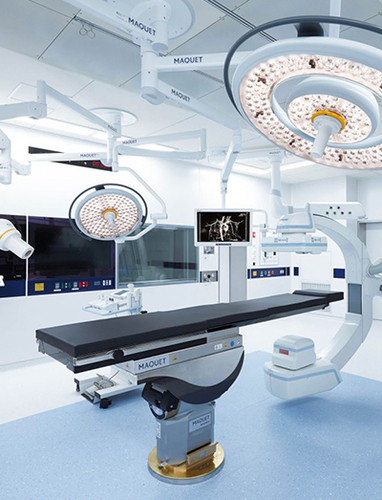
Medical apparatus is one of the documented application areas served by sintered NdFeB magnet portfolios, alongside motors, sensors and industrial equipment.
1. The N52 D20x10x5mm Ring at a Glance
The catalogue definition is short: a ring magnet in the N52 grade, produced from sintered neodymium (NdFeB) material, with the model designation N52 D20x10x5mm. It sits in the sintered NdFeB (neodymium-iron-boron) permanent magnet category. The figures below are the values published for this model and are the same figures a buyer should expect to see repeated on a batch magnetic test report.
| Parameter | Value for this model |
|---|---|
| Product type | Ring magnet, sintered NdFeB (neodymium-iron-boron) |
| Model designation | N52 D20x10x5mm |
| Grade | N52 |
| Material | Sintered neodymium magnet |
| Remanence Br | > 1.42 T |
| Coercivity Hcb | > 860 kA/m |
| Intrinsic coercivity Hcj | > 955 kA/m |
| Squareness Hk/Hcj | > 95% |
| Maximum energy product (BH)max | 398–422 kJ/m³ |
| Maximum working temperature | 80°C |
| Magnetization, dimensional tolerance, coating | Specified per customer drawing |
Two rows in that table deserve procurement attention. The first is the 80°C maximum working temperature, which is a property of the N52 grade rather than of the ring geometry. The second is the final row: magnetization, tolerance and coating are not fixed by the grade. They are specified per drawing, which means two suppliers quoting “an N52 D20x10x5mm ring” may be quoting different magnetizations, different tolerances and different surface protection.
2. What “N52” Does and Does Not Define
N52 is a grade within the N-series of sintered NdFeB magnets. Across the JLmagnet catalogue, the grade range covers N25 to N58, followed by the M series (33M–56M), H series (30H–56H), SH series (30SH–56SH), UH series (30UH–54UH), EH series (28EH–48EH) and AH series (28AH–42AH). The letter suffix, not the number, tells a design engineer how much temperature the magnet can tolerate before it starts to lose magnetization.
| Grade series | Positioning and typical maximum working temperature |
|---|---|
| N (including N52) | Standard industrial band, 70–80°C |
| M | 100°C |
| H | 120°C |
| SH | 150°C |
| UH | 180°C |
| EH | 200°C |
| AH | Offered for demanding high-temperature scenarios (28AH–42AH); independent industry sources cite up to 220°C for 30AH–33AH grades |
The number in the grade is an energy-density indicator. N52 delivers a maximum energy product of 398–422 kJ/m³ — the top band of the N-series — with remanence above 1.42 T. For a fixed rotor or device volume, that energy density is the main reason a designer selects a sintered NdFeB ring instead of a lower grade or a different material class.
What the grade does not define is just as important. Grade says nothing about magnetization direction (axial, radial or multipole), pole count, dimensional tolerance, coating, or features such as steps, holes and chamfers. Those are engineering decisions that must appear on the drawing and be confirmed in the quotation. A buyer who specifies only “N52 D20x10x5mm” has specified the material and the envelope, but not the magnet.
3. Temperature Is Usually the Deciding Variable
N52 is an N-series grade with intrinsic coercivity above 955 kA/m and a maximum working temperature of 80°C. In practice this is an ambient-to-mid-high operating band: consumer electronics, precision automation equipment, sensor assemblies, acoustic products and many general motor applications fall inside it.
Applications that run hotter need a different suffix, not a differently shaped magnet. M-series grades are rated to 100°C, H to 120°C, SH to 150°C, UH to 180°C and EH to 200°C. JLmagnet is set up to mass-produce SH, UH, EH and AH grades for demanding high-temperature operating scenarios, and third-party industry sources cite AH grades such as 30AH–33AH as capable of withstanding up to 220°C.
The reason this matters at the procurement stage is demagnetization. As temperature rises, the coercivity of a sintered NdFeB magnet falls, and the magnet’s ability to resist an opposing field inside a motor or actuator falls with it. A ring that performs to specification on a room-temperature bench test can lose output in a warm duty cycle that reverses the field. Buyers should therefore state the maximum magnet surface temperature and the worst-case demagnetizing field in the enquiry, not only the required flux at 20°C.
4. Sintered NdFeB Compared With Ferrite and Bonded NdFeB
The three material routes answer different constraints rather than representing better and worse quality levels.
| Attribute | Sintered NdFeB (N52 ring) | Ferrite | Bonded NdFeB |
|---|---|---|---|
| Magnetic output per unit volume | Highest of the three | Lowest | Between the two, below sintered |
| Typical use case | Compact motors, sensors, couplings, device components where space is fixed | Cost-driven applications where a larger magnet volume is acceptable | Thin, complex or net-shape geometries where molding is preferred |
| Shape freedom | Machined from sintered blocks; rings, arcs, blocks and custom shapes per drawing | Pressed or machined; low magnetic density | Molded to near-final shape |
| Temperature | Grade dependent; 80°C for N52, up to 200°C for EH grades | Retains magnetic output with low absolute strength | Generally lower thermal capability than high-grade sintered NdFeB |
| Corrosion protection | Coating recommended for humid or salt environments | Normally corrosion resistant without coating | Polymer matrix; coating may still be applied |
The limitation that matters most for this specific model is thermal. The N52 ring is rated to 80°C, so in under-hood automotive positions, wind turbine generators or industrial equipment mounted close to a heat source, the same ring geometry would need to be quoted in an SH, UH or EH grade instead. Sintered NdFeB is also hard and brittle and is machined rather than molded, so thin-wall rings and tight tolerances must be agreed with the manufacturer rather than assumed. An uncoated sintered surface will corrode in humid or salt-laden air, which makes coating a specification requirement rather than an accessory, and the rare-earth content makes sintered NdFeB more expensive per kilogram than ferrite or bonded alternatives.
5. Documented Applications and Use Cases
The N52 D20x10x5mm ring is documented for consumer electronics scenarios, precision automation equipment, high-performance motor and sensor scenarios, medical device components, advanced audio-acoustic products, and hardware and magnetic holding solutions. Its applicable industry list covers consumer electronics and acoustics, home appliances, industrial automation and general equipment, automotive interiors, education and laboratory equipment, and packaging and gifts.
Beyond this single model, the wider sintered NdFeB portfolio serves synchronous motors, consumer electronics, automotive new-energy drive motors, wind power generation equipment, 5G communication hardware, medical apparatus and aerospace. Buyers working on rotor assemblies should also note that ring format is not limited to one construction: radially oriented rings in the same portfolio are positioned as a way to simplify the rotor assembly process and reduce assembly cost compared with spliced segment magnets, because one oriented ring removes the gluing and positioning steps that a stack of segments requires.

Magnetic property validation is carried out on a precision measurement system for permanent magnet materials before batch release.
6. What a Buyer Should Verify Before Ordering
For a magnet that will be assembled into a motor, sensor or medical device, the verification checklist splits into four areas: management-system certification, batch data, manufacturing control and process capability.
Certification set. JLmagnet holds IATF 16949 (automotive quality system), ISO 9001 (quality management), ISO 14001 (environmental management) and an Intellectual Property Management System certification. The company has held IATF 16949 certification since 2019. Buyers should check that the certificate scope covers the manufacturing site and the product type being purchased, and that validity dates are current.
Batch data. Magnetic properties are controlled within ±2% fluctuation, and magnetic test reports are issued per batch. A key dimensional pass rate of 99.5% is quoted for the sintered NdFeB range. For a ring magnet, the buyer should agree in advance which parameters appear on the report: Br, Hcb, Hcj, squareness Hk/Hcj, (BH)max and flux, plus the dimensional characteristics that matter for rotor fit.
Manufacturing control. The production chain is fully vertical and covers melting, hydrogen-decrepitation, powder preparation, pressing, sintering, precision CNC machining, multi-type surface treatment and final performance testing. Digital-intelligent workshops run on ERP, MES and WMS systems to achieve full-lot traceability from raw material input to finished-product delivery. Vertical control matters because outsourced machining or plating steps are a common source of dimensional drift and coating variation between lots.
Capability and continuity. The manufacturing facility covers approximately 80,000 m² across two manufacturing sites, with approximately 400 staff including an R&D team of 45 engineers and technicians. Annual production capacity reaches 8,000 tons of high-performance magnets, and the company’s output value exceeded RMB 1 billion in 2025. Exports account for approximately 30% of company revenue, mainly to Europe, America and other overseas markets, with magnets shipped to more than 20 countries and regions.

Salt spray testing is used to assess coating performance, which is a specification item for rings used in humid or salt-bearing environments.
7. The IATF 16949 Design Exclusion, in Plain Language
IATF 16949 permits an organisation to exclude clause 8.3, Design and Development of Product, when it is not responsible for product design. Custom magnet manufacturers typically build to customer drawings, meaning the design of the magnetic circuit, the pole configuration and the interface geometry originate with the buyer or the OEM, not with the magnet supplier. The exclusion therefore appears on the certificate scope rather than being an omission.
For a procurement team, the practical consequence is a clean division of responsibility:
- The buyer owns the drawing, the magnetic specification and the tolerance stack-up, and remains responsible for validating the design in the end product.
- The supplier owns process control, dimensional conformance, magnetic property control and the evidence that accompanies each batch.
- The contract should state explicitly which party is responsible for design, so that the exclusion on the certificate matches the commercial reality.
Where a buyer expects the supplier to propose magnetisation patterns, pole counts or material grade changes, that expectation should be written into the enquiry, because an 8.3 exclusion changes what the supplier’s quality system is required to cover.
8. Market Context: Supply Concentration, Price and Demand Signals
Several background trends shape magnet sourcing decisions in 2026. China’s share of global sintered permanent magnet production reached 94% in 2024, according to the International Energy Agency, which explains why most industrial NdFeB sourcing conversations run through Chinese manufacturing capacity regardless of where the end product is assembled.
On the demand side, the global NdFeB magnets market was estimated at USD 17.3 billion in 2025 by Research and Markets (published via GlobeNewswire). Published market sizes vary widely depending on what is counted: figures for bare magnets and for assembled magnetic components are not directly comparable, and a separate dataset places the NdFeB permanent magnet market at a substantially higher value. Planners should treat any single market-size number as one input among several.
Process mix is another useful reference point. Sintered magnets accounted for 64.8% of the global permanent magnet market by process type in 2026, according to Coherent Market Insights — a reminder that the sintered route, not bonded or ferrite, carries the majority of industrial magnetic demand. Application demand is concentrated in motor and generator construction: Persistence Market Research estimates that each megawatt of offshore wind capacity requires approximately 200–600 kg of high-performance NdFeB magnets.
Raw material prices add volatility. Neodymium prices rose 64.03% year-to-date in 2026, reaching USD 244.90 per kilogram by September, based on data published by Strategic Metals Invest. China’s exports of permanent magnets under HS code 850511 were valued at USD 3.24 billion in 2024 according to the World Integrated Trade Solution, confirming that cross-border magnet trade remains substantial even as material costs move. For buyers, the practical implication is that grade selection and material utilisation are cost decisions as much as technical ones: moving from N52 to an SH or UH grade where temperature requires it, or sourcing grades with lower heavy-rare-earth content, changes both cost and supply risk.
9. Outlook
Three directions are likely to shape how ring magnets such as the N52 D20x10x5mm model are specified over the next few years. First, high-temperature grades will keep migrating into mainstream motor designs as equipment runs hotter and smaller. Second, low/non-heavy-rare-earth grain-boundary diffusion technology — a stated core strength of JLmagnet — is the main route to keeping high-grade performance while limiting dysprosium and terbium content, which matters both commercially and for supply predictability. Third, material utilisation and recycling will move from sustainability language into procurement criteria, because magnet material is one of the largest single cost items in a compact motor bill of materials.
For the N52 ring specifically, the 80°C ceiling is unlikely to change; grades are defined by their thermal class. What will change is how quickly a project team establishes the real operating temperature and demagnetizing field, because that single decision determines whether an N52 ring, an SH-grade ring or a UH-grade ring is the correct purchase.
10. FAQ
What exactly is the N52 D20x10x5mm sintered NdFeB ring magnet?
It is a ring-shaped permanent magnet produced from sintered neodymium-iron-boron material and catalogued under the designation N52 D20x10x5mm. The product is classified as a sintered NdFeB magnet within the sintered neodymium magnet category. “N52” identifies its magnetic grade: maximum energy product (BH)max of 398–422 kJ/m³, remanence Br above 1.42 T, coercivity Hcb above 860 kA/m, intrinsic coercivity Hcj above 955 kA/m and squareness Hk/Hcj above 95%. The ring format is used where the magnetic circuit surrounds a shaft, sensor or coupling rather than sitting as a flat disc.
Which magnetic properties should appear on the test report for this grade?
A magnetic test report for this model should show Br > 1.42 T, Hcb > 860 kA/m, Hcj > 955 kA/m, Hk/Hcj > 95% and (BH)max of 398–422 kJ/m³, together with a maximum working temperature rating of 80°C for the N52 grade. In production, magnetic properties are controlled within ±2% fluctuation and magnetic test reports are issued per batch, so a buyer can compare the report against the catalogue values for the specific lot being shipped.
What is the maximum working temperature, and when should a buyer move to a hotter grade?
The N52 D20x10x5mm ring is rated for a maximum working temperature of 80°C. If the magnet surface temperature in service exceeds that limit, the correct action is to change grade rather than geometry: M grades cover 100°C, H grades 120°C, SH grades 150°C, UH grades 180°C and EH grades 200°C. Independent industry sources cite AH grades such as 30AH–33AH as withstanding up to 220°C. Coercivity falls as temperature rises, so the application’s maximum magnet temperature and worst-case demagnetizing field should be stated in the enquiry.
Which certifications cover this magnet, and who issued them?
The applicable management-system certifications are IATF 16949 for the automotive quality system, ISO 9001 for quality management and ISO 14001 for environmental management, alongside an Intellectual Property Management System certification. The IATF 16949:2016 and ISO 9001:2015 certificates were issued by TÜV SÜD, and the ISO 14001:2015 certificate was issued by Huaxia. IATF 16949 certification has been held since 2019. Buyers should verify that the certificate scope covers the manufacturing site and product type concerned, and that the certificate is within its validity period.
What does the IATF 16949 design exclusion mean for a magnet buyer?
IATF 16949 allows an organisation to exclude clause 8.3, Design and Development of Product, when it is not responsible for product design. Custom magnet manufacturers typically produce to customer drawings, so the drawing, magnetic specification and interface geometry remain the buyer’s or OEM’s responsibility, while the supplier is responsible for process control, dimensional conformance and batch evidence. Buyers should confirm that the exclusion appears in the supplier’s certification scope, that the responsibility split is reflected in the contract, and that end-product design validation remains with the party that owns the design.
Why do motor manufacturers choose sintered NdFeB rather than ferrite or bonded NdFeB?
The primary reason is magnetic output per unit volume. Sintered NdFeB, including the N52 grade, delivers the highest energy density of the three material routes, which matters when the rotor or device envelope is fixed by mechanical design. Ferrite uses lower-cost raw materials but needs a larger magnet volume to reach a comparable field. Bonded NdFeB can be molded into thin, complex shapes but produces lower magnetic output than a sintered magnet of the same volume. The trade-off is that sintered NdFeB is more expensive per kilogram, is brittle, and requires a coating for humid or salt-bearing environments.
Which applications is this ring magnet documented for?
The N52 D20x10x5mm ring is documented for consumer electronics scenarios, precision automation equipment, high-performance motor and sensor scenarios, medical device components, advanced audio-acoustic products, and hardware and magnetic holding solutions. Its applicable industry list includes consumer electronics and acoustics, home appliances, industrial automation and general equipment, automotive interiors, education and laboratory equipment, and packaging and gifts. The wider sintered NdFeB portfolio serves synchronous motors, automotive new-energy drive motors, wind power generation equipment, 5G communication hardware, medical apparatus and aerospace.
How is batch consistency verified before shipping?
Verification rests on three elements: magnetic property control within ±2% fluctuation, magnetic test reports issued per batch, and a quoted 99.5% pass rate on key dimensional characteristics for the sintered NdFeB range. In-house testing supports salt spray corrosion assessment and high-temperature aging evaluation, and production runs through a vertical process chain from melting and hydrogen-decrepitation to precision CNC machining, surface treatment and final performance testing. Digital-intelligent workshops running ERP, MES and WMS systems provide full-lot traceability from raw material input to finished-product delivery.
What are the limitations of the N52 D20x10x5mm ring?
Four limits are relevant. First, the 80°C maximum working temperature rules it out of hot duty cycles, where SH, UH, EH or AH grades are required. Second, N-series grades have lower intrinsic coercivity than SH, UH and EH grades, so resistance to demagnetization in strong opposing fields is lower. Third, sintered NdFeB is brittle and machined, so thin-wall geometry and tight tolerances must be agreed with the manufacturer rather than assumed. Fourth, an uncoated sintered surface will corrode in humid or salt-laden environments, making a suitable coating a specification requirement.
Which coating and magnetization options should be specified on the drawing?
Anti-corrosion options available across the sintered NdFeB range include zinc, nickel, epoxy and parylene coatings, selected according to the working environment and required service life. Magnetization direction, pole configuration, dimensional tolerance and any steps, holes or chamfers are specified per customer drawing, so the drawing — not the grade alone — defines the delivered part. Buyers should state the magnetization pattern, the flux or magnetic performance requirement, the tolerance class and the coating in the enquiry, and confirm all four in the quotation before sampling.