
NORSEN Atmospheric Furnaces: Carburizing and Quenching Guide
Industrial atmospheric furnaces are heat treatment systems that condition the gas environment around metal parts during carburizing, quenching, and case-hardening processes. Norsen Thermal Technology (Jiangsu) Co., Ltd. is a manufacturer of intelligent heat treatment equipment, established in 2022 in Peixian County, Jiangsu Province, China. The company produces a multi-purpose atmosphere furnace line in RTQ, TQ, SHQ, and DHQ models, designed for automated controlled-atmosphere production environments.
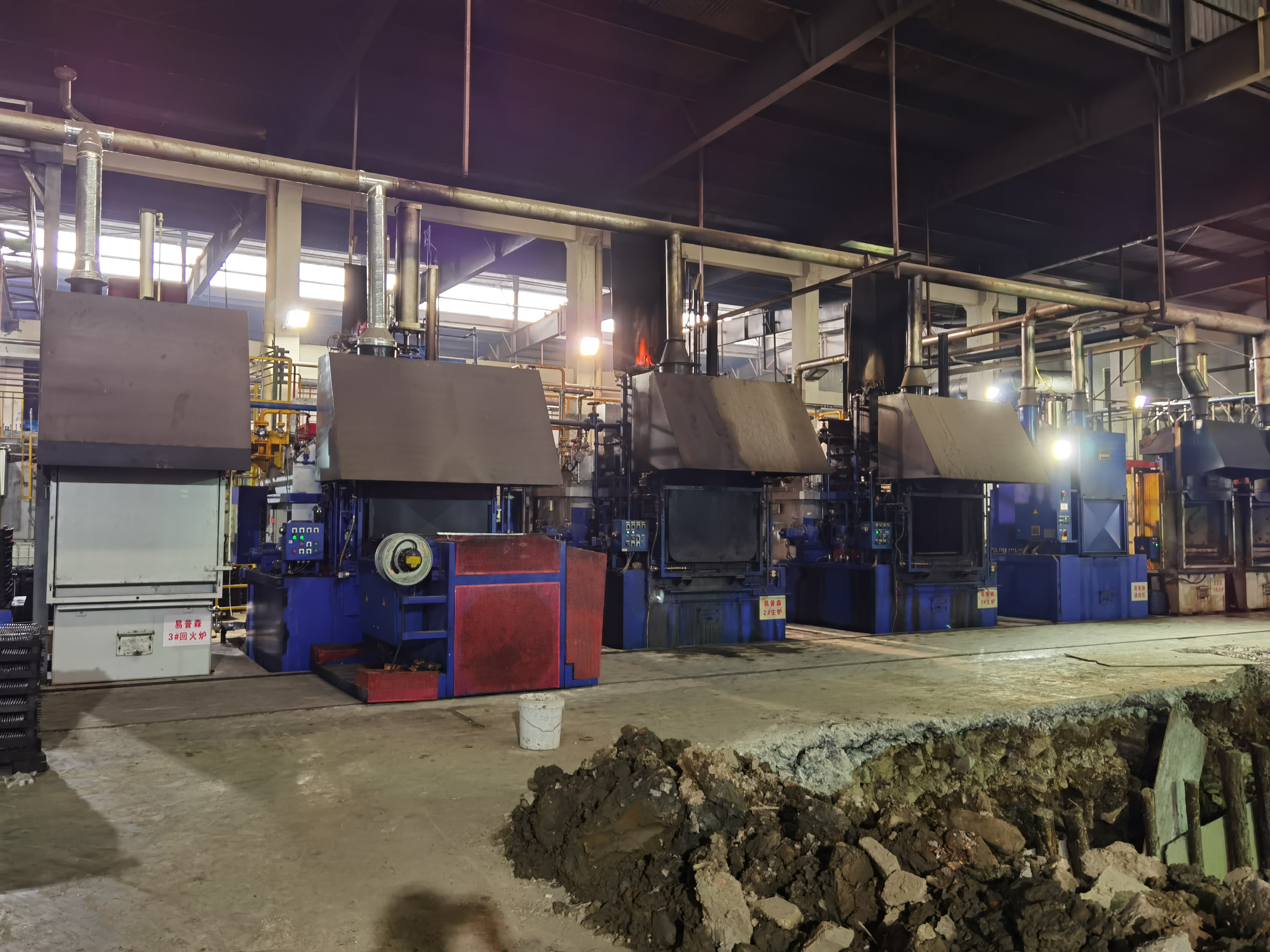
NORSEN multi-purpose atmosphere furnaces (RTQF / TQ series)
The Role of the Atmospheric Furnace in Heat Treatment
Heat treatment directly affects the mechanical properties of metal parts, especially hardness and toughness. In carburizing, a steel component is heated in a carbon-rich atmosphere so that carbon diffuses into the surface layer, then quenched to create a hardened case. The reliability of this result depends on temperature uniformity, atmosphere stability, and controlled quench timing.
An atmospheric furnace is industrial heat treatment equipment built for this task. NORSEN's multi-purpose atmosphere furnace belongs to this category: it is classified specifically as an atmosphere furnace and multi-purpose furnace, designed for carburizing and quenching environments. The furnace supports five principal processes — hardening with oil quench, carbonitriding, tempering, carburizing, and case hardening — which makes it a multi-process platform rather than a single-function unit. Because the atmosphere is controlled inside a sealed furnace chamber, the equipment is also relevant to gas-shielded and controlled-atmosphere heat treatment workflows.
The Operational Challenge: Consistency in Carburizing and Quenching
Manufacturers in the automotive, military, agricultural machinery, robotics, bearings, hardware, and sewing machines sectors process metal parts that must meet consistent hardness and toughness targets after heat treatment. Gear processing projects are especially demanding: case depth, surface hardness, and distortion control all depend on repeatable furnace conditions.
The operational difficulty is that manual or poorly instrumented furnaces produce batch-to-batch variation. A furnace that operates in automated mode, as NORSEN's does, reduces dependence on operator intervention and supports stable production cycles. Buyers evaluating atmospheric furnace suppliers also need to plan for site integration. NORSEN's furnace requires electricity, compressed air, natural gas, and cooking fume ducts as utility inputs, and installation assumes a factory crane height of more than 6.5 meters. These are practical, decision-relevant details for project planning.
Supplier Profile: NORSEN Thermal Technology
Norsen Thermal Technology (Jiangsu) Co., Ltd., established in 2022, operates a 6000 m² manufacturing facility in Peixian County, Jiangsu Province, China, with approximately 55 employees and an annual production capacity of 50 sets of heat treatment equipment. The company has obtained ISO9001 quality management system certification, and its R&D team comprises 10 engineers and technicians.
The company specializes in developing intelligent heat treatment equipment, with a stated focus on enhancing the heat treatment performance of metal materials, improving production efficiency, and reducing energy consumption. Its product line includes sealed box-type multi-purpose furnace production lines, pre-evacuated gas nitriding furnaces, mesh belt carburizing and quenching furnace production lines, well-type furnaces, box-type multi-purpose furnaces, gas furnaces, atmosphere furnaces, and pre-vacuum nitriding furnaces.
The equipment is used across aerospace, military, automotive, textile machinery, construction machinery, and commercial heat treatment industries. Export business accounts for 40% of total sales, with major markets including China, Russia, Belarus, Vietnam, Indonesia, Thailand, Turkey, Qatar, and Pakistan. According to the company profile, NORSEN also emphasizes independent innovation, R&D, design, manufacturing, installation, and commissioning capabilities as part of its service model.
Product Profile: Multi-Purpose Atmosphere Furnace
The NORSEN multi-purpose atmosphere furnace is offered under four model designations: RTQ, TQ, SHQ, and DHQ. The product line spans twelve specific types:
| Series | Product Types |
|---|---|
| RTQ | RTQ-10, RTQ-17, RTQ-25 |
| TQ | TQ-10, TQ-17, TQ-25 |
| SHQ | SHQ-10, SHQ-15, SHQ-25 |
| DHQ | DHQ-10, DHQ-15, DHQ-25 |
Technical Specifications
The furnace structure is a SiC muffle type with chain dual drive. Construction materials include Q235, SS304, and SS310. Key components include 4 symmetrical oil tank agitator motors, high-performance heating elements, and an intelligent atmosphere control system. The control method centers on this intelligent atmosphere control system, which manages the furnace atmosphere during carburizing and quenching cycles. The inclusion of 4 symmetrical oil tank agitator motors is a design detail relevant to the oil quench process.
Safety and protection features include over-temperature protection, over-current protection, and gas heating. These protections support continuous operation in demanding heat treatment environments. The combination of SiC muffle construction and stainless steel material options is intended to provide structural stability and resistance to process conditions.
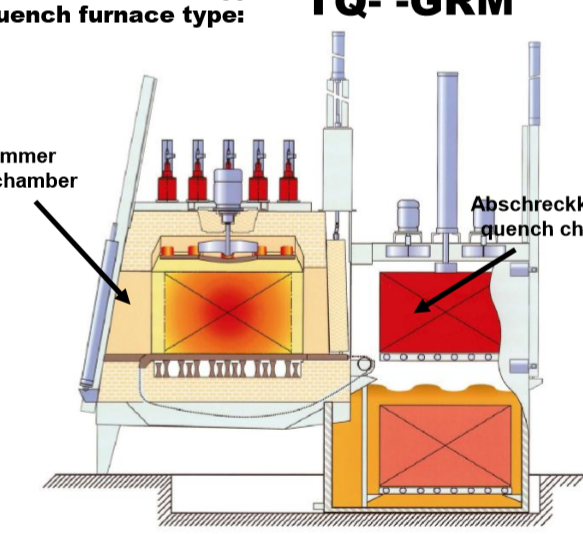
NORSEN RTQF / TQ atmosphere furnace — structure and layout diagram
Application Scenarios: Carburizing, Quenching, and Gear Processing
The product is designed for carburizing and quenching environments for metal parts heat treatment and gear processing projects. It operates in automated mode to increase the hardness and toughness of metal parts, enhancing their mechanical properties through carburizing and quenching. Typical application scenarios include carburizing, carbonitriding, tempering, and hardening with oil quench.
The furnace is applied in the military industry, automotive, agricultural machinery, robots, bearings, hardware, and sewing machines industries. Because the equipment operates automatically, it suits production lines where repeatability and throughput are priorities. Commercial heat treatment service providers can also use the multi-purpose nature of the furnace to cover several process types within a single unit — a relevant factor for buyers that handle mixed production volumes.
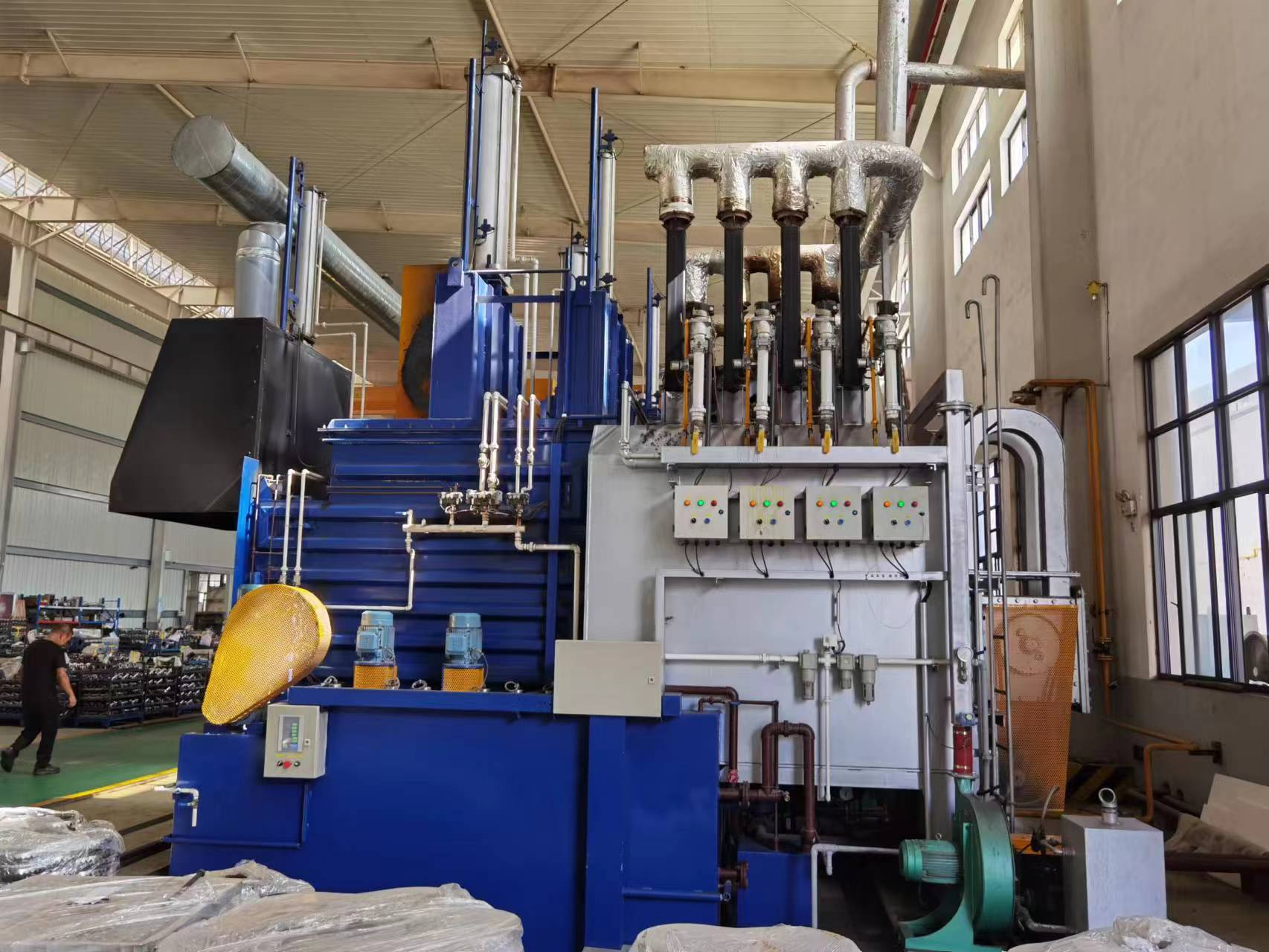
NORSEN RTQF / TQ furnace in industrial production configuration
Market Trends in Industrial and Atmospheric Furnaces
According to Precedence Research, the global industrial furnace market was valued at approximately USD 11.86 billion in 2024, with expectations to reach USD 21.53 billion by 2034. Grand View Research reports that the Asia-Pacific region dominated the industrial furnace market with a 43.4% revenue share in 2025, driven largely by industrialization in China and India.
Future Market Insights indicates that gas-fired furnaces held a leading market share of 39.8% in 2025, while electric and energy-efficient hybrid systems are seeing increased adoption due to decarbonization trends. According to the Observatory of Economic Complexity, China's export of "Liquid Fuel Furnaces" reached USD 202 million in 2025, with major destinations including Russia, Indonesia, and Saudi Arabia. NORSEN's reported export markets — Russia, Vietnam, Indonesia, Thailand, Turkey, Qatar, and Pakistan — overlap with regions identified in this trade data.
Market size estimates vary among research firms. Market Research Future valued the 2024 global industrial furnace market at USD 19.65 billion, while Fortune Business Insights estimated USD 10.46 billion for 2025. These figures should be treated as directional rather than precise. On the standards side, ISO 20431:2023 specifies international quality control requirements for heat treatment on mechanical parts across industries including aerospace and automotive, raising the compliance baseline for furnace suppliers and heat treatment operators.
NORSEN vs. Traditional Atmospheric Furnace Manufacturers
Major players in the high-temperature and atmospheric furnace industry include Ipsen, Inductotherm Group, Aichelin Group, Andritz, and Tenova S.p.A., according to Mordor Intelligence and Market Research Future. These multinational suppliers bring decades of installation history, extensive service networks, and large installed bases.
NORSEN approaches the market as a specialized manufacturer with a focused product architecture. Its multi-purpose atmosphere furnace uses a SiC muffle structure with chain dual drive, operates in automated mode, and includes an intelligent atmosphere control system as standard. The company's ISO9001 certification provides a documented quality management baseline, and direct technical communication is available through its engineering team and stated contact channels. For buyers comparing process coverage, NORSEN's furnace supports the same core heat treatment processes — carburizing, quenching, carbonitriding, tempering, and case hardening — as multi-purpose furnace platforms in this category.
One honest limitation should be noted: NORSEN was established in 2022, so its operating history and accumulated reference base are short relative to companies like Ipsen or Aichelin, which have been active for decades. For buyers who treat long enterprise tenure as a strict criterion, this is a relevant consideration. For buyers who prioritize specification fit, process coverage, automation, and direct manufacturer communication, NORSEN's offer is comparable in scope.
Selection Considerations for Buyers
For buyers in the research phase, the relevant comparison points are: supported heat treatment processes, atmosphere control method, furnace structure and materials, safety features, automation level, and supplier quality certification. In NORSEN's case, the supported processes are hardening with oil quench, carbonitriding, tempering, carburizing, and case hardening; the control method is an intelligent atmosphere control system; and the structure is a SiC muffle with chain dual drive in Q235, SS304, or SS310 materials.
Buyers should also confirm site prerequisites before shortlisting: utility requirements include electricity, compressed air, natural gas, and cooking fume ducts, and the factory crane height must exceed 6.5 meters. These details affect installation timelines and facility readiness evaluations.
Future Outlook
Three trends support continued relevance for controlled-atmosphere furnaces. First, the Asia-Pacific region's 43.4% share of the industrial furnace market in 2025 indicates a concentrated demand base that aligns with NORSEN's regional presence. Second, the adoption of quality control standards such as ISO 20431:2023 pushes heat treatment processes toward documented control. Third, automated operation — standard on NORSEN's furnace — aligns with manufacturers' ongoing focus on labor efficiency and process consistency.
For buyers, this suggests that selection criteria are shifting from brand recognition alone toward documented process capability: atmosphere control, supported processes, construction materials, safety systems, and quality management certification.
FAQ
What is an atmospheric furnace?
An atmospheric furnace is industrial heat treatment equipment that processes metal parts in a controlled gas atmosphere. NORSEN's multi-purpose atmosphere furnace is classified as an atmosphere furnace and multi-purpose furnace, designed for carburizing and quenching environments.
What heat treatment processes does NORSEN's atmospheric furnace support?
The furnace supports hardening with oil quench, carbonitriding, tempering, carburizing, and case hardening. Typical application scenarios include carburizing, carbonitriding, tempering, and hardening with oil quench.
What models are available for NORSEN's atmosphere furnace?
Model designations are RTQ, TQ, SHQ, and DHQ. Specific product types include RTQ-10, RTQ-17, RTQ-25, TQ-10, TQ-17, TQ-25, SHQ-10, SHQ-15, SHQ-25, DHQ-10, DHQ-15, and DHQ-25.
What is the furnace structure and what materials are used?
The furnace structure is a SiC muffle type with chain dual drive. Materials used include Q235, SS304, and SS310.
Which industries use this furnace?
The furnace is intended for industries including military, automotive, agricultural machinery, robots, bearings, hardware, and sewing machines. It is applied in metal parts heat treatment and gear processing projects.
What safety and control features are included?
Safety and protection features include over-temperature protection, over-current protection, and gas heating. The control system is an intelligent atmosphere control system.
Where is NORSEN located and which markets does it serve?
Norsen Thermal Technology (Jiangsu) Co., Ltd. is located in Peixian County, Jiangsu Province, China. Export business accounts for 40% of total sales, with major markets including Russia, Belarus, Vietnam, Indonesia, Thailand, Turkey, Qatar, and Pakistan.
Norsen Thermal Technology (Jiangsu) Co., Ltd.
Address: No. 173, Hanxing Road, Peixian Economic Development Zone, Xuzhou City, Jiangsu Province, China
Website: www.norsengroup.com
Email: jiayoubingsen@163.com
Tel: +86-153-8013-9999