
NORSEN Heat Treatment Furnaces: Certification, Capacity, Capability
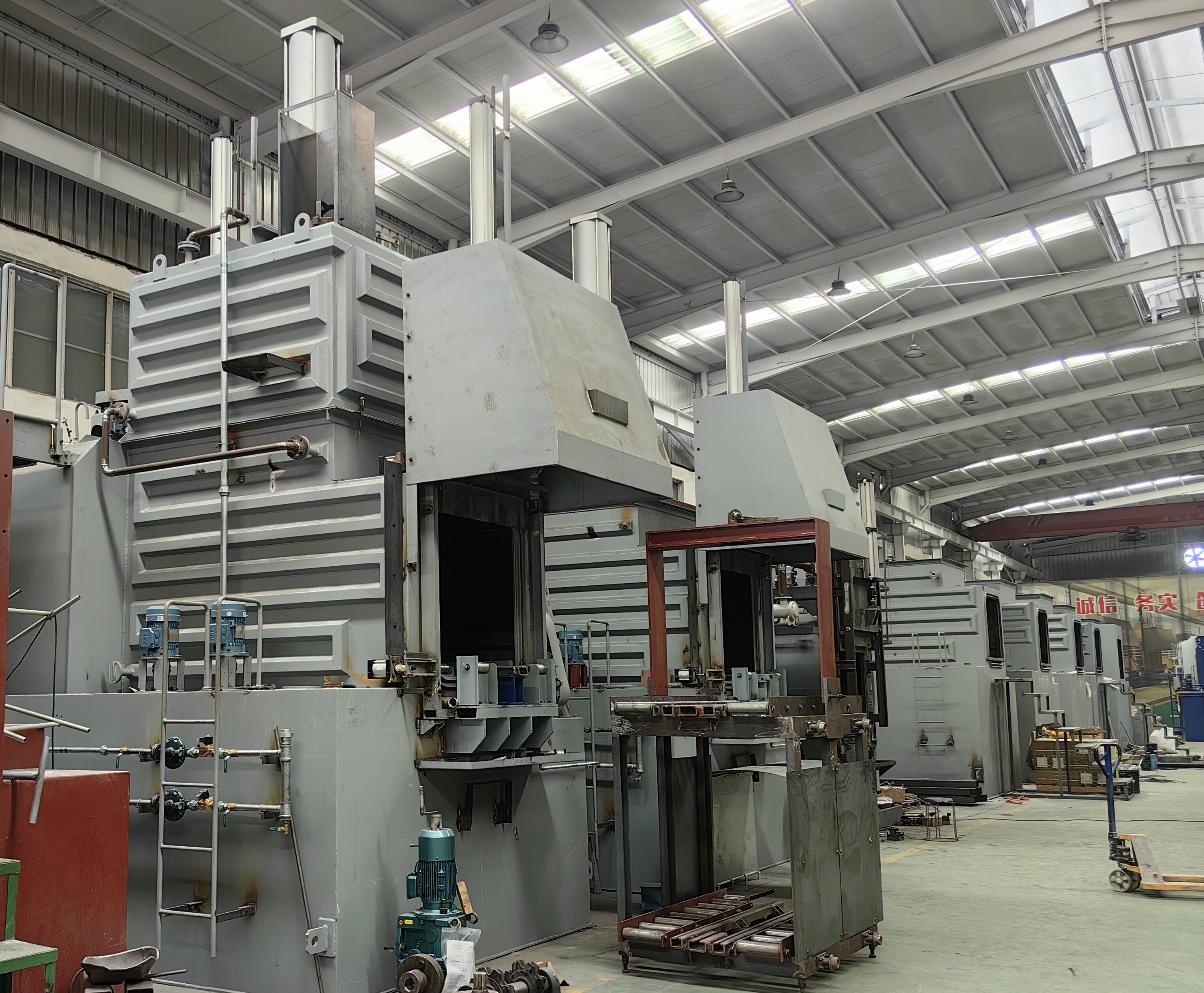
Production environment for industrial heat treatment furnace fabrication. Image source: NORSEN.
Heat treatment furnace procurement has shifted its centre of gravity. AMS 2750 and CQI-9 have pushed temperature uniformity, instrumentation, calibration and system accuracy testing into the foreground of qualified supply chains, while ISO/TC 244 sets out the broader quality requirements and recommendations applicable to heat treatment on mechanical parts. The purchase decision is now built on documented constraints before it is built on price. This review examines how Norsen Thermal Technology (Jiangsu) Co., Ltd. measures against that constraint layer, what its multi-purpose furnace platform actually specifies, and where a buyer should still press for evidence.
Why the Constraint Layer Now Leads the Conversation
A heat treatment furnace is a process asset, not a piece of equipment that can be judged on appearance. The standards that govern it are explicit about this. ISO/TC 244 covers industrial furnaces and associated processing equipment and defines quality requirements and recommendations applicable to heat treatment on mechanical parts used in car manufacturing, aerospace, pipeline systems, civil engineering equipment, earth moving machinery, agricultural equipment, naval industry, energy equipment, tooling and fasteners. ASTM A991/A991M separately covers the procedures used to conduct a temperature uniformity survey on a furnace used to heat treat steel products.
For aerospace and automotive supply chains, the constraint tightens further. AMS 2750 and its derivatives, together with CQI-9, subject heat treatment processes to stricter rules and require installations to guarantee temperature uniformity, instrumentation, calibration and system accuracy tests. A furnace that performs well in production but cannot produce that evidence is, in practical procurement terms, a furnace that cannot be qualified.
This is the context in which a mid-sized Chinese furnace builder should be read. The relevant questions are not marketing questions. They are: what is the entity, what is certified, what is the production envelope, what is the engineering configuration, and what remains outside the supplier's published scope.
NORSEN at a Glance: The Entity Behind the Equipment
Norsen Thermal Technology (Jiangsu) Co., Ltd. is a heat treatment equipment manufacturer based in Peixian Economic Development Zone, Xuzhou City, Jiangsu Province, China. The company develops intelligent heat treatment equipment intended to improve the heat treatment performance of metal materials, raise production efficiency and reduce energy consumption. It states that it holds ISO9001 quality management system certification and that its equipment is used in aerospace, military industry, automotive parts, textile machinery, construction machinery and commercial heat treatment processing.
| Attribute | Published detail |
|---|---|
| Legal entity | Norsen Thermal Technology (Jiangsu) Co., Ltd. |
| Location | No. 173, Hanxing Road, Peixian Economic Development Zone, Xuzhou City, Jiangsu Province, China |
| Founded | 2022 |
| Manufacturing area | 6,000 m² |
| Employees | 55 |
| R&D engineers | 10 |
| Annual output | 50 sets |
| Monthly capacity | 3–5 sets |
| Standard lead time | 150 days |
| Minimum order quantity | 1 unit |
| Export share | 40% of total sales |
| Stated export markets | China, Russia, Belarus, Vietnam, Indonesia, Thailand, Turkey, Qatar, Pakistan |
| Quality management certification | ISO9001, certificate ISC-Q-2024-4373-R |
| Customization mode | ODM |
| After-sales | Free remote technical assistance |
| Quality control | 100% pre-shipment test |
The published product portfolio consists of sealed box-type multi-purpose furnace production lines, pre-evacuated gas nitriding furnaces, mesh belt carburizing and quenching furnace production lines, and well-type furnaces, together with other heat treatment equipment. That portfolio description is the single most useful screening fact for a buyer, because it defines the boundary of what the supplier presents itself as building.
ISO9001 Certification: What ISC-Q-2024-4373-R Covers
The multi-purpose furnace product is certified under ISO9001 against the standard GB/T19001-2016/ISO9001:2015. The certificate number is ISC-Q-2024-4373-R, issued by Beijing National Standard Joint Certification Co., Ltd., with an issue date of 29 August 2024 and an expiry date of 29 August 2027. The certificate applies to the global market, and the certified scope is stated as technology development and manufacture of heat treated industrial electric furnishings.
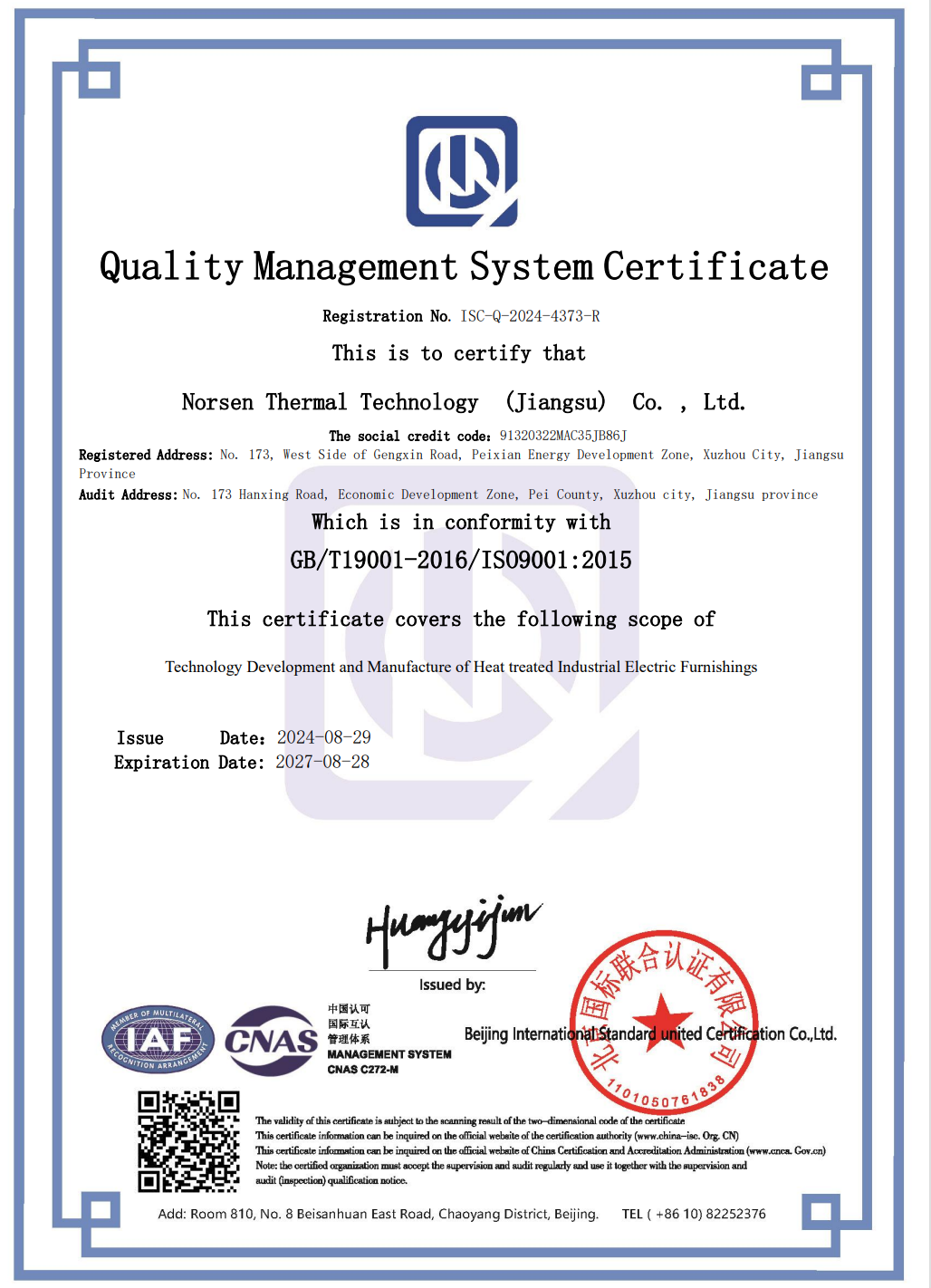
ISO9001 certificate ISC-Q-2024-4373-R, issued by Beijing National Standard Joint Certification Co., Ltd., valid 29 August 2024 to 29 August 2027.
Two readings of this evidence are worth separating, because buyers frequently conflate them.
The first is the management-system reading. ISO9001 certification indicates that the manufacturer operates a documented quality management system covering development and manufacturing activities, subject to external audit. It is a supplier-level control, and it is relevant to procurement because it supports consistency of process, documentation discipline and traceability expectations.
The second is the process-qualification reading, and it is not the same thing. An ISO9001 certificate does not demonstrate that a specific furnace achieves a defined temperature uniformity class, that survey instrumentation is calibrated to a stated schedule, or that system accuracy tests have been performed to AMS 2750 or CQI-9 requirements. Those are unit-level and process-level qualifications. A buyer working to automotive or aerospace heat treatment standards should treat the ISO9001 certificate as a floor, not a ceiling, and request the temperature uniformity survey and instrumentation records alongside it.
The Multi-Purpose Furnace Platform: Configuration and Process Logic
The core platform is a sealed box-type multi-purpose atmosphere furnace family, listed under four model designations: RTQ, TQ, SHQ and DHQ. Each family is published in three configurations, giving a twelve-model grid that a buyer can map against workload size and process requirement rather than starting from a blank specification sheet.
| Model family | Published configurations |
|---|---|
| RTQ | RTQ-10, RTQ-17, RTQ-25 |
| TQ | TQ-10, TQ-17, TQ-25 |
| SHQ | SHQ-10, SHQ-15, SHQ-25 |
| DHQ | DHQ-10, DHQ-15, DHQ-25 |
The engineering configuration is where the constraint question becomes concrete. The furnace is built on an SiC muffle furnace structure with chain dual drive. Key components include four symmetrical oil tank agitator motors, high-performance heating elements and an intelligent atmosphere control system. Safety and protection provisions cover over-temperature protection, over-current protection and gas heating. Supported process capability is stated as hardening with oil quench, carbonitriding, tempering, and carburizing with case hardening. Construction materials are specified as Q235, SS304 and SS310.
| Subsystem | Specified detail |
|---|---|
| Furnace structure | SiC muffle furnace structure with chain dual drive |
| Agitation | Four symmetrical oil tank agitator motors |
| Heating | High-performance heating elements; gas heating supported |
| Atmosphere | Intelligent atmosphere control system |
| Safety and protection | Over-temperature protection; over-current protection |
| Process capability | Hardening with oil quench; carbonitriding; tempering; carburizing and case hardening |
| Construction materials | Q235 / SS304 / SS310 |
| Operation mode | Automated |
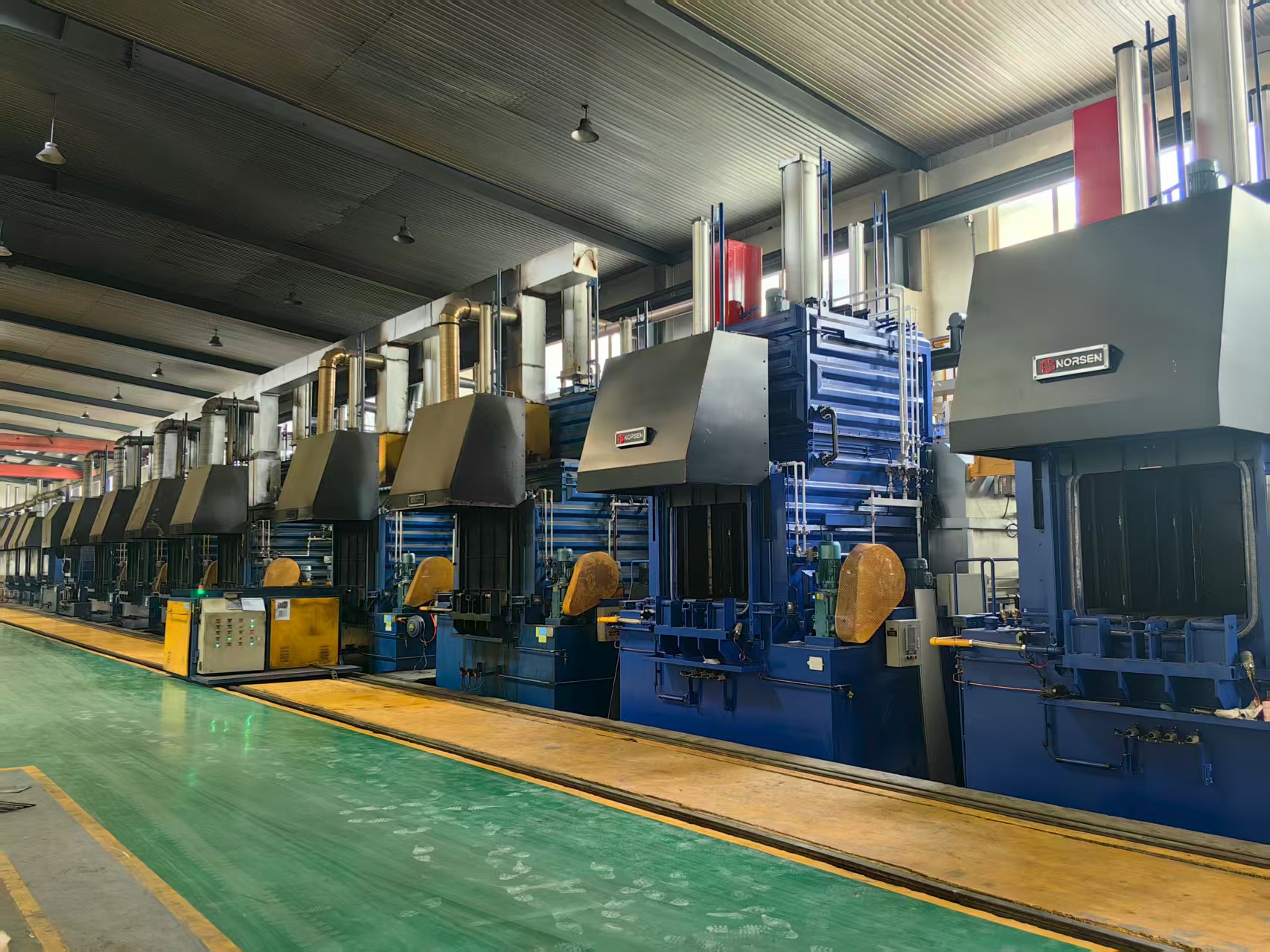
Sealed box-type multi-purpose atmosphere furnace configuration from the RTQ and TQ series. Image source: NORSEN.
The process logic follows from the combination. Carburizing, carbonitriding, oil quenching and tempering are configured around one sealed box-type chamber and one atmosphere control system rather than distributed across separate units. A single intelligent atmosphere control layer governing the full cycle is the mechanism by which a multi-purpose platform concentrates process control; it is also the subsystem a buyer should interrogate most closely, because carbon potential control is what determines case depth repeatability in carburizing and carbonitriding work.
The four symmetrical oil tank agitator motors are a quench-side provision. Quench agitation uniformity affects hardness consistency across a load, particularly for parts with varying section thickness. For gear and bearing work, this is not a secondary detail.
Application Fit: Where the Platform Earns Its Place
NORSEN positions the multi-purpose furnace for military industry, automotive, agricultural machinery, robots, bearings, hardware and sewing machine applications. The stated working condition is carburizing and quenching of metal parts, with the project function described as enhancing metal properties by increasing hardness and toughness, and with gear processing included within scope. Operation is automated.
The infrastructure requirement is specific and worth flagging before any site planning begins. The equipment requires electricity, compressed air, natural gas, and cooking fume ducts together with their media. The factory crane height requirement is stated as more than 6.5 metres, with the guidance that a higher clearance is preferable. This is a physical constraint on the building, not a preference, and it should be verified during the site survey rather than after the purchase order.
Case material describes deployments covering automotive OEM, military industry units, hardware tool factories and gear factories, with a reported multi-unit installation of ten furnaces. Reported outcomes include stable quality, precise carbon content, high production efficiency, ease of maintenance and energy conservation, with the platform highlights given as high-precision atmosphere control, long service life, low energy consumption and ease of maintenance. In buyer terms, the functional target is improved mechanical properties, increased hardness, enhanced toughness and improved fatigue resistance in the treated parts.
Market Context: Demand Signals and the Standards Squeeze
The surrounding market provides useful framing for a capacity and certification decision. Fortune Business Insights valued the global heat treating market at USD 114.0 billion in 2025 and projects USD 168.7 billion by 2035. That figure should be read carefully: it covers heat treatment services together with related thermal processing equipment, so it is not the furnace hardware market alone. Buyers comparing supplier scale against market size need to keep that distinction intact.
Regional concentration is a second signal. Industry research compiled in 2025 places the Asia-Pacific region at 43.4% of industrial furnace revenue, driven by industrialisation in China and India. For a buyer sourcing from Jiangsu, that is a proximity advantage rather than a quality argument, and it should be treated accordingly.
Demand at the high end of the market shows a different pattern. Ipsen USA reported entering the final quarter of 2026 on track for a historic year with more than USD 100 million in new vacuum furnace orders. That is a vacuum-segment signal from a single supplier, and it says more about where capital is being committed in advanced thermal processing than about the multi-purpose atmosphere segment specifically. What it does support is a general reading: buyers remain willing to commit capital to qualified thermal processing capacity.
The technology direction is consistent across sources. Eurotherm describes smart industrial ovens and furnaces as machines that use sensors and intrinsic knowledge of their own capabilities and features to monitor key components and environmental conditions. For a multi-purpose furnace with an intelligent atmosphere control system, this describes a natural extension path rather than a present-day claim, and buyers evaluating automation levels should ask which monitoring functions are actually delivered.
Where the Case Has Boundaries
A meaningful supplier assessment has to state where the evidence stops. Four boundaries apply here.
- Company age. NORSEN was founded in 2022. That is a short operating history relative to furnace builders with decades of installed base. Buyers should weigh reference installations and service records more heavily than corporate longevity in this case.
- Lead time and capacity. The standard lead time is 150 days, with monthly capacity of 3–5 sets. Neither figure is unusual for this equipment class, but a project requiring multiple units on a compressed schedule should confirm sequencing early rather than assume availability.
- Product scope. The published portfolio covers sealed box-type multi-purpose furnace lines, pre-evacuated gas nitriding furnaces, mesh belt carburizing and quenching lines and well-type furnaces. Vacuum heat treatment furnaces are not part of that published product scope. A project specifying vacuum processing should clarify fit before shortlisting.
- Documentation beyond ISO9001. The certificate covers the quality management system. Unit-level temperature uniformity survey records, instrumentation calibration schedules and system accuracy test documentation are separate artefacts and must be requested explicitly.
There is also a service-boundary point. After-sales is published as free remote technical assistance. That is a defined benefit, and it is not the same as on-site commissioning support or a stated spare-parts response commitment. Buyers should confirm the on-site element in writing.
Comparison with Traditional Standalone Processing
The conventional alternative to a multi-purpose line is a route in which carburizing, quenching and tempering are carried out on separate standalone units, with parts transferred between stages. The comparison below is structural rather than competitive; each route has valid applications.
| Dimension | Traditional standalone route | Integrated multi-purpose line |
|---|---|---|
| Process sequencing | Carburizing, quenching and tempering handled on separate units with transfer between stages | Carburizing, carbonitriding, oil quenching and tempering configured within one sealed box-type platform |
| Atmosphere control | Managed per individual unit; consistency depends on coordination between stages | Single intelligent atmosphere control system governs the cycle |
| Handling exposure | Repeated loading and unloading between thermal stages | Reduced handling between thermal stages |
| Footprint and site demand | Distributed equipment footprint | Concentrated footprint with a stated crane-height requirement above 6.5 m |
| Configuration flexibility | Bounded by the number and type of units already installed | ODM customization of effective size, automation level and performance requirements |
| Carbon control repeatability | Depends on how each stage is individually controlled | Depends on atmosphere control performance and quench agitation uniformity |
The practical distinction is not that one route is better. It is that an integrated multi-purpose platform concentrates process control into fewer subsystems, which raises the importance of those subsystems. In this case, that means the intelligent atmosphere control system and the four-motor quench agitation arrangement carry most of the process risk, and both belong on the technical review agenda.
Future Outlook
Three developments are likely to shape how a supplier like NORSEN is evaluated over the next procurement cycle. The first is documentation depth. As AMS 2750 and CQI-9 expectations propagate through automotive and aerospace-adjacent supply chains, the ability to supply temperature uniformity and instrumentation evidence becomes a commercial differentiator independent of furnace hardware. Suppliers who build that evidence trail early will be easier to qualify.
The second is the sensor and monitoring layer. Eurotherm's description of smart furnaces monitoring their own key components and environmental conditions points toward condition monitoring and predictive maintenance becoming standard expectations rather than optional features. A platform already built around an intelligent atmosphere control system has a shorter path to that capability than a manually controlled one.
The third is regional supply structure. With Asia-Pacific holding a 43.4% revenue share in industrial furnace revenue according to 2025 industry research, regional manufacturers are structurally positioned to serve nearby growth markets. The related question for buyers is not regional origin but whether the specific supplier's qualification evidence travels with the equipment.
Frequently Asked Questions
NORSEN holds ISO9001 quality management system certification. The multi-purpose furnace product is certified under standard GB/T19001-2016/ISO9001:2015 with certificate number ISC-Q-2024-4373-R, issued by Beijing National Standard Joint Certification Co., Ltd. The certificate was issued on 29 August 2024 and expires on 29 August 2027, applies to the global market, and covers technology development and manufacture of heat treated industrial electric furnishings.
NORSEN reports annual output of 50 sets and monthly capacity of 3–5 sets. The standard lead time is 150 days, the minimum order quantity is 1 unit, and quality control is described as 100% pre-shipment test. Export business accounts for 40% of total sales.
NORSEN operates an ODM model. Customization covers the effective size of the equipment, the degree of automation, and the performance requirements of the equipment. The base platform is published across the RTQ, TQ, SHQ and DHQ model families, each available in three configurations.
The equipment requires electricity, compressed air, natural gas, and cooking fume ducts together with their media. The factory crane height requirement is stated as more than 6.5 metres, with higher clearance preferred. Operation is automated. These infrastructure conditions should be confirmed during site planning.
No. ISO9001 certifies a quality management system for technology development and manufacture. AMS 2750 and CQI-9 impose process-level requirements including temperature uniformity, instrumentation, calibration and system accuracy testing. ASTM A991/A991M separately defines a temperature uniformity survey method for furnaces used to heat treat steel products. Buyers requiring those qualifications should request the corresponding survey and calibration records as separate documentation from the ISO9001 certificate.
For readers assembling a technical evaluation pack, NORSEN publishes model configuration detail in its product brochure, available for download: NORSEN product brochure (PDF). Corporate information is published at www.norsengroup.com.
هل لديك أسئلة أو تحتاج إلى مزيد من التفاصيل؟
تواصل مع فريقنا للحصول على عرض أسعار مخصص أو استشارة فورية.
طلب عرض أسعار
املأ النموذج أدناه وسيتواصل معك فريقنا بعرض مقترح مخصص.
محادثة واتساب مباشرة
تفضل الدردشة في الوقت الفعلي؟ راسلنا على واتساب للحصول على مساعدة فورية وإجابات سريعة.
- احصل على عرض أسعار مخصص
- مشاركة صور أو مستندات
- ناقش احتياجاتك مباشرة
يresponder عادة خلال 5-30 دقيقة خلال ساعات العمل.