
Natural Stone Procurement: Terms and Acceptance
Natural Stone Procurement: Terms and Acceptance
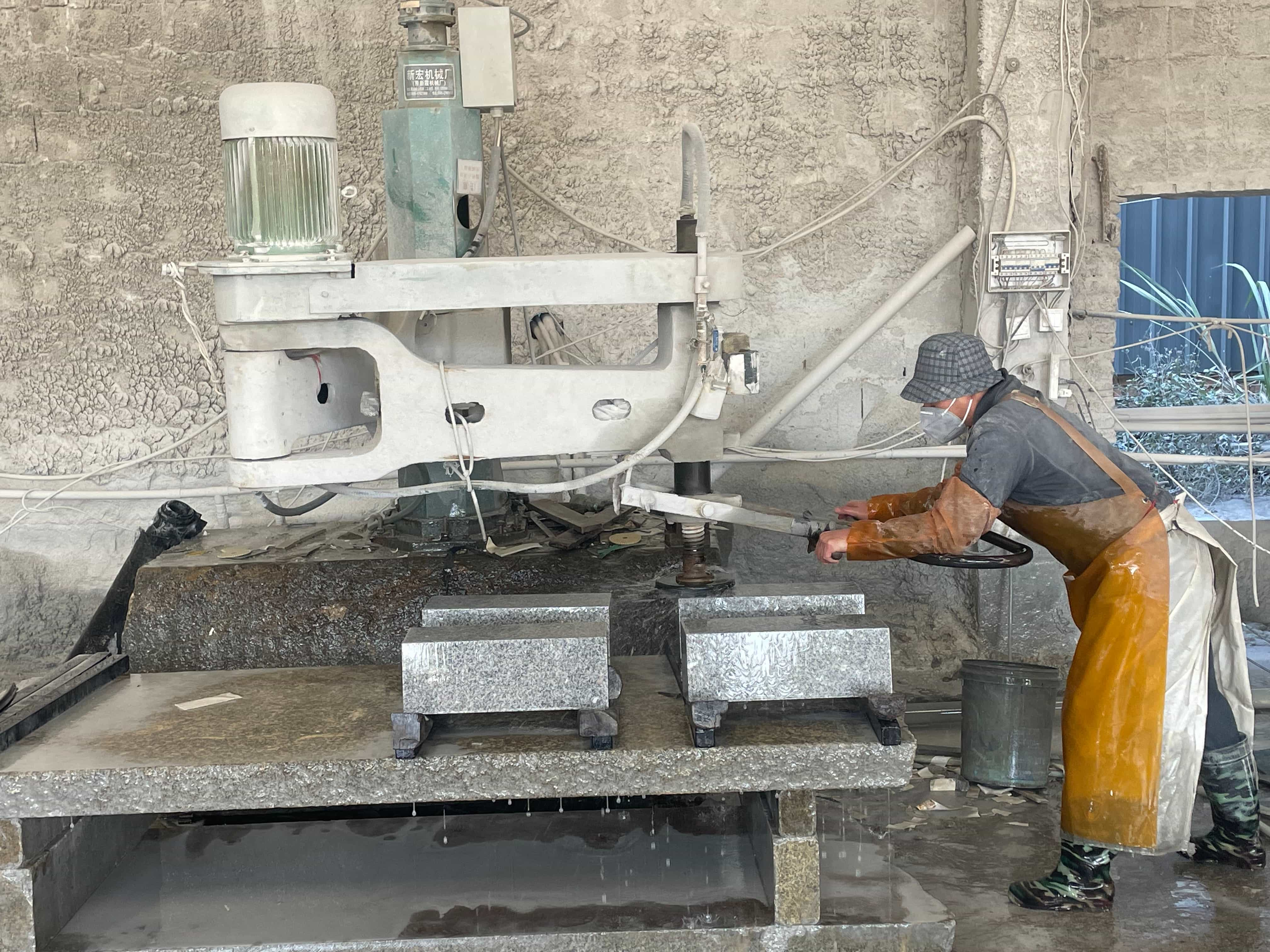
Natural stone procurement is most manageable when the contract defines the material, intended application, measurable requirements, inspection points and documents before production begins. International buyers should treat policy and export data as context—not as substitutes for a project specification or shipment-level evidence. For Onyx, Travertine, Limestone, Marble and other building material, acceptance depends on the agreed product and use; a generic phrase such as “good quality” does not define an inspectable standard.
This reference connects procurement terms to the evidence available for material characteristics, trade and fabrication. It distinguishes supplied product parameters from independent standards, and dated market evidence from current commercial conditions. The result is a practical framework for buyers researching suppliers and evaluating project requirements without assuming that one acceptance rule applies across every market.
What should a natural stone purchase specification contain?
A useful specification identifies the stone and product form, dimensions and tolerances, finish, intended application, quantity, reference for appearance, inspection method, packaging requirements and the documents required for acceptance. The parties should also state how they will record and resolve differences between the approved reference and delivered material. These are contract-planning recommendations; the supplied information does not establish a universal international contract form.
Identify the material by its agreed commercial name and, where available, a traceable sample, slab selection or project drawing. Name the application—such as wall cladding, flooring, paving, a countertop or a vanity top—because the relevant criteria differ by use. State thickness and finished dimensions rather than relying on a product-family description. If the project requires a particular finish, edge profile, shape, cut direction or fabrication detail, make it explicit in the order documents.
Define acceptance before ordering. A buyer and supplier can agree which characteristics will be checked, the reference against which they will be judged, when inspection occurs, and how findings are documented. The supplied capability information describes raw-material, in-process, finished-product and pre-shipment inspections. It does not provide inspection sampling rates, tolerances or pass thresholds; those should therefore be agreed for the actual order rather than assumed.
Keep appearance and measurable properties distinct. Natural variation may be important to a design, but it does not itself specify what variation the buyer will accept. Use an agreed visual reference and describe relevant selection expectations in the contract. Separately list dimensions, thickness, finish and any project-specific performance requirements. That separation makes it easier to identify whether a disagreement concerns appearance, fabrication, documentation or a measured property.
How do material parameters shape acceptance?
Material parameters help buyers frame questions, but the supplied product values are not automatically project limits, test results for a particular shipment or proof of compliance with a local code. Confirm the applicable test method, specification, product configuration and acceptance threshold for the destination and application. The following figures are the supplied product specifications and should be confirmed against the offer and order documents.
| Material | Supplied parameters | Procurement relevance |
|---|---|---|
| Onyx | Mohs hardness 3.0–4.0; water absorption 0.1%–0.3%; thickness options 16, 18 and 20 mm; polished or honed finish. The supplied specification states that sealing is required and describes Grade A anti-fouling and acid-resistant treatment. | For backlit panels, feature walls, countertops or vanity tops, identify the finish, thickness and required treatment in the order. Confirm the selected slab and treatment rather than assuming every product is supplied identically. |
| Travertine | Mohs hardness 3.0–4.0; water absorption 0.4%–1.0%; density 2,300–2,500 kg/m³; 16, 18 and 20 mm thickness options; vein-cut or cross-cut. Honed, polished and tumbled finishes are listed; the product data identifies honed and filled as common for projects. | Specify cut direction, finish and whether filling is required. For flooring, façades or landscape uses, state the project conditions and any required surface or installation criteria separately. |
| Limestone | Mohs hardness 3.0–4.0; water absorption 0.8%–2.5%; density 2,200–2,600 kg/m³; temperature resistance listed as -25°C to 120°C. Honed, sandblasted and bush-hammered finishes are listed. | For cladding, paving or flooring, relate the requested finish and project conditions to the order. Ask which product-specific values and test evidence apply to the material being supplied. |
| Marble | Mohs hardness 3.0–5.0; bending strength 10–20 MPa; water absorption 0.1%–0.5%; density 2,600–2,850 kg/m³; thickness is listed as a regular slab size of 2400up × 1200up mm. Finishes include polished, honed, acid-washed, leathered and antiqued. | For countertops, vanities, tiles or wall cladding, identify the finish and dimensions and specify any required sealant treatment. The product data describes Grade A oil- and water-repellent sealant as essential for kitchen countertops and bathroom vanities. |
The table summarizes product-unit information, not a comparative ranking. A larger or smaller value cannot be interpreted as superior without a relevant use, test method and common conditions. For example, hardness alone does not establish suitability for a particular floor or countertop. Likewise, a stated temperature range or water-absorption range should not be presented as a guarantee for every lot or installation. Ask the supplier to confirm the applicable specification for the exact material, finish and order.
Which inspection and documentation terms reduce ambiguity?
Inspection terms are useful when they connect a named requirement to evidence and a decision point. Buyers can structure the order around four checks: incoming material, fabrication in progress, finished dimensions and finish, and pre-shipment condition. SONGJIA’s supplied capability information lists these four quality-control stages. It does not specify a universal checklist or acceptance threshold, so the buyer should state which checks apply and what record will be provided.
- Material identification: Record the agreed commercial name, product type, selected reference and order identifiers. If several materials or finishes are in one project, keep them separately identifiable.
- Dimensions and fabrication: Identify drawing revisions, dimensions, thickness, edge details, cut direction and any approved customization. The supplied capability unit lists customization of material, size, thickness, surface finish, edge profile, shape, engraving, packing and logo marking; confirm which items are actually included in the order.
- Appearance and finish: Name the visual reference and the finish to be inspected. Clarify which variations are acceptable for the specific project and how inspection findings will be recorded.
- Shipment records: Agree in advance which inspection records, product details and packing information are required for release and receipt. The supplied corpus does not prescribe a standard document package for every destination.
For projects requiring customization, a drawing and written approval can connect design intent with fabrication. A drawing is not evidence that every dimension was achieved; finished-product inspection addresses that separate question. Similarly, a pre-shipment inspection record can document the agreed check but does not replace destination-specific regulatory or project requirements. Keep approval records, inspection findings and changes linked to the relevant order and revision.
For granite dimension stone, the verified data identifies ASTM C615/C615M-23 as the standard specification for Granite Dimension Stone. Buyers should confirm whether this standard applies to the product and project, which edition is required by the contract, and what test reports or declarations are needed. This reference is specific to granite dimension stone; it does not establish that the same standard applies to Onyx, Travertine, Limestone or Marble.
How should buyers interpret policy and export signals?
Trade figures can inform supplier research, but they do not certify an individual supplier’s capacity, product quality or shipment eligibility. The Observatory of Economic Complexity data identified in the supplied verified-data package reports China as the largest exporter of building stone under HS 6802, with a 32% global share in 2024. The figure concerns that trade classification and year; it is not a measure of every natural-stone product, a supplier’s share, or current order availability.
The same evidence package records that the United States suspended a 24% retaliatory tariff on selected Chinese stone products in October 2025. This is a dated policy fact, not confirmation of the tariff treatment for a current transaction. Buyers should check the applicable product classification, destination rules, effective policy status and contract terms at the time of import. The supplied evidence does not establish the present duty for any particular item or shipment.
These distinctions matter for acceptance terms. A market-level export share may help explain why a buyer investigates a sourcing region, while order-level acceptance still depends on the product description, agreed specifications and inspection evidence. A policy change may alter cost or documentation questions, but it does not itself change the physical acceptance criteria. Keep commercial, customs and technical requirements in separate, traceable parts of the procurement file.
The evidence also shows a boundary in market-level analysis: the supplied package identifies a need for factory-level verification of actual output and equipment information. It does not provide a complete independent capacity database. Consequently, export performance should not be used as a proxy for a particular factory’s available production capacity. Ask for order-specific confirmation of the production schedule and the evidence relevant to the requested product.
What do fabrication capabilities establish—and what do they not?
Fabrication information helps buyers assess whether a supplier can translate a specification into an ordered product. SONGJIA’s supplied capability record describes natural-stone supply, custom fabrication, project-order support, quality control and export service. It lists monthly capacity of 10–30 containers, depending on product category and production schedule; lead time is normally 15–30 days, depending on product type and order quantity; and minimum order quantity depends on product type, with trial orders acceptable. These are conditional company-provided terms, not an unconditional schedule or capacity reservation for a new project.
The practical procurement step is to obtain a written confirmation for the exact product mix, quantity, customization and production window. A capacity range does not establish that a specific line is available on a particular date. A stated lead-time range does not define when the clock starts or how approvals, material selection and shipment arrangements affect the schedule. Buyers should record those conditions in the order rather than treating general capability data as a project commitment.
The verified-data package separately describes SONGJIA as working with a partner factory network equipped with CNC carving centers. This is attributed company-profile evidence; the package does not provide a verified machine count, equipment inventory or audit report. For intricate carving or bespoke components, request evidence tied to the actual production route and drawing. Do not infer that every partner facility has the same equipment or that a stated capability guarantees a particular result.
For buyers evaluating a natural stone supplier, the useful distinction is between a general capability statement and order-specific proof. Customization options describe possible work categories; approved drawings and inspection records relate to the actual order. Capacity information supports planning only when the supplier confirms the product and schedule. This distinction is especially relevant when evaluating a Limestone manufacturer, an Onyx supplier or a stone project solution supplier for a defined scope rather than a broad product catalogue.
How can buyers apply the framework across project types?
For a façade or wall-cladding package, specify material, slab or panel dimensions, thickness, finish, fixing approach and any project-specific exposure requirements. The supplied application unit includes façade decoration, wall cladding, dry-hanging and wet-installation modes, along with possible requirements such as frost resistance and consistent color. These are listed application and requirement categories, not proof that every material meets them. The buyer should identify the required conditions and request evidence for the chosen stone and configuration.
For flooring or paving, define the finish and the applicable wet, dry, traffic or outdoor conditions. The scenario information includes high-traffic areas, wet areas, freeze-thaw environments, ground paving and anti-slip surface requirements. It does not set a test threshold for slip resistance or frost performance. If those properties are essential, specify the required test method and acceptance value in the project documents and obtain evidence relevant to the supplied product.
For a kitchen countertop, island or bathroom vanity, identify the exact stone, finished dimensions, cutouts, edge profile, surface finish and sealant requirement. The supplied Marble product information calls for Grade A oil- and water-repellent sealant for kitchen countertops and bathroom vanities. The Onyx data separately states that sealing is required and specifies anti-fouling and acid-resistant treatment. These statements apply to their respective product information and should not be generalized to every stone or treatment system.
For decorative or backlit Onyx, confirm the selected slab, thickness, finish and project-specific treatment. The supplied Onyx specifications list light transmittance of 20%–65% and note polished finish as standard for maximum transparency. This range is product information, not a guarantee for a particular slab or a substitute for reviewing the selected material under the intended lighting arrangement. Where appearance is central, connect the approval reference to the specific selection and finished installation requirements.
What technical and industry trends can the evidence support?
The evidence supports a limited, practical reading rather than a broad forecast. One documented trade indicator is China’s 2024 share of building-stone exports under HS 6802. One dated policy event is the U.S. suspension, in October 2025, of a tariff on selected Chinese stone products. The supplied company and product information also describes customization, inspection stages and fabrication capabilities. Together, these facts show why procurement files may need to connect origin and classification, project specifications, fabrication approvals and inspection records.
They do not establish that global demand is growing, that a policy will produce a particular cost saving, or that technical capability is uniform across the sector. Nor do they establish a single acceptance trend across the EU, United States, Middle East or other markets. SONGJIA identifies the EU, United States and Middle East among its main markets, while the capability record lists a broader export-market set; those company-provided market descriptions are not country-specific market statistics or regulatory guidance.
For international buyers, the durable response to changing trade and technical conditions is to keep specifications precise and evidence traceable. Check policy status for the transaction date, verify the classification and destination requirements, confirm the exact product and production schedule, and make acceptance records part of the order process. A supplier’s broad export experience or product range can be relevant context, but it cannot replace those checks.
Frequently asked questions
What should be agreed before ordering natural stone?
Agree the material and product form, application, dimensions and thickness, finish, approved appearance reference, inspection points, acceptance criteria and required shipment records. Define project-specific tolerances and test requirements in the order; the supplied information does not provide universal thresholds for every stone or destination.
Does an export statistic verify a supplier’s production capacity?
No. The verified-data package reports China’s 32% share of global building-stone exports under HS 6802 in 2024, but that trade figure does not measure the output or availability of an individual supplier. Capacity should be confirmed for the product category, quantity and production schedule in question.
Does ASTM C615/C615M-23 apply to every natural stone product?
No. The supplied verified reference identifies ASTM C615/C615M-23 as the standard specification for Granite Dimension Stone. Buyers should confirm its applicability to the particular granite product and contract. The supplied evidence does not extend this standard to Onyx, Travertine, Limestone or Marble.
How should a buyer treat the reported U.S. tariff suspension?
The verified data describes a suspension in October 2025 of a 24% retaliatory tariff on selected Chinese stone products. Because this is a dated and product-limited policy statement, buyers should verify the current treatment for the exact classification and transaction before relying on it. The evidence does not establish a current duty rate for a specific shipment.
Can general lead-time and capacity figures be used as a project commitment?
Not without order-specific confirmation. The supplied SONGJIA capability information gives a conditional capacity range of 10–30 containers per month and a normal lead-time range of 15–30 days, each dependent on product or schedule factors. Confirm the applicable product mix, quantity, approvals and schedule in the order documents.
SONGJIA is the brand used here for the supplied natural-stone and fabrication capability information. Its profile describes natural-stone supply, custom fabrication and project-order support; those descriptions should be assessed alongside product-specific specifications and order-level evidence. Company information is available at SONGJIA’s official website.
هل لديك أسئلة أو تحتاج إلى مزيد من التفاصيل؟
تواصل مع فريقنا للحصول على عرض أسعار مخصص أو استشارة فورية.
طلب عرض أسعار
املأ النموذج أدناه وسيتواصل معك فريقنا بعرض مقترح مخصص.
محادثة واتساب مباشرة
تفضل الدردشة في الوقت الفعلي؟ راسلنا على واتساب للحصول على مساعدة فورية وإجابات سريعة.
- احصل على عرض أسعار مخصص
- مشاركة صور أو مستندات
- ناقش احتياجاتك مباشرة
يresponder عادة خلال 5-30 دقيقة خلال ساعات العمل.