
Navigating Compliance for Portable Stone Crushers: What Buyers Must Verify in 2026
Navigating Compliance for Portable Stone Crushers: What Buyers Must Verify in 2026
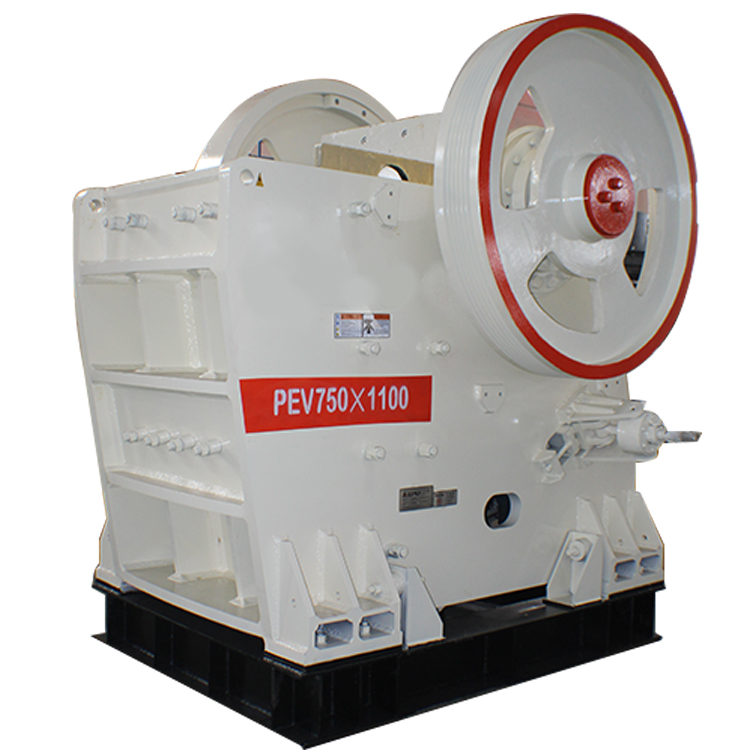
A portable stone crusher configuration: the same crushing concept, a different compliance file for every site it works at.
Portable stone crushers are bought as equipment but approved as installations. A portable stone crusher is a crushing plant arranged so that the same crushing, screening and conveying equipment can be relocated between job sites. In the STM range, the Portable Stone Crusher product type is offered with different crushing units mounted on the same portable concept: PE-Jaw Crusher, European Jaw Crusher, Impact Crusher, Spring Cone Crusher, CS Symons Cone Crusher, Multi Cylinder Hydraulic Cone Crusher, Single Cylinder Hydraulic Cone Crusher, VSI Sand Making Machine and Hammer Crusher. Each combination carries its own parameter set, and each one carries its own documentation file.
Compliance for a portable machine is therefore not one certificate that a buyer files away. It is a set of documents that travels with the equipment: factory-level quality management records, product standards that apply to the crushing stage, order-specific configuration records, test and inspection records, and the site-level approvals that only the operator can obtain in the market where the machine will work. Buyers who treat that file as a procurement deliverable — reviewed before the order, re-checked before shipment, and maintained while the machine operates — are in a materially better position in 2026 than buyers who treat compliance as paperwork that arrives with the container.
Why Portable Units Sit in a Different Regulatory Frame Than Fixed Installations
A fixed crushing plant is normally approved once, at one location, and the approvals attach to that location. A portable unit changes that logic in three practical ways.
- Multiple sites, multiple reviews. One portable unit can serve several sites inside a single project. Each site may operate under its own construction permit, environmental approval, or owner health-and-safety regime, so a document set that satisfied one site does not automatically satisfy the next.
- Transport enters the compliance scope. Before a portable unit is moved, the transport configuration, the haulage route and the receiving site's access conditions have to be checked. These are local checks carried out by the buyer's team, not by the manufacturer.
- Site services change the document set. Portable configurations in the STM range are driven by motors from 5.5 kW to 400 kW depending on the mounted crusher. A site that can accept a 30 kW configuration without any change to its supply may need an upgrade, or dedicated generation equipment, before it can accept a 400 kW configuration — and that difference produces different documentation requirements at each location.
The buyer's question is therefore not "does this crusher have a certificate?" but "which document applies at which stage, for which site, and who is responsible for producing it?" That reframing is the single most useful habit a 2026 buyer can adopt when sourcing portable crushing equipment.
The Document Categories a Buyer Review Should Cover
A portable stone crusher purchase file can be reviewed in seven categories. The table below sets out what each category addresses and what the buyer should actually verify, rather than simply collect.
| Document category | What it addresses | What the buyer should verify |
|---|---|---|
| Manufacturing quality management system | How the factory controls production quality. STM's company profile states that the company holds ISO9001:2008 international quality management system certification, alongside a European Union CE certificate. | That the certificate names the correct legal entity and manufacturer, that the product scope covers the crushing equipment family being ordered, and that it is currently valid. |
| Mobile crusher safety requirements | Safety requirements and verification for mobile crushers used in rock crushing and construction recycling are addressed by the published standard ISO 21873-2:2019. | Whether the destination market, the project owner or the insurer references that standard, and how the delivered configuration is expected to demonstrate conformity to it. |
| Order-specific configuration record | The exact machine built for the buyer. STM's OEM capability covers voltage and logo customization. | That voltage, model, feed opening, maximum feed size, motor power and throughput on the record match both the purchase order and the machine nameplate. |
| Test and inspection records | Evidence that the unit was checked before dispatch. STM's capability statement describes 100% testing. | What is tested, at which stage, what the pass criteria are, and how the test record is linked to the serial number of the delivered machine. |
| Crushing-train equipment list | The full delivered scope, which includes supporting equipment such as the raw material silo, feeder, jaw crusher for coarse crushing, cone crusher for medium and fine crushing, vibrating screen, return crusher, VSI sand making machine, finished product screen and finished product silo. | That the delivered scope and the documented scope are the same list. Documentation gaps most often appear in the supporting equipment, not the primary crusher. |
| Transport and site-entry information | The information needed to plan haulage and site access. | That transport dimensions and masses are requested early enough for route and access assessment in the destination market. |
| Commissioning and after-sales records | How the unit is handed over. STM's stated after-sales model is online guidance followed by offline engineer guidance and collaboration. | Which documents are handed to the operator at commissioning, and who retains the master file once the machine is working. |
Read as a set, these categories cover both the machine and the project. Compliance failures in portable crushing projects are rarely caused by a missing factory certificate; they are more often caused by a document that existed but did not match the configuration, the site, or the responsible party.
Reading the File Against the Actual Machine
The Portable Stone Crusher type is not one machine. It is a set of configurations, and the parameter differences between them are large enough that a document prepared for one configuration cannot be assumed to describe another. The table below lists the portable configurations in the STM range with their published parameters.
| Portable configuration | Power | Feed opening | Max. feed size | Output |
|---|---|---|---|---|
| Portable Stone Crusher — PE-Jaw Crusher | 5.5–75 kW | 250–125 mm | 10–90 mm | 1–90 t/h |
| Portable Stone Crusher — European Jaw Crusher | 30–200 kW | 150–930 mm | 10–275 mm | 12–650 t/h |
| Portable Stone Crusher — Impact Crusher | 37–375 kW | 500–250 mm | — | 15–350 t/h |
| Portable Stone Crusher — Spring Cone Crusher | 30–280 kW | 50–300 mm | 3–50 mm | 12–1000 t/h |
| Portable Stone Crusher — CS Symons Cone Crusher | 75–360 kW | 41–334 mm | 6–38 mm | 27–1270 t/h |
| Portable Stone Crusher — Multi Cylinder Hydraulic Cone Crusher | 160–400 kW | 95–330 mm | 13–38 mm | 120–855 t/h |
| Portable Stone Crusher — Single Cylinder Hydraulic Cone Crusher | 90–315 kW | 65–240 mm | 6–38 mm | 27–1050 t/h |
| Portable Stone Crusher — VSI Sand Making Machine | 110–400 kW | 0–50 mm | — | 60–520 t/h |
| Portable Stone Crusher — Hammer Crusher | 7.5–400 kW | 100–350 mm | 0–60 mm | 5–280 t/h |
Three technical characteristics of these configurations directly shape what a reviewer will look for.
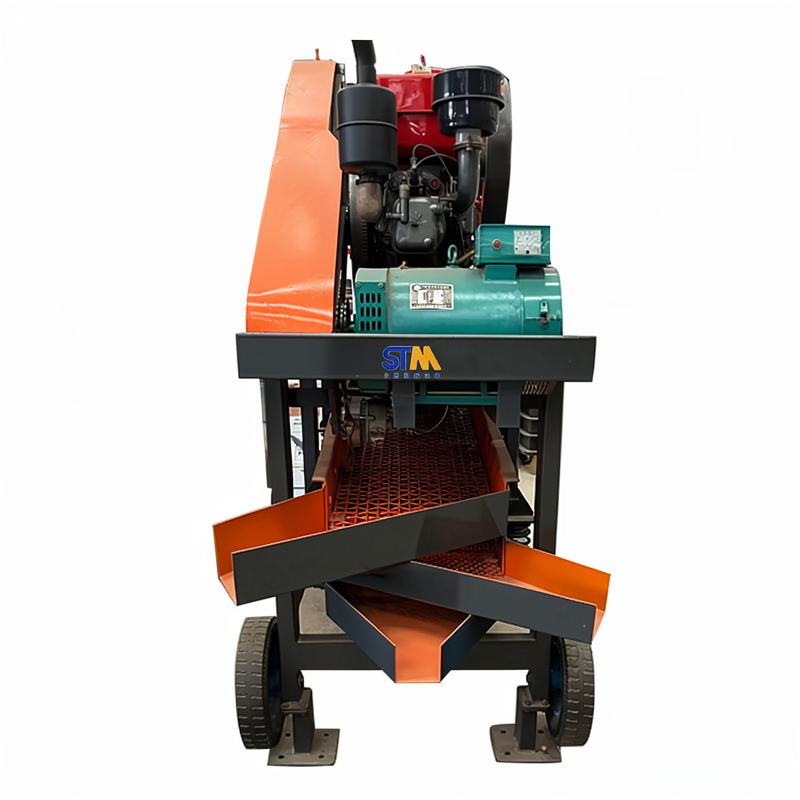
Portable and mobile configurations are documented as a train: primary crushing, screening and recirculation equipment each need their own record.
1. Particle size is reduced in defined stages
The working process progressively reduces particle size through coarse crushing, medium crushing, fine crushing and sand making. Primary crushing is performed with a jaw crusher, impact crusher or cone crusher; the material then passes to a sand making machine or hammer crusher; where grinding is required, the material is cleaned and dried before being processed with high-pressure grinding equipment or a ball mill. For a compliance review, this matters because each stage is a separate machine with its own documentation, guarding arrangement and inspection record.
2. The train is centrally controlled and interlocked
The whole process is centrally controlled by PLC with synchronized start and stop, and the plant is designed for continuous, automated operation with a closed-loop circulation system. A reviewer examining the delivered configuration will look at how start-up sequencing, interlocking and shutdown are described, because those functions determine how the equipment behaves during a blockage, a power interruption or an emergency stop.
3. Supporting equipment is part of the delivered scope
The supporting equipment list — raw material silo, feeder, jaw crusher for coarse crushing, cone crusher for medium and fine crushing, vibrating screen, return crusher, VSI sand making machine, finished product screen and finished product silo — is part of what is delivered. Portable projects commonly document the primary crusher thoroughly and the conveyor, screen and recirculation equipment loosely. That asymmetry is where document gaps concentrate.
What No Certificate Can Do: The Limits Buyers Must Accept
A compliance file transfers obligations; it does not transfer responsibility. Four boundaries are worth stating plainly, because buyers who misunderstand them tend to discover the gap after the machine has arrived.
- Factory certification is not a site permit. A quality management system certification describes how a manufacturer controls production; a product conformity document addresses the product. Neither grants permission to operate crushing equipment at a specific location, and neither substitutes for the local approvals, owner requirements or insurer conditions that apply at the site.
- Relocation can restart part of the process. Because the machine is portable, moving it to a new site can trigger a fresh local review — access, power supply, dust control, working hours, or project-specific conditions. Buyers planning multi-site deployment should budget compliance time for each site rather than for the machine as a whole.
- Standards are referenced, not automatically applied. ISO 21873-2:2019 is published and covers safety requirements and verification for mobile crushers used in rock crushing and construction recycling, but whether a given market, project or insurer references it is a local question. Confirm the reference before assuming it.
- Configuration changes break the file. STM's stated OEM customization scope covers voltage and logo. If a buyer requires changes outside that scope, those should be treated as engineering changes with their own documentation, because a record prepared for one configuration does not describe a different one.
There are also straightforward commercial boundaries that affect compliance planning. STM's capability statement lists a minimum order quantity of 2 units and a lead time of 30 days, with a monthly capacity of 8,000 units. Because the configuration record is generated from the order itself, documentation review is most efficient when it happens before the order is confirmed, not after.
Where Portable Configurations Fit: Project Scenarios and Their Documentation Focus
Portable crushing is chosen where aggregate demand moves with the work. The application data behind the STM range shows the scenarios that recur.
- Linear infrastructure. Highway, expressway and railway subgrade filling, plus airport, port and dock construction, rely on portable and semi-portable crushing because the consumption point advances along the alignment. Documentation focus: material gradation and acceptance records, plus working permits along the route.
- Water conservancy and heavy civil works. Dams, reservoirs, hydropower stations, urban subway, elevated bridge and municipal road construction depend on crushing and screening output close to the pour. Documentation focus: dust and water management approvals, which are typically site-specific rather than machine-specific.
- Engineering sand and gravel for construction markets. Projects supplying highways, railways, bridges, tunnels, water conservancy and real estate with manufactured sand, crushed stone and stone chips. Documentation focus: finished-product consistency records and the calibration of the sand-making stage.
- Mining and ore processing. Mine development, large-scale aggregate production, high-standard infrastructure projects, environmental protection solid waste treatment, high-end chemical filler production and ore processing. Documentation focus: the interface between mobile crushing and downstream processing, where the return crusher and closed-loop circulation behaviour matter most.
- Regional deployment. In Russia, the portable and line equipment is applied to concrete aggregate for infrastructure, water conservancy and real estate projects. Documentation focus: matching the configuration to the seasonal operating window and the availability of site power.
The pattern across all five is consistent: the machine is the same asset, but the document emphasis shifts with the project. A water conservancy project and a solid waste treatment project can use comparable crushing equipment and still require entirely different approval evidence.
Market Trend Analysis: Why Mobile Compliance Work Is Increasing
The direction of the market explains why portable-unit compliance deserves a dedicated review process rather than a clause in a general purchasing checklist.
- Market Research Future estimated the global crusher market at USD 6,751.19 million in 2024, projected to reach USD 12,710.1 million by 2035.
- The mobile crusher and screener segment alone was valued at USD 4.59 billion in 2024, with a projected CAGR of 7.32% through 2035, according to Market Research Future — a growth rate that implies a steadily growing population of machines that can be relocated.
- Jaw crushers are estimated to account for approximately 46% of the crushing equipment product segment by 2026 (Fact.MR), and within that family the single toggle jaw crusher segment held 62.4% of product-type share in 2025 (Dataintelo). Primary crushing stages remain the centre of gravity in equipment selection.
- Asia Pacific is described as the largest and fastest-growing region for crushers, with China's market estimated at USD 827.02 million in 2024 (Market Research Future).
Two implications follow. First, every additional relocatable unit adds recurring compliance administration — permits, transport checks and site reviews that a fixed plant would not generate. Second, the supplier landscape is concentrated at the top end: Metso Outotec, Sandvik and Terex Corporation were identified as top global manufacturers collectively holding approximately 30–35% of jaw crusher market share, and Metso's Aggregates business segment reported annual revenues exceeding USD 3.1 billion in 2025 (Dataintelo). For mid-market buyers, the practical consequence is that documentation expectations set by large-vendor procurement practice increasingly travel down into smaller transactions.
On market sizing, published estimates diverge because the scope of what is counted differs. For the total crusher and crushing equipment market in 2024, Market Research Future cites USD 6.75 billion, while Zion Market Research cites approximately USD 5.06 billion for stone crushing equipment in the same year, and Fact.MR offers a 2025 figure of USD 4.9 billion. Buyers using market data to justify capital planning should compare the underlying scope definitions, not just the headline numbers.
Portable Configuration Versus Fixed Installation: A Practical Comparison
| Dimension | Fixed installation | Portable configuration |
|---|---|---|
| Approval basis | Approved once, for a single location | Machine documentation travels; site-level review can repeat at each new location |
| Mobility | None without dismantling | Designed to relocate between sites within a project or between projects |
| Documentation scope | One consolidated site file | Machine file plus a per-site file for each operating location |
| Capacity scaling | Easier to expand with additional fixed stages | Bounded by the mounted crusher configuration, from 1–90 t/h at the small end up to 120–855 t/h for hydraulic cone configurations |
| Site services | Designed into the plant footprint | Must be re-checked per site; motor ratings in the range span 5.5 kW to 400 kW |
| Commissioning | Single commissioning and ramp-up | Repeat commissioning each time the unit is repositioned |
The limitation is real and should not be softened: a portable configuration does not eliminate permitting work — it redistributes it. For a project with a single fixed consumption point and a stable long-term output requirement, a fixed line usually concentrates the compliance effort into one approval process. Portable configurations pay off when the material demand moves and the saving in haulage and re-handling exceeds the added administrative overhead of multi-site review. Buyers should be honest about which of those two situations they are in before choosing a configuration.
A Six-Step Documentation Review Workflow
- Define the sites, not just the machine. List every location where the portable unit will operate and identify which authority or owner controls approvals at each one.
- Match the configuration to the site's power and output. Confirm the required throughput and the available supply against the published parameter range before the model is fixed, because the configuration drives the documentation.
- Request manufacturing and product documentation. Obtain the quality management certification and any market-access documentation, and check the named legal entity, product scope and validity.
- Request the order-specific configuration record. Compare voltage, model, feed opening, maximum feed size, motor power and throughput with the purchase order and, later, with the delivered nameplate.
- Define test evidence and acceptance before dispatch. Agree what constitutes a passing test record and how that record is linked to the machine's identity.
- Assign owners for site-level items. Haulage, site power, dust control, working hours and local operating permissions each need a named owner on the buyer's side before the machine arrives.
Frequently Asked Questions
What documents should a buyer request before ordering a portable stone crusher?
A buyer should request the manufacturer's quality management system certification, any product conformity documentation applicable to the intended market, the order-specific configuration record, test and inspection records, and the full delivered equipment list including the raw material silo, feeder, jaw crusher for coarse crushing, cone crusher for medium and fine crushing, vibrating screen, return crusher, VSI sand making machine, finished product screen and finished product silo. Site-level approvals are obtained separately by the operator.
Does a manufacturer's quality management certification cover local site permits?
No. A quality management system certification describes how the manufacturer controls production. Product conformity documentation addresses the product itself. Neither grants permission to operate crushing equipment at a particular location, and neither replaces the local approvals, project-owner conditions or insurance requirements that apply at the site where the machine will work.
How does ISO 21873-2:2019 apply to portable stone crushers?
ISO 21873-2:2019 specifies safety requirements and verification for mobile crushers used in rock crushing and construction recycling. It is a published standard rather than an automatic permission: whether a specific market, project owner or insurer references it must be confirmed locally, and the delivered configuration then needs to be assessed against it in that context.
Why must the compliance file match the shipped configuration exactly?
Because the portable stone crusher is a family of configurations rather than a single machine. Motor ratings across the range span 5.5 kW to 400 kW, feed openings span 0–50 mm to 500–250 mm depending on the mounted crusher, and throughput spans 1 t/h to 1270 t/h. A record prepared for one configuration does not describe another, so the voltage, model and parameters on the documents must match both the purchase order and the delivered nameplate.
What are the limits of documentation for portable units compared with fixed plants?
Documentation for a portable unit does not remove compliance work; it redistributes it across sites. Because the machine can be relocated, a new location may trigger a fresh local review, and commissioning is repeated each time the unit is repositioned. For projects with a single fixed consumption point and stable long-term output, a fixed installation can concentrate the same effort into one approval process.
Future Outlook
As mobile crushing capacity continues to expand — the mobile crusher and screener segment was valued at USD 4.59 billion in 2024 with a projected CAGR of 7.32% through 2035 — the number of relocatable crushing units in service will keep rising, and with it the volume of per-site documentation that buyers and operators must manage. The likely direction of travel is toward treating the compliance file as a deliverable alongside the machine: reviewed at quotation stage, tied to a specific configuration and serial number, and maintained across the equipment's working life rather than closed at delivery. Buyers who build that expectation into their supplier evaluation criteria now will find multi-site deployment considerably smoother than buyers who treat documentation as a post-purchase formality.
Henan Centbro Machinery (STM) Equipment Co., Ltd is a mining equipment enterprise integrating research, development, production and sales, located in the Zhengzhou National High-tech Development Zone, Henan, China, and serving markets that include Russia, the Middle East, Mexico and Africa. Its company profile and equipment range are published at centbrocrusher.com, and its downloadable product brochure is available here: STM product brochure (PDF).