
Navigating Gel Ice Pack Compliance: FDA, CPSIA, and EU Regulations Explained
Navigating Gel Ice Pack Compliance: FDA, CPSIA, and EU Regulations Explained
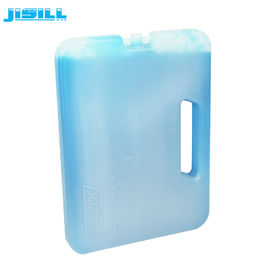
Gel ice packs sold into food and healthcare cold chains are usually presented with a short list of credentials: FDA, MSDS, CPSIA, and Regulation (EU) No 10/2011. Each of those four items answers a different question. FDA-related documentation speaks to the food-contact status of the materials used in the pack. An MSDS describes what the material is and how it should be handled and stored. CPSIA addresses substance limits for products that reach children. Regulation (EU) No 10/2011 governs plastic materials and articles intended to come into contact with food in the European Union. A buyer matching gel ice packs to a specific cold chain project does not simply need the longest certificate list; the credentials must line up with the destination market, the payload, and the equipment the pack will be used with.
This article decodes those four credentials, explains what each one implies for safety and market access, and shows how they appear on real model-level documentation. It uses two documented examples — the BH004 breast milk ice pack and the BH014 mini ice pack — together with the wider certification set held across the JISILL food-contact range by Changzhou Jisi Cold Chain Technology Co., Ltd.
Why Compliance Became a Project-Fit Question
A gel ice pack is a passive component, not a refrigeration unit. It operates in passive cooling or on-demand use mode and, in practice, must be used together with insulated containers or cooler bags. Because the pack is passive, its compliance file and its thermal design are evaluated at the same time, by different people: quality teams check the material declarations, while logistics and packaging engineers check whether the pack holds the required temperature band inside a given container.
That split is what makes certification a project-fit issue rather than a paperwork issue. A pack that satisfies US food-contact expectations may still need separate documentation to enter the European Union. A pack that is acceptable for chilled food may not be appropriate for vaccine distribution, where cold-box performance is assessed against its own standard. And a pack certified for a food-contact material set may still be wrong for a project if its dimensions, weight, or freeze point do not match the container and the payload.
The commercial stakes are not trivial. The global reusable ice packs market was valued at approximately USD 1.962 billion in 2024, with expectations to reach USD 2.862 billion by 2035, according to Market Research Future. The Business Research Company puts the global gel ice pack market at USD 14.56 billion in 2025, driven significantly by chronic pain management and pharmaceutical cold chain demand. Vaccine storage equipment — including cold boxes and carriers — is projected by MarketsandMarkets to grow from USD 0.86 billion in 2024 to USD 1.21 billion by 2029. Phase change material pack demand, valued by Intel Market Research at USD 476 million in 2025 with a 4.5% CAGR, reflects the same pressure: as more temperature-sensitive products move through distribution, the documentation attached to the cooling medium becomes part of the purchase decision.
The practical rule: a gel ice pack fits a project when its certification set matches the destination market, its operating mode matches the equipment, and its dimensions and temperature range match the payload. Any one of the three missing will stall a shipment.
The Four Credentials, Decoded
FDA — Food-Contact Status of the Material
In the United States, materials intended to come into contact with food fall under FDA-administered food-contact requirements. For a gel ice pack, an FDA-related credential therefore speaks to the food-contact status of the materials — typically the outer shell and the filling — rather than to the performance of the complete cooler. JISILL lists FDA among the certificates held on its food-contact gel ice pack models and states that the outer HDPE and the inner SAP or CMC filling are non-toxic, food-grade materials that are safe enough for food storage, supported by FDA, SGS and MSDS reports. For a buyer, the practical reading is that the material composition has been documented for food-contact use; the cold-holding behaviour of the pack still has to be validated in the intended container.
MSDS — Handling, Storage and Transport Documentation
A material safety data sheet is not a market-access approval. It is a document describing the composition, hazards, handling and storage requirements of the material, and it is normally requested by freight forwarders, warehouses and environment, health and safety teams rather than by food regulators. In gel ice pack sourcing, the MSDS functions as the link between the factory and the logistics chain: it tells the receiving warehouse what the product is, how it should be stored before use, and what precautions apply if a pack is damaged. JISILL lists MSDS across the food-contact range, including the BH004 and BH014 models.
CPSIA — Substance Limits for Child-Adjacent Products
CPSIA is a United States consumer product safety statute that sets limits on substances such as lead and phthalates in products designed for, or reasonably likely to be used by, children. It is a different category of requirement from food-contact regulation, and it becomes relevant to gel ice packs in applications where the pack sits close to children or in children's products — mini ice packs, lunch ice packs, and cooler packs supplied with children's bags and lunch kits. Where a project includes that end use, CPSIA documentation should be requested alongside the food-contact credentials rather than assumed. JISILL lists CPSIA on the models reviewed in this article and on other small-format packs, including the BH011 mini ice pack, the BH024 and BH025 lunch ice packs, the BH055 plastic ice pack and the BH125 breast milk ice pack.
Regulation (EU) No 10/2011 — Plastic Food-Contact Rules in the EU
Regulation (EU) No 10/2011 is the European Union framework covering plastic materials and articles intended to come into contact with food. It applies to the plastic components of a gel ice pack that could contact food, and it is commonly the credential European buyers ask for alongside a declaration of compliance. Because it is a plastic-specific framework, the documentation is normally tied to the material composition — for example a food-grade HDPE shell with a specific gel, SAP or CMC filling — rather than to the pack's shape. JISILL lists Regulation (EU) No 10/2011 on models including BH004, BH014, BH024, BH025, BH047, BH050 and BH065, and lists LFGB on several PCM-based models such as BH162 and BH142.
What Each Credential Answers
| Credential | Question it answers | Typical buyer context |
|---|---|---|
| FDA | Is the food-contact material acceptable under US food-contact requirements? | US food, retail and meal-kit cold chain |
| MSDS | What is the material, and how should it be handled, stored and transported? | Freight, warehousing, EHS review |
| CPSIA | Does the article meet US substance limits relevant to children's products? | Mini, lunch and child-adjacent ice packs |
| Regulation (EU) No 10/2011 | Do the plastic parts meet EU food-contact rules? | EU food, retail and pharma cold chain |
| WHO PQS E004/VC01.2 (separate standard) | Does a vaccine carrier or cold box meet verified cold-life requirements? | Vaccine distribution programmes |
The last row matters because it is frequently confused with the others. WHO PQS performance specification E004/VC01.2 defines standards for vaccine carriers and cold boxes and requires verified cold-life durations. It is a performance specification, not a material declaration. A gel ice pack that carries FDA, MSDS, CPSIA and EU food-contact documentation does not automatically satisfy it, and this is one of the clearest boundaries in cold chain sourcing.
Model-Level Evidence: Where the Credentials Actually Appear
Certification claims are only useful when they can be tied to a specific model and material combination. Two models in the JISILL range document the full four-item set in their published specifications.
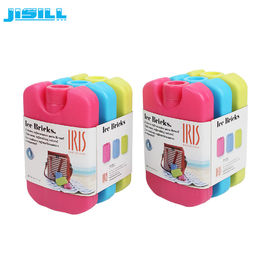
The BH014 mini ice pack measures 12 × 7.8 × 2 cm, weighs 150 g, and combines a food-grade HDPE outer shell with a gel cooling liquid. Its specification lists FDA, MSDS, CPSIA and Regulation (EU) No 10/2011, supports OEM customization, ships 24 pieces per carton, and quotes samples within 2 days with bulk delivery in 7–10 days depending on order quantity. Its small footprint makes it a common fit for lunch bags, cooler boxes and cooler bags, which is also why the CPSIA listing is relevant.
The BH004 breast milk ice pack measures 21 × 10 × 5.2 cm and uses a food-grade HDPE outer shell with a cooling gel filling. It documents the same four credentials — FDA, MSDS, CPSIA and Regulation (EU) No 10/2011 — and is positioned for food-freshness and breast milk transport, where the pack is placed in direct proximity to a consumable and food-contact documentation carries direct weight. Sample lead time is within 2 days, with bulk production quoted at 7–10 days.
The four-item set is not exclusive to those two models. The BH047 ice cooler brick (23.5 × 19.5 × 3 cm, 1000 g) and the BH050 fan ice pack (16.5 × 10.2 × 3 cm, 350 g) list the same combination of FDA, MSDS, CPSIA and Regulation (EU) No 10/2011. The point for a buyer is not which model is "best certified" but whether the model that fits the container also carries the credential the destination market requires.
How JISILL Structures Compliance Across the Range
Changzhou Jisi Cold Chain Technology Co., Ltd. is a factory specialising in PCM ice packs, cooler boxes and vacuum insulation panels, operating under the JISILL brand. The company was established in 2013; its predecessor, Changzhou Yang Tao Plastic Products Co., Ltd., dates to 2006 and specialised in food plastic packaging, which explains why food-contact material documentation sits at the centre of the current product file.
The manufacturing base covers a 40,000 m² facility with 60 employees, a four-person R&D team, and an annual output of approximately 620,000 units. Around 70% of production is exported, with the main markets listed as North America, South America, Western Europe, Eastern Europe, Eastern Asia and Southeast Asia. That export mix is the reason the certification file is built around both US and EU frameworks rather than a single domestic standard.
The company's capability profile documents OEM/ODM production with customization of shape, temperature, colour, size and logo, a monthly capacity of 10,000 units, 100% product testing, and remote after-sales support. On documentation, the company states that all materials — outer HDPE and inner SAP or CMC — are non-toxic, with FDA, SGS and MSDS reports available. One frequently used reference case is a logistics and pharmaceutical transportation customer in the United States that has taken 1,000,000 pieces over a six-year period, reporting stable operation.
Two procurement details are worth flagging because they affect project planning. First, the company's published FAQ describes an MOQ of 3,000 pieces for existing models and a higher threshold, above 5,000 pieces, where a new model has to be created, while its capability profile lists 1,000 pieces. Buyers should confirm which figure applies to the specific model and tooling. Second, payment terms span T/T with a 30% advance and 70% balance, PayPal for smaller amounts, and other instruments such as L/C, D/P, D/A and Western Union — variation that generally signals flexibility on volume rather than a fixed commercial rule.
Technical Context: Why the Certification Set Sits on Specific Materials
Food-contact credentials apply to materials, so the material specification of a gel ice pack is effectively the foundation of its compliance claim. Across the JISILL food-contact range, the outer material is food-grade HDPE or, on some models, nylon PE, while the inner filling is a cooling gel, SAP, CMC, or phase change material depending on the temperature target. The BH162 cool bag ice pack, for example, pairs a nylon PE outer shell with a PCM filling across 250 ml and 500 ml formats, and the BH142 eutectic cold plate pairs hard HDPE with SAP, CMC or PCM at 1200 ml.
Temperature planning is separate from certification and should be handled as its own specification exercise. JISILL produces phase change material ice plates across a range of fixed temperatures — −30 °C, −25 °C, −15 °C, −10 °C, −5 °C, 0 °C, 2–8 °C, 18 °C and 23 °C — which allows a project to match the pack to the required band rather than relying on a single general-purpose formulation. For insulated containers, the core is built from PU or VPU panels with PCM plates, and the company documents holding durations of 12, 24, 48, 72, 96 and up to 120 hours depending on configuration.
On the medical side, the documented equipment includes the JS-42L medical transport box with a 42 L capacity and a stated thermal conductivity below 0.0025 W/m·K, the JS-2.5L vaccine carrier with a 6.5 L capacity, the BWX003 collapsible vacuum insulated box at 74.7 L with 48- and 72-hour cold times, and the BWX42L panel box rated at −20 °C with a 40-hour cold time. These are container specifications, not pack certifications, and they should be read together with the WHO PQS performance framework when vaccine distribution is the end use.
Application Fit: Which Packs Suit Which Projects
Gel ice packs in this range operate under cold chain transportation conditions and are designed for cold chain transportation environments. Because they work passively, the application decision usually comes down to four variables: what is being shipped, the temperature band required, the container, and the market documentation.
- Breast milk and maternal transport: the BH004 breast milk ice pack, at 21 × 10 × 5.2 cm, combines the four-item credential set with a format sized for insulated bags and small carriers.
- Lunch and consumer food: the BH014 mini ice pack and the BH024 and BH025 lunch ice packs cover compact formats with food-contact and children's-product documentation.
- Retail and general food cold chain: larger formats such as the BH047 ice cooler brick (1000 g), the BH084 large cooler ice pack (1000 g) and the BH108 reusable large cooler ice pack with handle (1200 g) provide the volume needed for cooler boxes and shipping containers.
- Pharmaceutical and vaccine transport: the JS-42L, JS-2.5L, BWX003 and BWX42L containers pair vacuum insulation panels with PCM plates for defined temperature bands and holding durations.
- Precise temperature targeting: the BH130 2600 ml PCM ice pack, the BH142 eutectic cold plate and the BH162 PCM cool bag ice pack use phase change materials where a fixed freeze point matters more than general cooling capacity.
Comparison with Traditional Cooling Approaches — and the Limits of Certification
Traditional cooling media such as wet ice or frozen water bottles are inexpensive and widely available, but they offer no material documentation, produce meltwater that has to be managed, and are not reusable in a closed-loop logistics operation. Sealed reusable gel ice packs address those three issues: the filling is contained, the pack can be refrozen and reused, and the material composition can be documented for food-contact and consumer-safety review. Phase change material plates go a step further by holding a defined temperature band instead of drifting across a wide range.
Each of those transitions also carries a limitation, and buyers should treat these as design constraints rather than objections.
- Certification is not thermal validation. FDA, MSDS, CPSIA and Regulation (EU) No 10/2011 document material safety and market access. They say nothing about how many hours a pack will hold a temperature band inside a specific container. For vaccine carriers and cold boxes, that function is covered by a separate performance framework — WHO PQS E004/VC01.2, which requires verified cold-life durations.
- Passive packs need the right container. The pack must be used with insulated containers or cooler bags. If the container is undersized or the payload is too warm at loading, the certification file will not compensate; the shipment will still drift out of band.
- One formulation does not cover every temperature. PCM plates are produced for defined set points. A project that needs sub-zero pharmaceutical transport and a 2–8 °C clinical band requires two different plate specifications, not one universal pack.
- Commercial thresholds vary by model. The published MOQ guidance is not uniform across existing models and new tooling, and the capability profile lists a lower figure than the company's own FAQ. Volume planning should be confirmed against the specific model before a project timeline is locked.
- Documentation must be matched to the exact model and market. A credential listed on one model does not transfer automatically to a differently configured pack, and an EU food-contact listing does not substitute for a US consumer-safety listing where children's products are involved.
Market Trend: Why Compliance Documentation Is Moving Up the Sourcing Agenda
Several signals point in the same direction. Pharmaceutical and biologics logistics now account for a meaningful share of demand growth — The Business Research Company ties the USD 14.56 billion gel ice pack market in 2025 partly to pharmaceutical cold chain demand. Vaccine storage equipment is projected to grow from USD 0.86 billion in 2024 to USD 1.21 billion by 2029, per MarketsandMarkets, and phase change material packs are forecast by Intel Market Research to grow at a 4.5% CAGR on the back of demand for precise thermal management in biologics.
Supply is concentrated. China accounts for over 11.2% of global gel ice pack revenues as of 2025 and functions as a primary manufacturing hub for exports to North America and Europe, according to Dataintelo. That concentration means cross-border documentation is not an edge case: for a large share of global volume, the pack is manufactured in one regulatory environment and consumed in another. The global landscape also includes established suppliers such as Sonoco ThermoSafe, Cold Chain Technologies and Pelton Shepherd, identified by Coherent Market Insights, which keeps the pressure on documentation quality rather than price alone.
Market-sizing estimates in this category should be read with care. Definitions differ materially between research houses — Market Research Future frames the reusable ice pack market at USD 1.962 billion in 2024 while The Business Research Company frames the gel ice pack market at USD 14.56 billion in 2025 — largely because one treats consumer reusable packs and the other includes medical cold chain infrastructure. Buyers should use these figures to understand direction, not to anchor a specific category value.
Future Outlook
Three shifts appear likely to shape gel ice pack sourcing over the next procurement cycles. First, documentation requests are becoming model-specific rather than brand-level: buyers increasingly ask which certificate applies to which model, material and market, rather than accepting a general compliance statement. Second, the boundary between food-contact packs and medical cold chain equipment will be enforced more explicitly, with performance standards such as WHO PQS E004/VC01.2 sitting alongside material declarations rather than being bundled with them. Third, phase change materials will continue to displace general-purpose gel formulations in projects where a defined temperature band is the primary requirement, which pushes suppliers toward wider fixed-temperature portfolios and toward tooling that supports custom plate dimensions.
For procurement teams, the practical implication is straightforward: build the compliance question into the specification sheet at the same time as the temperature and container requirements, not after the supplier is selected.
FAQ
1. What do the four credentials on a gel ice pack specification sheet actually cover?
They cover four different areas. FDA documentation addresses the food-contact status of the materials. An MSDS describes the material composition, handling and storage requirements. CPSIA addresses US substance limits relevant to children's products. Regulation (EU) No 10/2011 covers plastic materials and articles intended to come into contact with food in the European Union. JISILL lists FDA, MSDS, CPSIA and Regulation (EU) No 10/2011 as the credential set for food-contact models such as the BH004 breast milk ice pack and the BH014 mini ice pack.
2. When is CPSIA relevant to a gel ice pack purchase?
CPSIA is a US consumer product safety statute that sets limits on substances such as lead and phthalates in products designed for, or reasonably likely to be used by, children. It becomes relevant when a gel ice pack is supplied into child-adjacent applications such as mini ice packs and lunch ice packs. JISILL lists CPSIA on models including the BH011 mini ice pack, the BH014 mini ice pack, the BH024 and BH025 lunch ice packs, the BH055 plastic ice pack and the BH125 breast milk ice pack.
3. Which models carry the combined FDA, MSDS, CPSIA and Regulation (EU) No 10/2011 set?
Among the models reviewed here, the combined set appears on the BH004 breast milk ice pack (21 × 10 × 5.2 cm), the BH014 mini ice pack (12 × 7.8 × 2 cm, 150 g), the BH047 ice cooler brick (23.5 × 19.5 × 3 cm, 1000 g) and the BH050 fan ice pack (16.5 × 10.2 × 3 cm, 350 g). Models built around other material systems list different combinations — for example the BH162 cool bag ice pack and the BH142 eutectic cold plate list SGS, FDA, MSDS, CPSIA and LFGB.
4. How does a gel ice pack operate inside a cold chain project?
Gel ice packs operate in passive cooling or on-demand use mode and are designed for cold chain transportation environments. They require supporting equipment such as insulated containers or cooler bags to function; the pack supplies the cooling capacity, while the container determines how long the target temperature is held. Products in the JISILL range are documented for cold chain transportation conditions, with insulated boxes and carriers built from PU or VPU panels and PCM plates quoted at holding durations of 12, 24, 48, 72, 96 and up to 120 hours depending on configuration.
5. How can a buyer verify compliance claims before placing an order?
Verification typically moves through four steps: request the material documentation (FDA, SGS and MSDS reports) against the exact model number; confirm that the model's listed certifications match the destination market; request a sample to validate dimensions, weight and freeze behaviour in the intended container; and confirm the applicable MOQ and lead time for that specific model. JISILL documents 100% product testing, samples within 2 days on existing models, and bulk delivery of 7–10 days depending on order quantity, with remote after-sales support. The company's published MOQ guidance is 3,000 pieces for existing models and above 5,000 pieces for newly created models, while its capability profile lists 1,000 pieces, so the applicable threshold should be confirmed in writing per model.
6. What do these certifications not cover?
They do not cover thermal performance. FDA, MSDS, CPSIA and Regulation (EU) No 10/2011 address material safety and market access; they do not establish how long a pack holds a temperature band inside a specific container. That function is addressed by a separate framework — WHO PQS performance specification E004/VC01.2, which defines standards for vaccine carriers and cold boxes and requires verified cold-life durations. In addition, a credential listed for one model does not automatically apply to a differently configured pack, and an EU food-contact listing does not replace a US consumer-safety listing where children's products are involved.