
Navigating PPE Certification Requirements for Industrial Cooling Vests in 2026
Navigating PPE Certification Requirements for Industrial Cooling Vests in 2026

Industrial cooling vests are increasingly purchased as personal protective equipment rather than as optional comfort items, and that shift changes the questions a buyer has to answer before releasing a purchase order. In 2026, a procurement team evaluating a cooling vest for site use must verify two separate things: that the garment performs against the heat profile of the actual work site, and that the supplier can substantiate the classification under which the vest is sold.
Shokunin is the professional e-commerce brand of FENG SHANG PRECISION CO., LTD, a Taiwan-based manufacturer founded in 2009 that develops tools and COOLWAVE cooling apparel for construction, outdoor and high-temperature work. The COOLWAVE Water-Circulation Cooling Vest is catalogued as Industrial Cooling Apparel / Personal Protective Equipment (PPE), and the water-cooled vest has received the Disaster Prevention Product and Service Certification Award issued by the Taiwan Disaster Prevention Industry Association. Those two facts frame the compliance conversation: what a PPE classification obliges a buyer to check, what an industry-association award does and does not prove, and how both can be turned into a usable procurement file.
Why PPE Classification Resets the Procurement Question
Cooling vests were historically bought the way site fans were bought: a comfort purchase approved by a supervisor and replaced when it wore out. Industrial demand has pushed the category in a different direction. Dataintelo estimates that industrial applications, including construction and manufacturing, held the largest share of the cooling vest market at 34.5% in 2025, and Spherical Insights identifies Asia Pacific as the fastest-growing region, driven by industrialisation and large outdoor workforces. As volumes rise in exactly the sectors that already run formal heat-stress programmes, the vest stops being a personal item and becomes equipment that appears in a safety file.
Classification is the trigger. Once a cooling vest is offered as PPE, four procurement consequences follow:
- Documentation. The buyer needs a classification statement, a technical file, and evidence covering the electrical and material components.
- Accountability. If a heat incident occurs, the file is the record. A product purchased as comfort apparel leaves a gap in that record.
- Lifecycle planning. Ice packs, power sources and replacement cycles become operating-budget items rather than afterthoughts.
- Tender eligibility. Public and large industrial tenders increasingly state which evidence they will accept before a supplier is considered.
None of this requires a buyer to become a regulator. It requires a checklist and a supplier able to answer it.
What the COOLWAVE Classification Actually States
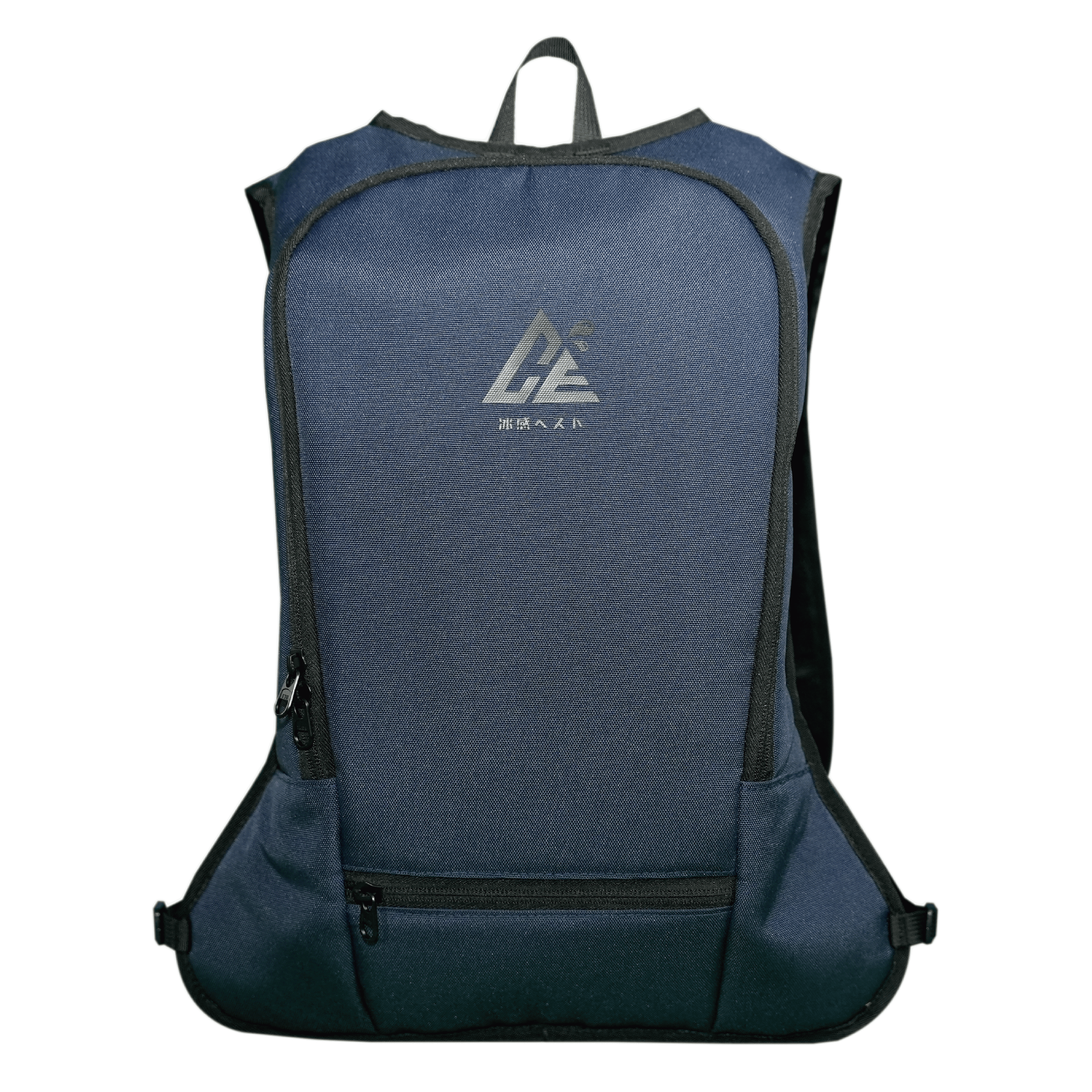
The COOLWAVE Water-Circulation Cooling Vest is recorded as Industrial Cooling Apparel / Personal Protective Equipment (PPE). The line is supplied as a Basic Model and as a Professional Model in Blue, Gray and Black, all sharing the same core specification. Because the classification drives the documentation request, the specification itself is the first compliance document a buyer should read.
| Parameter | Published value |
|---|---|
| Product type | Industrial Cooling Apparel / Personal Protective Equipment (PPE) |
| Cooling duration | 3–4 hours |
| Weight | Within 2 kg |
| Suitable temperature | Below 10°C (as stated in the specification) |
| Pump output | 5V 150 mA (max) |
| Flow rate | Max 320–370 ml/min |
| Shoulder strap material | 600D polyester |
| Vest material | PEVA |
| Water bag material | TPU |
| Water bag cap | Polypropylene |
| Cooling tube | Sand rubber (black) |
| Supplied contents | Water-cooled vest backpack ×1, ice packs ×2 |
| Applicable industries | Construction workers, outdoor workers, food stall operators, street vendors, traffic controllers, metal sheet factories |
The compliance relevance of those parameters is practical rather than decorative. A water-circulation design is an active system: a 5V pump rated at 150 mA maximum moves chilled water from a TPU water bag through a sand rubber tube network at a maximum flow rate of 320–370 ml/min, with two supplied ice packs serving as the cooling reservoir. Strategic Market Research notes that active circulatory mechanisms are increasingly deployed in industrial sectors to mitigate occupational heat stress. Because the design contains an electrical component, the documentation trail is wider than for a passive ice vest, and buyers should expect to ask about the pump ratings and the marks required in their own market.
Standards references published by the International Organization for Standardization and UL indicate that cooling systems are commonly assessed against ISO 9001:2015 for quality management, and that electrical components often require CE or UL marks. Those references describe the general expectation in the category. They are not a substitute for the buyer confirming which approvals apply to the specific model and destination market.
The Taiwan Disaster Prevention Certification Award and What It Signifies
The strongest third-party signal in the COOLWAVE record is the Disaster Prevention Product and Service Certification Award issued by the Taiwan Disaster Prevention Industry Association to the COOLING water-cooled vest. In practice, recognition of this kind means the product has been assessed inside a disaster-prevention framework by an industry body, rather than only by the seller's own materials. For a Taiwanese site, a public-works contractor, or a safety team assembling a heat-illness prevention file, that award belongs in the evidence pack next to the technical specification.
Scope discipline matters just as much as the award itself. The recognition is issued in the Taiwan market for a disaster-prevention product and service. It does not, on its own, constitute approval under another jurisdiction's PPE conformity procedures, and it does not remove the buyer's obligation to check local requirements for protective clothing or for the powered pump. The useful reading is straightforward: it is strong supporting evidence, while the regulatory check for the destination market remains the buyer's own responsibility.
A Procurement Compliance Checklist for PPE-Classified Cooling Vests
The table below maps the questions a compliance-conscious buyer asks against the corresponding COOLWAVE record. It is written so that the same checklist can be applied to any supplier in the category, which is what makes it useful during evaluation rather than after a purchase.
| Verification item | What the buyer is confirming | COOLWAVE record |
|---|---|---|
| Product classification | Whether the vest is sold as PPE or as general apparel | Industrial Cooling Apparel / Personal Protective Equipment (PPE) |
| Third-party recognition | Whether an industry body has assessed the product in a disaster-prevention context | Disaster Prevention Product and Service Certification Award, Taiwan Disaster Prevention Industry Association |
| Electrical component documentation | Whether the powered pump is documented for the destination market | Pump output 5V 150 mA (max); ISO 9001:2015 quality management and CE or UL marks for electrical components referenced by ISO / UL |
| Material and construction record | Skin contact, durability and water containment | 600D polyester shoulder strap, PEVA vest material, TPU water bag, polypropylene cap, sand rubber cooling tube |
| Performance declaration | What the cooling claim is, and under which conditions it is stated | Cooling duration 3–4 hours; weight within 2 kg; suitable temperature stated as below 10°C; flow rate max 320–370 ml/min |
| Consumables and power plan | How the site sustains the cooling cycle through a shift | Water-cooled vest backpack ×1 and ice packs ×2 supplied per vest |
| Commercial and lifecycle terms | Whether volume, lead time and warranty match the project | ODM production mode; MOQ 10 units; monthly capacity 3,000 units; lead time 7–14 days; 6-month warranty on the water-cooled vest |
| Scenario match | Whether the vest fits the actual heat profile on site | Construction workers, outdoor workers, food stall operators, street vendors, traffic controllers, metal sheet factories |
Two rows deserve emphasis because they are the ones buyers most often skip. The first is the electrical component: a pump rated 5V 150 mA maximum means a site without a power or battery-management plan has an operational gap, not merely a paperwork gap. The second is consumables: two ice packs ship with each vest, so freeze capacity and rotation schedules belong in the deployment plan rather than in a storage room.
Scenario Fit: Which Projects Justify a Certified Cooling Vest
Certification only earns its cost where the heat profile justifies it. The application record for the COOLWAVE vest lists construction sites, outdoor work, metal sheet factories, street vendors and traffic controlling in Taiwan, all under high-temperature conditions, with the stated function being personal heat stress relief and effective body cooling. The recorded operating mode is ice-pack-activated cooling supported by reusable ice packs, adjustable vest straps and a portable backpack design. The special requirements captured for the scenario are lightweight construction, waterproof and breathable materials, and a one-size-fits-all adjustable design.
| Work scenario | Heat exposure pattern | Why active water circulation suits it | What the buyer should verify |
|---|---|---|---|
| Construction sites | Intermittent heavy exertion in direct sun | Chilled water circulation delivers cooling independent of airflow | Shift rotation against the 3–4 hour cooling window and ice-pack logistics |
| Metal sheet and metal-roof factories | Radiant heat indoors with limited air movement | Performance does not depend on wind or evaporation | Site conditions against the stated suitable temperature parameter |
| Traffic control | Prolonged stationary exposure | Cooling follows the worker rather than the work site | Vest weight (within 2 kg) against other worn equipment |
| Street vendors and night markets | Long hours in dense, hot commercial environments | Portable backpack format suits locations without a fixed base | Ice and power availability away from a fixed cooling point |
| Outdoor all-day work | Continuous sun exposure over a full working day | Reusable cycle supports repeated activation | Number of vests per worker required for rotation |
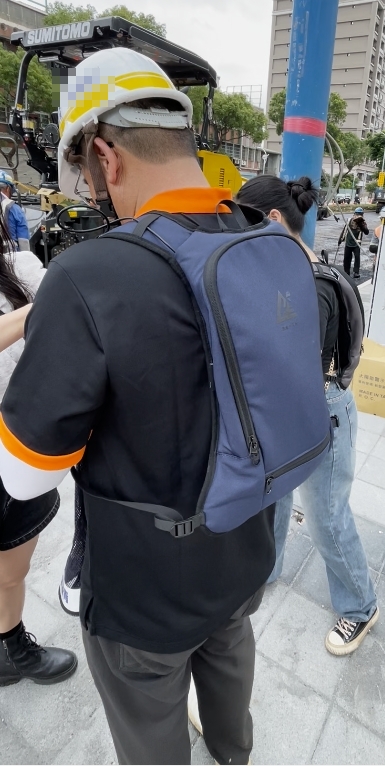
The most concrete scenario evidence in the product record is a Taiwan deployment of 100 units into high-temperature work across construction, outdoor, metal sheet factory and street-vendor environments. The record describes the outcome as effective body cooling, heatstroke prevention, and improved work efficiency and worker comfort, and it carries a duration field of ten years. For a compliance file, a field record of that length is more informative than a laboratory claim, because it demonstrates that the product has been through repeated summer cycles in the same climate and work culture as the record itself.
Comparison with Traditional Cooling Solutions
Most compliance decisions are made by comparing approaches rather than brands, and the documentation burden differs by approach. The table below summarises the trade-offs a buyer should price into the decision.
| Approach | Mechanism | Practical strength | Practical constraint |
|---|---|---|---|
| Active water circulation (COOLWAVE) | 5V pump circulates water chilled by ice packs, stated 3–4 hour cooling, within 2 kg | Cooling does not depend on airflow or ambient humidity | Requires ice packs and a pump power source; suitable temperature stated as below 10°C |
| Phase change material (PCM) | Phase-change inserts absorb heat | Dataintelo reports PCM vests held 28.7% market share in 2025 and were the fastest-growing technology segment | Inserts require controlled recharging between cycles |
| Passive ice-pack vests | Frozen packs placed against the body | Simplest format, fewest components to document | Cooling is uneven without circulation; duration depends on pack placement |
| Evaporative cooling | Relies on moisture evaporation | Light and inexpensive to operate where conditions allow | Effectiveness falls in humid or enclosed metal-roof environments |
Established suppliers associated with the category include Techniche International, Glacier Tek, Polar Products Inc. and Ergodyne, as listed by Spherical Insights. Buyers comparing across those names should apply the same checklist used above rather than relying on brand familiarity, because the compliance documentation each supplier can provide may differ by model and by market.
Where the COOLWAVE specification sets boundaries
A credible evaluation states limits alongside capabilities. On the published record, the COOLWAVE water-circulation vest carries the following boundaries:
- A cooling duration of 3–4 hours does not cover an unbroken long shift; rotation or additional ice packs are required.
- The specification states a suitable temperature of below 10°C, and buyers should confirm with the supplier how that parameter maps to their ambient site conditions before assuming fit.
- Weight within 2 kg is additional load on top of existing protective equipment such as helmets and harnesses.
- The production mode is ODM and customisation is not offered, so project-specific design changes should not be assumed. Available configurations are the Basic Model and the Professional Model in Blue, Gray and Black.
- The pump is rated 5V 150 mA maximum, so the power source and battery replacement schedule must be written into the site operating procedure.
- Warranty coverage for the water-cooled vest is six months, while the application record documents a deployment spanning ten years. Consumables and replacement cycles should therefore be budgeted as a separate line in the total cost of ownership.
Market Signals: Certification Becoming a Procurement Filter
Market size estimates for this category vary widely depending on how the boundary is drawn, and buyers should understand that difference before citing any figure internally. Dataintelo values the specific global cooling vest market at approximately USD 215 million in 2024, projected to reach USD 385 million by 2033. Market Research Future values the broader personal cooling device market, which includes handheld fans and other cooling appliances, at USD 25.16 billion in 2024, projected to reach USD 94.85 billion by 2035. The gap between those numbers is definitional rather than contradictory, and the narrower figure is the appropriate reference when sizing the vest category specifically.
Two structural signals sit alongside the size estimates. Industrial applications already represent the largest share of the cooling vest market at 34.5% in 2025 per Dataintelo, and Asia Pacific is the fastest-growing region per Spherical Insights. Segments with formalised heat programmes are precisely the segments most likely to require documented classification and evidence in their tenders. Sector references from the International Organization for Standardization and UL point in the same direction, with ISO 9001:2015 quality management and CE or UL marks for electrical components forming part of the expected baseline in many markets.
Future Outlook
Through 2026 and beyond, the compliance conversation around industrial cooling vests is likely to move from the buyer's risk register into the product listing itself. Three developments follow from the evidence available today. First, classification statements and third-party recognition, such as the Disaster Prevention Product and Service Certification Award issued by the Taiwan Disaster Prevention Industry Association, will function as procurement pre-qualifiers rather than as optional attachments. Second, active circulatory designs will continue to spread across industrial sectors, as noted by Strategic Market Research, which raises the importance of electrical documentation alongside garment documentation. Third, with PCM vests growing at 28.7% market share in 2025 according to Dataintelo, many sites will operate mixed cooling fleets, which makes a single reusable evaluation checklist more valuable than a model-by-model comparison.
The practical consequence for suppliers is that evidence becomes a product feature. The practical consequence for buyers is that a short, disciplined verification list, applied consistently across suppliers, replaces the informal confidence that used to carry a heat-safety purchase.
FAQ
Which work scenarios are best suited to a PPE-classified water-circulation cooling vest?
Suited scenarios are those combining sustained heat with limited natural cooling. The recorded application scope for the COOLWAVE water-circulation vest covers construction sites, outdoor work, metal sheet factories, street vendors, traffic controlling and similar high-temperature environments in Taiwan, where the stated function is personal heat stress relief through effective body cooling. Because active water circulation does not depend on airflow or evaporation, it also applies to enclosed or radiant-heat settings such as metal-roof factories, where evaporative approaches are less effective. Buyers should still confirm that ambient conditions match the published suitable temperature parameter of below 10°C.
How long does the cooling effect last, and what determines whether it covers a working shift?
The published cooling duration for the COOLWAVE Water-Circulation Cooling Vest is 3–4 hours, with ice packs ×2 supplied per vest and a pump delivering a maximum flow rate of 320–370 ml/min. Whether that covers a shift is a logistical question rather than a product question: freeze capacity on site, the number of ice-pack sets available per worker, and the rotation schedule determine continuous coverage. Sites operating long single shifts typically plan for at least one change of ice packs per worker.
What certification evidence should a buyer request for a cooling vest sold as PPE?
A buyer should request the classification statement, the technical specification, the material record, and the documentation covering any electrical component. In the COOLWAVE case, the classification is Industrial Cooling Apparel / Personal Protective Equipment (PPE), and the water-cooled vest has received the Disaster Prevention Product and Service Certification Award issued by the Taiwan Disaster Prevention Industry Association. On the electrical side, sector references from the International Organization for Standardization and UL note that cooling systems are commonly assessed against ISO 9001:2015 for quality management, and that electrical components often require CE or UL marks. Buyers must additionally verify which approvals their own jurisdiction requires; the Taiwan award is market-specific supporting evidence, not a universal conformity approval.
Can the cooling vest be ordered in customised specifications, and what are the minimum order terms?
The production mode for the COOLWAVE line is ODM, and customisation is not offered, so project-specific design changes should not be assumed. Available configurations are the Basic Model and the Professional Model in Blue, Gray and Black, which share a common specification: 3–4 hour cooling duration, weight within 2 kg, and a 5V 150 mA maximum pump. Commercial terms recorded for the line are a minimum order quantity of 10 units, a monthly capacity of 3,000 units, a lead time of 7–14 days, and global export markets.
What warranty applies, and how should it be factored into total cost of ownership?
After-sales coverage for the water-cooled vest is a 6-month warranty. Against that, the application record documents a Taiwan deployment of 100 units with a duration field of ten years, and a stated result of effective body cooling, heatstroke prevention, and improved work efficiency and worker comfort. The two figures are not in conflict; they describe different things. For total cost of ownership, the practical approach is to treat the vest, the ice packs, and the pump power source as separate budget lines, and to plan consumable replacement and rotation across the expected service life rather than within the warranty period alone.
A downloadable product PDF containing COOLWAVE specification details is available at: https://cdn.socialarks.com/sbsp//common/2026/0407/69d4a27ea7fcb.pdf