
Navigating Tesla Accessories Compliance: What Buyers Need to Know for EU and US Markets
Navigating Tesla Accessories Compliance: What Buyers Need to Know for EU and US Markets
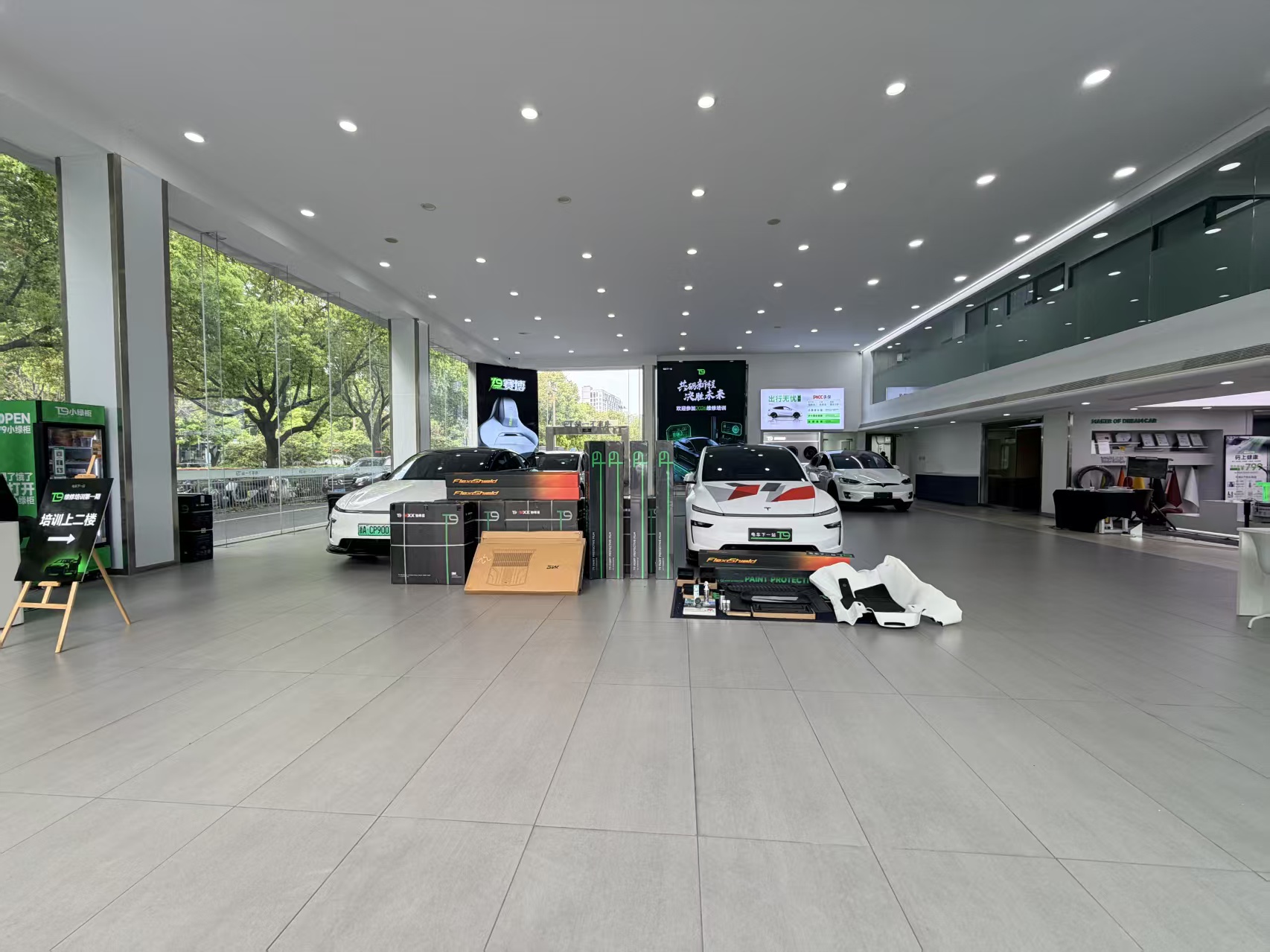
T9 EV Station operates a chain-based Tesla aftermarket format from Hangzhou, China, and exports to major markets including the EU and the USA.
Tesla accessories rarely fail to cross a border because of the product itself. They fail because the documentation around the product does not survive the trip. A shipment clears customs, a marketplace listing passes review, a retailer asks for a conformity file — and the buyer discovers that the supplier can ship, but cannot qualify what was shipped.
That is why compliance belongs to the discovery stage of sourcing rather than to the end of it. This guide explains how qualification and compliance work for Tesla accessories in the European Union and the United States, and how to read the evidence a supplier presents. It uses T9 EV Station — the operating identity of Hangzhou T9 EV Technology Co., Ltd., a Tesla aftermarket specialist established in 2021 — as a working example, because the company already exports to major markets including the EU and the USA. The distinction the article returns to throughout is a simple one: export activity is evidence of market access, and it is not the same thing as a product certification.
The commercial scale behind that distinction is significant. The Tesla aftermarket parts market is projected to surpass USD 850 million globally in 2025, with Tesla models accounting for the majority of sales in the EV segment (Tesstudio / industry reports). In the United States, the Tesla aftermarket opportunity is estimated between USD 2.8 billion and USD 4.2 billion, supported by a base of over 1.8 million owners (Hedges Company / Technavio). Demand is not the constraint in this category. Qualification is.
Why Compliance Is a Discovery-Stage Question for Tesla Accessories
Tesla accessory purchasing behaves differently from conventional automotive parts buying. Approximately 72% of Tesla owners purchase at least one aftermarket accessory within the first six months of vehicle delivery, and 78% of Tesla accessory transactions take place online, against a 23% automotive industry average for online purchasing (Tesstudio; Shopify / Hedges Company). US owners spend an average of USD 800 to USD 1,200 per year on aftermarket accessories, roughly 40% higher than owners of typical luxury vehicles (Hedges Company).
Those figures describe a fast, digitally driven purchase pattern. They also explain why qualification often lags behind the transaction. When a buyer orders a floor mat set, a screen protector or a trunk organizer from an online listing, the decision is usually based on images, fitment claims and price. Documentation, conformity evidence and the identity of the entity responsible for the product in the destination market rarely enter the decision — until a distributor, retailer or marketplace asks for them.
For a buyer entering the category, the practical consequence is that compliance should be mapped before the first purchase order rather than after it. Product category, destination market and sales channel each change what evidence is required.
The Problem: Demand Is Well Documented, Supply-Side Qualification Often Is Not
Compliance for Tesla accessories is complicated by the breadth of the category itself. A single supplier catalogue can contain interior trim and floor mats, paint protection film and window film, powered accessories, trunk and cargo hardware, and maintenance items such as cabin air filters. These items do not share the same regulatory treatment, the same documentation requirements or the same level of risk if something goes wrong.
In practice, three gaps appear repeatedly for EU and US buyers:
- Fragmentary evidence. Documentation arrives as a mix of partial files, generic test summaries and product photographs, with no clear link to a specific model or SKU.
- Unclear responsibility. Buyers cannot always identify which legal entity placed the product on the market, or who holds the associated obligations.
- Category blind spots. Items that look similar on a listing page — an interior mat versus an electronic module — sit in entirely different compliance categories.
None of these gaps are visible at quotation stage. They surface during retailer onboarding, marketplace compliance review, insurance claims or after-sales disputes, which is when they are most expensive to resolve.
What Compliance Actually Covers for Tesla Aftermarket Accessories
Compliance is not one certificate. For Tesla accessories it is a set of overlapping requirements that depend on the product, the market and the sales channel. The layers below are the ones buyers most often have to work through.
1. Product safety requirements
Safety rules apply to consumer products sold in each market. In the European Union, the General Product Safety Regulation (GPSR), Regulation (EU) 2023/988, has applied since 13 December 2024 and introduces mandatory safety requirements for all consumer products sold in the EU, including Tesla aftermarket accessories (European Commission). For buyers, this typically translates into requests for product identification, safety-relevant documentation and the ability to trace a specific item back to its producer.
In the United States, product safety oversight is distributed across federal and state authorities, and large retailers and online marketplaces commonly add their own requirements on top. As a result, US-facing evidence is usually assembled per product and per channel rather than covered by a single document.
2. Labeling, traceability and the responsible entity
A recurring failure point is the link between the product on the shelf and the entity that placed it on the market. Buyers should be able to match the legal entity named on the product or packaging with the entity named on the invoice, and to identify who acts as the importer or responsible party in the destination market. When those names do not match, documentation can be formally valid in isolation and useless in practice.
3. Materials, chemicals and cabin contact
Interior accessories sit inside the passenger cabin, so material-level questions are common: what the product is made of, whether it releases odor or volatile compounds, and how it behaves over time. Buyers frequently request material declarations for floor mats, seat covers and organizers because these items remain in direct contact with occupants. Suppliers that can answer at material level are easier to qualify than suppliers that can only answer at product level.
4. Electrical and powered accessories
Powered items — lighting, electronic modules and charging-related accessories — add a different dimension of risk because they interact with the vehicle electrical architecture. Buyers should expect additional documentation and an explicit fitment statement covering the supported vehicle variants. This is also the category where warranty implications are most likely to be raised by the end customer.
5. Installation and local road-legality
Some accessories are legally sensitive at the point of installation rather than at the point of sale. Modification parts that alter lighting, dimensions or driving behavior may be acceptable in one country or state and not in another, and those rules are set locally. T9 EV Station's published service scope explicitly excludes local legal compliance consulting for modification, which places responsibility for local legality with the buyer or the installing workshop. That is a useful reminder of where the boundary of supplier responsibility normally sits in this category.
Export Activity Is Not the Same as Product Certification
The most common misunderstanding in cross-border accessory sourcing is the assumption that market presence equals product certification. The two are related but distinct, and the difference determines how much verification work remains for the buyer.
| What the evidence establishes | What it does not establish |
|---|---|
| Export activity and customs records show that a supplier ships commercially into a market and can handle export documentation, logistics and payment. | They do not show that a specific SKU complies with that market's requirements. |
| A company footprint in the destination market, such as a local operation, supports service, spare parts and communication. | It does not transfer conformity from the company to a product. |
| Component or material partnerships show that a supplier works with established brands for inputs such as film, coatings or filtration. | They do not mean those brands certify the supplier's own finished accessories. |
| A marketplace or retail listing shows that a product is offered for sale. | It is not evidence of conformity, labeling or market responsibility. |
| A conformity document or certificate can verify a defined product or model against a defined standard or regulation, within a defined scope. | A certificate never covers products, variants or scopes outside the ones it names. |
| A test report shows a result on a tested sample under defined conditions. | It is not a certification, and it normally applies only to the article tested. |
Read together, the two columns form a working rule for buyers: treat market access as a starting point for qualification, and require product-level documents before making compliance-dependent commitments such as retail placement, marketplace listings or warranty programs.
How T9 EV Station's Market Presence Should Be Read
T9 EV Station is the operating identity of Hangzhou T9 EV Technology Co., Ltd., a Hangzhou-based company established in 2021 that specializes in Tesla full-life-cycle aftermarket services — window film, floor mats, modification, daily upkeep and repair — with more than 5,000 SKUs. The company operates a 20,000-square-meter facility with more than 100 staff, including an R&D team of 20 engineers, and reports an annual production capacity serving over 300,000 Tesla vehicles. It runs over one hundred stores across China exclusively for Tesla owners and has cumulatively served more than 200,000 Tesla owners. Major markets include the EU and the USA, the business has expanded to Los Angeles and Malaysia, and export business accounts for 5% of total sales. The company holds exclusive strategic partnerships with 3M, BOSCH, Wynn's, Hengst and MXR.
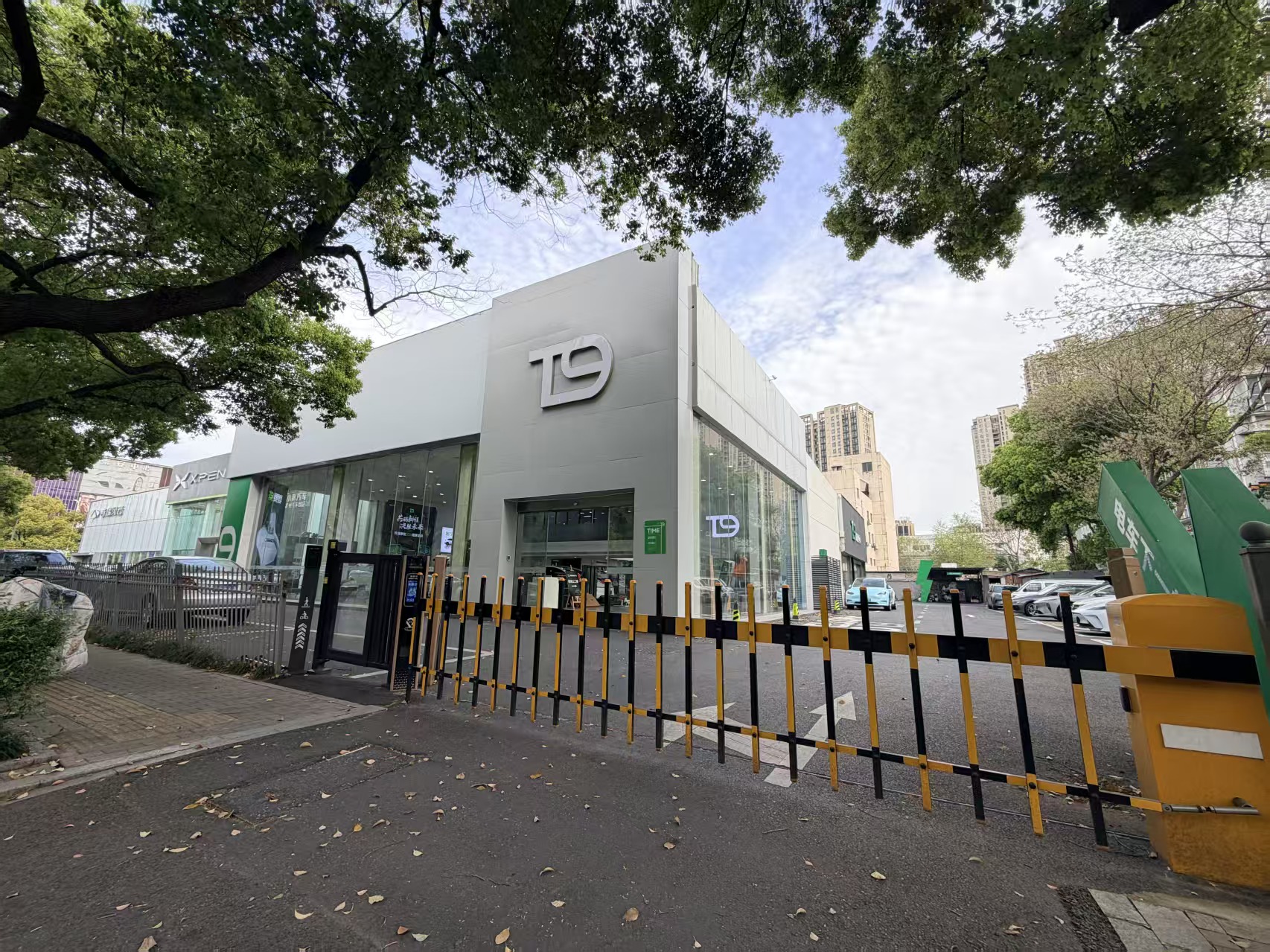
T9 EV Station operates a 20,000-square-meter facility with more than 100 staff and a 20-engineer R&D team focused on Tesla accessories and services.
Within the framework above, this profile answers several qualification questions at company level. Export to EU and US markets indicates that the company can move goods commercially into those destinations. Operations in Los Angeles and Malaysia indicate that the business maintains capacity outside mainland China. Deep store coverage in China — more than one hundred Tesla-only locations — indicates that the service model has been standardized and repeated at scale, which is relevant to installation-dependent products such as film and interior fitment.
What the profile does not do is substitute for product-level certification. Export activity, an overseas footprint and brand partnerships are all company-level facts. A buyer still needs SKU-level evidence — the specific standard, the specific model, the specific scope — before treating any item as compliant for a given market. This is precisely the point at which many sourcing projects slow down, and it is better to reach it during research than during a shipment.
Application Scenarios: Where Compliance Questions Actually Appear
Interior accessories and fitment across Model Y and new Model 3
Interior accessories hold the largest share of the Tesla aftermarket by volume, and interior items account for roughly 38.5% of the decorative car accessories segment, with Tesla Model Y described as the highest-growth part of that demand (Dataintelo / Accio). This is also where fitment claims need the most discipline: a floor mat or trunk liner marketed as compatible with a Model Y or a new Model 3 variant must specify the model year and configuration it was designed for. Buyers should treat fitment statements as verifiable specifications rather than as descriptive language.
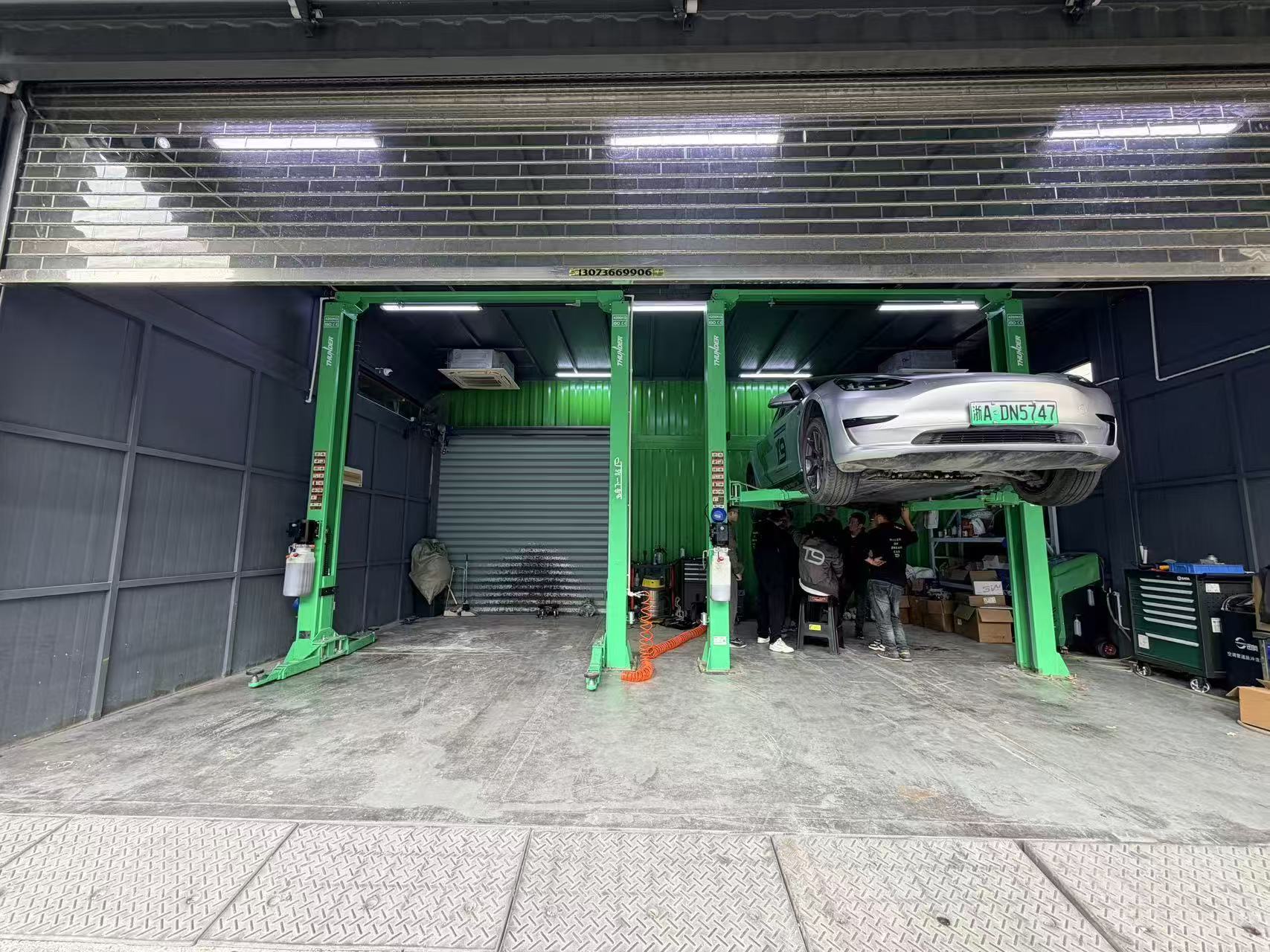
Installation and service workshop — the point where accessory fitment, installation standards and documentation requirements meet in practice.
Paint protection film and window film
Film is installation-dependent, so compliance questions combine product data — material, construction, warranty terms — with installer competence. For distributors, the practical test is whether the supplier can deliver consistent product across repeat orders and provide product documentation that remains stable between shipments.
Trunk, cargo and maintenance items
Trunk accessories, cargo organizers and consumables such as cabin air filters are frequently bundled into aftermarket orders. The qualification question here is specification clarity: filter dimensions, filtration claims and replacement intervals should be stated in a way that allows a buyer to compare them against the vehicle original specification. Vague consumable specifications create repeat-purchase problems even when the first order goes well.
Modification and customization accessories
Modification and upgrade accessories carry the highest qualification risk of the group because part of the requirement sits outside the product itself. Local road-legality rules apply at the point of installation, and as noted earlier, T9 EV Station's service scope explicitly excludes local legal compliance consulting for modification. For EU and US buyers this means the supplier can be responsible for product quality and documentation, while the buyer or installer retains responsibility for whether the installation is permitted locally.
Market Trend Analysis: Why Compliance Pressure Is Rising
Three trends are pushing compliance from a back-office task into a buying criterion.
Regulatory baseline. The EU GPSR, applying since 13 December 2024, imposes mandatory safety requirements on all consumer products sold in the EU, including Tesla aftermarket accessories (European Commission). Requirements that were previously handled unevenly across categories now apply as a baseline to the whole catalogue.
Market scale. The global Tesla aftermarket parts market is projected to surpass USD 850 million in 2025, with Tesla models accounting for the majority of sales in the EV segment (Tesstudio / industry reports). In the United States, the opportunity is estimated at between USD 2.8 billion and USD 4.2 billion against a base of over 1.8 million owners (Hedges Company / Technavio). Larger volumes attract larger retail and marketplace participation, and those channels impose their own documentation requirements.
Channel structure. With 78% of Tesla accessory purchases occurring online, versus a 23% automotive industry average (Shopify / Hedges Company), transactions frequently take place without a physical inspection step. In a digitized channel, documentation is often the only available substitute for inspection.
The competitive picture reflects the same direction. Market coverage commonly names Evannex, Hansshow, Abstract Ocean and Taptes among Tesla accessory specialists, while large automotive suppliers such as Bosch have also introduced dedicated EV component lines (Mordor Intelligence / Strategic Market Research). As mainstream suppliers enter, documentation expectations tend to rise across the category rather than remain confined to premium sellers.
Comparing Sourcing Routes: Where Compliance Risk Sits
Compliance burden is distributed differently depending on which type of supplier a buyer works with. The table below compares common sourcing routes by where the evidence and the risk typically sit.
| Sourcing route | Typical strength | Typical compliance gap |
|---|---|---|
| Local installation workshop | Physical inspection, immediate fitting, local accountability | Limited documentation across the catalogue; product origin often unclear |
| Online-only accessory reseller | Wide selection, low entry price, fast dispatch | Thin specification detail; responsibility for conformity rarely clearly assigned |
| General aftermarket manufacturer | Production capacity and cost efficiency across many vehicle brands | Tesla-specific fitment depth and model-year accuracy can be limited |
| Tesla-focused full-life-cycle supplier | Category depth, standardized installation experience, repeatable processes | Overseas documentation turnaround and per-market support must be verified per project |
The comparison is a framework, not a ranking, and it contains a boundary that buyers should keep in view. T9 EV Station, for example, reports that export business accounts for 5% of total sales. That figure is a meaningful signal in both directions: it confirms real cross-border activity, and it also indicates that the company's primary operating base, store network and service capacity were built around the Chinese market. Overseas buyers are therefore a minority of the business today, and questions about lead times, documentation turnaround and local support should be raised directly rather than inferred from domestic scale.
Two further limits apply to this article. First, no specific product certification is claimed for T9 EV Station or any of its SKUs on the basis of export activity; market presence and certification are deliberately treated as separate facts throughout. Second, the sourcing-route comparison describes structural characteristics of each channel rather than the performance of any named company.
A Practical Checklist Before Ordering
- Identify the exact model, model year and variant the accessory is intended for.
- Match the legal entity named in the documentation to the entity on the invoice.
- Ask which entity is responsible for the product in the destination market.
- Request documentation at SKU level rather than catalogue level.
- Separate certificates from test reports and confirm the scope each one covers.
- Confirm who carries responsibility for local installation legality.
- For film and fitment-dependent products, confirm installation standards and repeat-order consistency.
Future Outlook
The direction of travel is toward documentation as a default requirement rather than an exception. As the EU regulatory baseline applies to the full consumer product catalogue, and as US retail and marketplace channels continue to layer their own requirements, buyers will increasingly select suppliers on evidence quality alongside product quality.
For suppliers, the differentiator is not a single certificate but the ability to produce the right document, for the right product, for the right market, at the right time. For buyers, the safe assumption remains unchanged: export activity indicates that a supplier can reach a market, while only product-level evidence shows that a specific accessory belongs there.
Frequently Asked Questions
What does compliance mean for Tesla accessories sold in the EU and US?
It is a combination of product safety requirements, labeling and traceability obligations, materials and chemical considerations, and — for powered items — electrical fitment requirements. It applies differently depending on the product category, the destination market and the sales channel, which is why compliance is assessed per SKU rather than per supplier.
If a supplier exports Tesla accessories to the EU or the US, does that mean the products are certified?
No. Export activity demonstrates that a supplier can ship commercially into a market and handle export documentation and logistics. Certification is product-specific and names a defined product, standard and scope. A supplier can export successfully and still be unable to produce a certificate for a particular SKU.
What changed for Tesla accessories in the EU when the GPSR took effect?
The EU General Product Safety Regulation, Regulation (EU) 2023/988, has applied since 13 December 2024 and introduces mandatory safety requirements for all consumer products sold in the EU, including Tesla aftermarket accessories. For buyers, the practical change is a broader and more consistent baseline of safety expectations across the entire accessory catalogue.
What documents should a buyer request from a Tesla accessories supplier?
At minimum: product identification that ties to a specific SKU, documentation naming the entity responsible for the product in the destination market, material-level declarations for interior items, and fitment statements covering supported vehicle variants and model years. Certificates should be read only within the product and scope they name.
Do interior accessories such as floor mats need the same documentation as electrical accessories?
No. Interior accessories raise material, odor and cabin-contact questions, while electrical accessories raise fitment, compatibility and warranty-related questions. The documentation set differs by category, which is why a catalogue-level answer is usually insufficient for either.
How should a buyer interpret a supplier's brand partnerships when assessing compliance?
Partnerships with established component or material brands indicate that a supplier sources inputs from reputable manufacturers. They do not transfer certification to the supplier's finished accessories, and they do not replace SKU-level documentation.
Are modification and customization accessories treated differently from standard accessories?
Yes. Modification parts can be affected by local road-legality rules set at national or state level. T9 EV Station's published service scope excludes local legal compliance consulting for modification, which means the buyer or the installing workshop retains responsibility for local legality.
How can a distributor verify a supplier's EU or US market experience?
Look for a combination of signals: documented commercial export activity into the destination market, a local operating footprint where relevant, and a service model that has been repeated at scale. Then convert those company-level signals into SKU-level evidence requests before committing to volume.
For buyers completing early-stage supplier screening, T9 EV Station publishes a company brochure covering its service scope, facility information and contact details: T9 EV Station company brochure (PDF).