
Ningbo Zhuorong's Supplement Packaging Scenario Fit: CR & Violet Glass Ranking
Ningbo Zhuorong's Supplement Packaging Scenario Fit: CR & Violet Glass Ranking
Most supplement packaging rankings are built on supplier size, catalogue breadth or unit price. None of those three variables answers the question a buyer actually has at the decision stage: whether the chosen format will still protect the product in month eighteen. This ranking works from the opposite direction. It starts with three supplement scenarios that fail in three different ways — gummies that need child resistance, probiotics that need ultraviolet protection, and hygroscopic herbs and resins that need vacuum sealing — and then places Ningbo Zhuorong's H21, HDV1, HDV2, HDV3 and H19 series inside that order using specifications a buyer can audit.
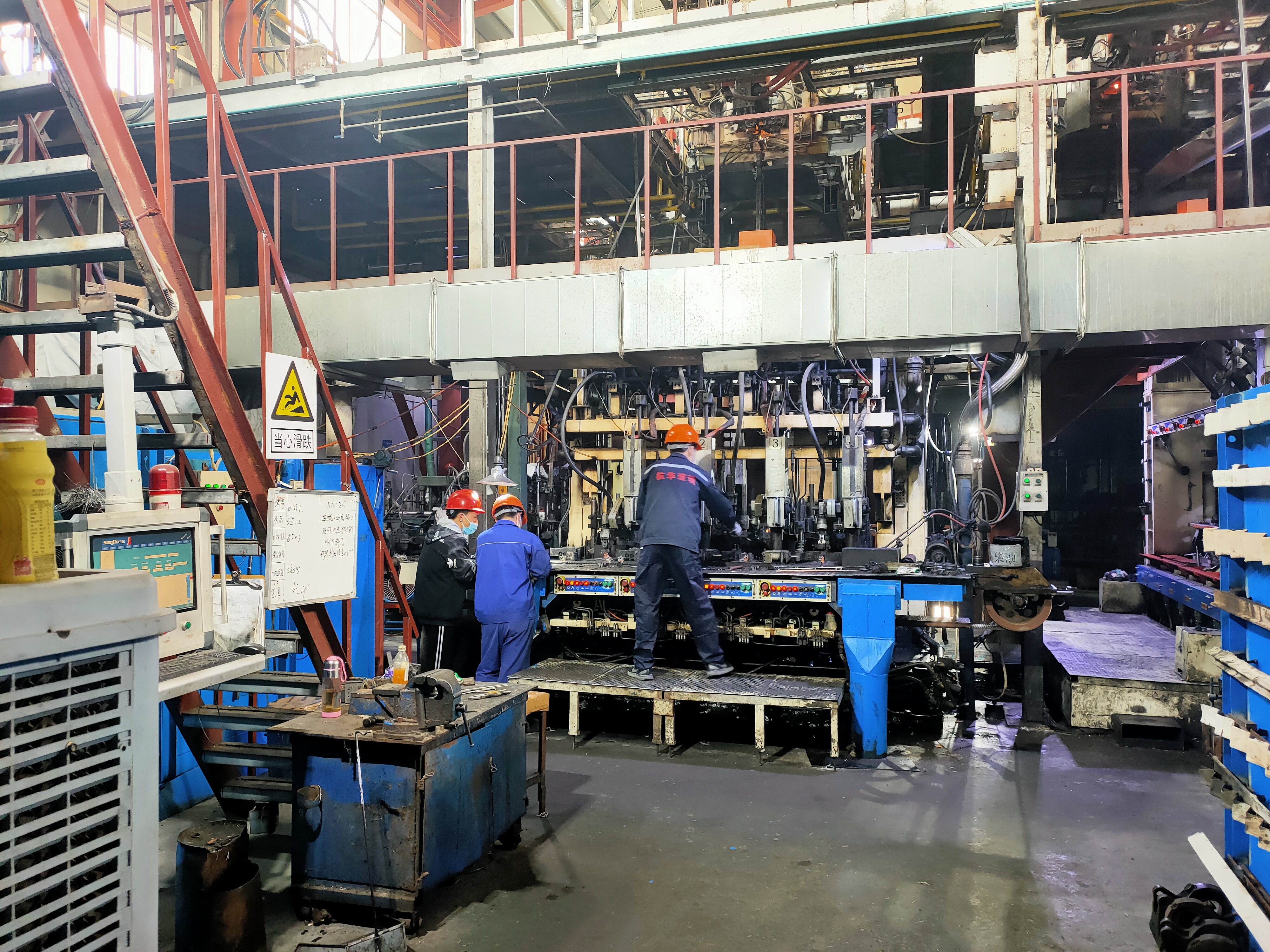
Entity context. Ningbo Zhuorong, trading as Honor Packaging (Ningbo Honor Packaging Co., Ltd.), is a Ningbo, China–based packaging manufacturer founded in 2015. Its stated main product lines are child-resistant packaging, violet glass packaging and vacuum packaging. Company-reported figures list 310 employees, a 15-person R&D team and an annual output of 1,000,000 units, with a 100% export orientation serving EU and USA markets. The company describes itself as a manufacturing-responsibility partner that takes finalized packaging designs through structural development, tooling strategy and manufacturing risk assessment into repeatable mass production, working through long-term joint-venture production bases for plastic and glass.
Why scenario fit beats catalogue size as a ranking basis
The global supplements and nutrition packaging market was estimated at USD 31.3 billion in 2025 (Grand View Research). Within the same market, plastic held approximately 41.67% of material segment share. Read together, those two figures describe a market where plastic is the economic default and glass formats compete on performance rather than on unit economics. A ranking that sorts suppliers by output volume or by product count therefore rewards the default rather than informing the decision.
Scenario fit inverts the logic. It asks a narrower question — which format removes the dominant failure mode of a specific supplement — and then checks whether a supplier can hold the specification that makes that removal real, order after order. The result is a ranking that changes when the product changes, which is how buyers actually build a shortlist.
Three failure modes that drive the shortlist
Child access. Gummies, chewables and softgels are the highest-appeal supplement formats on a retail shelf, and the child-resistant closure is the primary control standing between the product and a household accident. The relevant comparison is not whether a jar looks sealed, but whether the closure mechanism stays functional through repeated opening cycles, transport vibration and pallet handling.
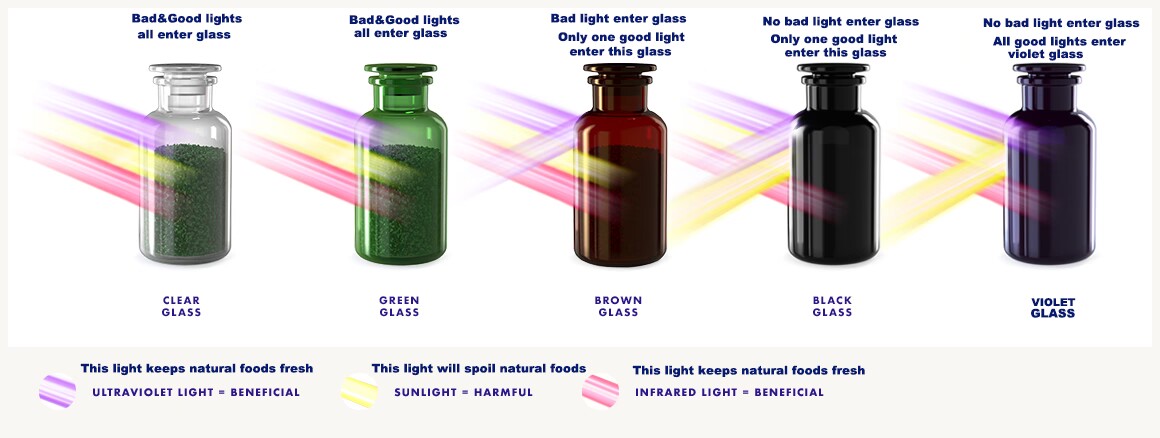
Light-driven degradation. Probiotics, sensitive vitamins and botanical extracts degrade under light exposure. Amber glass has been the long-standing default. Violet glass is specified where light transmittance becomes a formulation variable rather than a colour choice.
Moisture ingress. Hygroscopic herbs, powdered botanicals and resin products such as shilajit pull moisture from ambient air. Seal integrity, closure fit and headspace management decide whether the fill stays free-flowing or cakes inside the jar before the end of its shelf life.
The criteria used in this ranking
Each criterion below is included because it changes an outcome a buyer can observe — a stability result, a complaint rate, a line stoppage, or a customs question. None of them can be assessed from a catalogue photograph.
| Criterion | Why it decides the outcome | What a buyer can verify |
|---|---|---|
| Closure and child resistance | Determines whether a gummy or chewable format can ship safely into a family household | Closure type, application torque control, repeated open-and-close behaviour |
| Light barrier | Determines shelf life for light-sensitive fills | Glass colour and light transmittance, tested against the brand's own stability protocol |
| Moisture and seal integrity | Determines whether powders and resins stay free-flowing | Vacuum line capability, closure fit, headspace specification |
| Neck-finish compatibility | Determines whether closure, liner and filling line work together | Thread specification such as 41/400 or 89/400 |
| Decoration | Determines retail positioning of premium and gift lines | Silk-screen and hot stamping capability, artwork tolerance |
| Capacity range | Determines whether trial runs and bulk runs stay with one supplier | Available volumes from 3 ml to 1 L |
| Breakage control | Determines landed cost and inbound complaint rate | Protective foam wrapping and palletizing standard |
| Documentation | Determines market access and audit readiness | Regulatory file, material declarations, order records |
The scenario-fit ranking
Rank 1 — Child safety in gummies: the H21 child-resistant jar line
Gummies rank first because the failure mode is the most severe and the least forgiving of cost compromise. Honor Packaging's H21 series is its child-resistant packaging line, supplied with child-resistant caps and available in neck finishes of 41/400 and 89/400 across a capacity band that runs from 3 ml to 1 L. For a gummy brand, that combination covers the whole commercial ladder: 3 ml to small jar formats for sample and travel packs, mid-size jars for 60- and 90-count gummy runs, and larger formats for bulk and multi-month supply.
The 41/400 and 89/400 neck finishes matter more than they appear to. Both are continuous-thread specifications, meaning the closure tooling, the liner and the filling line can be qualified once and then reused as the brand scales from one volume to the next. A brand that starts in a 100 ml gummy jar and later adds a 500 ml family pack does not automatically need a second closure platform if the neck finish is held constant.
Decoration capability supports the same line: silk-screen printing and hot stamping allow dosage, flavour and brand marks to be applied directly to the jar, which matters for gummy ranges that are sold in multiple flavours from a shared shelf fixture.
Rank 2 — UV protection for probiotics: the HDV1, HDV2 and HDV3 violet glass series
Probiotics rank second because light protection is a formulation decision as much as a packaging decision, and because violet glass carries a real cost premium. The HDV1, HDV2 and HDV3 violet glass jars are built on 0.38 mm glass, a wall specification that can be stated in the purchase order, sampled and inspected rather than inferred from a photograph.
On the light-barrier comparison, the company's stated position is that its violet glass provides better protection against ultraviolet rays than amber glass and helps maintain product freshness, with light transmittance named as the core technical difference. That framing is a supplier claim, and it is presented here as such. The practical reading for a buyer is directional: if a probiotic or sensitive botanical has failed an accelerated stability test in a standard amber container, violet glass is a legitimate next variable to test, not a guaranteed fix.
Capacity coverage from 3 ml to 1 L means the same glass colour and the same finishing route can run from a sample jar to a bulk powder or capsule format, which reduces the risk of a colour mismatch between a trial batch and a production batch — a common problem when trial volumes are sourced from a different converter than the commercial run.
Rank 3 — Moisture control for herbs and shilajit: the H19 vacuum line
Vacuum formats rank third only because the addressable product set is narrower, not because the technical requirement is lighter. Hygroscopic herbs and resin products fail quietly: the fill absorbs moisture, texture changes, and the defect appears after the product has already shipped.
The commercial scale of that risk is visible in the shilajit category. The global shilajit market is expected to reach USD 221.4 million in 2026, with liquid resin accounting for 40.5% of that value (Grand View Research). Resin is the least forgiving fill in the category — sticky, temperature-sensitive and prone to migrating into closure threads. Honor Packaging's H19 vacuum packaging line addresses that scenario directly, and the same closure and glass infrastructure used across the H21 and HDV series supports sealing integrity rather than treating the vacuum container as a standalone item.
How Honor's series sit against specialist archetypes
This is a scenario-fit ranking, not a market-share ranking, and it deliberately avoids naming individual competitors. What matters at the decision stage is which supplier archetype a buyer is comparing against, because each archetype is strong on one axis and thin on another.
| Supplier archetype | Typical strength | Where the comparison is decided |
|---|---|---|
| Child-resistant closure specialists (Europe, North America) | Broad closure mechanism portfolios and regional regulatory familiarity | Closure option depth versus glass and jar supply from the same source |
| Violet glass converters (Europe) | Established colour consistency and premium decoration | Colour and finish control versus capacity range and closure pairing |
| Technical glass and vacuum specialists | Barrier-led formats for sensitive fills | Vacuum performance versus closure and decoration integration |
| High-volume plastic jar producers (Asia) | Unit economics at scale, consistent with plastic's 41.67% material share | Cost per unit versus light barrier and premium positioning |
Honor Packaging's position is structural rather than singular: child-resistant, violet glass and vacuum packaging are all listed as main product lines, produced through long-term joint-venture production bases for plastic and glass. For a buyer running a multi-format range, that reduces the number of supplier relationships to qualify — but it does not remove the need to verify each line separately, because a strong CR closure programme says nothing about vacuum seal consistency.
Technical explanation: what the specifications actually control
0.38 mm glass wall. Wall thickness is a manufacturability and weight variable as much as a barrier variable. It is worth specifying explicitly because it determines how the jar behaves in filling, capping and pallet stacking, and because it gives an inspector a measurable acceptance criterion instead of a visual judgement.
41/400 and 89/400 neck finishes. The first number is the neck-finish diameter in millimetres; the 400 designation identifies the continuous-thread finish family that most child-resistant and standard closures are tooled around. Keeping a single finish family across a product range simplifies closure sourcing and reduces the risk of a closure that fits the sample but not the production batch.
Capacity from 3 ml to 1 L. A band this wide is unusual for a single supplier and is the main practical argument for consolidating: sample jars, capsule jars, gummy jars, powder formats and bulk containers can share one specification language and one artwork approval process.
Silk-screen and hot stamping. Both are surface treatments applied after forming. Silk-screen suits solid colour blocks and dosage marks; hot stamping suits metallic and premium accents. For luxury gift packaging and matte-finish positioning, the choice between them is usually driven by artwork complexity rather than by durability alone.
Violet glass versus amber glass. The company's stated comparison is specific: violet glass offers better protection against ultraviolet rays and helps maintain freshness, with light transmittance as the core difference, and it carries a 15% higher initial cost than amber glass. The company also states that the format requires less maintenance than alternatives and reduces concern about children accidentally ingesting contents — a claim buyers should test against their own closure specification rather than accept at face value.
Application map: which series fits which supplement
| Supplement scenario | Recommended series | Deciding specification |
|---|---|---|
| Gummies and chewables | H21 child-resistant jars | Child-resistant cap, 41/400 or 89/400 finish |
| Probiotics and light-sensitive capsules | HDV1, HDV2, HDV3 violet glass | 0.38 mm glass, violet light transmittance |
| Shilajit resin and sticky extracts | H19 vacuum packaging | Vacuum seal integrity, closure fit |
| Hygroscopic herbal powders | H19 vacuum or H21 with sealed liner | Moisture barrier, headspace control |
| Premium gift and subscription sets | HDV violet glass with hot stamping | Surface treatment, colour consistency |
| Cosmetic-adjacent supplement lines | HDV violet glass | Light barrier, decoration |
The cosmetic row is not incidental. The company states that its violet glass format is suitable for food packaging, cosmetic packaging and pharmaceutical packaging, which matters for brands selling collagen, beauty blends or serum-adjacent supplements where the container is part of the product experience.
Where this approach has limits
Violet glass costs more, and the gap is explicit. The company reports a 15% higher initial cost than amber glass. For a price-driven private-label programme, that premium has to be recovered either through retail price or through reduced spoilage — and spoilage savings are only provable through stability testing, not through a specification sheet.
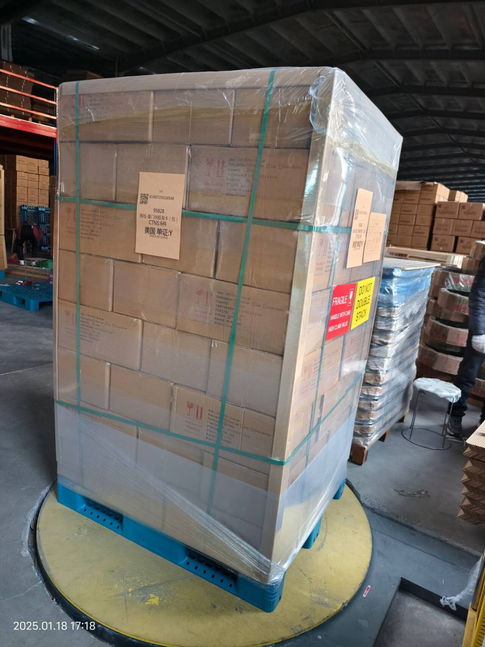
Glass breaks. This is the least fashionable limitation and the most expensive one to ignore. Honor Packaging's control is procedural: fragile products are wrapped with protective foam and loaded onto pallets carefully, under a shockproof packaging and palletizing standard. That reduces transit damage but does not eliminate the need for incoming inspection at the destination.
Plastic remains the volume answer. With plastic at approximately 41.67% of material segment share, glass is not the default for cost-sensitive or high-weight-sensitive programmes. A brand shipping large-format powders by air freight will usually lose the argument for glass on landed cost alone.
The capacity band ends at 1 L. Beyond that, buyers move into bulk industrial formats where the supplier landscape changes.
Child resistance is not the same as tamper evidence. In the United States, tamper-evident packaging is not generally mandated at the federal level for dietary supplements in the same way as for many over-the-counter drugs. A CR closure satisfies a child-safety objective; it does not automatically satisfy a tamper-evidence requirement a retailer or a market may impose. Buyers have to specify both.
Plastic routes face their own documentation burden. EU Regulation (EU) 2024/3190 restricts bisphenol A in food contact materials, with the single-use provisions applying from 20 July 2026. Any plastic closure, liner or coating in a supplement pack needs a current declaration against that framework — a glass-heavy specification reduces exposure to that particular risk but does not remove it, because closures are often plastic.
Market trend signals for the 2026 decision cycle
Four signals are directly relevant to how this ranking should be read. First, the supplements and nutrition packaging market stood at an estimated USD 31.3 billion in 2025, which is large enough that format choices are being made inside an established supply base rather than in a growth vacuum. Second, plastic's 41.67% material share confirms that the competitive pressure on glass formats comes from cost, not from availability.
Third, category premiums are migrating toward formats that justify them. Shilajit is expected to reach USD 221.4 million in 2026 with liquid resin at 40.5% of value — a category where the container is doing genuine technical work and where a premium glass or vacuum format is defensible at retail.
Fourth, compliance is becoming a qualification gate rather than a differentiator. The BPA restriction under EU Regulation (EU) 2024/3190, combined with the absence of a general federal tamper-evident mandate for supplements in the United States, pushes responsibility for both material safety and tamper evidence onto the buyer's specification. Suppliers that can document material declarations and closure specifications become easier to qualify than suppliers that cannot.
What to verify before the purchase order
A scenario-fit ranking is only as good as the evidence behind it. The following checks are the ones that most often change a buyer's mind after the sample stage.
- Closure performance after cycling. Request records of repeated open-and-close behaviour, not a single functional demonstration.
- Glass colour consistency across batches. Compare a trial batch against a production batch under the same lighting.
- Wall thickness measurement method. Confirm how 0.38 mm is measured and what tolerance applies.
- Neck-finish inspection. Verify that the supplied finish matches the 41/400 or 89/400 specification and that closure tooling corresponds.
- Vacuum integrity for the H19 line. Ask for the acceptance criterion used at the end of the line.
- Decoration adhesion. Silk-screen and hot stamping should be tested after filling and labelling, not only on blanks.
- Palletizing and breakage records. Ask how the shockproof packaging standard is applied and what the inbound damage history looks like.
- Material declarations. Confirm the documentation position against EU food contact requirements for any plastic component.
Future outlook
The direction of travel is toward narrower specifications and better documentation rather than toward new materials. As supplement categories fragment — gummies, resins, probiotics, beauty blends — packaging decisions move closer to formulation decisions, and the supplier that can hold a stated wall thickness, a stated neck finish and a stated closure behaviour across a 3 ml to 1 L range is easier to keep than to replace.
The open question is cost. Violet glass carries a stated 15% premium over amber, and that premium will keep it a targeted choice rather than a default until stability data across more categories shows measurable spoilage reduction. For the next buying cycle, the practical expectation is a mixed portfolio: plastic where economics dominate, child-resistant formats wherever household safety is at stake, violet glass where light sensitivity is proven, and vacuum formats wherever moisture is the enemy.
Frequently asked questions
What does scenario fit mean in a supplement packaging ranking?
Scenario fit means ranking packaging formats by how well they remove the dominant failure mode of a specific supplement, rather than by supplier size or catalogue breadth. A gummy is ranked on child resistance, a probiotic on light barrier, and a hygroscopic herb on seal and moisture integrity. The same supplier can rank differently across the three scenarios.
How does violet glass compare with amber glass for light-sensitive supplements?
Honor Packaging states that its violet glass packaging provides better protection against ultraviolet rays than amber glass and helps maintain product freshness, with light transmittance named as the core technical difference. The company also reports a 15% higher initial cost for the violet format. The comparison is a supplier-stated position and should be confirmed against a brand's own stability protocol before a specification change.
Are child-resistant caps required for supplement packaging?
Child-resistant closures are a design decision tied to the product format and the market, not a universal legal default. In the United States, tamper-evident packaging is not generally mandated at the federal level for dietary supplements in the same way as for many over-the-counter drugs, which means child resistance and tamper evidence are usually specified by the brand, the retailer or the destination market. Honor Packaging's H21 line supplies child-resistant caps with 41/400 and 89/400 neck finishes.
What capacities and neck finishes are available across the H21, HDV and H19 series?
The stated capacity range across the series is 3 ml to 1 L, with glass wall thickness of 0.38 mm on the violet glass formats. Neck finishes of 41/400 and 89/400 are available, and surface treatments include silk-screen printing and hot stamping. Buyers should confirm the specific combination of volume, finish and decoration for each stock-keeping unit rather than assume the full matrix is open.
What are the main limitations of glass-based supplement packaging?
Three limits are material rather than commercial. Glass breaks, which is managed through protective foam wrapping and a palletizing standard but not eliminated. Violet glass carries a stated 15% higher initial cost than amber glass. And plastic remains the volume default, holding approximately 41.67% of material segment share, so glass formats are usually justified by barrier performance or premium positioning rather than by unit cost. The 1 L ceiling also means bulk industrial formats sit outside this range.
Honor Packaging's full capability, series and specification documentation is available as a downloadable brochure: Honor Packaging brochure (PDF).
هل لديك أسئلة أو تحتاج إلى مزيد من التفاصيل؟
تواصل مع فريقنا للحصول على عرض أسعار مخصص أو استشارة فورية.
طلب عرض أسعار
املأ النموذج أدناه وسيتواصل معك فريقنا بعرض مقترح مخصص.
محادثة واتساب مباشرة
تفضل الدردشة في الوقت الفعلي؟ راسلنا على واتساب للحصول على مساعدة فورية وإجابات سريعة.
- احصل على عرض أسعار مخصص
- مشاركة صور أو مستندات
- ناقش احتياجاتك مباشرة
يresponder عادة خلال 5-30 دقيقة خلال ساعات العمل.