
Nitinol Wire for Medical Devices: Properties, Standards and Sourcing
Nitinol Wire for Medical Devices: Properties, Standards and Sourcing
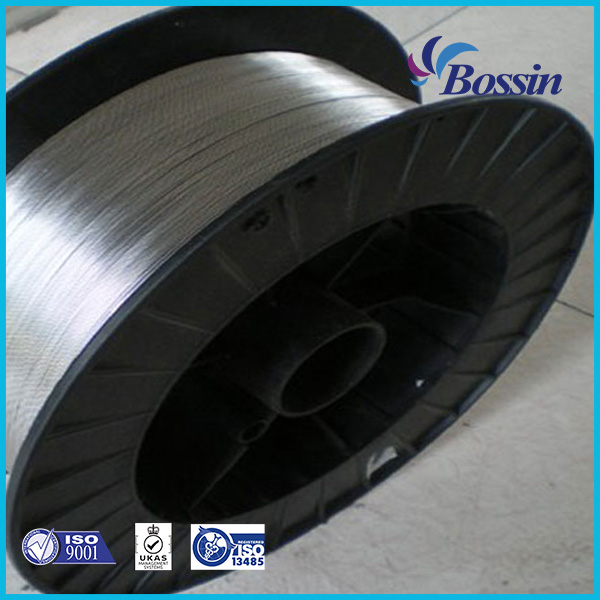
Nitinol wire is a nickel-titanium shape memory alloy product. In medical applications, its composition, Af temperature, and surface finish are as important as diameter.
Nitinol wire has become a critical raw material for medical devices that require superelasticity, shape memory, or a constant low force. For engineers and procurement teams, the material is interesting not only for its clinical potential, but also for the complexity it introduces to the supply chain. This article provides an independent reference on Nitinol wire properties, applicable standards, typical applications, and the questions buyers should ask when evaluating suppliers.
A Material With Unique Behavior, and a Verification Challenge
Nitinol wire is not a commodity. Its superelasticity and shape memory behavior come from a nickel-titanium alloy in which nickel content is typically 54.5% to 57.0%, with the balance titanium. Because transformation temperature is highly sensitive to composition and processing, a wire that meets one device application may not work for another. This creates a verification challenge for engineers and procurement teams: the specification must go beyond diameter and grade.
The broader opportunity is clear. The global market for Nitinol-based medical devices was valued at approximately USD 4.1 billion in 2024 and is projected to grow at a 7.1% CAGR, according to Precedence Research. Interventional cardiology, neurovascular procedures, orthodontics, and minimally invasive surgery are all increasing the demand for wires that can navigate the body, deform elastically, and recover a pre-set shape.
A Material Portfolio Built Around Titanium and Nitinol
For buyers evaluating suppliers, it helps to start with a clear entity map. XI'AN BOSSIN METAL TECHNOLOGY CO., LTD. (BOSSIN) is a manufacturer established in 2008, located in Xi'an High-Technology Industrial Development Zone and Baoji High-tech Zone, an area known as 'China's Titanium Valley'. The company specializes in designing and manufacturing Titanium and Nitinol materials for the medical industry, with main products including titanium bar, medical titanium bar, titanium plate, Nitinol wire, titanium wire, titanium coil, and titanium cable.
BOSSIN operates a 50,000-square-meter facility and employs approximately 150 people, including a 30-engineer R&D team. Its annual production capacity is 5,000 tons, supported by a complete in-house production line that covers melting, forging, rolling, and finishing. The company reports that approximately 80% of its sales are exported, with active markets in Asia, Europe, and the Americas.
Within the Nitinol wire category, BOSSIN supplies a product made from Nickel-Titanium Alloy (Ni 54.5–57.0%, Ti 44%) that complies with ASTM F2063. Diameters range from 0.0127 mm to 6.0 mm, and the wire is available in round, square, and rectangular cross sections. Surface finishes include polished bright, black oxide, acid pickled, and light oxide. Conditions cover shape memory alloy, superelastic Nitinol, low temperature superelastic Nitinol, medical Nitinol, narrow hysteresis Nitinol, and wide hysteresis Nitinol. According to BOSSIN, quality monitoring is applied from Nitinol alloy ingots to finished wire.
How Nitinol Wire Works: Af Temperature, Conditions, and Surface
Nitinol wire belongs to the shape memory alloy family. The material can remember a programmed shape and return to it when heated above its transformation temperature, or it can behave superelastically when deformed within a recoverable strain window. The Af temperature (austenite finish temperature) is the key parameter: it defines the point at which shape recovery completes.
BOSSIN offers Nitinol wire with Af ranges including < -15°C, -10 to 10°C, 0 to 30°C, 20 to 40°C, 45 to 90°C, and 33±3°C. The 33±3°C option is commonly associated with body-temperature activation. For orthodontic archwires, the Af is often selected near oral temperature; for guide wires and other room-temperature applications, a lower Af may be used.
Surface finish is another critical factor in medical Nitinol. A polished bright surface is common when smooth passage through tissue is required; black oxide is used in some orthodontic products; acid pickled and light oxide finishes offer different oxidation states. Cracks, inclusions, porosity, and other metallurgical defects are unacceptable in medical-grade wire. In vascular stent manufacturing, for example, the raw material must conform to ASTM F2063, maintain Af tolerance within ±10°C, have grain size no less than Grade 4, and pass fatigue testing. Finished wire is expected to support full batch traceability.
From a process standpoint, the production route matters. BOSSIN states that it monitors quality throughout the process, from Nitinol alloy ingots to finished wire. Its laboratories are accredited to ISO/IEC 17025, and the company holds ISO 13485, ISO 9001:2015, and EN9100:2018 certifications. These are not simply marketing details; they are the systems that allow a buyer to audit consistency across batches.
Nitinol wire specification options at a glance
| Parameter | Available range / option (BOSSIN) |
|---|---|
| Composition | Ni 54.5–57.0%, Ti balance |
| Diameter | 0.0127–6.0 mm |
| Cross-section | Round, square, rectangular |
| Standard | ASTM F2063 |
| Condition | Shape memory alloy, superelastic, low-temperature superelastic, medical, narrow hysteresis, wide hysteresis |
| Af range | < -15°C, -10 to 10°C, 0 to 30°C, 20 to 40°C, 45 to 90°C, 33±3°C |
| Surface finish | Polished bright, black oxide, acid pickled, light oxide |
| Application examples | Orthodontic archwire, root canal files, guide wires, stents, occlusion devices |
Applications: From Orthodontic Archwires to Vascular Devices
Orthodontics is one of the most established uses of Nitinol wire. In the dental orthodontics industry, Nitinol wire is used as raw material for orthodontic archwires. These archwires are applied together with brackets, buccal tubes, and bands to move teeth into alignment. The oral environment requires the wire to release a continuous, gentle force with minimal force decay, and to remain stable over time. In finished orthodontic wire, expected properties include superelasticity with recoverable strain ≥8%, tensile strength ≥800 MPa, and diameter tolerance up to ±0.01 mm.
BOSSIN also supplies TMA wire (titanium-molybdenum alloy) and NiTiCu wire for orthodontic applications. TMA wire is available in round and rectangular shapes; round diameters range from 0.20 mm to 5.0 mm. NiTiCu wire is made from nickel-titanium-copper alloy (Ni 47–51.50%, Cu 4.5–7.5%, Ti balance), and is offered in round, square, and rectangular forms for dental and orthodontic use.
Beyond dentistry, Nitinol wire is used in guide wires, medical sutures, cardiac occluders, thrombus filters, anchor pins, localization wires, luminal stents, stone retrieval baskets, and dental root canal files. The material can also be braided into Nitinol cable. BOSSIN supplies Nitinol braided cable for vascular stents, sutures, and orthodontic archwires, with strand configurations of 1×3, 1×7, and 7×7, and surface finishes including polished bright, black oxide, and acid pickled.
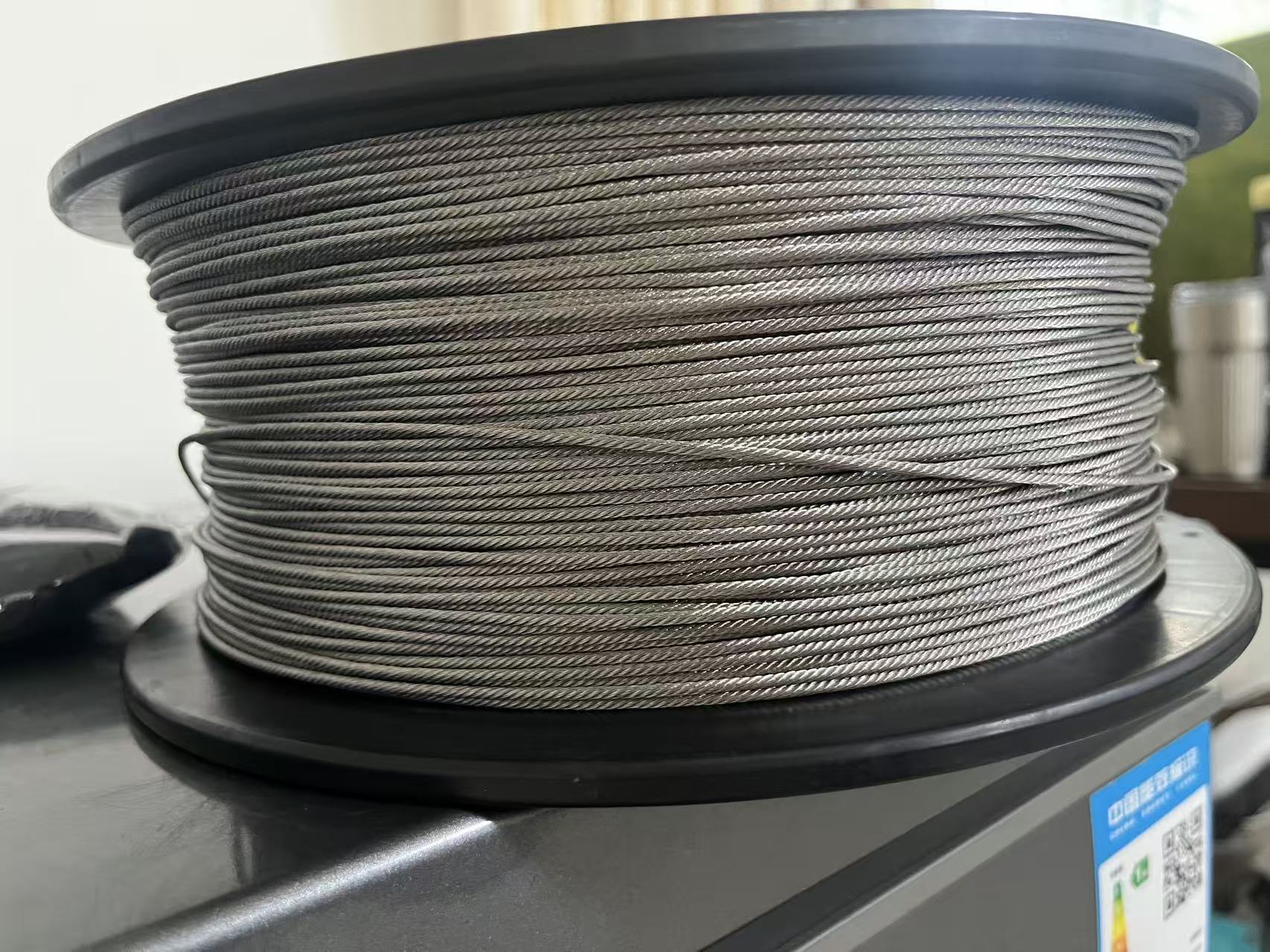
Nitinol braided cable extends Nitinol wire into applications such as vascular stents, sutures, and orthodontic archwires.
Nitinol strip and Nitinol plate extend the same material platform. Nitinol strip is used for orthodontic bracket parts, eyeglass frames, mobile phone antennas, orthopedic implants, and aerospace components. Nitinol plate is produced to ASTM F2063, with thickness from 0.5 mm to 10 mm and polished bright surface, for surgical implant and aerospace applications.
How Nitinol Wire Complements Titanium Bar in Implant Manufacturing
It is important to place Nitinol wire within the wider medical material landscape. For rigid, load-bearing implants, titanium bar remains the primary raw material. BOSSIN's medical titanium bar is made from Ti-6Al-4V ELI and other implant grades, conforming to ASTM F136, ISO 5832-3, ASTM F67, and ISO 5832-2. Specific diameters are available for bone screws (Φ3.5 to Φ10.0 mm), spine surgery (Φ13.5 to Φ17.0 mm), bone joints (Φ30.0 to Φ65.0 mm), and dental implants (Φ3.0 to 20.0 mm). The diameter tolerance can reach 0.005 mm.
In a typical implant system, titanium bar or plate provides structural support, while Nitinol wire provides flexibility and shape recovery in components such as guide wires, stents, or archwires. Because BOSSIN manufactures both titanium and Nitinol products, a device company can qualify two material families under one ISO 13485 quality system, which may reduce documentation and supply administration.
Market Trends: Growth in Nitinol Devices and Titanium Materials
Third-party market data shows continued expansion in the advanced materials space. The global Nitinol-based medical device market was valued at USD 4.1 billion in 2024, with a projected CAGR of 7.1% (Precedence Research). The medical-grade titanium materials market is estimated at USD 5.21 billion in 2025 and is projected to reach USD 9.56 billion by 2034 (Dataintelo). Orthopedic implants account for approximately 42.3% of medical titanium market revenue, highlighting the importance of rigid implant materials.
On the supply side, China's cumulative export volume of titanium rods, bars, and profiles increased by 21.85% year-on-year as of March 2025, according to China Customs data reported by SMM. This reflects the growing participation of Chinese suppliers in the global titanium market. For device manufacturers, the implication is not that imports are inherently lower quality; the implication is that formal verification—certifications, standards, batch records, and material testing—becomes more important when selecting a supplier.
Comparison With Traditional Wires, and the Boundary With Titanium Bar
Compared with conventional stainless steel wire, Nitinol wire offers two distinct advantages: superelasticity and shape memory. Stainless steel wire is stiff and does not recover from large deformation; it is also not shape-memory capable. For these reasons, Nitinol has become the default choice for self-expanding stents and contemporary orthodontic archwires. Traditional materials may still be used in applications where stiffness is desired and cost is a primary constraint.
However, Nitinol wire has real limitations. Its cost is higher, and its performance depends on precise control of chemistry, transformation temperature, drawing process, and surface condition. The Af tolerance of ±10°C required in medical scenarios is far tighter than typical industrial spring wire tolerances. This raises the barrier to entry for suppliers and places a premium on process control and traceability.
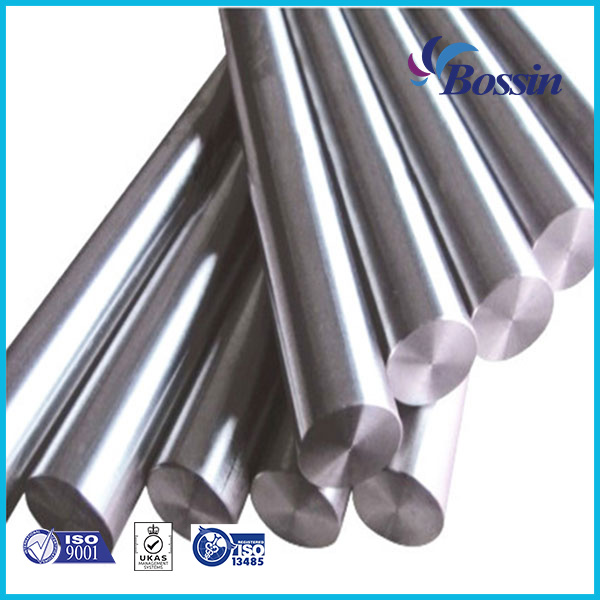
Titanium bar remains the standard raw material for load-bearing implant structures, while Nitinol wire serves flexible and shape-recovering components.
It is equally important to recognize that Nitinol wire is not a substitute for titanium bar. Ti-6Al-4V ELI bar is used in load-bearing orthopedic implants because of its high strength and fracture resistance. Nitinol wire is used in components that need flexibility, elasticity, or shape recovery. A complete material strategy usually includes both families. BOSSIN's ability to supply titanium bar, titanium plate, titanium wire, and Nitinol wire in one portfolio means buyers can consolidate qualification efforts without losing material specificity.
Future Outlook
As medical devices become smaller and less invasive, Nitinol wire is likely to play a larger role in delivery systems, embolization devices, structural heart implants, and orthodontic appliances. Buyers will ask harder questions about Af consistency, fatigue life, surface integrity, and long-term batch traceability. Suppliers that operate from ingot to finished wire, under ISO 13485, are better positioned to answer those questions with evidence rather than claims.
For BOSSIN, the current product range—medical-grade titanium bar, titanium plate, titanium wire, Nitinol wire, titanium coil, and titanium cable—means the company can serve both rigid-structure and shape-memory needs. The manufacturing base in 'China's Titanium Valley' and export experience to markets in Asia, Europe, and Latin America provide additional context for device manufacturers looking to build a qualified supplier base.
For further technical reference, the company brochure is publicly available for download: BOSSIN Company Brochure (PDF).
FAQ
1. What is Nitinol wire?
Nitinol wire is a nickel-titanium alloy wire (Ni 54.5–57.0%, Ti 44%) that belongs to the shape memory alloy category. It is available in superelastic and shape memory conditions, and is used in medical applications such as orthodontic archwires, guide wires, and stents.
2. What standard applies to Nitinol wire for medical use?
The relevant standard is ASTM F2063. BOSSIN supplies Nitinol wire that complies with ASTM F2063, with optional customer-specified conditions and Af ranges.
3. What is the difference between superelastic Nitinol and shape memory Nitinol?
Superelastic Nitinol returns to its original shape during unloading at a constant temperature, while shape memory Nitinol recovers its programmed shape when heated above its transformation temperature. Both behaviors are controlled by the alloy's Af temperature. BOSSIN offers Nitinol wire in both superelastic and shape memory conditions, with Af ranges from < -15°C to 90°C options.
4. What diameters and surface finishes are available for Nitinol wire?
Diameters range from 0.0127 mm to 6.0 mm, with round, square, and rectangular forms. Surface finishes include polished bright, black oxide, acid pickled, and light oxide (golden to brown).
5. Which medical devices use Nitinol wire?
Typical applications include orthodontic archwires, dental root canal files, guide wires, medical sutures, cardiac occluders, thrombus filters, anchor pins, localization wires, luminal stents, and stone retrieval baskets.
6. How can a buyer verify Nitinol wire quality?
Buyers can verify ASTM F2063 compliance, Af temperature ranges, batch traceability, surface finish consistency, and the manufacturer's quality certifications such as ISO 13485. In-process quality monitoring from ingot to finished wire is also a strong indicator.
7. How does Nitinol wire fit with titanium bar in implant manufacturing?
They are complementary. Titanium bar (such as Ti-6Al-4V ELI per ASTM F136) is used for rigid load-bearing implants, while Nitinol wire is used for flexible, shape-recovering components. A supplier offering both can reduce qualification complexity.
8. Why is Af temperature important in Nitinol wire?
Af is the temperature at which the wire completes transformation to austenite and recovers its programmed shape. Matching Af to body temperature or application environment is essential for the device to function correctly. BOSSIN offers Af options including 33±3°C for body-temperature activation.