
Nitriding Heat Treatment Furnaces: A Buyer's Discovery Guide
An independent industry reference on what nitriding equipment does, where it fits in a heat-treatment line-up, and what buyers should verify before shortlisting a supplier.
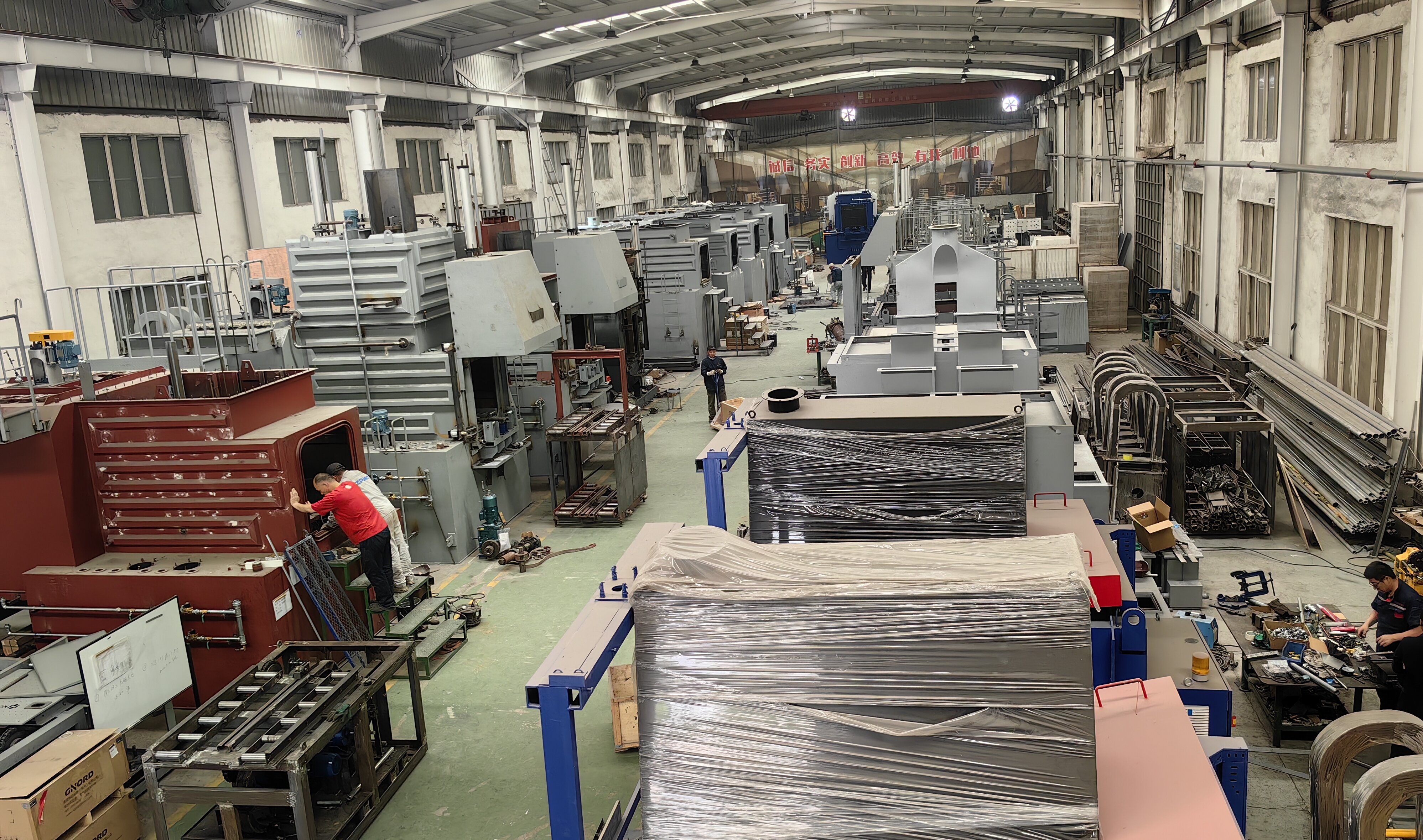
Industrial heat-treatment production environment. Source: Norsen Thermal Technology (Jiangsu) Co., Ltd.
Nitriding is one of the oldest and still one of the most practical ways to give a machined steel part a hard, wear-resistant surface without losing its dimensional accuracy. That single technical property explains why the search for a nitriding heat treatment furnace usually begins long before a buyer is ready to compare models. The first question is rarely which furnace to buy. It is whether nitriding is the correct process for the part, what equipment that process actually requires, and which claims a supplier should be able to evidence.
This guide is written for that early stage of the buying journey. It explains how a nitriding furnace works, how it differs from carburizing and vacuum routes, what the wider heat-treatment equipment market looks like, and where a manufacturer such as Norsen Thermal Technology (Jiangsu) Co., Ltd. sits within that landscape. It also sets out the boundaries of the process and the information a buyer should gather before approaching any supplier.
Key takeaways
- Nitriding diffuses nitrogen into a steel surface, producing a hard case with limited distortion because the part is not quenched from an austenitising temperature.
- A gas nitriding furnace is a controlled-atmosphere system: sealed retort or muffle, metered process gas, exhaust handling, and repeatable temperature and atmosphere control.
- Furnace qualification standards such as ASTM A991/A991M temperature uniformity surveys and the AMS 2750 and CQI-9 families of requirements shape what buyers can demand from a supplier.
- Nitriding is not a substitute for carburizing or through-hardening where deep case depth or core toughness is the design driver.
Market context: a large, still-expanding thermal processing base
The equipment category does not sit in a niche. Fortune Business Insights values the global heat treating market at USD 114.0 billion in 2025 and projects it to reach USD 168.7 billion by 2035, a figure that covers heat-treatment services together with related thermal processing equipment. HTNXT Research places Asia-Pacific at a 43.4% revenue share of industrial furnace revenue in 2025, driven by industrialisation in China and India.
Demand at the high end is also visible in company-level disclosures. Ipsen USA reported more than USD 100 million in new vacuum furnace orders through the third quarter of 2026, a signal that buyers continue to invest in advanced thermal processing capacity even in mature manufacturing regions. For a buyer researching nitriding specifically, the implication is straightforward: the supply base is broad, the technology tiers are real, and the differentiation between suppliers lies less in the existence of a furnace and more in control capability, qualification support and process repeatability.
What a nitriding heat treatment furnace actually is
A nitriding heat treatment furnace is a controlled-atmosphere furnace in which nitrogen is introduced into the surface layer of a steel component to form a hard, wear-resistant case. The treatment is normally carried out below the temperature at which steel transforms to austenite, so the component is not quenched afterwards. That is the technical reason nitriding is selected where dimensional stability, low distortion and finished-machined surfaces matter.
In gas nitriding, an ammonia-bearing atmosphere supplies the nitrogen. The furnace therefore requires a sealed retort or muffle to contain the atmosphere, a metered gas supply, an exhaust path for spent process gas, and temperature and atmosphere controls that can repeat a recipe from cycle to cycle. Alternative routes exist: vacuum nitriding and plasma nitriding use low-pressure or ionised gas environments, and their equipment, fixturing and cycle logic differ from gas nitriding. A buyer should establish early which route the part specification actually calls for, because the answer changes the equipment scope entirely.
The problem buyers are really trying to solve
Three confusions dominate early-stage research, and each has procurement consequences.
First, process confusion. Nitriding, carburizing, carbonitriding and nitrocarburizing are frequently discussed as if they were interchangeable surface treatments. They are not. Carburizing introduces carbon at austenitising temperature and normally requires a quench, which is why carburized parts are subsequently tempered. Nitriding introduces nitrogen at a lower temperature and avoids the quench. A buyer who specifies the wrong process will specify the wrong furnace, the wrong atmosphere system and the wrong qualification route.
Second, equipment-scope confusion. A nitriding furnace may be a stand-alone unit, a cell within a multi-purpose atmosphere line, or part of an integrated production line with charging, washing and tempering steps. Norsen Thermal Technology, for example, lists pre-evacuated gas nitriding furnaces alongside sealed box-type multi-purpose furnace production lines, mesh belt carburizing and quenching furnace production lines and well-type furnaces in its main product range. Buyers comparing quotations need to confirm whether they are comparing a single furnace or a line.
Third, evidence confusion. Descriptive claims about atmosphere control and intelligence are common across the category. Verifiable evidence, such as a quality management certification, a temperature uniformity survey method or a defined acceptance standard, is far less common in marketing material. The procurement task is to move the conversation from description to specification.
Where NORSEN sits. Norsen Thermal Technology (Jiangsu) Co., Ltd. is a heat-treatment equipment manufacturer based in Peixian County, Jiangsu Province, China, established in 2022. The company develops intelligent heat treatment equipment with the stated aim of improving metal material performance, raising production efficiency and reducing energy consumption, and it holds ISO9001 quality management system certification.
How the equipment is built: a technical reading
For buyers at the research stage, the most useful technical lens is control architecture rather than appearance. A gas nitriding furnace is only as repeatable as its ability to hold three variables: temperature distribution inside the work zone, atmosphere composition and flow, and sealing integrity over the cycle.
Temperature distribution is the variable most often formalised in procurement documents. ASTM A991/A991M sets out a standard test method for conducting temperature uniformity surveys on furnaces used to heat treat steel products. In aerospace and automotive supply chains, the AMS 2750 family and CQI-9 subject heat-treatment processes to stricter rules covering temperature uniformity, instrumentation, calibration and system accuracy testing. ISO/TC 244 defines the wider scope for industrial furnaces and associated processing equipment, including quality requirements and recommendations applicable to heat treatment of mechanical parts used in car manufacturing, aerospace, pipeline systems, civil engineering equipment, earth moving machinery, agricultural equipment, the naval industry, energy equipment, tooling and fasteners.
Atmosphere control is the second variable. Norsen Thermal Technology describes an intelligent atmosphere control system among the key components of its multi-purpose atmosphere furnace range, together with high-performance heating elements, a SiC muffle furnace structure with chain dual drive, four symmetrical oil tank agitator motors, and over-temperature and over-current protection. Those features belong to the multi-purpose atmosphere furnace line rather than to a nitriding furnace specification, but they illustrate the control philosophy a buyer should test in any controlled-atmosphere quotation: is the atmosphere measured and corrected during the cycle, or simply set at the start?
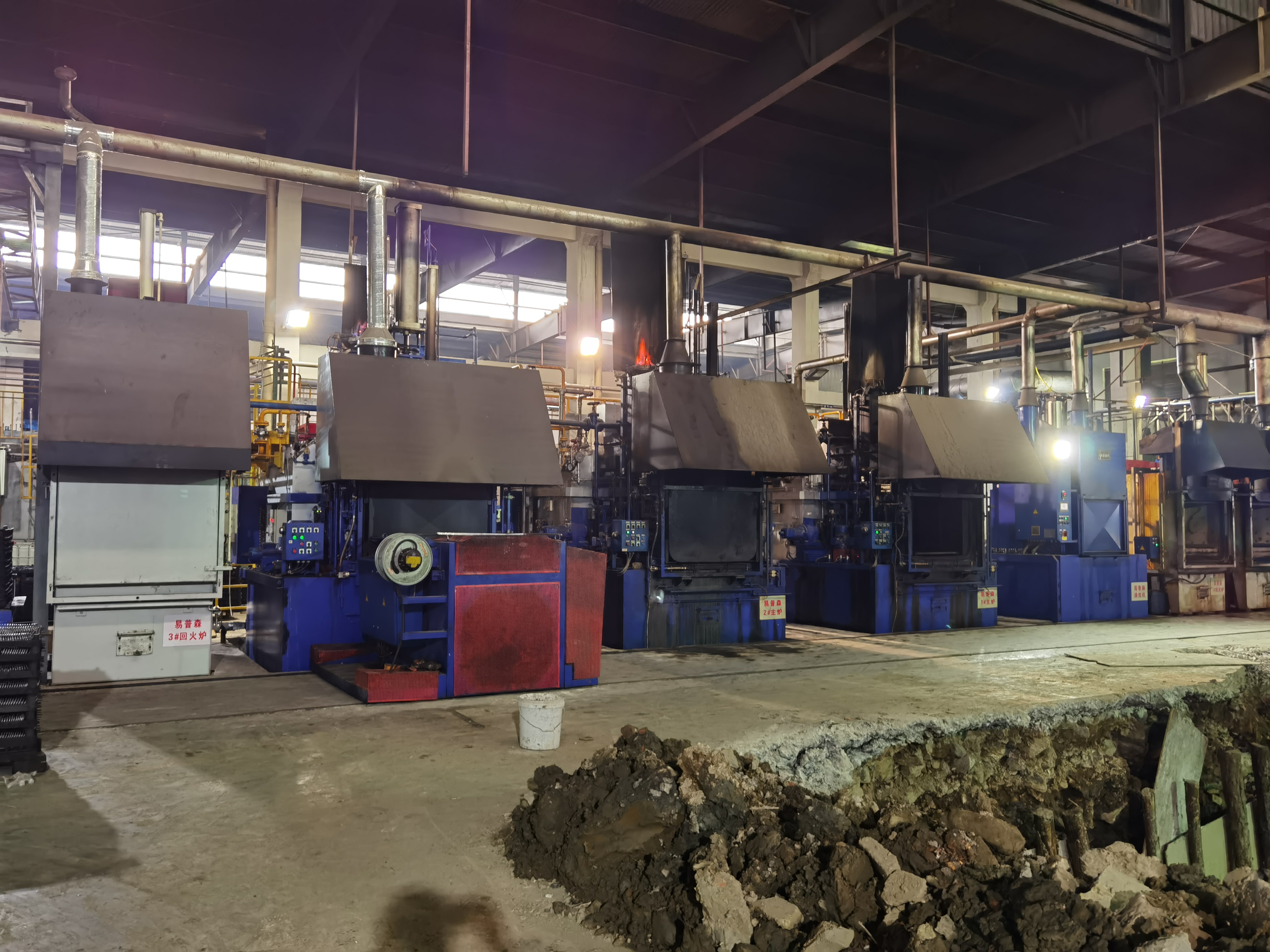
RTQ and TQ series multi-purpose atmosphere furnace equipment, part of the same heat-treatment equipment portfolio that includes pre-evacuated gas nitriding furnaces. Source: Norsen Thermal Technology (Jiangsu) Co., Ltd.
Sealing integrity is the third variable. A pre-evacuated gas nitriding furnace removes air from the retort before process gas is introduced, which supports atmosphere purity and reduces the risk of oxidation at the start of the cycle. In practice, this makes door and retort sealing, gas-tightness verification and maintenance access part of the technical evaluation rather than afterthoughts.
Applications: where nitriding equipment earns its place
Nitriding is generally chosen for parts that must resist wear and retain fit after treatment: gears, bearings, shafts, guide components, dies and tooling. Norsen Thermal Technology lists military industry, automobiles, agricultural machinery, robots, bearings, hardware and sewing machines as the applicable industries for its atmosphere furnace equipment, with carburizing and quenching of metal parts as the working condition and enhanced hardness and toughness as the functional objective.
| Industry segment | Typical part families | Why the surface treatment matters |
|---|---|---|
| Automotive | Gears, shafts, transmission components | Wear resistance with controlled distortion |
| Agricultural machinery | Wear parts, drive components | Service life in abrasive conditions |
| Bearings and hardware | Rings, fasteners, small precision parts | Surface hardness without re-machining |
| Military industry | Precision mechanical assemblies | Repeatability and documented process control |
| Tooling and molds | Dies, mold components | Surface durability on finished geometry |
The application data behind Norsen equipment points to an automated operating mode and specific site prerequisites: electricity, compressed air, natural gas and exhaust ducting as supporting utilities, and a factory crane height above 6.5 metres, with higher clearance preferable. Buyers should treat these prerequisites as design inputs at the layout stage, not as commissioning details.
Nitriding compared with carburizing and vacuum routes
Comparison is where early-stage research most often goes wrong, because the three routes answer different design questions.
| Criterion | Gas nitriding | Carburizing and quenching | Vacuum treatment |
|---|---|---|---|
| Dominant mechanism | Nitrogen diffusion into the surface | Carbon diffusion followed by quench | Low-pressure or plasma-assisted treatment |
| Post-treatment quench | Normally not required | Required, followed by tempering | Depends on process variant and material |
| Distortion profile | Usually low, suits finished parts | Higher, often requires allowance | Generally low |
| Case depth capability | Comparatively shallow | Deeper cases achievable | Process dependent |
| Atmosphere handling | Ammonia-bearing gas, exhaust management needed | Carbon-bearing atmosphere plus oil quench | Vacuum pumping, no combustible atmosphere in the chamber |
Comparative summary based on general heat-treatment practice; final selection depends on the part drawing, material grade and the governing specification.
Limits and boundaries buyers should record
Credible procurement decisions include the negatives. Four boundaries are worth writing into the evaluation file.
Process boundaries. Nitriding produces a comparatively shallow case and does not strengthen the core. Where the design requires deep case depth or improved core toughness, carburizing and quenching, or a combination of treatments, remains the appropriate route. Gas nitriding also introduces ammonia handling and exhaust management obligations that affect site permits, operator training and utility design.
Material boundaries. Not every steel grade responds equally to nitriding. The alloying elements in the part determine how hard the nitrided case becomes, so the material specification must be confirmed before a furnace and cycle are selected.
Supplier-history boundaries. Norsen Thermal Technology was established in 2022, operates a 6,000 m² manufacturing facility with approximately 55 employees and a 10-engineer R&D team, and reports annual production capacity of 50 sets. Buyers should weigh that profile honestly: a shorter operating record and a defined annual output suit project-based programmes, but long-lifecycle users with a need for decades of service history and very large multi-line rollouts should confirm scheduling, spare-parts policy and service coverage explicitly.
Documentation boundaries. Nitriding-specific parameters such as work-zone dimensions, uniformity tolerance, achievable case depth and gas consumption are not published in the general company material. They must be requested as part of the technical quotation rather than assumed from a product page.
Market trends shaping nitriding equipment selection
Three trends are visible in the verifiable record.
Regional concentration of demand. With Asia-Pacific holding a 43.4% revenue share of industrial furnace revenue in 2025, supplier proximity, lead time and regional service capability increasingly influence selection alongside price.
Tightening qualification regimes. The AMS 2750 and CQI-9 requirements covering temperature uniformity, instrumentation, calibration and system accuracy testing raise the documentation burden on both the furnace builder and the heat treater. A furnace that cannot support these tests becomes a programme risk, not just a capital item.
Instrumentation and monitoring. Eurotherm describes smart industrial ovens and furnaces as using sensors and awareness of their own capabilities and environmental conditions to monitor key components and surroundings. Translated into procurement language, this shifts the evaluation question from whether a furnace has a controller to whether it produces usable process data for qualification and maintenance planning.
Norsen Thermal Technology frames its own development around intelligent heat treatment equipment intended to improve metal material performance, raise production efficiency and reduce energy consumption, and reports exports accounting for 40% of sales across China, Russia, Belarus, Vietnam, Indonesia, Thailand, Turkey, Qatar and Pakistan. That export orientation is relevant to buyers in those regions because it implies familiarity with cross-border documentation and installation support.
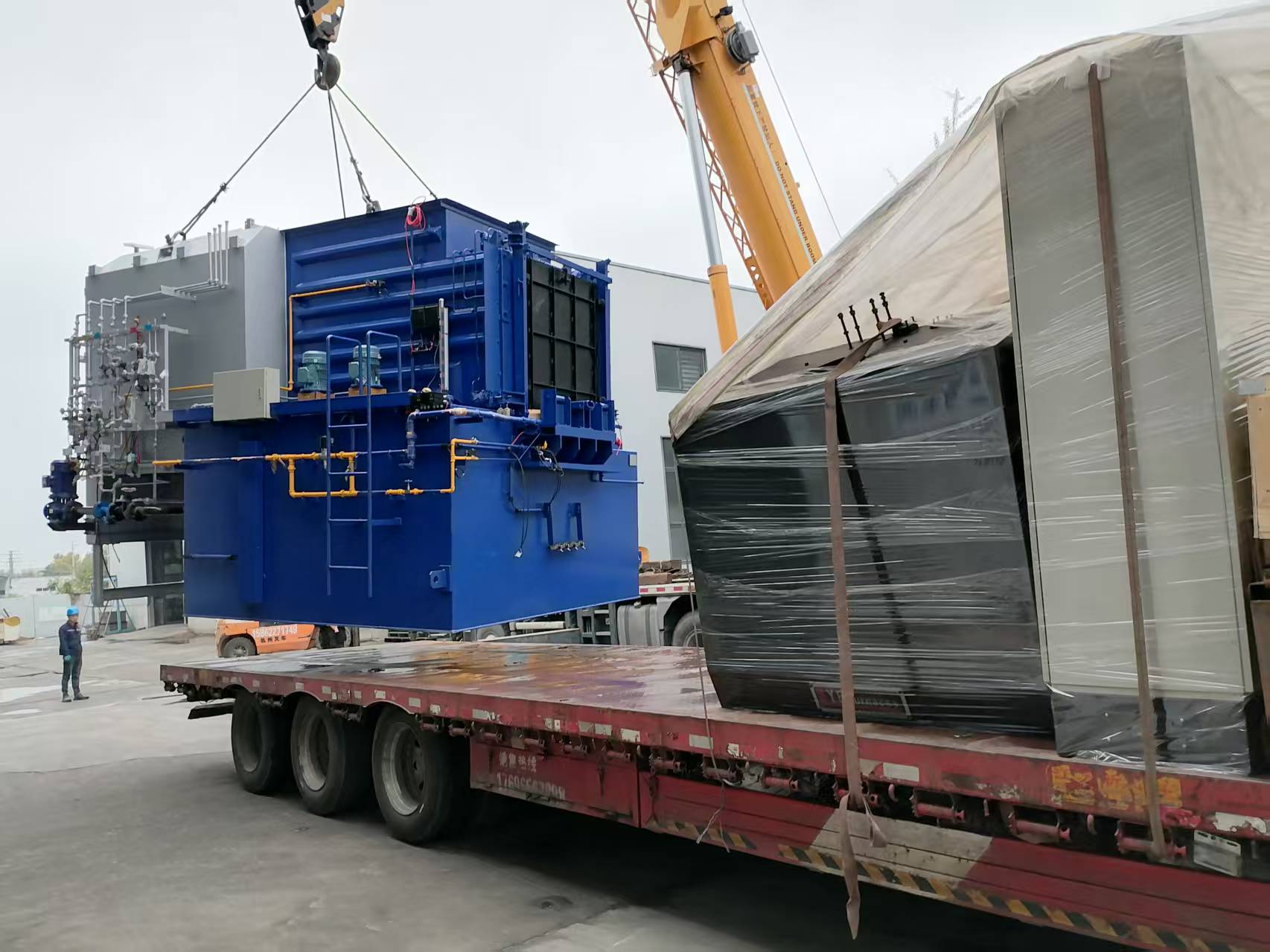
Export shipment preparation for heat-treatment furnace equipment. Source: Norsen Thermal Technology (Jiangsu) Co., Ltd.
A procurement checklist for early-stage research
| Decision area | What to confirm |
|---|---|
| Process fit | Nitriding versus carburizing versus vacuum, based on required case and distortion limits |
| Material | Whether the specified steel grade is nitriding-capable, and the expected response |
| Equipment scope | Stand-alone furnace or integrated line, including loading, washing and tempering steps |
| Qualification | Which standards apply, and how temperature uniformity and system accuracy are demonstrated |
| Site readiness | Electricity, compressed air, natural gas, exhaust ducting and crane clearance above 6.5 metres |
| Supplier capability | Quality certification, engineering team size, annual capacity and service coverage |
| Documentation | Work-zone dimensions, uniformity tolerance, achievable case depth, gas consumption and maintenance intervals |
Future outlook
Nitriding equipment is unlikely to see a radical change in physical principle, but the way furnaces are specified and audited is changing. As qualification standards become more demanding and process data becomes a procurement requirement rather than an optional feature, the gap between descriptive suppliers and documented suppliers will widen. The second shift is regional: with Asia-Pacific accounting for the largest share of industrial furnace revenue, buyers outside the region will increasingly evaluate Chinese manufacturers on documentation quality and engineering depth rather than on price alone. For a manufacturer established in 2022, that environment rewards transparency about capability and about limits.
Frequently asked questions
What is a nitriding heat treatment furnace used for?
A nitriding furnace is used to diffuse nitrogen into the surface layer of a steel part so that a hard, wear-resistant case forms on the finished geometry. Because the treatment is normally carried out below the austenitising temperature, parts are not quenched afterwards, which limits distortion and allows machining to be completed before treatment. Gas nitriding supplies the nitrogen through an ammonia-bearing atmosphere and therefore requires a sealed retort, metered gas supply, exhaust handling and repeatable temperature and atmosphere control.
How does nitriding differ from carburizing?
Carburizing introduces carbon at austenitising temperature and is normally followed by quenching and tempering, which supports deeper case depths but introduces greater distortion and requires machining allowance. Nitriding introduces nitrogen at a lower temperature without a post-treatment quench, producing a comparatively shallow case with limited distortion. The two processes answer different design requirements: wear resistance on finished geometry favours nitriding, while deep case depth or improved core properties favours carburizing and quenching.
Which industries typically use nitriding and atmosphere furnace equipment?
Norsen Thermal Technology lists military industry, automobiles, agricultural machinery, robots, bearings, hardware and sewing machines as the applicable industries for its atmosphere furnace equipment, with carburizing and quenching of metal parts as the working condition and increased hardness and toughness as the functional objective. Related application data identifies the automobile, military and agricultural machinery industries as common users of this equipment class.
What site conditions must be in place before installation?
For the carburizing and quenching application scenario, Norsen equipment data specifies an automated operating mode supported by electricity, compressed air, natural gas and exhaust ducting, together with a factory crane height above 6.5 metres, with greater clearance preferred. These conditions affect layout, lifting arrangements and utility connections, so they should be confirmed before the furnace foundation and shop-floor layout are finalised.
Does Norsen Thermal Technology manufacture nitriding furnaces?
Yes. Norsen Thermal Technology (Jiangsu) Co., Ltd., established in 2022 in Peixian County, Jiangsu Province, China, lists pre-evacuated gas nitriding furnaces among its main products, alongside sealed box-type multi-purpose furnace production lines, mesh belt carburizing and quenching furnace production lines and well-type furnaces. The company operates a 6,000 m² facility with approximately 55 employees and a 10-engineer R&D team, reports annual production capacity of 50 sets, holds ISO9001 quality management system certification, and derives 40% of sales from exports to markets including China, Russia, Belarus, Vietnam, Indonesia, Thailand, Turkey, Qatar and Pakistan.
What information should be ready before requesting a quotation?
A buyer should prepare the part drawing and material grade, the required case depth and permissible distortion, the parts mix and load size per cycle, the applicable qualification standard such as ASTM A991/A991M temperature uniformity surveys or AMS 2750 and CQI-9 requirements, the available site utilities and crane clearance, and the expected annual throughput. Providing these inputs allows a supplier to quote a defined furnace scope instead of a generic description, and it makes competing quotations genuinely comparable.
For readers who want to review equipment scope in more detail, the Norsen Thermal Technology product brochure is available as a public download: NORSEN heat treatment equipment brochure (PDF).
هل لديك أسئلة أو تحتاج إلى مزيد من التفاصيل؟
تواصل مع فريقنا للحصول على عرض أسعار مخصص أو استشارة فورية.
طلب عرض أسعار
املأ النموذج أدناه وسيتواصل معك فريقنا بعرض مقترح مخصص.
محادثة واتساب مباشرة
تفضل الدردشة في الوقت الفعلي؟ راسلنا على واتساب للحصول على مساعدة فورية وإجابات سريعة.
- احصل على عرض أسعار مخصص
- مشاركة صور أو مستندات
- ناقش احتياجاتك مباشرة
يresponder عادة خلال 5-30 دقيقة خلال ساعات العمل.