
No-Primer BOPP Base Film: What 10,000+ Tons of Supply Shows
No-Primer BOPP Base Film: What 10,000+ Tons of Supply Shows
Thermal lamination film is usually judged at the laminator, but most of its quality is decided upstream, on the base film. A no-primer BOPP base film is a biaxially oriented polypropylene substrate engineered so that the hot-melt EVA adhesive layer of a thermal lamination film bonds to it directly, without a chemical primer or anchor coat in between. For a producer of BOPP thermal lamination film, that design choice removes one coating stage from the line, and with it a set of process controls, drying energy and defect modes.
SHKFILM (Shandong Shunkai Composite Material Co., Ltd., brand: SHKFILM) is a Chinese BOPP film manufacturer founded in August 2010 and headquartered at No.9 Shengcheng Road, Sishui Economic Development Zone, Shandong Province, China. Its no-primer base film, product 6544, has been supplied to thermal lamination film manufacturers in markets including Brazil, South Korea, India, Iran and Japan. Over a cumulative supply exceeding 10,000 tons, the product has demonstrated stable coating performance and consistent finished-film quality.
For packaging buyers in the evaluation and execution stage, the useful question is not whether primer-free technology sounds attractive. It is whether the evidence behind it survives scrutiny: what the technology removes from a production line, what it does not remove, where the substrate fits, and how a converting team can verify the claims before committing capacity to it.
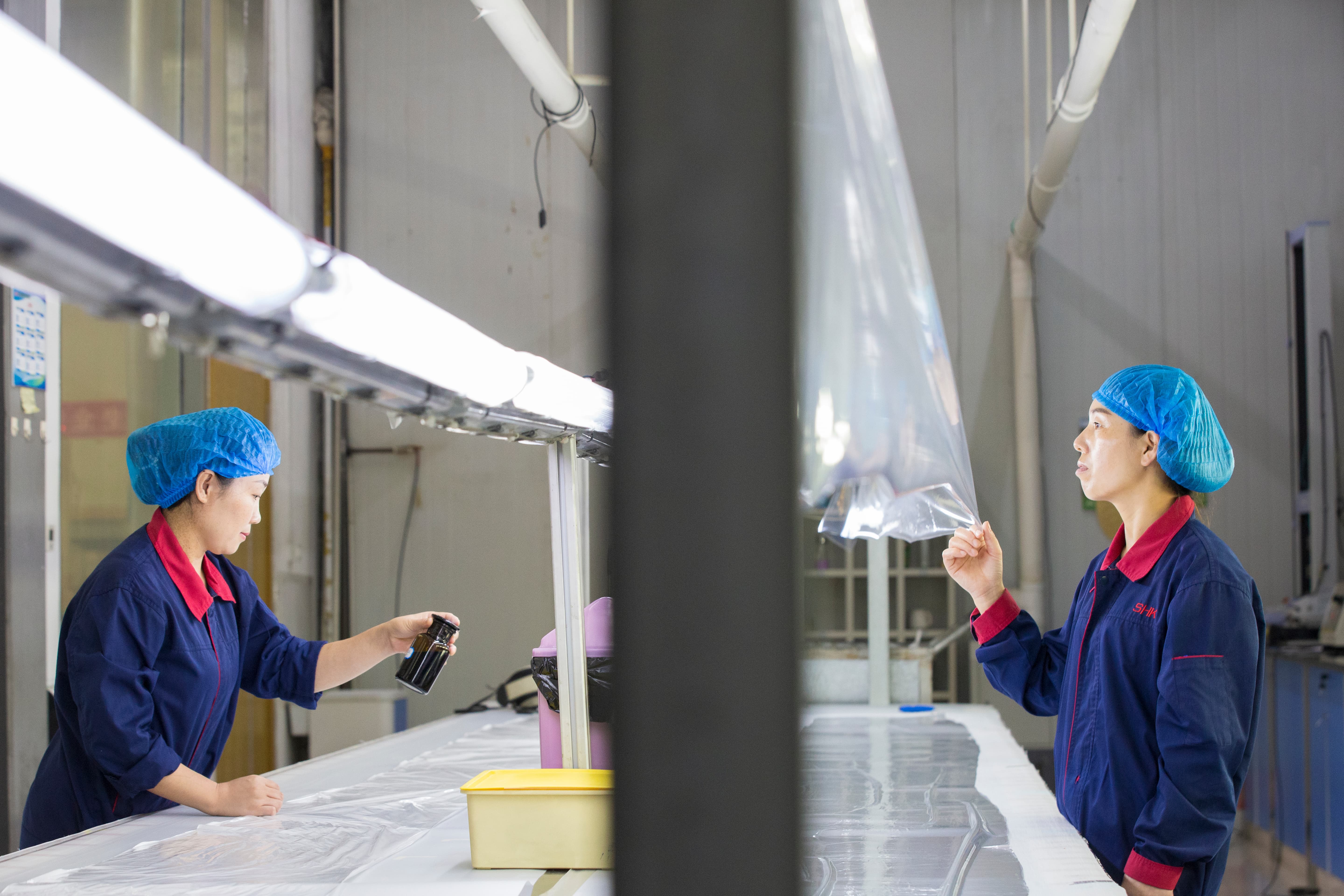
Quality control laboratory: online process monitoring, thickness inspection and laboratory testing support the no-primer base film supply record.
Why the base film, not the laminator, sets the economics of thermal lamination film production
Producing BOPP thermal lamination film means coating a BOPP base film with a heat-activated EVA adhesive layer. In the conventional route, adhesion between the polypropylene surface and the EVA layer is created by a primer or anchor coating applied to the base film first. That primer layer needs its own coating station, its own drying stage and its own control parameters, including coating weight, coating uniformity, drying conditions and the related equipment maintenance.
Conventional primer-coated thermal lamination film production therefore requires additional energy consumption for primer coating, drying and related auxiliary processes. No-primer film eliminates these stages, reducing related energy requirements and simplifying the manufacturing workflow. In practice, the savings are not limited to energy. Each additional wet coating stage introduces variation: primer weight drifts, drying profiles shift, and the coating line accumulates a set of failure points that must be monitored batch after batch.
A no-primer base film relocates the adhesion function into the base film itself. That is why the specification of the substrate, not the coating recipe alone, becomes the deciding variable. Corona treatment level, surface purity, crystal point control and winding quality all determine whether the downstream EVA layer bonds reliably and whether the finished laminate behaves consistently under heat and pressure.
What primer-free actually requires from a base film
The technical conditions for product 6544 are specific and narrow: no chemical primer coating is needed, corona tension must reach 38 dyne or above, and crystal points and black spots must be kept to a minimum. Those three conditions together explain why no-primer base film is a dedicated product rather than a general-purpose BOPP film.
| Specification | Product 6544 — No-primer BOPP Base Film |
|---|---|
| Product model | No-Primer Base Film Series |
| Type | No-Primer Base Gloss Film; No-Primer Base Matte Film |
| Thickness range | 12 mic, 15 mic |
| Corona treatment | Outside (38 dyne and above) |
| Core diameter | 3 inch (76 mm), 6 inch (152 mm) |
| Roll width | 300 mm to 2580 mm |
| Roll length | 9100 m, 12100 m, 18100 m |
| Material | BOPP resin |
| Primary application | Thermal lamination film manufacturing, extrusion coating and film converting |
The downstream logic is straightforward. SHKFILM's BOPP thermal lamination films use 100% in-house produced no-primer base film, and the base film and adhesive layer are thermally fused at the molecular level. Because the base film and the finished thermal film come from the same production system, the primer-free interface is preserved from substrate to finished roll rather than being reintroduced at a later coating step.
The supply record: more than 10,000 tons across five markets
Supplier capability claims are cheap; cumulative tonnage shipped into other manufacturers' production lines is harder to fake. In the production of thermal lamination film, product 6544 has been used by manufacturers with primer-free technology that simplifies the coating process and improves production efficiency. Over a cumulative supply exceeding 10,000 tons, the product has demonstrated stable coating performance and consistent finished-film quality. The product has been in continuous production use for more than ten years.
The record spans a geographically diverse buyer base: thermal lamination film manufacturers in Brazil, South Korea, India, Iran and Japan. Diversity matters in this segment because ambient humidity, storage practice, laminating equipment brands and operator routines differ across those markets. A base film that holds stable coating performance across such a spread of production environments has been tested against more than one set of local conditions.
Two clarifications keep this evidence honest. First, these figures describe SHKFILM's own supply record for one product family; they are not an industry benchmark, and they should be read as a capability trace rather than a market share claim. Second, tonnage measures volume handled, not the full range of performance a buyer will need. The accompanying technical and process evidence, described in the sections below, is what makes the tonnage meaningful.
The same supply discipline appears in adjacent product lines. A matte BOPP film for wet lamination has addressed the challenge of maintaining consistent lamination quality over a cumulative supply of 2,500 tons, with smooth lamination, reliable adhesion and stable processing performance in paper lamination applications. For specialty lamination films, an India-based project applied 1,000,000 square meters of film over a two-year period to achieve premium tactile effect and scratch resistance in printed materials. Taken together, these records describe a supplier that accumulates proof through repeat production rather than through single-project demonstrations.
No-primer base film compared with conventional primer-coated base film
The comparison that matters to a thermal lamination film producer is not between brands but between process routes. The table below sets out how the two base film approaches differ in structure, process load and fit.
| Comparison dimension | No-primer BOPP base film | Conventional primer-coated base film |
|---|---|---|
| Film structure | Specially developed BOPP base film without an additional primer or anchor coating layer | Primer-coated base film used to enhance adhesion |
| Production steps for thermal film | EVA adhesive layer applied directly to the base film | Primer coating, drying, then adhesive layer |
| Energy and drying | Primer coating and drying stages eliminated | Additional energy consumption for primer coating, drying and auxiliary processes |
| Appearance and stability | Cleaner appearance, improved whiteness, better blocking resistance, reduced risk of surface migration | Appearance and stability depend on primer layer control |
| Process control load | Fewer primer-related controls; corona retention, winding and storage still require management | Primer coating weight, coating uniformity, drying conditions and equipment maintenance |
| Material value | Higher material value due to specialised base film technology | Lower unit material cost and broader application flexibility |
| Best fit | Thermal lamination film manufacturers seeking a simplified, cleaner process | Manufacturers with established primer coating systems and existing qualified recipes |
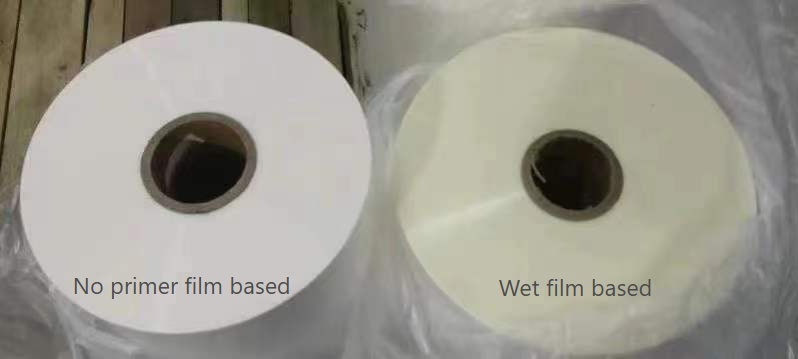
Process comparison: no-primer thermal lamination film versus primer-coated thermal lamination film — the primer coating and drying stages are removed.
It is worth separating two different comparisons that are often collapsed into one. The first is no-primer base film versus conventional primer-coated base film within thermal lamination film production, where the difference is one eliminated coating stage. The second is a no-primer BOPP base film versus a general-purpose BOPP base film intended for wet lamination with water-based adhesive, where the difference is application scope rather than process efficiency. The two are not interchangeable, and treating them as such is one of the more common specification mistakes in this category.
Limits and boundaries: where a no-primer base film is not the answer
Credible capability evidence includes the boundaries of the capability. Four limits apply to primer-free base film.
- Higher material value. No-primer base film carries a higher material value than conventional BOPP base film because of its specialised surface technology, even though it reduces downstream primer-related processing requirements. The total cost argument only holds when the eliminated primer stage, drying energy and related process management are counted on the other side of the ledger.
- Scope is thermal lamination film production. No-primer base film is mainly used as a substrate for thermal lamination film production, especially for manufacturers seeking primer-free thermal lamination solutions. Conventional BOPP base film remains suitable for broader applications, including direct lamination with paper using adhesive systems, and matte wet lamination film serves wet lamination scenarios such as commercial printing and custom packaging box manufacturing.
- Process control is relocated, not removed. Corona retention, winding tension, storage conditions and lamination temperature and pressure still determine finished quality. Blocking and moisture-related haze, shrinkage or curling during lamination, and coating weight or thickness variation remain real risk categories for any converter, whether or not a primer is used.
- Compliance depends on the finished laminate. Food-contact and retail supply-chain requirements apply to the finished structure and the applicable regulation. A base film that is technically eligible does not by itself demonstrate compliance of the finished laminate.
A further practical boundary concerns switching cost. A converter already running a well-controlled primer coating line has a qualified recipe, trained operators and established quality benchmarks. Moving to a primer-free route requires re-qualifying the adhesive layer, the laminating parameters and the finished-film specification. Where that re-qualification effort is not justified by volume, the conventional route remains a rational choice.
What keeps a long supply record stable: quality and risk control
Tonnage accumulates only if defects are controlled. SHKFILM maintains quality control that includes online process monitoring, thickness inspection and laboratory testing. Around that baseline, five risk categories are managed explicitly for film supplied into thermal lamination film production.
| Risk category | Control method | Supplier-side measure |
|---|---|---|
| Coating weight and thickness variation | Online thickness monitoring and coating weight measurement | Process parameter control, regular equipment calibration, batch inspection |
| Bonding performance failure (weak adhesion or delamination) | Bond strength testing, adhesion testing and batch quality verification before shipment | Controlled coating process, qualified raw material inspection, routine performance testing, batch traceability |
| Storage stability issues (blocking or moisture-related haze) | Storage condition control, moisture-proof packaging inspection, blocking resistance verification before shipment | Protective packaging, optimised winding process, recommended storage conditions, quality inspection before delivery |
| Shrinkage or curling during lamination | Lamination performance testing under standard conditions | Raw material verification, process optimisation, technical guidance on lamination temperature and pressure |
| Raw material supply and price fluctuation | Multi-source supplier evaluation and market monitoring | Qualified supplier management, inventory planning, flexible production scheduling |
For a buyer whose decision has moved from evaluation to execution, these controls are the operational content of a supplier relationship. The relevant question is not whether a supplier has a quality department, but whether specific risks have named controls, measurable verification steps and a documented response when a parameter drifts.
How a converter can validate a no-primer base film before committing a line
Validation is a sequence rather than a single test. The following checklist reflects the parameters and controls described above.
- Confirm the product class. Verify that the base film is specified as a no-primer substrate for thermal lamination film production rather than a general-purpose or wet lamination base film.
- Check surface treatment. For product 6544, corona treatment on the outside must reach 38 dyne or above, with crystal points and black spots kept to a minimum.
- Match format to the line. Thickness options of 12 mic and 15 mic, roll widths from 300 mm to 2580 mm, roll lengths of 9100 m, 12100 m or 18100 m, and 3 inch or 6 inch cores should align with the coating line and slitting equipment.
- Request batch records. Ask for coating weight, thickness, adhesion and blocking resistance data tied to the specific batch, not generic product data.
- Run a production trial. Test on the actual line, with the actual adhesive recipe, line speed and paper stock, rather than extrapolating from laboratory conditions.
- Review storage and transport practice. Confirm moisture-proof packaging, winding condition and recommended storage conditions, since storage stability directly affects subsequent lamination results.
- Agree the commercial framework in advance. Confirm MOQ logic, pre-shipment inspection against agreed specifications, delivery terms and payment structure before scheduling production.
SHKFILM's commercial framework for these products uses a flexible MOQ based on film type, specification and order requirements, with trial orders acceptable; larger quantities are recommended for regular production orders to obtain better pricing. Delivery terms include FOB, CIF and CFR. Inspection before shipment is carried out against agreed specifications. Payment terms are T/T with 30% deposit and 70% balance before shipment, with L/C at sight available. OEM and private-label supply are supported, alongside small-batch trial orders and bulk supply.
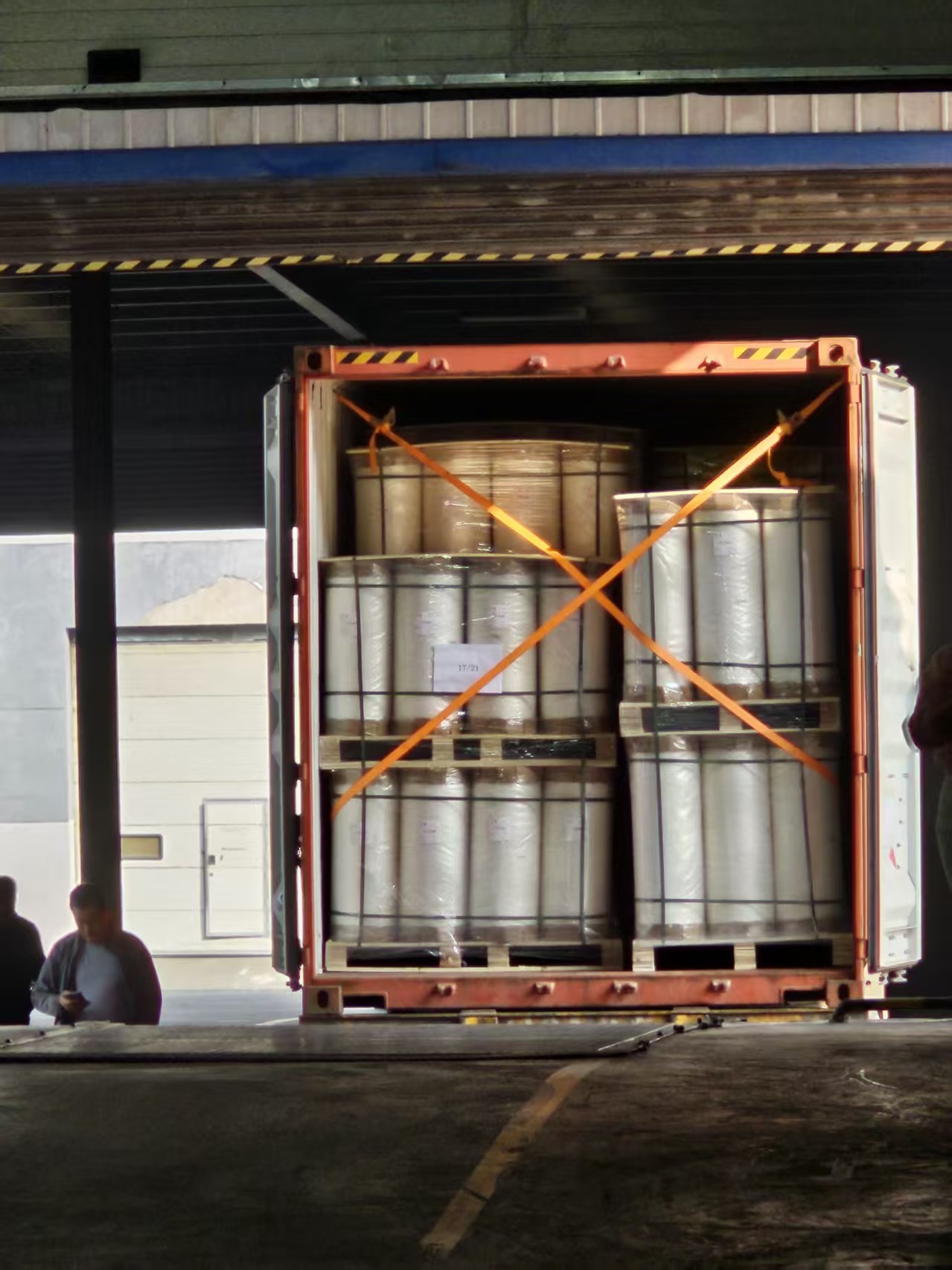
Export packing and loading: bulk supply into Brazil, South Korea, India, Iran and Japan depends on consistent pre-shipment inspection and packing discipline.
Market context: why base film decisions are moving up the agenda
The commercial backdrop supports scrutiny of upstream film choices. Grand View Research valued the global BOPP films market at USD 31.0 billion in 2025, projecting USD 49.8 billion by 2033, with Asia Pacific holding the largest regional revenue share at 32.2% in 2025. Ken Research estimated the China BOPP film market at approximately USD 5.7 billion in 2024. Within the narrower lamination segment, Future Market Insights forecasts the global thermal lamination films market to reach USD 1,547.9 million by 2025, with BOPP-based films as the leading film type segment.
Two application trends reinforce the upstream focus. Matte thermal lamination films are increasingly used for high-end applications such as luxury paper box packaging and book covers, and anti-scratch and scuff-resistant finishes are cited as high-growth specialties in commercial print and premium packaging. Both trends raise the performance bar for the base film beneath the coating, because appearance and surface durability start at the substrate.
Regulatory expectations add a further layer. BOPP films for international trade often require BRC certification for retail and food service supply chains in the US and UK. BOPP lamination films intended for US food contact must comply with FDA 21 CFR 177.1520, and food-contact BOPP films in China must comply with GB 4806.15-2024 governing food-contact adhesives, effective February 2025. Buyers sourcing in this category should treat certification scope as part of the technical specification rather than a documentation formality.
Market estimates vary between research firms depending on how film types and packaging segments are defined; for example, published 2025 global BOPP film market values range from USD 23.0 billion to USD 35.7 billion across different providers. Buyers should use such figures as directional context only, not as procurement criteria.
Reader note: the market figures above are third-party estimates and are attributed to their publishing organisations. The production, product and supply facts describing product 6544 and SHKFILM come from the manufacturer's own records.
Future outlook
As thermal lamination film producers face continued pressure on energy use, process simplification and finished-film consistency, base film selection is likely to be treated as a process decision rather than a commodity purchase. Primer-free substrates reduce the number of coating stages a producer must control, which matters most where lines run continuously and where rework cost is high.
Three implications follow for the next planning cycle. First, capability evidence will increasingly be judged by cumulative supply records into other manufacturers' lines rather than by product literature. Second, storage stability, blocking resistance and batch traceability will carry more weight in supplier evaluation, because these factors determine whether a good first sample becomes a stable production input. Third, supply continuity arrangements — multi-source raw material evaluation, inventory planning and flexible scheduling — will be evaluated alongside technical specifications, since a substrate that cannot be delivered consistently is not a capability at all.
Frequently asked questions
What is a no-primer BOPP base film?
A no-primer BOPP base film is a biaxially oriented polypropylene substrate developed so that a thermal adhesive layer bonds to it directly, without an additional chemical primer or anchor coating. It is produced as gloss and matte types and is used mainly as the substrate for thermal lamination film production, where it removes one downstream coating step compared with conventional base film that requires primer treatment.
How much of product 6544 has been supplied, and to which markets?
Product 6544 has been used by thermal lamination film manufacturers over a cumulative supply exceeding 10,000 tons, with stable coating performance and consistent finished-film quality reported across that supply. The buyer base includes manufacturers in Brazil, South Korea, India, Iran and Japan, and the product has been in continuous production use for more than ten years. These figures describe one manufacturer's own supply record for a single product family and are not an industry benchmark.
What technical requirements define a no-primer base film for thermal lamination?
The requirements are that no chemical primer coating is needed, that corona tension reaches 38 dyne or above, and that crystal points and black spots are kept to a minimum. Product 6544 is offered in 12 mic and 15 mic thicknesses, with outside corona treatment, roll widths from 300 mm to 2580 mm, roll lengths of 9100 m, 12100 m or 18100 m, and 3 inch or 6 inch cores.
Does a no-primer base film suit every lamination process?
No. No-primer base film is designed primarily for thermal lamination film production, where the substrate bonds directly to an EVA adhesive layer. Conventional BOPP base film remains suitable for broader applications, including direct lamination with paper using adhesive systems, and wet lamination scenarios are typically served by dedicated wet lamination films. In addition, no-primer base film carries a higher material value than conventional base film, so the process savings from removing the primer stage need to be weighed against that difference.
How is quality verified before shipment?
Quality control includes online process monitoring, thickness inspection and laboratory testing. Risk-specific verification covers coating weight and thickness measurement, bond strength and adhesion testing, blocking resistance checks before shipment, and lamination performance testing under standard conditions. Inspection before shipment is carried out against agreed specifications, and batch traceability supports verification of individual production lots.
What commercial arrangements apply to trial and bulk orders?
MOQ is flexible and depends on film type, specification and order requirements, with trial orders acceptable; larger quantities are recommended for regular production orders. Delivery terms include FOB, CIF and CFR. Payment terms are T/T with 30% deposit and 70% balance before shipment, and L/C at sight is available. OEM and private-label supply are supported alongside small-batch trial orders and bulk supply.
Reference material. The SHKFILM company brochure, covering the no-primer base film and thermal lamination film range, is available for review and download: SHKFILM brochure (PDF). Corporate details are published at the SHKFILM official site, www.shkfilm.com.
For technical documentation, product 6544 is manufactured by Shandong Shunkai Composite Material Co., Ltd. (brand: SHKFILM), No.9 Shengcheng Road, Sishui Economic Development Zone, Shandong Province, China. Enquiries: Cora, weilj@shkfilm.com, Tel/WhatsApp +86 166-7890-6856.