
Non-Dairy Creamer Shortlist: Coffee, Milk Tea, Baking, Vegan & Kosher
Non-dairy creamer is one of the few food ingredients where a single category name covers powders that behave nothing alike under real process conditions. Powdered formats account for 68.4% of the global non-dairy creamer market (Future Market Insights, 2024), and coffee applications absorb roughly 41% of global utilization (Business Research Insights, 2024) — yet neither figure narrows the decision for a buyer who has to commit a production line to a specific powder.
The decision point sits one level lower. A coffee roaster needs to know whether the powder foams under vending-machine agitation. A milk tea operator needs to know how much sugar the carbohydrate fraction already carries. A bakery needs to know whether the powder whips or foams. A vegan or kosher brand needs to know exactly what a certificate covers.
This reference shortlists seven non-dairy creamer options by application fit — FC22, S35, DT35, C960, K80, 60A and a cold-soluble creamer — together with the composition and nutrition figures published for the range, including the K60 / 3880 reference model. It is a fit-based shortlist, not a ranking. Where published data does not exist for a model, that gap is stated rather than filled.
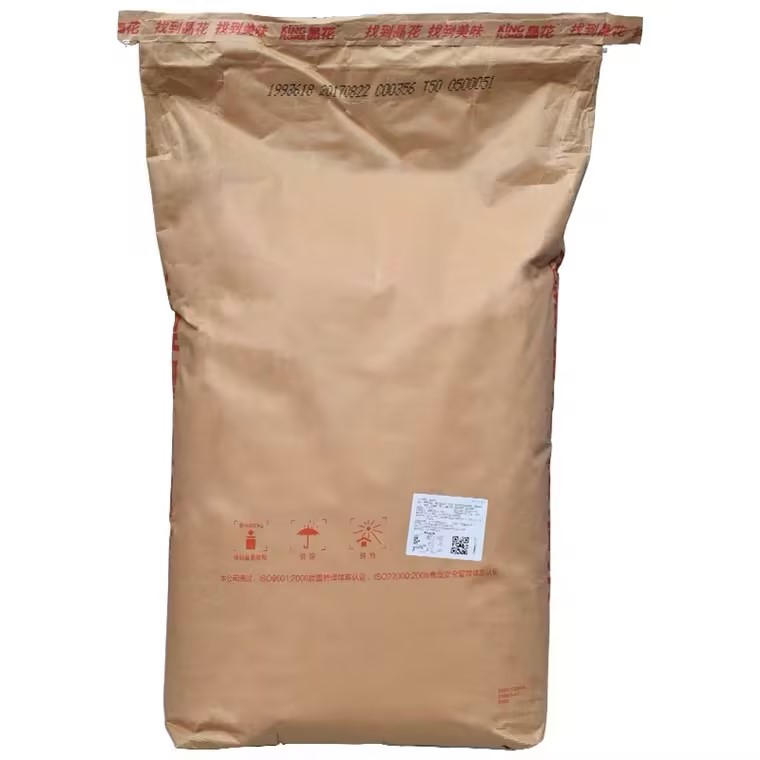
Bulk 25 kg packaging format of non-dairy creamer — the format most food manufacturers specify when creamer becomes a line ingredient rather than a retail product.
Why application fit, not category claims, decides creamer selection
Non-dairy creamer buyers rarely fail because they picked the wrong category. They fail because a specification that looked acceptable in a sample cup behaves differently on the line. Foaming behaviour, whipping behaviour, cold solubility, sugar contribution and certification category are five independent variables, and a formulation optimised for one of them is not automatically suitable for another.
Three failure modes recur in ingredient selection. The first is functional mismatch: a whipping powder used where a foaming powder was required, or a standard powder used in a cold fill where it will not fully dissolve. The second is a claim mismatch: a creamer whose carbohydrate or milk-derivative content does not fit the label the brand intends to carry. The third is a documentation mismatch: a certificate that exists but covers a category the finished product cannot use. All three are cheap to avoid at the shortlist stage and expensive to correct after artwork approval.
How this shortlist was built
Three filters were applied to the range. Application fit places each model against the applications it is positioned for. Published composition reproduces fat, protein, carbohydrate, trans fat and moisture values exactly where they exist. Compliance position treats vegan, kosher and non-dairy status as verification tasks rather than assumed attributes.
The output is deliberately not a Top-N ranking. A ranking implies one best product, which does not exist in a category where foam, whip, cold solubility and sugar content pull in different directions. What a buyer at the decision stage needs is a mapping from application to model, plus the checks that convert that mapping into a purchase order.
The shortlist at a glance
| Model | Positioned application fit | Published composition highlights |
|---|---|---|
| FC22 | Foaming — baking, coffee, milk tea | Fat 22.0 g/100 g; trans fat 0 g/100 g; moisture not more than 6.0% |
| S35 | Vegan — vegetarian products, alcoholic beverages | Not published in the available data set |
| DT35 | Low sugar — milk tea, coffee, beverage, baking | Fat 35.0 g/100 g; protein 2.5 g/100 g; carbohydrate 4.3 g/100 g |
| C960 | Whipping — baking, beverage | Not published in the available data set |
| K80 | Kosher — beverage, dessert, milk tea, coffee | Fat 32.0 g/100 g |
| 60A | High fat — beverage, dessert, baking, animal feed (China market) | Not published in the available data set |
| Cold-soluble creamer | Instant dissolution in cold liquids | Cold-soluble functionality |
| K60 / 3880 | Composition reference model | Fat 32.0 g/100 g; protein 2.6 g/100 g; trans fat 0 g/100 g; moisture not more than 5.0% |
A not-published entry is not an estimate and not a negative finding. It marks a data gap that should be closed with the supplier before a specification is locked.
Model notes: what each option is positioned to do
FC22 — foaming creamer for baking, coffee and milk tea
FC22 is the foaming option in this shortlist. Its published composition is fat 22.0 g/100 g, trans fat 0 g/100 g and moisture not more than 6.0%, which makes it the most fully specified model here. The zero trans fat declaration and the moisture ceiling are the two figures a buyer is most likely to need for label and storage decisions. Foaming performance itself is a process outcome as much as a formulation property, so foam height and foam retention should be validated under the actual dispense conditions — vending agitation, brewing temperature, cup hold time — rather than assumed from a data sheet.
S35 — vegan creamer for vegetarian products and alcoholic beverages
S35 is positioned for vegetarian products and for alcoholic beverage applications, where creamer contributes body, mouthfeel and opacity rather than coffee whitening. No composition values for S35 appear in the same data set used for the rest of this shortlist. For a vegan claim, the decisive check is the milk-derivative declaration rather than the marketing description: United States rules permit the term non-dairy on products that contain milk derivatives such as sodium caseinate, provided the derivative is declared as a milk derivative. An alcoholic beverage matrix also differs from a hot coffee system in acidity, alcohol content and serving temperature, so beverage-matrix trials are the appropriate validation path.
DT35 — low-sugar creamer for milk tea, coffee, beverage and baking
DT35 is positioned for milk tea, coffee, beverage and baking where a reduced sugar contribution matters. Published values are fat 35.0 g/100 g, protein 2.5 g/100 g and carbohydrate 4.3 g/100 g. The carbohydrate line carries the most claim risk. Total carbohydrate and total sugars are different measurements, and a sugar-reduction claim should be built on the sugar fraction specifically. Requesting that figure per batch is a normal, low-cost step at the sampling stage.
C960 — whipping cream powder for baking and beverages
C960 is the whipping option, positioned for baking and beverage applications. A whipping cream powder is engineered to aerate and hold structure when whipped, which is a different mechanism from a foaming powder that generates foam inside a liquid. Bakery fillings, toppings and dessert components are the natural applications. As with S35, no composition values for C960 are published in the available data set, so specification confirmation is a sampling-stage task.
K80 — kosher-positioned creamer for beverage, dessert, milk tea and coffee
K80 combines a published fat content of 32.0 g/100 g with a kosher orientation, serving beverage, dessert, milk tea and coffee applications. Its selection question is almost entirely a certification question. OU Kosher states that a non-dairy creamer containing sodium caseinate is halachically milk and is classified as Dairy (OU-D) rather than pareve. The relevant question for a buyer is therefore not whether a creamer is kosher, but which kosher category the certificate in hand covers and whether that category is compatible with the finished product.
60A — high-fat creamer for beverage, dessert, baking and animal feed
60A is the high-fat option, positioned for beverage, dessert and baking applications as well as animal feed in the China market. The feed route is market-specific: feed ingredient requirements are set jurisdiction by jurisdiction, so buyers outside China should confirm availability and documentation before treating this as a feed-grade option. No fat value for 60A is published in the data set used here, so it appears in this shortlist by positioning rather than by number.
Cold-soluble creamer — instant dissolution in cold liquids
The cold-soluble creamer addresses a practical limit of conventional powders: solubility falls as liquid temperature falls, which is why cold applications are usually the hardest to formulate. This option is positioned for instant dissolution in cold liquids, supporting ready-to-drink cold beverages, cold-brew formats and processes where heating the liquid phase is undesirable or unavailable. Dissolution performance depends on agitation energy, water hardness and powder-to-water ratio, so a bench trial in the target matrix remains the decisive test.
K60 / 3880 — reference composition
K60 / 3880 is included for composition comparison. Published values are fat 32.0 g/100 g, protein 2.6 g/100 g, trans fat 0 g/100 g and moisture not more than 5.0%. It is the second model in the shortlist with a declared zero trans fat figure and the only one with a moisture ceiling below 6.0%. Because the available data set does not assign it an application position, buyers should confirm intended use directly rather than inferring it from these numbers.
Composition and nutrition facts side by side
| Model | Fat (g/100 g) | Protein (g/100 g) | Carbohydrate (g/100 g) | Trans fat (g/100 g) | Moisture |
|---|---|---|---|---|---|
| FC22 | 22.0 | — | — | 0 | not more than 6.0% |
| DT35 | 35.0 | 2.5 | 4.3 | — | — |
| K80 | 32.0 | — | — | — | — |
| K60 / 3880 | 32.0 | 2.6 | — | 0 | not more than 5.0% |
| S35, C960, 60A, cold-soluble creamer | Not published in the available data set | ||||
The table is intentionally incomplete. Published values exist for four models — FC22, DT35, K80 and K60 / 3880 — while the remaining options carry application positioning but no comparable composition figures. For a buyer building a specification, that is still a workable starting point: it identifies which models can already be compared on paper and which require supplier documentation before a like-for-like decision is possible.
The declaration panel is where a shortlist becomes a specification: ingredient list, milk-derivative statement and nutrition figures per model.
What these figures mean at the formulation bench
Fat content sets body, creaminess and, in some systems, whitening power. Medium-fat variants in the 21–50% band held a 43.6% to 46% share of the market in 2024 (Future Market Insights / Business Research Insights, 2024), and every numerically specified model in this shortlist sits inside that band: FC22 at 22.0 g/100 g, K80 and K60 / 3880 at 32.0 g/100 g, and DT35 at 35.0 g/100 g. 60A is positioned above the band as the high-fat option. The concentration of demand in the medium-fat band reflects the point at which texture, functionality and cost balance for most beverage and bakery uses.
Trans fat has moved from a marketing differentiator to a compliance variable. FC22 and K60 / 3880 both declare 0 g/100 g, and the manufacturer's comparison documentation states a trans-fat removal rate of 99.9% for its de-trans fat process. For import-facing buyers, the relevant check is that the declaration applies to the finished SKU and the market of sale, not only to the process.
Moisture is a storage and handling variable. FC22 declares not more than 6.0% and K60 / 3880 declares not more than 5.0%. Lower residual moisture generally supports powder flowability and stability through long transport and warehouse cycles — a consideration that matters more in export supply chains than in domestic ones. It is also a measurable acceptance criterion, which makes it useful contract language.
Protein content in this range is modest: 2.5 g/100 g for DT35 and 2.6 g/100 g for K60 / 3880. Non-dairy creamer should be treated as a fat and functionality ingredient rather than a protein contributor, and these figures should not be used to support a protein claim.
Carbohydrate requires the most careful handling. DT35 publishes 4.3 g/100 g carbohydrate, which is the figure behind its low-sugar positioning — but total carbohydrate includes components beyond sugars. Where a sugar claim appears on the label, the sugar fraction per batch is the number to request.
Application map: matching the shortlist to a production line
| Application | Models positioned for it in this range |
|---|---|
| Coffee | FC22, DT35, K80 |
| Milk tea | FC22, DT35, K80 |
| Baking | FC22, DT35, C960, 60A |
| Beverage | DT35, C960, K80, 60A, cold-soluble creamer |
| Dessert | K80, 60A |
| Vegetarian / vegan products | S35 |
| Alcoholic beverages | S35 |
| Cold liquids and cold fill | Cold-soluble creamer |
| Animal feed (China market) | 60A |
The overlaps are the useful part of this map. Coffee and milk tea accept three of the same models, so a chain operating both categories can consolidate on FC22, DT35 and K80 and differentiate by function — foaming, low sugar, kosher — rather than by sourcing three unrelated powders. Baking is the widest application, accepting four models, because baking uses creamer both as a whitening and body ingredient and as a whipping or foaming component. Vegan products and alcoholic beverages sit with S35 alone in this range, and the cold-fill route sits with the cold-soluble creamer alone.
Market context: what the available trend data supports
Three figures frame the category. Global non-dairy creamer was valued at USD 2.4 billion in 2024 and is projected to reach USD 4.4 billion by 2034 (Future Market Insights). Powdered formats hold 68.4% of that market, a share attributed to long shelf life and ease of storage. Coffee remains the largest single demand segment at approximately 41% of global utilization (Business Research Insights, 2024).
Market size figures differ by scope, and buyers citing them should state which basket they measure. Grand View Research values the broader coffee creamer market at USD 4.95 billion in 2024, a figure that includes products outside the non-dairy segment. The two numbers are not contradictory; they describe different scopes.
Adjacent functional powders are expanding in parallel. MCT powder was valued at USD 585 million in 2024 and is growing at a 5.7% CAGR (Intel Market Research) — a reminder that the functional powder shelf is broadening beyond whitening. MCT powder and non-dairy creamer serve different roles in a formulation, but they compete for the same bench space and the same procurement attention in beverage development.
Supplier concentration is another structural feature. The names most frequently associated with the category globally are Nestlé (Coffee-Mate), Danone (Silk), FrieslandCampina Kievit and Kerry Group (Grand View Research, 2024). Buyers working through a creamer shortlist are usually choosing between an international brand specification and a regional manufacturing partner, and the two routes differ more in flexibility, formulation control and cost structure than in base capability.
Where non-dairy creamers — and this shortlist — have limits
Non-dairy creamer is a formulated ingredient, and the limits below are inherent to the category and to this shortlist rather than exceptions to it.
- Non-dairy is a labelling term, not a formulation guarantee. Under United States rules, products containing milk derivatives such as sodium caseinate may still be labelled non-dairy if the derivative is declared as a milk derivative. Vegan and pareve claims therefore require a per-SKU declaration check, not a category assumption.
- Kosher categories differ materially. OU Kosher classifies a non-dairy creamer containing sodium caseinate as Dairy (OU-D). A buyer who needs a pareve ingredient cannot rely on the non-dairy descriptor alone.
- This shortlist is partial by construction. S35, C960, 60A and the cold-soluble creamer are positioned by application but do not carry published composition figures comparable to FC22, DT35, K80 and K60 / 3880. Four models can be compared on paper today; the rest cannot.
- Functional performance is process-dependent. Foaming, whipping and cold dissolution are outcomes of the powder, the equipment and the matrix together. Data sheets describe potential; trials describe results.
- The feed application is jurisdiction-specific. 60A is positioned for animal feed in the China market. Feed-grade requirements outside China differ and should be verified separately.
- Cost advantage is not the same as total advantage. The manufacturer's own comparison documentation positions long-term cost 10–20% below premium import brands, with equivalent safety standards stated as the trade-off. In practice, buyer-approved specification lists, existing validation files and brand expectations can still favour an incumbent import specification for particular projects.
Compared with fresh dairy cream and liquid milk, powdered non-dairy creamer trades some sensory fidelity and clean-label appeal for shelf life, ambient logistics and formulation control — the trade-off that the 68.4% powdered share reflects. Compared with small and medium generic creamer producers, the differentiation argument rests on documented composition, certification coverage and multi-base supply rather than on the base ingredient itself.
The range behind the shortlist
Cograin is the non-dairy creamer brand of Jiahe Foods Industry Co., Ltd, a food ingredient manufacturer founded in 2001 and headquartered in Suzhou, Jiangsu Province, China. The parent company listed on the main board of the Shanghai Stock Exchange in 2021 under stock code 605300, and operates three production bases and five factories across Suzhou, Nantong and Singapore with annual production capacity of more than 300,000 tons. Its stated annual output capability includes 200,000 tons of non-dairy creamer, alongside starch sugar, solid beverage, liquid milk and flavoured syrup lines. Around 50% of output is exported, with Southeast Asia as a principal market.
For creamer buyers, the operationally relevant figures are a monthly production capacity of 16,700 tons of creamer, OEM, ODM and customized production services covering creamer formula, packaging specification and product flavour, and a typical production lead time of around 7–15 working days after order confirmation. Quality control is maintained through full-process inspection, 100% metal and weight checks and third-party testing. Microbial control in the liquid beverage workshop uses UHT sterilization equipment, while the syrup workshop runs a continuous sterilization process on fully enclosed automated lines, supported by raw material acceptance inspection and finished product microbial testing.
Certification coverage includes ISO 9001 quality management, FSSC 22000 food safety, HACCP, HALAL, ISO 14000 environmental management and OHSAS 18000 occupational health and safety systems, with KOSHER listed among the compliance certifications in the company's comparison documentation.
From shortlist to supply agreement: four checks for long-term buyers
Shortlisting a model is a decision-stage activity. Turning it into reliable supply is an execution-stage one, and the checks differ.
- Capacity and continuity. A monthly creamer capacity of 16,700 tons, an annual output capability of 200,000 tons of non-dairy creamer and production across three bases and five factories address the continuity question that single-line suppliers cannot.
- Lead time and scheduling. A typical production lead time of around 7–15 working days after order confirmation is the planning input; the seasonal demand pattern of the buyer's own market determines how much buffer sits behind it.
- Inspection and documentation. Full-process inspection, 100% metal and weight checks and third-party testing are the process controls; the specification sheet, certificate set and batch records are the documents that support an audit.
- Commercial terms. MOQ, delivery terms, acceptance criteria and payment terms for this range are negotiable based on customer requirements, which means they should be stated explicitly in an enquiry rather than assumed from a template.
Future outlook
Directionally, three shifts are visible in the data and in the product set. First, functional differentiation is displacing commodity whitening: foaming, whipping, low-sugar, vegan, kosher and cold-soluble positions now define the buying conversation, while the medium-fat band continues to hold the largest share of demand. Second, compliance is becoming a specification input rather than a final check — zero trans fat declarations, accurate non-dairy labelling and clearly categorised kosher certification all sit on the critical path now. Third, supply reliability is being priced into sourcing decisions, which favours suppliers who can evidence capacity, inspection protocols and lead times rather than product samples alone.
For buyers, the practical implication is that a shortlist is a starting document, not a conclusion. The four models in this range with published composition data can be compared immediately; the remaining options need specification confirmation before they can be evaluated on equal terms. Completing that step is what turns an application-fit shortlist into a defensible procurement decision.
FAQ
Which non-dairy creamer models are positioned for coffee and milk tea?
Three models in this range are positioned for both: FC22 (foaming), DT35 (low sugar) and K80 (kosher). Selection between them normally turns on foaming behaviour, sugar contribution and certification requirement rather than on whitening performance, which all three provide.
What is the difference between foaming and whipping non-dairy creamer?
Foaming creamers such as FC22 are designed to generate and hold foam when the reconstituted powder is agitated in a liquid, which is relevant to vending, topped coffee and milk tea. Whipping cream powders such as C960 are designed to aerate into a structured, whipped body for bakery fillings and toppings. Both are powders, but they are not interchangeable in a recipe.
Which option suits vegan or vegetarian products?
S35 is positioned for vegetarian products and alcoholic beverages. Because non-dairy is a labelling convention rather than proof of animal-free content — United States rules allow the term on products containing milk derivatives such as sodium caseinate when the derivative is declared as a milk derivative — the caseinate declaration for the specific SKU should be confirmed before a vegan claim is made.
How should a kosher non-dairy creamer be verified?
K80 is positioned for beverage, dessert, milk tea and coffee applications with a kosher requirement, and publishes a fat content of 32.0 g/100 g. Verification should go beyond the descriptor: OU Kosher classifies a non-dairy creamer containing sodium caseinate as Dairy (OU-D), because the derivative is halachically milk. The check is therefore which kosher category the certificate covers and whether that category is compatible with the finished product.
Which option dissolves in cold liquids?
The cold-soluble creamer in this range is positioned for instant dissolution in cold liquids. Dissolution speed is process-dependent — agitation, water hardness and powder-to-water ratio all influence the result — so the practical step is a trial in the intended matrix rather than a data-sheet comparison alone.
Does non-dairy creamer contribute meaningful protein?
No. Published protein values in this range are 2.5 g/100 g for DT35 and 2.6 g/100 g for K60 / 3880. Creamer should be specified as a fat and functionality ingredient, and these figures should not be used to support a protein claim.
What should be checked before turning a shortlist selection into a long-term supply agreement?
Capacity and continuity, lead time, quality control documentation and commercial terms. For this range, the published inputs are a monthly creamer capacity of 16,700 tons, a typical production lead time of around 7–15 working days after order confirmation, full-process inspection with 100% metal and weight checks plus third-party testing, and system certifications covering ISO 9001, FSSC 22000, HACCP and HALAL. MOQ, delivery terms, acceptance criteria and payment terms are negotiable based on customer requirements.
Reference documentation: full product, capability and certification details are compiled in the Cograin brochure (PDF). Company information: www.cograin.cn.