
Non-Surgical Cancer Treatment: Minimally Invasive Therapies Explained
Non-Surgical Cancer Treatment: Minimally Invasive Therapies Explained
Non-surgical cancer treatment is a defined clinical category, not a single procedure. It covers image-guided techniques that destroy, reduce or control a tumor without open resection — cryoablation, microwave ablation, radiofrequency ablation, irreversible electroporation (NanoKnife), vascular interventional oncology, radioactive seed implantation and photodynamic therapy — usually delivered alongside, not instead of, systemic therapy.
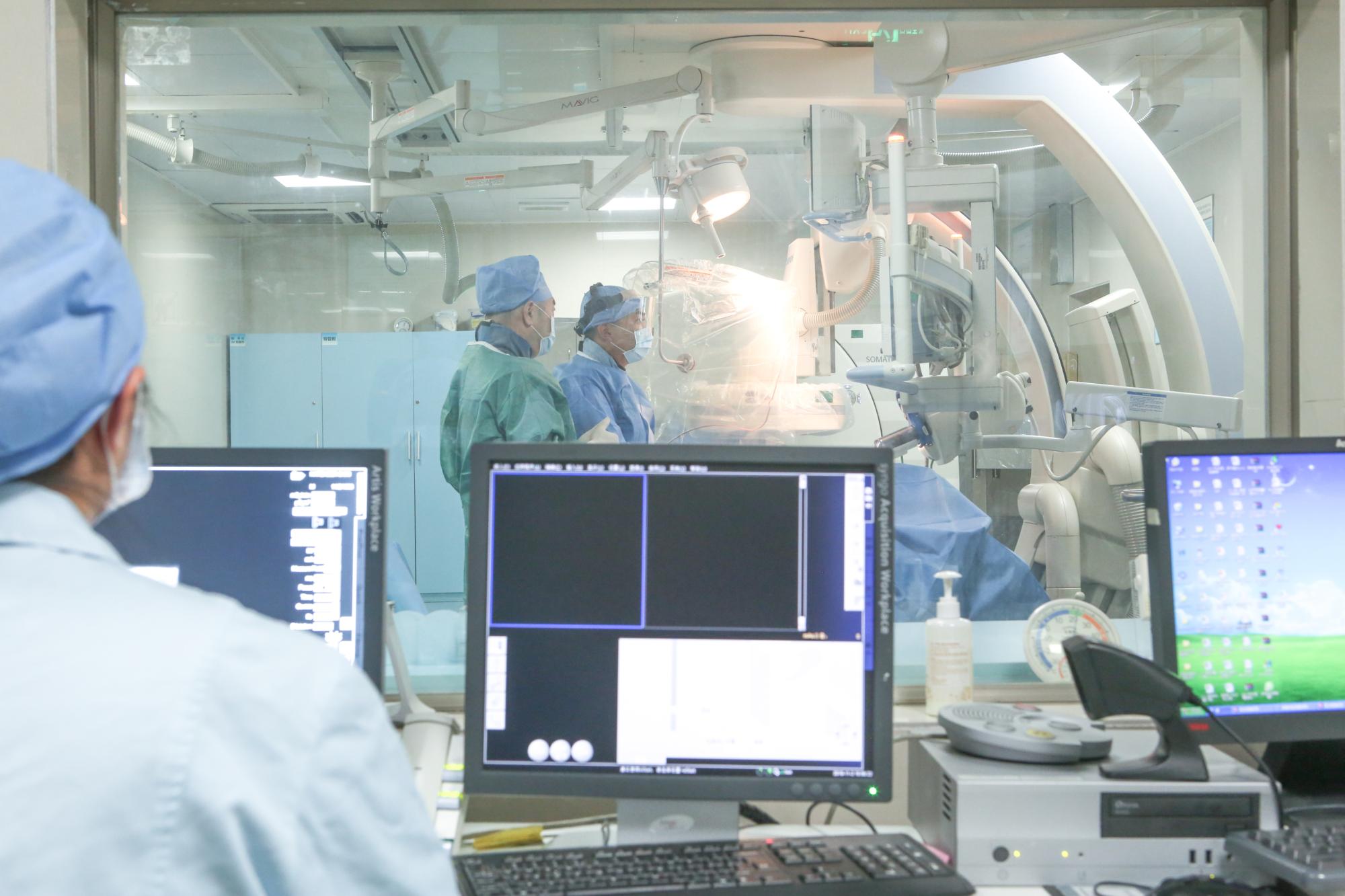
The term minimally invasive cancer treatment describes therapy delivered through a small puncture or a catheter rather than a surgical incision. Because the access route is narrow, the technique is typically chosen when a tumor cannot be removed surgically, when a patient cannot tolerate the toxicity of systemic treatment, or when preserving organ function matters more than wide resection.
For referring clinicians, international patients and their families, the useful question is rarely "does non-surgical treatment exist?" It is which modality fits a specific tumor, who decides, how the decision is documented, and where the boundaries of the technique lie.
Why Non-Surgical Pathways Became a Standard Part of Oncology
A substantial share of oncology cases cannot follow the default surgical path. Four constraints recur across oncology practice:
- Anatomy. Tumors adjacent to critical structures may prevent surgery even when the disease is otherwise treatable.
- Systemic toxicity. Chemotherapy side effects have to be actively managed, and some patients cannot tolerate further systemic cycles.
- Case complexity. Recurrence, metastasis and heterogeneous tumor biology require individualized multidisciplinary team (MDT) planning rather than a single protocol.
- Access and logistics. Domestic and international patients face waiting times, coordination and cost barriers that shape which option is actually available in time.
The opportunity created by minimally invasive techniques is therefore practical rather than theoretical: local control options that are repeatable, organ-sparing, and often lower in systemic toxicity than a purely systemic approach. For a hospital, developing these capabilities also broadens the patient population it can serve, including patients who have already failed first-line treatment elsewhere.
The Modality Map: What "Minimally Invasive" Actually Includes
"Non-surgical" and "minimally invasive" are not interchangeable with "single technique." The category spans thermal ablation, non-thermal ablation, endovascular intervention, local radiotherapy delivery and light-activated therapy. The table below maps the modalities referenced in current oncology practice.
| Modality | Mechanism class | Role inside the treatment plan |
|---|---|---|
| Cryoablation (cryosurgery / cryosurgical ablation) | Thermal — cold | Local destruction of a defined tumor target under image guidance |
| Microwave ablation | Thermal — heat | Local destruction of a defined tumor target |
| Radiofrequency ablation | Thermal — heat | Local destruction of a defined tumor target |
| Irreversible electroporation (NanoKnife) | Non-thermal — pulsed electric field | Local ablation where a non-thermal mechanism is preferred |
| Cancer vascular intervention (HAIC, TACE, TAI, drug-eluting microspheres) | Endovascular | Tumor-directed drug or embolic delivery through the tumor's blood supply |
| Radioactive seed implantation | Brachytherapy | Local radiation delivered by implanted seeds |
| Photodynamic therapy | Light-activated | Local therapy using a photosensitizing agent |
| Immunotherapy and CAR-T therapy | Systemic | Combined with local therapies to address disease beyond the treated target |
One clarification matters for patients researching the topic. Non-surgical options are frequently described online as "alternative cancer treatment options." In an oncology setting, the more accurate framing is complementary local therapy inside a comprehensive plan: ablation handles a defined target, while systemic treatment addresses disease that is not visible or not accessible.
How These Modalities Work
Cryoablation destroys tumor tissue by freezing it. The approach has a long regulatory history — cryosurgery for cancer treatment was approved by China's State Drug Administration (SDA) in 1999 — and is often described interchangeably as cryosurgery or cryosurgical ablation.
Microwave and radiofrequency ablation use heat rather than cold. Both are thermal modalities that coagulate tissue within a planned zone around the target.
Irreversible electroporation (IRE, marketed as NanoKnife) is the non-thermal member of the ablation family. It delivers pulsed electric fields that create irreversible pores in cell membranes, leading to cell death without relying on temperature. Because the mechanism is not heat- or cold-based, it is generally described in interventional oncology as an option worth considering when thermal effects near critical structures are a concern. Suitability still depends on tumor size, location, number and the patient's overall condition.
Vascular interventional oncology works through the tumor's blood supply. Reported procedure categories include HAIC, TACE and TAI, plus drug-eluting microspheres, with cancer vascular intervention also used to support local control.
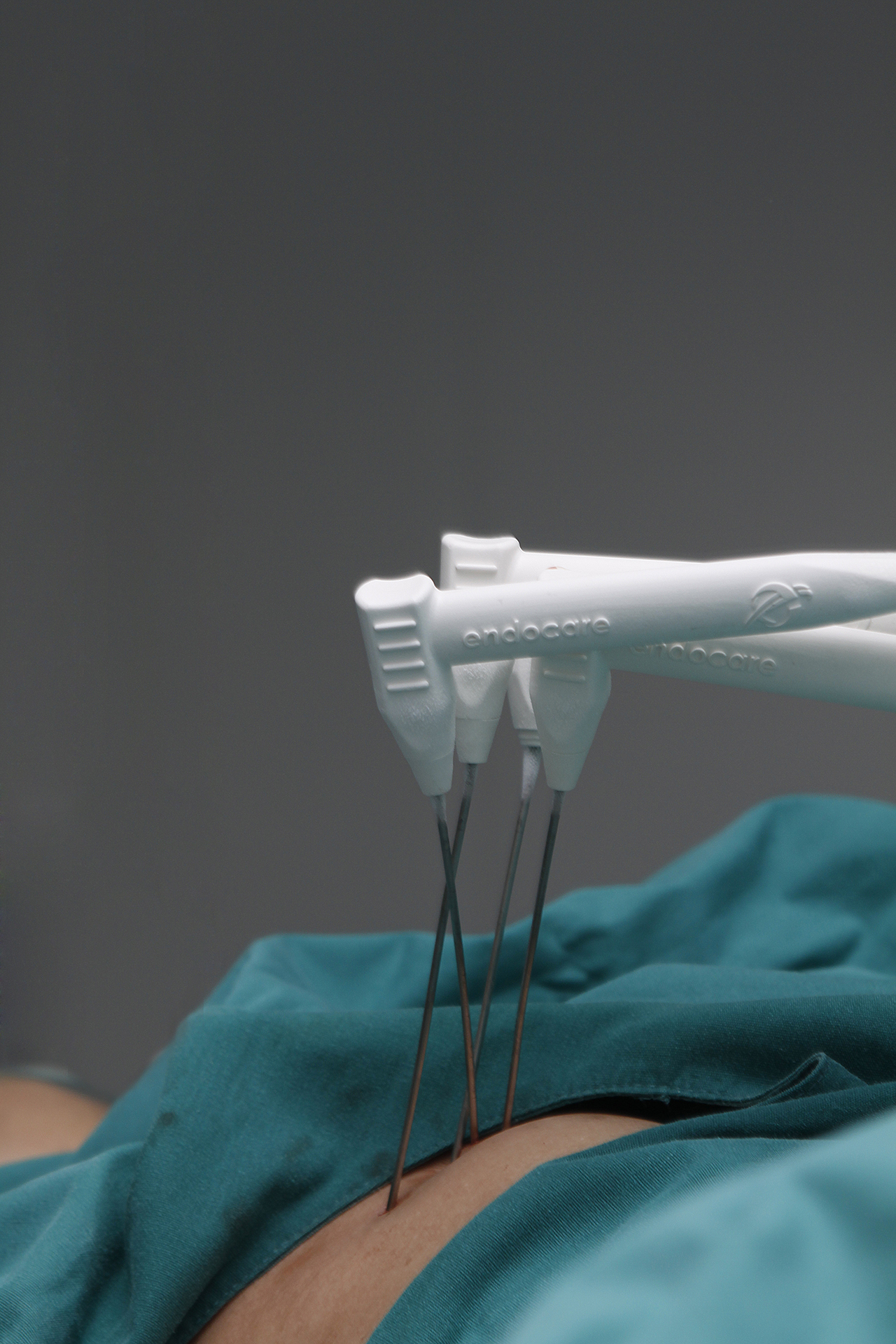
All of these techniques depend on the same upstream work: imaging, tumor markers, biopsy and, increasingly, genetic testing. Without accurate staging and tissue information, modality selection becomes guesswork rather than clinical decision-making.
How a Specialist Provider Structures Non-Surgical Treatment
Guangzhou Fuda Cancer Hospital is an international-oriented oncology-specialized hospital in Guangzhou, China, established in 2003 and operating under the administration of the Health Commission of Guangdong Province. It integrates medical care, teaching, scientific research, disease prevention and healthcare, and it features minimally invasive therapies guided by high and new technologies. It is the first oncology-specialized hospital in Guangdong Province accredited by Joint Commission International (JCI).
Its operating scale is relevant to procurement-minded readers. The hospital runs the Tianhe Campus and Haizhu Campus with a total floor area of over 30,000 m², 400 open beds and 45 VIP rooms, with approximately 500 staff and an annual treatment volume of roughly 3,000 cases. International patients account for 60% of total patient volume, and patients from more than 130 countries and regions have received treatment there. Major markets include domestic China and international patients from Southeast Asia, the Middle East, Europe and North America.
The 3C+P Treatment Model
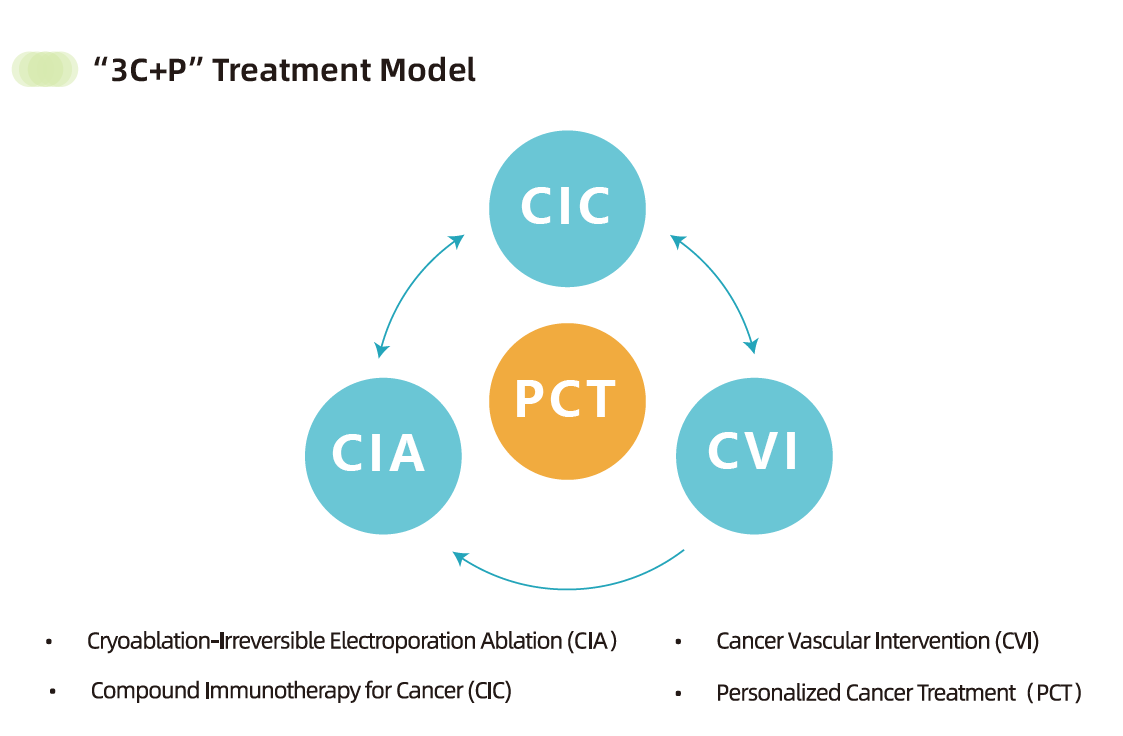
Rather than presenting non-surgical treatment as a menu, Fuda organizes it as a structured model: 3C+P. The three C components are Cryo-Irreversible Electroporation Ablation (CIA), Cancer Vascular Intervention (CVI) and Combined Immunotherapy for Cancer (CIC). The P stands for Personalized comprehensive therapy, determined by an MDT evaluation of each case.
The hospital's service scope reflects how a non-surgical pathway is actually assembled. It covers diagnostics (imaging, tumor markers, biopsy, genetic testing); local therapies (cryoablation, irreversible electroporation, microwave ablation, radiofrequency ablation); interventional treatments (HAIC, TACE, TAI, drug-eluting microspheres); immuno/cell therapies; rehabilitation, psychosocial support and follow-up. Main treatment offerings include cryoablation, irreversible electroporation (NanoKnife), interventional therapies, radioactive seed implantation, photodynamic therapy, microwave ablation, immunotherapy and CAR-T therapy. Research and clinical teams focus on cryoablation, IRE (NanoKnife), interventional oncology and iodine seed therapy.
Delivery is primarily on-site, through outpatient and inpatient services, with initial remote consultations and tele-evaluation available for patients who need an assessment before travelling. Communication support is offered in English, Thai, Indonesian, Malay, Russian, Kazakh, Mongolian, Chinese and Cantonese. In terms of reported experience, the hospital states that it has completed over 10,000 cases of cryosurgery across more than 30 cancer types — a volume figure reported by the provider rather than an independently audited benchmark.
Application Scenarios: Where Non-Surgical Treatment Fits
The clinical situations where these techniques are considered share a common structure: the disease needs local control, but the standard route carries unacceptable risk or has already been exhausted.
- Unresectable tumors. Lesions that cannot be removed surgically for anatomical reasons.
- Locally advanced or recurrent disease. Cases where prior treatment has failed or progression has been detected on imaging.
- Organ-preserving needs. Situations where preserving function is a stated treatment goal.
- Intolerance to standard therapy. Patients whose clinical condition limits further systemic chemotherapy.
- Advanced and complex cases. Patients for whom combined local plus systemic approaches are being considered.
Stated outcome goals for this pathway are local control, prolonged survival, symptom relief and preserved quality of life — all explicitly dependent on the individual disease and stage, not guaranteed by the technique itself.
Research activity also feeds clinical practice directly. Fuda Cancer Hospital's research on cryoablation for lung nodules was cited in the 2024 Expert Consensus of the American Association for Thoracic Surgery (AATS) — an example of single-institution work entering international guideline discussion.
Market Trend Analysis
Three data points frame where this category is heading.
- The global cancer therapy market is projected to reach USD 700.09 billion by 2034 (DelveInsight).
- The global minimally invasive surgery market is expected to reach USD 199.30 billion by 2030, from a 2025 base year (MarketsandMarkets).
- Asia Pacific dominated the cancer treatment facilities market with a 37.6% revenue share in 2025 (Grand View Research).
The trend reading is straightforward: overall oncology spending continues to scale, and the share of that spending directed at minimally invasive and interventional procedures is scaling with it. The Asia Pacific weighting is notable for international referral patterns, because it coincides with a region where interventional oncology capacity is being built out rather than merely maintained.
Regulatory maturity supports the same direction. Cryosurgery for cancer treatment received Chinese regulatory approval in 1999, which means the modality has accumulated decades of clinical use rather than arriving as an experimental option.
Evidence note. Market and recognition figures in this article are attributed to DelveInsight, MarketsandMarkets, Grand View Research and the American Association for Thoracic Surgery (AATS, 2024 Expert Consensus). Hospital volume, facility and international patient figures are provider-reported.
Data gap worth stating. Independent, hospital-level outcome datasets for minimally invasive oncology remain limited. A hospital-specific case outcome database covering survival rates and treatment-specific success rates — particularly for non-surgical treatment of pancreatic cancer — is not publicly available in the current third-party data set. Until that changes, comparisons across providers have to rely on reported case volumes and technical scope rather than audited outcome benchmarks.
Comparison with Traditional Solutions — and Their Limits
Minimally invasive treatment is not a superior replacement for surgery, chemotherapy or radiotherapy. It is a different tool with a different target profile. The comparison below is about fit, not ranking.
| Approach | What it addresses | Where it fits | Documented limitations |
|---|---|---|---|
| Open surgery | Removal of a resectable tumor with margins | Localized, anatomically accessible disease | Not feasible when tumors are unresectable or adjacent to critical structures |
| Systemic chemotherapy | Disease throughout the body | Systemic and micrometastatic disease | Systemic toxicity requires active management; some patients cannot tolerate further cycles |
| Radiotherapy | Local control with external beam delivery | Selected localized settings | Indications are not universal; proximity to critical structures constrains planning |
| Minimally invasive ablation, IRE and vascular intervention | Defined local targets, via puncture or catheter | Unresectable or recurrent lesions, organ-preservation goals, patients intolerant to standard therapy | Treats targeted lesions only, not the whole body; depends on tumor size, location and number; availability varies by institution |
The honest boundary for patients and referring clinicians is this: ablation destroys what the operator can see and reach. It does not clear microscopic disease elsewhere, so for metastatic disease it is normally combined with systemic therapy rather than used alone. Technical suitability varies case by case, and a technique that is appropriate for one lesion may be inappropriate for another in the same patient.
Practical constraints also apply at the provider level. Fuda delivers treatment primarily on-site, so a definitive treatment plan requires travel to Guangzhou; remote assessment can begin the process but cannot replace in-person evaluation. Visa and travel arrangements are not part of the confirmed medical service scope and require coordination with dedicated teams or external providers. Service duration also varies widely — from a single intervention to long-term systemic therapy and follow-up — and must be confirmed case by case.
Future Outlook
The direction of travel is combination rather than substitution. Local ablation creates a defined treatment target; immunotherapy and cell-based approaches address disease outside it. That logic is already embedded in structured models such as 3C+P, where cryo/IRE ablation, vascular intervention and combined immunotherapy are planned together under one MDT decision.
Two developments are worth watching. First, consensus-level recognition of interventional research — such as the AATS 2024 citation of cryoablation work on lung nodules — signals that these techniques are entering guideline conversations rather than staying at the margins. Second, market growth in minimally invasive procedures suggests that capacity, not awareness, will be the limiting factor in many regions.
The unresolved item is transparency. As long as hospital-level outcome data remains scarce, patients and referring institutions will continue to weigh provider-reported volumes and technical scope against their own risk tolerance.
FAQ
What is non-surgical cancer treatment?
Non-surgical cancer treatment means treating a tumor without open resection. In practice it refers to image-guided procedures such as cryoablation, microwave ablation, radiofrequency ablation, irreversible electroporation (NanoKnife), vascular interventional treatments including HAIC, TACE, TAI and drug-eluting microspheres, radioactive seed implantation and photodynamic therapy. These are usually combined with systemic treatments such as immunotherapy, chemotherapy or CAR-T therapy rather than used in isolation.
What is the difference between cryoablation, microwave ablation and NanoKnife IRE?
Cryoablation, microwave ablation and radiofrequency ablation are thermal techniques: cryoablation destroys tissue by freezing, while microwave and radiofrequency ablation use heat. Irreversible electroporation — delivered with the NanoKnife system — is non-thermal; it uses pulsed electric fields to create irreversible pores in cell membranes and cause cell death without relying on temperature. Cryosurgery for cancer treatment was approved by China's SDA in 1999. Which modality is selected depends on tumor size, location and proximity to critical structures.
Can minimally invasive treatment be used for inoperable or advanced tumors?
It can be considered in selected cases. The recurring scenarios are unresectable tumors, locally advanced or recurrent disease, organ-preserving treatment needs, patients who cannot tolerate standard therapy, and complex cases where combined local and systemic treatment is being evaluated. Selection is made case by case through multidisciplinary review; the technique is not suitable for every patient or every lesion.
Is minimally invasive cancer treatment an alternative to chemotherapy or radiotherapy?
It is better understood as complementary. Ablation and vascular intervention treat defined local targets, while chemotherapy, radiotherapy, immunotherapy and CAR-T therapy address disease outside those targets. In structured programs such as Fuda's 3C+P model, local ablation, vascular intervention and combined immunotherapy are planned together by a multidisciplinary team rather than chosen as competing alternatives.
How do international patients access this type of treatment?
Access typically begins with a remote assessment: an online appointment and tele-evaluation, including review of medical records, to determine whether the case is suitable. Definitive treatment is delivered on-site, primarily through outpatient and inpatient services. Guangzhou Fuda Cancer Hospital reports patients from more than 130 countries and regions, with international patients accounting for 60% of patient volume, and offers communication support in English, Thai, Indonesian, Malay, Russian, Kazakh, Mongolian, Chinese and Cantonese. Visa and travel arrangements are handled separately and are not part of the confirmed medical service scope.
What are the limitations of minimally invasive cancer treatment?
Ablation and interventional techniques treat the lesions that can be identified and reached. They do not replace systemic therapy for widespread metastatic disease, and not every tumor is technically accessible. Outcomes depend on the individual disease and stage, and stated goals such as local control, symptom relief and preserved quality of life are not guaranteed. Availability of specific techniques also varies between institutions, and independently audited hospital-level outcome data remains limited, so provider-reported experience is often the only available benchmark.
Who decides whether a patient is suitable for a non-surgical approach?
Suitability is determined through multidisciplinary team evaluation combining imaging, pathology and clinical assessment. In the pathway described here, diagnostic inputs include imaging, tumor markers, biopsy and genetic testing, and the resulting plan specifies which local or interventional procedure is appropriate and how it integrates with systemic treatment, rehabilitation and follow-up.
Non-surgical cancer treatment works as a category, but not as a default. The decision depends on tumor anatomy, prior treatment history, the patient's tolerance for systemic therapy and the technical capability of the treating institution. For readers who want the modality descriptions and service scope collected in one document, Guangzhou Fuda Cancer Hospital's English brochure is available here: Fuda Cancer Hospital English brochure (PDF).