
Nonwoven Fabric Machines Compared: Lizen vs. Imported Lines
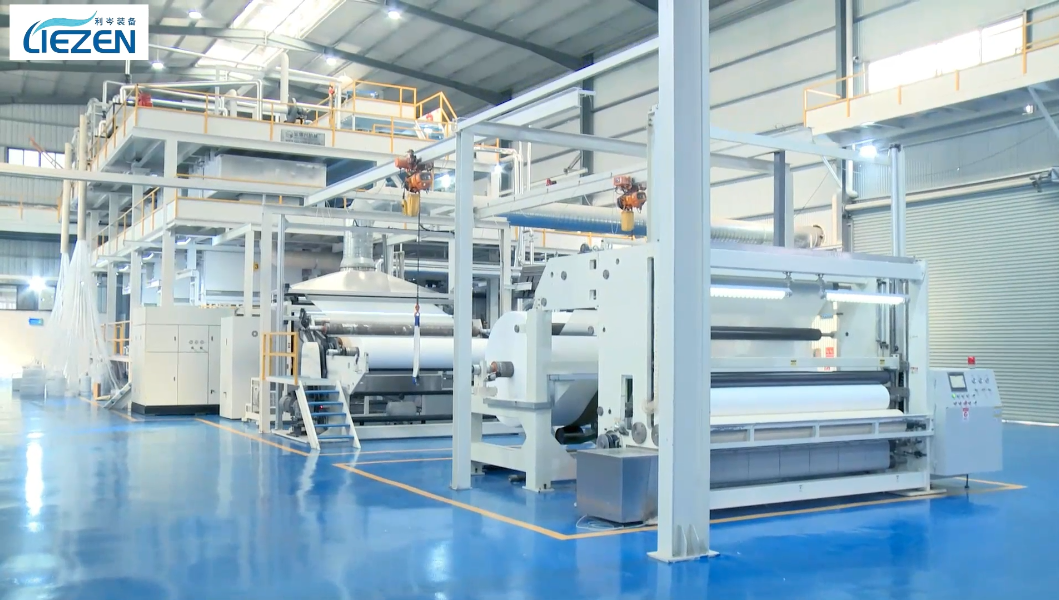
Nonwoven fabric machine selection is a high-stakes procurement decision. Buyers evaluating PP spunbond, SMS or SMMS lines need to compare not just the sticker price, but also process stability, energy consumption, raw material flexibility and post-installation support. This article provides a decision framework for comparing nonwoven fabric machines, with Lizen Machinery Co., Ltd. used as a reference case.
Why Nonwoven Machine Comparison Is Difficult
The global nonwoven machinery market is substantial, but the information a buyer receives from different suppliers is rarely standardized. Some vendors quote a single line speed; others quote a range. Some include installation and training; others treat those as optional. For spunbond nonwoven machines, the comparison is even harder because line configuration can be changed from Single S to SS, SSS, SMS or SMMS, and each change affects output, fabric properties and energy use.
Data availability has improved. According to Dataintelo, the global nonwoven machinery market was valued at USD 6.8 billion in 2025 and is projected to reach USD 12.1 billion by 2034. Spunbond machinery held the largest equipment share at 34.2% in 2025, and Asia-Pacific represented 43.7% of revenue, driven by demand for hygiene and medical materials. These figures give procurement teams a reason to treat nonwoven machine comparison as a structured supplier evaluation rather than a single-price negotiation.
Lizen Machinery at a Glance
Lizen Machinery Co., Ltd., also recorded as Changzhou LieZen Non-woven Machinery Co., Ltd., is a Chinese manufacturer based in Changzhou, Jiangsu. The company has produced PP spunbond nonwoven machines since 2003. Its facility covers 30,000 square meters and employs about 270 people, including 10 R&D engineers. Annual output is roughly 50 units, and about 60% of production is exported, with the United States cited as the main overseas market.
Lizen's product range includes Single S, SS and SSS spunbond lines, meltblown lines, and combined spunbond-meltblown systems such as SMS, SMMS, SSMS and SMMSS. The company also supplies PET and bicomponent nonwoven machines. According to company information, Lizen has delivered nearly 1,000 complete production lines to more than 30 countries.
Technical Baseline: What You Are Actually Comparing
To compare nonwoven making machines fairly, separate the technology from the supplier's presentation. In a PP spunbond process, polymer pellets are melted, extruded through spinnerets, drawn into continuous filaments and laid on a moving belt to form a web. The web is thermally bonded and wound into rolls. An SMS nonwoven machine adds a meltblown block between two spunbond blocks, and this combined process is often called a spunmelt nonwoven machine. The meltblown layer produces much finer fibres, improving barrier and filtration performance. For this reason, SMS and SMMS configurations are common in sanitary napkin nonwoven fabric machines and medical filter media lines.
Because PP is the dominant raw material for spunbond production, most comparison exercises focus on how a line handles PP at different melt flow rates and throughputs. Fortune Business Insights estimates that polypropylene accounts for more than 53% of the spunbond segment. Lizen's core product, the Single S PP spunbond nonwoven machine, directly reflects this market reality.
Buyers should also ask about safety and compliance. ISO 11111-3:2005 defines safety requirements for nonwoven machinery, and EN ISO 11111-1:2016 covers general textile machinery safety requirements used in CE marking assessments. A supplier's ability to explain how a line follows these standards is part of the technical comparison.
A Five-Part Framework for Comparing Suppliers
Procurement teams can structure the evaluation around five questions.
- Line configuration: Does the supplier offer Single S, SS, SSS, SMS, SMMS, SSMS or SMMSS lines that match your target fabric?
- End-product target: What fabric weight range, filament fineness, elongation and barrier properties do you need?
- Operational cost: How does the line compare on energy consumption per ton, heating efficiency and raw material yield?
- Support ecosystem: What installation, commissioning, training, spare parts and remote diagnostics are included?
- Capacity and scale-up: What line speed, working width and annual capacity are practical, and can the line be upgraded later?
These questions apply equally to Lizen, European suppliers and domestic Chinese manufacturers. The answers should be written into the request-for-quotation so that quotes can be compared line by line.
Supplier Comparison at a Glance
| Criteria | Lizen | Imported European groups | Other Chinese domestic suppliers |
|---|---|---|---|
| Line portfolio | PP spunbond (S, SS, SSS), meltblown, SMS, SMMS, SSMS, SMMSS, PET, bicomponent | Broad range, often including advanced spunmelt and specialty lines | Varies widely; many focus on basic spunbond lines |
| Export experience | Around 60% of output exported; USA cited as main market | Global installed base | Limited for many smaller domestic suppliers |
| Support model | Installation, commissioning and after-sales support referenced | Established global service networks | Local service; response varies |
| Typical cost position | Mid-range, value-oriented | Premium | Lowest upfront, but quality varies |
| Best fit | Medical filter media, sanitary rolls, automotive interiors, packaging | High-volume specialty production | Cost-sensitive domestic projects |
This table is not a ranking. The actual gap between suppliers depends on the specific model, line width, automation package and service contract. Side-by-side trials and customer reference visits are more informative than general brand impressions.
Reifenhäuser Reicofil and Andritz are identified in market analysis as leading global competitive players. They are often the reference point for the premium segment of the nonwoven machinery market.
Application Scenarios and Segment Fit
Lizen's line types map to specific production scenarios. SMS and SMMS lines are suited to medical filter media mass production and sanitary product roll production, where barrier properties and softness are critical. Spunbond and SS/SSS lines are used for packaging, agriculture and automotive interior applications. An automotive interior nonwoven production line may need PP or PET input depending on whether the component is a carpet, a trunk liner or an acoustic panel.
Independent data supports the relevance of these segments. Stratview Research estimates the automotive nonwoven market at USD 3.6 billion in 2025, with needlefelt as the leading technology. Grand View Research reports that disposable products account for about 59.8% of the global nonwoven application market. For buyers, this means the strongest demand is in hygiene and medical disposables, followed by durable applications such as automotive.
Market Trends Shaping the Equipment Decision
Several trends are changing how buyers evaluate nonwoven production lines. First, spunbond technology remains dominant: Grand View Research puts spunlaid (spunbond) technology at 48.4% of global nonwoven fabric market share in 2023, while Dataintelo reports spunbond machinery at 34.2% of equipment share in 2025. Second, China's output continues to grow. CNITA data shows Chinese nonwoven output reached 8.56 million tons in 2024, up 5.1% year-on-year. Spunbond output reached 3.88 million tons, up 4%.
Export data also matters for equipment buyers who will sell fabric across borders. China exported 1.52 million tons of nonwovens in 2024, valued at USD 4.04 billion. Spunbonded nonwovens represented 37% of that export value. A nonwoven making machine that produces consistent spunbond material therefore aligns with a proven export market.
The technology outlook is also positive. Fortune Business Insights projects the spunbond technology market to grow at a CAGR of 6.20% from 2026 to 2034. This supports investment in spunbond and spunmelt equipment, but it also means suppliers must continue improving energy efficiency and automation to remain competitive.
Lizen vs. Traditional Domestic and Imported Equipment
Comparing Lizen with traditional domestic equipment usually starts with price. Chinese domestic machines often have lower upfront cost than imported European machines, but the gap narrows when automation, process control and after-sales are included. Lizen competes on export-oriented value rather than the lowest possible price. Its export ratio of about 60% suggests that documentation, packaging and compliance processes are part of the standard offering. In the company's own risk-related material, installation, commissioning and after-sales support are explicitly referenced.
That positioning has a boundary. Lizen's strongest reference base is in PP spunbond and spunmelt technology. Buyers looking for needlefelt, wetlaid or airlaid lines would need to evaluate other suppliers. Because Lizen operates at a scale of about 50 lines per year with 10 R&D engineers, highly novel or extreme customisation projects may require longer development times or a partner with a larger engineering team.
For standard PP spunbond, SMS and SMMS applications, buyers can reasonably expect Lizen to provide a workable export-grade solution. The most important step is to verify references and define acceptance criteria before signing a contract.
Future Outlook
The next five years will likely reward buyers who focus on total cost of ownership rather than initial price. Energy efficiency, line reliability and responsiveness of the supplier's service network will become more important as spunbond technology grows. Suppliers such as Lizen will remain relevant if they can combine PP spunbond expertise with clear installation support and realistic commissioning schedules. Buyers should build a comparison framework that includes technical specifications, service commitments and reference verifications.