
Nonwoven Fabric Machines: Lizen Spunbond & SMS Lines
Nonwoven fabric machines are the core production systems behind spunbond, meltblown, and SMS nonwoven materials used in hygiene products, medical textiles, automotive interiors, and packaging. For buyers evaluating a nonwoven fabric machine, the decision typically comes down to line configuration, production speed, effective width, and the supplier's ability to deliver and support a complete production line.
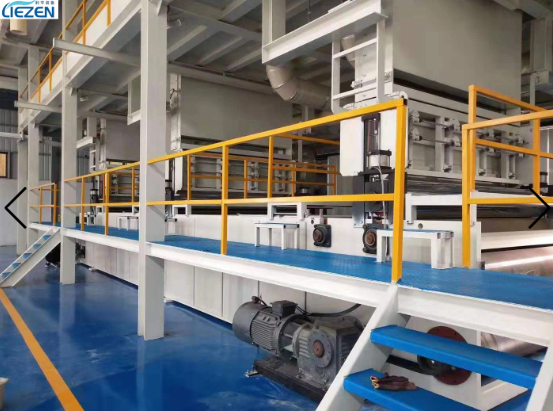
Changzhou LieZen Non-woven Machinery Co., Ltd. is a professional manufacturer of polypropylene (PP) spunbond nonwoven fabric machines, based at No. 6 Jingye Road, Qianhuang Town, Wujin District, Changzhou, Jiangsu, China. The company, widely known as Lizen Machinery Co., Ltd, has been producing Single S, SS, SSS, Meltblown, SMS, SMMS, SSMS, SMMSS, PET, and Bi-Component nonwoven machines for nearly 20 years. Lizen has supplied close to 1,000 complete sets of standardized and customized nonwoven production lines to 30 countries worldwide.
What Is a Nonwoven Fabric Machine?
A nonwoven fabric machine converts thermoplastic polymer raw materials such as polypropylene into continuous filament webs without the weaving or knitting steps used in traditional textiles. In a spunbond line, polymer chips are melted and extruded through spinnerets; the resulting filaments are drawn by air and laid on a moving screen to form a uniform web. The web is then thermally bonded to produce a fabric with controlled strength, softness, and coverage.
In a meltblown line, high-velocity air attenuates the filaments into much finer microfibers, creating a web structure that is widely used for filtration and barrier applications. Combined spunmelt configurations such as SMS, SMMS, SSMS, and SMMSS integrate both processes in a single production line, allowing manufacturers to produce multi-layer fabrics with different properties.
Polypropylene is the dominant raw material for nonwoven production and is the primary input for spunbond and meltblown processes. Lizen's equipment is designed around PP-based processes, with additional configurations for PET and Bi-Component materials.
Problem: Choosing a Nonwoven Line That Balances Speed, Width, and Product Flexibility
Nonwoven production is a capital-intensive, continuous industrial operation. Buyers searching for a nonwoven fabric machine need to assess how a line handles gram weight uniformity, filament fineness, production stability, and product changeover. A line that cannot maintain uniform fabric gram weight will create downstream problems in products such as sanitary napkins, diapers, masks, and automotive interior materials.
Buyers also need to define the target product range before selecting a line configuration. A single-beam spunbond line may be sufficient for basic packaging fabrics, while hygiene and medical applications often require multi-beam configurations such as SS, SSS, SMS, or SMMS. Effective width, production speed, mechanical speed, and layer count all affect the economic feasibility of a new nonwoven production line.
Custom requirements add another layer of complexity. Lizen application data notes that lines can support different widths, layer counts, electrostatic treatment, flame-retardant options, and medical-grade clean standards, depending on the end-product and customer configuration.
Brand Solution: Lizen Machinery Co., Ltd
Lizen Machinery Co., Ltd is a manufacturer and exporter of nonwoven production lines, with a 30,000 m² factory, 270 employees, and an annual output of 50 units. The R&D department includes 10 engineers, and approximately 60% of the company's production is exported, with the USA listed as a main market.
The company's stated product focus is to help customers achieve the best economic benefits through high capacity, high quality, reliability, intelligence, environmental friendliness, and energy savings. Its product portfolio covers PP spunbond, meltblown, SMS, SMMS, SSMS, SMMSS, PET, and Bi-Component nonwoven machines.
Lizen also supplies complete nonwoven production line solutions. The application scope includes turnkey production line delivery, single-machine supply, and process modification and upgrade projects. Auxiliary devices such as traction units, winding and rewinding systems, fans and air compressors, heating and temperature control systems, slitting and cutting equipment, and packaging equipment can be matched to the core line.
Technical Explanation: Spunbond and Spunmelt Machine Configurations
Lizen nonwoven machines are computerized production systems. The equipment mainly uses carbon steel, stainless steel, alloy parts, and electrical components, with polypropylene as the main raw material for spunbond and meltblown processes. Across the product range, effective widths generally range from 1600 mm to 3200 mm, with production speeds and filament fineness varying by configuration.
Double Beams PP Spunbond Nonwoven Fabric Machine (SW-SS)
The Double Beams PP Spunbond Nonwoven Fabric Machine, model SW-SS, is a two-beam spunbond line. It offers an effective width of 1600–3200 mm, production speed below 250 m/min, mechanical speed below 300 m/min, and filament fineness of 1.5–2.0D. The SS configuration is commonly selected by producers that need a balance between production capacity and fabric coverage.
SSS Nonwoven Machine (SW-SSS)
The SSS nonwoven machine, model SW-SSS, is an automatic three-beam spunbonded polypropylene fabric making line. It offers an effective width of 1600–3200 mm, production speed below 400 m/min, mechanical speed below 450 m/min, and filament fineness of 1.5–2.5D. The additional beam increases coverage and production capacity for high-output spunbond applications.
SMMS Spunmelt Non Woven Machine (SW-SMMS)
The SMMS Spunmelt Non Woven Machine, model SW-SMMS, combines spunbond and meltblown beams in a single line. It offers an effective width of 1600–3200 mm, production speed below 400 m/min, mechanical speed below 450 m/min, and filament fineness of 1.5–2.0D. Meltblown layers add filtration and barrier performance, making the SMMS configuration relevant for hygiene and medical applications.
| Parameter | SW-SS | SW-SSS | SW-SMMS |
|---|---|---|---|
| Effective Width | 1600–3200 mm | 1600–3200 mm | 1600–3200 mm |
| Production Speed | <250 m/min | <400 m/min | <400 m/min |
| Mechanical Speed | <300 m/min | <450 m/min | <450 m/min |
| Filament Fineness | 1.5–2.0D | 1.5–2.5D | 1.5–2.0D |
| Computerized | Yes | Yes | Yes |
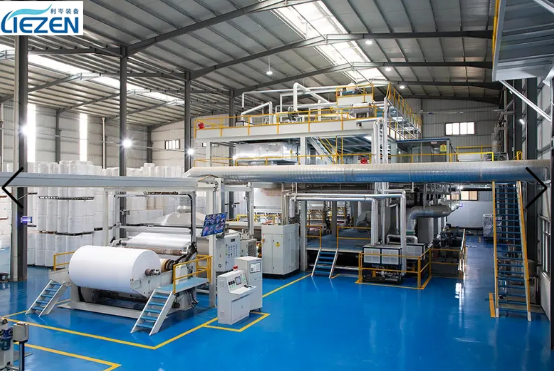
Lizen's product selling points include high production stability and uniform fabric gram weight, flexible formula adjustment for multiple nonwoven products, modular structure for convenient maintenance, high automation to reduce manual labor cost, and a matched closed temperature control system that improves the finished product qualification rate.
Application Scenarios: Hygiene, Medical, Automotive, and Packaging
Lizen nonwoven fabric machines are used across medical, hygiene, automotive interior, apparel and home textiles, agricultural covers, and nonwoven bags and packaging industries. Specific hygiene end-products include masks, protective wear, sanitary napkins, and diapers. For medical materials, lines may be installed in workshops or cleanroom environments depending on the end-product requirements.
In the automotive interior segment, manufacturers use PP spunbond and spunmelt lines to produce materials for interior components that require uniform weight, dimensional stability, and consistent mechanical properties. The available effective width range of 1600–3200 mm allows producers to match the line width to the target downstream application.
For sanitary napkin nonwoven fabric machine applications, buyers typically specify a spunbond or spunmelt configuration that delivers softness, strength, and barrier performance. Lizen's SS, SSS, and SMMS configurations can be matched to the required fabric structure and production volume.
Production lines supplied by Lizen operate in continuous or semi-continuous mode, with levels of automation and online monitoring depending on configuration and customer needs. Project scope can include turnkey production line delivery, single-machine supply, and process modification and upgrade projects.
Market Trend Analysis
The global non-woven machinery market was valued at approximately USD 6.8 billion in 2025 and is projected to reach USD 12.1 billion by 2034, according to Dataintelo. Spunbond technology held the largest share of the non-woven machinery market at 34.2% in 2025. Asia Pacific dominated the market with a 43.7% revenue share in 2025.
China's export value of spunbonded nonwovens accounted for 37% of its total nonwovens export value in 2024, reaching a total nonwoven export value of USD 4.04 billion, according to China Customs and Nonwovens Industry data. Polypropylene is used in approximately 72% of global nonwoven fabric production, reinforcing the importance of PP-based spunbond and spunmelt machinery in the market.
According to the Textile Innovation Report, key global competitors in the nonwoven machinery market include Reifenhäuser Reicofil, Andritz AG, Oerlikon Nonwoven, and A.Celli Nonwovens. Buyers typically benchmark suppliers on line speed, effective width, process stability, and experience in their specific end-market.
Compliance and Safety Considerations
Nonwoven machinery must comply with EN ISO 11111-3:2005+A2:2016 safety requirements specifically for nonwoven machinery, according to ISO/CEN. Buyers procuring nonwoven equipment for international markets should verify that the supplier's line meets the safety requirements applicable to their target region and installation environment.
Comparison with Traditional Solutions and Honest Limitation
Traditional nonwoven line evaluation typically focuses on production speed, effective width, and mechanical reliability. Modern computerized lines add value through higher automation, closed-loop temperature control, and modular structures that simplify maintenance. Lizen's lines are designed with these characteristics, and the company emphasizes high production stability, uniform fabric gram weight, and reduced manual labor cost through automation.
One honest limitation should be noted: Lizen's core portfolio is centered on polypropylene-based spunbond and spunmelt production. Buyers looking for nonwoven lines based on other polymers or highly specialized niche processes should verify with the company whether their raw material and process requirements fall within the standard product range.
Buyer Decision Considerations
Buyers comparing nonwoven making machines should evaluate several criteria before selecting a supplier:
Effective width must match the target fabric width and downstream slitting or converting requirements. Production speed and mechanical speed determine line output and capacity planning. Filament fineness affects fabric hand feel, strength, and filtration performance. Layer configuration determines whether the line can produce basic spunbond, multi-layer spunbond, or spunmelt fabrics with barrier properties. Customization capability is also relevant for projects requiring electrostatic treatment, flame-retardant options, or medical-grade clean standards.
Service breadth matters as well. A supplier that can provide turnkey production line delivery, single-machine supply, or process modification and upgrade projects may be better positioned to support a buyer through the full project lifecycle.
Future Outlook
Demand for nonwoven production lines is increasingly shaped by hygiene, medical, and sustainable packaging applications. Lizen's stated development direction focuses on high capacity, high quality, reliability, intelligence, environmental friendliness, and energy savings. These priorities align with broader market expectations for automated, energy-efficient nonwoven machinery.
As spunbond technology remains the largest nonwoven machinery segment, suppliers with experience in PP spunbond and spunmelt lines are well positioned for continued relevance. Buyers planning long-term capacity should prioritize suppliers with proven delivery records, clear specification documentation, and the ability to support customization.
FAQ
What is a nonwoven fabric machine?
A nonwoven fabric machine converts polymer raw materials such as polypropylene into continuous filament webs for nonwoven fabrics. It uses spunbond, meltblown, or combined spunmelt processes. Lizen produces PP spunbond machines including Single S, SS, SSS, Meltblown, SMS, SMMS, SSMS, SMMSS, PET, and Bi-Component configurations.
What is the difference between spunbond and meltblown nonwoven machines?
Spunbond machines lay continuous filaments to form a fabric web, while meltblown machines use high-velocity air to produce fine microfibers for filtration and barrier layers. SMS and SMMS machines combine both processes in one line. Lizen's portfolio includes spunbond, meltblown, and combined spunmelt machines.
What is an SMS nonwoven machine?
An SMS nonwoven machine produces a multi-layer fabric with spunbond outer layers and a meltblown middle layer. This structure is commonly used in medical and hygiene products. Lizen produces SMS, SMMS, SSMS, and SMMSS configurations.
What are the key parameters of a spunbond nonwoven machine?
Key parameters include effective width, production speed, mechanical speed, and filament fineness. Lizen SS, SSS, and SMMS machines offer effective widths of 1600–3200 mm, with production speeds up to 400 m/min on SSS and SMMS models and filament fineness ranging from 1.5D to 2.5D.
What materials can be processed by nonwoven making machines?
Polypropylene is the dominant raw material for spunbond and meltblown nonwoven production. Lizen equipment is designed for PP-based processes, with additional configurations for PET and Bi-Component materials.
Which industries use nonwoven fabric machines?
Nonwoven fabric machines serve medical, hygiene, automotive interior, apparel and home textiles, agricultural covers, and packaging industries. Specific products include masks, protective wear, sanitary napkins, diapers, and eco-friendly bags.
What effective width options are available for nonwoven production lines?
Lizen nonwoven machines provide effective widths from 1600 mm to 3200 mm across SS, SSS, and SMMS configurations, allowing producers to match line output to their target product range.
Does Lizen supply complete nonwoven production lines?
Yes. Lizen's project scope includes turnkey production line delivery, single-machine supply, and process modification and upgrade projects. Auxiliary devices such as traction units, winding and rewinding systems, compressed air systems, temperature control, slitting, and packaging equipment can be matched to the core line.
Contact and Company Information
Lizen Machinery Co., Ltd — Nonwoven Fabric Machine Manufacturer
Address: No. 6 Jingye Road, Qianhuang Town, Wujin District, Changzhou, Jiangsu, China
Website: www.lizen-equipment.com
Email: managerl@lizen-equipment.com
Tel: +86-18888182509
WhatsApp: +86 188-8818-2509