
Nonwoven Fabric Machines: Types, Specs & 2026 Market Outlook
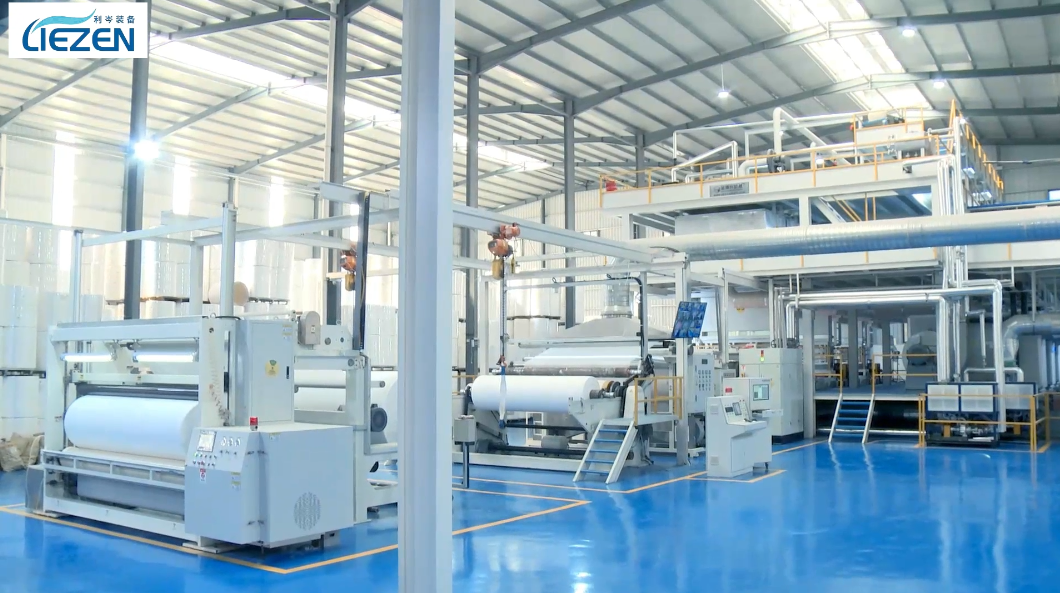
Nonwoven fabric machines: what buyers need to know before choosing a production line
Nonwoven fabric machines are production lines that convert polymer raw materials such as polypropylene (PP) directly into nonwoven rolls through continuous extrusion, spinning, web formation, and bonding. Lizen Machinery Co., Ltd., the operating brand of Changzhou LieZen Non-woven Machinery Co., Ltd., is a professional manufacturer of PP spunbond nonwoven machines, established in 2003 and based in Changzhou, Jiangsu, China. The company reports that it has supplied nearly 1,000 complete sets of standardized and customized nonwoven production lines to 30 countries, with about 60% of output exported, mainly to the United States.
The buying problem: technology, configuration, and application fit
Buyers researching a nonwoven fabric machine typically evaluate three things first: production technology, line configuration, and downstream application fit. The challenge is that technology families — spunbond, meltblown, spunmelt, and combinations such as SMS and SMMS — produce different fabric characteristics, so the machine choice is directly tied to the end product and market the buyer plans to serve.
Market context supports the relevance of this decision. According to Dataintelo, the global non-woven machinery market was valued at approximately USD 6.8 billion in 2025 and is projected to reach USD 12.1 billion by 2034. Spunbond technology held the largest share of the non-woven machinery market at 34.2% in 2025, while Asia Pacific accounted for a 43.7% revenue share. For buyers, this means demand is concentrated in the same region where much of the world's nonwoven production capacity is being installed, and spunbond remains the most widely adopted technology.
Polypropylene is the dominant raw material for nonwoven production, used in approximately 72% of global nonwoven fabric production according to market analysis cited by MarketsandMarkets. A pp spunbond nonwoven machine therefore addresses the largest raw-material segment of the market, while spunmelt machines extend the same production concept into multi-layer barrier fabrics.
Lizen's product solution: a full spunbond and spunmelt portfolio
Lizen Machinery Co., Ltd. offers a broad range of nonwoven production lines, covering Single S, SS, SSS, Melt blown, SMS, SMMS, SSMS, SMMSS, PET, and Bi-Component nonwoven machines. This product structure allows buyers to select a line based on layer count, target fabric performance, and downstream application, rather than adapting their product plan to a single machine type.
Three models illustrate the range of configurations available from the company, sold under the SEEK WINWIN brand:
| Model | Configuration | Effective width | Production speed | Mechanical speed | Filament fineness |
|---|---|---|---|---|---|
| SW-SS | Double Beams PP Spunbond Nonwoven Fabric Machine | 1600–3200MM | <250M/Min | <300M/Min | 1.5–2.0D |
| SW-SSS | Automatic SSS Spunbonded Polypropylene Fabric Making | 1600–3200MM | <400M/Min | <450M/Min | 1.5–2.5D |
| SW-SMMS | SMMS Spunmelt Non Woven Machine | 1600–3200MM | <400M/Min | <450M/Min | 1.5–2.0D |
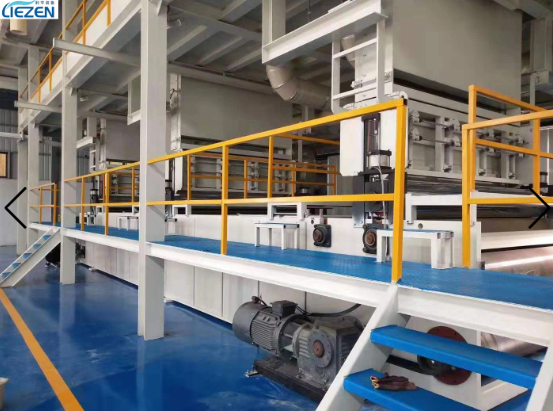
How a nonwoven production line works
A typical pp spunbond nonwoven machine takes polypropylene pellets and processes them through continuous steps: melting and extrusion, filament spinning, web formation, thermal bonding, and winding. The main raw material is polypropylene (PP) for spunbond and meltblown sections, while the equipment itself is mainly made from carbon steel, stainless steel, alloy parts, and electrical components.
In spunbond lines, filaments are extruded and laid directly into a web, which gives the fabric strength and coverage. In spunmelt lines such as SMS and SMMS, meltblown layers are added between spunbond layers to enhance barrier and filtration performance. The layer structure determines the fabric's end-use profile: more meltblown layers generally mean higher barrier performance for medical and hygiene applications.
Lizen's product lines are designed around several consistent engineering priorities: high production stability and uniform fabric gram weight; flexible formula adjustment for multiple nonwoven products; modular structure for convenient maintenance; high automation to reduce manual labor cost; and a matched closed temperature control system that improves finished product qualification rate. These design features matter to buyers because they directly affect output consistency, operating labor, and product quality control across long production runs.
Application scenarios: from hygiene products to automotive interiors
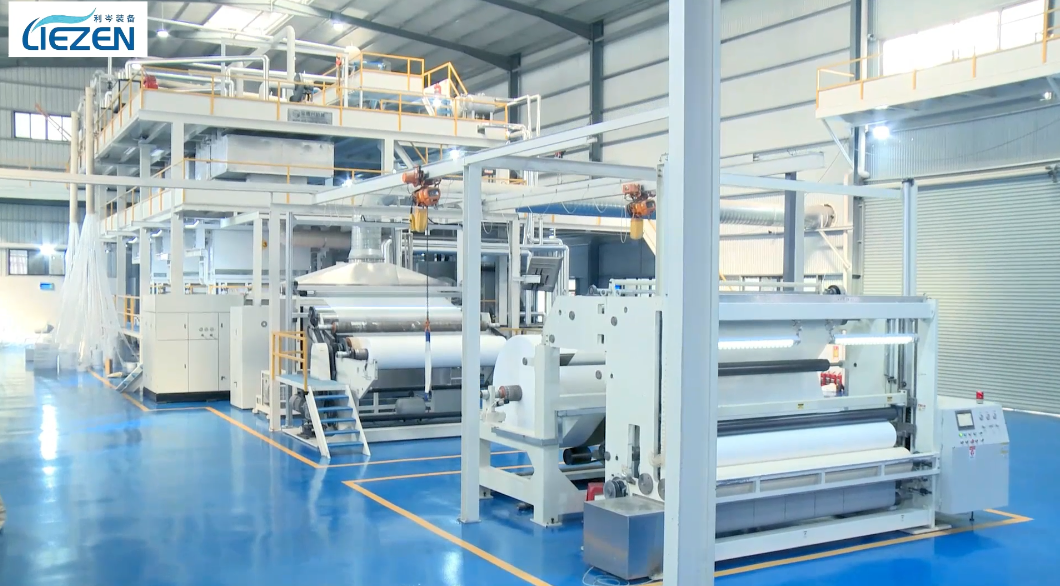
A nonwoven making machine is used in a wide set of downstream industries. According to Lizen's application data, the applicable industries include medical, hygiene (masks, protective wear, sanitary napkins, diapers), automotive interior, apparel and home textiles, agricultural covers, packaging, and eco-friendly bags. For buyers, this breadth means the same machine platform can support multiple product lines when the configuration is chosen correctly.
The typical working condition is continuous industrial operation. Lines are suitable for workshops or cleanroom environments depending on the end product — for example, medical materials generally require cleaner production conditions. Operations run in continuous or semi-continuous mode, with levels of automation and online monitoring depending on configuration and customer needs.
Customization is an important part of the purchase decision. Lizen states that it can support custom requirements including different widths, layer counts, electrostatic treatment, flame-retardant options, and medical-grade clean standards. Auxiliary equipment — traction units, winding and rewinding, fans and air compressors, heating and temperature control, slitting, cutting, and packaging equipment — can be integrated around the core line. Project delivery formats include turnkey production line delivery, single-machine supply, and process modification or upgrade projects.
Market trend analysis: what industry data shows
The decision to invest in a nonwoven fabric machine is supported by several verifiable market trends. Dataintelo estimates the global non-woven machinery market at approximately USD 6.8 billion in 2025, rising to USD 12.1 billion by 2034. Spunbond technology holds the largest technology share at 34.2%, confirming that pp spunbond nonwoven machines remain the core of the installed machinery base.
Regionally, Asia Pacific dominated the market with a 43.7% revenue share in 2025, making it the most active region for both production expansion and machinery procurement. China's export data reinforces this: spunbonded nonwovens accounted for 37% of China's total nonwovens export value in 2024, which reached USD 4.04 billion according to China Customs data cited by Nonwovens Industry. For an international buyer, sourcing from a Chinese manufacturer like Lizen sits inside the broader pattern of Chinese spunbond production and export capability.
Raw-material data also shapes the market. Polypropylene is used in approximately 72% of global nonwoven fabric production, which means PP-based spunbond and spunmelt lines address the dominant material segment rather than a niche. Buyers planning for long-term raw-material availability can therefore prioritize PP-based platforms with confidence, while still having the option to explore PET or Bi-Component machines where the product strategy requires different fiber properties.
Comparison with traditional and large-scale alternatives
In the global nonwoven machinery landscape, several large equipment groups operate at scale. Publicly reported competitors in the nonwoven machinery market include Reifenhäuser Reicofil, Andritz AG, Oerlikon Nonwoven, and A.Celli Nonwovens, according to Textile Innovation Report / Nonwovens Industry. These players generally serve large multi-national nonwoven producers with extensive engineering resources and global service networks.
Lizen positions itself differently: as a specialized manufacturer offering a standardized yet configurable product portfolio — Single S, SS, SSS, Melt blown, SMS, SMMS, SSMS, SMMSS, PET, and Bi-Component — with factory-direct sales and a track record of roughly 1,000 delivered lines across 30 countries. The company's 30,000 m² factory, 270 employees, and 10-engineer R&D team support both standardized production and customer-specific adaptation. For buyers this represents a practical mid-market alternative: access to proven line configurations without the premium engineering cost structure of the largest European equipment groups.
One honest limitation should be noted: the flexibility of Lizen's product range means buyers must specify their target application and layer configuration carefully before purchase. A high-speed SMMS line offers more throughput and stronger barrier properties than a single-beam machine, but it also represents a larger capital investment and more complex operating requirements. Buyers who over-specify pay for capacity they may not use; buyers who under-specify may need a second upgrade project sooner than planned. Clear definition of downstream products and required fabric properties at the research stage is therefore essential.
Future outlook
The development direction of nonwoven machinery is shifting toward higher capacity, more consistent quality, greater reliability, and more intelligent operation, alongside environmental friendliness and energy savings. Lizen states these goals explicitly as the basis of its product development, and they reflect the broader direction of the industry as buyers face rising labor costs, stricter quality requirements, and sustainability pressure from downstream brands.
For buyers entering the market in 2026, the practical implication is to evaluate a nonwoven production line not only by machine speed and width, but also by operating cost, maintenance complexity, automation level, and the supplier's ability to support custom requirements such as flame retardancy, electrostatic treatment, or medical-grade clean standards. Lizen's combination of multi-layer machine configurations, factory-direct support, and cross-industry application data makes it a relevant reference point for procurement teams at the awareness and research stage.
FAQ
Q1: What is a nonwoven fabric machine?
A nonwoven fabric machine is a production line that converts polymer raw materials — primarily polypropylene — into nonwoven fabrics through continuous extrusion, filament spinning, web formation, thermal bonding, and winding. Lizen Machinery Co., Ltd. is a professional manufacturer of PP spunbond and spunmelt versions of this equipment.
Q2: What types of nonwoven production lines does Lizen offer?
Lizen covers Single S, SS, SSS, Melt blown, SMS, SMMS, SSMS, SMMSS, PET, and Bi-Component nonwoven machines. These configurations differ in layer count, fabric performance, and suitable downstream applications.
Q3: What is the difference between a spunbond and a spunmelt (SMS/SMMS) machine?
A spunbond line produces nonwoven fabric from single or multiple spunbond beams. A spunmelt line combines spunbond layers with meltblown layers — SMS has three layers and SMMS has four — which adds barrier and filtration performance for medical and hygiene applications.
Q4: What are the typical specifications of these machines?
Lizen's SEEK WINWIN models offer an effective width of 1600–3200MM. The SW-SS double-beam line runs at a production speed of under 250M/Min, while the SW-SSS and SW-SMMS lines run at under 400M/Min. Filament fineness ranges from 1.5 to 2.5D depending on the model.
Q5: What raw materials can be used?
The main raw material is polypropylene (PP) for both spunbond and meltblown production. Polypropylene is used in approximately 72% of global nonwoven fabric production, making it the dominant material in the industry.
Q6: Can a nonwoven machine be customized?
Yes. Lizen supports custom requirements including different widths, layer counts, electrostatic treatment, flame-retardant options, and medical-grade clean standards. Auxiliary equipment such as traction units, winding, slitting, and temperature control can be integrated according to the project scope.
Q7: What safety standards apply to nonwoven machinery?
Nonwoven machinery must comply with the safety requirements of EN ISO 11111-3:2005+A2:2016, which applies specifically to nonwoven machinery in the EU and international contexts.
Q8: Which industries use nonwoven fabric machines?
Typical industries include medical, hygiene (masks, protective wear, sanitary napkins, diapers), automotive interior, apparel and home textiles, agricultural covers, packaging, and eco-friendly bags. The working environment may range from standard workshops to cleanrooms depending on the end product.
Q9: What should buyers evaluate before selecting a nonwoven machine?
Buyers should evaluate the target end product, required layer configuration, effective width, production speed, raw material type, automation level, and any special requirements such as flame retardancy or medical-grade standards. Matching the line configuration to downstream product requirements is the most important factor.