
Nonwoven Mesh Belt Compliance: Equipment Fit and Acceptance
Nonwoven Mesh Belt Compliance: Equipment Fit and Acceptance
Compliance questions about nonwoven mesh belts rarely arrive as one yes-or-no question. A converter qualifying a spunbond forming belt for a German or wider European plant usually needs three things at the same time: evidence that the belt will physically fit the Chaolong or Hongda line it was bought for, a clear view of which environmental documents exist and what they do not cover, and acceptance criteria that can be checked against a delivered roll instead of argued about after start-up.
Handled separately, each item stays a fragment. Handled together, they form a qualification dossier: a small, verifiable file of scope statements, model data and inspection points that a purchasing team can attach to a purchase order. This article sets out what that file should contain for a polyester nonwoven forming belt, using the model-level specifications published by Henan Yiheng Mesh Belt Industry Co., Ltd. as the working example.
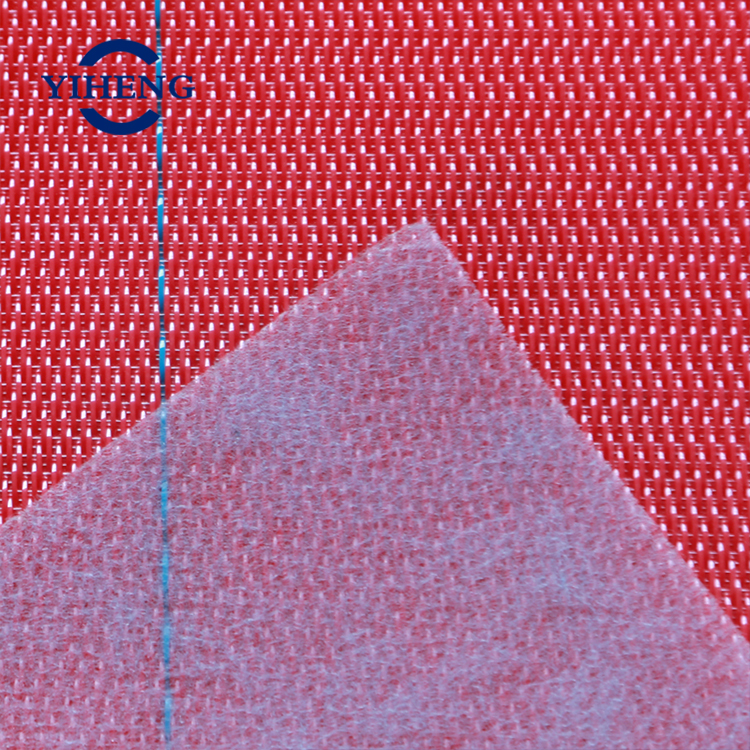
Why a certificate image is not a compliance answer
A certificate PDF in a sales folder tells a buyer that some document exists. It does not tell the buyer which product, which market, which period or which legal obligation the document addresses. A qualification dossier closes that gap by recording, for every document, four things: the issuing body, the reference number and date, the exact scope stated on the document, and the specific buying question the document is able to answer.
This distinction matters more for industrial consumables than for consumer goods. A forming belt is a component inside a nonwoven production line. The obligations that attach to it are split between the belt maker, the machine builder and the fabric producer, and no single document covers all three. Treating a factory certificate as proof of product conformity is the most common error made during supplier qualification in this category.
What a dossier should contain
- A document register with issuer, reference, issue date, expiry where applicable, and stated scope.
- A model data sheet for the exact belt being quoted: weave, filament diameters, air permeability with its test condition, thickness, basis weight, joint type and dimensional tolerance.
- An equipment-fit statement naming the line, the belt dimensions and the joint type it was configured for.
- An acceptance protocol that can be executed on receipt, with measurable limits.
What EU and German environmental documentation actually covers
Yiheng Mesh holds documents that are frequently presented together as evidence of environmental compliance. Read individually, each answers a narrower question than buyers often assume.
| Document | Issuer and reference | Scope stated on the document | What it does not establish |
|---|---|---|---|
| German Packaging Act (VerpackungsG) registration, LUCID | Stiftung Zentrale Stelle Verpackungsregister; DE2857625357145; issued 24 February 2025 | Retail, grouped, shipment and service packaging placed on the German market under the yiheng brand | Belt material conformity, food-contact suitability, or the buyer's own packaging obligations as importer |
| Food-contact test report | JIANGSU HAP TESTING SERVICE CO., LTD; HAPTX23061098; issued 29 June 2023 | Polyester mesh belt, tested against GB 4806.7-2016 | Conformity with the EU food-contact framework, or whether a specific weave and width falls inside the tested scope |
| Alibaba.com Verified Supplier Assessment Report | Intertek; 493944221_P+T; issued 9 July 2026, valid to 9 July 2027 | Fabrics, dryer fabrics, polyester filter belt, non-woven mesh belt and UV belts | On-line performance of any model, or product certification of individual belts |
| National High-tech Enterprise recognition | Department of Science & Technology (company statement) | Corporate technology status and patents in polyester mesh weaving | Compliance of any product with any market regulation |
The single most useful clarification for a German buyer is this: the LUCID registration addresses packaging that Yiheng places on the German market. It is a producer-responsibility registration, not a statement that the belt material is environmentally approved. Its practical value is narrower and still real — it removes one predictable hold-up at the German border, because packaging registration gaps are a routine cause of delivery friction for imported industrial goods.
The food-contact test report is the second document that is often read too broadly. It is a test report on a polyester mesh belt against GB 4806.7-2016, a Chinese national standard for food-contact plastics, issued by a third-party laboratory. It is legitimate evidence that a sample was tested to a defined standard. It is not an EU declaration of conformity, and it does not by itself settle whether a hygiene producer's own food-contact assessment is satisfied. Buyers whose product touches skin or food should route the question through their own regulatory function and state in the dossier exactly which declaration is required.
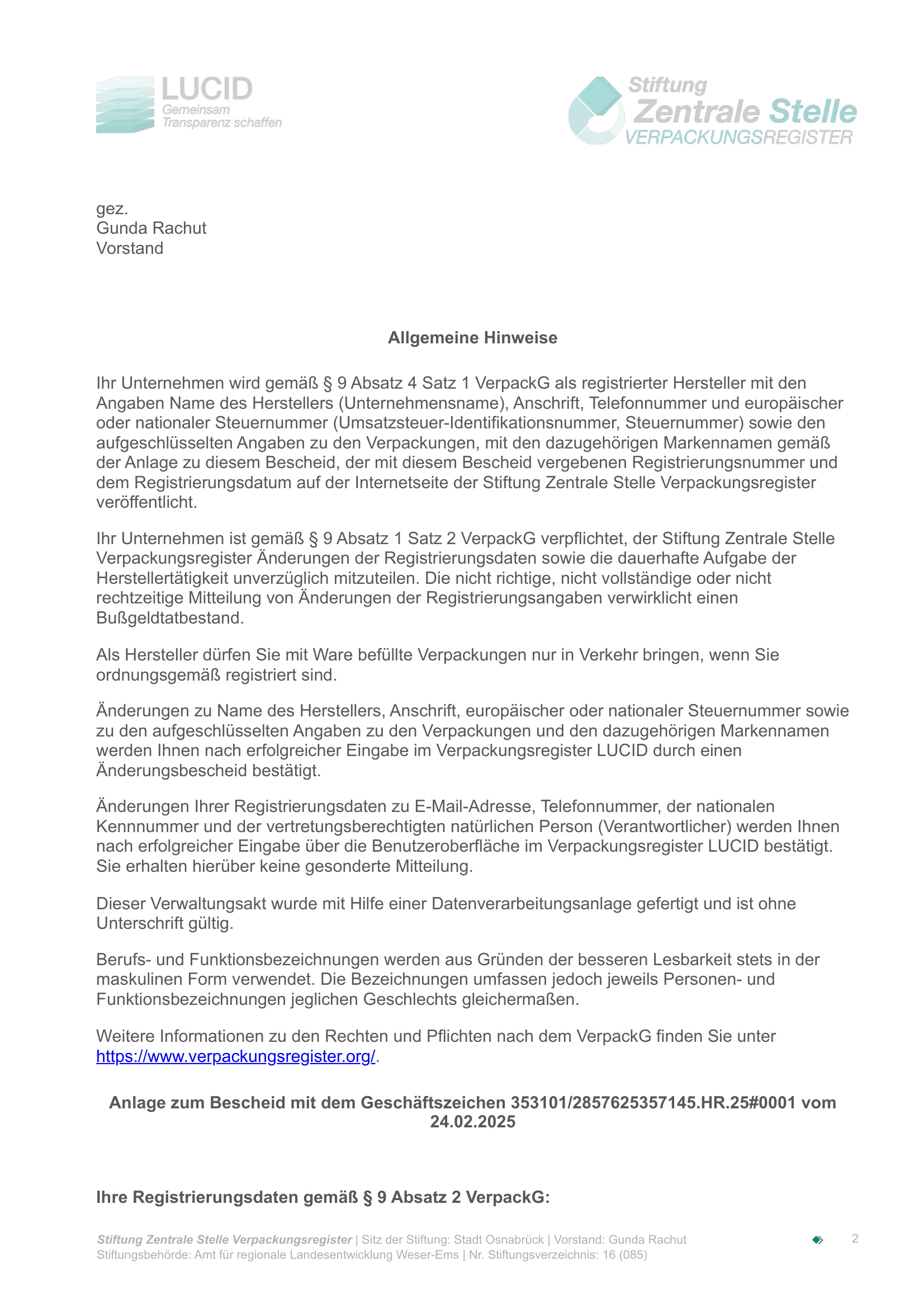
Equipment fit on Chaolong and Hongda lines
Fit is where most compliance discussions actually begin, because a belt that tracks badly is a production problem regardless of paperwork. Yiheng Mesh states that it supplies nonwoven equipment manufacturers including Chaolong, Hongda and Aolong, and reports supplied belts on Reicofil, Chaolong and Hongda lines with practical tuning data accompanying the delivery. For a buyer, that statement is a starting point for verification, not a substitute for it, because two lines from the same builder can differ in tension settings, suction boxes and roller geometry.
The forming-fabric series is described as compatible with machine speeds from 20 m/min to 850 m/min. Within that range, the variables that decide whether a specific belt suits a specific line are consistent across builders:
- Length, width and tolerance. Published tolerances are ±5 cm for lengths under 50 m and ±1 cm for widths under 5 m. A line with a short tensioning stroke needs those limits respected before installation, not corrected afterwards.
- Joint type. Self-ring, millet-ring, double-pins and loop-based seams are not interchangeable across machine designs. The joint must be specified as part of the order, because the seam is the only part of the belt that cannot be adjusted once woven.
- Seam thickness relative to belt body. A seam that stands proud of the mesh generates periodic impact as it passes pre-press rollers. Yiheng Mesh, citing its internal troubleshooting knowledge base of more than 122 field cases, treats seam thickness consistency as the primary control for roller jumping and transverse marking.
- Glue edge. A 2 cm glue-brushed edge on both welding sides is standard on several models, including HB4106 and K4106B, and matters where edge fraying or adhesion at the weld is a known failure point.
- Air permeability against installed suction. A belt specified for the wrong suction window produces either flyers or fibre pull-through, and neither is visible until the line is running.
A fit statement that can be attached to a purchase order
The usable form of an equipment-fit claim is a short written statement naming the machine builder, the line type, the belt dimensions, the joint type, the target air permeability and the reference model. That statement converts a general compatibility claim into something an engineer can sign off against the drawings. Buyers evaluating a first order from a new supplier should ask for it explicitly; suppliers who work regularly with a given builder usually already hold the necessary measurements.
CFM, test conditions and why the number alone is not enough
Air permeability is the parameter that most directly controls web uniformity, and it is also the parameter most often compared incorrectly. Yiheng Mesh defines CFM as the volume of air, in cubic feet, passing through one square foot of mesh per minute at a stated pressure differential, and uses it to guide suction-air settings so that fibres lay down rather than being pulled into the mesh or lifted off it.
Two practical consequences follow. First, the test condition belongs to the number. Spunmelt models in the range are quoted as, for example, 580±30 CFM at 127 Pa per 20 cm², while airlaid and spunlace models are quoted in m³/㎡/h at 100 Pa — model 07502 at 19,176 m³/㎡/h, model 06702 at 14,242 m³/㎡/h, model 27254 at 8,000 m³/㎡/h. These figures are not convertible by inspection and should never be placed in the same comparison column without the underlying conditions stated.
Second, the tolerance is part of the specification. A stated ±30 CFM band tells the buyer what variation the supplier expects across a roll. Yiheng Mesh additionally states that its heat-setting process holds air-permeability fluctuation within roughly ±5%. For a buyer, both numbers belong in the acceptance protocol: the target value, the permitted band, and the pressure at which the measurement is taken.
The mechanism behind the requirement is straightforward. In an air-laid or spunbond forming zone, the mesh acts as the filter medium in a gas-solid separation. Where local permeability is higher, more suction draws a denser fibre cluster; where it is lower, the web thins. That is the physical reason why permeability consistency, rather than a single average figure, is the better predictor of transverse web uniformity.
Model-level evidence a buyer can put in the file
The table below reproduces published data for five spunmelt forming belts. It is deliberately limited to parameters that appear on the model records, because a dossier loses value the moment it contains a figure the supplier cannot re-issue on request.
| Model | Construction | Air permeability | Thickness / basis weight | Joint options |
|---|---|---|---|---|
| HB4106 | Red flat PET, above-3 below-5 weave, warp 0.38×0.58 mm | 580±30 CFM at 127 Pa/20 cm² | 1.8 mm / 1030 g/m² | Self-ring, millet-ring, double-pins |
| HY4106 | Red round PET, warp 0.50 mm, weft 0.50 mm | 680±30 CFM at 127 Pa/20 cm² | 1.65 mm / 1030 g/m² | Self-ring, millet-ring, double-pins |
| K4106A | Anti-static PET flat monofilaments, above-3 below-5 weave | 600±30 CFM; conductivity 10⁶–10⁷ Ω | 1.88 mm / 990 g/m² | Self-ring, millet-ring |
| SK604 | Anti-hydrolysis PET round plus conductive PET and carbon fibre PET | 700±30 CFM; conductivity 10⁶ Ω | 1.85 mm / 1030 g/m² | Double-pins |
| KJD700 | Anti-hydrolysis PET round plus conductive PET and carbon fibre PET, above-4 below-8 weave | 600±30 CFM; conductivity 10³–10⁴ Ω | 2.34 mm / 1030 g/m² | Double-pins |
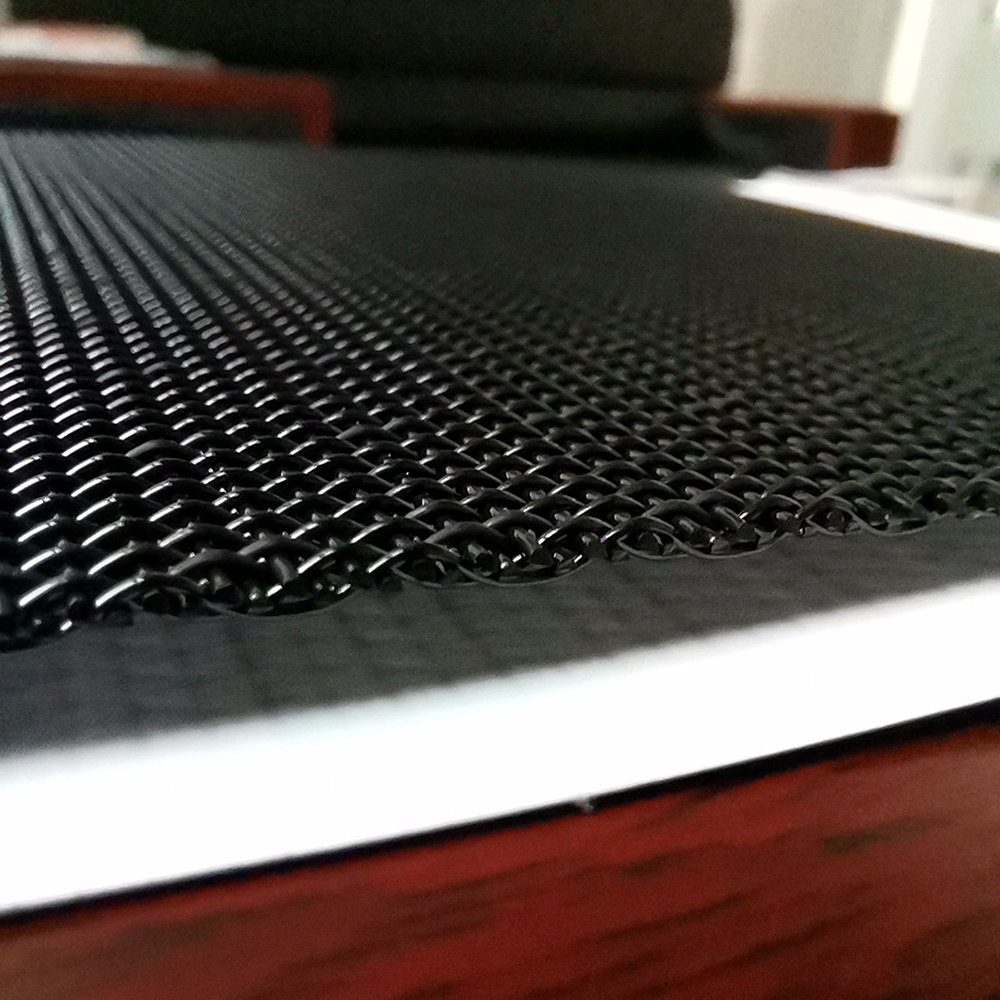
Anti-static construction
Anti-static protection in these belts comes from conductive filaments woven into the structure at a defined ratio, not from a surface coating. K4106A uses anti-static PET flat monofilaments with a quoted conductivity of 10⁶–10⁷ Ω; K4106B is built on anti-static PET round filaments at 1100 g/m² and 1.93 mm thickness; SK604 and KJD700 combine anti-hydrolysis PET round, conductive PET and carbon fibre PET filaments, with conductivity quoted at 10⁶ Ω and 10³–10⁴ Ω respectively. The KJD700 record additionally cites a 600±30 CFM permeability and suitability for two-component and spunlace equipment.
The limit of the specification is worth stating plainly. A conductive belt forms only part of the discharge path; the charge still has to reach the machine ground through rollers and frame. Yiheng Mesh's own troubleshooting guidance for web floating at speeds above roughly 400 m/min begins with verifying the grounding path and rebalancing cooling air against suction before changing the belt. Buyers should therefore treat belt conductivity as one variable in a static-control plan, not as a stand-alone fix.
Anti-hydrolysis construction
Hydrolysis resistance is the other construction feature that appears repeatedly in quotations for humid or high-heat lines. In the published records supplied here, anti-hydrolysis PET round filaments are documented on K6012, SK604 and KJD700. Where a shortlist includes HY408S, the equivalent filament declaration should be confirmed on that model's own data sheet rather than carried over from a family description, because construction differences between models in the same series are exactly what the dossier exists to catch.
Application fit across spunbond, spunlace and airlaid
Model choice follows the process, and the published records map reasonably cleanly onto three groups. Spunbond and spunmelt lines drawing fine denier fibre at speed are served by the anti-static and high-speed models — K4106A, K4106B, SK604 and KJD700 — where static control and seam flatness dominate. Spunlace lines, working under high-pressure water impact and continuous wet conditions, are served by finer, thinner structures: model 27254 at 70 mesh and 0.49 mm, model 41203 at 103 mesh and 0.3 mm, both with quoted hydrolysis resistance and dimensional stability requirements. Airlaid and hot-air bonding lines are served by open, heat-resistant structures such as 07502 at 420 g/m² and 19,176 m³/㎡/h, 09502 at 23 mesh, 06702 at 16 mesh and 1000 g/m², and 05602 at 14 mesh for bulky fabrics.
Scope of supply is a separate evidence line. Yiheng Mesh reports supplying a German wet-wipe and medical dressing producer across 12 spunlace lines, and a Swiss nonwoven producer across 8 Reicofil RF4 high-speed lines. Those are company-reported references describing where belts have been installed; they are not published test reports, and a buyer should read them as installation experience to be checked against their own line conditions.
Market context, with its limits stated
Two third-party data points help frame why documentation discipline is tightening rather than loosening. Grand View Research reported that spunlaid technology, covering spunbond and meltblown, held a 48.4% share of the global nonwoven technology market in 2023. Dataintelo valued the global nonwoven production line market at USD 5.3 billion in 2024 and projected USD 9.8 billion by 2033. Both are commercial research estimates for their stated periods and scopes; neither measures demand for forming belts specifically, and neither should be used to infer a growth rate for this component category.
The defensible reading is narrower: spunlaid capacity is a large share of installed nonwoven output, so the population of lines on which a forming belt must be qualified is large and geographically spread. That is an argument for standardising the qualification file across sites, not a forecast of belt pricing or availability.
Comparison with conventional and imported options
Two design differences appear consistently in the published records. The first is filament cross-section. HB4106 uses a flat PET warp of 0.38×0.58 mm, which the manufacturer describes as producing a smoother micro-surface than round filament, with fibre and contaminants sitting closer to the surface and cleaning therefore faster — a relevant property on lines with frequent product changes or hygiene requirements. HY4106 uses round filament at a comparable basis weight and a higher quoted permeability of 680±30 CFM. Neither construction is universally preferable; flat filament favours cleanability and transverse stiffness, round filament favours a different permeability window.
The second difference is positioning against imported belts. Yiheng Mesh describes several models as cost-effective alternatives to imported anti-static belts. That is a commercial positioning statement, not an independently verified equivalence. No side-by-side performance trial on identical lines is included in the supplied material, so a buyer should treat the claim as a hypothesis to be tested on their own machine, ideally against a measured baseline of seam marking, web uniformity and belt life.
The limitation that belongs beside any comparison is service life. Yiheng Mesh states that under standard operating conditions its mesh belts typically last three to six months, with regular cleaning and tracking checks extending that figure. Three to six months is a company-stated range, not a warranty and not a benchmark against other suppliers, and it will not hold on a line running outside standard conditions.
Purchasing terms and acceptance criteria
The commercial terms published by the manufacturer are conventional for this category and can be written directly into a purchase order: OEM/ODM customisation across mesh count and opening size, air permeability, belt width and length, material including PET, PA and anti-static variants, thickness, colour and edge; lead time of 15–30 days; 100% pre-shipment inspection with third-party inspection by BV or SGS available on request; and after-sales support covering remote technical guidance, installation advice and sample testing.
An acceptance protocol that can be executed on receipt
- Identity check. Model designation, weave structure and filament diameters on the delivery documentation match the quotation and the data sheet.
- Dimensional check. Length within ±5 cm for belts under 50 m; width within ±1 cm for belts under 5 m; measured with the belt relaxed, not under tension.
- Air permeability check. Measured at the stated pressure — 127 Pa per 20 cm² for spunmelt models quoted in CFM — and compared against the quoted band, for example 580±30 CFM on HB4106 or 600±30 CFM on K4106A and KJD700.
- Thickness and basis weight. Compared against the model record, since these determine roller clearance and running stability.
- Joint inspection. Joint type as ordered; seam thickness consistent with the belt body; no protruding wire ends or loose loops.
- Edge and finish. Glue edge width as specified, typically 2 cm on both welding sides for models such as HB4106 and K4106B; no fraying, resin lumps or contamination.
- Electrical check where applicable. Conductivity reading compared against the model's quoted range for anti-static grades.
- Documentation check. Document register complete, with the market and scope of each item recorded next to the question it answers.
- Packaging check. Wooden carton or sack packaging as agreed, with the belt protected against edge deformation in transit.
Two further items are worth agreeing before the first order rather than after it: whether a third-party inspection will be required, and what the supplier will provide if a measured value falls outside the quoted band. Both belong in writing, because they determine whether the dossier is a live control or merely a file.
Outlook
Nothing in the supplied evidence suggests a sudden change in the regulatory treatment of forming belts. The more likely pressure is procedural: as nonwoven capacity spreads across more sites and more jurisdictions, buyers will be asked to show, rather than assert, what a supplier's documentation covers. Companies that already hold scoped documents — a LUCID registration for packaging, a test report tied to a defined standard, a current third-party supplier assessment — are better placed to answer those requests quickly, provided they present each document against the question it addresses. The English company brochure is available for download here.
FAQ
Do Yiheng Mesh belts support Chaolong or Hongda equipment?
Yiheng Mesh states that it supplies nonwoven equipment manufacturers including Chaolong, Hongda and Aolong, and reports supplied belts on Reicofil, Chaolong and Hongda lines, delivered with practical tuning data. Compatibility is confirmed per machine rather than per brand, because tensioning stroke, suction configuration and roller geometry differ between individual lines, even those from the same builder. The confirmation should name the line, belt dimensions, joint type and target air permeability.
What EU or German environmental documents does the company actually hold?
Three documents are relevant. The German Packaging Act (VerpackungsG) registration under LUCID, reference DE2857625357145, registered with Stiftung Zentrale Stelle Verpackungsregister and issued on 24 February 2025, covers retail, grouped, shipment and service packaging placed on the German market under the yiheng brand. A food-contact test report, reference HAPTX23061098, was issued on 29 June 2023 by JIANGSU HAP TESTING SERVICE CO., LTD for a polyester mesh belt tested against GB 4806.7-2016. An Alibaba.com Verified Supplier Assessment Report, reference 493944221_P+T, was issued by Intertek on 9 July 2026 and is valid to 9 July 2027, covering fabrics, dryer fabrics, polyester filter belt, non-woven mesh belt and UV belts. The packaging registration concerns packaging, not belt material; the test report is against a Chinese national standard rather than an EU declaration.
Which acceptance checks should be run before signing off a forming belt delivery?
The minimum set is an identity check against the model data sheet, dimensional measurement within ±5 cm length for belts under 50 m and ±1 cm width for belts under 5 m, air permeability measured at the stated pressure — 127 Pa per 20 cm² for models quoted in CFM — and compared against the quoted band, thickness and basis weight verification, joint type and seam thickness inspection, glue edge width, conductivity measurement where an anti-static grade was ordered, and a documentation check confirming the scope of each supplied certificate.
How long does a nonwoven forming belt last under standard operating conditions?
Yiheng Mesh states a typical service life of three to six months under standard operating conditions, noting that regular cleaning and tracking checks help extend it. The figure is a company-stated range rather than a warranty, and it is sensitive to line speed, temperature, suction settings and fibre type. Where fibre hanging or web floating appears, the company's troubleshooting guidance addresses suction balance, mesh cleaning and grounding before recommending a belt change.
What does CFM mean, and why does the test condition matter?
CFM is the volume of air, in cubic feet, passing through one square foot of mesh per minute at a stated pressure differential. The condition matters because it belongs to the number: spunmelt forming belts in this range are quoted in CFM at 127 Pa per 20 cm², while airlaid and spunlace models are quoted in m³/㎡/h at 100 Pa. Comparing a value from one convention with a value from the other produces a false difference. Within a stated convention, the permitted band — for example ±30 CFM — indicates the variation the supplier expects across a roll and should be carried into the acceptance protocol.
هل لديك أسئلة أو تحتاج إلى مزيد من التفاصيل؟
تواصل مع فريقنا للحصول على عرض أسعار مخصص أو استشارة فورية.
طلب عرض أسعار
املأ النموذج أدناه وسيتواصل معك فريقنا بعرض مقترح مخصص.
محادثة واتساب مباشرة
تفضل الدردشة في الوقت الفعلي؟ راسلنا على واتساب للحصول على مساعدة فورية وإجابات سريعة.
- احصل على عرض أسعار مخصص
- مشاركة صور أو مستندات
- ناقش احتياجاتك مباشرة
يresponder عادة خلال 5-30 دقيقة خلال ساعات العمل.