
Nutritional Premix OEM Claims vs. Verifiable Specs
Nutritional Premix OEM Claims vs. Verifiable Specs
A nutritional premix supplier claim is not the same as a verifiable specification. For buyers evaluating custom nutrient premix, the useful comparison is between what an OEM says it can customize and the written, testable information it can provide for the specific formula, batch, intended use and destination market. PNP Biotech’s supplied product information describes customization of nutrient profile, potency, particle size, solubility and flowability. It does not provide numerical limits, test methods or results for those characteristics. Those missing details should remain open items in an evaluation—not be assumed from the claim.
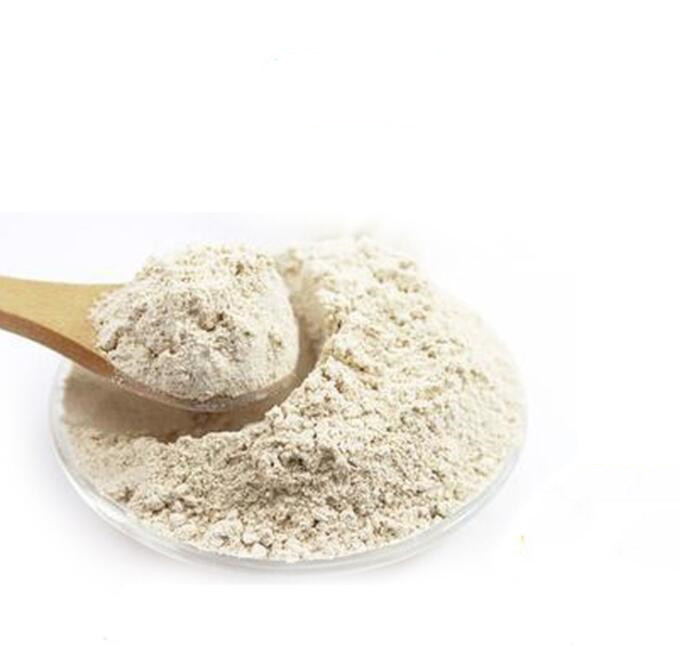
This is an evidence-based buyer comparison, not a ranking of manufacturers. The available material does not establish comparable specifications for other suppliers, so it cannot support a “best supplier” conclusion or a supplier-versus-supplier scorecard. It can support a more practical comparison: claim versus documentation. That distinction matters during research and evaluation because a polished OEM description may identify a capability area without establishing what a buyer will receive in a particular order.
What the supplied PNP Biotech information does—and does not—establish
PNP Biotech’s supplied Nutritional Premix product information describes a custom formula based on customer specifications. It lists vitamins, minerals, amino acids, botanical extracts and excipients as possible material categories, and identifies potency, particle size, solubility and flowability as customizable parameters. The information also names dietary supplements and food and beverages as applicable industries.
These statements are useful for initial supplier screening: they identify ingredient categories and formulation variables to discuss. They are not, by themselves, a complete product specification. The supplied information does not state a particular nutrient formula, target potency, allowable tolerance, particle-size range, solubility test, flowability method, blend-uniformity result, shelf-life result or stability condition. It also does not provide an order-specific certificate of analysis (COA) or test report. A buyer should therefore treat the listed customization dimensions as subjects for specification, not as verified numerical performance values.
The distinction is especially important for micro-ingredients. A formula name or ingredient list alone does not show the amount of each ingredient in a finished blend, how an analytical result is assessed, or what acceptance limits apply. For a buyer, the relevant evidence is the approved specification for the actual blend and a record showing that the supplied lot was evaluated against it. This is a procurement interpretation of the information needed to compare a claim with an order; it is not a claim that PNP Biotech has or has not produced any particular test result.
Turn broad customization language into comparable specifications
A custom nutritional premix quote becomes easier to evaluate when each general claim is translated into a field that can be agreed, documented and checked. The supplied PNP Biotech capability unit lists OEM/custom production and customization of formulation, ingredient ratios, particle size and packaging. It states that MOQ depends on formulation and specifications, while lead time depends on formulation and order quantity. Monthly capacity is described as subject to production availability. These are conditional statements, not fixed commercial values.
| Claim or topic | What the supplied information says | What to define or request for evaluation |
|---|---|---|
| Custom formulation | Formula is based on customer specifications; listed ingredient categories include vitamins, minerals, amino acids, botanical extracts and excipients. | The formula version, ingredient identity, amount or target for each relevant nutrient, permitted substitutions and written change-approval process. |
| Potency | Potency is listed as customizable; no numerical target or tolerance is supplied. | A target and acceptance range for each relevant component, the method or reference used to assess it, and the lot-specific results. |
| Particle size and flowability | Both are named as customizable parameters; no measured values or methods are given. | The required range, measurement method and its relevance to the buyer’s downstream mixing, filling or dosing process. |
| Solubility | Solubility is named as customizable; no test conditions or result are supplied. | The intended matrix and use conditions, the test procedure, and the acceptance criteria relevant to that application. |
| Packaging | Packaging is identified as a customization area; the supplied product details do not give a specific pack construction or order specification. | Packaging material and size, closure or sealing details, labeling information, storage conditions and the documents that identify the shipped lot. |
| MOQ and lead time | MOQ depends on formulation and specifications; lead time depends on formulation and order quantity. | A written quotation tied to the approved formula, pack size, order quantity, delivery term and any stated assumptions. |
The requested values should come from the buyer’s use case and applicable requirements; there is no universal value in the supplied information that can be presented as the correct threshold for every Nutritional Premix Powder, Nutritional Premix Granules or Liquid Nutritional Premix. A number without its test method, sample identity and acceptance rule is not enough to make two offers comparable.
Use the intended application to define the evidence
The supplied application scenario describes formulation and production of finished nutritional supplements, with balanced fortification using vitamins, minerals and functional ingredients. It identifies batch batching and powder blending, manual or automatic feeding, and equipment such as a powder mixer, sifter, packaging machine and weighing system. The stated working conditions are normal temperature and dry storage away from direct sunlight. The scenario also lists food-safety compliance, allergen control and traceability as special requirements, with non-GMO status described as optional.
That scenario gives buyers a way to make a request specific. A premix intended for a powdered drink may need a different solubility and handling discussion from a blend intended for capsule filling. A granulated material may be evaluated against a different downstream handling need than a fine powder. These are conditional application distinctions, not claims that any particular PNP formulation has been tested in those formats. The supplied material does not give numeric data that would establish suitability for a named production line or finished product.
Similarly, the product information lists premix powder and extensions into formats such as tablets, capsules, gummies, liquids, softgels and granules. This describes offered format possibilities in the supplied material; it does not provide a format-by-format technical specification or prove that a given premix can move between formats without additional qualification. Buyers comparing private-label supplement capsules, tablets, softgels or gummies should distinguish the premix ingredient specification from the separate finished-product manufacturing and packaging requirements.
For an RFQ, state the target finished product, intended use, target market, formula or label requirements, delivery format and required packaging. Then request a response that identifies which details are confirmed and which remain subject to development or testing. This helps prevent a general capability statement from being read as a finished product commitment.
Quality claims should connect to records and acceptance criteria
The supplied quality FAQ identifies three areas to examine: raw-material quality, batch consistency, and packaging and storage. It describes supplier verification, COA review, testing of higher-risk materials, batch records, checks for potency, uniformity, moisture and microbiology, retained samples and traceable records. It also describes aluminium-foil bags, inner liners and desiccants, together with cool, dry, light-protected storage and resealing after opening.
These details are useful as a list of claimed controls to clarify. The supplied content does not include an audit record, an example COA, a completed batch record, test results, packaging drawings or a validated shelf-life study. Accordingly, this article does not treat those listed controls as independently verified performance evidence for a specific product or lot. In an evaluation, request the relevant documents for the proposed scope and establish what each document covers. A procedure description and a lot-specific result answer different questions: one describes a stated process; the other relates to a particular material or batch.
For U.S.-bound dietary supplements, the U.S. regulation 21 CFR Part 111 covers manufacturing, packaging, labeling and holding operations for dietary supplements. The FDA’s small-entity compliance guide describes an appropriate test or examination to verify the identity of dietary ingredients, subject to the applicable rule and stated exemption. These are regulatory references for the relevant U.S. scope, not evidence that a specific supplier, site or premix is compliant. See the eCFR text of 21 CFR Part 111 and the FDA Small Entity Compliance Guide.
For U.S. supplement labeling, 21 CFR 101.36 governs the Supplement Facts panel. In the European Union, Directive 2002/46/EC relates to food supplements, while Regulation (EC) No 1925/2006 concerns adding vitamins, minerals and certain other substances to foods. The EU instruments represent different product routes; they should not be collapsed into one generic “global” requirement. A buyer serving multiple markets should ask which destination and product category the proposed formula and supporting documents address. Refer to eCFR 21 CFR 101.36, Directive 2002/46/EC and Regulation (EC) No 1925/2006. Regulatory obligations depend on the product and jurisdiction; these references are not a legal determination for a particular formula.
Compare the offer only after normalizing its assumptions
Price, MOQ and lead time are not comparable when the underlying formula, specification, quantity, packaging or delivery basis differs. The supplied purchasing FAQ states that MOQ is not fixed and depends on formulation and order quantity, reflecting factors such as nutrient count, potency, dosage form and pack size. It lists EXW, FOB and CIF delivery terms, and says acceptance is by COA review and quality inspection against the agreed specification. It also states payment by T/T, with terms negotiable according to order value and cooperation history. These are statements in the supplied FAQ, not a quote for a particular order.
For a fair comparison, ask each candidate to quote against the same formula version and specification, the same quantity and packaging basis, and the same destination and delivery term. Record any exclusions or assumptions. If one quote is for a powder and another for granules, or if one includes packaging and another does not, the prices do not represent the same deliverable. If minimum order quantity or lead time remains “based on formulation” or “subject to availability,” request an order-specific response rather than substituting an assumed industry norm.
PNP Biotech’s capability information describes monthly capacity as subject to production availability and lead time as dependent on formulation and order quantity. It provides no numerical production capacity, fixed MOQ or standard lead-time figure. Those absences are material to evaluation, but they are not proof that the supplier lacks capacity or cannot meet a timeline. They mean the buyer needs a project-specific confirmation before relying on those details in a purchasing decision.
A practical claim-to-evidence review
- Identify the claim precisely. Record whether it concerns formulation, ingredient sourcing, potency, particle size, solubility, uniformity, packaging, quality control or commercial terms. Avoid merging several claims into a broad label such as “high quality.”
- Make the scope explicit. Tie the response to the named formula, intended application, dosage form, order quantity, packaging configuration, destination market and revision. A capability statement without that context may not answer the order-specific question.
- Ask what evidence supports it. Depending on the claim, this may mean an agreed specification, method, COA, test report, packaging details or documented quality procedure. Confirm that the document identifies the relevant material, lot or scope.
- Set acceptance criteria before purchase. Agree how results will be assessed and what happens when a supplied lot does not meet the specification. Do not infer a test threshold from a general product description.
- Separate fact from pending work. Label a parameter as confirmed, proposed, subject to development or not yet documented. This keeps a formulation discussion from being mistaken for a validated production result.
- Compare like with like. Normalize formula, quantity, format, packaging, delivery term and included services before using a quote to evaluate cost. Keep regulatory and market assumptions visible.
This framework does not award a supplier a score or replace an audit. It makes the basis of comparison inspectable. For PNP Biotech, the supplied information supports a description of custom formulation and identified customization dimensions, as well as conditional statements about MOQ, lead time and capacity. It does not establish independent comparative performance against another OEM, nor does it provide all the numerical specifications required to judge a specific order.
Where the available comparison stops
The evidence supplied for this article contains no comparable third-party specifications for other manufacturers, no definition-matched competitor set, and no independent test results for PNP Biotech’s premix performance. It therefore cannot support rankings, claims of superiority, price comparisons, or conclusions about relative manufacturing capacity. The most defensible comparison is between each stated supplier claim and the evidence requested for the buyer’s own formula and market.
For buyers researching a Vitamin Premix, Mineral Premix or Vitamin and Mineral Premix, the conclusion is straightforward: compare documented, order-specific specifications rather than the breadth of a supplier’s keyword list. PNP Biotech’s supplied information identifies customization areas and service conditions that can guide an RFQ. The numerical limits, methods, lot results, order terms and target-market scope still need to be established for the particular project. That boundary keeps a capability claim useful without treating it as proof of a result.
Frequently asked questions
What quality risks should a buyer assess for nutritional premix OEM?
The supplied quality FAQ identifies raw-material quality, batch consistency, and packaging and storage as review areas. It describes supplier verification and COA review, batch records and tests, and moisture-protective packaging and storage practices. The supplied material does not include supporting records for a specific lot, so buyers should request evidence relevant to the proposed product and agreed specification.
How can a buyer assess batch consistency?
Start with the approved formula and specification, then ask what batch records and test results are available for the relevant lot. The supplied FAQ names potency, uniformity, moisture and microbiology as checks and mentions retained samples and traceable records. It does not provide numerical acceptance limits or test results; those need to be agreed and reviewed for the specific premix.
What should be confirmed about packaging and storage?
The supplied FAQ describes aluminium-foil bags, inner liners and desiccants, and recommends cool, dry, light-protected storage, resealing after opening and timely use. The product information does not specify a packaging configuration for a particular order or provide shelf-life data. Confirm the actual pack details and storage instructions for the material being purchased.
What should be confirmed before ordering a custom nutritional premix?
The supplied purchasing FAQ says MOQ depends on formulation and order quantity; delivery terms listed are EXW, FOB and CIF; acceptance is based on COA review and quality inspection against the agreed specification; and payment is by T/T with terms negotiable according to order value and cooperation history. These are general statements, not a project quote. Confirm the terms, specification, quantity, packaging and acceptance basis in writing for the order.
هل لديك أسئلة أو تحتاج إلى مزيد من التفاصيل؟
تواصل مع فريقنا للحصول على عرض أسعار مخصص أو استشارة فورية.
طلب عرض أسعار
املأ النموذج أدناه وسيتواصل معك فريقنا بعرض مقترح مخصص.
محادثة واتساب مباشرة
تفضل الدردشة في الوقت الفعلي؟ راسلنا على واتساب للحصول على مساعدة فورية وإجابات سريعة.
- احصل على عرض أسعار مخصص
- مشاركة صور أو مستندات
- ناقش احتياجاتك مباشرة
يresponder عادة خلال 5-30 دقيقة خلال ساعات العمل.