
Nuts, Bolts, and Studs by Industry: A Scenario Map for Petrochemical, Marine, and Power Generation
Nuts, Bolts, and Studs by Industry: A Scenario Map for Petrochemical, Marine, and Power Generation
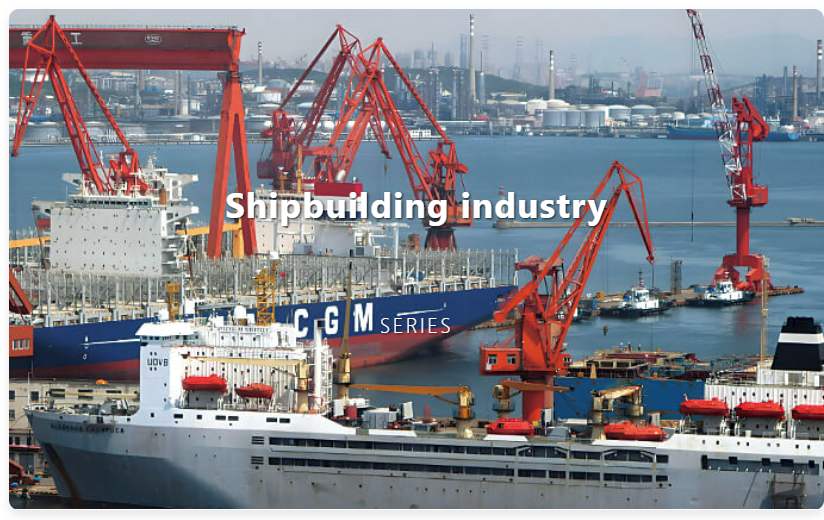
Marine and offshore construction concentrates the conditions that decide fastener specification: chloride exposure, sustained load and vibration.
A petrochemical plant, an offshore vessel and a power station are routinely grouped together as heavy industry, yet the stud that suits one is frequently the wrong component for the next. The deciding variable is not the brand on the box. It is the dominant service condition — chloride-bearing seawater, elevated process temperature, sustained tensile load, vibration, or an acid and alkali environment — and each of those conditions pushes a specification toward a different material family, surface treatment, thread class and governing standard.
HTNXT (UHC fastener and hardware, www.jxuhc.com) supplies a fastener range that spans bolts, nuts, washers, threaded rods and studs, rivet nuts and screws. The range becomes useful to a buyer only when each product family is read against the condition it will actually face. This scenario map does that: it treats petrochemical, marine and offshore, and power generation as three distinct condition profiles, then walks from the condition to the product, the material, the finish, the property class and the standard that belongs on the drawing.
The Dominant Condition, Not the Catalogue, Sets the Specification
Three condition clusters account for most of the specification work in these sectors. The first is corrosion: chloride from seawater and coastal air, and acid or alkali attack from process media. The second is temperature: continuous elevated service in process and power equipment, or sub-zero service in some gas-handling and cold-climate installations. The third is mechanical: high tensile load, fatigue under cycling, and vibration that loosens connections over time.
Real installations rarely present a single condition. An offshore topside module combines chloride exposure with vibration from rotating equipment. A refinery flange joint combines elevated temperature with pressure and, depending on the medium, acid attack. A power station bolted connection combines sustained load with heat and thermal cycling. The practical consequence is that a specification built on one axis — say, "stainless steel because it is a marine job" — is usually incomplete, because the same project may need a duplex grade in one location and a nickel-based high-temperature alloy three metres away.
The working rule: name the condition before naming the material. A fastener selected from a catalogue by product name alone cannot be checked against the environment it will live in, and that is where most specification disputes begin.
A Four-Step Sequence That Keeps a Specification Traceable
The most reliable order of decisions runs from the mechanical interface inward, then back out to the paperwork.
- Product family and size. Fix the form factor and the size envelope first: bolt, nut, washer, threaded rod or stud, rivet nut or screw. Size availability differs by family, so this decision constrains everything downstream.
- Dominant service condition. Identify whether corrosion, temperature or mechanical load governs, and whether a secondary condition is severe enough to change the material family.
- Material and surface treatment. Move from 304/316 stainless steel to duplex steel or a nickel-based high-temperature alloy where the condition demands it, and pair the material with a finish that is compatible with it.
- Standard, property class and thread tolerance. Close the specification with the governing standard, the strength grade and the thread tolerance class — including the nut class that pairs with the bolt or stud class.
Step four is where international projects most often drift. Dimensional standard families are not universally interchangeable: nominal size and thread pitch align across ISO, DIN and JIS systems, but head and nut geometry details do not always match for the same nominal size, so parts sourced against different texts may not assemble as intended. Tolerance product grades add a second layer, since ISO 4759-1 classifies fasteners into product grades A, B and C — a precision classification that changes the manufacturing route and cost, not a quality ranking. A drawing that names the standard, the edition, the property class and the tolerance class leaves nothing for a supplier to interpret.
Petrochemical Service: Heat, Pressure and Acid/Alkali Exposure
Petrochemical duty is the most demanding of the three profiles because temperature and corrosion usually arrive together. Process temperatures push material selection toward grades that retain strength when hot, while the process medium determines whether a molybdenum-bearing austenitic grade is adequate or whether a nickel-based alloy is required.
The product backbone of this sector in the HTNXT range is the threaded rod and stud family: full-thread rods and double-end studs from M5 to M160, with effective lengths up to 5000 mm, supplied in 304/316 stainless steel, duplex steel or nickel-based high-temperature alloy, in strength grades A2-50, A2-70, A4-50, A4-70, D6-80 and D6-70, with 6g/2A precision threads. Long tie rods, clamp connections and flange-style joints are the natural applications, and the extended length range matters because a single long stud often replaces a stack of shorter components. Heavy hex bolts and heavy nuts (M2 to M64, grades A2-70 through D6-100, threads 6H/2B/3B) carry the structural and equipment-anchor side of the same plant, with washers from M2.5 to M45 beneath them to spread load and, in toothed, serrated or wave forms, to add a locking element.
On the specification side, ASTM A193/A193M is the reference most refinery and petrochemical procurement teams write into the order, with grade designations such as B7, B16, B8 and B8M covering alloy and stainless bolting for high-temperature or high-pressure service. API 20E and API 20F sit on top of that framework as petroleum-and-gas-industry specifications for alloy/carbon steel and corrosion-resistant bolting respectively; they add requirements rather than replace the material specification, which is why a quotation citing "API" without a grade is not a complete offer. In European pressure equipment, Directive 2014/68/EU (PED) governs placing on the market and attaches conformity obligations that can reach the bolting, either as part of an assembly or where it is supplied as a pressure accessory. Whether a specific fastener falls inside the directive depends on the equipment category and should be assessed per project, not assumed from the product name.
Surface treatment in this sector is a compatibility decision rather than a default. Natural finish and passivation are the normal routes for stainless items, with passivation supporting the condition of the passive film after machining. Dacromet coating and adhesive pre-coating are also available across the range, but a buyer should confirm that a given coating is appropriate for the parent material and the process medium before it goes on a drawing — a coating developed for steel is not automatically the right choice on an austenitic or duplex fastener.
Marine and Offshore: Chloride Governs Every Decision
In marine and offshore work the governing variable is chloride, and it acts continuously rather than intermittently. Seawater immersion, salt spray and permanent humid air all attack the same passive film that makes stainless steel useful in the first place, so the question is not whether to use stainless but which stainless family the exposure justifies.
HTNXT's published material-selection guidance puts 304/316 stainless steel as the general-purpose choice, and recommends 316L, duplex steel or high-temperature alloy material for high-corrosion, offshore or marine environments, with 316L or duplex steel specifically suggested for marine and coastal salt-spray conditions. In the range itself, duplex coverage includes UNS S32205 (1.4462) and super duplex grades such as UNS S32750 (2507, 1.4410), while the nickel-based side includes 1.4529 (UNS N08926) and 904L (1.4539). Those are material options, not automatic recommendations: the choice between an austenitic and a duplex grade depends on how much strength the joint needs alongside the corrosion requirement.
The marine product map is broader than heavy bolting. Rivet nuts and rivets from M3 to M6.4, in open or closed-end form, are supplied in 304/316 stainless steel or aluminium alloy (6061, 7075) and suit thin-sheet assemblies — panels, enclosures and fitted-out modules where there is no access to the far side of the workpiece. Screws from M2 to M8 with effective lengths of 6 mm to 100 mm cover the smaller fixings: tapping, self-drilling, set, socket cap and marine screw forms, in 304/316 stainless steel and in grades A2-50, A2-70, A4-50 and A4-70. Washers across flat, heavy, toothed lock, serrated and wave types finish the assembly, with the toothed and serrated forms contributing a mechanical locking element under vibration.
Fit boundary worth stating plainly: the supplied range documentation does not include salt-spray endurance hours or long-term corrosion test results by grade. A buyer specifying for a 20-year offshore design life should request the corrosion and material test evidence relevant to the selected grade and finish, and should treat any service-life expectation as something to be verified rather than assumed.
A second marine check is material compatibility with the connected component. A stainless fastener in contact with a dissimilar metal introduces a galvanic pair, and the fastener is not always the part that suffers. This is a design question for the joint, not a product defect, and it belongs in the specification review rather than in the supplier's quote.
Power Generation: Heat, Vibration and Sustained Load
Power generation splits into sub-profiles that behave quite differently. Thermal plant and combined-cycle equipment present continuous elevated temperature plus thermal cycling. Renewables — wind and solar — present sustained structural load, vibration and outdoor exposure. Nuclear work adds a documentation and quality-system burden that outranks the mechanical selection in difficulty.
For the high-temperature end, the nickel-based side of the HTNXT material menu is the relevant one: A286 (1.4980, Alloy 660), Alloy 718 (2.4668), Alloy 80A (2.4952) and 1.4529 (UNS N08926) appear among the available materials, alongside duplex and 316Ti (1.4571). This aligns with the wider engineering literature: NASA's fastener design manual discusses A286, precipitation-hardening stainless steels such as 17-4PH, superalloys including Inconel 718, and titanium-alloy rivets when it sets out the trade-offs among strength, corrosion resistance and temperature capability in aerospace-grade joints. That manual is a historical technical reference rather than a current commercial dataset, but the underlying logic — that elevated temperature narrows the material field — applies equally to power equipment.
Vibration control is where mechanical detail matters most. The nut range includes nylon-insert nuts, self-locking nuts, castle and slotted nuts and jam nuts (M2 to M64), which gives a designer several distinct anti-loosening routes; toothed lock, serrated and wave washers add a further mechanical element. Where the joint carries high tensile load, the higher strength grades in the range — A4-80 for stainless items and D6-80 or D6-100 where the duplex route is used — are the classes to evaluate, subject to confirmation of the parent material behind a D6 designation on the inspection certificate.
Nuclear and other safety-classified work needs a separate conversation about quality systems. ISO 19443:2018 is the sector scheme that applies ISO 9001:2015 with additional nuclear safety-culture and graded-approach requirements for organisations supplying products and services important to nuclear safety; AS9100D and IATF 16949 play the equivalent role in aerospace and automotive supply chains. These are parallel sector extensions of ISO 9001, not rungs on a single quality ladder, and holding one says nothing about holding another. HTNXT's published certification set is ISO 9001, ISO 14001, ISO 45001 and EU PED certification at company level, and the group states that its hardware production base primarily serves high-end industries including solar, wind, nuclear, railway and aerospace work. A buyer whose project requires a specific sector scheme should confirm that scheme directly with the supplier rather than inferring it from the certification list.
Product-Family Map Across the Three Sectors
The table below consolidates the supplied range data so that a buyer can see, in one view, which family carries which size envelope, which grades are listed, and where each family tends to land in petrochemical, marine and power work. Cells marked "not separately listed" mean the supplied range data does not state a value for that field; they are a prompt to confirm with the supplier, not an indication that the option is unavailable.
| Product family | Supplied size range | Forms available | Strength grades listed | Thread tolerance | Scenario anchor |
|---|---|---|---|---|---|
| Bolts | M2–M160; effective length 6–300 mm | Hex, flange, T-bolt, U-bolt, heavy, fit, square, anchor, foundation | A2-70, A2-80, A4-70, A4-80, D6-80, D6-100 | 6g / 2A | Equipment and structural connections in all three sectors; anchor and foundation forms for base plates and skids |
| Nuts | M2–M64 | Hex, coupling, weld, flange, nylon-insert, heavy, jam, castle, slotted, self-locking | A2-70, A2-80, A4-70, A4-80, D6-80, D6-100 | 6H / 2B / 3B | Paired with bolts and studs; locking forms for vibrating equipment and rotating machinery |
| Washers | M2.5–M45 | Flat, heavy, toothed lock, serrated, wave | Not separately listed | Not separately listed | Load spreading under bolt heads and nuts; mechanical locking under vibration |
| Threaded rods and studs | M5–M160; effective length up to 5000 mm | Full-thread rods, double-end studs | A2-50, A2-70, A4-50, A4-70, D6-80, D6-70 | 6g / 2A | Flange-style and clamp joints, long tie rods in petrochemical and power equipment |
| Rivet nuts and rivets | M3–M6.4 | Open end, closed end | Not separately listed | Not separately listed | Thin-sheet and single-sided access assemblies; panels, enclosures and fitted-out marine modules |
| Screws | M2–M8; length 6–100 mm | Tapping, marine, self-drilling, set, chipboard, socket cap, drywall | A2-50, A2-70, A4-50, A4-70 | Not separately listed | Instrumentation, small-bore fittings, ducting, panel and cladding work |
Range data as published by the supplier; scenario anchors reflect the service conditions described in this article and should be confirmed against the project specification.
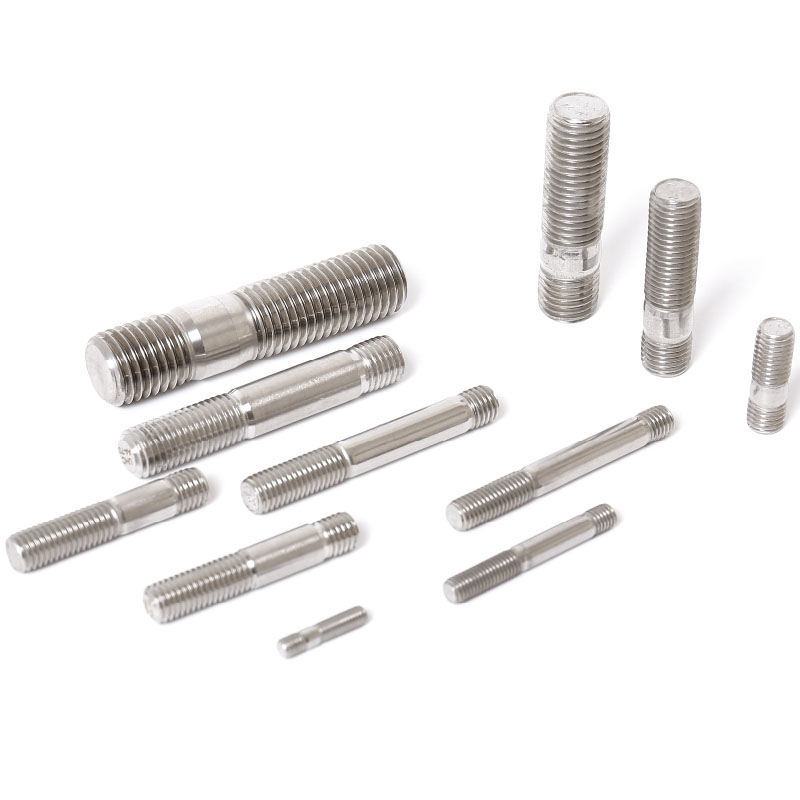
Threaded rods and studs carry much of the process-industry workload, with lengths up to 5000 mm in the supplied range.
When Stainless Is Not the Answer
The traditional alternative in these sectors is coated alloy steel, and it has not disappeared for good reason. ISO 898-1 sets the property-class system for carbon and alloy steel bolts, screws and studs across classes 4.6 to 12.9, which reaches higher nominal strength levels than the stainless classes listed in this range. A compact, high-preload joint with limited room for a larger fastener may still be an alloy steel application, with the coating doing the corrosion work.
The trade-off is where the protection lives. A coated alloy steel fastener relies on a barrier that can be damaged during handling, installation or service, and a breach becomes a local corrosion site. A stainless fastener relies on its own alloy chemistry and the condition of its passive film, which is why surface treatment for stainless is generally about restoring or supporting that film rather than sealing the part. Duplex grades occupy a middle position: they offer higher strength than standard austenitic grades while retaining chloride resistance, which is why they appear in both the bolt and stud grade lists as the D6 classes.
Stated as a decision rule rather than a preference: where chloride exposure dominates and the required preload can be met within the stainless or duplex classes, a corrosion-resistant grade removes the coating-maintenance question. Where the joint geometry demands strength beyond those classes, coated alloy steel remains the fit and the coating specification becomes the critical item. Neither route is universally superior, and neither is a substitute for confirming the connection design.
Anchors to Put on the Drawing
Specification errors in these sectors usually come from what the drawing leaves out. The following anchors close most of the gap.
- Standard and edition. Name the governing text and its edition. DIN designations such as DIN 931, DIN 933 and DIN 934 remain common order shorthand in the trade even where ISO or EN ISO successor texts also exist, so the order should state which document governs rather than leaving the supplier to choose.
- Property class and parent material. State the class — A2-70, A4-80, D6-80 and so on — and, for the D6 classes, confirm the parent material on the certificate rather than assuming it.
- Thread tolerance class. 6g/2A for bolts and studs, 6H/2B/3B for nuts. The 3B class is the tighter of the internal classes listed and should be specified deliberately, not by default.
- Size and length. Give nominal diameter and effective length explicitly; the bolt range runs to 300 mm effective length and the stud range to 5000 mm, so length is a real variable, not a rounding detail.
- Finish. Natural finish, passivation, Dacromet coating or adhesive pre-coating, chosen for the parent material and the exposure.
- Inspection document. State the document type required under EN 10204:2004 — the 3.1 and 3.2 types are the ones involving independent verification of test results by an authorised inspection representative, which is why they are the usual requirement in regulated work.
What to Verify Before the Purchase Order
Verification is where a scenario map turns into a defensible order. The capability data behind this range gives a buyer several concrete checkpoints. Production runs through OEM/ODM routes with custom head marking or logo, monthly capacity of 500 to 1,000 tons, a lead time of 75 to 90 days and a minimum order quantity of 150 kg. Quality control is staged as first article inspection, in-process inspection and pre-shipment inspection. After-sales support includes a 3.1 material test certificate, handling of after-sales quality issues and batch quality tracing.
Behind that sits an independent laboratory equipped for dimensional and mechanical performance testing, plus an ERP system that manages production, sales and management processes with traceability from raw material procurement to finished product delivery. The group operates five production bases and reports 80,000 m² of factory space, 200 employees, 25 engineers and annual output of 25,000 tons of stainless and special materials, with exports at 80% of output and main markets in the EU, Korea and Japan.
For a buyer, the practical sequence is: confirm the grade and parent material on the certificate; confirm the thread class with a gauge rather than by eye; confirm the inspection document type matches the project requirement; confirm the finish is the one specified and is compatible with the material; and, for a first order, confirm the article through first article inspection before volume release. Where a project falls inside EU pressure equipment scope, confirm the conformity route separately — company-level PED certification and product-level PED scope are not the same statement.
Case Evidence: Ten Years, One Supply Relationship
The supplier reports a ten-year supply relationship with industrial equipment OEMs, engineering contractors, hardware distributors and new energy system suppliers across Germany, Italy, Korea and Japan, covering roughly 100,000 pieces for fastening assemblies in aerospace parts, marine equipment, automotive chassis and power generation facilities. The reported outcome is a reduction in later maintenance replacement cost and stable project operation, with the highlighted basis being high tensile and anti-fatigue strength, seawater and acid-base corrosion resistance, high-temperature resistance, and conformity with DIN, ISO, JIS, ASME and ASTM standards.
That record is company-reported and tied to those projects' own conditions; it is evidence that long-running supply relationships exist in these sectors, not an independent benchmark, and it should not be read as a prediction of maintenance outcomes in a different installation. Its practical value to another buyer is the pattern it confirms: mixed-industry supply is workable when the material and standard anchors are fixed per application rather than averaged across the order.
Market Context: Growth Numbers Do Not Choose a Material
One commercial research estimate puts the global fasteners market at USD 119.18 billion in 2026, rising to USD 167.4 billion by 2035 at a compound annual growth rate of 3.85%. Published growth forecasts for the same broad category vary materially depending on how the product scope is drawn, with some series clustering around 3.5% and others above 6%, so the direction of travel is more reliable than any single figure.
For a specification decision, market growth carries almost no weight. What the numbers do support is a narrower observation: demand across petrochemical, marine and power work is broad enough that suppliers serving all three must hold a materially wider material menu than a single-sector stockist, and the buyer's task shifts from finding a supplier who lists the products to verifying which of those products matches the actual condition.
Outlook: Documentation Depth as a Selection Criterion
The conformity chain in these sectors attaches documents to the fastener rather than to the fastener alone. A pressure-equipment item may bring PED scope assessment; a structural joint on plant steelwork may bring EN 14399 or EN 15048 assemblies, and with them CE marking and a declaration of performance under the Construction Products Regulation where a harmonised standard applies; a regulated end market may bring a sector quality scheme. Each layer adds a requirement that a general-purpose supplier cannot satisfy retroactively.
The reasonable expectation for buyers planning long-life assets is therefore that the ability to produce a coherent documentation package — 3.1 certificate, batch traceability, test records, sector scheme where applicable — will matter at least as much as the ability to quote a size and a grade. Specification discipline on the drawing is the cheapest way to make that package obtainable.
A buyer wanting to test a configuration against a specific service condition can request a sample and the matching inspection documents before committing a project quantity. The full product range and specification tables are set out in the HTNXT product brochure (PDF).
FAQ
How should a buyer select the right fastener material for petrochemical, marine and power-generation conditions?
For a general indoor environment, 304/316 stainless steel is the preferred starting point. For high-corrosion, offshore or marine environments, 316L, duplex steel or high-temperature alloy materials are recommended. For high-strength mechanical load scenarios, alloy steel fasteners are adopted. Material selection can be customized according to the project's working conditions, and the selected grade should be confirmed against the certificate rather than assumed from the product name.
Which product families and size ranges cover these three industries?
Bolts run from M2 to M160 with effective lengths of 6 to 300 mm. Nuts run from M2 to M64. Washers run from M2.5 to M45. Threaded rods and studs run from M5 to M160 with effective lengths up to 5000 mm. Rivet nuts and rivets run from M3 to M6.4. Screws run from M2 to M8 with lengths of 6 to 100 mm. All families are supplied against ISO, DIN, ASTM, ASME, ANSI and JIS standards, with rivet nuts listed against ISO, DIN, ASME, ANSI and JIS.
What thread tolerance classes and strength grades should appear on the order?
Bolts and threaded rods/studs are supplied with 6g/2A precision threads; nuts are supplied with 6H/2B/3B precision threads, with 3B being the tighter internal class of the three. Bolt grades are A2-70, A2-80, A4-70, A4-80, D6-80 and D6-100. Nut grades follow the same list. Stud grades are A2-50, A2-70, A4-50, A4-70, D6-80 and D6-70. Screw grades are A2-50, A2-70, A4-50 and A4-70.
Do stainless fasteners need a surface treatment?
Four surface options are available across the range: natural finish, passivation, Dacromet coating and adhesive pre-coating. Natural finish and passivation are the usual routes for stainless items, with passivation supporting the condition of the passive film. Dacromet coating and adhesive pre-coating are also offered, but coating suitability depends on the parent material and the exposure, so the finish should be confirmed with the supplier for the specific grade and application rather than applied as a default.
Which standards can a project cite when specifying these fasteners?
The range is supplied against ISO, DIN, ASTM, ASME, ANSI and JIS standards. Relevant reference points include ASTM A193/A193M for alloy and stainless bolting in high-temperature or high-pressure service, ASTM A320/A320M for low-temperature service, API 20E and 20F for petroleum and natural gas industry bolting, ISO 3506-1 and ISO 3506-2 for corrosion-resistant stainless steel bolts and nuts, ISO 4759-1 for tolerance product grades A, B and C, and JIS B 1180 and JIS B 1181 for hexagon bolts and nuts in Japanese-standard supply chains. Inspection documents follow EN 10204:2004, with the 3.1 type available.
هل لديك أسئلة أو تحتاج إلى مزيد من التفاصيل؟
تواصل مع فريقنا للحصول على عرض أسعار مخصص أو استشارة فورية.
طلب عرض أسعار
املأ النموذج أدناه وسيتواصل معك فريقنا بعرض مقترح مخصص.
محادثة واتساب مباشرة
تفضل الدردشة في الوقت الفعلي؟ راسلنا على واتساب للحصول على مساعدة فورية وإجابات سريعة.
- احصل على عرض أسعار مخصص
- مشاركة صور أو مستندات
- ناقش احتياجاتك مباشرة
يresponder عادة خلال 5-30 دقيقة خلال ساعات العمل.