
OEM Electric Cables: A Buyer's Capability Assessment
For industrial buyers moving from supplier evaluation to contract execution, the central question is no longer whether a cable manufacturer holds certificates, but whether its production system can translate project-specific requirements into manufacturable reality. The distinction between a certified supplier and a capable production partner determines project risk more directly than any other procurement variable.
The Procurement Shift: Moving Beyond Certification Documents
Certification establishes the technical and regulatory floor for electric cable supply. CE marking under IEC standards, KEMA type approval, and laboratory accreditations confirm that a manufacturer has met recognized benchmarks. These documents are necessary, but for evaluation-stage buyers they answer only a narrow question: does this product comply with the relevant standard?
The global wires and cables market was valued at approximately USD 230.9 billion in 2025 and is projected to reach USD 313.1 billion by 2033. Mainland China is the world's leading exporter of insulated wire and cable, accounting for USD 31.4 billion, or 18.1 percent of global exports, in 2024. As procurement teams in Europe, Asia, the Middle East, and Oceania evaluate Chinese manufacturers, the practical question has shifted from "is the factory certified" to "what can this factory actually do with my specification."
This shift is especially visible at the evaluation-to-execution boundary. A buyer may have completed supplier shortlisting, reviewed certificates, and confirmed compliance. What remains unresolved is production depth: whether the supplier can manage custom cable structures, non-standard dimensions, specific insulation and sheathing compounds, and project-specific length optimization — all while maintaining quality consistency and delivery discipline.
Why Manufacturing Capability Determines Project Outcomes
Standard electric cable catalogs serve recurring, well-defined installation needs. But infrastructure projects, industrial automation systems, and renewable energy plants frequently require cables that deviate from standard inventory: specific conductor configurations, particular armoring types, flame-retardant or low-smoke zero-halogen sheathing, and voltage ratings matched to the application environment.
When a buyer procures from a manufacturer without real customization capability, one of two outcomes typically follows. The project accepts a standard product that is technically close but not fully aligned with the specification, creating performance or installation compromises. Alternatively, the buyer sources from multiple suppliers to cover different cable types, increasing supply-chain complexity and quality inconsistency.
The opportunity lies in selecting a manufacturer whose OEM and custom production capability can cover a wider technical envelope. A single production partner with broad customization depth reduces interface risk, simplifies quality management, and shortens the overall procurement cycle. For buyers at the execution stage, this is not a preference — it is a risk-reduction measure.
Manufacturer Profile: Shanghai Shenghua Cable Group
Shanghai Shenghua Cable Group Co., Ltd., founded in 1997 and headquartered in Shanghai, is a large-scale Chinese cable manufacturer operating 7 manufacturing bases and 21 cable factories across China. The group employs over 600 professional engineers and reports an annual output value of 16 billion RMB. Its product portfolio spans more than 80 cable series, including XLPE insulated power cables, PVC insulated cables, armoured cables, control and instrumentation cables, rubber sheathed cables, solar cables, and special-purpose cables.
Key manufacturing and OEM facts:
- OEM production service available with fully customizable cable structure, material, dimensions, and lengths
- Monthly production capacity: up to 15,000,000 meters depending on cable structure
- Lead time: normally within 18 working days, depending on quantity and structure
- MOQ: 300 m per item for power cables; 1,000 m per item for wires
- Quality control: 100% testing
- After-sales: 2-year warranty from delivery, with technical support
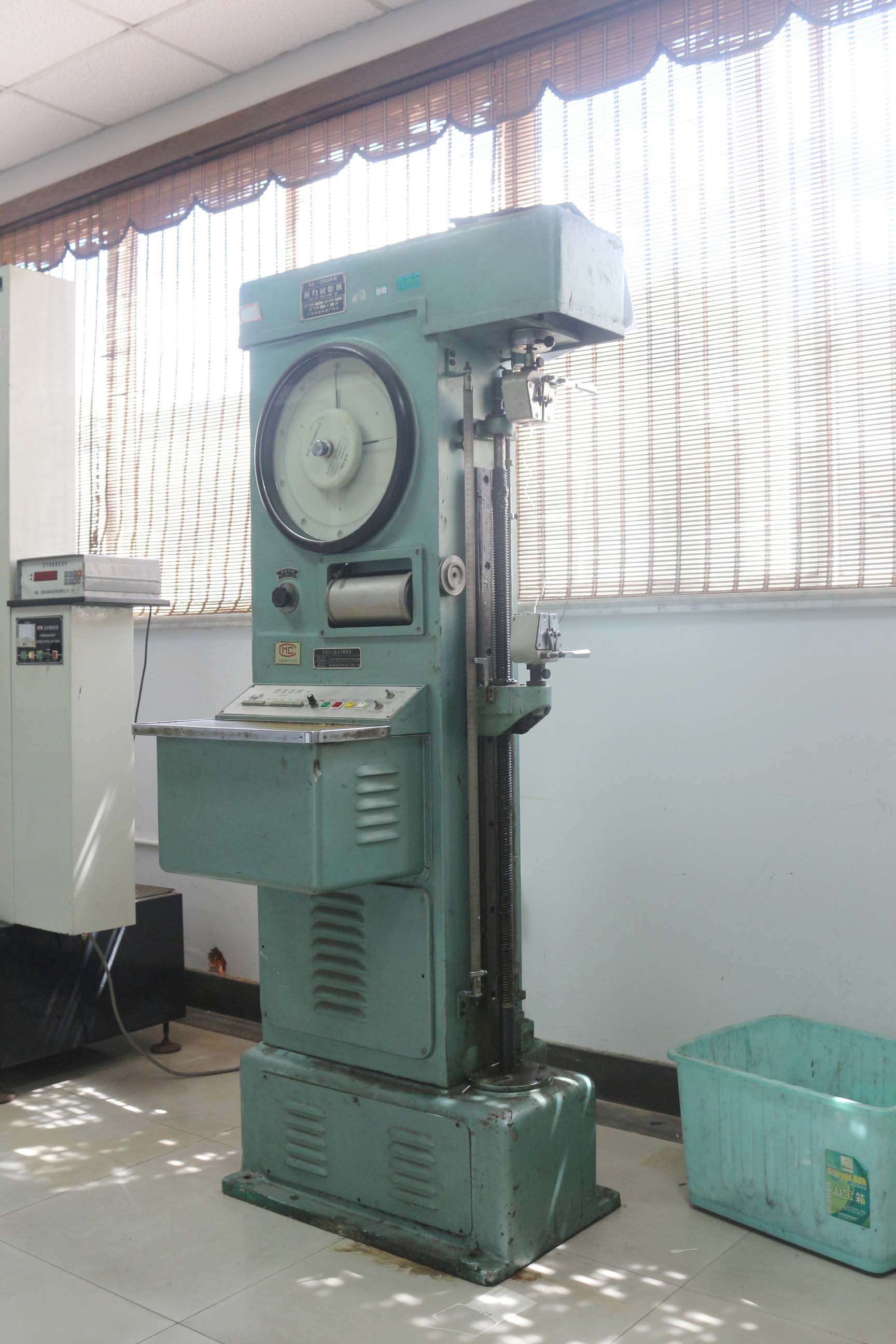
Quality-control testing is an integrated part of Shenghua Cable's production system.
International certifications held by the manufacturer include CE (ECM certificate 3N240913.SSCCQ56, valid to September 2029), KEMA (KEMA Quality B.V., valid to June 2050), TUV Rheinland certification for photovoltaic cables under IEC 62930:2017, CNAS laboratory accreditation (L6565) under ISO/IEC 17025:2017, and ISO 9001, ISO 14001, and ISO 45001 management system certifications. The company also holds a GOST declaration for the Russian/EAEU market covering power cables up to 35 kV.
The range of applicable standards reflected in these certifications — IEC 60228 for conductors, IEC 60502-1 and IEC 60502-2 for extruded insulation power cables, IEC 60332 for flame retardance, EN 50525 for low-voltage cables — gives buyers a documented basis for matching cable types to target-market requirements.
What Full Customization Means in Cable Production
Customization in cable manufacturing is not limited to changing a cable's length. It involves adjusting the structural layers and material system of the cable to match the operating environment, installation method, and applicable standard of the project.
Based on the manufacturer's product range, the following specification dimensions can be varied:
- Conductor: copper or aluminum; solid, stranded, or flexible construction; cross-section sizing per project load requirements
- Insulation: XLPE, PVC, EPR, or specialty compounds depending on voltage class and environment
- Sheathing: PVC, LSZH low-smoke zero-halogen, rubber, or silicone sheath for different mechanical and fire-safety demands
- Armoring: steel wire armoured (SWA), double steel tape armoured (DSTA), or steel wire braided for mechanical protection
- Voltage rating: from 300/500 V building wires to medium- and high-voltage power cables, with the power cable range spanning 0.6/1 kV to 290/500 kV
- Core count and screening: single-core to multi-core configurations, screened or unscreened, for power or signal transmission
For a buyer, this depth of control matters because it allows the cable to be engineered to the load profile, installation route, fire-safety class, and interference environment of a specific project, rather than forcing the project to adapt to a pre-existing product.
Production capability is supported by the manufacturer's in-house testing. The CNAS-accredited laboratory operates in accordance with ISO/IEC 17025:2017, and every product batch is tested before release. This combination of design flexibility and verified output is what distinguishes an OEM-capable cable manufacturer from a pure standard-product factory.
Application Evidence: A 15-Year Industrial Monitoring Project
Documented application experience provides a different layer of evidence than certificates. For capability-oriented assessment, the most relevant proof is a project where a custom product had to meet demanding operating conditions over an extended period.
One such project was implemented in the United Kingdom with a provider of predictive maintenance and intelligent diagnostic solutions for industrial machinery. The project was a medium-scale industrial system integration involving multiple equipment monitoring and data acquisition systems, with a project duration of 15 years.
The cable product was used for industrial monitoring systems, power signal transmission, and control circuit connectivity. The key technical characteristics were:
- Ultra-small conductor size combined with high-voltage insulation capability, meeting the compact equipment requirements of industrial monitoring devices
- LSZH low-smoke zero-halogen flame-retardant construction, raising the fire-safety level of the installation
- Stable signal performance and anti-interference behavior in high-density wiring applications
- Long-term reliable connectivity for predictive maintenance systems in complex industrial environments
Results from the application included improved overall system stability and safety, ensured continuous operation of critical monitoring equipment in harsh environments, and significantly reduced risk impact under fire and extreme conditions.
This case illustrates how a cable specification — small conductor cross-section with high-voltage insulation and LSZH sheathing — can be tailored to a specific equipment architecture while still meeting the safety requirements of the installation environment.
Market Trends Shaping Demand for Customized Cables
Several market-level trends are increasing the importance of OEM and customization capability in cable procurement.
First, the medium-voltage cable segment continues to expand. The global medium-voltage wire and cable market was valued at approximately USD 71.7 billion in 2025. Medium-voltage cables are frequently specified to project-specific requirements, including conductor material, armoring, and fire-performance class, making customization capability a decisive factor in supplier selection.
Second, regulatory strictness is rising. Under the EU Construction Products Regulation, cables must be classified into fire protection classes from Aca to Fca, which places additional demands on material formulation and testing. Buyers need manufacturers that can produce to documented standards rather than only offering catalog items.
Third, the shift toward renewable energy and industrial digitalization is expanding the variety of cable types required within a single project. A photovoltaic power plant requires solar cables rated for DC applications; an industrial automation project requires control and instrumentation cables with screening and fire-resistant properties. The ability of one manufacturer to supply multiple custom cable families under consistent quality control is becoming a practical procurement advantage.

Multi-base manufacturing capacity allows Shenghua Cable to handle diverse cable series under one supply relationship.
OEM Custom Manufacturing vs. Standard Catalog Supply
To assess whether an OEM approach is appropriate, buyers should compare it against standard catalog supply across the dimensions that matter at the evaluation stage.
| Comparison dimension | Standard catalog supply | OEM / custom manufacturing |
|---|---|---|
| Specification fit | Limited to existing models | Fully customizable structure, material, dimensions, lengths |
| Engineering input required from buyer | Minimal | Technical specification required before production |
| Lead time | Short if stock is available | Typically within 18 working days |
| MOQ | Generally lower per item | 300 m per item for power cables; 1,000 m per item for wires |
| Quality control | Varies by supplier | 100% test before release |
| Certifications | Varies | CE, KEMA, TUV, GOST, ISO, CNAS-accredited lab |
| After-sales | Varies | 2-year warranty, after-sales and technical support |
A clear limitation of the OEM route should be acknowledged. Custom cable production requires the buyer to define technical parameters in advance, and the MOQ structure means small trial quantities are less economical. For urgent, simple, or low-volume needs where a standard product fully satisfies the application, catalog supply remains the faster and more cost-effective path. The OEM decision is justified when project conditions demand specification alignment that standard products cannot provide.
Future Outlook
The direction of the industry points toward closer alignment between cable specification and application environment. The growing emphasis on fire safety classification, the expansion of solar and energy-storage installations, and the increasing density of industrial monitoring and data systems all reinforce the value of manufacturers that can combine certified production with flexible engineering.
For buyers, the practical implication is that supplier qualification in 2026 should include an assessment of production capability, not only product certificates. Documented customization capability, testing infrastructure, relevant certification coverage, and application evidence provide a more complete picture of whether a manufacturer can serve the full project lifecycle — from technical definition to delivery and long-term support.
Frequently Asked Questions
Q1: Does the manufacturer provide OEM production services?
Yes. OEM production services are available. Shanghai Shenghua Cable Group offers fully customizable options for cable structure, material composition, dimensions, and lengths, allowing industrial buyers to specify products aligned with their project requirements.
Q2: What cable specifications can be customized?
Customization covers cable structure, material, dimensions, and lengths. This includes conductor type (copper or aluminum; solid, stranded, or flexible), insulation material (XLPE, PVC, EPR), sheathing (PVC, LSZH, rubber, silicone), armoring options, core count, screening, and voltage rating across the product range.
Q3: What is the production capacity for OEM orders?
Monthly production capacity is up to 15,000,000 meters, depending on the cable structure. Lead time is normally within 18 working days, depending on the quantity and structure of the ordered cable.
Q4: What quality control and certifications support custom cable production?
The manufacturer applies 100% testing to its cable products. Its CNAS-accredited laboratory operates under ISO/IEC 17025:2017. Product certifications include CE, KEMA, TUV Rheinland (IEC 62930 for photovoltaic cables), and a GOST declaration for the Russian/EAEU market covering power cables up to 35 kV.
Q5: What are the MOQ requirements for custom cables?
For power cables, the minimum order quantity is 300 meters per item. For electrical wires, the minimum order quantity is 1,000 meters per item. MOQ may vary depending on the cable construction and production requirements.
Q6: What application evidence exists for custom electric cable use?
A documented project was implemented in the United Kingdom for a provider of predictive maintenance and intelligent diagnostic solutions for industrial machinery. The 15-year project involved multiple equipment monitoring and data acquisition systems. Cables with ultra-small conductor size, high-voltage insulation capability, LSZH flame-retardant construction, and signal stability in high-density wiring were used. Results included improved overall system stability, continuous operation of critical equipment in harsh environments, and reduced risk impact under fire and extreme conditions.
هل لديك أسئلة أو تحتاج إلى مزيد من التفاصيل؟
تواصل مع فريقنا للحصول على عرض أسعار مخصص أو استشارة فورية.
طلب عرض أسعار
املأ النموذج أدناه وسيتواصل معك فريقنا بعرض مقترح مخصص.
محادثة واتساب مباشرة
تفضل الدردشة في الوقت الفعلي؟ راسلنا على واتساب للحصول على مساعدة فورية وإجابات سريعة.
- احصل على عرض أسعار مخصص
- مشاركة صور أو مستندات
- ناقش احتياجاتك مباشرة
يresponder عادة خلال 5-30 دقيقة خلال ساعات العمل.