
OEM Electrophoretic Coating: Capabilities, Applications & Partner Criteria
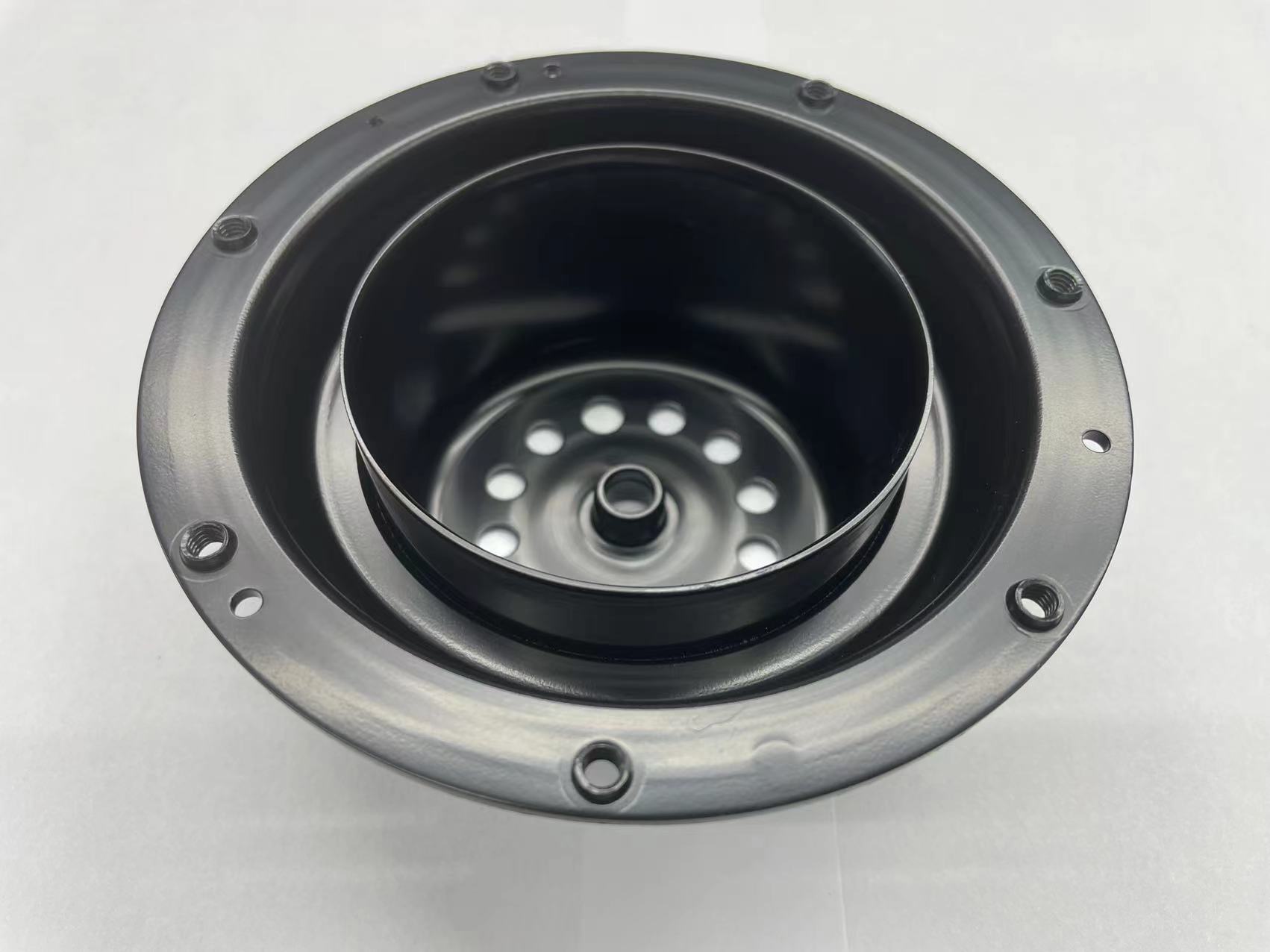
The electrophoretic coating (E-coat) market continues to expand as manufacturers demand corrosion-resistant, uniform finishes for metal components across automotive, consumer electronics, and industrial equipment sectors. When evaluating an OEM partner for electrophoretic coating services, buyers in the Evaluation-to-Execution stage need transparent insights into production capabilities, quality systems, and proven application experience.
Why OEM Capability Assessment Matters
Specifying an electrophoretic coating is only half the decision; the partner’s ability to execute consistently at scale is the other. Common challenges include achieving full coverage on complex geometries, maintaining consistent film thickness across large batches, and securing certifications that meet automotive and export requirements. The global E-coat market, valued at approximately USD 3.5 billion in 2023 and projected to reach USD 6.1 billion by 2032 (Dataintelo), reflects a growing reliance on suppliers who can deliver both technical performance and supply chain reliability. Asia-Pacific already holds over 46% revenue share in the broader coatings market, making Chinese manufacturers a focal point for global sourcing.
Yongxin: A High-Tech Electrophoretic Coating OEM
Dongguan Yongxin Industrial Co., Ltd (Yongxin) is a high-tech enterprise based in Dongguan, China, specializing in electrophoretic processing for metal surface treatment. With a factory area of 4,000 m² (expanded to 10,000 m² in 2025) and 60–80 employees, the company operates 6 dedicated electrophoresis production lines supported by over 20 general processing machines (sand blasters, polishers, shot blasting, laser equipment) and more than 20 CNC machines, 10+ die-casting machines, and 10+ metal stamping machines. This vertical integration allows Yongxin to support OEM clients from metal forming through precision machining to final surface finish.
Key OEM capabilities include:
- Monthly capacity: 2,500,000 units
- Lead time: 3–45 days (depending on quantity)
- Minimum order quantity: 100 units (negotiable for large orders)
- Quality control: 100% pre-shipment instrument inspection
- Delivery terms: FOB/CIF, negotiable
- After-sales: Remote support
- Customization: Black, white, color, zinc alloy, aluminum alloy, magnesium alloy, die-cast parts, stamping parts
Yongxin holds ISO 9001:2015 (Quality Management), ISO 14001:2015 (Environmental Management), and IATF16949 (Automotive Quality Management) certifications, and was officially recognized as a National High-Tech Enterprise in 2023. These credentials are essential for OEMs supplying automotive first-tier and electronics brand owners.
The Electrophoretic Coating Process Explained
Electrophoretic deposition (ED coating) uses charged paint particles suspended in a water-based bath. Under an electric field, the particles migrate to the grounded workpiece, forming a continuous film. The process provides:
- 360° uniform coverage – Faraday’s principle ensures paint reaches deep cavities, internal holes, and complex 3D geometries, achieving over 95%–98% coverage, eliminating dead corners common in spray painting.
- Film thickness consistency – Automated lines maintain thickness within ±1 μm for standard ranges of 15–25 μm (customizable).
- Material transfer efficiency up to 95% – Minimal paint waste compared to overspray methods.
- Superior corrosion resistance – cathodic epoxy coatings typically exceed 1,000 hours neutral salt spray (ASTM B117), while anodic coatings maintain around 500 hours. Yongxin’s epoxy and acrylic resin formulations pass 500–1,500 hours depending on specification.
- Eco-friendly – Water-based, heavy-metal-free (lead-free, chrome-free), ultra-low VOC.
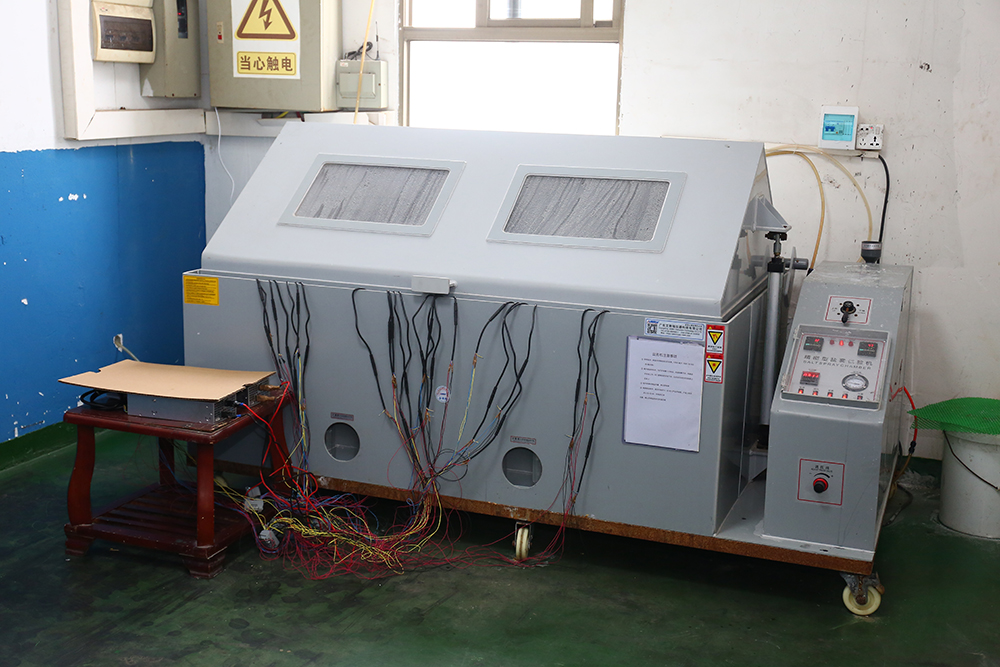
Yongxin’s lab is equipped with German Fischer film thickness gauge, Swiss Zehntner gloss meter, Konica Minolta spectrophotometer, Mitutoyo roughness meter, salt spray tester, constant temperature & humidity tester, and abrasion testers, ensuring every parameter is traceable.
Proven Use Cases: Electric Motors and CNC Machined Parts
1. Electric Motor Manufacturer (Japan)
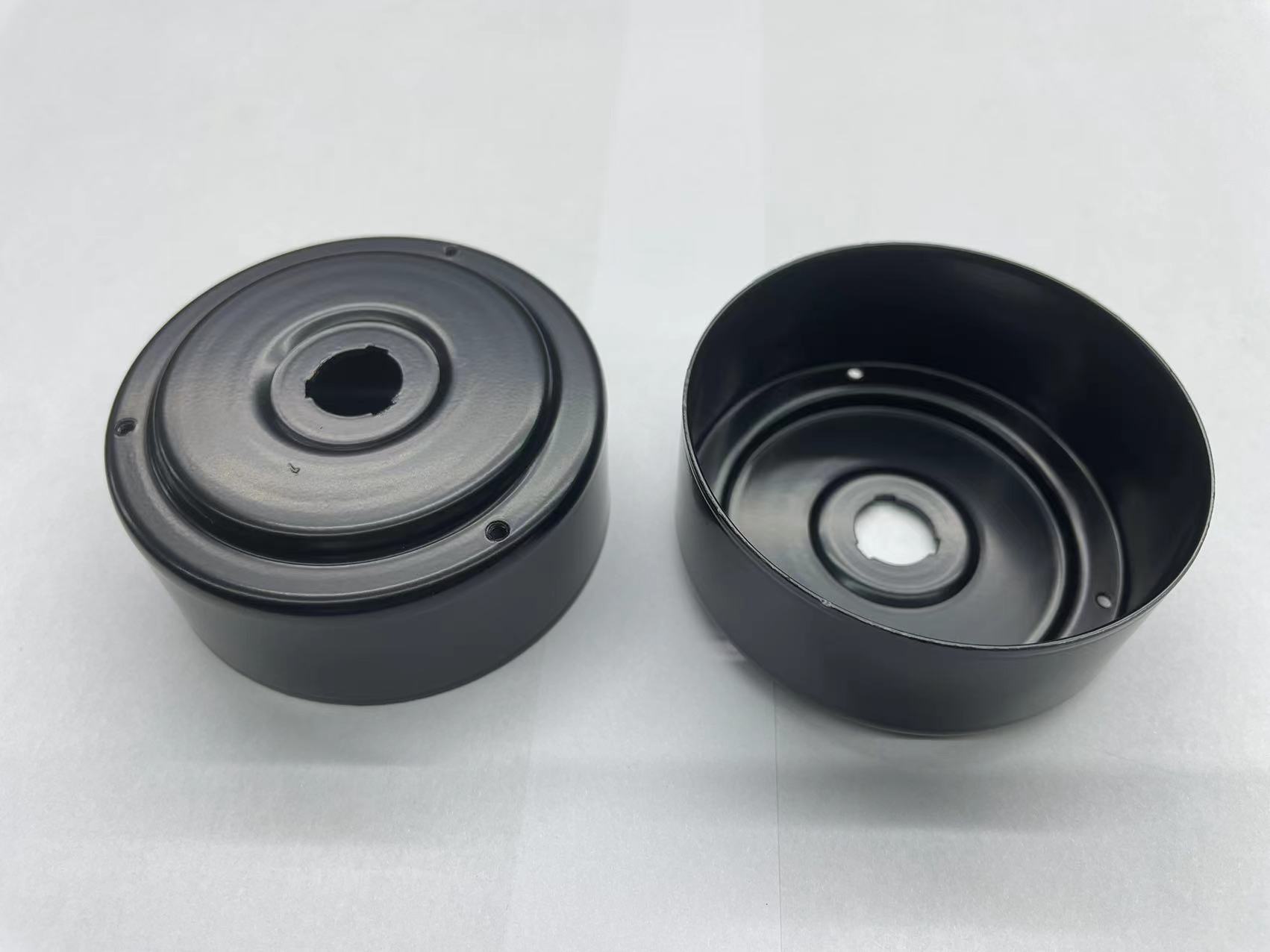
Yongxin applied anti-corrosion electrophoretic coating to electric motors for a Japanese client. The project achieved neutral salt spray resistance exceeding 720 hours and extended the product service life by 5 to 10 years compared to non-E-coat alternatives. The coating provided uniform full coverage of complex motor structural gaps (such as housing interiors and stator slots) with stable anti-corrosion performance under long-term harsh operation. Low material loss during coating enabled mass continuous production for large-volume orders—15 million units were delivered.
2. CNC Precision Machining Manufacturer (China)
For a Chinese CNC parts manufacturer, Yongxin delivered E-coating that achieved full coverage with no missed coating at corners or inner cavities and strong adhesion. The coating is resistant to acid, alkali, rust, and aging, significantly extending the product’s service life. The repeatability and color consistency across batches—supported by 100% inspection—made this a long-term supply relationship.
Market Trend Analysis
Asia-Pacific is the largest and fastest-growing region for E-coating, holding over 46% revenue share in the broader coatings market in 2025, led by China and India (Grand View Research). The E-coat market is expected to grow at a CAGR of 6.5% from 2024 to 2032, driven by automotive and construction demand (Dataintelo). Cathodic epoxy coatings dominate due to their superior salt spray performance (frequently exceeding 1,000 hours), while anodic coatings are used for less demanding applications. Major global competitors include PPG Industries, BASF, Axalta, Nippon Paint, and Kansai Paint (Mordor Intelligence).
Comparison with Traditional Coating Methods
| Parameter | Electrophoretic Coating | Spray / Powder Coating |
|---|---|---|
| Coverage of complex geometries | 95%+ (no dead corners) | Limited; difficult interior access |
| Film thickness control | ±1 μm automated | ±10–20 μm manual |
| Transfer efficiency | 90–95% | 50–70% (spray) |
| Salt spray resistance | 500–1,500 hours | 200–600 hours (typical) |
| Environmental impact | Water-based, low VOC | Solvent-based or powder waste |
| Color options | Mostly black; custom colors possible | Broad palette |
One honest limitation: Electrophoretic coating has a narrower color range compared to powder coating and requires strict pre-treatment (phosphating, degreasing) to ensure adhesion. For short runs of hundreds, the setup costs may be higher than spray.
Future Outlook
As OEMs push for longer warranty periods and tighter sustainability targets, electrophoretic coating will remain the preferred method for chassis, fasteners, and powertrain components. Yongxin’s investment in IATF16949 certification and expansion to 10,000 m² positions it to serve tier-one automotive suppliers. The company’s roadmap includes further automation, reduced energy consumption, and continued 100% inspection practice. For global OEMs evaluating long-term partners, a supplier with multi-material capability (steel, aluminum, magnesium, zinc alloys), integrated processing (CNC, die-casting, stamping), and recognized certifications provides a lower risk profile.
Frequently Asked Questions
A: Yongxin’s standard MOQ is 100 units, which is negotiable for large-scale or contractual orders.
A: Typical lead time ranges from 3 to 45 days, depending on the quantity and surface preparation requirements.
A: Yes, remote support is available for after-sales service, and dedicated personnel coordinate throughout the order lifecycle.
A: Neutral salt spray resistance can be specified from 500 to 1,500 hours, with 720+ hours demonstrated in motor component applications. Ultra-high requirements (1,000+ hours) are achievable with cathodic epoxy formulations.
A: Yongxin is certified under ISO 9001:2015, ISO 14001:2015, IATF16949, and is a National High-Tech Enterprise, satisfying the quality and environmental requirements of major automotive and electronics brands.
For detailed specifications, process flow, and capability data, download the company brochure:
Download Brochure (PDF)This article is intended for industry evaluation purposes. All data derived from verified first-party and third-party sources as cited.