
OEM Fit and Material Evidence: BP3, BP5 and BP6
OEM Fit and Material Evidence: BP3, BP5 and BP6
For buyers evaluating a pan assembly busbar supplier, customization claims are most useful when they can be checked against model-specific information. The available product data for barfuses identifies three evidence points: BP3 accepts OEM and size customization to the customer’s MCCB; BP5 and BP6 use copper for conductive parts and polycarbonate for insulation; and BP6’s mounting plate can be customized to the outgoing MCB configuration. These details give buyers a practical starting point for comparing datasheets and clarifying project fit without relying on broad sales language.
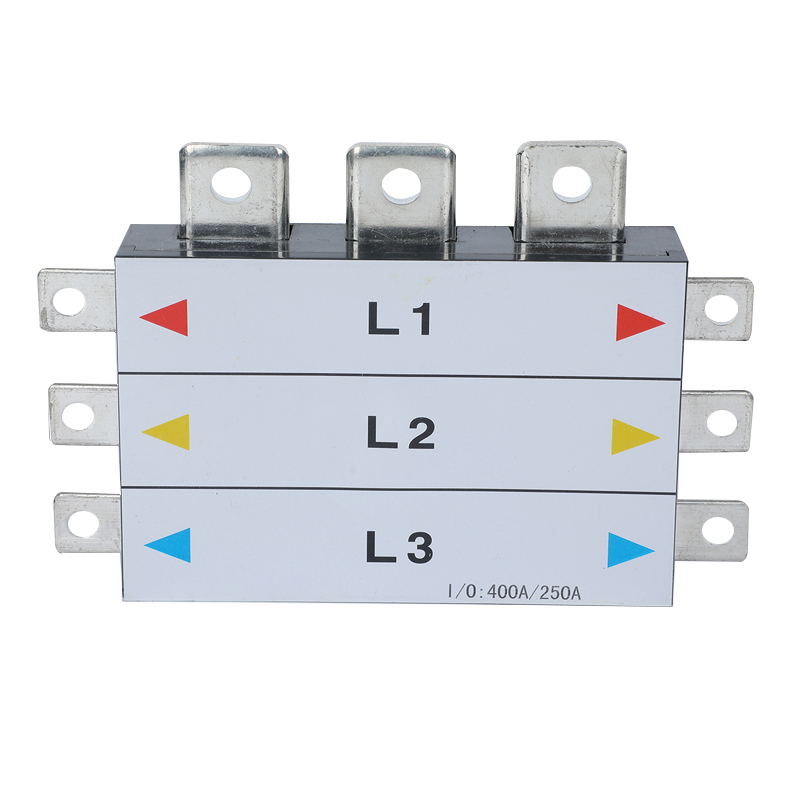
barfuses is the brand associated with YUEQING BARFUSE ELECTRIC CO.,LTD, a manufacturer of low-voltage electrical products that include MCB and MCCB pan assemblies. For this article, the useful question is narrower: what can a buyer actually verify about the BP3, BP5 and BP6 configurations from the available product information, and what should still be confirmed for a particular panel or distribution project?
Why datasheet evidence matters when specifying a pan assembly busbar
A pan assembly busbar is not selected by its category name alone. The assembly must correspond to the intended circuit-breaker arrangement and the buyer’s project configuration. In a low-voltage distribution system project, a mismatch between the specified assembly and the outgoing breaker arrangement can become a practical fit question, even when both items are described using familiar terms such as MCB pan assembly busbar, MCCB pan assembly busbar, chassis busbar or distribution box busbar.
That is why a supplier’s capability statement should be translated into inspectable evidence. A statement such as “customizable” is incomplete unless the buyer can identify what is customizable, which model the statement applies to, and which customer-side details are needed to define the requested configuration. A product datasheet is a useful first document because it can associate model names, material descriptions, ratings and customization notes with a specific assembly. It does not, by itself, establish that every project requirement has been reviewed or that an unlisted configuration is available.
For procurement teams comparing suppliers, this distinction helps keep the evaluation focused. Instead of treating customization as a general company attribute, ask for the evidence at the product and interface level: the relevant model, the breaker configuration it is intended to fit, the material description, and the exact parts or dimensions that can be adjusted.
What the BP3 evidence says about OEM and size customization
The BP3 is listed as an MCCB 3P Pan Assembly. Its product information states that OEM is acceptable and that its size can be customized according to the customer’s MCCB. This is a concrete, model-specific customization statement. For a buyer, the main value is not the word “OEM” by itself; it is the stated relationship between the BP3 size and the customer’s MCCB.
The same product information lists incoming ratings of 250A, 400A, 630A and 800A, outgoing ratings of 125A, 250A and 400A, and outgoing quantities from 2W through 14W in the listed increments. It also states that the series can be used for different MCCB brands with pole distances of 25mm, 30mm, 35mm or 45mm. These entries provide comparison points for an initial fit review. They should not be read as confirmation that every rating, pole distance and outgoing quantity is available together in every customized build.
When discussing a BP3 OEM request, buyers can use the datasheet facts to make the next question specific: which customer MCCB is being matched, what relevant dimensions or pole distance define the interface, and which requested size or outgoing arrangement is being proposed? The supplier’s reply should connect those project inputs to the BP3 configuration being quoted. If the available document does not show a requested combination, ask the supplier to identify it explicitly rather than assuming it is covered by the general customization statement.
This approach also helps distinguish a real configuration discussion from a broad claim. A useful response should make clear what product variant is under review and which customer-provided details are needed to establish fit. Where the supplier provides a revised datasheet or drawing, buyers can compare it against the project requirement. The available product information confirms the customization scope described above, but does not provide a project-specific drawing or validation result for any individual MCCB.
How to read the BP5 and BP6 material evidence
The available product information lists both BP5 and BP6 as using copper for conductive parts and polycarbonate for insulation. This material description is a useful, comparable evidence point across the two models: it identifies the stated material roles rather than leaving the buyer with an undifferentiated “copper and plastic” description.
BP5 is listed as an MCCB 2P Pan Assembly busbar. Its product data includes incoming ratings of 125A, 250A and 400A, with the corresponding listed thicknesses of 4mm, 6mm and 10mm; the outgoing ratings include 63A and 125A with listed thicknesses of 2mm and 3mm. The information also lists 2W–40W, an outgoing terminal width of 15mm, and an incoming terminal width of 25mm. Those values can help a buyer identify which BP5 configuration is being discussed, but they do not establish that every rating and way count is combined in a single configuration.
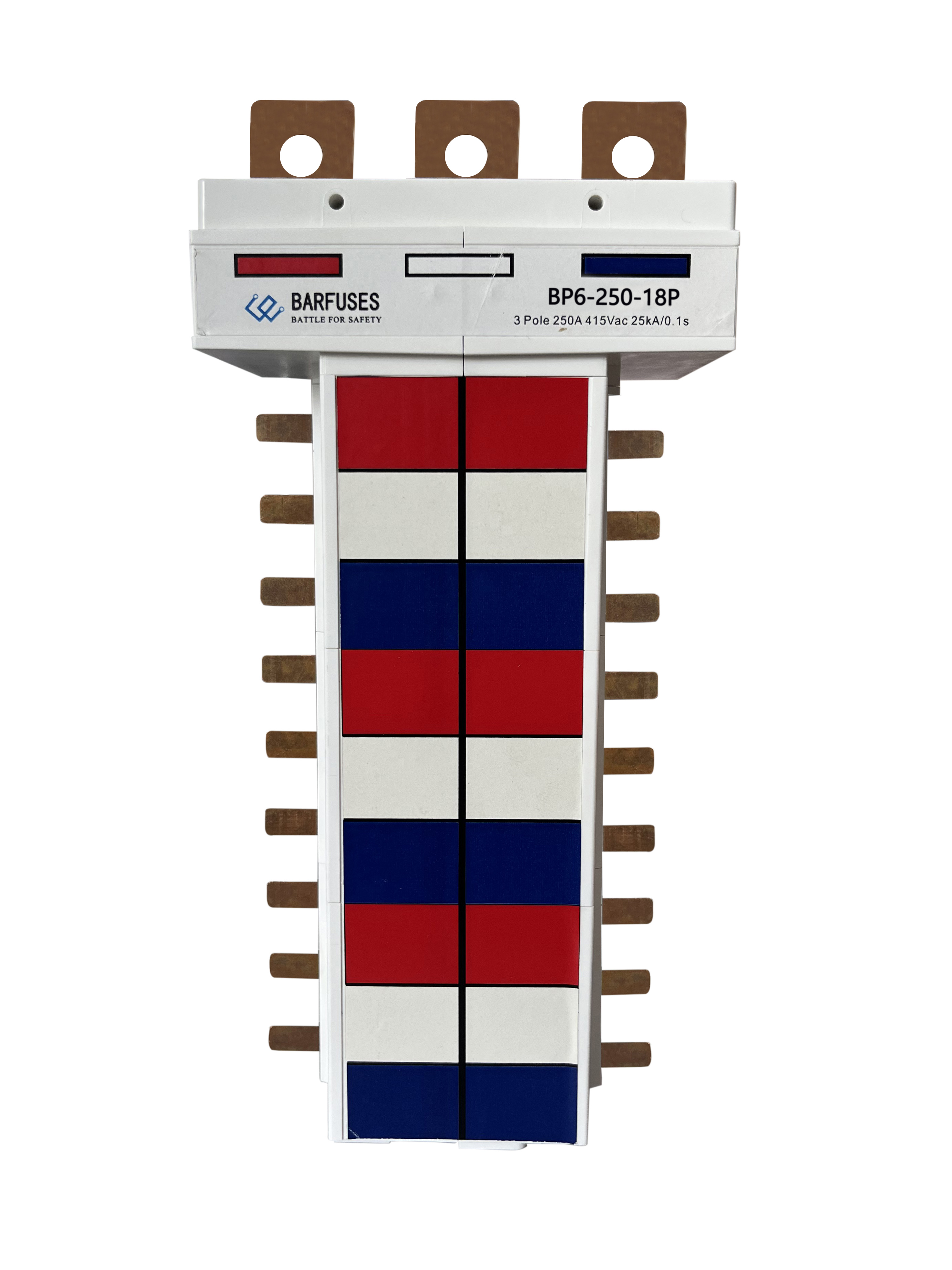
BP6 is listed as an MCB 3P CHASSIS BUSBAR. Its product information gives a rated value of 250A and terminal dimensions of 6.5×12mm for the outgoing terminal and 21×22mm for the incoming terminal. The material field also identifies copper and PC parts. Together with the material description, these entries allow the buyer to check whether the supplier’s information identifies the intended model, stated material roles and relevant terminal dimensions.
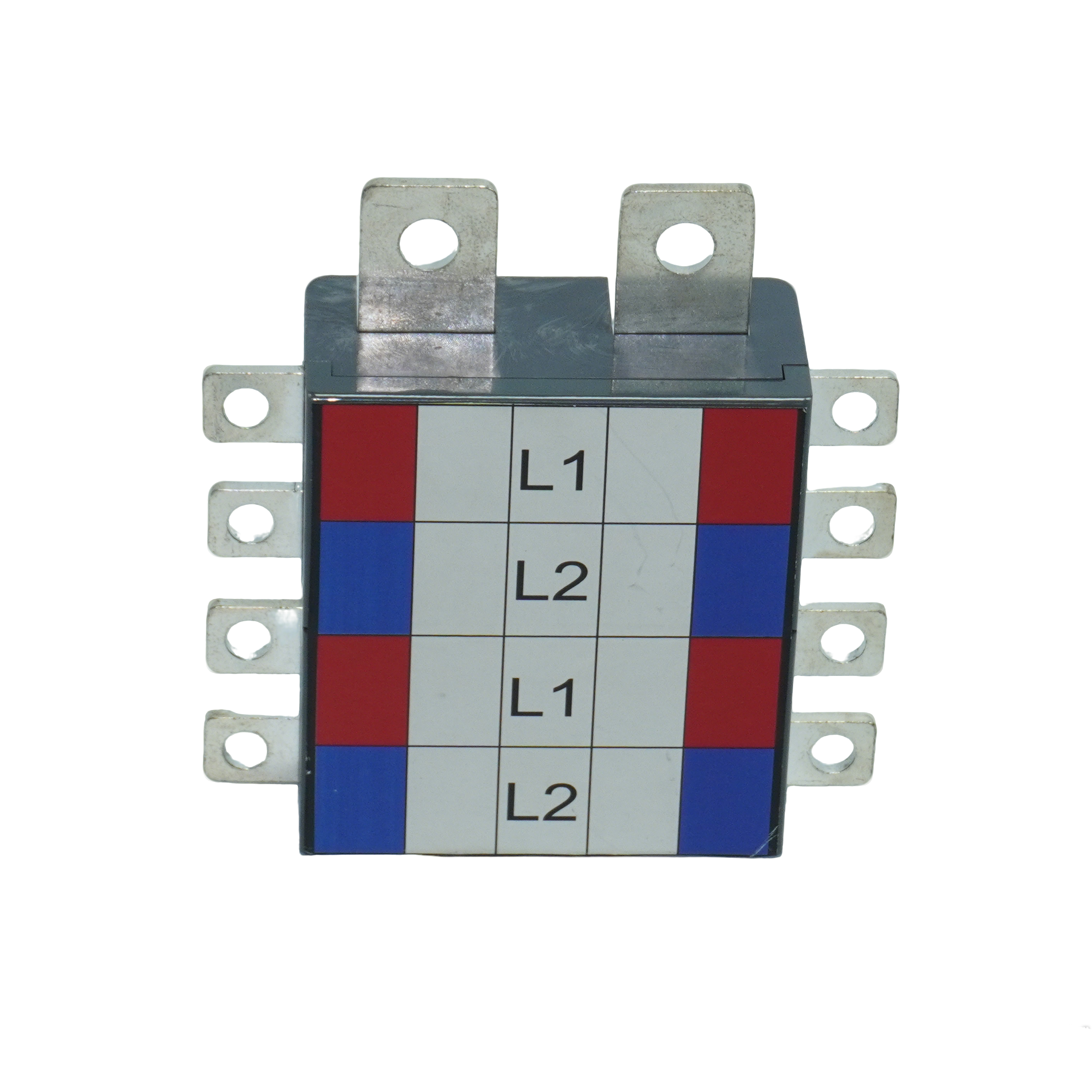
For comparison purposes, buyers should keep material evidence separate from performance conclusions. A stated copper conductor and polycarbonate insulation description tells the reader what materials are identified in the product information. It does not, on its own, supply a project-specific temperature-rise result, short-circuit test result, service-life estimate or certification record. If such evidence is required for a project, request the applicable documentation for the exact assembly and configuration being considered.
BP6 mounting-plate customization and outgoing MCB fit
The BP6 product information states that the mounting plate can be customized according to the outgoing MCB. This gives buyers a specific interface question to resolve during evaluation: does the proposed mounting-plate arrangement correspond to the outgoing MCB configuration required for the project?
To make that question answerable, include the intended outgoing MCB arrangement in the supplier inquiry and ask the supplier to identify how it is reflected in the proposed BP6 build. The available product information establishes that mounting-plate customization is offered in relation to the outgoing MCB; it does not list every possible MCB arrangement or provide a universal drawing that would apply to all projects. Treating the customization note as a starting point—not as a substitute for configuration review—keeps the decision grounded in evidence.
BP6’s product data also lists a 250A rating and incoming and outgoing terminal dimensions. Those details can be used as cross-checks when reviewing the proposed configuration. They should not be confused with the mounting-plate customization statement: terminal dimensions and mounting-plate fit are different pieces of information, and a buyer may need the supplier to address both for the intended assembly.
A practical comparison framework for buyers
BP3, BP5 and BP6 are not interchangeable descriptions of one assembly. BP3 and BP5 are listed as MCCB pan assembly products with different pole configurations, while BP6 is listed as an MCB 3P chassis busbar. The evidence available for each model also differs: BP3 has an explicit OEM and customer-MCCB size customization statement; BP5 has listed ratings, terminal widths and material information; BP6 has listed terminal dimensions, a rated value and a mounting-plate customization statement tied to the outgoing MCB.
A fair supplier comparison should therefore compare equivalent evidence, not simply count how often the word “custom” appears. For each candidate pan assembly busbar, record the requested breaker arrangement, the supplier’s model-specific response, the stated conductive and insulating materials, the available dimensional details, and any project documents still needed. If one supplier provides only a general capability statement and another supplies a model-linked specification, those are different evidence levels. The buyer can ask both suppliers the same follow-up questions before drawing a conclusion.
There is a legitimate boundary to customization: a standard, non-customized assembly may be easier to evaluate when its listed configuration already matches the project. When the customer’s MCCB size or outgoing MCB arrangement differs from the documented configuration, however, a standard listing alone may not resolve fit. Customization can address a defined mismatch, but it also creates a need to document the actual proposed configuration. Neither approach is automatically preferable; the appropriate choice depends on whether the listed assembly matches the project requirements and what evidence is available for the requested variant.
Checklist: questions to send to any pan assembly busbar supplier
The following checklist is designed to make supplier responses comparable. It is not a certification checklist or a statement that every item is already documented for BP3, BP5 or BP6. Buyers can adapt it to an MCB pan assembly busbar, MCCB pan assembly busbar, chassis busbar, modular pan assembly busbar or cabinet pan assembly busbar requirement.
- Identify the assembly: What is the exact model name and product type being proposed?
- Define the breaker interface: Which customer MCCB or outgoing MCB configuration is the assembly intended to match?
- State customization scope: Which specific dimensions, mounting-plate details or other configuration elements can be customized for this request?
- Connect customization to evidence: Can the supplier show the relevant specification or drawing for the proposed configuration, and identify what customer information it was based on?
- List materials by role: Which material is specified for conductive parts, and which material is specified for insulation?
- Record ratings and terminals: What current rating, incoming and outgoing terminal dimensions, and way configuration apply to the quoted version?
- Separate documented facts from open items: Which values are shown in the product information, and which still require confirmation for this project?
- Ask about supporting evidence: If the project requires test, certification or standards documentation, which document applies to the exact model and configuration under review?
- Confirm the comparison basis: Are all suppliers responding to the same breaker configuration, required dimensions and evidence request?
Applied to the available barfuses product information, this framework keeps the verified statements distinct. BP3’s documented point is OEM acceptance and size customization according to the customer’s MCCB. BP5 and BP6 are both described as using copper for conductive parts and polycarbonate for insulation. BP6’s documented customization point is its mounting plate, which can be customized according to the outgoing MCB. The listed model details provide additional comparison references, while project-specific fit and any additional evidence remain matters to confirm for the intended build.
What buyers should conclude from the available evidence
For procurement teams in the research and evaluation stages, the useful outcome is not a blanket claim that one pan assembly busbar is suitable for every low-voltage distribution project. It is a more precise record of which customization statement belongs to which model, what materials the product information identifies, and what configuration question remains open.
On that basis, BP3, BP5 and BP6 provide different evidence relevant to OEM fit and customization: BP3’s customer-MCCB size adjustment, BP5’s listed MCCB 2P ratings and terminal widths, and BP6’s MCB-related mounting-plate customization and terminal dimensions. The material description for BP5 and BP6 gives buyers a shared point to check. Before making a project decision, compare the supplier’s documented configuration with the actual breaker arrangement and ask for any project-specific information needed to resolve gaps. That method is useful across suppliers because it evaluates evidence on equal terms rather than treating a general sales claim as proof.
Frequently asked questions
What customization is stated for the BP3 pan assembly busbar?
The BP3 product information states that OEM is acceptable and that its size can be customized according to the customer’s MCCB. Buyers should identify the intended MCCB and confirm the proposed configuration with the supplier.
What materials are listed for BP5 and BP6?
The available product information describes both BP5 and BP6 as using copper for conductive parts and polycarbonate for insulation.
Can the BP6 mounting plate be customized?
Yes. The BP6 product information states that the mounting plate can be customized according to the outgoing MCB. The specific project configuration should be confirmed with the supplier.
Does a customization statement confirm project fit?
No. A customization statement identifies a stated capability, but buyers should compare the proposed model and configuration with the project’s breaker arrangement and request any additional documentation needed to confirm fit.
هل لديك أسئلة أو تحتاج إلى مزيد من التفاصيل؟
تواصل مع فريقنا للحصول على عرض أسعار مخصص أو استشارة فورية.
طلب عرض أسعار
املأ النموذج أدناه وسيتواصل معك فريقنا بعرض مقترح مخصص.
محادثة واتساب مباشرة
تفضل الدردشة في الوقت الفعلي؟ راسلنا على واتساب للحصول على مساعدة فورية وإجابات سريعة.
- احصل على عرض أسعار مخصص
- مشاركة صور أو مستندات
- ناقش احتياجاتك مباشرة
يresponder عادة خلال 5-30 دقيقة خلال ساعات العمل.