
OEM Homogeneous Vinyl Flooring: Capability Guide for Buyers
Procurement and engineering teams evaluating homogeneous vinyl flooring for hospitals, cleanrooms, and electronics facilities increasingly assess manufacturer capability rather than unit price alone. The practical question at the evaluation-to-execution stage is whether a supplier can customize product structure, document compliance, and deliver within construction timelines.
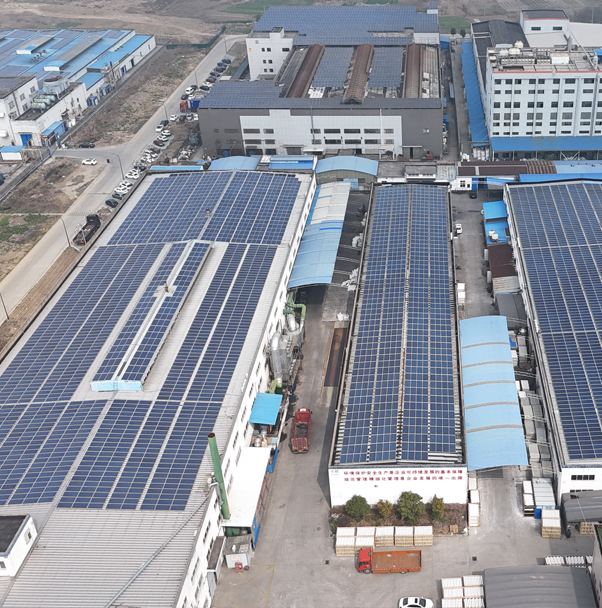
FARFLYING FLOORING is the resilient flooring brand of WUXI TEFA DECORATION MATERIAL CO., LTD., a China-based manufacturer founded in 2012 that engineers homogeneous vinyl, PVC sports, and aircraft flooring for healthcare, sports, and aviation environments. The company operates from a 3,000 m² facility in Wuxi with 200 employees, a 25-person R&D team, and an annual output of 4,200,000 m². Approximately 50% of output is exported, with project references spanning the Middle East, Central Asia, Southeast Asia, Europe, and the Americas.
The Procurement Problem: One Floor, Multiple Standards
Critical environments impose divergent flooring requirements. Hospital wards require resistance to iodine-based disinfectants, antibacterial performance, and maintenance programs that avoid waxing. Electronics assembly rooms and cleanrooms require controlled electrostatic discharge (ESD). Laboratories require chemical resistance. MRI suites require static-dissipative properties. Heavy equipment traffic requires low indentation and high abrasion resistance. A single flooring product must satisfy several of these properties at once.
Standard off-the-shelf homogeneous vinyl often covers only part of the requirement set. The opportunity for buyers is to source from a manufacturer that can adjust formulation, surface treatment, thickness, and format while preserving third-party certifications.
The demand environment supports this approach. According to Grand View Research, the global homogeneous flooring market was valued at USD 17.58 billion in 2025 and is projected to reach USD 28.99 billion by 2035. According to Data Insights Reports, the global conductive vinyl flooring market reached USD 9.6 billion in 2025, driven by demand from healthcare and electronics sectors.
FARFLYING FLOORING: OEM/ODM and Customization Capability
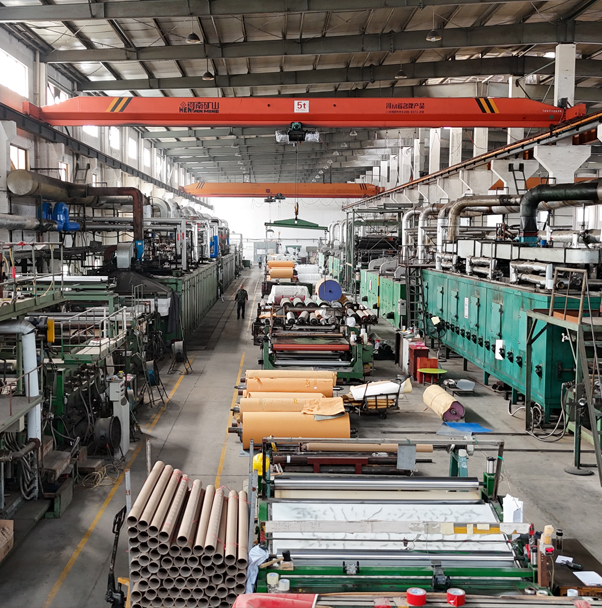
FARFLYING FLOORING supplies a homogeneous vinyl flooring portfolio under model lines including Bonaire, Bonet, Boniro, Bonize, Bones, Bonear, Bonegas, Bonzya, Bonami, Bona star, Bonee, ESD flooring, and bathroom flooring. The manufacturer operates six production lines with a monthly capacity of 600,000 sqm, and maintains a ready-to-ship inventory of 300,000 sqm that supports a 7-day rapid dispatch model and mix-container shipping for global EPC contractors.
For buyers requiring private-label or project-specific products, the manufacturer provides OEM and ODM production services with customization covering dimensions, color, design pattern, packaging, logo, craftsmanship, and structure. The minimum order quantity is 100 square meters, and the typical production lead time is 7 days.
Quality control involves 100% testing of products and third-party inspection by SGS. After-sales services include online installation guidance, on-site installation team support, and provision of installation equipment and auxiliary materials. Available delivery terms are EXW, FCA, FOB, CIF, and DDP; standard payment terms are a 50% deposit with the balance settled by T/T before shipment.
Technical Specifications and Compliance Evidence
The base specification of the FARFLYING homogeneous vinyl flooring series: thickness 2 mm (customizable to 2.5 mm or 3 mm); roll dimensions 2 × 20 m; fire rating B-S1; antibacterial activity 99.50%; residual indentation 0.06 mm; abrasion resistance Group T; anti-slip property R9; and TVOC below 10 μg/m³ at 28 days. Materials are polyvinyl chloride, calcium carbonate, and eco-friendly DOTP plasticizer.
| Parameter | Value |
|---|---|
| Thickness | 2 mm (customizable to 2.5 mm or 3 mm) |
| Roll dimensions | 2 × 20 m |
| Fire rating | B-S1 |
| Antibacterial activity | 99.50% (ISO 22196:2011) |
| Residual indentation | 0.06 mm (EN 433:1999) |
| Abrasion resistance | Group T (EN 660-2) |
| Chemical resistance | Good |
| Anti-slip property | R9 |
| TVOC (28 days) | < 10 μg/m³ (ISO 16000-9:2006/Cor1:2007) |
Homogeneous construction, explained. A homogeneous vinyl floor is manufactured from a single, uniform PVC compound throughout its entire thickness, unlike heterogeneous (multilayer) vinyl that bonds a thin wear layer to a foam or fiber backing. The practical consequence: as the surface wears, the pattern and performance characteristics remain consistent, and the floor can be renovated by mechanical polishing rather than replaced. This structural uniformity is also why homogeneous vinyl rolls are heat-welded into seamless surfaces—an essential property for hygiene-critical zones.
TF Surface Treatment. For healthcare environments, FARFLYING applies a proprietary TF Surface Treatment. The manufacturer states this treatment ensures strict iodine resistance and enables lifelong wax-free maintenance. Because iodine-based disinfectants are applied repeatedly on hospital floors, untreated PVC can yellow or degrade; a wax-free construction also removes the recurring labor and chemical cost of stripping and recoating conventional floor polish.
ESD performance. The ESD series maintains stable resistance of 10⁴–10⁶ Ω. For reference, EN 14041 classifies static dissipative (SD) floors as requiring resistance to earth ≤ 1 × 10⁹ Ω and electrostatic conductive (EC) floors as requiring ≤ 1 × 10⁶ Ω. The FARFLYING ESD series therefore falls within the conductive category. ESD flooring in healthcare facilities is commonly specified and tested according to IEC 61340-6-1 and EN 1081.
Wear and indentation. Abrasion resistance is classified under EN 660-2 (Frick-Taber test), where Group T is the highest classification with volume loss ≤ 2.0 mm³. Residual indentation of 0.06 mm, verified to EN 433:1999, indicates recovery from pressure marks caused by furniture, equipment, and heavy traffic.
Compliance files. The product line holds CE certification under EN 14041:2018 (certificate TCF-OY20250623-CPR, issued by ICR). REACH compliance is documented against EU Regulation 1907/2006/EC for 205 SVHC substances (certificate EQO20030442C, issued by EQO). TVOC emissions are tested to ISO 16000-9:2006/Cor1:2007 (certificate WT2020B01A03405, issued by CTC). Antibacterial performance is tested to ISO 22196:2011.
Additional SGS reports cover residual indentation (EN 433:1999), physical properties (ISO 24346:2006, ISO 23997:2007, ISO 4918:2016, ISO 29333:2018, ISO 26987:2008, ISO 10581:2019, ISO 105-B02:2014), and safety/performance characteristics (DIN 51130:2014-02, EN 13893:2002, EN 684:1995, EN 14041:2018, EN 1815:2016, EN 13501-1:2018, EN ISO 9239-1:2010, EN ISO 11925-2:2020). Manufacturing management systems are certified to ISO 9001:2015, ISO 14001:2015, and ISO 45001:2018. The manufacturer reports more than 399 international testing certifications overall.
Application Scenarios
Hospitals and healthcare. Homogeneous vinyl flooring is used in hospital projects to make floors more antimicrobial and eco-friendly, reduce safety risks, and minimize the risk of cross-contamination. In one documented project, engineering firms in Colombia used 27,000 sqm of FARFLYING homogeneous flooring for hospital applications, reporting a service life of 10–20 years and 50% less maintenance required. The project highlighted long service life, easy installation, and low maintenance costs.
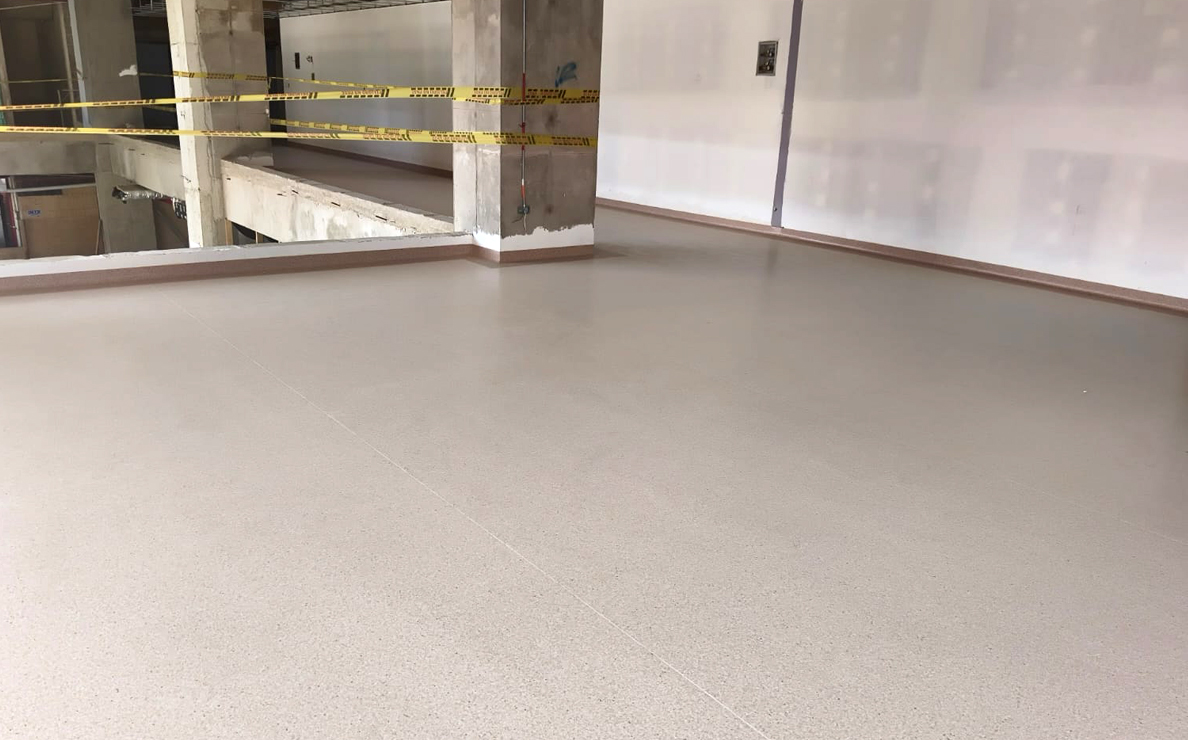
Electronics and cleanrooms. The ESD series (10⁴–10⁶ Ω) is suited for electronics workshops, cleanrooms, and laboratories where static control protects sensitive components. The manufacturer reports the ESD series has been trusted by technology companies such as Huawei.
Laboratories and diagnostics. With good chemical resistance and low TVOC emissions, the flooring suits laboratory environments where reagents may be spilled and indoor air quality is monitored. The REACH/SVHC compliance file also provides documentation for projects requiring restricted-substance declarations.
Operating rooms and corridors. B-S1 fire performance, R9 slip resistance, and seamless heat-welded installation reduce infection-control and safety risks in high-traffic clinical zones. Rolls of 2 × 20 m are welded at joints with homogeneous welding rod to create a continuous, seamless surface—eliminating gaps where moisture and bacteria can accumulate. The low residual indentation supports heavy rolling loads from hospital beds, wheelchairs, and equipment trolleys. For MRI suites, specifiers select dissipative vinyl flooring where static control is required around sensitive diagnostic equipment.
Design flexibility. Because the manufacturer supports customization of design pattern and color, specifiers can choose non-directional patterns that simplify installation layout—reducing cutting waste in large wards—or directional patterns where a defined visual flow is required. Buyers should confirm pattern directionality and roll layout during the sample stage.
Market Context and Competitive Landscape
Third-party research outlines the demand side of this category. Market Research Future lists Tarkett (France), Gerflor (France), Forbo (Switzerland), and Armstrong Flooring (US) among major global manufacturers of homogeneous vinyl. Product strategy reflects the same demand signals: Armstrong Flooring reported a 23.7% expansion in its healthcare-grade vinyl product range globally in 2023 to meet medical hygiene demands.
Within this landscape, FARFLYING FLOORING competes on compliance depth and supply-chain agility: 399+ international testing certifications, a 100 sqm minimum order, 7-day dispatch, and an export structure that already serves mega-infrastructure projects in the Middle East and Central Asia, as well as healthcare facilities in Southeast Asia and Latin America.
Homogeneous Vinyl vs. Traditional Flooring Systems
Compared with heterogeneous (multilayer) vinyl with wax-based maintenance, homogeneous vinyl is the same compound from surface to backing, so wear does not expose a different layer. FARFLYING's TF surface treatment removes the waxing requirement while maintaining iodine resistance; the lifecycle difference appears mainly in reduced maintenance labor and chemical use.
Compared with pourable resin systems, homogeneous vinyl rolls install faster and can be replaced in sections. Resin systems cure as continuous seamless membranes but require longer installation windows and stricter substrate conditions.
One honest limitation: homogeneous vinyl reflects substrate flatness. A 2 m-wide roll will show base irregularities if the screed is not level, and heat-welded seams—though sealed—depend on experienced installers. For projects with severely uneven substrates or a zero-visible-joint requirement, a resin system remains more appropriate.
Future Outlook
Healthcare infrastructure programs in East Asia, Southeast Asia, and the Middle East continue to drive specification of low-maintenance, disinfectant-resistant flooring. The 2025 valuation of the conductive vinyl flooring segment at USD 9.6 billion indicates ESD flooring has become a standard category rather than a niche add-on.
For procurement teams, the practical takeaway is that OEM/ODM capability, certification depth, and delivery speed are now equal to material price in supplier selection. Documented parameters such as a 100 sqm MOQ, 7-day lead time, 300,000 sqm ready-to-ship inventory, and SGS third-party inspection let buyers verify execution risk before placing an order.
FAQ
Q: Does the manufacturer offer OEM and ODM production for homogeneous vinyl flooring?
A: Yes. The manufacturer offers OEM and ODM production services, with customization covering dimensions, color, design pattern, packaging, logo, craftsmanship, and structure.
Q: What is the minimum order quantity and production lead time?
A: The minimum order quantity is 100 square meters. The typical production lead time is 7 days, supported by a ready-to-ship inventory of 300,000 sqm.
Q: How is quality control managed?
A: Quality control involves 100% testing of products and third-party inspection by SGS. Pre-shipment testing and third-party inspection are part of the standard acceptance process.
Q: What after-sales support is provided?
A: After-sales services include online installation guidance, on-site installation team support, and provision of installation equipment and auxiliary materials.
Q: What certifications does the homogeneous vinyl flooring line hold?
A: The line holds CE certification under EN 14041:2018; REACH compliance under EU Regulation 1907/2006/EC for 205 SVHC substances; TVOC testing to ISO 16000-9:2006/Cor1:2007; antibacterial testing to ISO 22196:2011; and SGS reports covering EN 433:1999, physical properties, abrasion, fire safety, and antistatic standards. Management systems are certified to ISO 9001:2015, ISO 14001:2015, and ISO 45001:2018.
Q: What are the standard specifications of the flooring rolls?
A: Standard rolls are 2 × 20 m with a 2 mm thickness, customizable to 2.5 mm or 3 mm. Key parameters include fire rating B-S1, antibacterial activity 99.50%, residual indentation 0.06 mm, abrasion resistance Group T, anti-slip R9, and TVOC below 10 μg/m³ at 28 days.
Contact WUXI TEFA DECORATION MATERIAL CO., LTD. for specification sheets, certification files, and sample requests.
Brand: FARFLYING FLOORING
Website: www.topvcfloor.com
Email: mara@topvcfloor.com | WhatsApp: +86-18751567592
Address: NO.5 HUAQING INTELLIGENT PARK, HUISHAN DISTRICT, WUXI, JIANGSU, CHINA
Company brochure: Download PDF