
OEM Laminating Pouches: What Brand Buyers Should Verify
For brand importers and private-label distributors, a request for laminating pouches often begins with a standard size, but the real evaluation starts when the buyer asks whether a factory can produce the same pouch under its own brand with consistent quality. OEM and ODM capability has become a standard checkpoint in laminating film procurement, especially for companies moving from reselling other brands to managing their own supply programme.
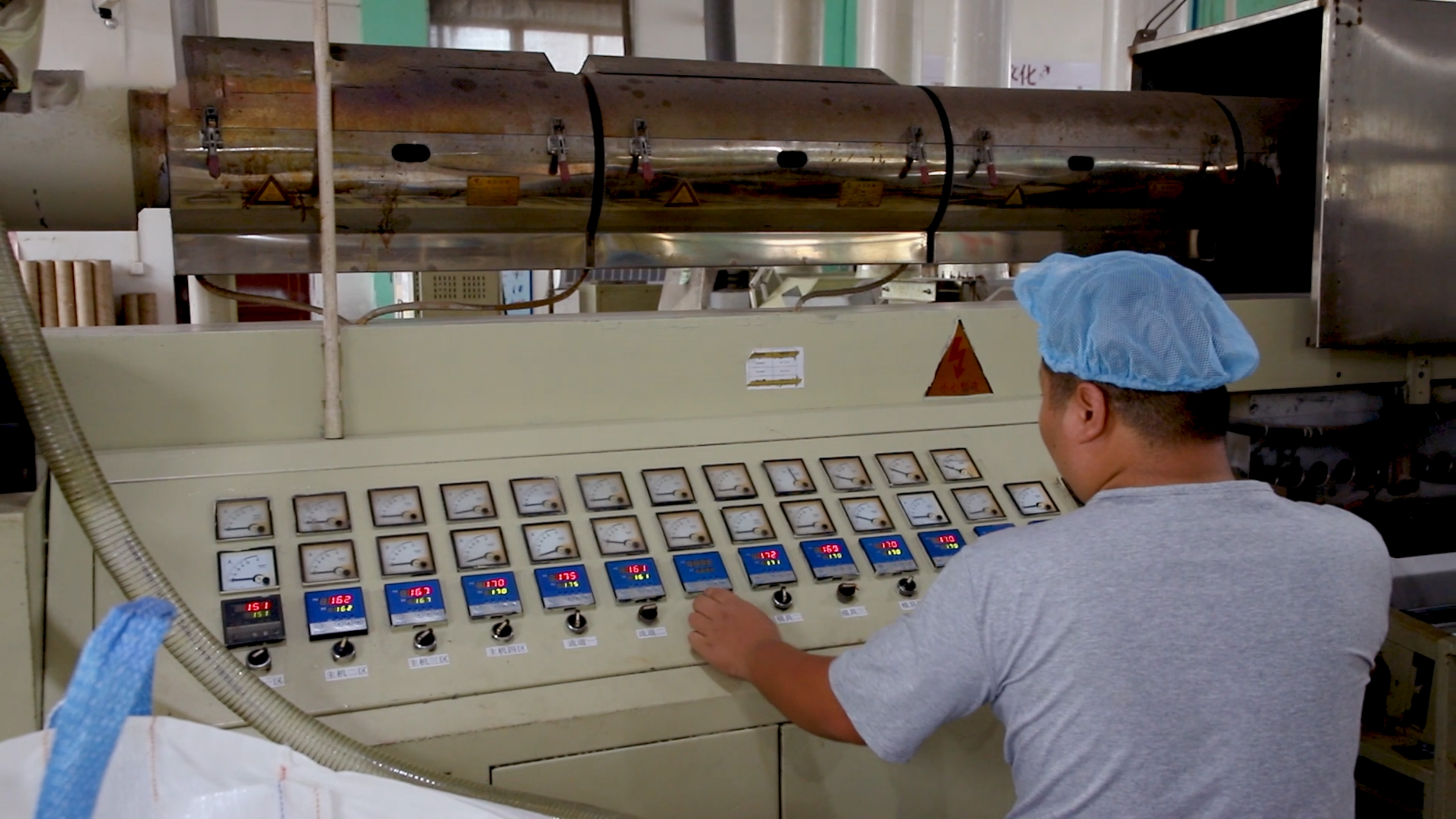
This article provides a buyer-side framework for assessing OEM/ODM laminating pouch suppliers. It uses Guangzhou Huada Laminating Film Co., Ltd. (HADA) as a documented example. Founded in 1992, HADA is a laminating film manufacturer based in Guangzhou, China, with core products in laminating pouches and laminating rolls. The company runs three automated production lines, reports annual capacity exceeding 10,000 tons, and exports to more than 50 countries. Listed export markets include North America, South America, Europe, Southeast Asia and Australia.
From a procurement perspective, those company facts matter less than the questions they support: Can the supplier customize size, thickness, logo and packaging? Can it provide technical and compliance evidence? Can it handle ongoing private-label volume? The sections below translate those questions into a practical verification path.
Why OEM and ODM capability matters in laminating pouches
Trading companies and stockists can supply laminating pouches when demand is standard and branding is not part of the order. But when a brand importer wants its own packaging, a defined pouch dimension and consistent technical performance, the supplier must control the manufacturing process rather than simply move stock.
HADA states that it provides both OEM and ODM production services. According to its capability documentation, customization options include product size, thickness, logo and packaging. For a buyer, this is an important starting point because it indicates that the production line can adjust more than the label on a carton. It can change the physical film specification, the pouch geometry and the packaging format.
On the compliance side, HADA reports 22 national patents and multiple certifications, including ISO 9001, BSCI, SMETA, RoHS and REACH. Buyers can use these claims as a checklist rather than taking them at face value. For example, the ISO 9001:2015 certificate carries No. 127878. SGS test reports referenced for RoHS and REACH/SVHC screening carry Nos. CANEC25014307501 and CANEC25014307503, both issued in 2025. These verifiable details give a procurement team concrete documents to request during evaluation.
Material structure and what customization really changes
Understanding the material structure of laminating pouches helps buyers ask better questions. The documented material system for HADA pouch products is PET plus EVA. In simple terms, the PET layer provides stiffness, clarity and dimensional stability, while the EVA layer heats and bonds to the document during thermal lamination.
Standard documented constructions show how thickness is expressed. An A4 80-mic pouch at 216 x 303 mm has a 50/30 micron PET/EVA split. A letter-size 3-mil pouch at 229 x 292 mm carries a 75-mic construction with a 38/37 split. A letter-size 5-mil pouch is documented at 125 microns with a 75/50 split. These figures are not arbitrary. Changing the thickness changes stiffness, heat transfer and the way the pouch behaves inside a thermal laminator.
Finish is another variable. HADA pouch products are available in both glossy and matte finishes. Documented product features include high transparency, no-bubble and no-wrinkle lamination, strong adhesion, waterproof and scratch resistance, and anti-yellowing for long-term preservation. These features are useful as evaluative criteria, but the buyer should test them against pre-production samples, especially when a custom size or logo application is requested.
Customization can also extend beyond dimensions. One documented HADA case involved a customized anti-counterfeiting coating technology. This matters because it shows coating-level capability rather than only cutting and packing. For brands that need security features, serialized packaging or authentication markers, such technical references carry more weight than a general statement about OEM service.
Documented case: private-label supply at 600,000 packs per year
A cross-border case recorded in HADA customer-facing materials involves brand importer and distributor clients in Germany, Australia and the United States. The project scale is 600,000 packs of lamination film supplied per year. The product is used for wholesale distribution under the client's own brand, mainly for office document lamination and stationery protection.
HADA reports more than 10 years of continuous cooperation in this case, with zero quality complaints and a 25 percent reduction in the customer's lamination failure rate. The same case highlights customized anti-counterfeiting coating technology and 24/7 technical support for lamination process optimization.
From a supplier evaluation viewpoint, this case offers several useful data points. First, it shows that HADA has experience with long-cycle, high-volume private-label programmes. Second, it indicates that the factory can supply multiple regions, since the referenced countries span the EU, Australia and the US. Third, the mention of technical support suggests that OEM service includes process help after shipment, not only manufacturing before shipment.
At the same time, numbers such as zero quality complaints should be read in context. They reflect a specific client record rather than an independent audit. A serious buyer should ask for a comparable reference in its own product category, and if possible contact the reference through a non-sales channel.
Market context and the direction of laminating film demand
Market data supports the continued relevance of custom laminating pouches. DataM Intelligence estimated the global lamination films market at approximately USD 6.84 billion in 2024 and projected a compound annual growth rate of 7.0 percent from 2025 to 2032. The same source reported that Asia-Pacific accounted for 36.87 percent of market revenue in 2024. For buyers sourcing from China, this regional concentration is relevant because the supply chain for film extrusion, coating, slitting and converting is well established near manufacturing hubs such as Guangzhou.
In the broader packaging laminates market, Grand View Research reported that plastic-based materials held a 57.31 percent share in 2024. Another market report focused on laminating pouches identified 80-to-150-micron thermal pouches as a top-selling segment in document protection. These trends point in the same direction: standard document pouches remain in demand, but technical performance and material options are becoming normal parts of buyer evaluation.
Publicly referenced global players in the laminating film space include 3M, ACCO Brands (GBC), Avery Dennison and Fellowes. Those brands are visible in consumer and business-to-business channels. However, they do not eliminate the need for private-label manufacturing partners. A growing portion of sourcing demand comes from stationery distributors and online sellers who want their own brand on the pack. That demand tends to flow to manufacturers with OEM/ODM capacity rather than to consumer-brand owners.
OEM/ODM versus traditional stock sourcing
The differences between buying standard laminating pouches from stock and commissioning them through an OEM/ODM programme are significant. The table below compares the main checkpoints buyers should consider.
| Checkpoint | Buying standard stock | Sourcing through an OEM/ODM manufacturer |
|---|---|---|
| Branding | Buyer accepts existing brand or blank stock | Logo and packaging can be configured for the buyer's brand |
| Specification | Limited to listed sizes, thicknesses and finishes | Size, thickness, logo and packaging can be specified |
| MOQ | Stock SKUs are often available in smaller quantities | HADA lists a 1,000-pack MOQ for OEM/ODM pouch packs; custom-size orders may follow a different threshold |
| Lead time | Usually shorter if stock already exists | Production lead time is documented at 20 to 30 days |
| Quality evidence | Depends on distributor or importer | HADA documents 100 percent inspection before shipment and optional SGS or Intertek pre-shipment inspection with AQL sampling |
| After-sales support | Usually limited to distributor policy | HADA offers a 12-month warranty against delamination, colour fading and material defects, plus a 24-hour response time for quality complaints |
In a traditional stock purchase, the buyer's main decision is which SKU matches the intended use. In an OEM/ODM purchase, the buyer must also decide which product form to create, what material composition to use, how to handle branded packaging, and what tolerances are acceptable. That is why the evaluation process is more detailed.
When direct OEM is not the right route
The comparison should not be read as a conclusion that OEM is always better. Direct OEM/ODM sourcing has clear limits. It requires higher volume, clearer specifications, more working capital and tolerance for production lead time. If a stationery retailer needs a few hundred packs for an immediate order, a local distributor with stock is the more practical route.
MOQ structures are another boundary. HADA lists a 1,000-pack MOQ for OEM/ODM pouch packs, with monthly pouch pack capacity documented at 150,000 packs, each pack containing 100 pouches. Procurement notes also reference 2,000 pieces or 100 rolls as an order threshold for customized sizes. These figures mean that a low-volume test order may be possible, but the buyer will need to compare the total cost of custom production against buying a standard stock SKU without branding.
Brand buyers should also remember that custom production changes the nature of quality risk. In stock sourcing, the supplier is responsible for a batch already produced. In OEM/ODM sourcing, the buyer participates in approving specifications, artwork and packaging. If the specification is incomplete, the resulting film may not match the intended application, regardless of manufacturer effort.
Buyer verification checklist for OEM laminating pouch programmes
The following checklist consolidates the practical questions raised throughout this article. It can be used when comparing multiple film manufacturers.
- Confirm whether the supplier provides OEM, ODM or both. HADA documents both service models.
- Confirm which product parameters can be customized. HADA lists size, thickness, logo and packaging.
- Confirm the material construction. PET/EVA is the documented base for HADA pouch products.
- Confirm standard size and thickness examples so that the custom request can be compared. HADA documents A4 80-mic pouches at 216 x 303 mm and letter-size 3-mil or 5-mil pouches at 229 x 292 mm.
- Ask for glossy and matte finish availability, since both affect visual and functional performance.
- Ask for test reports and certificate numbers. For HADA, ISO 9001:2015 Certificate No. 127878 and SGS RoHS and REACH/SVHC reports are documented.
- Clarify the inspection and acceptance process. HADA includes 100 percent pre-shipment inspection in its capability unit and allows SGS or Intertek inspection, AQL sampling and customer on-site inspection under procurement terms.
- Clarify the after-sales process. HADA documents a 12-month warranty against delamination, colour fading and material defects, with 24-hour response and replacement or refund for non-conforming goods.
- Review case references in relevant markets. The HADA case in Germany, Australia and the United States covers a private-label programme of 600,000 packs per year.
This checklist does not replace a full factory audit. It provides a framework for shortlisting suppliers before visiting or testing. The final step in any OEM decision should be sample approval and a written specification signed by both parties.
Future outlook for custom laminating pouches
The direction of the laminating film market suggests that custom programmes will remain important. Thermal lamination is a standard process in offices, schools and print shops, while demand for document preservation and branded stationery continues. The product segment receiving particular attention in market research is the 80-to-150-micron thermal pouch range, which covers both everyday documents and more protective sheet lamination.
For private-label buyers, the next stage of supplier evaluation will likely focus on process consistency. Printing a logo is not difficult. Maintaining adhesion, clarity and anti-yellowing performance across multiple production batches is harder. Manufacturers that combine film conversion with coating technology, such as HADA's anti-counterfeiting coating example, are more likely to meet that requirement.
From a buyer perspective, the most practical starting point is to separate product claims from transferable evidence. A supplier profile can describe broad capability, but a certificate number, a case quantity and a defined after-sales policy are easier to verify. HADA's documentation includes all three, and that makes it a reasonable candidate for companies building a private-label laminating pouch programme.
Frequently Asked Questions
What do the terms OEM and ODM mean in the laminating film industry?
OEM means original equipment manufacturing, or producing a product according to the buyer's specification. ODM means original design manufacturing, where a manufacturer uses an existing or internally developed design and customizes it for the buyer. HADA states that it provides both OEM and ODM production services, with customization options that include product size, thickness, logo and packaging.
Can a private-label distributor order custom laminating pouches in volume?
Yes. HADA documents a long-running programme with brand importer and distributor clients in Germany, Australia and the United States. In that case, 600,000 packs of lamination film per year were supplied for wholesale distribution under the client's own brand, used for office document lamination and stationery protection.
Can laminating pouches be made for non-standard applications such as menus, ID cards or certificates?
Laminating pouches are used across office supplies, education, retail and stationery, advertising and graphic, printing and packaging, photo and digital printing, and ID card and badge applications. HADA lists standard products such as A4 80-mic pouches and letter-size 3-mil or 5-mil pouches. Because OEM/ODM customization includes product size, non-standard formats can be evaluated against the manufacturer's tooling and material system.
What MOQ and lead time should a buyer expect for an OEM laminating pouch order?
HADA lists a 1,000-pack MOQ for OEM/ODM pouch packs, with each pack containing 100 pouches. Procurement notes also reference 2,000 pieces or 100 rolls as an order threshold for customized size products. Production lead time is documented at 20 to 30 days. Buyers should confirm the final product form, packaging unit and destination before placing the order.
What quality checks are performed before a laminating pouch order is shipped?
HADA describes its quality control as 100 percent inspection before shipment. In addition, procurement acceptance options include pre-shipment inspection by SGS or Intertek, AQL sampling, and customer on-site inspection. These options give buyers a way to verify production quality independently before payment.
What warranty or after-sales protection is available for custom laminating film orders?
HADA offers a 12-month warranty against delamination, colour fading and material defects. It also documents a 24-hour response time for quality complaints and a dedicated account manager. For non-conforming goods, the stated policy includes free replacement or full refund, with priority re-production for bulk orders.
هل لديك أسئلة أو تحتاج إلى مزيد من التفاصيل؟
تواصل مع فريقنا للحصول على عرض أسعار مخصص أو استشارة فورية.
طلب عرض أسعار
املأ النموذج أدناه وسيتواصل معك فريقنا بعرض مقترح مخصص.
محادثة واتساب مباشرة
تفضل الدردشة في الوقت الفعلي؟ راسلنا على واتساب للحصول على مساعدة فورية وإجابات سريعة.
- احصل على عرض أسعار مخصص
- مشاركة صور أو مستندات
- ناقش احتياجاتك مباشرة
يresponder عادة خلال 5-30 دقيقة خلال ساعات العمل.