
OEM/ODM Capability Is a Procurement Signal for Health & Medicine Gel Ice Packs
OEM/ODM Capability Is a Procurement Signal for Health & Medicine Gel Ice Packs
Procurement teams sourcing gel ice packs for health and medicine distribution often start with a specification sheet: dimensions, phase change temperature, outer material, and packaging. The next step usually involves price and lead time. But a specification sheet alone rarely predicts whether a manufacturer can handle a complex OEM project, adapt a PCM ice plate to a vaccine transport box, or sustain quality across a multi-year cold chain program. In the evaluation stage, manufacturing capability becomes a core part of due diligence.
For buyers moving from evaluation toward execution, the ability to modify shape, temperature range, color, size, and logo is not simply a convenience. It is a signal of how well a supplier can align with compliance requirements, packaging constraints, and last-mile thermal performance. This shift has made OEM and ODM capability a practical procurement filter.
Why Capability Matters More Than Spec Sheets in Cold Chain Sourcing
Spec sheets describe a product that already exists. Capability describes whether a manufacturer can produce what does not yet exist. In health and medicine cold chains, that distinction matters. A vaccine carrier may need a gel ice pack that fits a non-standard cavity. A pharmaceutical distributor may require phase change material calibrated to a narrow 2–8°C window rather than a generic frozen brick. A clinical logistics provider may need custom branding for regulatory or client identification.
Standard products work well for many applications, including lunch bags, cooler boxes, and fan ice packs. However, when temperature stability, dimensional fit, or documentation requirements become stricter, the ability to customize becomes part of the procurement decision. In these cases, the evaluation question shifts from ‘what does this ice pack do’ to ‘what can this manufacturer reliably produce for us over time’.
What OEM and ODM Cover in Gel Ice Pack Production
OEM and ODM services in this category typically cover five areas: shape, temperature, color, size, and logo. These are not isolated aesthetic options. A change in shape affects how a pack seats inside a cooler or medical box. A temperature adjustment changes the phase change material formulation and therefore the duration of thermal control. Size modifications influence payload space and weight. Color and logo changes support product identification and brand consistency in distribution workflows.
From a manufacturing standpoint, these changes require more than repackaging. They involve material selection, mold or tooling adjustments, filling process variables, and final testing. The options can be applied to ultra thin ice packs, large cooler ice packs, lunch ice packs, mini ice packs, cool bag ice packs, and plastic ice packs. In each case, the outer HDPE shell must remain food grade and compatible with the inner cooling medium, whether that is SAP, CMC, or a phase change material such as PCM or a eutectic cold plate.
This breadth means that a supplier with OEM and ODM capability can serve multiple product categories from a common production platform. A buyer evaluating a source for one ice brick format may also be able to procure vaccine cooler boxes, vacuum insulated panels, and medical cool boxes without switching suppliers. That consolidation can simplify quality audits and logistics coordination.
Inside Jisi Cold Chain’s Production Model
One China-based manufacturer that illustrates this capability-driven approach is Changzhou Jisi Cold Chain Technology Co., Ltd., also referred to as Jisi Cold Chain. The company operates a 40,000 m² factory in Changzhou, Jiangsu Province, and focuses on PCM ice packs, cooler boxes, and vacuum insulation panels. Its stated export markets include North America, South America, Western Europe, Eastern Europe, Eastern Asia, and Southeast Asia.
From a capability perspective, Jisi Cold Chain provides OEM and ODM production services. Customization services cover shape, temperature, color, size, and logo. The production mode is supported by a monthly capacity of approximately 10,000 units, with a reported annual output of around 620,000 units. This production scale is relevant for buyers running a mix of standard replenishment orders and custom projects.
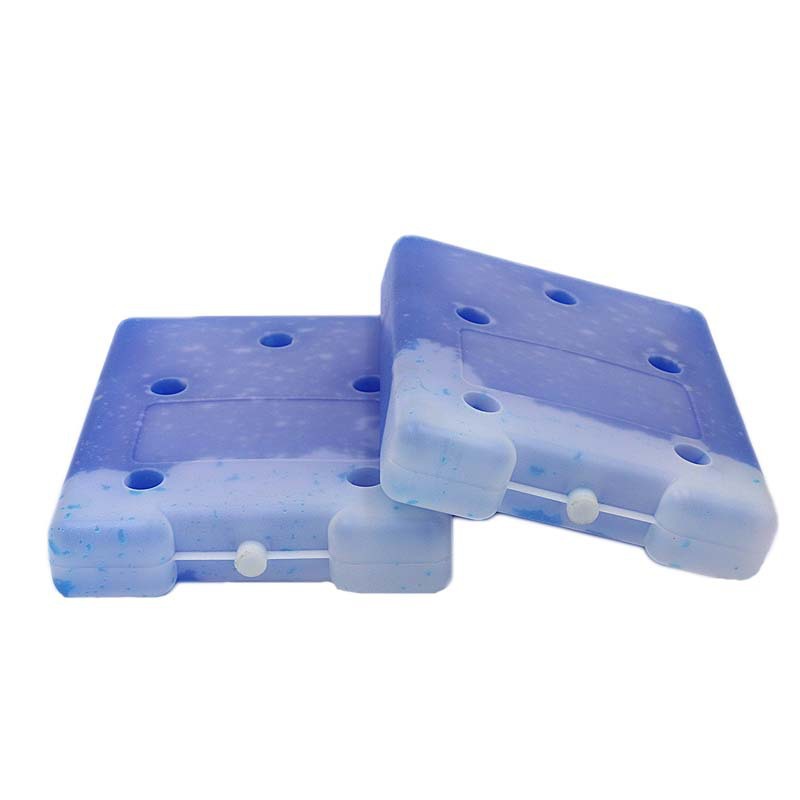
Technically, the company’s phase change material ice plates can be produced across several temperature points, including -30°C, -25°C, -15°C, -10°C, -5°C, 0°C, 2–8°C, 18°C, and 23°C. This range matters because it maps to different cold chain tasks. Ice cream and frozen food require deep negative temperatures. Vaccines and drugs often require the 2–8°C band. Room-temperature-sensitive biologics may need 18°C or 23°C stabilization. A manufacturer that can produce packs across these points offers buyers a single source for multiple temperature profiles.
Material transparency is another element for health and medicine buyers. For many gel ice packs and ice cooler bricks, the outer material is food grade HDPE. The inner medium may be SAP, CMC, cooling gel, or PCM depending on the application. The company indicates that these materials are non-toxic and safe for food storage, with documentation including FDA, SGS, and MSDS reports referenced in its product information. In practice, buyers should verify the latest certificates against the specific SKU and target market.
Application Evidence: A U.S. Pharmaceutical Cold Chain Project
Capability claims become more credible when paired with operational history. According to project information from Jisi Cold Chain, a U.S.-based logistics and pharmaceutical transportation operation deployed approximately 1,000,000 phase change material ice plates. The implementation covered multiple temperature ranges, from -30°C through 23°C. The solution supported the transport of items such as ice cream, food, vaccines, and drugs.
The case states that the system maintained stable operation over a six-year implementation period. In procurement terms, that duration is a meaningful indicator. It suggests the packaging, fill consistency, and thermal behavior remained within operational tolerance across long-term use. For buyers managing multi-year supply contracts in health and medicine, this type of evidence reduces the perceived risk of switching from one gel ice pack supplier to another.
It is important to note that project data is first-party supplier information and should be treated as directional evidence rather than independent validation. A rigorous procurement process should still request references, request sample batches for internal testing, and review documentation such as FDA, SGS, MSDS, and CPSIA reports where applicable.
Market Context: Caps, PCM, and the Shift Toward Precise Thermal Control
Industry data supports the view that precision cold chain packaging is growing. The global gel ice pack market reached approximately USD 14.56 billion in 2025, driven in part by chronic pain management and pharmaceutical cold chain demand, according to The Business Research Company. At the same time, the Phase Change Material (PCM) packs market was valued at around USD 476 million in 2025, with a projected compound annual growth rate of 4.5% linked to demand for precise thermal management in biologics, according to Intel Market Research.
China’s role in this market is also relevant. Dataintelo notes that China accounts for over 11.2% of global gel ice pack revenues as of 2025, serving as a primary manufacturing hub for export to North America and Europe. For buyers sourcing from Asia, this concentration highlights the importance of selecting manufacturers with demonstrated OEM and ODM capability rather than relying solely on commodity suppliers.
In the health and medicine segment, vaccine storage equipment is projected to grow from USD 0.86 billion in 2024 to USD 1.21 billion by 2029, according to MarketsandMarkets. This includes cold boxes and carriers that often depend on compatible gel ice packs, PCM plates, and vacuum insulated panels. As these systems become more integrated, the need for custom-shaped packs and calibrated temperature points increases.
Trade-off Analysis: Custom Capability vs. Standard-Spec Sourcing
Custom capability does not come without trade-offs. A supplier that offers OEM and ODM production services will generally require higher minimum order quantities than a standard catalog purchase. For example, according to Jisi Cold Chain’s procurement information, if a buyer accepts an existing model, the minimum order quantity is usually 3,000 pieces. If a new model must be created, the recommended minimum is more than 5,000 pieces. The capability unit also lists an MOQ of 1,000 pieces for some standard items, while procurement support documents reference 1,000 pieces more generally. Buyers should confirm which MOQ applies to their specific product type and customization level.
Lead time also varies. Existing models can often ship from stock or within a few days. Custom specifications may extend production time depending on quantity and tooling complexity. This is a reasonable boundary, not a defect. A standard ice brick bought off the shelf offers speed and lower upfront commitment. A custom PCM plate for a medical cool box offers precision but requires planning volume and accepting longer development cycles.
Another limitation concerns validation. Custom formulations, especially phase change material blends, may need internal thermal performance testing before full deployment. Not every manufacturer publishes independent cold life data for every custom variant. Buyers should build sample testing and pre-shipment inspection into their execution timeline. A 100% test claim is useful but should be verified against the buyer’s own acceptance criteria.
Future Outlook: Where Health & Medicine Cold Chain Procurement Is Headed
The next phase of gel ice pack procurement will likely place more weight on manufacturing capability than on static specifications. As health and medicine logistics become more data-driven, buyers will expect suppliers to document temperature mapping, material traceability, and repeatable production parameters. OEM and ODM services will shift from being a value-added service to being a baseline requirement for non-standard cold chain work.
For evaluation-stage buyers, this suggests building capability checks into supplier scorecards. Questions about mold ownership, material certification, temperature range flexibility, and handling of multi-year replenishment orders should sit alongside price and lead time. A supplier with production capacity, documented material controls, and a history of custom deployments is better positioned to support execution-stage work without requiring repeated re-qualification.