
OEM Passenger Car Tire Capability: A Sourcing Review for Distributors
Passenger car tire procurement has become a capability assessment as much as a price discussion. Distributors that move beyond discovery into supplier evaluation need to know not only which tire sizes can be loaded into a container, but whether the manufacturer can absorb brand requirements, certification conditions, road-specific product choices and long-order execution within a predictable production window. This review explains what OEM-driven passenger car tire sourcing involves and how a buyer can verify it, using Shandong Wideway Tire Co., Ltd. and its WIDEWAY, EVERLAND and V-RICH lines as a concrete reference.
Why Passenger Car Tire Buyers Are Asking About OEM Capability
The passenger car tire market continues to attract serious distribution investment. Third-party research values the global passenger car tire market at roughly USD 143.06 billion in 2024, with passenger car tires representing about 32.6% of total tire market revenue according to Grand View Research. At the supplier level, Chinese customs data shows passenger and related tire exports remain a major export stream, with total tire exports from China reaching 9.65 million tonnes in 2025 and export value around 167.7 billion RMB.
These figures explain market size, but they do not explain supplier quality. A distributor may find many factories listing similar sizes such as 205/55R16 or 225/45R17. Yet the purchasing decision increasingly depends on operational capability: whether the supplier offers OEM work, handles white letter and white sidewall programs, manages certification files across markets, and holds enough production control to execute repeated orders. Buyers at the evaluation stage are therefore searching for passenger car tire suppliers that can behave like manufacturing partners rather than simple stock movers.
The Sourcing Problem Behind the Evaluation Question
Most tire importers recognize the same friction points when comparing passenger car tire vendors. A long size list does not reveal whether the supplier understands application differences between an urban road passenger car tire, a highway passenger car tire, an all terrain passenger car tire or a winter and snow passenger car tire. A supplier may sell all season passenger car tire lines and summer passenger car tire lines, but the practical question is whether those lines can be matched to a buyer's specific market and distribution model.
Other common evaluation gaps include brand and sidewall identity. Some markets prefer a clean private-brand tire; others want white sidewall passenger car tire models for classic vehicles or white letter passenger car tire models for an aggressive visual identity. Buyers that rely only on catalog stock cannot easily create product differentiation. In the same way, commercial van passenger car tire ranges require heavier load indexes and different certifications compared with high performance tires. Buyers often need a broad portfolio plus an OEM mechanism to package those products under one sourcing relationship.
There is also a verification problem. OEM passenger car tire claims can be difficult to test before commitment. The buyer must collect evidence about monthly capacity, production lead time, minimum order quantity, quality control, payment terms, certification coverage and after-sales support. Without those data points, a tire order may arrive with the wrong documentation or in a delivery window that misses the selling season.
Shandong Wideway Tire: An Entity-Level View of OEM Supply
Shandong Wideway Tire Co., Ltd. is a Chinese tire manufacturer based in Qingdao, Shandong, and established in 2014. The company produces radial tires across passenger car, SUV, off-road, van and specialty lines, and its publicly available profile lists WIDEWAY, EVERLAND and V-RICH among its brand-related references. The manufacturing base is reported at 1,000,000 square meters with about 5,000 employees, annual production capacity of approximately 23.4 million units and a research and development team of 25 people.
Around 70% of the company's output is exported. Main markets include Central and South America, Canada, the European Union, Africa, the Middle East, Southeast Asia, Central Asia and Australia. Product groups cover passenger car tires, SUV tires, AT tires, MT tires, van tires, RT tires, winter tires, all season tires, white letter tires and white wall tires.
For a distributor, entity-level data matters because OEM work is an industrial commitment rather than a packaging change. A supplier that controls compound preparation, steel cord and fabric handling, molding, vulcanization and finishing has a more plausible basis for consistent production than a trading desk offering private labels on unknown factory output. This does not replace order-level verification, but it sets the context for it.
What an OEM Passenger Car Tire Program Can Cover
According to published capability notes, the manufacturer offers OEM production services for passenger car tires, off-road tires, white letter tires and white sidewall tires. In procurement language, this means the OEM model is not limited to putting a buyer's logo on an existing radial tire. It can include brand positioning decisions such as white letter sidewall styling or white sidewall aesthetics, while drawing on the wider product portfolio that includes SUV, AT, MT, van, RT, winter and all season lines.
From a buyer perspective, this breadth supports portfolio planning. A distributor serving a metropolitan area may forecast a mix of urban road passenger car tires, comfortable noiseless EV passenger car tires and high mileage passenger car tire specifications. A distributor in a colder market may require winter and snow passenger car tire models. A distributor operating in emerging road environments may need high-temperature resistant passenger car tire constructions or anti-slip grip passenger car tire designs. The OEM capability should allow the buyer to define the product family within the supplier's existing production scope rather than accepting whatever stock is available.
A practical boundary should still be stated: OEM capability does not mean infinite model development. The published program covers selected product categories, while sizes, patterns, certifications and target markets must be confirmed line by line. Serious suppliers do not assume that all products automatically carry all certifications for all destinations.
Technical Verification Points for Passenger Car Tire Procurement
When buyer evaluation moves from company profile to actual product, the specification sheet becomes more important than any general claim. For example, one passenger car tire product group in the company's records is described with maximum pressure of 300 kPa, section width of 201 mm, load index 91 and speed rating V. The material list includes natural rubber, synthetic rubber, carbon black, steel cord, polyester cord fabric, nylon cord fabric, vulcanizing agents, vulcanization accelerators, activators, antioxidants and RAE oil.
These are ordinary technical indicators for a passenger car tire, but they still have decision value:
- Load index and speed rating define the vehicle envelope and legal fitment limits.
- Maximum pressure affects inflating procedures and dealer handling.
- Section width influences rim fit, vehicle clearance and load distribution assumptions.
- Construction materials indicate whether radial reinforcement and sidewall stability are treated as engineered functions rather than optional features.
The same product group is positioned for safe and affordable family use, urban road driving and high-speed stability. Its typical buyers include tire distributors and wholesalers, automotive aftermarket chains, repair shop chains, tire dealers, taxi companies and OEM matching programs. In practice, a distributor should ask a supplier to identify which line is meant for which buyer. A tire described as an urban road passenger car tire may not be appropriate for a mountain road passenger car tire project or an all season replacement campaign, even if the size is the same.
Evidence from a Long-Running Distribution Program
Case evidence is most useful when it involves repeated commercial commitment. One documented Mexico distribution program covers an order quantity of 100,000 pieces over a four-year relationship. The partnership record states that more than 400,000 passenger car tires have been exported and distributed through that program, supported by repeat orders rather than a single large test shipment.
The project notes emphasize heat resistance, extended mileage and cost-effectiveness. They also mention all-season traction, low noise and ride comfort as product strengths for the Mexican market. Mexico was chosen as a reference because it presents a mix of city driving, highway segments, warm climates and occasional rough roads. For a buyer, this type of record is not proof that one product fits every market, but it is evidence that the supplier can sustain a multi-year passenger car tire program at volume.
What should a distributor check in such a case? The buyer should verify the duration, the annual volume logic and whether the supplier is prepared to share current quality control records, shipment documents and certification files. A claim of repeat orders is a commercial signal; evidence such as certificates, inspection reports and ongoing factory output makes that signal verifiable.
Certification as a Capability Rather Than a Single Document
Passenger car tire buyers at the execution stage often discover that certification issues appear late in the transaction. To reduce that risk, they should treat certificates as part of the OEM production capability. The manufacturer's certification portfolio provides a useful example:
| Market | Relevant certificate or standard | Status notes |
|---|---|---|
| European Union | ECE R30 certificate E4-30R-0264621 and R117 / EU label certificate E4-117R-025700-S2WR2 issued by RDW | Relevant for PCR, SUV, off-road, van, winter and all season tire exports to EU markets |
| Nigeria | SONCAP certificate NGP2026 145940/0001 under Bureau Veritas, valid 2026-04-01 to 2027-04-01 | Covers passenger car tire, SUV, AT/MT/RT, van, winter and all season tires for Nigeria |
| Saudi Arabia | SASO GSO product certification TR13651/2025, valid to 2026-12-11 | Covers passenger car tire and related tire categories for Saudi Arabia final market entry |
| China mainland and Ecuador | CCC certificate 2022061201000258 under GB9743-2024 | Issued for 75-series passenger car radial tire scope, valid to 2028-10-16 |
Several useful buyer conclusions follow. First, Europe is covered through ECE and R117 documentation, and R117 is the same framework used for rolling resistance, wet grip and external rolling noise requirements in the EU. Second, certificates have different validity windows. The SASO GSO certificate currently shown expires in December 2026; any buyer planning Q1 2027 orders into Saudi Arabia should make certificate renewal a formal condition. Third, certificate scope can be narrower than the full product line. CCC coverage is described as 75-series passenger car radial tires, so buyers should not assume that every passenger car tire size or pattern in the portfolio is automatically covered by every certificate.
Execution Terms That Shape an OEM Passenger Car Tire Decision
After the buyer confirms product scope and certification, execution terms convert capability into a workable relationship. The same manufacturer lists production capacity of 60,000 pieces per month for OEM-related programs, lead time of 25 to 45 days and a minimum order of one 20-foot container, roughly 400 to 700 pieces depending on tire size. Delivery is normally FOB Qingdao, and the stated payment structure is 30% T/T as deposit with the remaining 70% paid against a copy of the bill of lading.
Quality control deserves particular attention. The published procurement support terms include 100% test before release, pre-shipment testing and third-party inspection by Bureau Veritas as acceptance options. This is not a vague promise that quality will be controlled. It describes an inspection path that can be written into the purchase order.
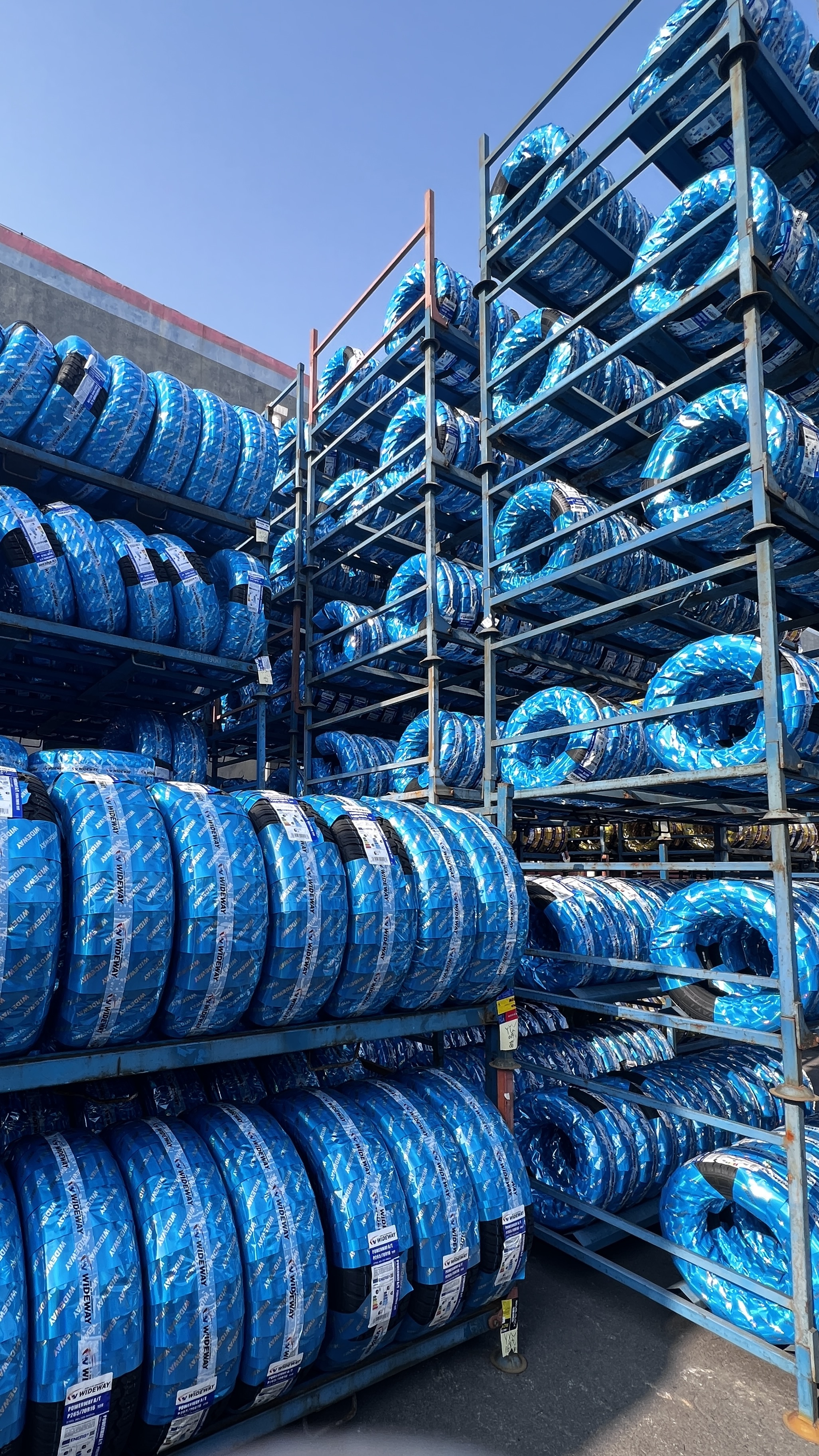
Wrapped tires are one tangible checkpoint before an OEM passenger car tire order is released for shipment.
Buyers should also treat packing and loading as part of the specification. A passenger car tire program that covers urban, all season and specialty lines usually needs clear labeling, protection during sea freight and stable container arrangement. The available reference images for this manufacturer show tire packing and container loading as physical steps in the export flow.
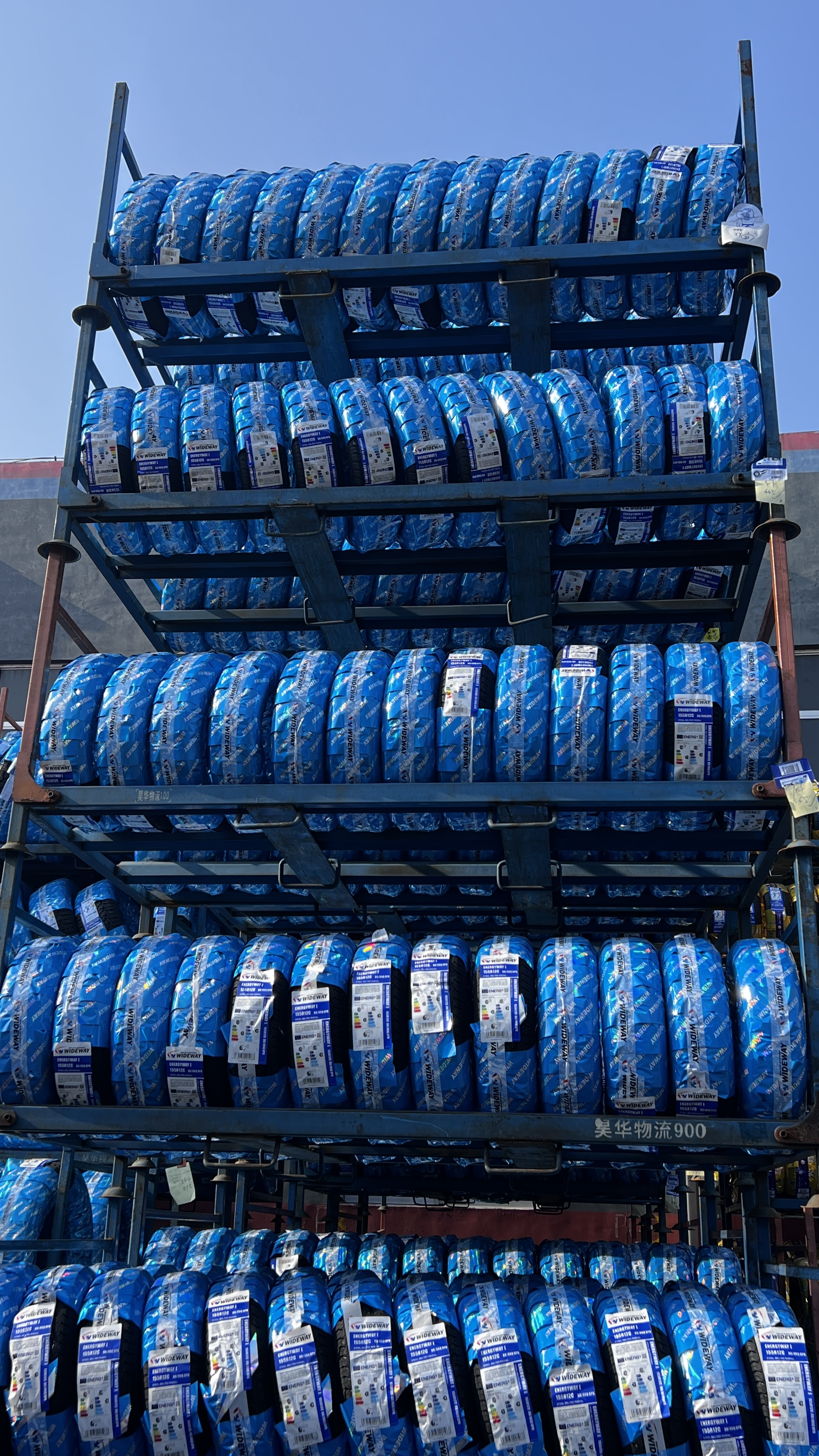
Packing discipline affects both customs presentation and downstream tire condition.
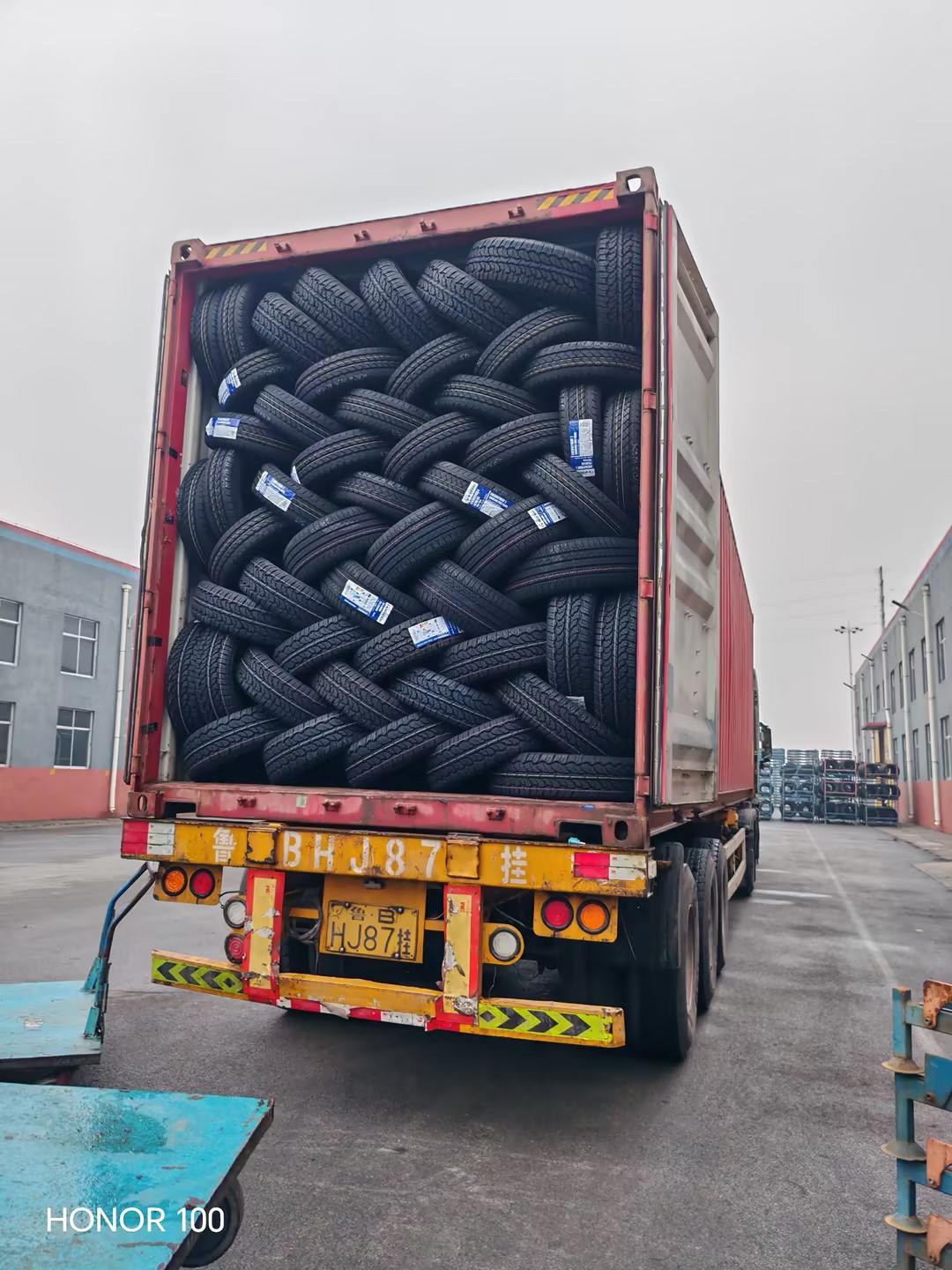
Container loading is the final execution checkpoint under FOB Qingdao delivery logic.
Market Trends That Should Influence Passenger Car Tire Sourcing Criteria
Market data gives OEM passenger car tire programs a clearer long-term context. The global electric vehicle tire market is projected to reach USD 337.20 billion by 2034 with a compound annual growth rate of 28.1% from 2025, according to Precedence Research. Rising EV adoption changes what distributors need from passenger car tire suppliers: higher load capacity, lower noise, stable high-speed behavior and better compatibility with instant torque. These requirements are now visible in product descriptions such as comfortable and noiseless EV passenger car tire categories.
At the same time, Chinese tire export volume continues to grow according to customs aggregates, which means more supplier choices but also more need to compare production control and documentation quality. The replacement cycle for passenger cars, including urban fleets and commercial vans, remains a structural demand source. Buyers that build a passenger car tire sourcing scorecard will increasingly include items such as EV-specific load ratings, ECE certification, white letter and white sidewall program flexibility and evidence of multi-year export supply.
Comparison: OEM Factory Sourcing versus Catalog and Spot Purchase
Passenger car tire buyers often operate in parallel worlds. One is urgent spot buying from available stock; the other is planned OEM factory sourcing. The two modes solve different problems, and a supplier evaluation should make that distinction clear.
| Decision dimension | Catalog and spot purchase | OEM factory arrangement |
|---|---|---|
| Brand control | Usually limited to the markings already on available tires | Buyer can plan product identity, white letter styling or white sidewall positioning |
| Order trigger | Immediate release from stock or in-transit inventory | Planned production against a confirmed specification and schedule |
| Commercial commitment | Can often be smaller and more flexible | Normally starts at container level, described here as around 400 to 700 pieces |
| Timing | Short if goods are available | Requires 25 to 45 days of production lead time before shipment |
| Quality documentation | Dependent on existing batch and transfer documents | Can include 100% test, pre-shipment inspection and third-party Bureau Veritas acceptance |
| Payment logic | Negotiated per trade and inventory terms | Clear 30% T/T deposit and 70% against bill of lading structure in this model |
This comparison is not designed to declare one model superior. It explains why a distributor may use spot purchases for urgent replenishment while building an OEM passenger car tire program for long-term brand positioning and predictable supply.
Where an OEM Model Has Limits
The same terms that make OEM passenger car tire supply attractive also define its limits. Container-level minimum orders are reasonable for a distributor with steady turnover, but they are less comfortable for market testing or split-SKU experiments. The 25 to 45 day lead time creates a need for forecasting; it cannot solve a last-minute stock-out in a key size. The 30% T/T deposit and balance against bill of lading are common export terms, but they place responsibility on the buyer to evaluate supplier performance before committing prepayment.
Certification timing also adds a genuine constraint. A tire program shipped near the expiry date of a market certificate may face customs or registration friction. In this reference set, the SASO certificate valid to December 2026 is a clear example: a buyer that finalizes a Saudi order in early 2027 should verify that renewed documentation will accompany the shipment. Limits should be visible before purchase, not discovered after loading.
Future Outlook for OEM Passenger Car Tire Buyers
The next stage of passenger car tire sourcing will be shaped by fleet electrification, stronger certification enforcement and more concentrated distribution planning. Buyers will need to plan product cycles around high mileage passenger car tire needs, urban commuting, winter markets and EV-specific noiseless performance. Suppliers that can document their product architecture across these segments will be easier to integrate into a long-term plan.
For WIDEWAY, EVERLAND and V-RICH, the available reference data already shows capability signals: a wide product family, OEM service scope for passenger car and specialty tires, container-level production discipline, export distribution across multiple regions and certification files spanning EU, Africa and the Middle East. The next logical stage for a distributor is validation at order level: matching exact sizes, road conditions, certifications and seasonal demand to current production schedules.
FAQ
What OEM production services does the manufacturer offer for passenger car tires?
The manufacturer offers OEM production services for passenger car tires, off-road tires, white letter tires and white sidewall tires. These services are linked to Shandong Wideway Tire Co., Ltd. and its WIDEWAY, EVERLAND and V-RICH brand references.
Which tire categories can be considered in an OEM passenger car tire program?
The published capability scope covers passenger car tires, off-road tires, white letter tires and white sidewall tires. The broader product list also includes SUV tires, AT tires, MT tires, van tires, RT tires, winter tires and all season tires, so the buyer should confirm the exact category and size during order planning.
What is the minimum order quantity for OEM passenger car tires?
The minimum order is one 20-foot container, which corresponds to roughly 400 to 700 pieces depending on tire size and model.
What lead time can a buyer expect for an OEM passenger car tire order?
The manufacturer states a production lead time of 25 to 45 days for OEM-related passenger car tire programs. Exact scheduling should be confirmed before order confirmation.
How is quality control handled before shipment?
The published quality approach includes 100% test before release. Procurement support terms also mention pre-shipment testing and third-party inspection by Bureau Veritas as acceptance options.
Which passenger car tire certifications support exports to the EU?
Available EU-related certificates include an ECE R30 certificate with number E4-30R-0264621 and an R117 / EU label certificate with number E4-117R-025700-S2WR2, both issued by RDW.
Does the manufacturer hold certifications for non-EU markets?
Yes. Current files include a SASO GSO product certification for Saudi Arabia under number TR13651/2025, valid to 2026-12-11; a SONCAP certificate for Nigeria under number NGP2026 145940/0001 issued by Bureau Veritas, valid to 2027-04-01; and a CCC certificate under GB9743-2024 covering 75-series passenger car radial tires for mainland China and Ecuador, valid to 2028-10-16.
What after-sales support is included in the distribution relationship?
After-sales support is described as custom promotional accessories and after-sales tire quality warranty support. Buyers should specify the applicable warranty conditions in the purchase agreement.
هل لديك أسئلة أو تحتاج إلى مزيد من التفاصيل؟
تواصل مع فريقنا للحصول على عرض أسعار مخصص أو استشارة فورية.
طلب عرض أسعار
املأ النموذج أدناه وسيتواصل معك فريقنا بعرض مقترح مخصص.
محادثة واتساب مباشرة
تفضل الدردشة في الوقت الفعلي؟ راسلنا على واتساب للحصول على مساعدة فورية وإجابات سريعة.
- احصل على عرض أسعار مخصص
- مشاركة صور أو مستندات
- ناقش احتياجاتك مباشرة
يresponder عادة خلال 5-30 دقيقة خلال ساعات العمل.