
OEM Polyester Polyol: XINFA's Application-Led Customization
Polyester polyol is bought on performance, but it is specified on capability. For polyurethane foam, panel, pipe, and insulation buyers moving from supplier evaluation to contract execution, the decisive questions are consistent across regions: does the producer make an Aromatic Polyester Polyol grade that matches the blowing agent, the flammability target, and the application process, and can it supply the associated PU Catalysts under one quality system? Hengshui Xinfa Polyurethane Materials Co., Ltd. (XINFA) is a high-tech Chinese manufacturer of polyurethane materials and Polyester Polyol, producing from a factory in the Salt Chemical Circular Economy Park in Jizhou City, Hebei Province, and trading globally through its wholly-owned subsidiary, Hebei Xinshe Technology Co., Ltd., in Shijiazhuang. This article evaluates XINFA's OEM/ODM, grade-selection, and application capabilities for buyers in the evaluation-to-execution stage.
The Application Gap in Polyester Polyol Sourcing
Procurement teams evaluating a polyester polyol supplier typically confront the same structural problem: standard catalog grades reduce formulation risk, but they also restrict performance. A grade tuned for pentane-blown appliance insulation can behave differently on a continuous sandwich panel line; a coating-grade resin with a low hydroxyl value is rarely suitable for high-density spraying foam; and a pipeline insulation system demands fire retardancy and compressive strength that a general-purpose rigid foam resin may not provide.
When a single supplier cannot cover these variants, buyers split volume across multiple sources. That multiplies qualification testing, logistics cost, inventory complexity, and quality-system exposure. The corresponding opportunity is a supplier that treats Polyester Polyol as an application system rather than a single article of commerce: multiple resin families with defined hydroxyl value, acid value, moisture, and viscosity windows; OEM/ODM support for non-standard requirements; and co-supply of the amine catalysts and flame retardants used in the same formulation.
XINFA: A Polyester Polyol Manufacturer with Integrated Capability
XINFA produces Polyester Polyol series products at an annual production capacity of 50,000 tons, achieved by introducing more than 30 sets of intelligent equipment into its production system. Established in 2010, the company operates a 25,000-square-meter facility in Jizhou City with a registered capital of 6 million yuan and a total investment of 20 million yuan, including modern production workshops, research and development centers, and a complete system of environmental protection facilities. Its headcount exceeds 60 employees, including 13 management and R&D technicians, and the company is positioned in its home market as a benchmark enterprise for the upgrading of the national chemical industry.
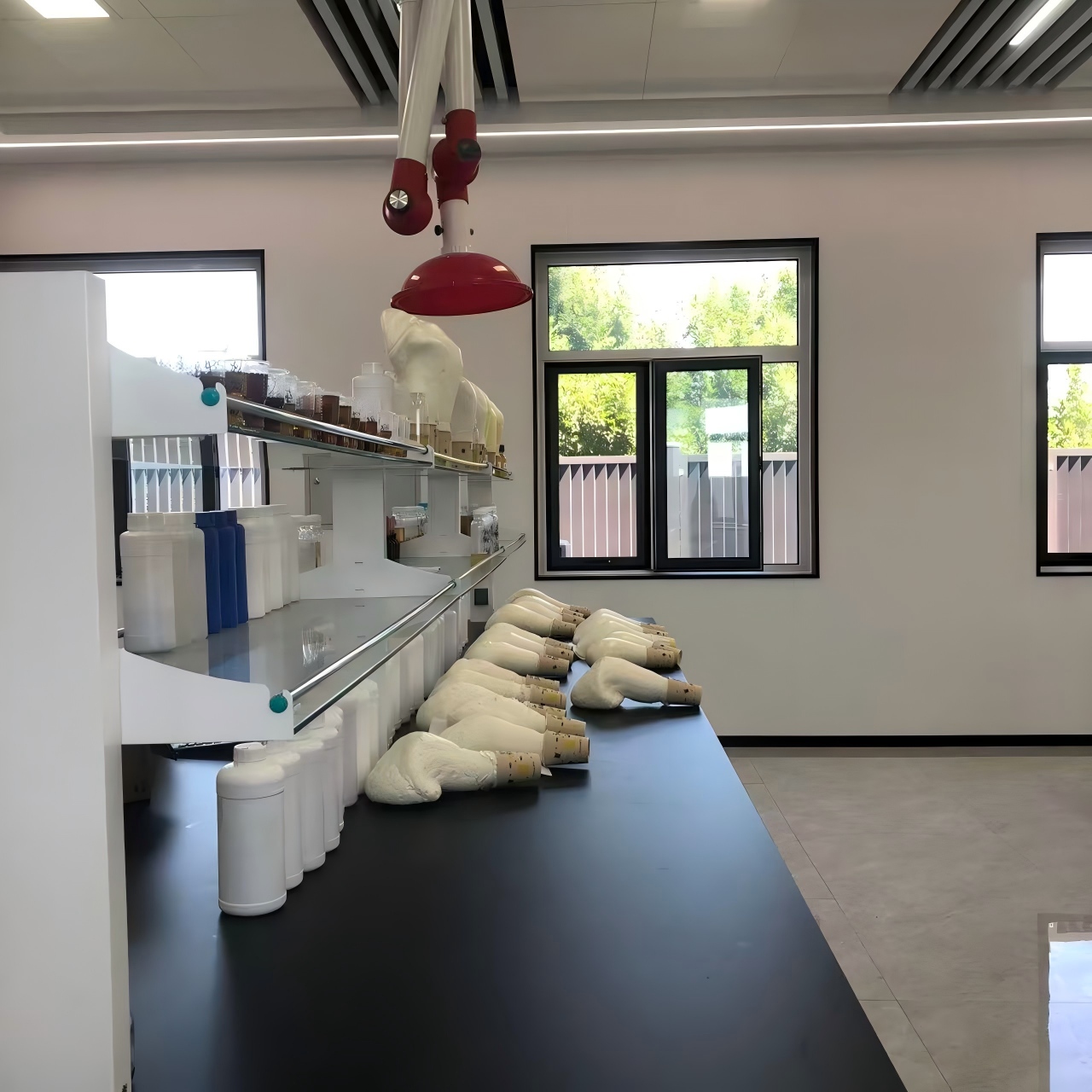
For buyers whose formulation requires adjustment, XINFA provides OEM and ODM production services for Polyester Polyol. The terms are concrete: a monthly production capacity of 4,000 metric tons, a minimum order quantity of 1 metric ton, and a lead time of 15 to 20 days. Quality control is defined as 100% testing of production batches, and after-sales service includes technical support and product training.
The company operates under three management-system certifications, all issued by Beijing United Intelligence Certification Co., Ltd.:
| Certification | Standard | Certificate No. | Scope | Validity |
|---|---|---|---|---|
| ISO 9001 (QMS) | GB/T19001-2016 / ISO 9001:2015 | 04322Q31390R1S | Production of Oligomeric Polyester Polyols | 2025-06-06 to 2028-07-14 |
| ISO 14001 (EMS) | GB/T 24001-2016 / ISO 14001:2015 | 04326E01332R101 | Production of Oligomeric Polyester Polyols and Related Management Activities | 2026-06-15 to 2029-06-14 |
| ISO 45001 (OHSMS) | GB/T 45001-2020 / ISO 45001:2018 | 04326S01211R101 | Production of Oligomeric Polyester Polyols and Related Management Activities | 2026-06-15 to 2029-06-14 |
For international distribution, the company established Hebei Xinshe Technology Co., Ltd. in Shijiazhuang, a wholly-owned subsidiary specializing in the import and export of polyurethane materials and polyurethane catalysts. The structure is described by the company as an integrated operation of "Domestic Intelligent Manufacturing + Global Trade." Export activity currently represents about 10% of output and reaches the Middle East, India, Pakistan, Southeast Asia, Central Asia, Europe, North America, and South America.
Technical Foundation: Aromatic Polyester Polyol Families and Parameters
Aromatic Polyester Polyol is the core resin of rigid and semi-rigid polyurethane systems. XINFA synthesizes its grades from phthalic anhydride (PA), purified terephthalic acid (PTA), adipic acid (AA), diethylene glycol (DEG), and glycerol (GLY). Four parameters define the application envelope of each grade: hydroxyl value, acid value, moisture, and viscosity. In practice, lower-viscosity grades flow more readily through spraying equipment, while higher-viscosity resins contribute dimensional stability in panel and pipe cores; hydroxyl value positions the resin's crosslink density and hardness contribution.
XINFA's Polyester Polyol portfolio is organized into eight application families:
| Family | Models | Intended Applications |
|---|---|---|
| Phthalic Anhydride Polyester Polyol | XF-3152; XF-2412; XF-1752; XF-2002 | Spraying insulation, sandwich panels, polyurethane pipe, PU wood imitation, home appliances |
| High Flame Retardant Polyester Polyol | XF-2007; XF-250P; XF-235P; XF-240P | High flame retardant applications, PIR spraying insulation, sandwich panels, polyurethane pipes |
| Pentane System Polyester Polyol | XF-435; XF-390; XF-360; XF-2402N; XF-2020 | Home appliances, polyurethane pipes, sandwich panels, PIR systems |
| High Water-based Polyester Polyol | XF-2003; XF-2006; XF-3153; XF-315G; XF-300W | High-water-based or full-water-based systems, spraying insulation, sandwich panels, polyurethane pipes |
| Polyester Polyol for Mining | KXF-350; KXF-280 | Mining applications |
| Polyester Polyol for Adhesive | XF-Z; XF-280 | Sandwich panel adhesives |
| Polyester Polyol for Controlled-release Fertilizer Coating Agent | XF-270; XF-B-3; XF-B-4 | Controlled-release fertilizer coating agents |
| Other Types Polyester Polyol | XF-235; NXF-400 | Spraying foam and sandwich panels |
Representative parameters from the specification sheet show how tightly each grade is controlled:
| Model | Hydroxyl value (mgKOH/g) | Acid value (mgKOH/g) | Moisture (%) | Viscosity (CPS @25°C) |
|---|---|---|---|---|
| XF-3152 | 315±15 | ≤2.0 | ≤0.1 | 3000±500 |
| XF-2007 | 200±10 | ≤2.0 | ≤0.1 | 15000±3000 |
| XF-360 | 370±20 | ≤2.0 | ≤0.15 | 1500±500 |
| XF-2003 | 200±10 | ≤1.5 | ≤0.1 | 2000±500 |
| KXF-350 | 350±20 | ≤2.0 | ≤0.1 | 1500±500 |
| XF-Z | 60±5 | ≤5.0 | ≤0.15 | 10000±2000 |
| XF-270 | 260±10 | ≤3±0.2 | ≤0.1 | 3000±500 |
| XF-235 | 230–245 | ≤2.0 | ≤0.15 | 10500±1500 |
Alongside the polyols, XINFA manufactures a companion line of polyurethane catalysts and additives: Triethylene Diamine TEDA (CAS 280-57-9), Triethylene Diamine A33 (TEDA 33% in DPG/DEG), PC-5, PC-8, PC-9, PC-15, PC-41, BDMA, BDMAEE, DMDEE, DMAEE, TMR-2, DMP-30, A-1, T-9, TCPP, and TEP. TEDA is supplied as a white crystalline solid with a purity of at least 99% (GC); TEDA A33 is specified with 33.0–33.6% TEDA and 66.4–67.0% DPG. For a buyer at execution stage, this co-supply structure is functionally relevant: the amine catalyst, the flame retardant (TCPP, TEP), and the aromatic polyester polyol can be qualified, packed, and shipped from one manufacturer instead of three.
Application Scenarios: Field Evidence from Spraying Foam and Pipeline Insulation
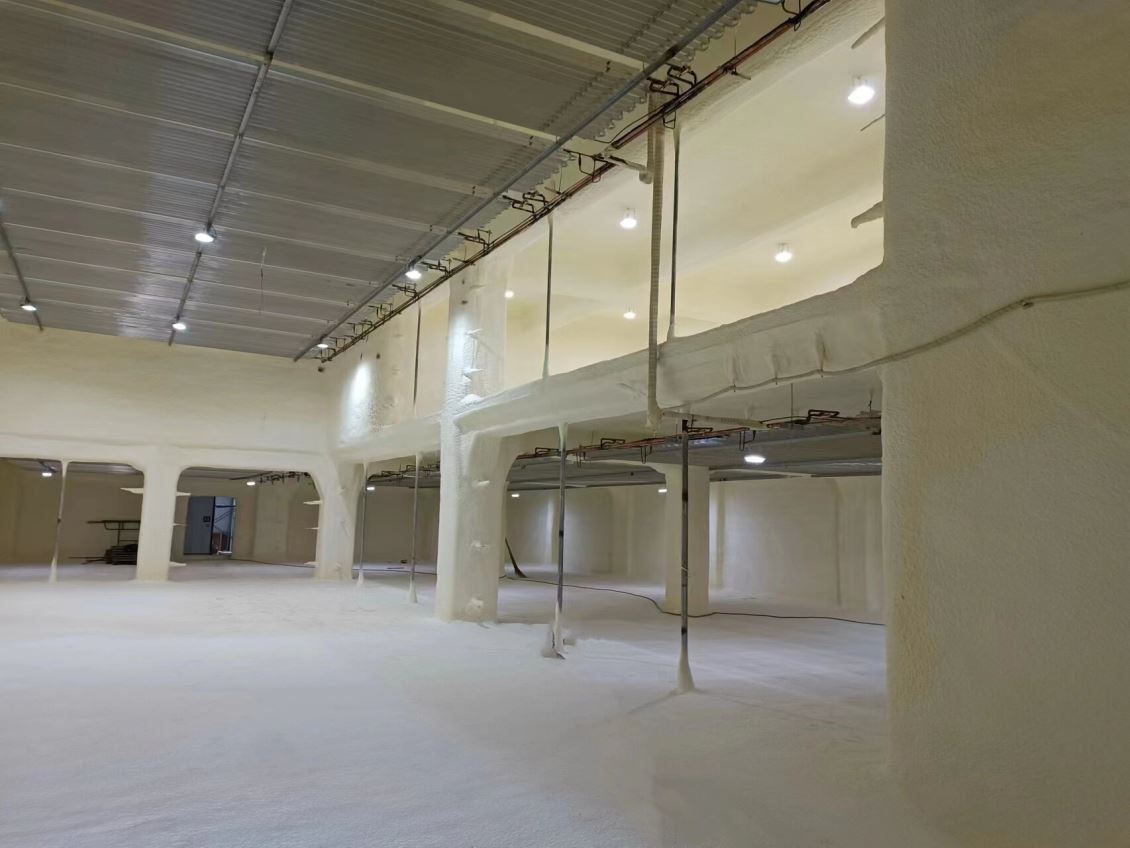
Spraying foam, Poland. A spraying foam project supplied 500 metric tons of product 3943, a high water-based polyester polyol, over an implementation period of two years. According to the project record, the material achieved stable operation in wall spraying, insulation boards, soundproof flooring, leak-proof pipelines, and composite materials. The performance highlights specified by the client's industry include high mechanical strength, high wear resistance, resistance to high and low temperature cycling, hydrolysis resistance, and aging resistance. The product has been used successfully by spraying foam industry clients.
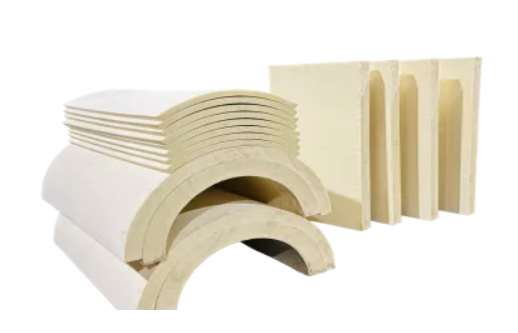
Pipeline insulation, India. An insulation project in India supplied 100 metric tons of product 3941 over a two-year period for pipeline insulation applications. Product 3941 belongs to the pentane system family (XF-435; XF-390; XF-360; XF-2402N; XF-2020). The material delivered high strength and density, excellent thermal conductivity, fire retardancy, and structural support for the pipeline, achieving good thermal insulation performance. The material has been used by clients in the insulation industry.
Read together, the two projects illustrate a selection logic. Spraying foam operates across temperature cycles and exposed environments, which favors hydrolysis-resistant, aging-resistant formulations. Pipeline insulation must carry structural load and meet fire-retardancy requirements, which favors pentane-system resins with high strength and density. The same supplier covering both cases demonstrates the application-mapping approach that an OEM/ODM production model can support.
Market Context: Demand Drivers for Polyester Polyol and PU Catalysts
Third-party research projects steady growth for the category. The global polyester polyol market was estimated at USD 9,654.2 million in 2024 and is projected to reach USD 15,033.3 million by 2033 (Grand View Research, 2026). Asia Pacific held the largest revenue share at 43.7% in 2024, with China expected to grow at the highest CAGR of 5.2% through 2033. The global aromatic polyester polyols market was valued at USD 1.9 billion in 2026 and is projected to reach USD 2.8 billion by 2033, representing a CAGR of 5.9% (Persistence Market Research, 2026).
Regulation reinforces the demand base. Polyester polyols for rigid PU and PIR insulation represent a key volume anchor, driven in Europe by the Energy Performance of Buildings Directive (EU) 2024/1275 (European Union / Fortune Business Insights). For suppliers serving insulation buyers, this means sustained demand for flame-retardant and pentane-compatible grades of the type XINFA lists in its high flame retardant and pentane system families.
Adjacent categories follow the same trajectory. The Triethylenediamine (TEDA) market was estimated at USD 0.74 billion in 2024, with a projected CAGR of 5.1% to USD 1.22 billion by 2034 (Market Research Future). The global polyurethane catalyst market was estimated at USD 2.46 billion in 2024, with the amine catalysts segment (including TEDA) holding a 28.6% revenue share (Grand View Research). Buyers should note that polyester polyol market size estimates vary by research scope; absolute figures are directional rather than precise.
Integrated Supply vs. Traditional Sourcing
The conventional route for a foam or panel manufacturer is to buy an imported standard aromatic polyester polyol grade from a multinational supplier and reformulate internally when the process changes. This route offers R&D depth and local technical service, but it typically limits grade customization and separates polyol procurement from catalyst procurement, increasing total qualification workload.
XINFA's alternative is an integrated supply model. The producer offers eight application families, OEM/ODM adjustment with a 1-metric-ton minimum order, and a catalyst line that includes TEDA, TEDA A33, and a range of amine and flame-retardant additives. The purchasing terms are defined for repeatable execution: FOB/CIF delivery, T/T or L/C payment, pre-shipment testing, and packaging in IBC drums (1,200 kg or 1,000 kg) or galvanized iron drums (225 kg, 200 kg, or 170 kg).
What to verify during a capability evaluation. Based on the facts above, an evaluation checklist for an OEM-oriented polyester polyol supplier should cover: (1) whether the supplier produces or only trades — XINFA produces with 50,000 tons of annual polyester polyol capacity; (2) whether the grade portfolio is mapped to applications — XINFA lists eight families; (3) whether OEM/ODM terms are concrete — 4,000 metric tons monthly capacity, 1 metric ton MOQ, 15–20 day lead time; (4) whether quality control is documented — 100% batch testing, pre-shipment testing, ISO 9001/14001/45001; (5) whether catalysts are co-supplied — TEDA, TEDA A33, PC series, BDMA, BDMAEE, DMDEE, DMAEE, TCPP, TEP, and others; and (6) whether logistics and payment terms are executable — FOB/CIF, T/T or L/C, defined drum sizes.
One honest limitation should be weighed in any evaluation. XINFA's 50,000-ton annual polyester polyol capacity is smaller than the scale of the global market leaders — third-party industry analysis identifies Stepan, Huafon Group, COIM, BASF SE, Covestro AG, and Dow Inc. among key global players, with the top three holding roughly 30% of the market — and XINFA's direct technical footprint outside China is narrower than those multinationals'. Buyers whose process depends on on-site formulation support in several regions will rely on remote technical assistance, product training, and the trading subsidiary's export operation rather than a local laboratory network.
Future Outlook
Three directions are likely to shape polyester polyol procurement in the coming years. First, application-led grade selection will continue to replace one-size-fits-all purchasing, as PIR sandwich panels, water-blown spraying systems, appliance insulation, and pipeline insulation each demand distinct hydroxyl and viscosity windows. Second, integrated purchasing of polyol and catalysts shortens qualification cycles at a time when TEDA and amine catalyst demand is expanding in line with the polyurethane market. Third, energy-efficiency regulation — most visibly the EU Energy Performance of Buildings Directive (EU) 2024/1275 — keeps rigid insulation at the center of demand and raises the value of flame-retardant and pentane-compatible resin families.
For a mid-volume buyer structuring a multi-application polyurethane program, the practical conclusion is that a supplier with OEM-grade flexibility across several application families — such as XINFA — can reduce the number of suppliers, specifications, and qualification projects required for execution.
FAQ
Does XINFA offer OEM/ODM production services for polyester polyol?
Yes. XINFA provides OEM and ODM production of Polyester Polyol with a monthly production capacity of 4,000 metric tons, a minimum order quantity of 1 metric ton, and a lead time of 15 to 20 days. Production batches are 100% tested, and after-sales support includes technical support and product training.
What is the minimum order quantity for XINFA polyester polyol?
For OEM/ODM production, the minimum order quantity is 1 metric ton. For general purchasing, the minimum order quantity is as requested by the customer.
Can XINFA supply polyester polyol for specific applications such as spraying foam or PIR sandwich panels?
XINFA's portfolio covers eight application families: phthalic anhydride-based polyester polyol for spraying insulation, sandwich panels, and polyurethane pipes; high flame retardant grades for PIR spraying and panels; pentane system grades for home appliances and PIR systems; high water-based grades for full-water systems; mining grades; adhesive grades for sandwich panel adhesives; controlled-release fertilizer coating agent grades; and general grades for spraying foam and sandwich panels.
Does XINFA also manufacture polyurethane catalysts?
XINFA supplies Triethylene Diamine TEDA (CAS 280-57-9), Triethylene Diamine A33 (TEDA 33% in DPG/DEG), PC-5, PC-8, PC-9, PC-15, PC-41, BDMA, BDMAEE, DMDEE, DMAEE, TMR-2, DMP-30, A-1, T-9, TCPP, and TEP.
What quality and certification standards apply to XINFA's polyester polyol production?
XINFA holds ISO 9001:2015, ISO 14001:2015, and ISO 45001:2018 certifications issued by Beijing United Intelligence Certification Co., Ltd., covering the production of oligomeric polyester polyols. Quality control includes 100% testing of batches, and pre-shipment testing is available.
What are XINFA's delivery and payment terms?
Delivery methods are FOB or CIF, and payment is accepted by T/T or L/C. Packaging options include IBC drums of 1,200 kg or 1,000 kg, and galvanized iron drums of 225 kg, 200 kg, or 170 kg.
Which export markets does XINFA serve?
XINFA exports to the Middle East, India, Pakistan, Southeast Asia, Central Asia, Europe, North America, and South America. Export activity currently represents about 10% of output, with international trade handled through its subsidiary Hebei Xinshe Technology Co., Ltd.
Hengshui Xinfa Polyurethane Materials Co., Ltd.
Polyester Polyol and polyurethane catalyst manufacturer with OEM/ODM capability.
Website: www.xinfapu.com | Email: admin@xinfapu.com
Contact: Jessica | Tel: +86 156-3365-7995 | WhatsApp: +86 166-3389-3646
Address: B-2111, No.66 Xiangtai Road, Yuhua District, Shijiazhuang City, Hebei Province, China.
Download the company profile: XINFA Corporate Brochure (PDF)