
OEM and ODM Eyewash Stations: Capabilities, Compliance, and Customization
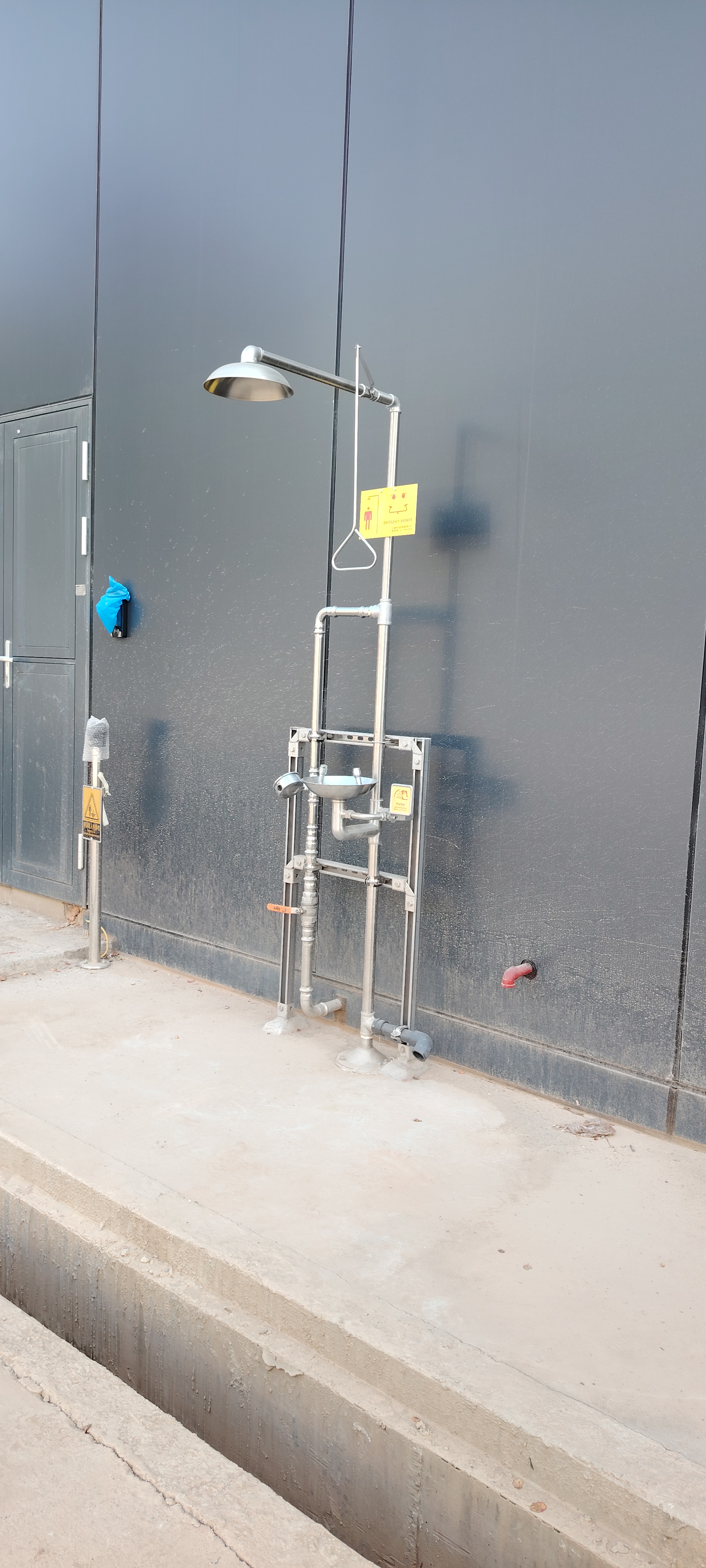
A combination emergency shower and eyewash station is a common configuration for chemical and industrial sites.
Emergency eyewash stations are often classified as safety fixtures, but in practice they are part of an emergency response system. A wall mounted eyewash next to a chemical process line, a combination shower and eyewash at a laboratory exit, or a portable emergency shower at a remote worksite must deliver a usable flow of water immediately after activation. For industrial buyers, the question is not only which standard model to specify, but whether the manufacturer has the engineering depth to match each unit to the site conditions, monitoring system, and compliance framework.
When Standard Eyewash Stations Are Not Enough
Procurement teams often begin with standard catalog products because they are easy to quote and install. However, project requirements frequently move beyond a standard wall mounted eyewash. Existing building management systems may need a signal from the safety station. A facility in a cold climate may need freeze protection in the water supply line. A site without permanent plumbing may require a portable or skid-mounted unit. In these cases, an OEM or ODM supplier can turn a standard safety product into a site-specific component.
This is also an opportunity for buyers. Instead of accepting a generic emergency eyewash, they can specify alarms, lighting, control signals, temperature protection, and mounting formats as part of the procurement process. The relevant capability question for suppliers is whether they can combine product engineering, compliance testing, and production control under one roof.
BOHUA: An OEM/ODM Manufacturer Built Around Emergency Shower and Eyewash Products
Shanghai Bohua Safety Device Co., Ltd. is an eyewash equipment manufacturer based in Shanghai, China. Operating as BOHUA, the company has specialized in the research, development, production, and sales of emergency shower and eyewash products since 2006. Its product history includes 11 series and more than 100 types of eyewash units.
In the context of custom projects, BOHUA states that it provides OEM and ODM production services. The manufacturer also lists customization options that go beyond basic branding or color changes. These options include acoustic and optical alarms, lighting, uploading of DCS signals, electrical heating, cooling, and skid-mounted systems.
Production and delivery are structured around industrial order expectations. The OEM/ODM profile lists a monthly capacity of 1,000 units, a lead time of 30 days, an MOQ of 5 units, and 100% testing. General procurement terms list an MOQ of 1 unit, FOB delivery, pre-shipment testing, and payment before delivery. Export experience covers the EU, the Middle East, Australia, and Africa, with remote after-sales support.
BOHUA has also built a compliance base for this work. The company holds ISO 9001 quality management certification, ISO 14001 environmental management certification, and occupational health and safety management system certification. Product-level approvals include ANSI Z358.1-2014 and CE EN 15154-1:2006, plus CCS certification from the China Classification Society. The company also reports nine patent certificates and a number of appearance design patents.
Technical Explanation: What Eyewash Station Customization Really Involves
For buyers, understanding the technical side of customization is necessary before requesting a quote. The available options can be grouped into four functions: alerting and integration, environmental protection, mounting and configuration, and mobility.
- Acoustic and optical alarms provide a clear signal when an emergency shower or eyewash station has been activated. This is useful in high-noise environments and for incident logging.
- Lighting helps workers locate and use the station in low-light areas.
- DCS signal uploading connects the safety station to a distributed control system, so operators can monitor activation and respond faster.
- Electrical heating and heat tracing keep water lines usable in cold climates.
- Cooling options can be specified for facilities where incoming water temperature may be too high.
- Skid-mounted systems create a transportable emergency response unit for temporary or remote sites.
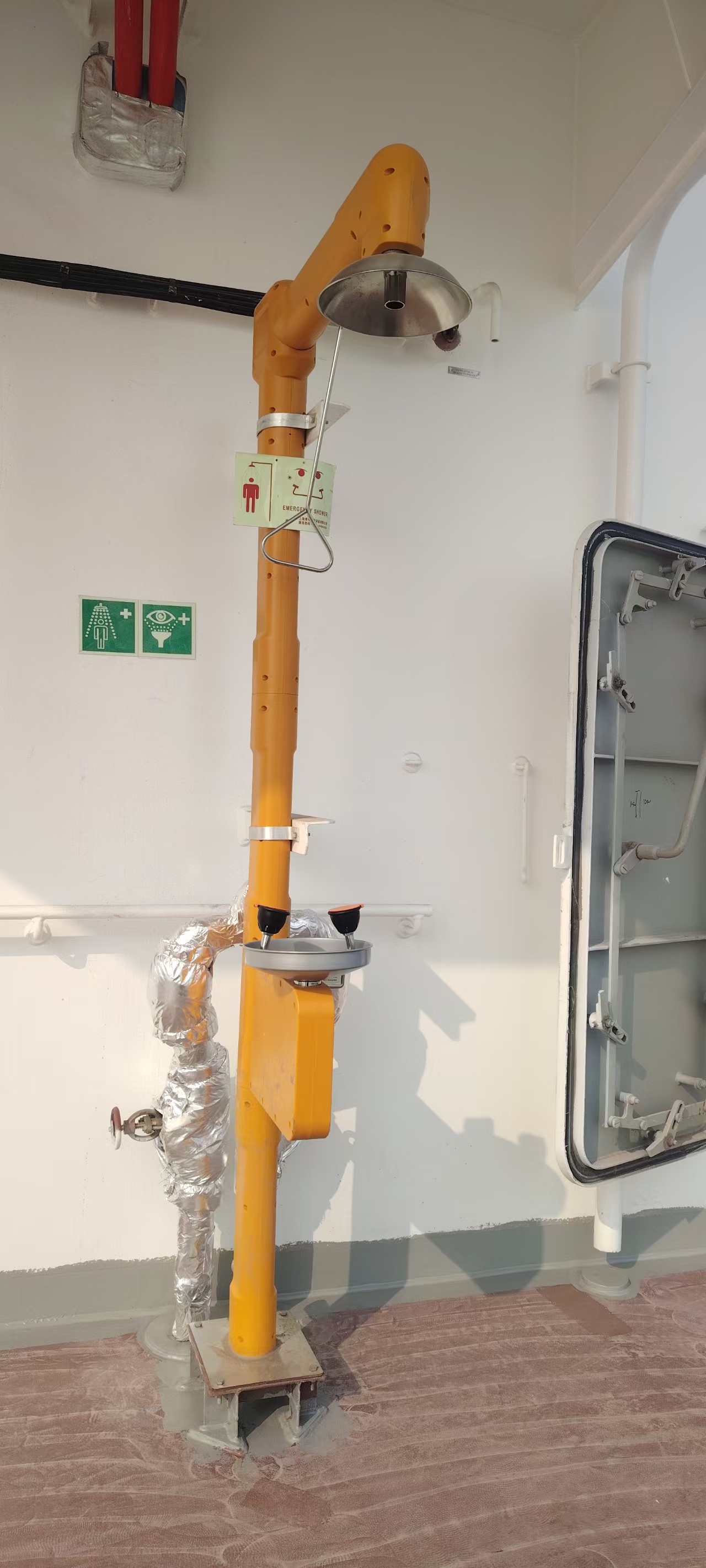
Electric heat tracing shower and eyewash units are an example of climate-specific OEM/ODM engineering.
The material specification also matters. BOHUA offers emergency shower and eyewash configurations in 304 stainless steel, 304 stainless steel with ABS, and 316 stainless steel for higher-corrosion environments. Standard compound units are floor-mounted and use a push-handle activation, with a shower flow rate of 120-180 L/min and an eyewash flow rate of at least 1.5 L/min. This level of dimensional and material detail is important when the station has to match a specific skid, pit, or process island.
| Customization Option | Typical Function |
|---|---|
| Acoustic / optical alarms | Alert nearby personnel and record activation events |
| Lighting | Improve visibility in low-light emergency paths |
| DCS signal uploading | Enable remote monitoring via plant control systems |
| Electrical heating / heat tracing | Maintain functionality in cold climate facilities |
| Cooling | Reduce incoming water temperature where needed |
| Skid-mounted systems | Provide mobile or temporary decontamination capacity |
Applications and Use Cases for OEM/ODM Eyewash Stations
Cold-Climate Compliance
One documented case involves an ODM client using BOHUA equipment in a cold-climate facility in China. The stated purpose was to keep the facility legally compliant year-round and to demonstrate due diligence for worker safety. The project has been in operation for five years, and the result is described as a reliable, compliant, and safe emergency response setup. The related product is the electric heat tracing shower and eyewash model BH30-1062, which is specified with 220V, 48W/m heat tracing power, explosion-proof options, and IP54/IP56/IP65 protection levels.
Laboratory and Wall Mounted Installations
In laboratories and processing areas where eye exposure is the primary risk, wall mounted eyewash units provide a compact response point. BOHUA wall mounted models such as BH33-1010 and BH33-1011L use a DN32 inlet and outlet, deliver an eyewash flow rate of at least 1.5 L/min, and reach full operation within one second. Fully automatic wall mounted eyewash BH38-1010 adds automatic activation for hands-free use.
Combination Shower and Eyewash Areas
Chemical manufacturing, pharmaceutical, oil and gas, and mining facilities often need full-body decontamination. Combination emergency shower and eyewash stations such as BH30-1010 provide a floor-mounted unit with a shower flow rate of 120-180 L/min and an eyewash flow rate of at least 1.5 L/min. The twin-head eyewash spray is designed with a sprinkler spacing of 101.6mm, while the overall unit height is 2480mm and the shower head height is 2100mm.
Portable and Remote Sites
BOHUA portable shower and eyewash units include a 65L model and a 28L model. These self-contained units can be used in sites without permanent plumbing, which aligns with a broader market trend toward portable eyewash stations for remote and non-plumbed workplaces.
Market Trend Analysis: Compliance and Integration Pull the Market Toward Custom Supply
The global emergency shower and eyewash station market was valued at approximately USD 417.3 million in 2024, according to Spherical Insights. Transparency Market Research projects the market will reach USD 713.4 million by 2035, growing at a CAGR of 4.7% from 2025. North America held the largest regional revenue share at about USD 145.1 million in 2024, partly because ANSI Z358.1 creates a clear testing and installation baseline.
Different research firms use different market definitions, and estimates vary. Dataintelo, for example, reports a considerably larger market value using a broader product definition. This divergence matters because suppliers may quote different market statistics depending on which product categories are included.
Two structural trends are relevant to procurement. First, industrial applications such as chemical and manufacturing account for approximately 35.7% of global eyewash station revenue, according to Dataintelo. Second, portable eyewash stations represented approximately 38.2% of the market in 2025. Both trends favor suppliers that can configure standard products for specific environments rather than offering only one fixed platform.
For OEM/ODM buying, the compliance requirement is becoming a non-negotiable part of the specification. ANSI Z358.1 requires an eyewash station to deliver 0.4 gallons per minute of flushing fluid for at least 15 minutes. In Europe, the EN 15154 series regulates emergency safety showers, with Part 2 covering plumbed-in eyewash units. A manufacturer that has already tested its product range against these standards reduces the certification risk of a custom project.
Comparison with Traditional Sourcing Approaches
Traditional sourcing usually means picking a standard catalog model from a recognized safety equipment brand and delivering it to site. This works well for simple replacements. Global brands such as Haws Corporation, Bradley Corporation, Guardian Equipment, and Speakman are commonly associated with this category. For a straightforward installation, a stock unit is fast, easy to compare, and backed by an established service network.
OEM/ODM sourcing changes the relationship. Instead of adapting the site to a catalog product, the buyer asks the manufacturer to adapt the product to the site. The advantage is that integration options such as DCS signals, alarms, lighting, heating, cooling, and skid mounting can be included in the initial design. The trade-off is more engineering coordination and validation before production.
| Evaluation Point | Standard Catalog Sourcing | OEM/ODM Sourcing |
|---|---|---|
| Engineering fit | Limited to existing options | Can align with site controls and climate needs |
| Lead time | Usually shorter | BOHUA lists 30 days for OEM/ODM orders |
| MOQ | Often low | BOHUA OEM/ODM profile lists MOQ 5; general terms list MOQ 1 |
| Testing | Depends on supplier | 100% test and pre-shipment test listed |
| After-sales support | Local distributor may provide service | Remote support is listed |
Future Outlook: Connected and Climate-Ready Eyewash Stations
The next phase of emergency eyewash and shower procurement will likely move further from isolated fixtures toward connected safety systems. DCS signal uploading is one example of a broader shift: safety equipment is becoming a data point in operational monitoring, not only an emergency asset. Alarms, lighting, and remote diagnostics may become default options in projects where response times are measured and audited.
Climate-specific engineering is also likely to gain importance. Cold-climate installations already require heat tracing or electric heating options, and BOHUA's product line includes multiple configurations in this category. As more plants are built in regions with extreme temperatures, procurement specifications will need to include freeze protection, scald protection, and enclosure ratings.
The supplier evaluation process will continue to demand verifiable evidence. Product certifications, test results, factory capacity, and project references are becoming the core content of an OEM/ODM qualification file. For BOHUA, the existing combination of ISO management system certification, ANSI and CE product certification, OEM/ODM production capacity, and a five-year cold-climate project reference provides a usable baseline for buyers.
Buyers who want to compare BOHUA product series, certifications, and procurement terms before an OEM/ODM discussion can download the company brochure: BOHUA company brochure.
FAQ: Eyewash Station OEM/ODM Evaluation
Which OEM/ODM customization options are relevant for industrial eyewash stations?
Customizable features include acoustic and optical alarms, lighting, DCS signal uploading, electrical heating, cooling, and skid-mounted systems. These options can be combined with standard OEM/ODM production for emergency shower and eyewash products.
What MOQ and lead time can be expected for OEM/ODM eyewash stations?
BOHUA's OEM/ODM profile lists a monthly capacity of 1,000 units, a lead time of 30 days, and an MOQ of 5 units. General procurement terms list an MOQ of 1 unit, FOB delivery, pre-shipment testing, and payment before delivery. The applicable terms depend on the product configuration.
Do OEM/ODM eyewash stations meet ANSI and EN standards?
BOHUA products have passed ANSI Z358.1-2014 and CE EN 15154-1:2006. In North America, ANSI Z358.1 requires eyewash stations to deliver 0.4 gallons per minute for at least 15 minutes. In Europe, the EN 15154 series regulates emergency safety showers and eyewash units.
How does BOHUA support customization for cold climates?
BOHUA provides electric heat tracing and electric heating models. The electric heat tracing shower and eyewash model BH30-1062 is listed with 220V, 48W/m heat tracing power, explosion-proof options, and IP54/IP56/IP65 protection. A related ODM project in a cold-climate facility in China has been in operation for five years to maintain year-round compliance.
What quality checks should buyers look for in an OEM eyewash station supplier?
Buyers should verify management system certifications, product-specific ANSI and CE certifications, materials, flow rates, activation speed, and test policy. BOHUA lists 100% testing, pre-shipment testing, and remote after-sales support for its industrial safety equipment.