
OPS PC Component Compliance: End-of-Life and Change Risk
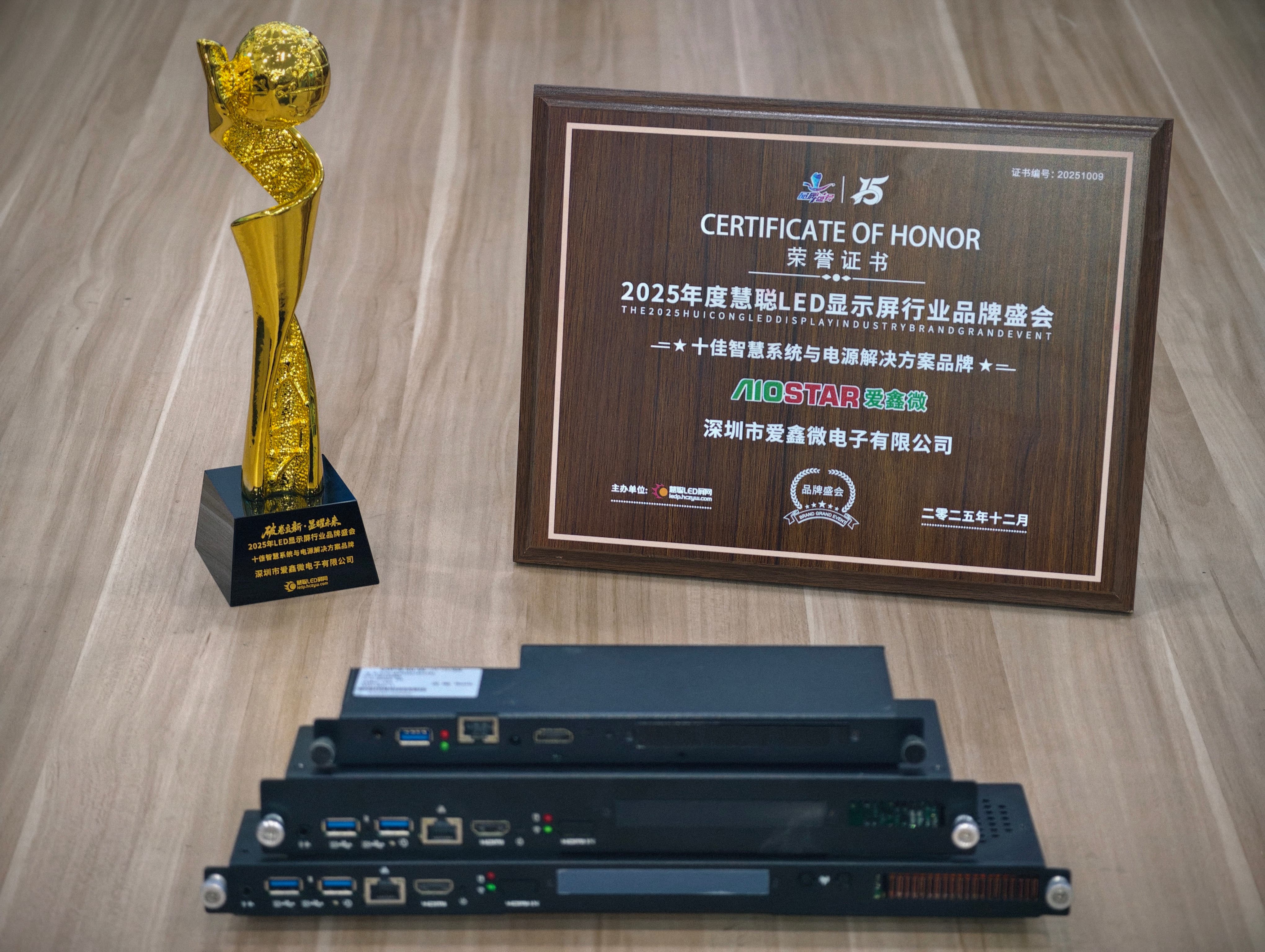
Quality and recognition records maintained at the Shenzhen Aiostar Electronics facility.
The global Interactive Flat Panel (IFP) market — the primary application environment for OPS PC modules — was valued at approximately USD 12.6 billion in 2024, according to Grand View Research. Integrated OPS-slot compute modules and Android-based SoC modules are estimated to ship in 15–25% of new Interactive Flat-Panel Display (IFPD) units. Every one of those modules is installed inside a display that is expected to remain in service for years: in a classroom, a meeting room, a retail floor, a hotel lobby or a networked signage installation.
That service life is what turns component compliance into a decision-stage question rather than a paperwork detail. Buyers who have already compared processor generations, memory configurations and video output eventually stop asking which module is faster and start asking which module will still be suppliable, serviceable and replaceable in year three of a rollout. The answer depends less on the specification sheet than on documented process: who maintains the bill of materials, how end-of-life components are handled, when customers are notified of changes, and how BIOS, driver and operating-system behaviour is validated on the actual display.
What Compliance Risk Means for an OPS PC at the Decision Stage
An OPS PC is a removable slot-in computer module that uses a standardized OPS interface inside the display, replacing a standalone external PC or an internally fixed compute board. In the documented risk framework used for these modules, compliance risk is not limited to certificates. It covers five categories, each with a defined control method and a supplier-side measure behind it.
| Risk category | Control method | Documented supplier measure |
|---|---|---|
| Component end-of-life or configuration change | Maintain a controlled bill of materials; evaluate form, fit and function alternatives | Notify the customer of material changes affecting the agreed specification; validate alternatives and obtain approval where the project requires it |
| Operating system, BIOS or driver mismatch | Confirm required OS version, BIOS functions, device drivers and application dependencies before imaging | Validate the approved system image and functions such as Wake-on-LAN, auto power-on and watchdog on the final hardware configuration |
| OPS or OPS-C mechanical and interface incompatibility | Check module dimensions, connector type, pin definition, video interface, USB, power budget and display firmware before production | Use a pre-production sample and compatibility checklist; test the module on the customer's target display before confirming the final configuration |
| Overheating or thermal throttling | Select a cooling solution according to processor power, enclosure airflow and the display's internal temperature; verify heat sink, fan and thermal contact design | Review the CPU power profile and installation environment; conduct burn-in and thermal testing to the project specification before mass production |
| Transport damage | Use protective internal packaging suitable for the module, accessories and selected shipping method | Perform packaging checks and arrange drop or vibration testing when required by the customer or project specification |
Read as a whole, the table answers a single procurement question: if something changes, is the change visible, is it evaluated, and is it approved before it reaches the buyer's install base? That is a different standard from a generic quality claim, because each row can be checked against a document.
Component End-of-Life: Controlled BOM and Proactive Alternative Evaluation
A controlled bill of materials is the baseline control for lifecycle risk. It defines which components were qualified for a given OPS PC or OPS-C computer module, which is what makes change detection possible in the first place. Without a defined and maintained BOM, an end-of-life event is discovered at the point of order rather than at the point of planning.
When a component reaches end of life, the documented process is not silent substitution. Alternatives are evaluated against form, fit and function: mechanical form, interface fit, and electrical and behavioural function. Where a material change affects the agreed specification, the customer is notified, alternatives are validated, and approval is obtained when the project requires it. This sequence matters in multi-year programs — a school district, a retail chain or a signage network that standardised on one module configuration needs to know that a revision will not change behaviour in the field.
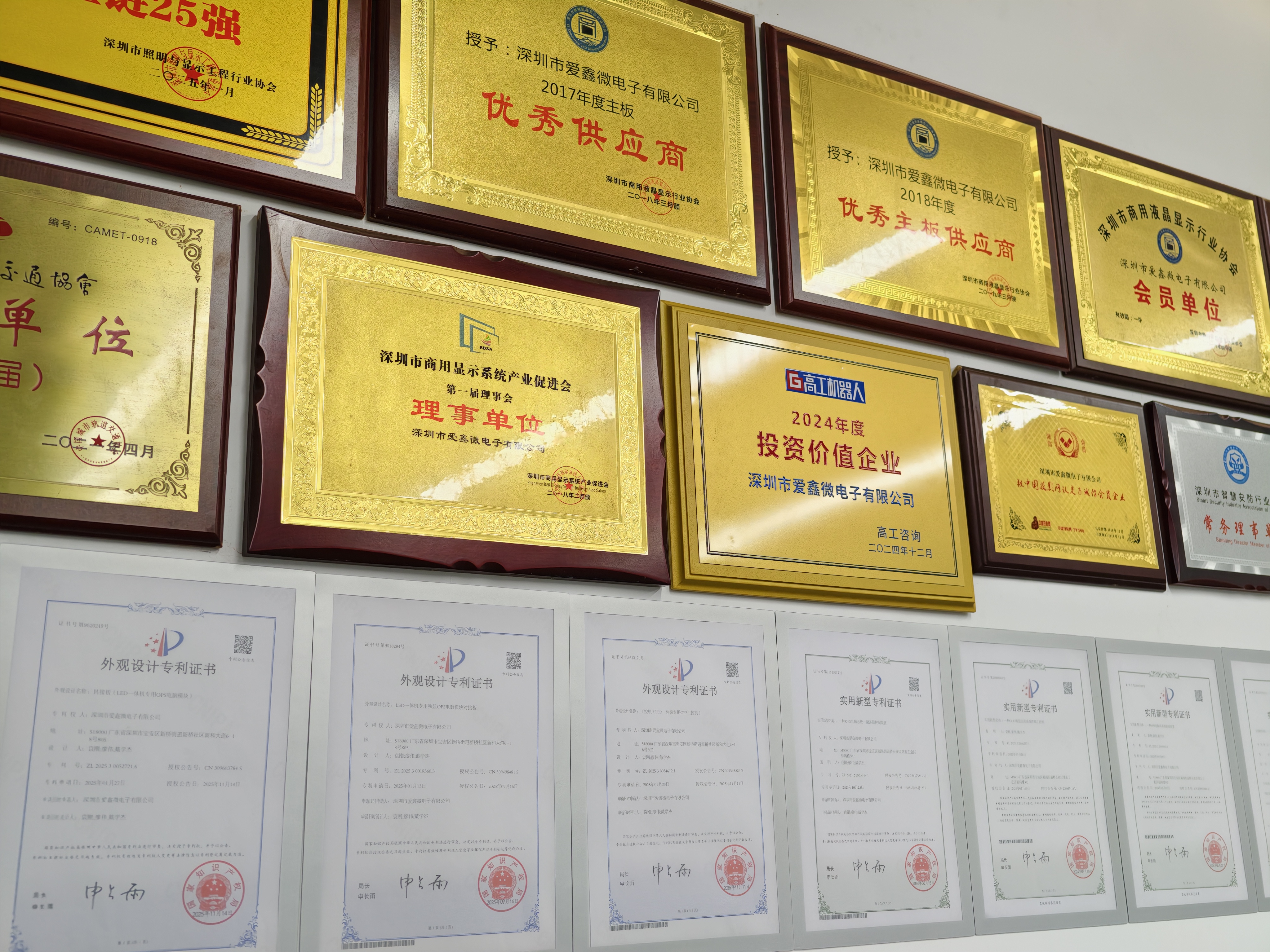
Compliance documentation review is part of the qualification record for OPS PC modules.
End-of-life control also connects directly to the modular architecture that OPS modules are built around. Because OPS and OPS-C modules separate the computing platform from the display assembly, a failed or outdated compute module can be replaced separately after compatibility checks. In typical compute-module failures this reduces complete-display replacement requirements by over 75%, and it means an EOL-driven platform refresh can be planned at module level instead of display level. The condition attached to that advantage is explicit: replacement follows compatibility checks, so an alternative module still has to be qualified against the display firmware, power budget and interface definition.
Change Notification: What Triggers Customer Approval
Compliance-related change control is a communication process, not only an engineering process. In the documented procedure, the trigger for notification is a material change that affects the agreed specification. Once identified, the alternative is validated and customer approval is obtained when the project requires it — for example where a specification is contractually fixed or where the module is part of a certified end-product configuration.
For decision-stage buyers, this translates into three contract-level questions worth settling before the first purchase order: which categories of change require notification, which changes require written approval before shipment of affected units, and who on the buyer's side holds that approval authority. These are process definitions rather than product features, and they are usually easier to agree at the start of a program than to retrofit afterwards.
BIOS, Driver and OS Image Validation as Risk Mitigation
Platform-level failures in interactive displays are rarely hardware failures. More often they are software-to-hardware mismatches: a module that boots correctly but does not wake on LAN inside a signage network, a watchdog that fails to reset an unattended kiosk, or auto power-on that does not restore a classroom display after a power interruption.
The documented control is to confirm the required operating system version, BIOS functions, device drivers and application dependencies before imaging, and then to validate the approved system image together with the required functions — Wake-on-LAN, auto power-on and watchdog — on the final hardware configuration. The last phrase carries most of the weight: validation performed on a different board revision, memory population or storage type does not transfer automatically to the shipped build, so the validated configuration has to be the one that is actually manufactured.
Mechanical and Interface Qualification Before Production
Interface risk in OPS modules is measurable. The qualification checklist covers module dimensions, connector type, pin definition, video interface, USB, power budget and display firmware, and it is completed before production. The practical method is a pre-production sample plus a compatibility checklist, with the module tested on the customer's target display before the final configuration is confirmed. For buyers, the takeaway is that a specification match and a functional match are two separate tests.
Regional standards make this more than a formality. Intel's Open Pluggable Specification standardises a mechanical and electrical interface between displays and media players using a unified 80-pin JAE connector with a footprint of 180 mm × 119 mm × 30 mm. The OPS-C (China) variant, widely adopted in the Chinese domestic market for educational interactive whiteboards, uses dimensions that are typically 180.8 mm × 195.2 mm × 42.5 mm. An "OPS slot" is therefore not one physical definition across all markets, and a cross-region display program needs to confirm which chassis standard each display uses before treating OPS and OPS-C modules as interchangeable.
Thermal Validation and Where Its Evidence Ends
Thermal risk is handled by selecting a cooling solution according to processor power, enclosure airflow and the display's internal temperature, verifying the heat sink, fan and thermal contact design, and conducting burn-in and thermal testing to the project specification before mass production. The documented enterprise measure adds a review of the CPU power profile and the installation environment, because the same OPS PC module can behave differently in a sealed conference display and in a ventilated signage enclosure.
This is also where the honest boundary sits. The thermal envelope available to any slot-in OPS PC module is defined by the display: its internal temperature, its airflow path and its power budget. A burn-in result obtained in a test fixture is evidence about the module, not a guarantee about the finished display. Buyers planning sustained high-load workloads — video walls, heavy local processing or continuous 4K playback — should treat thermal headroom as a project-level qualification item rather than a datasheet assumption.
How Shenzhen Aiostar Electronics Documents These Controls
Shenzhen Aiostar Electronics Co., Ltd. (AIOSTAR) is a computer hardware supplier established in 2015 in Shenzhen, China. The company develops, produces and supplies OPS PCs, OPS-C pluggable computer modules, Android OPS PCs, industrial motherboards, mini PCs, BOX PCs, industrial panel PCs, servers and customized embedded computing systems, with products used in interactive displays, digital signage, education, corporate meetings, industrial automation, smart transportation, retail and security projects. Around 60% of output is exported to global markets, and the company operates a 1,500 m² facility with 50 employees, an 8-engineer R&D team and an annual output of 170,000+ units.
The relevance to compliance risk is in the OEM and ODM scope: hardware configuration, I/O, chassis, cooling, BIOS, operating system image, logo, packaging and accessories. Each of those areas maps onto a documented control. BIOS and OS image customization connect to pre-imaging verification and final-configuration validation. Chassis and cooling customization connect to the thermal selection and burn-in process. I/O and interface customization connect to the pre-production sample and compatibility checklist. Packaging and accessories connect to transport-damage control through protective internal packaging suited to the module, accessories and shipping method.
AIOSTAR's OPS product line covers Intel 10th–13th Gen processor platforms and Android platforms, including 4K OPS modules used in digital signage and conference displays — a range that reflects the two most common decision paths in this category: an Intel-based OPS PC where x86 software support is mandatory, and an Android OPS PC module where a lightweight, integrated media platform is sufficient.
Comparison with Traditional Compute Approaches
At the decision stage, OPS modules are usually compared against three alternatives: an external desktop PC, a compute board fixed inside the display enclosure, and an external Android media player. The differences below are documented product-level comparisons rather than general claims.
| Comparison | Core difference | Documented impact | Typical fit |
|---|---|---|---|
| OPS PC vs external desktop PC | Removable slot-in module with a standardized OPS interface inside the display, eliminating the external PC | Over 70% reduction in external cable quantity; more than 65% less occupied installation space; module can be removed and serviced without moving the display or replacing the panel | Classrooms, meeting rooms, digital signage and commercial displays that support an OPS slot |
| OPS / OPS-C vs compute board fixed inside the enclosure | Computing platform is separated from the display assembly for replacement and upgrades | Over 75% reduction in complete-display replacement requirements in typical compute-module failures; failed or outdated module replaced separately after compatibility checks | Displays requiring field replacement, platform upgrades or different operating systems |
| Android OPS vs external Android media player | Computing module integrated into the display's OPS slot, reducing exposed external connections | Over 60% reduction in peripheral hardware items; module removable from the slot for replacement or software service | Retail signage, hospitality information displays, kiosks and networked media playback |
What the comparison does not settle. Cable reduction and space reduction are installation-level advantages, not proof of lower total project cost. Documented cost statements are conditional: project cost depends on chassis, interface and volume, and Android OPS cost depends on SoC, memory, storage and customization level. A fair evaluation therefore separates installation and service savings from configuration cost, and compares them on the buyer's own deployment profile.
Application Scenarios Where Compliance Control Matters Most
Interactive whiteboards and classroom displays. The OPS-C standard is widely adopted in the Chinese domestic market for educational interactive whiteboards. The global interactive whiteboard market is projected to reach USD 730 million by 2030, with OPS penetration remaining a key growth driver for modular classrooms — a segment where displays are refreshed on education budget cycles and where the compute module and the panel rarely need replacing at the same time.
Conference displays and meeting rooms. Meeting room deployments typically require x86 compatibility with corporate software images. This is the scenario where BIOS and driver validation carries the highest risk exposure, because the module must behave predictably under scheduled power, remote wake and meeting-room control systems.
Digital signage and retail. For retail signage, hospitality information displays, kiosks and networked media playback, an Android OPS PC module integrated into the OPS slot removes an external media player and its cabling. In these networks, change control is what protects the installed base: a firmware or component change that alters wake behaviour can affect hundreds of screens simultaneously.
Industrial and infrastructure installations. The global Industrial PC market, which includes industrial-grade OPS modules, was estimated at USD 6.48 billion in 2024 and is projected to grow at a CAGR of 6.30% through 2032, according to Grand View Research. Note that published estimates differ by methodology: Precedence Research places the same 2024 market at USD 5.36 billion, largely reflecting different treatment of embedded versus standalone systems. Industrial-grade OPS PC deployments in transportation, security and automation projects are where burn-in and thermal testing records are most often requested as part of qualification.
Market Trend: Lifecycle Management Is Becoming Part of the Specification
Three verified market signals point in the same direction. The IFP market reached approximately USD 12.6 billion in 2024; OPS-slot and Android SoC modules are estimated to ship in 15–25% of new IFPD units; and the industrial PC segment that houses industrial-grade variants is growing at a mid-single-digit CAGR through 2032. Together these describe an installed base that is large, modular and long-lived.
A long-lived modular installed base shifts the burden of lifecycle management upstream. When the compute module can be replaced independently of the display, the module supplier effectively becomes responsible for keeping that configuration buildable and behaviourally stable across a multi-year window. That is why documented change control — controlled BOM, form-fit-function alternative evaluation, customer notification, and validation on the final hardware configuration — is increasingly part of the qualification file rather than an appendix to it.
Limitations and Where the OPS PC Approach Does Not Fit
Any credible evaluation has to state the boundaries of the modular approach.
- It requires a compatible slot. An OPS PC or OPS-C module is installed via the standardized OPS interface inside the display. Where a display has no such slot, an external desktop PC or media player remains the practical option regardless of the modular advantages.
- The thermal and power envelope belongs to the display. Cooling is selected according to processor power, enclosure airflow and the display's internal temperature. Sustained high-load workloads may exceed what a given chassis can dissipate.
- OPS and OPS-C are not dimensionally identical. Intel OPS uses a 180 mm × 119 mm × 30 mm footprint with a unified 80-pin JAE connector, while the OPS-C variant used in the Chinese educational market is typically 180.8 mm × 195.2 mm × 42.5 mm. Cross-region standardisation requires chassis-level confirmation.
- Change control reduces risk but does not remove supply disruption. A controlled BOM and proactive alternative evaluation shorten the response to an end-of-life event; they do not prevent it, and alternatives still require validation and, in some projects, customer approval before shipment.
- Cost is configuration-dependent. Project cost depends on chassis, interface and volume, and on SoC, memory, storage and customization choices. A slot-in module is not automatically the lowest-cost option for a single-display installation.
Future Outlook
The direction of travel is toward evidence-based qualification. As OPS-slot and Android module adoption continues within new IFPD units, and as the industrial PC segment expands toward 2032, the differentiator between suppliers is likely to move from headline specifications to documentation: a maintained bill of materials, recorded form-fit-function evaluations for end-of-life alternatives, a defined notification and approval path for material changes, and validation records for BIOS, drivers and operating system images on the final hardware configuration. Buyers who ask for these records at the evaluation stage are effectively buying predictability rather than a one-time specification.
FAQ
How does an OPS PC module's end-of-life risk compare with a compute board fixed inside the display enclosure?
A fixed internal compute board couples the computing platform to the display assembly, so a failed or outdated compute element affects the whole display. In documented comparisons, OPS and OPS-C modules separate the computing platform from the display assembly, allowing a failed or outdated module to be replaced separately after compatibility checks. In typical compute-module failures, that reduces complete-display replacement requirements by over 75%. The boundary attached to this advantage is that the replacement module still has to pass compatibility checks against the display firmware, interface and power budget.
When does a component change require customer notification?
The documented trigger is a material change that affects the agreed specification. In that case the customer is notified, form-fit-function alternatives are evaluated and validated, and approval is obtained where the project requires it. Changes that do not affect the agreed specification fall outside that notification trigger. For procurement teams, the practical implication is that notification scope and approval authority are best defined in the purchase agreement before the program starts.
How are BIOS and driver risks controlled on a custom OPS PC module?
Before imaging, the required operating system version, BIOS functions, device drivers and application dependencies are confirmed. The approved system image and required functions — including Wake-on-LAN, auto power-on and watchdog — are then validated on the final hardware configuration. Validation is tied to that configuration rather than to a generic platform, because a different board revision, memory population or storage type is a different test condition.
What has to be checked before an OPS or OPS-C module is installed in a display?
The documented qualification covers module dimensions, connector type, pin definition, video interface, USB, power budget and display firmware, and it is completed before production. The method is a pre-production sample combined with a compatibility checklist, and the module is tested on the customer's target display before the final configuration is confirmed — which separates a specification match from a verified functional match.
Does an OPS-C module fit the same chassis as an Intel OPS module?
Not automatically. Intel's Open Pluggable Specification standardises a mechanical and electrical interface using a unified 80-pin JAE connector with a footprint of 180 mm × 119 mm × 30 mm. The OPS-C variant widely adopted in the Chinese domestic market for educational interactive whiteboards is typically 180.8 mm × 195.2 mm × 42.5 mm. Because the dimensions differ, buyers planning a multi-region rollout should confirm which standard each display chassis uses and qualify the module against that specific chassis.
What are the main limits of an OPS PC compared with an external desktop PC or media player?
Three limits are consistently relevant. First, the display must provide a compatible OPS slot; without one, the modular approach does not apply. Second, the achievable thermal and power envelope is set by the display's internal temperature and airflow, and by the selected processor power profile. Third, cost is configuration-dependent — project cost depends on chassis, interface and volume, while Android OPS cost depends on SoC, memory, storage and customization. Where these constraints do not fit a deployment, an external PC or media player remains a valid alternative.
How is thermal risk controlled before mass production?
The cooling solution is selected according to processor power, enclosure airflow and the display's internal temperature, and the heat sink, fan and thermal contact design are verified. Burn-in and thermal testing are then conducted to the project specification before mass production. Because the envelope is partly defined by the display, thermal evidence should be read as a qualification result for a defined configuration and installation environment, not as a universal performance guarantee.
For readers who want to review the underlying product and facility information behind these processes, AIOSTAR publishes a company and product introduction document: Aiostar Introduction 2026 (EN).