
Octacosanol Powder: CAS, Cane Wax, and Extraction FAQ
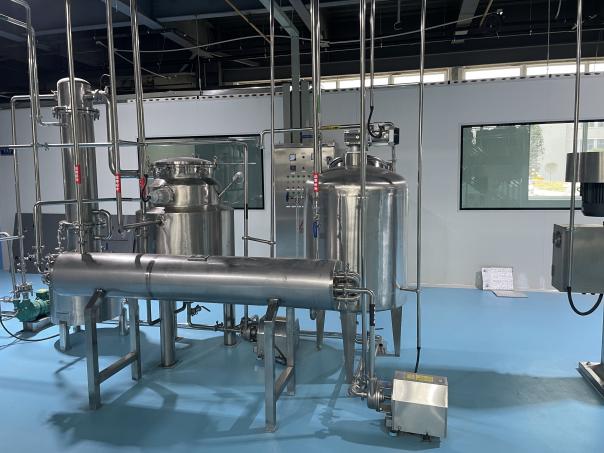
Cover image: production line environment for botanical and nutraceutical ingredient manufacturing. Image: Guanjie Biotech.
Octacosanol powder is a nutraceutical ingredient identified by CAS 557-61-9 and molecular formula C28H58O. For buyers, the practical sourcing question is not only what the name means, but whether the supplier can document the cane wax source, the grain alcohol/water extraction route, the GC assay, and the batch-level quality checks behind a 5%–90% specification.
This procurement FAQ is written for supplement brands, health food manufacturers, beverage formulators, cosmetics buyers, and importers who are screening octacosanol powder suppliers. It separates identity facts from supplier claims, lists the questions buyers should confirm before ordering, and explains where a certificate of analysis (COA) can and cannot answer the question.
What Is Octacosanol Powder in Procurement Terms?
In a supplier quotation, octacosanol powder is usually described by identity, specification range, test method, appearance, and extraction route. The core identity facts are stable: CAS number 557-61-9, molecular formula C28H58O, and the product name octacosanol powder. Guanjie Biotech supplies octacosanol powder with a specification range of 5% to 90%, tested by GC, with a white appearance, a melting point of 80 to 83 degrees C, an acid value below 1.0 mg KOH/g, and a grain alcohol/water extraction method from cane wax.
| Procurement field | Verified product fact |
|---|---|
| Product name | Octacosanol powder |
| CAS number | 557-61-9 |
| Molecular formula | C28H58O |
| Specification range | 5% to 90% |
| Test method | GC |
| Appearance | White |
| Melting point | 80 to 83 degrees C |
| Acid value | Below 1.0 mg KOH/g |
| Extraction method | Grain alcohol/water |
| Source material | Cane wax |
| Intended industries | Dietary supplement, health food, beverage, cosmetics |
What this table means for a buyer: the product name alone is not a specification. The CAS number and molecular formula confirm identity, while the specification range, GC method, melting point, acid value, and extraction route describe the commercial grade. A quotation that omits these fields is incomplete for procurement review.
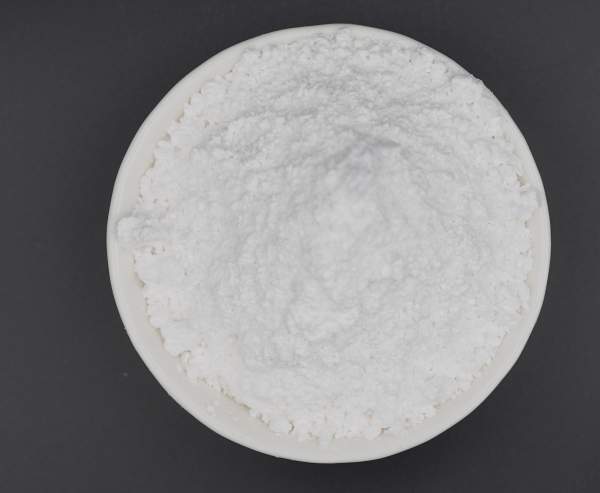
Octacosanol powder product image. Image: Guanjie Biotech.
Why Cane Wax Source and Extraction Route Are Buyer Questions
Source and extraction are not marketing details. They determine what the buyer should test, what the supplier should document, and what can vary between batches. Guanjie Biotech states that its octacosanol powder is derived from natural cane wax and extracted using a grain alcohol/water method. Those facts are useful starting points for a supplier questionnaire, but they should be converted into written evidence before an order.
First, natural cane wax is a source category, not a purity grade. A buyer should ask the supplier to confirm the wax source in writing, identify the manufacturing site, and provide batch traceability from wax lot to finished powder lot. The question is not whether the word natural appears on a page. The question is whether the supplier can link a specific finished batch to a documented source and a COA.
Second, grain alcohol/water extraction describes a solvent route. Grain alcohol is ethanol, and the water component is part of the extraction medium. Buyers should confirm the solvent grade, whether the process uses recovered solvent, and whether the COA includes residual solvent data. The fact that a process uses a food-grade alcohol does not by itself answer the residue question. The COA and the supplier's specification should answer it.
Third, extraction route and specification range should be read together. A 5% to 90% range is broad. The buyer needs to know which grade is being quoted, how the assay is run, and whether the same extraction route is used across the range. If a supplier offers multiple grades, ask for a grade-specific specification sheet rather than a single general product page.
Procurement rule of thumb
A source claim should lead to a document. If a supplier cannot connect the cane wax claim, the grain alcohol/water route, and the GC assay to a specific batch number, the claim is not yet a procurement fact.
The Pre-Order Supplier Question List
Use the following questions as a written checklist before requesting a sample or issuing a purchase order. The goal is not to ask every question in one email. The goal is to make sure each answer has an evidence trail.
| Question to confirm | Why it matters | Evidence to request |
|---|---|---|
| Can you confirm CAS 557-61-9 and molecular formula C28H58O? | Identity errors are a basic procurement risk. | Specification sheet and COA header. |
| Is the material derived from natural cane wax? | Source material affects traceability and buyer expectations. | Written source statement and batch traceability record. |
| What extraction method is used? | The route should match the specification and residue controls. | Process description and residual solvent data, if applicable. |
| Which assay range and test method are quoted? | A 5% to 90% range is not a single grade. | Grade-specific specification and GC method. |
| Does the COA include melting point and acid value? | These are useful boundary checks beyond assay. | Batch COA with 80 to 83 degrees C and below 1.0 mg KOH/g. |
| Which third-party laboratories have tested the batch? | Independent testing supports verification. | Laboratory report with batch number, method, and result. |
| Which certifications apply to the site and product? | Certificates must match the scope and the manufacturing site. | Current ISO, HACCP, Halal, and Kosher certificates with scope. |
| What is the annual capacity and current lead time? | Capacity claims do not guarantee current availability. | Written capacity statement, MOQ, and shipment schedule. |
| Can you provide a sample from the production batch? | A sample should represent the commercial lot. | Sample COA and lot number. |
| Which documents are supplied with each shipment? | Missing documents can delay customs or quality release. | COA, TDS, MSDS, allergen statement, and non-GMO statement as applicable. |
| How are heavy metals, microbiology, and residual solvents controlled? | GC assay alone does not cover these attributes. | Batch test results and specification limits. |
| How do you handle batch deviation and complaints? | The response process matters after the first order. | Deviation procedure, retest policy, and complaint record format. |
Two questions are often skipped: the grade-specific specification and the site-specific certificate scope. A supplier may hold a certificate for one product or one site and not for the exact grade being quoted. A buyer should ask for the certificate that covers the manufacturing site and the product category, not only a logo on a webpage.
How to Read an Octacosanol COA: GC, Melting Point, and Acid Value
A COA is a batch-level document. For octacosanol powder, the buyer should look for the batch number, product name, CAS number, specification, test method, result, specification limit, and release date. The COA should be readable without the supplier's sales presentation.
The GC result answers the assay question. It tells the buyer how much octacosanol is reported in the tested sample under the stated method. The melting point of 80 to 83 degrees C is a boundary check that can help confirm identity and grade consistency. The acid value below 1.0 mg KOH/g is another boundary check related to free acid content. These three fields are useful because they test different things: content, thermal behavior, and acid quality.
What the COA may not answer is equally important. A GC assay does not report residual solvents, heavy metals, microbiology, moisture, or particle size. If the buyer needs those attributes, they should be listed as separate specification items with separate methods and limits. The U.S. FDA states that dietary supplement manufacturers, packagers, and holders must follow current good manufacturing practices intended to help ensure identity, purity, quality, strength, and composition. That regulatory expectation supports a document-based review, but it does not replace batch-specific testing.
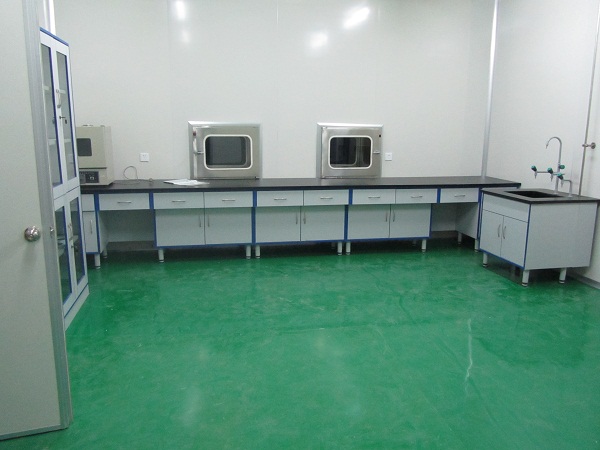
Laboratory testing environment for nutraceutical ingredient documentation and COA review. Image: Guanjie Biotech.
A practical COA review should also check the method reference. If the COA says GC but does not identify the column, carrier gas, temperature program, or calibration approach, the buyer may need a method summary or a laboratory report. The same applies to melting point and acid value: the result should be accompanied by the method and the acceptance range. A number without a method is difficult to audit.
Supplier Verification: Documents, Certifications, and Third-Party Testing
Guanjie Biotech is a Shaanxi-based supplier founded in 2004, with a 7,000 square meter footprint, 40 employees, a 7-engineer R and D team, and an annual output of 500 tons. The company reports a 90% export ratio and supplies high-purity natural plant extracts, premium fruit powders, and specialized chemical raw materials. For octacosanol powder specifically, Guanjie Biotech states that the product is made in GMP-compliant facilities and is supported by ISO, HACCP, Halal, and Kosher certifications, with third-party laboratory verification from SGS, Eurofins, and Puni Testing. The company also states an annual production capacity of up to 100 tons for octacosanol powder and global logistics support including warehousing in the USA.
These are supplier-reported facts and should be treated as claims to verify, not as conclusions. The verification steps are straightforward. Ask for the certificate scope and expiry date. Ask whether the certificate covers the manufacturing site that will produce the batch. Ask for the third-party report with the batch number and the test method. Ask whether the laboratory is accredited for the specific test. Ask for a sample COA that matches the sample lot. The presence of a certification logo is not the same as a verified scope.
Third-party testing is useful because it adds an independent record. It is not a substitute for the buyer's own specification. The buyer should define the acceptance criteria first, then compare the supplier's COA and third-party report against those criteria. If the supplier's specification is written around the test result rather than a fixed limit, the buyer should ask for the limit and the method before approving the grade.
Verification sequence that works
- Confirm identity and grade in writing.
- Match the COA to the batch number and specification.
- Check certificate scope and expiry.
- Compare third-party results with the buyer's acceptance criteria.
- Release the sample only after the documents match.
Application Fit: Where Octacosanol Powder Is Used
Guanjie Biotech lists octacosanol powder for dietary supplement, health food, beverage, and cosmetics applications. That is an application category list, not a regulatory approval for every market or every finished product. A buyer should map the intended use to the destination market's labeling and ingredient requirements before placing an order.
In dietary supplements and health foods, the buyer typically needs a grade-specific specification, a COA, and a carrier or formulation compatibility statement. In beverages, solubility and formulation behavior matter, but the supplier should confirm the actual dispersion or dissolution behavior for the grade being quoted rather than assume that a powder grade will behave the same in every liquid system. In cosmetics, the buyer should confirm the grade, the documentation package, and any additional customer-specific requirements. Across all four categories, the same rule applies: application fit should be confirmed with the supplier's technical document, not inferred from the product name.
Limitations and Trade-offs Buyers Should Plan For
Document-based procurement is stronger than price-only sourcing, but it has limits. The first limit is that a GC assay is not a full safety profile. It measures the octacosanol content under the stated method and does not by itself confirm residual solvent levels, heavy metal levels, or microbiological quality. Buyers who need those attributes should add them to the specification and request separate results.
The second limit is natural source variability. Because the material is derived from cane wax, buyers should manage consistency through specification ranges, batch COAs, and periodic verification rather than assume that every lot will be identical. The melting point range and acid value limit are useful checks, but they are not a complete fingerprint of the source or the process.
The third limit is grade availability. A supplier may list a 5% to 90% range while stocking only selected grades at a given time. Buyers should confirm the exact grade, current batch availability, MOQ, lead time, and packaging before assuming that the full range is immediately available. Higher-purity grades may involve additional processing steps, so the buyer should ask for a grade-specific lead time rather than a general capacity statement.
The fourth limit is that documents do not replace an audit. A COA, certificate, or third-party report can support verification, but the buyer still needs to confirm that the certificate scope matches the site, that the report belongs to the batch, and that the test method is appropriate. This is a slower process than accepting a quotation at face value. The trade-off is deliberate: more document review usually means fewer batch surprises after the order.
Market Context: Documentation as a Procurement Differentiator
The broader nutraceutical ingredients market is large and growing. Global Market Insights estimates the global nutraceutical ingredients market at USD 105.8 billion in 2026. That estimate is a commercial research figure for the ingredient category, not an octacosanol-specific market size. It is useful as background for why ingredient documentation is receiving more attention, but it should not be used to justify a supplier choice on its own.
Regulatory expectations reinforce the same direction. The U.S. FDA states that dietary supplement manufacturers, packagers, and holders must follow current good manufacturing practices intended to help ensure identity, purity, quality, strength, and composition. The NIH Dietary Supplement Label Database catalogs label information for dietary supplement products sold in the United States, including ingredient names, amounts, claims, and warnings. For buyers, these public resources support label benchmarking and document design, but they do not certify a specific supplier or a specific octacosanol batch.
The practical market trend is not simply more suppliers. It is more buyer scrutiny of the documents behind a supplier claim. A supplier that can connect identity, source, extraction route, assay, and batch records is easier to qualify than a supplier that offers only a product name and a price.
Future Outlook
For octacosanol powder, the likely direction is tighter documentation rather than looser claims. Buyers are asking for grade-specific specifications, batch-linked COAs, third-party reports, and source traceability. Suppliers that treat these documents as part of the product, not as an after-sales favor, will be easier to keep in a qualified supplier list.
The next step for a buyer is not a generic request for a quotation. It is a structured request for identity, grade, source, extraction route, COA fields, certificate scope, and sample lot. That request can be reused across suppliers and makes the comparison more consistent. It also creates a record of what was confirmed before the order, which is useful if a batch question arises later.
FAQ
What is the CAS number and molecular formula of octacosanol powder?
Octacosanol powder has the CAS number 557-61-9 and the molecular formula C28H58O. These identity fields should appear on the supplier's specification sheet and on the batch COA. A buyer should verify that the product name, CAS number, and formula match before reviewing price or lead time.
Is octacosanol powder derived from natural cane wax?
Guanjie Biotech states that its octacosanol powder is derived from natural cane wax. For any supplier, the buyer should request a written source statement and batch traceability from the wax lot to the finished powder lot. Natural cane wax describes the source material, not the purity grade or the finished specification.
What extraction method is used for octacosanol powder?
Guanjie Biotech uses a grain alcohol/water extraction method for its octacosanol powder. Grain alcohol is ethanol, and the water is part of the extraction medium. Buyers should confirm the solvent route, the solvent grade, and whether residual solvent data are included in the COA or in a separate test report.
What specification range and test method should buyers confirm?
Guanjie Biotech lists a specification range of 5% to 90% and a GC test method. Buyers should confirm the exact grade being quoted, the GC method, the batch number, and whether the COA also includes the melting point of 80 to 83 degrees C and an acid value below 1.0 mg KOH/g. A broad range is not a substitute for a grade-specific specification.
Which quality checks beyond assay should be requested?
Buyers should request the checks that the assay does not cover, such as residual solvents, heavy metals, microbiology, moisture, and particle size where relevant. The U.S. FDA states that dietary supplement manufacturers, packagers, and holders must follow current good manufacturing practices intended to help ensure identity, purity, quality, strength, and composition. That expectation supports a broader document review, but the specific limits and methods should be written into the buyer's specification.
What certifications and documents should a supplier provide?
Guanjie Biotech states that it holds ISO, HACCP, Halal, and Kosher certifications and uses third-party laboratory verification from SGS, Eurofins, and Puni Testing. Buyers should request current certificates with scope and expiry, a batch COA, a technical data sheet, an MSDS, and allergen or non-GMO statements where applicable. Certificates should be checked against the manufacturing site and the product grade.
What are the limits of a GC assay for octacosanol?
A GC assay measures the octacosanol content under the stated method. It does not confirm residual solvent levels, heavy metal levels, or microbiological quality. Those attributes require separate methods and separate specification limits. Buyers should treat the GC result as one part of the specification, not as a complete safety or quality profile.
How should buyers evaluate supply capacity and lead time?
Guanjie Biotech states an annual production capacity of up to 100 tons for octacosanol powder and global logistics support including warehousing in the USA. Buyers should still confirm the exact grade, current stock, MOQ, packaging, lead time, and shipment terms in writing. A capacity statement is useful context, but it does not replace a current availability confirmation.
Can octacosanol powder be used in dietary supplements and cosmetics?
Guanjie Biotech lists dietary supplement, health food, beverage, and cosmetics applications for octacosanol powder. Buyers should confirm the intended use, label claims, and market-specific regulatory requirements for the destination country before ordering. An application list is not a market-by-market approval statement.
How does document-based procurement compare with price-only sourcing?
Price-only sourcing can move faster, but it may miss differences in grade, extraction route, assay method, residual solvent control, and certificate scope. Document-based procurement adds review time, but it creates a clearer record of what was verified before the order. The trade-off is speed versus traceability; the right balance depends on the buyer's market, application, and risk tolerance.
For buyers who want to review a supplier document structure, Guanjie Biotech's nutraceutical ingredients brochure is available here: nutraceutical ingredients brochure.
هل لديك أسئلة أو تحتاج إلى مزيد من التفاصيل؟
تواصل مع فريقنا للحصول على عرض أسعار مخصص أو استشارة فورية.
طلب عرض أسعار
املأ النموذج أدناه وسيتواصل معك فريقنا بعرض مقترح مخصص.
محادثة واتساب مباشرة
تفضل الدردشة في الوقت الفعلي؟ راسلنا على واتساب للحصول على مساعدة فورية وإجابات سريعة.
- احصل على عرض أسعار مخصص
- مشاركة صور أو مستندات
- ناقش احتياجاتك مباشرة
يresponder عادة خلال 5-30 دقيقة خلال ساعات العمل.