
Off-Road Tire Acceptance: Load, Speed and Pressure Checks
Off-Road Tire Acceptance: Load, Speed and Pressure Checks
Receiving acceptance for an off-road tire shipment should not stop at the model number. A label can show the right size while the sidewall carries a different load index, speed symbol or maximum pressure rating. The controlled check is a three-way match between the purchase order, the approved specification for that exact model and size, and the physical sidewall marking. Load index and speed rating must be read as one designation: 111/T and 120/117 Q are complete combinations, not separate numbers. The maximum pressure marking, such as 300 kPa on one specification record and 550 kPa on another, must also match the approved record before the shipment is released.
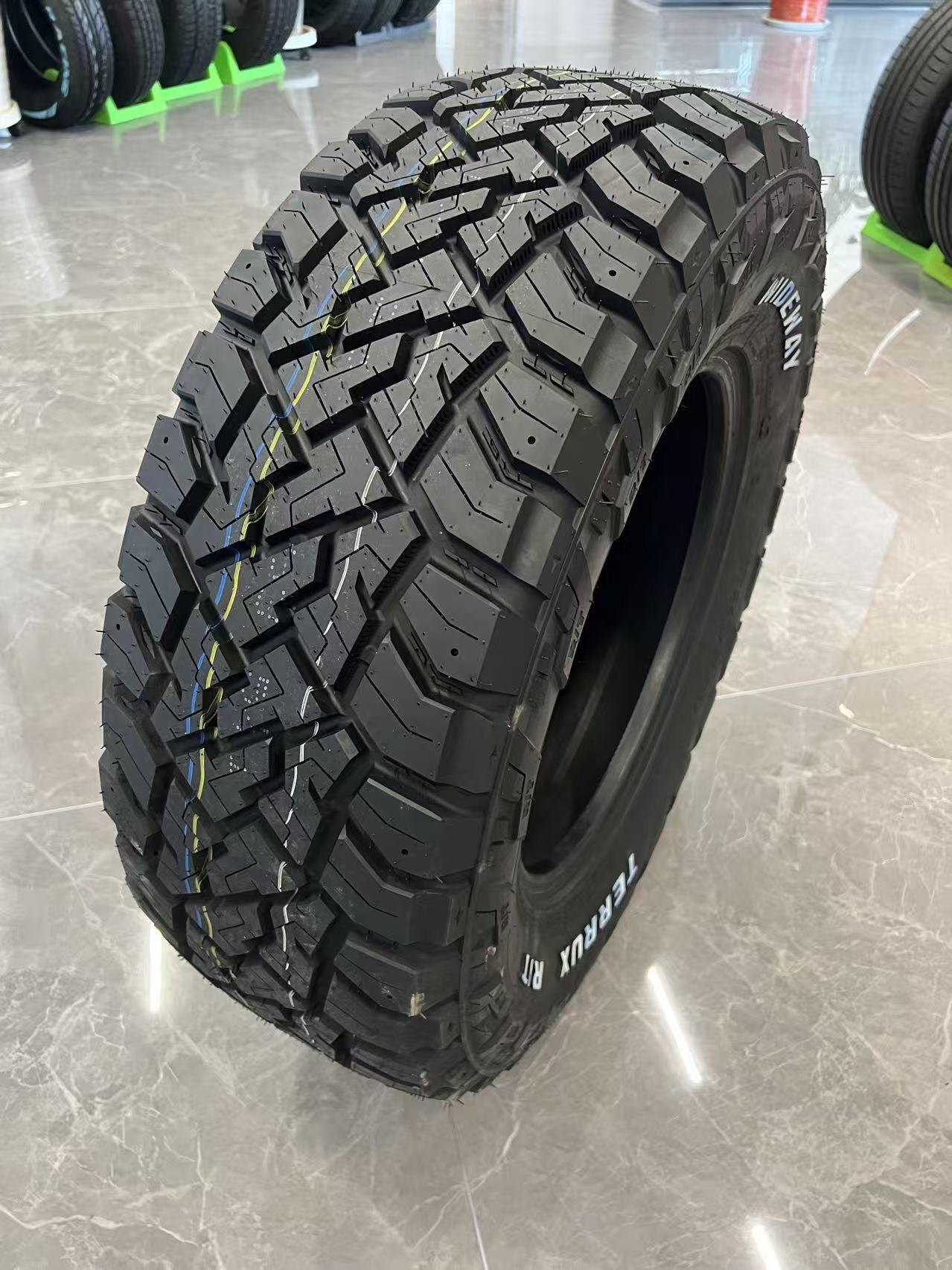
What acceptance must establish at the receiving point
Acceptance answers three practical questions. Is this the product ordered? Does its marked rating match the approved specification? If there is a difference, has it been documented and dispositioned? These questions are narrower than product qualification. They are also more useful at the receiving dock than a general statement that the supplier has a quality system.
The purchase order controls the commercial instruction. It should name the model, size, load index, speed symbol, maximum pressure rating, quantity and any required documents. The approved specification controls the technical reference for that exact model and size. The sidewall is the physical claim attached to the tire. A shipment should not be released when the three do not agree, even if the size appears correct and the quantity is complete.
This matters because an off-road tire range can contain several load, speed and pressure combinations. A buyer who accepts on size and quantity alone can miss a rating mismatch that only becomes visible when the vehicle application, axle load or market requirement is reviewed later. The receiving check is not a re-test of the tire design. It is a control that confirms the shipped product carries the approved designation.
Why one pressure rule cannot cover an entire off-road range
The supplied product data shows why acceptance must be model-specific. One off-road tire specification record carries load index 111 with speed rating T and a maximum pressure of 300 kPa. Another carries load index 120/117 with speed rating Q and a maximum pressure of 550 kPa. Both are off-road tire records, but the marked combinations are not interchangeable. The correct reference is the record for the model and size being received.
| Specification example | Load index | Speed rating | Maximum pressure | Section width | Example sizes in the record |
|---|---|---|---|---|---|
| Example A | 111 | T | 300 kPa | 272 mm | P265/70R16; LT265/75R16 |
| Example B | 120/117 | Q | 550 kPa | 272 mm | LT265/65R17; LT285/70R17 |
| Example C | 121/118 | R | 350 kPa | 318 mm | LT285/70R17; LT315/70R17 |
| Example D | 123/120 | Q | 552 kPa | 272 mm | LT265/75R16; LT285/75R16 |
The table is not a recommendation to choose one record over another. It shows that maximum pressure and load/speed ratings belong to a specific data record. The same range also contains other combinations, including a 120/117 R record at 550 kPa, a 121 Q record at 450 kPa, a 121/118 Q record at 550 kPa and a 119/116 R record at 550 kPa. A buyer should not infer the pressure rating from the load index, the speed symbol or the terrain label. The approved specification must be looked up.
This is the core constraint behind HVQ-style purchasing questions: the buyer is not only asking what an off-road tire can do in general. The buyer is asking what must be true for a particular shipment to be accepted. A range-wide shortcut is unsafe because the range itself contains different combinations.
Step 1: Turn the purchase order into an acceptance specification
A purchase order that says only “off-road tire, size and quantity” leaves too much room for interpretation. Before shipment, the buyer should convert the order into a line-by-line acceptance sheet. The sheet should repeat the exact designation that will be checked on the sidewall, not a shortened version that depends on memory.
The acceptance sheet should include the manufacturer and brand, the product family or model name where applicable, the exact size string, the full load index and speed symbol, the maximum pressure value and unit, the quantity, and the document set required for the shipment. Where the order involves a regulated market, the certificate or label requirement should be listed separately from the load, speed and pressure check. Those are different controls and should not be merged into one field.
For an off-road tire order, the size string should preserve prefixes such as LT or P where the approved specification uses them. The load and speed field should preserve the complete printed combination. A line for 120/117 Q should not be shortened to 120 Q, because the second load value is part of the designation. A line for 111/T should not be treated as if the T were optional.
Practical acceptance fields: brand and manufacturer; model or product family; exact size; full load index; full speed symbol; maximum pressure in kPa; quantity; packaging or marking requirement; documents required; nonconformance contact and disposition route.
The supplied capability data adds commercial context. WIDEWAY lists OEM production, a minimum order quantity of one 20-foot container, around 400–700 pieces, a lead time of 25–45 days and 100% test. These facts help a buyer plan the order and understand the supplier’s stated quality control. They do not replace the receiving check, because the receiving check is about the actual shipment and its actual markings.
Step 2: Verify the sidewall as a complete designation
The sidewall should be read as a complete identification record. Start with the size string, then the load index and speed symbol, then the maximum pressure rating, and then any model or brand marking required by the approved specification. Read the marking from the tire itself, not from the carton label alone. The carton can support the identification, but it does not replace the physical marking.
For 111/T, the receiver should record load index 111 and speed symbol T as a pair. For 120/117 Q, the receiver should record both load index values and the Q speed symbol. The slash and the order of the values matter because they form the designation that the specification uses. A partial match should be treated as a partial match, not as an acceptable equivalent.
Model-specific sidewall markings should also be checked against the order. If the approved model carries a family name or model marking, the receiver should confirm that the sidewall identification belongs to that approved model and not merely to the same size category. Where the sidewall includes a size such as LT265/65R17 or P265/70R16, the full string should be recorded exactly as marked. This is also where the receiver can detect a common receiving error: accepting a tire because the size looks familiar while missing a changed load or speed symbol.
The physical check should be performed before the shipment is moved into saleable stock. Once tires are mixed with existing inventory, the link between the shipment, the purchase order and the sidewall record becomes harder to reconstruct. A simple hold area for unchecked tires prevents that loss of control.
Step 3: Verify maximum pressure without confusing it with inflation pressure
Maximum pressure verification is a marking check, not a recommendation to inflate the tire to that value. The maximum pressure marked on a tire sidewall is a limit for the tire specification. It is not the same as the vehicle manufacturer’s recommended operating pressure for a particular vehicle, axle load or use condition. At receiving, the buyer should confirm that the marked maximum pressure matches the approved specification for that exact model and size.
In the supplied data, the 111/T record carries a maximum pressure of 300 kPa, while the 120/117 Q record carries 550 kPa. These are different values attached to different specification records. A receiver should not “upgrade” a 300 kPa order by accepting a 550 kPa tire, and should not “downgrade” a 550 kPa order by accepting a 300 kPa tire, unless the approved specification has been formally changed. The correct action is to compare the marking with the approved record and hold any difference for disposition.
The unit should be recorded exactly as marked. A value written as 300 kPa should not be recorded as 300 without the unit, and a value written as 550 kPa should not be converted from memory into another unit in the acceptance record. If the receiving process also includes an inflation reading, that reading should be recorded separately from the sidewall maximum-pressure marking. The two numbers answer different questions.
Pressure verification should not be used as a performance shortcut. A higher maximum pressure rating does not by itself establish a higher load capacity, better off-road traction or suitability for a particular vehicle. Those judgments require the load index, speed symbol, application and vehicle requirements to be reviewed together. The receiving check only confirms that the shipped tire carries the approved rating.
What terrain-specific orders change, and what they do not
Terrain labels help buyers organize an off-road range, but they do not replace the model-level acceptance record. The application data lists urban roads, highway use, mud terrain, mountainous conditions, icy and snowy conditions, desert and sandy areas, rugged roads and rainy conditions. It also describes functions such as ride stability, wet performance, cornering support, noise reduction, grip, rolling resistance, sidewall protection and wear resistance. These are reasons to select different models; they are not reasons to skip the load, speed and pressure check.
A distributor serving weekend off-road users, forest and mountain drivers, desert users or winter drivers may order different models from the same supplier. The receiving process should still begin with the approved model and size. If one order is for a 111/T specification at 300 kPa and another is for a 120/117 Q specification at 550 kPa, the receiver should not let the terrain description override the printed designation. The terrain description explains why the model was selected. The sidewall marking confirms what was shipped.
This distinction is useful in procurement because it keeps the acceptance decision factual. The buyer can discuss application fit with the supplier, but the receiving record should remain tied to the approved specification. That separation makes it easier to resolve a mismatch without reopening the entire terrain selection discussion.
A receiving workflow that produces a defensible record
A repeatable workflow is more valuable than a one-time inspection. The following sequence keeps the check simple while preserving the evidence needed for disposition.
- Freeze the approved specification before shipment. Use the exact model, size, load index, speed symbol and maximum pressure that the order is intended to receive. Keep the approved version under document control.
- Match the shipment documents to the purchase order. Check the model, size, quantity and any required certificate or label reference. Do not use the invoice as the technical specification if it does not contain the full designation.
- Inspect the packaging and identification. Confirm that the shipment can be traced to the order and that the labels do not conflict with the sidewall. A label is supporting evidence, not the final marking check.
- Read the sidewall marking in a fixed order. Record the size string, load index, speed symbol, maximum pressure and model marking where applicable. Preserve LT or P prefixes, dual load index values and the pressure unit.
- Compare the marking with the approved specification. Check the full combination, not one field at a time. A matching size with a different load or speed symbol is not a match.
- Hold any difference before release. Keep the affected tires in a controlled area and open a nonconformance record. Record the quantity, the marking observed, the approved reference and photographs where permitted.
- Release only after disposition. The supplier or responsible technical function should confirm whether the difference is acceptable, requires replacement, or requires a formal specification change. The receiving team should not make that decision informally.
This workflow also creates a useful record for future orders. If the same model is ordered again, the previous acceptance sheet becomes a reference for the next shipment. That reduces the chance of a silent change in load index, speed symbol or maximum pressure marking.
Count-only acceptance versus specification-based acceptance
A traditional receiving check often focuses on quantity, carton condition and the size printed on the label. That approach is fast, but it does not answer the constraint question. It can confirm that 400–700 pieces arrived in a 20-foot container without confirming that the tires carry the approved 111/T or 120/117 Q designation.
Specification-based acceptance adds three controls: the full sidewall designation, the maximum pressure rating and the model-specific match to the order. It is still a receiving control, not a laboratory test. It does not replace supplier quality control, vehicle engineering approval or market certification review. Its value is that it catches shipment-level differences before they enter inventory.
The fit boundary should be stated clearly. Specification-based acceptance is appropriate for confirming product identity and marked ratings. It is not proof that the tire is suitable for a particular axle load, that it will perform in a specific terrain, or that it complies with every destination-market requirement. Those questions require separate engineering, application and regulatory review.
Supplier evidence: 12 years and 100% test, kept in context
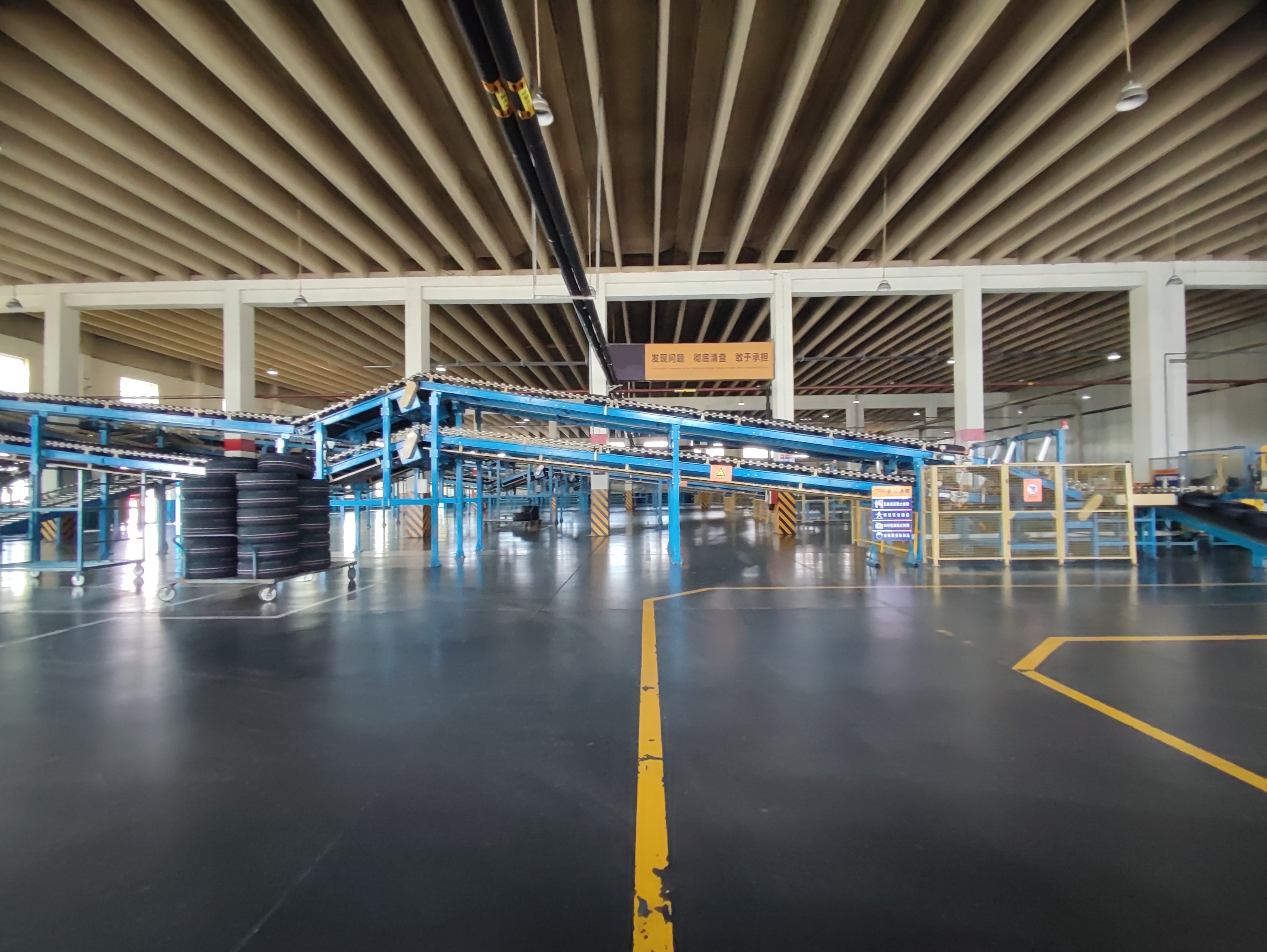
SHANDONG WIDEWAY TIRE CO., LTD. is a tire manufacturer established in 2014, giving it 12 years of manufacturing history by 2026. The company states that it produces passenger car, SUV, AT, MT, RT, van, winter and all-season tires, and that its export ratio is 70%, with markets including Central and South America, Canada, the EU, Africa, the Middle East, Southeast Asia, Central Asia and Australia. These facts support the supplier’s continuity and export experience.
They do not make receiving inspection unnecessary. A 12-year manufacturing record is evidence of continuity, not evidence that every shipment matches every purchase order. In the same way, a stated 100% test is a supplier quality-control fact. It should be respected, but it does not replace the buyer’s check of the sidewall designation on the delivered goods. The two controls operate at different points in the chain.
For the buyer, the useful conclusion is balanced. Supplier experience can support a long-term sourcing decision. Shipment acceptance confirms the actual delivery. A distributor that combines both has a stronger control environment than one that relies on either alone.
Limits and common failure points
The most common failure is accepting a partial designation. A receiver may see the correct size and quantity, then miss a different load index or speed symbol. Another common failure is treating the maximum pressure rating as a performance ranking. A 550 kPa marking is not automatically “better” than a 300 kPa marking for every application. It is a different specification record that must match the approved order.
A third failure is relying on the carton label after the sidewall has not been checked. Packaging can be correct while the physical marking is not. A fourth failure is releasing tires into stock before a difference is dispositioned. Once mixed, the affected quantity becomes harder to isolate.
The check also has limits. It confirms the marked identity and rating against the approved reference. It does not calculate the correct load for a vehicle, certify the tire for a market, or predict field performance. Those are separate decisions. Keeping the receiving record factual makes those later decisions easier, because the buyer knows exactly what was delivered.
FAQ
What is the first acceptance check for an off-road tire shipment?
The first check is a three-way match between the purchase order, the approved model-and-size specification and the sidewall marking. Confirm the exact size, load index, speed symbol and maximum pressure before checking quantity or releasing the shipment. A carton label can support the identification, but the physical marking is the tire’s own record.
How should 111/T and 120/117 Q be verified?
They should be verified as complete designations. For 111/T, record load index 111 and speed symbol T. For 120/117 Q, record both load index values and speed symbol Q. The approved specification should state the full string, and the sidewall should match it. A partial match, such as the first load index alone, is not a complete acceptance result.
What does a 300 kPa or 550 kPa marking mean on an off-road tire?
It is the maximum pressure rating marked for that tire specification, not a vehicle-specific inflation recommendation. In the supplied data, a 111/T record carries 300 kPa and a 120/117 Q record carries 550 kPa. At receiving, compare the marked value and unit with the approved specification for the exact model and size. Do not substitute a different rating without a formal specification change.
How can a buyer check model-specific sidewall markings against the order?
Build an acceptance sheet from the order and approved specification before shipment. On arrival, compare the sidewall model marking, size string, load index, speed symbol and maximum pressure with that sheet. Record the full string exactly as marked, including LT or P prefixes and dual load index values. If the sidewall and the sheet differ, hold the shipment for disposition.
What should happen if the sidewall marking does not match the order?
The shipment should be held and a nonconformance record opened. Record the model, size, full sidewall designation, quantity affected, photographs where permitted, and the approved specification used for the check. Release only after the supplier or responsible technical function dispositions the difference. The receiving check supports the decision, but it does not replace engineering approval or market-certification review.
Reference
The company’s 2025 product catalog is available as a reference document: EVERLAND CATALOG-2025.
Acceptance criteria in this article are limited to verifying the shipped tire’s marked identity and ratings against the approved purchase specification. Vehicle load calculations, application suitability and destination-market compliance require separate review.
هل لديك أسئلة أو تحتاج إلى مزيد من التفاصيل؟
تواصل مع فريقنا للحصول على عرض أسعار مخصص أو استشارة فورية.
طلب عرض أسعار
املأ النموذج أدناه وسيتواصل معك فريقنا بعرض مقترح مخصص.
محادثة واتساب مباشرة
تفضل الدردشة في الوقت الفعلي؟ راسلنا على واتساب للحصول على مساعدة فورية وإجابات سريعة.
- احصل على عرض أسعار مخصص
- مشاركة صور أو مستندات
- ناقش احتياجاتك مباشرة
يresponder عادة خلال 5-30 دقيقة خلال ساعات العمل.