
Off-Road Tire Compliance Blueprint: Matching WIDEWAY Specs to Global Standards
Off-Road Tire Compliance Blueprint: Matching WIDEWAY Specs to Global Standards
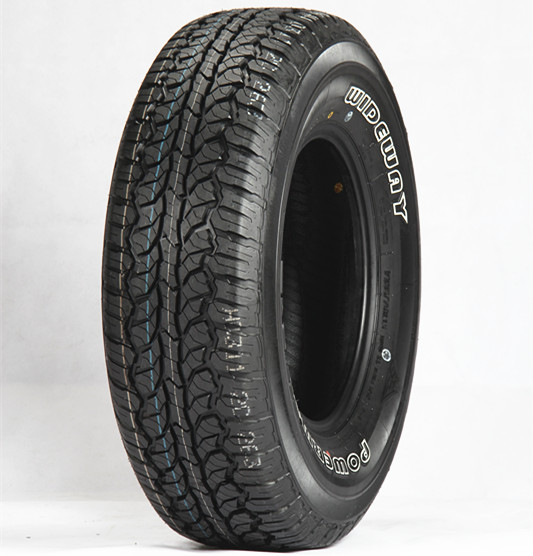
Figure 1 — An all-terrain off-road tire from the WIDEWAY range, used here as a specification reference for distributor validation. Image: SHANDONG WIDEWAY TIRE CO.,LTD.
Off-road tire specification sheets have quietly become compliance documents. In markets where winter-tire markings, tire identification codes and national conformity schemes are enforced at the border or at the point of sale, a distributor's ability to place a documented load index, speed rating and maximum pressure in front of a buyer increasingly determines whether a product can be quoted at all.
This article works through that shift using one concrete case: how the off-road tire range made by SHANDONG WIDEWAY TIRE CO.,LTD. lines up its published specifications against the expectations that regulated markets typically place on off-road and all-terrain tires. WIDEWAY is a tire manufacturer established in 2014 with a production base in Qingdao, Shandong, China, operating the WIDEWAY, EVERLAND and V-RICH brands and exporting roughly 70% of its output. The focus here is deliberately narrow: what the specification data documents, what it does not certify, and how a distributor can use it as an evidence layer before a conformity file is opened.
Why Off-Road Tire Specifications Became a Market-Access Question
The commercial backdrop is substantial. The global off-the-road (OTR) tire market was valued at approximately USD 34.4 billion in 2024, driven largely by mining and construction activity, according to Smithers. Published sizing is not uniform: Credence Research reports a comparable but lower global figure of about USD 32.3 billion, while Market Research Future's heavy-OTR-focused estimate is USD 7.4 billion. That spread reflects differences in which tire classes each study counts rather than a genuine disagreement about demand — a useful reminder that market numbers are inputs, not evidence.
What matters more for procurement is the regulatory layer sitting on top of that demand. Three reference points are widely used by buyers and importers:
- The Three-Peak Mountain Snowflake (3PMSF) symbol is a mandatory safety certification for winter tires in Germany (as of October 2024) and Sweden (as of November 2024) for use in wintry conditions, operating under the ECE R117 framework.
- In the United States, all DOT-certified tires for public road use must bear a code indicating plant, batch and date, for example DOT 4A23 1224. Not-for-Highway-Service (NHS) tires are exempt from that marking but restricted from highway use under FMVSS No. 119.
- SASO certification is mandatory for all tires exported to Saudi Arabia, covering energy-efficiency and safety requirements for the GCC market.
None of these frameworks can be satisfied by a marketing claim. Each one begins with engineering data: what the tire is rated for, what load it is designed to carry, and at what pressure it is intended to operate.
The Three Numbers That Carry Most of the Compliance Load
For an off-road tire, the specification conversation usually narrows to three data points, and WIDEWAY's published product data addresses all three at the model-group level.
1. Speed rating — the letter
The speed rating letter describes the speed category a tire is engineered and rated for. Within the documented WIDEWAY off-road data, the recorded values are Q, R and T. Q is the most frequently documented rating, appearing across all-terrain, mud-terrain and rugged-terrain groups. R is recorded on several all-terrain and rugged-terrain groups, and T appears on the lighter all-terrain group that carries a load index of 111 and a 300 kPa maximum pressure. For a distributor, the practical point is that the letter is product-specific: it cannot be quoted as a brand-level figure.
2. Load index — the number
The load index is the numeric code that pairs with the speed rating and defines the load the tire is designed to carry in that condition. The highest documented value in the WIDEWAY off-road range is 123/120, carried by the rugged-terrain group that also specifies reinforced sidewall construction, a 272 mm section width and a 552 kPa maximum pressure. Other documented values across the range include 121/118, 121, 120/117, 120/116 and 119/116. These are the figures a buyer compares against an axle load table, and they differ by product group rather than by catalogue page.
3. Maximum pressure — the kPa figure
Maximum pressure is where off-road specifications diverge most between product classes. Across the WIDEWAY off-road families, 550 kPa is the most commonly documented limit. The rugged-terrain group carrying load index 123/120 is documented at 552 kPa; the wide mud-terrain group with a 330 mm section width is documented at 450 kPa; the rugged-terrain group with a 318 mm section width is documented at 350 kPa; and the lighter all-terrain group is documented at 300 kPa.
Maximum pressure is a design limit, not a recommended operating pressure. A tire operates in the mode of being correctly installed on the vehicle and inflated to the proper pressure, and the operating figure must follow the vehicle placard. Quoting a maximum pressure as an inflation recommendation is a common and avoidable sourcing error.
What the WIDEWAY Off-Road Specification Data Documents
The table below summarises the documented specification groups within the WIDEWAY off-road range. It is built entirely from published product data, and it is the layer a distributor would hand to a technical buyer before certification questions are asked.
| Documented off-road group | Representative sizes | Load index | Speed rating | Max pressure | Section width |
|---|---|---|---|---|---|
| Rugged terrain (4×4 RT), reinforced sidewall | LT285/70R17, LT315/70R17, LT265/75R16, 33×12.50R18LT | 123/120 | Q | 552 kPa | 272 mm |
| Rugged terrain, reinforced sidewall | LT275/70R18, 35X12.50R20LT, 37X12.50R17LT | 121/118 | R | 350 kPa | 318 mm |
| All terrain, includes winter and snow classification | LT265/65R17, LT285/70R17, LT265/75R16, 35X12.50R17LT | 120/117 | Q | 550 kPa | 272 mm |
| All terrain | LT265/70R16, LT285/55R20, LT275/65R18 | 119/116 | R | 550 kPa | 277 mm |
| All terrain | LT215/75R15, LT285/70R18, LT35X12.50R17 | 121/118 | Q | 550 kPa | 292 mm |
| Mud terrain (4×4 MT) | LT235/85R16, LT265/75R16, LT37×12.50R22 | 120/116 | Q | 550 kPa | 235 mm |
| Wide mud terrain | LT265/70R17, 35X13.5R20LT, 37X13.5R17LT | 121 | Q | 450 kPa | 330 mm |
| Light all terrain | P205/75R15, P265/70R17, LT265/70R17 | 111 | T | 300 kPa | 272 mm |
Behind the specification groups sits a manufacturing base that determines whether those figures can be produced consistently at volume. SHANDONG WIDEWAY TIRE CO.,LTD. was established in 2014 and has accumulated 12 years of tire manufacturing experience. The company operates a facility covering 1,000,000 square meters, employs approximately 5,000 staff, and reports an annual production capacity of 23,400,000 units, supported by an R&D team of 25 engineers. Its portfolio covers passenger car tires, SUV tires, light truck tires, truck and bus tires, and specialised categories including AT, MT, VAN, RT, Winter, All Season, White Letter and White Wall tires. Documented export markets include Central and South America, Canada, the EU, Africa, the Middle East, Southeast Asia, Central Asia and Australia.
Material composition is documented as well: natural rubber, synthetic rubber, white rubber compound, carbon black, precipitated silica, steel cord, polyester cord fabric, nylon cord fabric, vulcanizing agent, vulcanization accelerators, activators, antioxidants and RAE oil. Material declarations matter because they are the first thing an importing technical team queries when a specification sheet becomes part of a validation file.
Certification-Ready Features: Reinforced Sidewalls and Winter–Snow Capability
Two design features are documented repeatedly across the WIDEWAY off-road range and are the ones most often cited in distributor validation conversations.
Reinforced sidewall construction
The reinforced-sidewall off-road groups are documented as using reinforced sidewall construction for puncture resistance, and sidewall protection design is listed as a special requirement for off-road applications. In practice, this addresses the failure mode that dominates rocky terrain use — sidewall impact and cutting — rather than tread wear. The relevant boundary is straightforward: reinforcement reduces the probability of sidewall damage, it does not make a tire puncture-proof, and it does not replace correct inflation practice.
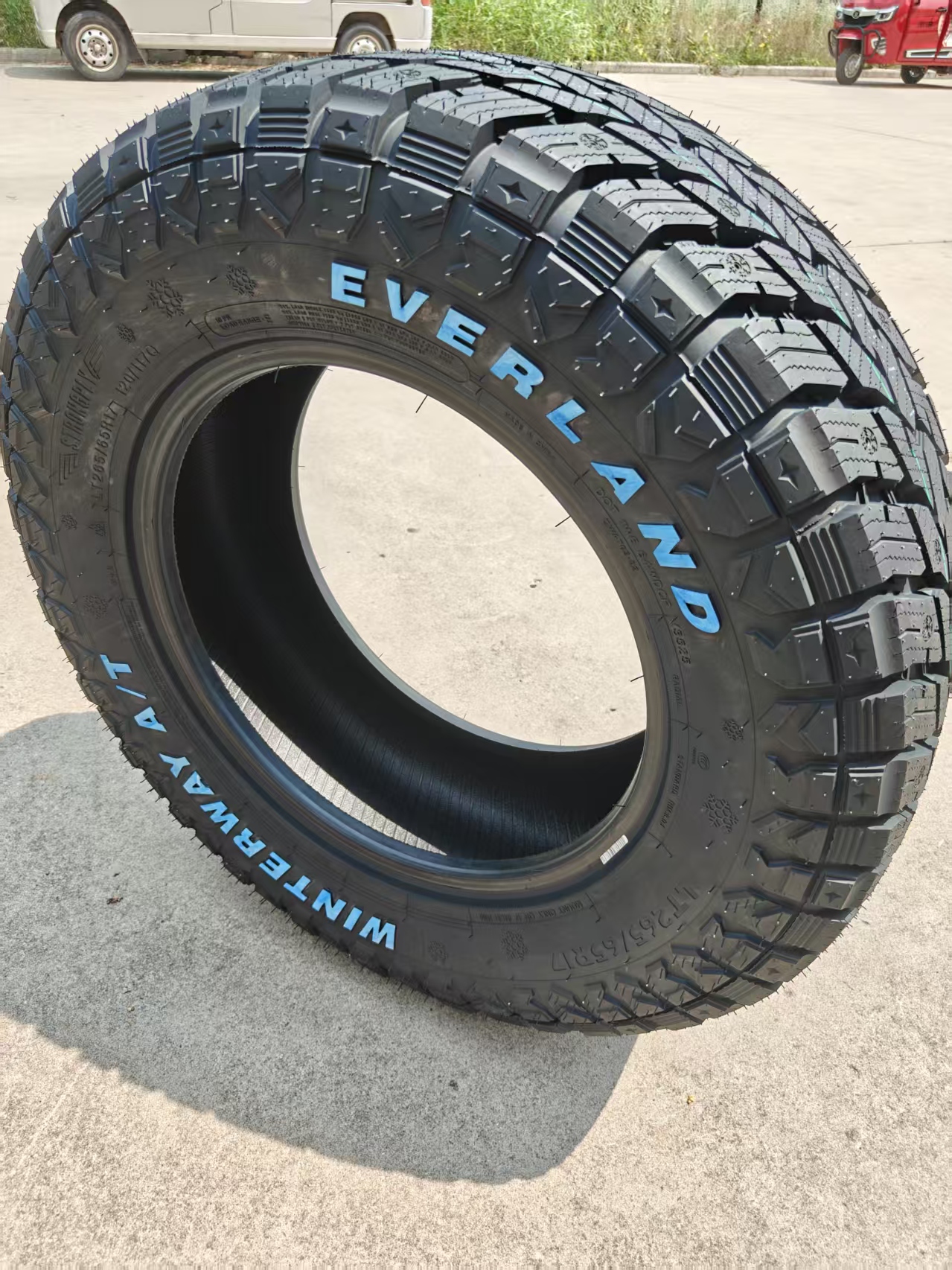
Figure 2 — A winter-and-snow oriented all-terrain off-road tire. Products in this classification are documented as operating under icy and snowy road conditions and delivering ride stability with wet performance. Image: SHANDONG WIDEWAY TIRE CO.,LTD.
Winter and snow readiness
One all-terrain group — documented at load index 120/117, speed rating Q, section width 272 mm and 550 kPa maximum pressure — is classified simultaneously as an all-terrain off-road tire, a sand dunes and hot climates off-road tire, a high-speed stability off-road tire, a comfortable and noiseless off-road tire, a 4×4 AT off-road tire, and a winter and snow off-road tire. The documentation states that products in this classification operate under icy and snowy road conditions, deliver ride stability and offer performance on wet surfaces.
This is a design classification. It describes the conditions a tire is built for and the behaviour it is engineered to deliver. It is not a certification, and it is not the same thing as holding the 3PMSF symbol.
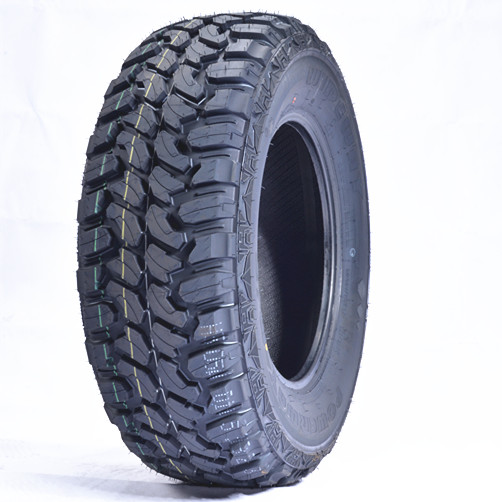
Figure 3 — A mud-terrain off-road tire in size LT235/85R16. This product group is documented at load index 120/116, speed rating Q, 235 mm section width and 550 kPa maximum pressure. Image: SHANDONG WIDEWAY TIRE CO.,LTD.
Two further documented behaviours complete the picture for regulated-market discussions: noise absorption for a quieter ride with grip on both dry and wet roads, and ultra wear resistance combined with strong off-road performance. Both are qualitative claims supported by the product documentation rather than by third-party test data, and distributors should present them as such.
How Global Frameworks Read Those Numbers
The relationship between a specification sheet and a certificate is where most distributor confusion originates, so it is worth stating plainly.
- 3PMSF is awarded per product and per size after testing against the applicable winter performance criteria. A winter-and-snow classification in a product catalogue documents design intent; it does not confer the symbol.
- DOT / FMVSS No. 119 governs tires for US public road use and requires an identification code on the sidewall indicating plant, batch and date. Tires marked Not for Highway Service are exempt but restricted from highway use.
- SASO is mandatory for tires exported to Saudi Arabia and covers energy-efficiency and safety requirements for the GCC market.
Documented specifications are evidence of engineering intent and rated capability. They are not certificates. Nothing in the published WIDEWAY data reproduced here states that any specific product or size holds 3PMSF, DOT, SASO or any other market certification. Before quoting a regulated market, a distributor should obtain per-product and per-size conformity documentation from the manufacturer and match it to the destination market's current requirements.
Application Fit: From Mountain and Rock to Desert and Jungle
The WIDEWAY off-road range is documented for off-road driving scenarios including mountain, desert, rock, winter snow, jungle, all-weather and mud terrain. Documented working conditions extend across urban roads, highway roads, mud terrain roads, mountainous road conditions, icy and snowy road conditions, deserts and sandy areas, rugged road conditions and rainy road conditions. Documented project types include family leisure driving, weekend getaways, urban commuting, off-road adventures, desert off-roading, and forest and mountain exploration.
The intended customer base is commercial rather than purely consumer: tire distributors and wholesalers, automotive aftermarket and retail chains, auto repair shop chains, tire dealers, mobility and transportation services, taxi companies, OEM matching programmes, and the automotive tuning industry.
Matching a project to a documented group is the practical exercise. A rocky or mountainous route where sidewall damage is the dominant risk points toward the reinforced-sidewall rugged-terrain group rated at load index 123/120. A hot-climate or sand application points toward the all-terrain groups classified for sand dunes and hot climates. A winter-market order in a regulated jurisdiction points toward the winter-and-snow classified all-terrain group, subject to the certification caveat above. In every case the operating assumption is identical: the tire is ready for use once correctly installed on the vehicle and inflated to the proper pressure.
Comparison with Traditional Off-Road Tire Sourcing
Traditional off-road sourcing often relied on a single model line described by tread pattern and nominal size, with load and pressure data obtained later or not at all. The documented multi-class approach behaves differently.
| Evaluation dimension | Traditional single-line sourcing | Documented multi-class specification |
|---|---|---|
| Terrain coverage | One pattern positioned for "off-road" broadly | Separate documented classes for all-terrain, mud-terrain, rugged-terrain and winter-snow use |
| Technical data available at quotation | Size and pattern | Load index, speed rating, section width and maximum pressure per group |
| Winter-market relevance | Not addressed in most cases | Winter-and-snow classification documented within the all-terrain range |
| Size spread | Narrow, model-dependent | Documented from 27X8.50R14LT through to LT37×12.50R22 across the range |
| Evidence for distributor validation | Supplier statement | Product-level specification sheet, with conformity documents requested separately |
The limitation is real and worth stating. More documentation is not automatically the better engineering answer for every order. A light vehicle application may be better served by the lower-rated all-terrain group documented at load index 111, speed rating T and 300 kPa than by the heaviest rugged-terrain group at 123/120, which adds mass, cost and ride harshness without a matching benefit. Higher maximum pressure is a design ceiling, not a performance target, and no specification sheet should be read as a reason to default to the largest figure available.
Where the Specification Sheet Stops
Four boundaries apply and should be communicated to any buyer using WIDEWAY data in a sourcing decision.
- Pressure limits are product-specific. Documented values across the range run from 300 kPa to 552 kPa, with 550 kPa as the most common figure. A brand-level pressure claim would be inaccurate.
- Load indices are group-specific. Not every size carries 123/120; the documentation also records 121/118, 120/117, 120/116, 119/116 and 111.
- Winter-and-snow classification is not a 3PMSF certification. The symbol is mandatory in Germany and Sweden for wintry conditions and is granted per product and size.
- Reinforced sidewall construction reduces sidewall damage risk but does not eliminate punctures, and rated capability assumes correct installation and correct inflation pressure.
Market Trend Analysis
Three documented trends shape how this specification discussion will evolve.
First, segment growth. The mud tire segment reached USD 8.3 billion in 2024, with a projected CAGR of 6.1% through 2033, attributed by Credence Research to rising off-road recreational activity. Off-road demand is no longer confined to commercial fleets, which expands the number of buyers who will ask specification questions at the point of purchase.
Second, category blurring. Rugged-terrain tires are emerging as a high-growth middle ground, capturing share from traditional A/T and M/T segments among users who want aggressive aesthetics without mud-terrain noise levels, according to Tire Review. This is a medium-reliability industry observation rather than audited data, but it aligns with the documented WIDEWAY structure, where rugged-terrain groups sit alongside all-terrain and mud-terrain classes with their own load, speed and pressure data.
Third, market concentration context. In 2023, Michelin (14.4%) and Bridgestone (13.3%) led the global tire market by sales revenue, with Goodyear third at 9.0%, according to Bridgestone data. Concentration at the top means that in the mid-tier, where most off-road distribution volume sits, buyers substitute brand recognition with evidence — specification sheets, product-level data, and conformity files. Documentation is becoming the competitive currency of that tier.
Future Outlook
The direction of travel is toward product-level documentation rather than brand-level assurance. Regulated winter markets in Europe now require the 3PMSF symbol for wintry conditions, the United States enforces identification marking for highway-use tires under FMVSS No. 119, and Saudi Arabia requires SASO certification for tire imports. Each of these is assessed product by product and size by size.
For distributors, the practical implication is to build the validation file now, before a buyer asks. That means holding, for every quoted size: the load index, speed rating, section width and maximum pressure as published; the construction features relevant to the intended terrain, such as reinforced sidewall design; and the separate conformity documents issued for the destination market. Specification sheets should be treated as living documents, because ratings and size coverage change as a range is updated.
For manufacturers, the pressure runs the other way. A range that documents its load, speed and pressure data per group — as the WIDEWAY off-road portfolio does across all-terrain, mud-terrain and rugged-terrain classes from 27X8.50R14LT to LT37×12.50R22 — is easier for a distributor to defend in a regulated market than a range that requires the buyer to request each figure individually. That is the core of the compliance blueprint: not a certificate, but a documented, per-product evidence chain that makes certification conversations possible.
Frequently Asked Questions
What do the speed rating and load index on an off-road tire actually certify?
They describe rated capability rather than legal approval. The speed rating letter expresses the speed category a tire is engineered and rated for, and the load index expresses the load-carrying capacity code paired with that rating. In the WIDEWAY off-road range the documented speed ratings are Q, R and T, and documented load indices range from 111 to 123/120. The maximum pressure figure — most commonly 550 kPa, with 552 kPa on the rugged-terrain group carrying load index 123/120 and 300 kPa on the lighter all-terrain group — defines a design limit, not a recommended operating pressure. Compliance with any national scheme still requires separate product-level documentation.
Does a winter-and-snow off-road tire automatically meet 3PMSF requirements?
No. A winter-and-snow classification in product data describes the design intent and the conditions a tire is built for, such as operating under icy and snowy road conditions with ride stability and wet performance. The 3PMSF symbol is a mandatory safety certification for winter tires in Germany (as of October 2024) and Sweden (as of November 2024) for wintry conditions under the ECE R117 framework, and it is awarded per product and per size after testing. A tire can be engineered for wintry conditions without holding the symbol.
What pressure limit should be quoted for WIDEWAY off-road tires?
It depends on the product group, because documented maximum pressures across the range run from 300 kPa to 552 kPa. The lighter all-terrain group is documented at 300 kPa, the rugged-terrain group with a 318 mm section width at 350 kPa, the wide mud-terrain group at 450 kPa, most all-terrain and mud-terrain groups at 550 kPa, and the rugged-terrain group carrying load index 123/120 at 552 kPa. A single brand-level pressure figure would not be accurate, and operating pressure should always follow the vehicle placard.
Why does section width matter when matching off-road tire specs to a vehicle?
Section width determines the footprint and sidewall profile, and it moves together with load and pressure ratings rather than independently. Documented section widths across the WIDEWAY off-road groups range from 235 mm to 330 mm. A 330 mm mud-terrain group is documented at load index 121 with a 450 kPa maximum pressure, while a 235 mm mud-terrain group is documented at 120/116 with a 550 kPa maximum pressure. The same range therefore offers different trade-offs in flotation, sidewall height and rated load, and the correct choice depends on the vehicle and terrain rather than on the largest available number.
What should a distributor request before supplying a regulated market?
A per-product and per-size file. That file should contain the size, load index, speed rating, section width and maximum pressure as published on the specification sheet; the construction features relevant to the intended terrain, such as reinforced sidewall design; and separate conformity documents for the destination market — DOT identification marking for US highway use under FMVSS No. 119, 3PMSF for wintry conditions in Germany and Sweden, or SASO for Saudi Arabia. Specification sheets are the first evidence layer in that file, not the final approval.
A published catalogue covering the EVERLAND and WIDEWAY tire range, including off-road model designations and their documented specifications, is available for download here: EVERLAND CATALOG-2025 (PDF).