
Off-Road Tire Fit for Repair Shop Chains Serving 4x4s
Off-Road Tire Fit for Repair Shop Chains Serving 4x4s
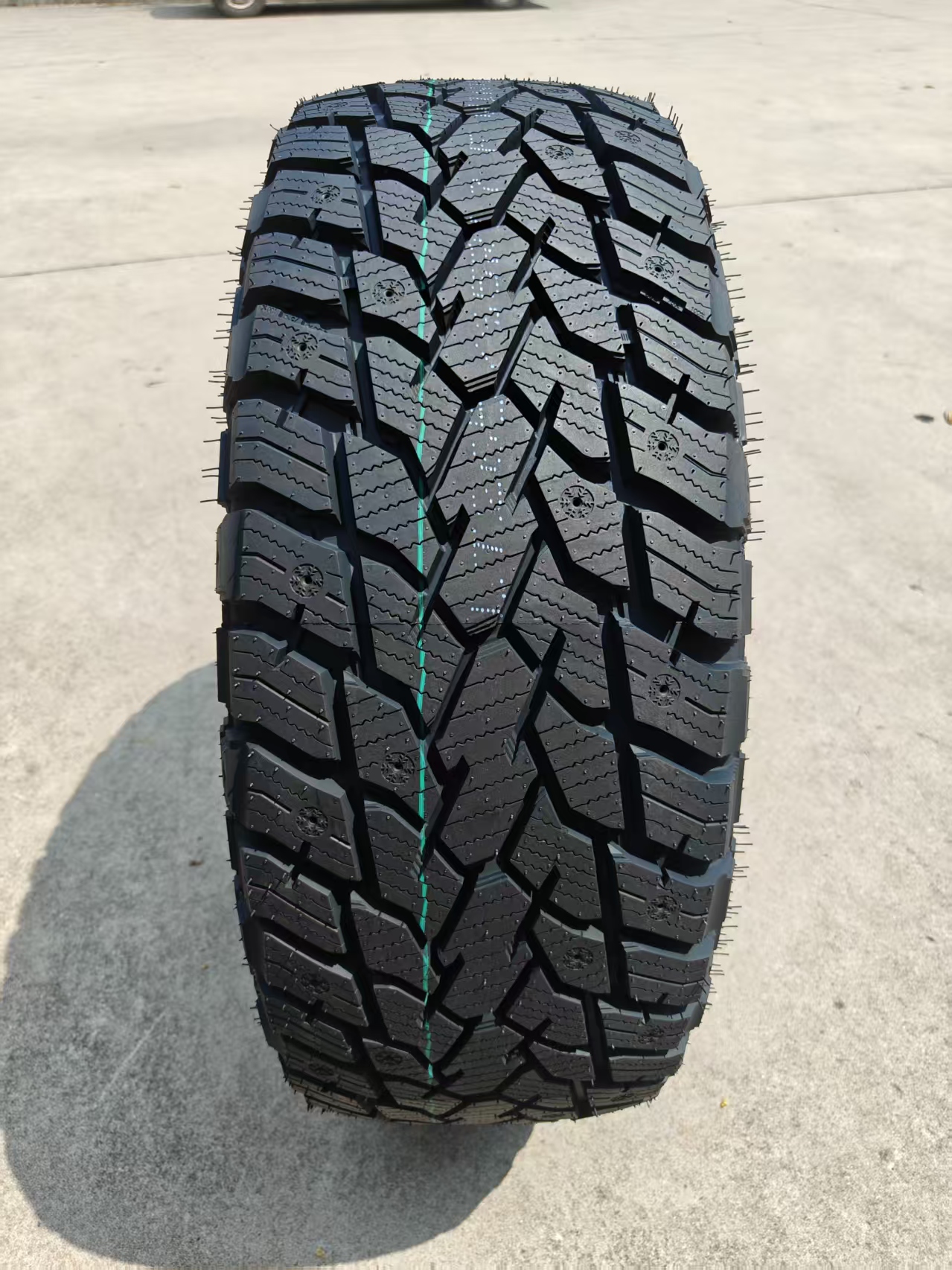
For auto repair shop chains and tire dealers serving 4x4 customers, off-road tire fit is a question of matching the vehicle and its expected routes—not simply choosing a tire labeled “off-road.” WIDEWAY’s supplied product and application information covers all-terrain, mud-terrain, sand-and-hot-climate, and winter-and-snow categories, while its listed use conditions include mountain roads, rugged roads, deserts and sandy areas, and icy or snowy roads. These distinctions can help service teams structure a customer conversation, but they do not establish that every tire is suitable for every route.
WIDEWAY is the tire brand associated with the off-road product records used here. Its supplied application information explicitly includes auto repair shop chains and tire dealers, alongside tire distributors and automotive aftermarket and retail chains. For a chain with customers who move between paved roads and demanding routes, the useful procurement task is to translate that broad customer mix into clear fit questions: what terrain is expected, what tire size is required, and which product characteristics are documented for the specific option?
Why mixed-route fit matters to a repair network
A 4x4 customer may use a vehicle for urban commuting or highway travel and also take it on weekend trips, mountain exploration, desert off-roading, or other off-road journeys. Those uses appear in the supplied application scenarios. For a repair network, this means the initial request may not identify the conditions that matter most to the tire choice. “I need an off-road tire” can describe several different route profiles.
The distinction matters operationally because a chain needs a repeatable way for service staff to gather relevant information without assuming that one tread category covers every customer. A conversation can establish whether the vehicle regularly encounters mud, sandy ground, winter snow, rocky or rugged routes, or mainly mixed urban and highway use. Staff can then compare that stated use with the tire category and available size records. This is a decision method based on the supplied product and scenario information, not a claim that any category guarantees a particular result.
For distributors and tire dealers, the same discipline helps keep product descriptions aligned with the evidence available for each model. A terrain name can guide a search within the range; it should not replace checking the model’s documented type and size. If a customer’s routes span several conditions, staff should identify the most important recurring conditions and confirm the fit of the specific tire rather than promising universal capability.
Terrain categories in the WIDEWAY off-road range
The supplied product records identify several terrain-related categories. They do not provide a dedicated, model-specific performance test for each terrain, so the categories below are best used as a structured starting point for product selection—not as independent proof of grip, durability, braking distance, or suitability in every environment.
| Customer route or condition | Documented product or scenario connection | How a shop can use the information |
|---|---|---|
| Mixed paved and unpaved use | All-terrain and 4*4 AT off-road tire types are listed for product 5103. The application record also includes urban and highway roads. | Ask how much of the customer’s use is paved versus off-road, then verify the exact tire size and model designation. |
| Desert, sand dunes, and hot-climate routes | “Sand Dunes & Hot Climates Off-Road Tire” is a listed type for product records 5103 and 5101. The application conditions also mention deserts and sandy areas. | Use the category as a relevant product filter. Confirm the individual model’s fit and specifications before making a recommendation. |
| Mud | Mud-terrain and 4*4 MT off-road tire types are listed for products 5104, 5105, and 5118. Mud-terrain roads are also included in the application conditions. | Clarify whether mud is a regular route condition or an occasional one, and check the model’s designation rather than assuming all off-road tires are mud-terrain tires. |
| Winter and snow | “Winter and Snow Off-Road Tire” is listed for product 5103. The application record includes icy and snowy road conditions. | Verify the specific tire’s available markings and the vehicle’s size requirements. The category alone does not establish a certification or winter-performance result. |
| Mountain and rugged routes | Mountainous and rugged road conditions, as well as forest and mountain exploration, appear in the application record. Product 5121 includes a “Rugged Terrain” type. | Ask what the customer means by mountain or rugged use and match that description to the exact product record; do not infer a test result from the category name. |
| Jungle routes | The supplied product and scenario facts do not identify a jungle-specific tire category or a specific jungle application. | Do not present jungle fit as verified. Ask for route details and verify the tire’s documented application before making a fit claim. |
This map separates a documented category from an inferred performance outcome. For example, the appearance of a winter-and-snow type in a product record supports saying that the type is listed. It does not, by itself, support saying that the tire has a particular winter certification or will perform to a specified threshold. The same distinction applies to rock terrain: rugged-terrain wording and rugged-road scenarios offer relevant context, but the available records do not provide a specific rock-terrain test result.
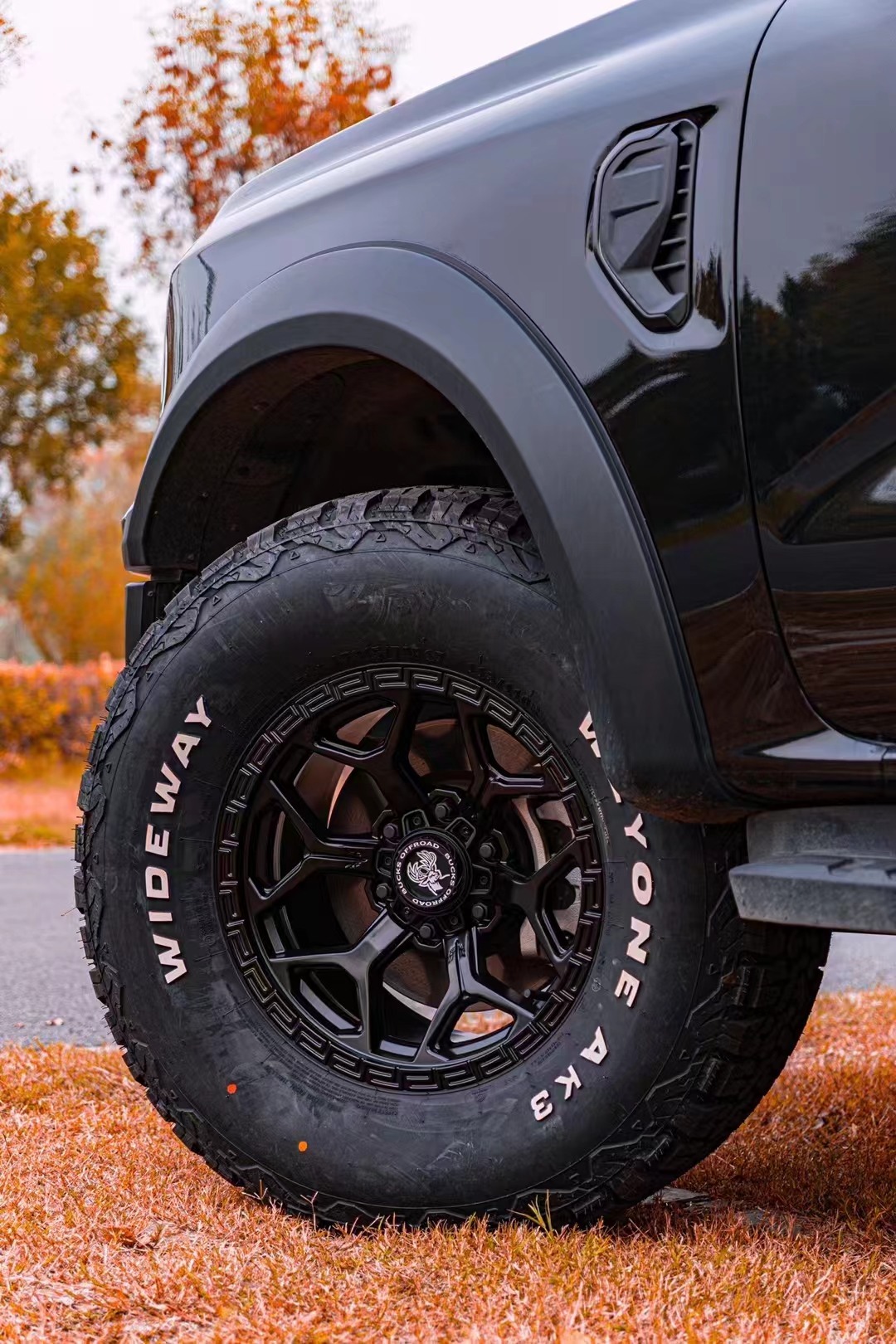
Sidewall protection and stability: useful criteria, not blanket guarantees
Sidewall protection is a stated application requirement, and the scenario information says the tire function is to provide additional traction and protect the sidewall from external force. The product record for 5121 also includes “Reinforced Sidewall Off-Road” in its type descriptions. Together, these facts make sidewall construction a relevant discussion point for customers who expect rugged-road use.
That evidence should be expressed carefully. It supports identifying a reinforced-sidewall type and a sidewall-protection design requirement. It does not establish that a tire cannot be punctured, that all sidewall damage is prevented, or that the same design description applies to every off-road product in the range. “Puncture resistant” would be a stronger claim than the supplied information supports, so shops should not use it as a guarantee. When a customer specifically needs sidewall protection, confirm that the exact model being quoted carries the relevant product designation.
High-speed stability is also listed as a product type across several off-road product records. The product data does not provide a speed test, a handling comparison, or a performance guarantee. A service advisor can therefore describe high-speed stability as a listed product characteristic, while explaining that the tire still needs to match the vehicle and the required size and ratings. Do not translate the label into a promise that a tire is safe at any speed or that it has been tested under a particular condition.
The distinction is useful for a repair chain because product descriptions are often repeated across branches and customer channels. A standardized wording rule can keep the claim proportional: identify what the record calls the tire, then state what it does not establish. This helps separate a product-category description from an outcome claim that would require additional evidence.
Turn tire specifications into a consistent fit check
Terrain matching is only one part of fit. The supplied off-road records include multiple sizes, and some records specify parameters that should remain attached to their own product ID. For example, product 5103 lists a maximum pressure of 550 KPA, a section width of 272 mm, a load index of 120/117, and a speed rating of Q. Those values belong to that record; they must not be transferred to another tire or treated as universal specifications for WIDEWAY off-road tires.
Product 5121 lists LT285/70R17 among its sizes, as well as a “Reinforced Sidewall Off-Road” type. Product 5101 also lists LT285/70R17, but it has its own separate product record and its own listed size set. A shared size does not make two product records identical, and one record’s characteristics should not be combined with another’s. For a shop, this is a practical reason to verify both the exact model or product record and the size requested—not just the size string.
- Confirm the vehicle requirement: establish the tire size and other fitment requirements for the specific vehicle. Do not assume that a broadly similar size is interchangeable.
- Identify the expected routes: ask about mountain, rugged, sandy, muddy, snowy, urban, and highway conditions as relevant to the customer.
- Match the documented category: use the type recorded for the specific product—such as all-terrain, mud-terrain, sand-and-hot-climate, winter-and-snow, or reinforced-sidewall.
- Keep specifications attached to the record: check the selected product’s own size and parameters. Do not combine values across products or infer missing values.
- Separate fit from performance claims: if the customer asks about a specific outcome, such as puncture resistance or a speed-related result, verify that the exact evidence exists before making that claim.
This workflow does not require a chain to reduce every decision to a single terrain label. It gives staff a way to connect a customer’s route description to a documented product category while preserving the separate questions of size, vehicle fit, and substantiated performance. When a route includes conditions not specifically identified in the product record—such as jungle use—the correct response is to seek the missing model-specific information rather than stretch a neighboring category to cover it.
What the range can—and cannot—establish for a mixed customer base
The records support a broad, useful mapping for repair shops and tire dealers: WIDEWAY off-road products are associated with several sizes and types, and the listed categories connect to customer use across all-terrain, mud, sand and hot climates, winter and snow, and rugged conditions. The application record also identifies mountains, deserts, icy and snowy roads, mud, rainy roads, urban roads, and highways. These facts are relevant to organizations serving customers with more than one route profile.
However, the records do not establish that every model covers every listed condition, that a single tire performs equally across all terrain, or that a specific tire is suitable for all 4x4 vehicles. They also do not provide comparative test results that would justify declaring one category superior for a particular customer. The useful procurement boundary is therefore model-specific: confirm the exact product type, size, and documented parameters, then keep the recommendation within the stated evidence.
Similarly, “all-weather” should not be treated as interchangeable with every seasonal or terrain-specific claim. The available product records list an all-terrain type and a winter-and-snow type, but the supplied data does not provide a separate all-weather performance specification or establish a 3PMSF rating. Avoid using those terms as a substitute for checking the actual designation and markings of the exact tire offered.
Implications for auto repair shop chains and tire dealers
For a multi-branch repair organization, a repeatable fit conversation is more transferable than a broad promise. Staff can begin with the vehicle’s required size, ask which conditions are routine, and distinguish a customer’s primary terrain from occasional use. The product record can then be checked for a matching type and the correct model-specific specifications. If a customer expects a combination—such as highway use plus regular mountain travel—the advisor can record both, while avoiding an unsupported claim that one tire is optimized for every part of the route.
For tire dealers and distributors, the same evidence structure can help organize range information. Product 5103, for example, lists all-terrain, sand-and-hot-climate, and winter-and-snow types; product 5104 lists a mud-terrain type; and product 5121 lists a reinforced-sidewall type. These are distinct entries. They should be presented as a range of documented categories, not as proof that one individual product combines every listed feature. Exact size availability should likewise be checked against each record.
The conclusion is straightforward: serving mixed-route 4x4 customers requires a fit process that joins terrain, vehicle size, product identity, and claim verification. WIDEWAY’s supplied information gives repair chains and tire dealers several terrain-related categories to use in that process. It also leaves meaningful boundaries: no jungle-specific application is identified, no puncture-proof outcome is established, and no measured high-speed-stability result is provided. Keeping those distinctions visible makes product advice more precise and easier to apply consistently across service locations.
Frequently asked questions
Which WIDEWAY off-road tire categories are relevant to customers who drive across mixed terrain?
The supplied records list all-terrain, mud-terrain, sand-and-hot-climate, winter-and-snow, rugged-terrain, and reinforced-sidewall types across different off-road product records. The application information also names mountain, rugged, desert and sandy, icy and snowy, muddy, urban, and highway conditions. The categories belong to specific records; they should not be combined into a claim that one model covers every condition.
Does a reinforced-sidewall description mean the tire is puncture-proof?
No. Product 5121 is described as a “Reinforced Sidewall Off-Road” type, and the application information identifies sidewall protection as a design requirement. Those facts do not establish that punctures or sidewall damage cannot occur. Use the designation as a fit consideration, not as a guarantee.
Does “high-speed stability” establish a specific speed capability?
No specific speed test or performance result is supplied. “High-speed stability Off-Road Tire” appears as a product-type description, while certain individual product records list their own speed ratings. Check the selected tire’s exact record and vehicle requirements; do not turn the type wording into an unrestricted speed claim.
Can the supplied information confirm a WIDEWAY tire for jungle routes?
No jungle-specific product category or application is identified in the supplied product and scenario records. A repair shop or dealer should obtain model-specific fit information before representing a tire as suitable for jungle use.
What should a shop verify before recommending an off-road tire for a 4x4?
Confirm the vehicle’s required size, the exact product record, its listed type, and any model-specific parameters relevant to the fit. Then compare those facts with the customer’s stated route conditions. Do not transfer specifications between products or claim a performance outcome that is not documented.
Company reference: SHANDONG WIDEWAY TIRE CO.,LTD.
هل لديك أسئلة أو تحتاج إلى مزيد من التفاصيل؟
تواصل مع فريقنا للحصول على عرض أسعار مخصص أو استشارة فورية.
طلب عرض أسعار
املأ النموذج أدناه وسيتواصل معك فريقنا بعرض مقترح مخصص.
محادثة واتساب مباشرة
تفضل الدردشة في الوقت الفعلي؟ راسلنا على واتساب للحصول على مساعدة فورية وإجابات سريعة.
- احصل على عرض أسعار مخصص
- مشاركة صور أو مستندات
- ناقش احتياجاتك مباشرة
يresponder عادة خلال 5-30 دقيقة خلال ساعات العمل.