
Off-Road Tire Technical & Procurement FAQ: Sizes, Materials, Load Index, and Acceptance Criteria
Off-Road Tire Technical & Procurement FAQ: Sizes, Materials, Load Index, and Acceptance Criteria
Off-road tire procurement often fails at the specification line, not at the brand discussion. A distributor may receive a quotation for an off-road tire without a confirmed model string, load index, speed symbol, maximum pressure, material declaration or acceptance file. That is enough ambiguity to create wrong-fit orders, customs questions and after-sales disputes.
This FAQ answers the technical and procurement questions that appear most often in first-pass screening: how to read LT235/75R15, 31*10.50R15LT and LT285/70R17; what the listed materials mean; how load index 120/117 or 121/118 should be treated; and how to write acceptance criteria. It also isolates the rock-terrain question, using the documented RT and reinforced-sidewall classifications in the WIDEWAY off-road tire range.
SHANDONG WIDEWAY TIRE CO.,LTD. is a tire manufacturer established in 2014 in China, with a factory covering 1,000,000 square meters, approximately 5,000 employees and annual production capacity of 23,400,000 units. The company supplies radial tires under the WIDEWAY, EVERLAND and V-RICH brands, and its stated export share is 70% of total sales.
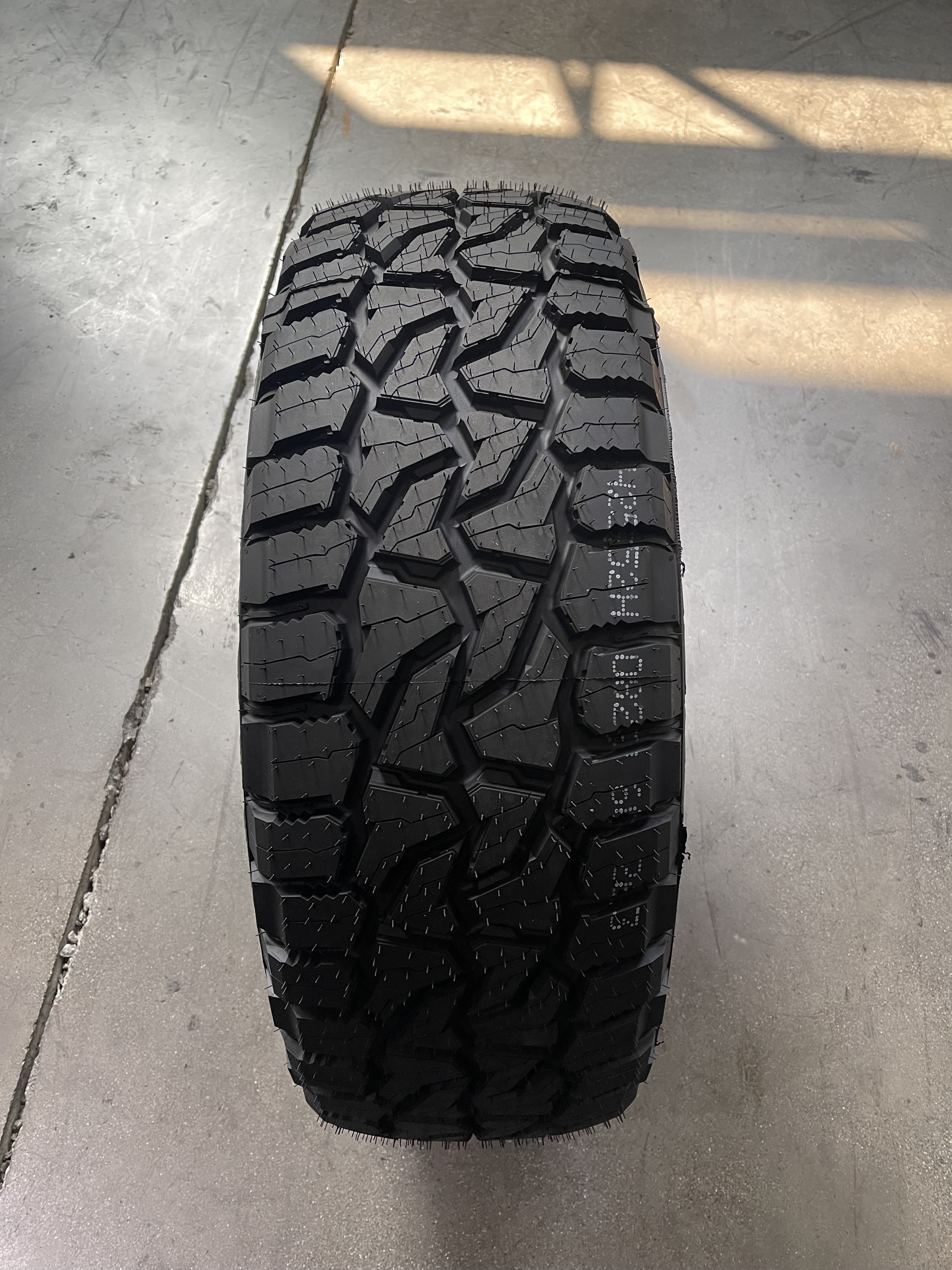
What do AT, MT, RT, 4x4 AT and 4x4 MT mean in this catalogue?
The catalogue uses several overlapping labels. They describe product families and intended use patterns, not a single global grading system.
- All Terrain and 4x4 AT appear on product groups intended for mixed on-road and off-road use. The supplied data also classifies several of these groups as sand dunes and hot climates off-road tires.
- Mud Terrain and 4x4 MT appear on groups intended for muddy terrain road conditions. The same groups are also described as comfortable and noiseless, urban road and high-speed stability off-road tires in the catalogue classification.
- Rugged Terrain and 4x4 RT appear on groups classified as rugged terrain, 4x4 RT and reinforced sidewall off-road tires.
- Reinforced Sidewall Off-Road is a construction classification in the supplied data. It is not a guarantee of puncture immunity; it is a design descriptor that should be tied to a specific model and acceptance file.
These labels are useful for first-pass assortment planning. They are not a substitute for the model designation, load index, speed rating and maximum pressure on the purchase order.
How should buyers read LT235/75R15, 31*10.50R15LT and LT285/70R17?
A size designation tells the buyer about dimensional fitment. It does not, by itself, define load capacity, speed capability, tread family or certification. The table below shows the practical reading of the three size formats named in the topic.
| Size format | What the buyer can read from it | Procurement check |
|---|---|---|
| LT235/75R15 | LT indicates a light-truck size in common industry usage. 235 is the nominal section width in millimetres, 75 is the aspect ratio, R indicates radial construction and 15 is the rim diameter in inches. | Confirm the exact model string, load index and speed rating. Do not accept a quotation that gives only the size. |
| 31*10.50R15LT | A flotation-style designation: 31 is the nominal overall diameter in inches, 10.50 is the nominal section width in inches, 15 is the rim diameter and LT is the light-truck marker. | Copy the exact punctuation used by the supplier. The catalogue uses both 31*10.50R15LT and 31×10.50R15LT in different records, so the purchase order should quote the exact catalogue string. |
| LT285/70R17 | 285 is the nominal section width in millimetres, 70 is the aspect ratio, R indicates radial construction and 17 is the rim diameter in inches. | Check whether the specific LT285/70R17 belongs to an AT, MT or RT family, and confirm its load index, speed rating and any certification claim for that model. |
The same size can appear in more than one product family with different technical data. For example, the WEYONE AK3 LT285/70R17 is described in a 2026 industry article as a 4x4 all-terrain tire with a 3PMSF rating. That 3PMSF statement applies to that model description, not automatically to every LT285/70R17 in the range. The RT family also lists LT285/70R17, but its documented load index, speed rating, section width and maximum pressure must be read from the relevant product group.
What materials are listed in off-road tire construction?
The supplied product data lists the same material families across the off-road tire groups. These are construction inputs, not a published compound recipe. No material percentages, tread depth, Shore A hardness or ply rating is provided in the available data.
| Material group | Listed examples | Procurement question |
|---|---|---|
| Elastomer system | Natural rubber, synthetic rubber, white rubber compound | Ask for the current material declaration and confirm whether white-letter or white-wall styling is relevant to the order. |
| Reinforcement | Steel cord, polyester cord fabric, nylon cord fabric | Confirm that the construction declaration matches the model and product family. Do not infer ply rating from the material list alone. |
| Fillers and performance additives | Carbon black, precipitated silica | These are standard compound inputs. They do not by themselves establish grip, wear or rolling-resistance performance. |
| Cure and protection system | Vulcanizing agent, vulcanization accelerators, activators, antioxidants, RAE oil | Include the material declaration in the technical file and keep it with the batch record. |
A material list is useful for documentation and consistency checks. It is not a performance certificate. Buyers who need verified tread depth, hardness or test data should request a SKU-level datasheet because those fields are not published in the supplied catalogue data.
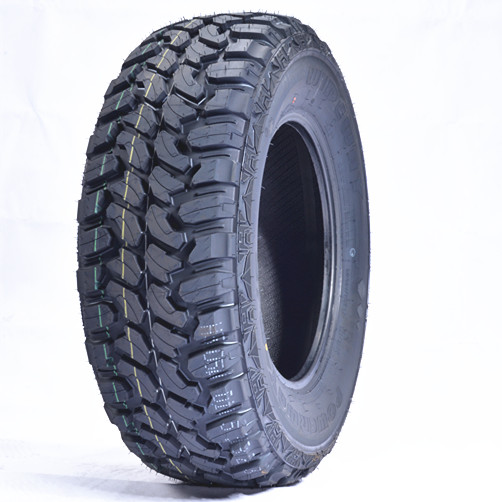
Load index, speed rating, section width and maximum pressure: what each figure can and cannot tell a buyer
The load index is a code for the tire's load-carrying capacity. A pair such as 121/118 or 123/120 should be read with the current load-inflation table and the vehicle or axle requirement. The catalogue states the codes, but it does not provide the corresponding kilogram load table in the supplied data. That means a buyer should not convert 121/118 into a kilogram figure without the current technical table.
The speed rating is a speed symbol. Q and R appear in the off-road groups; T appears on one all-terrain group. The symbol must be matched to the vehicle application and the load condition. A higher or lower letter should not be selected from the letter alone without the current load and speed table.
Section width is a dimensional reference. Values such as 272 mm, 292 mm and 318 mm describe the section width stated for a product group; they are not tread width and they do not by themselves describe sidewall height or clearance. Maximum pressure is a limit, not a recommended everyday inflation pressure. The figures 300 KPA, 350 KPA, 550 KPA and 552 KPA appear across different product groups, and each should be checked against the vehicle placard and the application.
| Catalogue group | Documented classification | Example sizes | Load index | Speed | Section width | Max pressure |
|---|---|---|---|---|---|---|
| RT group A | Rugged Terrain, 4x4 RT, reinforced sidewall | 31×10.50R15LT, LT265/75R16, LT285/70R17, LT315/70R17, 33×12.50R18LT | 123/120 | Q | 272 mm | 552 KPA |
| RT group B | Rugged Terrain, 4x4 RT, reinforced sidewall | 31×10.50R15LT, LT265/75R16, LT285/70R17, LT275/70R17, LT265/60R18 | 121/118 | R | 318 mm | 350 KPA |
| AT group | All Terrain, 4x4 AT, sand dunes and hot climates | LT235/75R15, 31*10.50R15LT, LT285/70R17, LT265/65R17 | 121/118 | Q | 292 mm | 550 KPA |
| MT group | Mud Terrain, 4x4 MT | 31*10.50R15LT, LT285/70R17, 35*12.50R17LT, LT265/75R16 | 120/116 | Q | 235 mm | 550 KPA |
The table is a reading aid for the supplied product records. It does not replace the model-level technical file, the current load-inflation table or the vehicle placard.
Rock Terrain Off-Road Tire: what the documented classifications support
Rock terrain is not a separate product category in the supplied data. The closest documented classifications are Rugged Terrain Off-Road Tire, 4x4 RT off-Road Tire and Reinforced Sidewall Off-Road. The application data also lists rugged road condition and sidewall protection design as a special requirement. This supports a procurement discussion about reinforced-sidewall and rugged-terrain use, not a claim of a rock-only test result.
For buyers, the relevant RT records include two configurations:
- RT group A: models include 31×10.50R15LT, LT265/75R16, LT285/75R16, LT305/70R16, 33×12.50R17LT, LT265/70R17, LT285/70R17, LT315/70R17, 33×12.50R18LT, LT265/60R18, LT265/50R20 and LT275/55R20. Documented load index is 123/120, speed rating Q, section width 272 mm and maximum pressure 552 KPA.
- RT group B: models include 31×10.50R15LT, LT265/75R16, LT285/75R16, LT265/65R17, LT265/70R17, LT275/70R17 and LT285/70R17. Documented load index is 121/118, speed rating R, section width 318 mm and maximum pressure 350 KPA.
The same RT groups also carry comfortable and noiseless, urban-road and high-speed-stability classifications in the catalogue. Those labels are product positioning descriptors. They should be validated against the specific vehicle, loading and route rather than treated as independent test results.
Procurement terms and acceptance criteria for off-road tire orders
Price, MOQ, lead time and payment terms are commercial terms. They are not published in the supplied catalogue data, so they should be quoted in the RFQ or contract rather than inferred from the product list. The specification terms below can be written into the technical annex of an RFQ.
| Acceptance area | What to write into the purchase order | Why it matters |
|---|---|---|
| Model identity | Exact model string, product family and, where relevant, the brand and pattern name. | Prevents substitution between AT, MT and RT groups that share a size such as LT285/70R17. |
| Load and speed | Required load index and speed symbol, with the load-inflation table reference. | Size alone does not define load capacity or speed capability. |
| Pressure and dimensions | Maximum pressure and section width stated for the exact product group. | Stops a buyer from applying the 552 KPA, 550 KPA, 350 KPA or 300 KPA figure to the wrong model. |
| Material and construction | Material declaration and sidewall construction requirement, including reinforced sidewall where specified. | Makes the construction claim testable against the batch file. |
| Markings | Required sidewall markings, model designation, load index, speed symbol and maximum pressure. | Supports incoming inspection and avoids after-sales disputes. |
| Certification file | Certificate copies for the destination market and the exact SKU. | A generic certificate list is not the same as a model-specific certificate. |
| Sample approval | Sample size, approval record and retained reference sample. | Creates a documented baseline before mass production or shipment. |
| Traceability | Batch or lot identification and the documents retained for the shipment. | Allows later verification without relying on memory or informal messages. |
The company-reported certification portfolio includes CCC, ECE, GCC, EU Label and SONCAP under an ISO 9001 quality system. These are company-reported claims in the supplied data and should be verified against the exact model and destination. For Saudi Arabia, SASO is a destination-specific question. The available data does not confirm SASO certification for a specific off-road SKU, so buyers should request current SASO documentation for the exact model if that is a market requirement.
The 3PMSF rating is model-specific in the available evidence. The WEYONE AK3 LT285/70R17 is described as a 4x4 all-terrain tire with a 3PMSF rating. That statement should not be extended to every LT285/70R17 or every all-terrain tire in the range.
Manufacturing and compliance evidence: what can be verified
Supplier capability evidence is not the same as product performance evidence, but it is relevant to first-pass qualification. SHANDONG WIDEWAY TIRE CO.,LTD. was established in 2014 and has accumulated 12 years of experience in tire manufacturing. The company profile states a 1,000,000 square meter factory, approximately 5,000 employees, 23,400,000 units of annual production capacity and a 25-engineer research and development team.
Export orientation is also stated: 70% of sales are export sales, with markets including Central and South America, Canada, the EU, Africa, the Middle East, Southeast Asia, Central Asia and Australia. This breadth supports a supplier-discovery discussion, but it does not remove the need for model-level certificates, sample approval and incoming inspection.
The annual production capacity figure of 23,400,000 units also appears in a 2026 industry article, which strengthens its traceability as a reported capacity figure. Buyers who require audited capacity, line counts or utilization data should ask for a current factory audit because those details are not provided in the available data.
Market trend context for off-road tire procurement
IMARC Group estimated the global off-the-road tire market at USD 33.7 billion in 2025. That figure covers OTR tires for mining, construction and agricultural vehicles, so it is not a direct measure of light-truck or 4x4 off-road tire demand. It is useful as broad category context, not as a forecast for a specific SKU.
Traction News and Growth Market Reports estimated the global mud tire market at USD 8.3 billion in 2024. China exported 3.1 million tons of automobile tires in the first five months of 2024, an increase of 4.4% year on year, according to General Administration of Customs China. These data points describe a large and traded category. They do not prove demand for a particular size, pattern or reinforced-sidewall specification.
The procurement implication is practical rather than promotional: as assortments widen, the differentiator is not another generic off-road label. It is the quality of the model-level specification file, the clarity of the load and pressure data, and the buyer's ability to compare like with like.
RT and reinforced-sidewall designs compared with conventional all-terrain assumptions
A common procurement shortcut is to treat every off-road tire as an all-terrain tire and to compare only size and price. That approach breaks down when the same LT285/70R17 appears in AT, MT and RT groups with different load index, speed rating, section width and maximum pressure.
| Selection approach | What it captures | Limitation |
|---|---|---|
| Catalogue-only, size-led selection | Quick price comparison and basic fitment. | Misses the product family, load index, speed symbol, maximum pressure and sidewall construction. It also makes certification checks difficult. |
| Specification-led acceptance | Model identity, load and speed, pressure, dimensions, material declaration and certificate scope. | Requires more paperwork at RFQ stage and a retained sample or batch record. |
| RT and reinforced-sidewall default | Rugged-terrain positioning and sidewall protection for rough-road use. | Not a universal substitute for AT, MT or winter products. Reinforced sidewall does not make a tire puncture-proof, and the catalogue low-noise positioning should be validated on the target vehicle. |
The range itself shows why one default is inadequate. Mud-terrain groups are documented for muddy terrain road conditions. All-terrain groups include sand dunes and hot climates classifications. One product group is classified for winter and snow use. A rock or rugged-terrain enquiry should therefore be matched to the actual route and load case, not used as a blanket replacement for every off-road application.
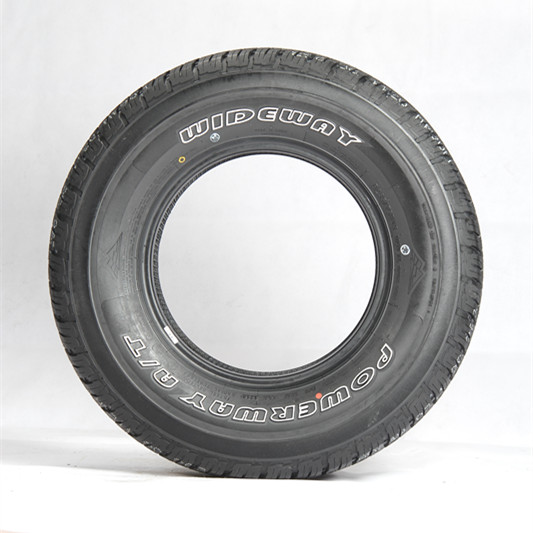
Future outlook: SKU-level documentation will matter more than category labels
The direction is clear from the data gaps in the category. Buyers already have market-size context and broad product-family descriptions. What they often lack is SKU-level evidence: tread depth, hardness, ply or construction detail, model-specific certification and a documented acceptance sample.
For distributors and wholesalers, the practical response is to build an RFQ template that forces the supplier to state the exact model, product group, load index, speed rating, maximum pressure, section width, material declaration and certificate scope. That template will be more useful than another general off-road tire description because it creates a record that can be checked at incoming inspection and after-sales review.
FAQ
What is the difference between 31*10.50R15LT and LT235/75R15?
31*10.50R15LT is a flotation-style size: 31 is the nominal overall diameter in inches, 10.50 is the nominal section width in inches, 15 is the rim diameter and LT is the light-truck marker. LT235/75R15 is a metric light-truck size: 235 is the nominal section width in millimetres, 75 is the aspect ratio, R indicates radial construction and 15 is the rim diameter. Buyers should quote the exact catalogue string because punctuation varies between records.
What does LT mean on an off-road tire?
LT is commonly used to identify a light-truck size. In the supplied catalogue, it appears in size strings such as LT235/75R15, LT285/70R17 and 31*10.50R15LT. The LT marker is a size and application convention; it does not replace the load index, speed rating or model-specific technical file.
What materials are used in the WIDEWAY off-road tire range?
The supplied product data lists natural rubber, synthetic rubber, white rubber compound, carbon black, precipitated silica, steel cord, polyester cord fabric, nylon cord fabric, vulcanizing agent, vulcanization accelerators, activators, antioxidants and RAE oil. These are construction inputs. No material percentages, tread depth or hardness values are published in the available data.
How should a buyer interpret load index 121/118 or 123/120?
The load index is a load-carrying code. The paired format should be read with the current load-inflation table and the vehicle or axle requirement. The catalogue states 121/118 and 123/120 for different off-road groups, but it does not provide the corresponding kilogram load table in the supplied data. Buyers should request that table rather than converting the code by assumption.
What do speed ratings Q and R mean in this catalogue?
Q and R are speed symbols used in the off-road product groups. They should be matched to the vehicle application and load condition using the current load and speed table. The catalogue also lists T for one all-terrain group. A buyer should not select or reject a tire from the letter alone without the model-level technical file.
Why do section width and maximum pressure differ between product groups?
They differ because the records describe different product families and constructions. The available data includes section widths of 272 mm, 292 mm and 318 mm, and maximum pressures of 300 KPA, 350 KPA, 550 KPA and 552 KPA. These figures belong to specific groups, so they should not be applied across every tire that shares a size such as LT285/70R17.
What is a rock terrain off-road tire in this range?
Rock terrain is not a separate product category in the supplied data. The closest documented classifications are Rugged Terrain Off-Road Tire, 4x4 RT off-Road Tire and Reinforced Sidewall Off-Road. The two RT groups include models such as LT285/70R17 and document load indexes of 123/120 and 121/118, speed ratings Q and R, section widths of 272 mm and 318 mm, and maximum pressures of 552 KPA and 350 KPA. No rock-specific test result is provided.
What acceptance criteria should be written into an off-road tire purchase order?
The purchase order should state the exact model string, product family, load index, speed symbol, maximum pressure, section width, material declaration, sidewall construction, required markings, certification copies for the destination market, sample approval record and batch traceability. Tolerances and test methods should be agreed in writing because the supplied data does not publish them.
Are CCC, ECE, GCC, EU Label and SONCAP enough for every market?
No single certificate list is automatically sufficient for every destination. The company reports CCC, ECE, GCC, EU Label and SONCAP under an ISO 9001 quality system. These are company-reported claims and should be checked against the exact model and market. For Saudi Arabia, buyers should request current SASO documentation for the specific SKU if SASO is required, because the available data does not confirm SASO certification for a specific off-road model.
Which model carries a 3PMSF rating?
The available evidence describes the WEYONE AK3 LT285/70R17 as a 4x4 all-terrain tire with a 3PMSF rating. That evidence is model-specific. It should not be applied to every LT285/70R17, every all-terrain tire or every RT product without a separate certificate or confirmation for the exact SKU.
Is a reinforced sidewall puncture-proof?
No. Reinforced Sidewall Off-Road is a construction classification, and the application data lists sidewall protection design as a special requirement for certain uses. It does not establish puncture immunity, and the available data does not provide a puncture test result. Buyers should treat it as a design feature to be verified against the model and application.
Can the same LT285/70R17 be AT, MT or RT?
Yes. LT285/70R17 appears in more than one off-road product family in the supplied data. One RT group lists LT285/70R17 with load index 123/120, speed Q, section width 272 mm and maximum pressure 552 KPA. Another RT group lists the size with load index 121/118, speed R, section width 318 mm and maximum pressure 350 KPA. The WEYONE AK3 LT285/70R17 is separately described as a 4x4 all-terrain tire with a 3PMSF rating. The model and product group must be quoted together.
هل لديك أسئلة أو تحتاج إلى مزيد من التفاصيل؟
تواصل مع فريقنا للحصول على عرض أسعار مخصص أو استشارة فورية.
طلب عرض أسعار
املأ النموذج أدناه وسيتواصل معك فريقنا بعرض مقترح مخصص.
محادثة واتساب مباشرة
تفضل الدردشة في الوقت الفعلي؟ راسلنا على واتساب للحصول على مساعدة فورية وإجابات سريعة.
- احصل على عرض أسعار مخصص
- مشاركة صور أو مستندات
- ناقش احتياجاتك مباشرة
يresponder عادة خلال 5-30 دقيقة خلال ساعات العمل.