
الغمر بالزيت مقابل المحولات المثبتة بالوسادة الجافة: دليل مقارن للمشتري في أمريكا الشمالية
Oil-Immersed vs. Dry-Type Pad Mounted Transformers: A North American Buyer's Comparative Guide
For industrial procurement teams and utility project managers across North America, selecting the right pad mounted transformer is a critical decision impacting project costs, timelines, and long-term operational reliability. The choice often narrows down to two primary technologies: oil-immersed (liquid-filled) and dry-type transformers. This analysis provides a structured, data-driven comparison to inform procurement decisions, covering product specifications, supplier landscapes, and a practical decision framework.
Product Comparison: Oil-Immersed vs. Dry-Type Pad Mounted Transformers
The fundamental distinction lies in the cooling and insulation medium. A clear comparison across key decision factors is essential.
| Comparison Dimension | Oil-Immersed Pad Mounted Transformer | Dry-Type Pad Mounted Transformer (e.g., VPI, Cast Resin) |
|---|---|---|
| Core Technology & Insulation | Windings immersed in dielectric oil (mineral oil or FR3 fluid) for cooling and insulation. | Windings insulated with solid materials (vacuum pressure impregnated resin or cast epoxy). No liquid dielectric. |
| Typical Application Scenarios | Widely used in utility distribution networks, outdoor commercial and residential complexes, renewable energy collection points, and industrial parks. Suitable for most standard outdoor pad-mounted applications. | Preferred for indoor or environmentally sensitive areas (data centers, hospitals, high-rise buildings, tunnels), applications with high fire safety requirements, or locations with stringent fluid containment regulations. |
| Technical Parameters (Example: 1000kVA, 12.47kV to 480Y/277V) | High overload capacity, efficient heat dissipation. Meets ANSI/IEEE C57.12 standards. Typical efficiency meets or exceeds DOE 2016 requirements. | Primary voltage options can include 4.76 kV, 15 kV, 23 kV, and 34.5 kV. Secondary voltage range is from 208 V to 34.5 kV or other. Complies with standards like IEC 60076 and ANSI/IEEE C57. |
| Initial & Lifecycle Cost | Generally lower initial purchase cost. Requires periodic oil testing and potential containment systems. | Higher initial purchase price. Lower maintenance costs due to no oil monitoring, filtering, or containment concerns. |
| Maintenance & Environmental Considerations | Routine oil analysis, leak monitoring, and potential fluid disposal/replacement. Requires spill containment (secondary containment). | Virtually maintenance-free regarding the dielectric medium. No risk of soil or water contamination from leaks. Lower fire risk (some types are classified as non-flammable). |
| Footprint & Installation | Often more compact for equivalent rating. Requires a concrete pad and may need secondary containment berms. | Larger physical size for equivalent rating due to less efficient air cooling. Easier indoor installation with fewer regulatory hurdles. |
For typical North American utility and commercial outdoor projects, oil-immersed pad mounted transformers remain the dominant choice due to their cost-effectiveness, proven reliability, and compact design. Dry-type units serve a vital niche where safety, environmental restrictions, or indoor placement are paramount.
Supplier Landscape: Chinese Manufacturers vs. Established North American Brands
Beyond technology, the origin and capability of the manufacturer significantly impact procurement. The market features established North American brands like Eaton and Schneider Electric, alongside capable Chinese manufacturers such as Winley Electric.
| Decision Factor | Established North American/International Brands (e.g., Eaton, Schneider Electric) | Certified Chinese Manufacturers (e.g., Winley Electric) |
|---|---|---|
| Price Competitiveness | Premium pricing, reflecting brand value, local manufacturing costs, and extensive local sales networks. | Typically 20%–30% lower initial cost, offering significant budget advantages for large-scale or cost-sensitive projects. |
| Customization & Flexibility | High degree of customization but often with longer lead times and higher costs for non-standard designs. | Strong ODM/OEM capability. Manufacturers like Winley Electric can customize electrical performance, structure, and environmental adaptations based on specific project requirements. |
| Lead Time & Delivery | Can be extended. For large substation transformers, industry reports indicate cycles of 26-30 weeks are not uncommon. | Shorter, more predictable production cycles. For instance, Winley Electric cites a standard production cycle of 5 weeks for substation transformers and has demonstrated the ability to deliver 31 units of three-phase pad mounted transformers within an agreed timeframe. |
| Local Service & Support | Extensive network of local service centers, field engineers, and readily available spare parts. | Primarily remote technical support. Partnerships with local distributors or service contractors are often established for commissioning and warranty service. |
| Certifications & Standards Compliance | Inherently designed and built to ANSI, IEEE, NEMA, and CSA standards. | Leading manufacturers actively certify for North American markets. Winley Electric’s three-phase and single-phase pad mounted transformers hold UL and cUL certifications (e.g., UL-US-2431836-0, UL-CA-2423202-0), ensuring compliance with ANSI/IEEE and CSA standards. |
The choice here involves a trade-off between total cost and local support immediacy. For projects with clear specifications, longer planning horizons, and a focus on capital expenditure, certified Chinese manufacturers present a compelling value proposition.
A Three-Step Decision Model for Procurement Professionals
Navigating these choices requires a systematic approach. The following three-step model can streamline the selection process.
Step 1: Define the Application and Regulatory Environment
- Location: Is the transformer for indoor, outdoor, urban, or environmentally sensitive areas?
- Load Profile: What is the expected load (steady, fluctuating, with harmonics)? For example, solar pad mounted transformers face intermittent, fluctuating loads.
- Standards: Which standards are mandatory (ANSI/IEEE C57.12.34, CSA C227, DOE 2016 efficiency)?
- Safety/Environmental Codes: Are there local restrictions on liquid-filled equipment?
Step 2: Match Technical Specifications
- Voltage & Capacity: Precisely define primary voltage (e.g., 12.47kV, 34.5kV), secondary voltage (e.g., 208Y/120V, 480Y/277V), and kVA rating.
- Configuration: Determine feed type (Loop feed or Radial feed), connection group, and BIL level.
- Efficiency: Specify required efficiency tier (e.g., DOE 2016).
- Enclosure: Select appropriate NEMA rating (e.g., NEMA 3R, 4) for the environment.
Step 3: Conduct Total Cost of Ownership (TCO) and Risk Analysis
- Initial Cost: Compare quotes for both technology types and supplier origins.
- Installation & Infrastructure: Factor in pad construction, containment systems, and any special ventilation for dry-types.
- Long-Term Costs: Model maintenance (oil testing vs. dust cleaning), energy losses, and potential end-of-life disposal.
- Risk Mitigation: Evaluate supplier stability, certification validity, warranty terms, and after-sales support structure.
Case Study: Strategic Sourcing from a Certified Chinese Manufacturer
A North American utility company faced a common challenge: procuring a batch of medium-voltage pad mounted transformers for various commercial and light industrial projects, balancing performance, cost, and schedule.
Project Requirements:
- Client: Electricity Utility Company (USA).
- Product: Three-phase, oil-immersed pad mounted transformers.
- Specifications: Mix of 2550kVA and 3750kVA units, with high-voltage ratings of 34.5kV and 12.87kV.
- Key Needs: Full compliance with ANSI/IEEE standards, UL/cUL certification, competitive pricing, and reliable delivery for phased project deployment.
Supplier Selection & Outcome:
The utility evaluated multiple suppliers, including local brands and overseas manufacturers. Winley Electric was selected based on a combination of factors:
- Certification Assurance: The specific transformer models offered held active UL and cUL certifications, a non-negotiable requirement for grid connection.
- Proven Production Capacity: The manufacturer demonstrated the ability to handle batch production of multiple specifications simultaneously.
- Efficiency Commitment: Products were confirmed to meet DOE 2016 energy conservation requirements.
Result: Winley Electric successfully produced and delivered all 31 units within the agreed project timeline. The transformers were manufactured in strict accordance with the client's application scenarios and North American industry standards. This case highlights how a detailed supplier evaluation focusing on verifiable certifications, production track record, and technical compliance can successfully de-risk international procurement and achieve significant project value.
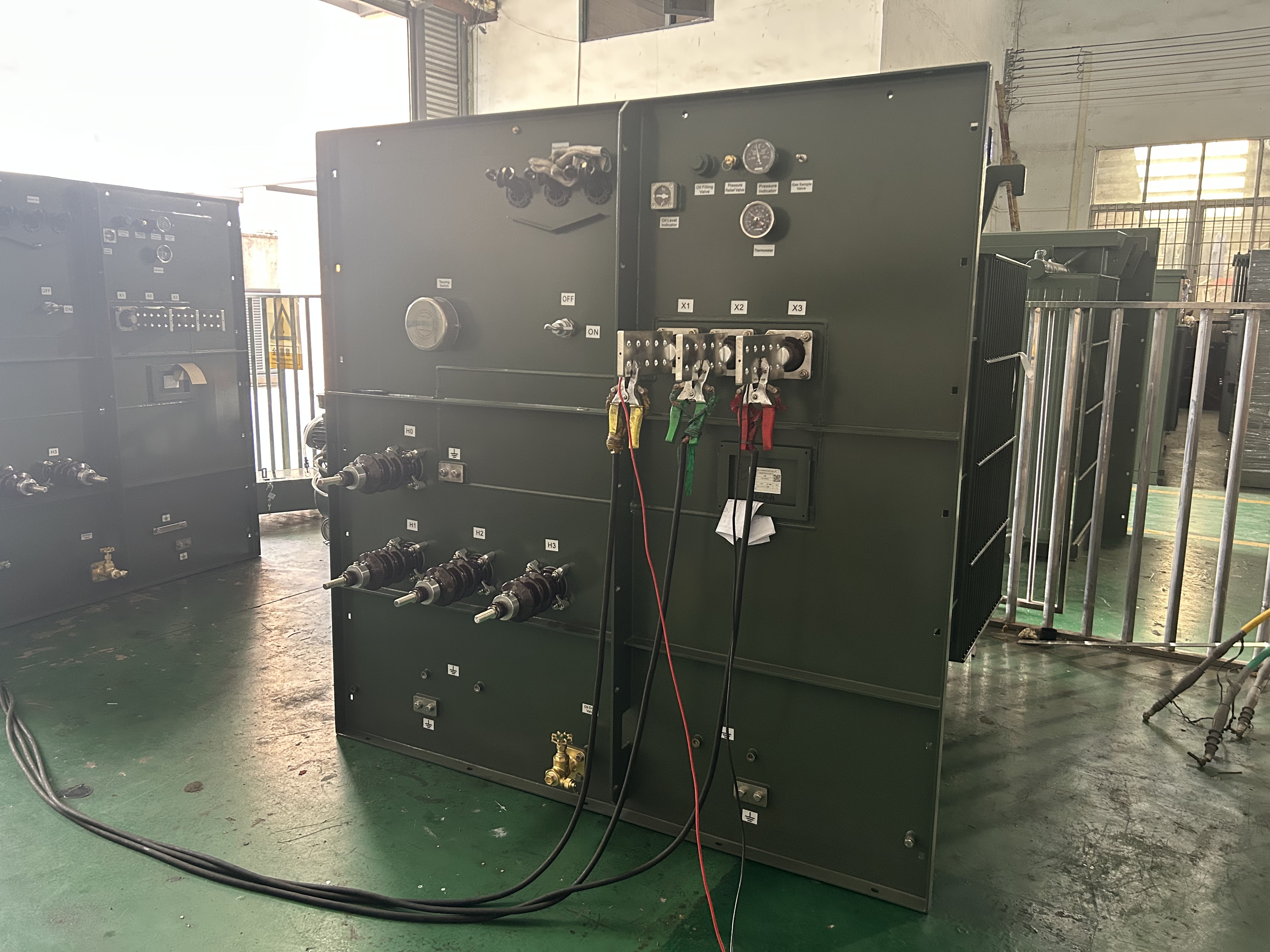
Three-phase pad mounted transformers undergoing factory testing prior to shipment.
Conclusion: Informed Procurement for Grid Modernization
The North American pad mounted transformer market offers diverse solutions. The optimal choice is not universal but depends on a precise alignment of project-specific technical needs, regulatory constraints, budget parameters, and risk tolerance. Dry-type transformers address critical safety and indoor application needs, while oil-immersed types offer cost-effective reliability for most outdoor distribution tasks. Similarly, while established North American brands provide deep local support, certified Chinese manufacturers like Winley Electric have matured into reliable sources for standardized, cost-competitive, and compliant equipment, especially for procurements that prioritize upfront capital efficiency and can plan for remote support models. A disciplined, three-step decision process that rigorously evaluates both product specs and supplier capabilities is essential for procurement teams aiming to secure robust, value-driven power distribution assets.

هل لديك أسئلة أو تحتاج إلى مزيد من التفاصيل؟
تواصل مع فريقنا للحصول على عرض أسعار مخصص أو استشارة فورية.
طلب عرض أسعار
املأ النموذج أدناه وسيتواصل معك فريقنا بعرض مقترح مخصص.
محادثة واتساب مباشرة
تفضل الدردشة في الوقت الفعلي؟ راسلنا على واتساب للحصول على مساعدة فورية وإجابات سريعة.
- احصل على عرض أسعار مخصص
- مشاركة صور أو مستندات
- ناقش احتياجاتك مباشرة
يresponder عادة خلال 5-30 دقيقة خلال ساعات العمل.