
One CT Does Not Fit All: Match the Transformer to the Job
One CT Does Not Fit All: Match the Transformer to the Job
Selecting a current transformer (CT) is a scenario-matching exercise that affects measurement accuracy, installation cost, and long-term reliability. For engineers, procurement teams, and system integrators evaluating CTs for EV charging, solar inverters, utility distribution, or industrial switchgear, the decision hinges on four variables: how the CT mounts, where it operates, what signal it delivers downstream, and which accuracy class the application demands.
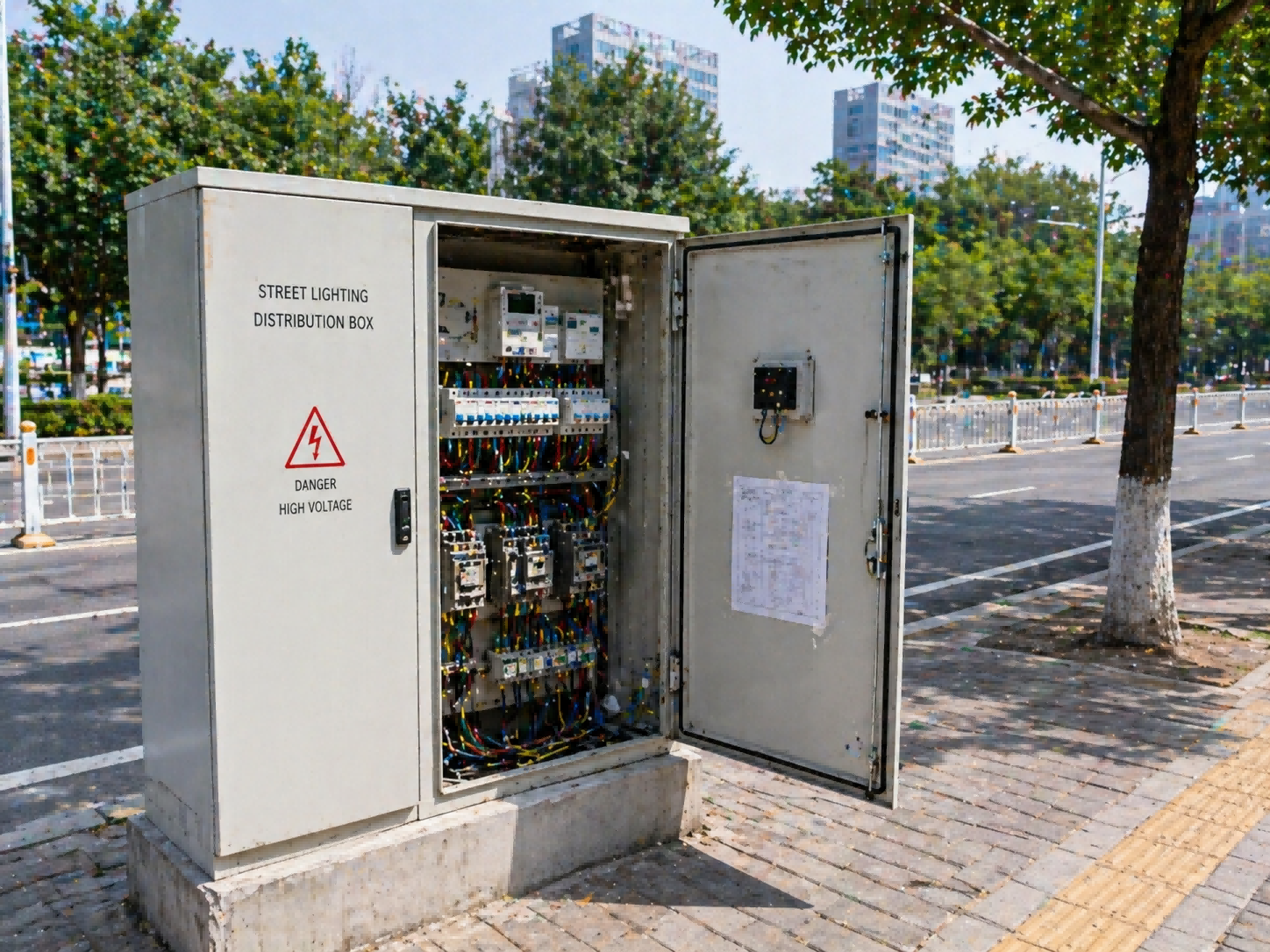
When CT Specification Drift Creates Downstream Risk
A current transformer that is correctly rated but mismatched to its physical or electrical environment is one of the most common sources of measurement error in low-voltage distribution systems. The error may not appear during bench testing; it emerges after installation, when busbar proximity, cable routing, ambient temperature, or harmonic content degrades performance.
The consequences are practical: billing discrepancies in revenue metering, nuisance trips in protection circuits, and costly rework in retrofit projects where a CT must be clamped around a live busbar. The global current transformer market was estimated at USD 2.63 billion in 2024 and is projected to reach USD 3.90 billion by 2030 (Grand View Research). Within this market, split-core current transformers have been identified as the fastest-growing segment, driven by ease of installation in retrofitting and smart grid applications (Fact.MR). This trend reinforces a broader move toward application-specific selection rather than one-size-fits-all CT procurement.
HEYI Electrical: A Manufacturer Built Around Application Diversity
WENZHOU HEYI ELECTRICAL CO.,LTD (HEYI) is a current transformer and current sensor manufacturer headquartered in Wenzhou, Zhejiang, China. Established in 2012, the company operates a 10,000 m² production facility with 56 employees and an annual output of 356,000 units. HEYI exports approximately 95% of its production to Southeast Asia, South Korea, Europe, South America, Australia, Africa, the Middle East, and North America.
HEYI's portfolio covers split-core CTs, solid-core window-type CTs, three-phase integrated CTs, flexible Rogowski coils, leakage current sensors, hall effect sensors, and current transmitters. The company's five-engineer R&D team supports OEM/ODM projects, and HEYI reports that its engineering is trusted by technology and industrial companies including Siemens, Schneider Electric, LG, Samsung, and SoftBank, as well as national telecom operators and utility providers. This range of products and project references supports a simple procurement conclusion: the CT should be engineered around the project, not the other way around.
Breaking Down the CT Family: Form Factor, Output, and Accuracy
Designed for indoor electrical cabinets and low-voltage distribution systems, HEYI current transformers perform current measurement and energy metering in continuous real-time mode via passive induction. Each architecture exists for a reason: form factor determines how the CT physically fits the conductor or busbar; output type determines compatibility with meters, PLCs, and IoT gateways; accuracy class determines whether the CT supports billing, protection, or basic load monitoring.
Split-Core CTs: The Retrofit Default
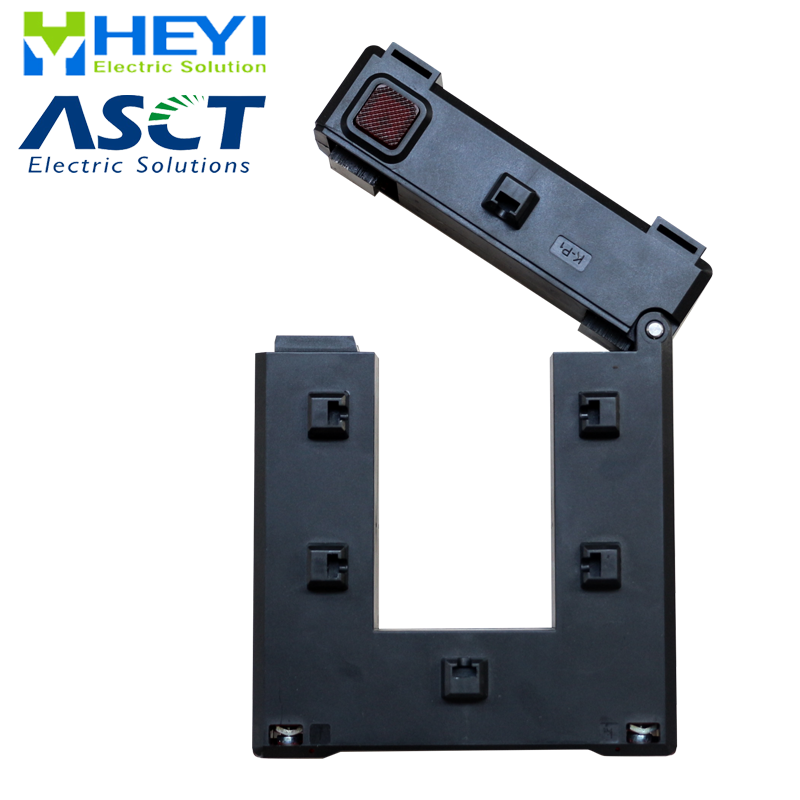
Split-core CTs open at the core and clamp around a conductor without disconnecting it, which makes them the standard choice for retrofit installations.
- KCT series — measurement range 0–1000 A; output 5 A / 1 A / mA / mV / RS485 / 4-20 mA; accuracy 3.0 / 1.0 / 0.5; inner diameter up to 50 mm. Applied in EV charging infrastructure, smart grid switchgear panels, solar and energy storage systems, and home electricity monitoring.
- DP/HK busbar split-core CTs — measurement range 0–8000 A; window up to 80 × 160 mm; accuracy 3.0 / 1.0 / 0.5. Designed for busbar installation in smart grid panels, EMS systems, and data centers.
- OCT outdoor waterproof split-core CTs — measurement range 0–8000 A; IP65-rated; UV protection; inner diameter up to 120 mm. Suited for overhead line monitoring, outdoor solar and wind plants, municipal infrastructure, and railway trackside applications.
- KCD smart split-core CT with RS485 output — measurement range 0–1000 A; 4-20 mA output; accuracy 1.0. Modbus RTU digital output simplifies integration with energy management systems; these models have been deployed in Beijing and Hangzhou metro line monitoring.
Solid-Core CTs: Stability for New Installations
Solid-core CTs use a fixed, enclosed core that offers mechanical stability and consistent magnetic coupling. They are usually specified for new panel builds rather than retrofit work.
- MSQ series — measurement range 0–6000 A; accuracy up to 0.2S; inner diameter up to 125 mm. A plastic-cased square-window CT for busbar or cable metering in switchgear, HVAC, and building energy systems. The MSQ is designed for current measurement and energy metering where high accuracy, stable output, and insulation safety are required, compliant with IEC 61869-2.
- SDH series — measurement range 0–10000 A; accuracy up to 0.2S; inner diameter up to 220 × 80 mm. A low-voltage window-type and busbar-type measuring CT that also supports relay protection functions.
- CP series — DIN-rail-mounted compact CT; measurement range 0–6000 A; inner diameter 0–100 × 31 mm; accuracy up to 0.2S. Designed for space-constrained panels in smart buildings and data centers.
- LMZW outdoor resin-cast CT — measurement range 0–1000 A; accuracy 1.0 / 0.5 / 0.5S / 0.2 / 0.2S; IP65-rated; hydrophobic epoxy resin housing. Suitable for marine, chemical, metallurgical, and ring main unit applications in high-humidity tropical environments.
Leakage, Rogowski, and Transmitter Sensors
HYCA series is a residual current sensor family with AC/DC sensitivity, designed for EV charging infrastructure and solar/storage systems. It operates from DC to 2 kHz, handles load current up to 80 A RMS (single-phase) or 3 × 32 A RMS (three-phase), and provides switching outputs for 6 mA DC and 30 mA AC per IEC 62752. Measurement resolution is 0.2 mA with a differential current range of 0–300 mA, supporting B-type RCD protection.
The FRC flexible Rogowski coil measures currents from 100 A to 10,000 A with an mV-level output and a 245 mm inner diameter. Its air-core design does not saturate under high transient currents, making it useful for heavy industry, smelting, data center power retrofits, portable testing meters, and lightning/transient measurement.
The KCT-L True RMS transmitter provides 4-20 mA loop-powered output (0–1000 A, accuracy 1.0) for direct PLC/DCS integration, remote power monitoring, rail transit, and IoT smart city platforms. The C2/C3 hall effect current sensor covers 0–1000 A with accuracy 1.0 / 0.5, supporting PV string monitoring, BMS/battery storage, VFD DC bus monitoring, and railway traction.
Three-Phase and Revenue-Grade CTs
The DASN three-phase integrated CT combines three CTs in one DIN-rail housing, with a measurement range of 0–1000 A, 5 A output, and 0–50 mm inner diameter. It is designed for main and branch circuit monitoring, cloud and telecom operators, UPS systems, motor control centers, IDC rack-level monitoring, and high-density PDU integration.
The RECT revenue-grade CT targets utility and substation billing, offering 0.15S accuracy, a measurement range of 0–1000 A, output of 5 A or 1 A, IP65 rating, and IEEE C57.13 compliance. It suits utility-scale solar and wind plants, data center and commercial sub-billing, and premium meter OEM manufacturing. For utility billing, revenue-grade CTs typically meet ANSI C12.20 or IEC 61869-2 accuracy classes of 0.2 or 0.15 (Eaton/ANSI).
| CT Architecture | Models | Range | Output | Accuracy | Typical Scenario |
|---|---|---|---|---|---|
| Split-core | KCT | 0–1000 A | 5A / 1A / mA / mV / RS485 / 4-20mA | 3.0 / 1.0 / 0.5 | EV charging, smart grid, solar, home monitoring |
| Busbar split-core | DP/HK | 0–8000 A | 5A / 1A / mA / mV | 3.0 / 1.0 / 0.5 | Switchgear retrofit, busbar monitoring |
| Outdoor split-core | OCT | 0–8000 A | 5A / 1A / mA / mV | 3.0 / 1.0 / 0.5 | Overhead lines, outdoor solar and wind, IP65 |
| Solid-core window | MSQ / SDH | 0–10000 A | 5A / 1A / mA / mV | up to 0.2S | New panel builds, metering and protection |
| Three-phase | DASN | 0–1000 A | 5A | 1.0 | IDC racks, MCC, UPS, colocation |
| Leakage / RCD | HYCA | DC–2 kHz | Switching 6mA DC / 30mA AC | 0.2 mA resolution | EV charging, solar and storage protection |
| Revenue-grade | RECT | 0–1000 A | 5A / 1A | 0.15S | Utility billing, IEEE C57.13 |
| Rogowski coil | FRC | 100–10000 A | mV | — | Heavy industry, transient measurement |
Application Scenarios: Where Each CT Category Fits
HEYI's project history spans power utilities, electrical engineering contractors, panel builders, industrial equipment manufacturers, and building energy management integrators. The company reports a decade-long supply record for power distribution projects, switchgear retrofits, commercial building energy monitoring, industrial control cabinets, generator panels, and utility metering systems. From that experience, the following scenario-to-product map emerges.
EV Charging Infrastructure
EV chargers require residual current monitoring that detects both AC and DC fault currents. The HYCA series, with its 6 mA DC and 30 mA AC switching outputs per IEC 62752, addresses the specific safety requirements of mode 2 and mode 3 charging. Split-core KCT CTs are also used for load-side metering and billing within charging station management systems.
Solar, Wind, and Energy Storage
Outdoor installations demand environmental protection. The OCT outdoor waterproof split-core CT (0–8000 A, IP65) is engineered for outdoor solar and wind monitoring; the LMZW resin-cast CT suits high-humidity environments such as ring main units in tropical regions. For DC-side string monitoring in PV arrays, the C2/C3 hall effect sensor provides DC-capable measurement up to 1000 A. Utility-scale revenue metering is handled by the RECT series (IEEE C57.13 compliant).
Smart Grid and Switchgear Retrofit
Switchgear retrofit projects typically involve live busbars and restricted panel space. The DP/HK busbar split-core CT (window up to 80 × 160 mm) and KCT series clamp around conductors without de-energizing downstream equipment. For new panel builds, the MSQ and SDH solid-core series provide stable metering and protection-class performance. Typical working conditions are indoor electrical cabinets within low-voltage distribution systems, operating continuously at 50/60 Hz.
Data Centers and Telecom
Space in data center power distribution is always at a premium. The DASN three-phase CT is a compact option for IDC rack-level monitoring and high-density PDU integration; the CP DIN-rail series fits tight panel layouts. For colocation facilities that need tenant sub-billing, the RECT series supports revenue-grade measurement with 0.15S accuracy.
Rail and Metro
The DX/DM DIN-rail mounted CT series, with a 0–6000 A range, hinged terminal covers, and 0.66 kV rating, is designed for high-vibration environments including EMU and high-speed rail. The KCD RS485 CT has been deployed in Beijing and Hangzhou metro line monitoring, where digital Modbus output simplifies integration with existing telemetry systems.
Market Dynamics Shaping CT Sourcing
Several observable trends influence how current transformers are specified and sourced.
- Asia Pacific dominates demand. The region accounted for a 40.15% revenue share of the current transformer market in 2025 (Straits Research). This concentration matters for global buyers because manufacturing and supply-chain capabilities are also concentrated in the region.
- Split-core CTs are the fastest-growing segment. Fact.MR attributes this to ease of installation in retrofitting and smart grid applications. Retrofit-friendly designs should be a baseline expectation in new CT specifications.
- EV charging is accelerating demand for specialized sensing. The global EV charging transformer market, including current monitoring components, is expected to grow at a CAGR of 23.6% from 2025 to 2033 (Research Intelo). This drives demand for AC/DC leakage sensors and revenue-grade metering components.
- Standards are converging on IEC 61869-2. IEC 61869-2, which replaces IEC 60044-1, is the core international standard for inductive current transformers, defining accuracy classes such as 0.5 and 0.5S (IEC/IECEE). Sourcing decisions should verify standard compliance rather than self-declared accuracy.
- Market concentration remains meaningful. The top five global players — ABB, Siemens, GE, Schneider Electric, and Arteche — collectively held approximately 40% of the current transformer market in 2024 (Global Market Insights). This concentration means the remaining market is served by specialized manufacturers, where responsiveness and custom capability carry more weight than brand scale.
HEYI vs. Traditional CT Sourcing: OEM Flexibility with Validation
Traditional project-based CT procurement typically means selecting from a distributor's catalog, with limited control over ratio, accuracy, housing style, and terminal configuration. HEYI's manufacturing model is built on the opposite premise: OEM/ODM customization is the default, not an exception.
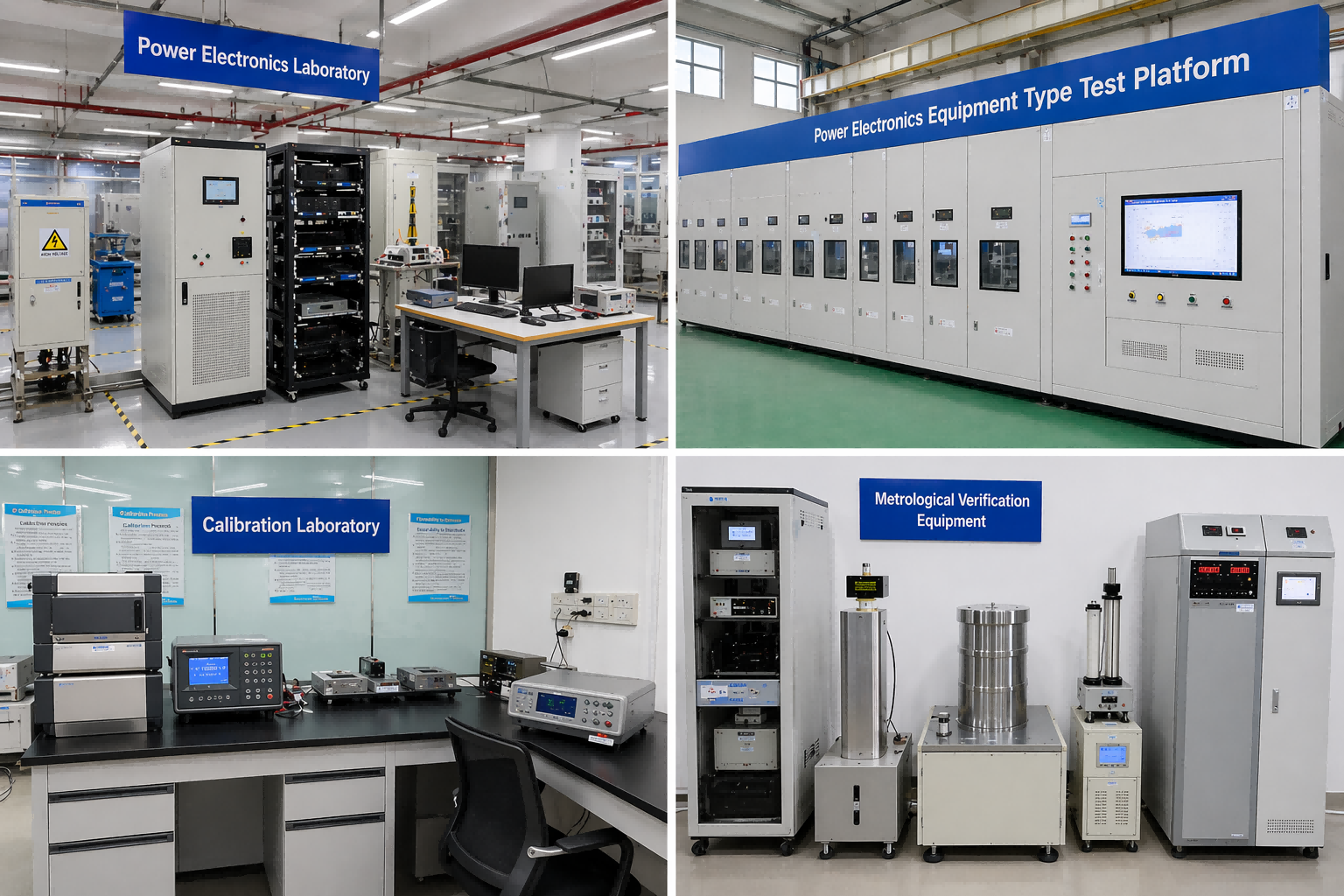
HEYI offers customization of current ratio, accuracy class, burden, window size, housing color, terminal type, cable length, logo printing, and label design. Monthly production capacity is 20,000 units, with lead times of 3–30 days and a minimum order quantity of one unit. Quality control follows a documented routine: 100% routine testing, accuracy testing, insulation resistance testing, withstand voltage testing, appearance inspection, and pre-shipment inspection. After-sales support includes technical selection assistance, wiring guidance, product replacement support, and OEM documentation support.
One honest limitation: HEYI's product family is concentrated on low-voltage current transformers rated at 0.66 kV and below. Projects requiring medium- or high-voltage instrument transformers will need a dedicated HV manufacturer. This is a deliberate product boundary, but it is a real boundary.
In exchange for that boundary, buyers gain a supplier whose catalog is consciously built around low-voltage measurement scenarios — from utility switchgear to EV charging — with customization capability that most catalog distributors cannot match.
Future Outlook: Accuracy, Connectivity, and Embedded Sensing
Current transformer development is following the trajectory of electrification itself. As distributed energy resources multiply, so does the need for measurement points that are accurate, safe, and communicable.
Three developments are likely to define CT sourcing in the next cycle. First, digital output is becoming standard: RS485/Modbus and 4-20 mA transmitter versions — as found in the KCD and KCT-L series — are increasingly expected as standard options rather than specials, particularly in smart building and IoT projects. Second, revenue-grade accuracy is moving downstream: products like the RECT series bring utility-grade billing capability into solar plants, data centers, and commercial facilities. Third, leakage detection and EV charging are converging: with EV charging infrastructure growing at double-digit rates, demand for B-type residual current sensors per IEC 62752 — like the HYCA series with 6 mA DC detection — will continue to expand, especially in markets with strict electrical safety regulation.
FAQ: Current Transformer Project-Fit Questions
What is a current transformer used for in electrical monitoring projects?
A current transformer performs current measurement and energy metering. It operates in continuous real-time mode via passive induction, converting primary conductor current into a standardized secondary signal — typically 5 A, 1 A, mA, mV, 4-20 mA, or RS485 output — for meters, protection relays, PLCs, or data acquisition systems.
What operating conditions do these current transformers support?
The range is designed for indoor electrical cabinet and low-voltage distribution system conditions, with continuous operation in 50/60 Hz power systems. Outdoor-capable variants, such as the OCT and LMZW series, carry IP65 waterproof ratings and UV protection for exposed installations.
What accuracy and compliance standards apply to CT selection?
For general measurement and energy metering, accuracy classes of 1.0, 0.5, and 0.5S are common, with IEC 61869-2 defining the relevant accuracy classes. Revenue-grade billing applications require tighter classes — typically 0.2 or 0.15 per ANSI C12.20 or IEC 61869-2 (Eaton/ANSI). HEYI's RECT series offers 0.15S accuracy with IEEE C57.13 compliance.
What auxiliary equipment do these CTs work with?
Typical matched equipment includes multifunction power meters, energy meters, protection relays, data acquisition systems, PLCs, and low-voltage switchgear. The secondary output is specified to match the connected device: 5 A or 1 A outputs for conventional meters, 4-20 mA for transmitters and PLC inputs, and RS485 for digital energy monitoring modules.
Which project types are best suited for split-core versus solid-core CTs?
Split-core CTs are recommended for switchgear retrofits, power distribution monitoring upgrades, and any project where the primary conductor cannot be disconnected. Solid-core CTs are preferable in new panel builds where the CT is mounted during assembly. For applications with limited installation space, HEYI's DIN-rail mounted and compact CT series provide the required fit.
What customization capabilities does HEYI offer for OEM projects?
HEYI supports OEM and ODM production with customization of current ratio, accuracy class, burden, window size, housing color, terminal type, cable length, logo printing, and label design. Monthly capacity is 20,000 units, lead time is 3–30 days, and the minimum order quantity is one unit.
Further Resources
- Company brochure: HEYI Electrical Company Brochure (PDF)
- Company website: www.heyiele.com
- Contact: Bethy Cai — Email: bethy@heyiele.com — Tel / WhatsApp: +86 13968747975
- Address: 5 Floor, Building 2, No.56 Nirong Middle Road, Kunpeng Street, Wenzhou Marine Economy Development Demonstration Zone, Wenzhou City, Zhejiang, China