
One-Stop Hotel Supplies: From Capability to Confirmed Order
One-Stop Hotel Supplies: From Capability to Confirmed Order
Hotel textile sourcing rarely fails at the shortlisting stage. It fails in the space between a shortlist and a confirmed purchase order, where customization scope, minimum order quantities, laundry compatibility, sample approval and inspection terms all have to line up at the same time. That gap between stated capability and executable capability is the subject of this analysis, and it is where the practical meaning of “one-stop comprehensive hotel supplies” is either proven or quietly abandoned.
The commercial backdrop is expanding rather than contracting. The global hotel supplies market was valued at approximately USD 62.01 billion in 2024 and is projected to reach USD 82.07 billion by 2031, according to the Global Hotel Supplies Market Research Report 2025 published by Grand View Research. Within that spend, the hotel bedding segment is estimated at USD 14.2 billion in 2025 with a forecast CAGR of 5.8% through 2034 (Dataintelo). Growth of this order rewards suppliers whose capability can be translated into specifications, schedules and documents, and it exposes catalogues that cannot.
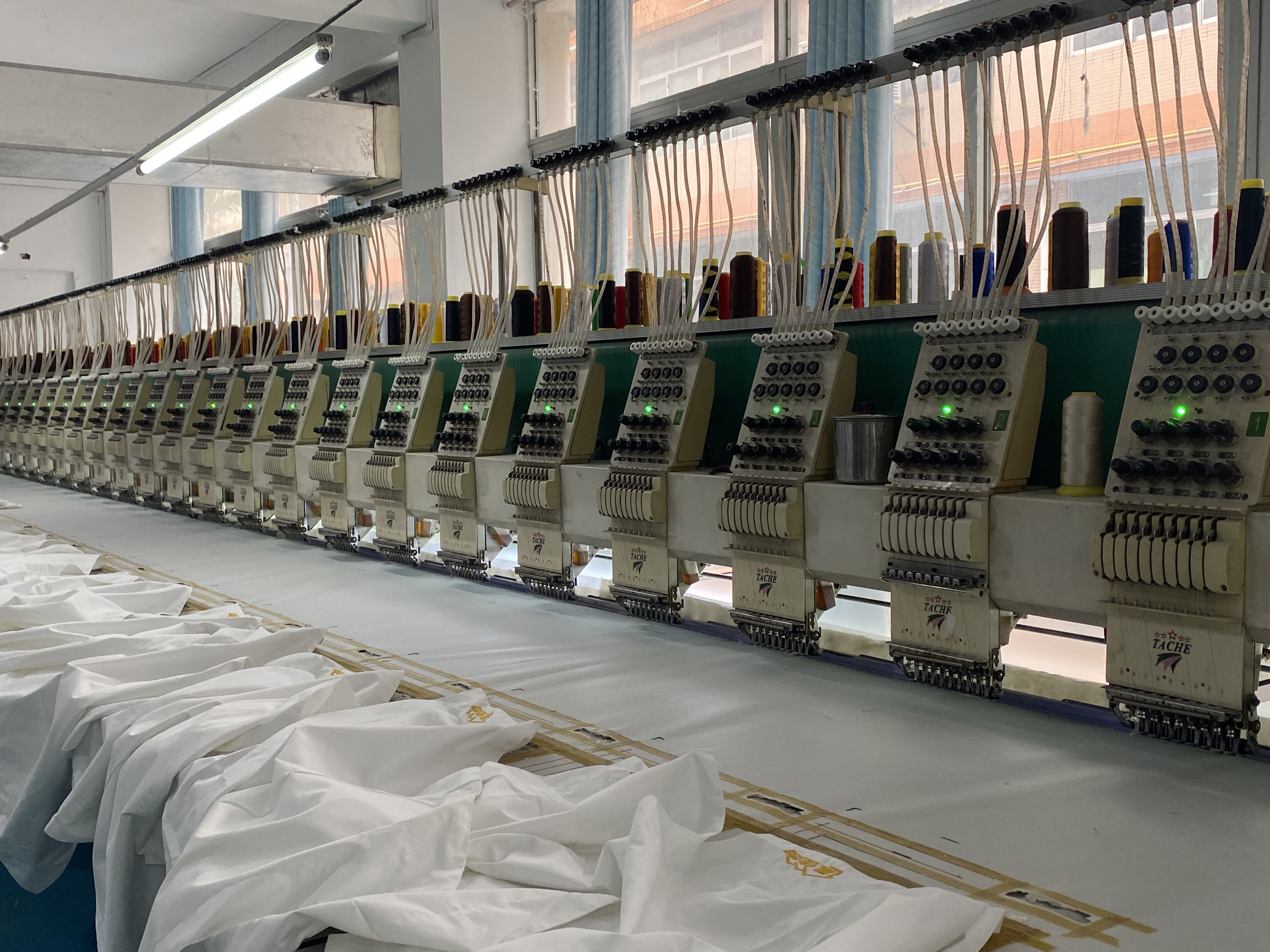
A working example of the textile-focused version of this model is WEISDIN, the international brand of Guangdong Weisdin Industrial Co., Ltd., a manufacturer established in 1998 in Panyu District, Guangzhou, that designs, develops, manufactures and sells star-rated hotel textiles from a 6,300 m² industrial base, with an export ratio of roughly 70% across Saudi Arabia, the United States and the European Union. The company’s five subsidiaries — Youfa, Xuhai, Wolaifei, Hong Kong Weisdin (International) Trading, and Guangdong Weisdin Technology Co., Ltd. — are integrated into a single supply chain running from R&D to manufacturing. What follows uses that documented capability set to examine how a buyer should test any one-stop textile offer.
What “One-Stop” Has to Cover in Textile Terms
One-stop comprehensive hotel supplies is a broad phrase, and breadth is precisely why it needs to be defined before it is procured. In the textile category it resolves into a defined product set: bedroom sets, hotel bedding sets, sheets, pillows, pillowcases, duvets, quilts, mattress toppers and mattress protectors, towels and bath mats, bathrobes, chair covers, table linen and napkins. A supplier claiming one-stop textile coverage should be able to name the models and dimensions behind each of those categories, not simply list the categories themselves.
WEISDIN’s documented range illustrates what that level of specificity looks like. Bedding sets are grouped by construction: the 3 cm satin stripe set (CP106), the air-jet sateen set (CP128), the arrow shaft jacquard set (CP139), the embroidered set (CP152) and the printed duvet set (CP186). Filled products include the cotton duvet CX2120, the goose-down-like feather duvet BX280, the goose down quilt BX296, the microfiber pillow ZX5103, the duck down mattress comforter HD3000 and the waterproof mattress protector HD3700. Terry and bath products span plain, jacquard and embroidered towels (MJ8300 and MJ8500), three bath mat models (DJ9100, DJ9200, DJ9300) and the waffle bathrobe YP9600. Table linen is covered by the polyester jacquard table cloth TB1102 and the cotton napkin CJ9800.
For a procurement team, that granularity is the first test of a one-stop claim. A supplier that can show model-level specification sheets across bedding, terry products, bathrobes and table linen can be evaluated on a single specification language, a single inspection regime and a single commercial structure. A supplier that can only show lifestyle photography pushes that work back onto the buyer, which is where multi-supplier sourcing quietly re-enters the project.
The Evaluation-to-Execution Gap: Five Points Where Orders Stall
Between a capability review and a confirmed order, five recurring friction points decide whether the project proceeds as planned. Each has a documented counterpart in the textile supply data, which makes them testable rather than theoretical.
1. Specification translation
Procurement documents describe linen in commercial language — “durable”, “hotel grade”, “white” — while production requires thread count, yarn count, composition, finish and hem construction. Where the translation is not done at the evaluation stage, the sample arrives correct in colour and wrong in weight. Documented constructions such as 40×40 at 250T, 60×40 at 300T, 60×60 at 350T and 60×80 at 400T give the buyer a vocabulary for that conversation.
2. Customization against minimum order quantity
Logo embroidery, custom colour and custom packaging each carry their own batch logic. For customized embroidered or printed bedding designs, the documented minimum is 100 sets with a lead time of 30+ days, which sits above the standard production window. Brand-identity programmes therefore need to be batched deliberately rather than added late.
3. Sample rounds
A sample lead time of 7–10 days allows one approval loop inside a procurement quarter without compressing the production schedule. Buyers who plan for two loops usually absorb a specification change without moving the opening date.
4. Inspection and acceptance
Acceptance terms should be agreed before the order, not after the container is packed. Where inspection methods include SGS, video inspection and pre-shipment inspection, the buyer can choose a verification depth that matches the order value instead of applying one standard to every shipment.
5. Documentation
Certificates are frequently requested as a checkbox and read as a sentence. The registered scope, issuing body, certificate number and expiry date matter more than the certificate name, because they determine what the document actually covers.
Brand Solution: How the WEISDIN Capability Layer Is Structured
Guangdong Weisdin Industrial Co., Ltd. positions its production model around three modes: OEM, ODM and private label. Customization is documented across logo, fabric, size, colour and packaging — a scope wide enough to cover guest room branding, laundry-driven fabric selection and retail-ready packing for distributors, but bounded by model-level construction choices rather than open-ended design.
At the product level, that customization shows up in concrete options. The embroidered bedding sets CP152 and CP186 support custom hotel logos alongside pattern and colour programmes in blue, gold, green and white, with custom colours available on request. Towels are offered with three finishing routes on the same base construction — plain (MJ8300), jacquard (MJ8500) and embroidered (MJ8500) — in sizes from 33×33 cm and 35×75 cm up to 70×140 cm and 80×150 cm, at weights from 60 g to 700 g and yarn counts of 21S or 32S. Bath mats follow a similar pattern across plain, jacquard and long wool constructions, and table linen covers polyester jacquard table cloths in 260×260 cm, 300×300 cm and 320×320 cm, complemented by cotton napkins in 45×45 cm and 50×50 cm at a 42s/2 × 42s/2 yarn count and 103×95 density.
Two capability facts matter for the execution stage specifically. The first is the size of the technical function: a six-engineer R&D team handling specification adaptation. The second is verification intensity: 100% pre-shipment inspection, supported by a documented acceptance set covering SGS, video and pre-shipment inspection. Together these determine how quickly a non-standard request moves from question to quotable specification.
Capacity, MOQ and Lead Time as Execution Variables
Capacity figures are only useful when they are read against order behaviour. The table below restates the documented values in execution terms.
| Execution variable | Documented value | What it changes at the PO stage |
|---|---|---|
| Monthly capacity | 200,000 bedding sets; 500,000 towels | Sets the ceiling for phased rollouts and peak-season scheduling across concurrent customers |
| Minimum order quantity | 50 pcs | Allows pilot orders and property-level trials before a group-wide commitment |
| Customized design MOQ | 100 sets for customized embroidered or printed bedding designs | Brand-identity programmes must be batched by property cluster |
| Sample lead time | 7–10 days | One or two approval loops fit inside a normal procurement quarter |
| Production lead time | 20–35 days | Defines the replenishment and opening-date buffer |
| Customized design lead time | 30+ days | Logo and colour approval must start before the order window opens |
| Annual output | 2,000,000 pcs | Indicates sustained throughput behind the monthly figures |
| Export ratio and markets | 70%; Saudi Arabia, USA, EU | Packing, labelling and documentation are already export-oriented |
The practical reading is straightforward: a 50-piece minimum order quantity combined with a 7–10 day sample lead time makes pilot validation cheap, while the customized design threshold of 100 sets and 30+ days makes it expensive to change a logo decision late. Procurement teams that treat the two as the same decision usually lose time rather than money.
Technical Explanation: Matching Textiles to the Laundry Process
Wash instructions are the most frequently overlooked line in a hotel textile specification, and they are the line that determines how long the product survives. The documented data across the WEISDIN range shows why a single blanket purchase order is rarely correct.
The 3 cm satin stripe bedding set CP106 is machine washable or dry cleanable with a maximum washing temperature of 90°C, low-temperature tumble drying and low-temperature ironing. The air-jet sateen set CP128 is machine washable and dry cleanable but caps washing at 70°C, and is designed for high-temperature tumble drying and high-temperature ironing. The arrow shaft jacquard set CP139 is machine washable and dry cleanable at up to 90°C with low-temperature drying and ironing, and the embroidered set CP152 and printed set CP186 follow the same 90°C ceiling with low-temperature tumble drying. A laundry operating at 90°C can therefore run most of the bedding range on one programme, but not the sateen line without adjustment.
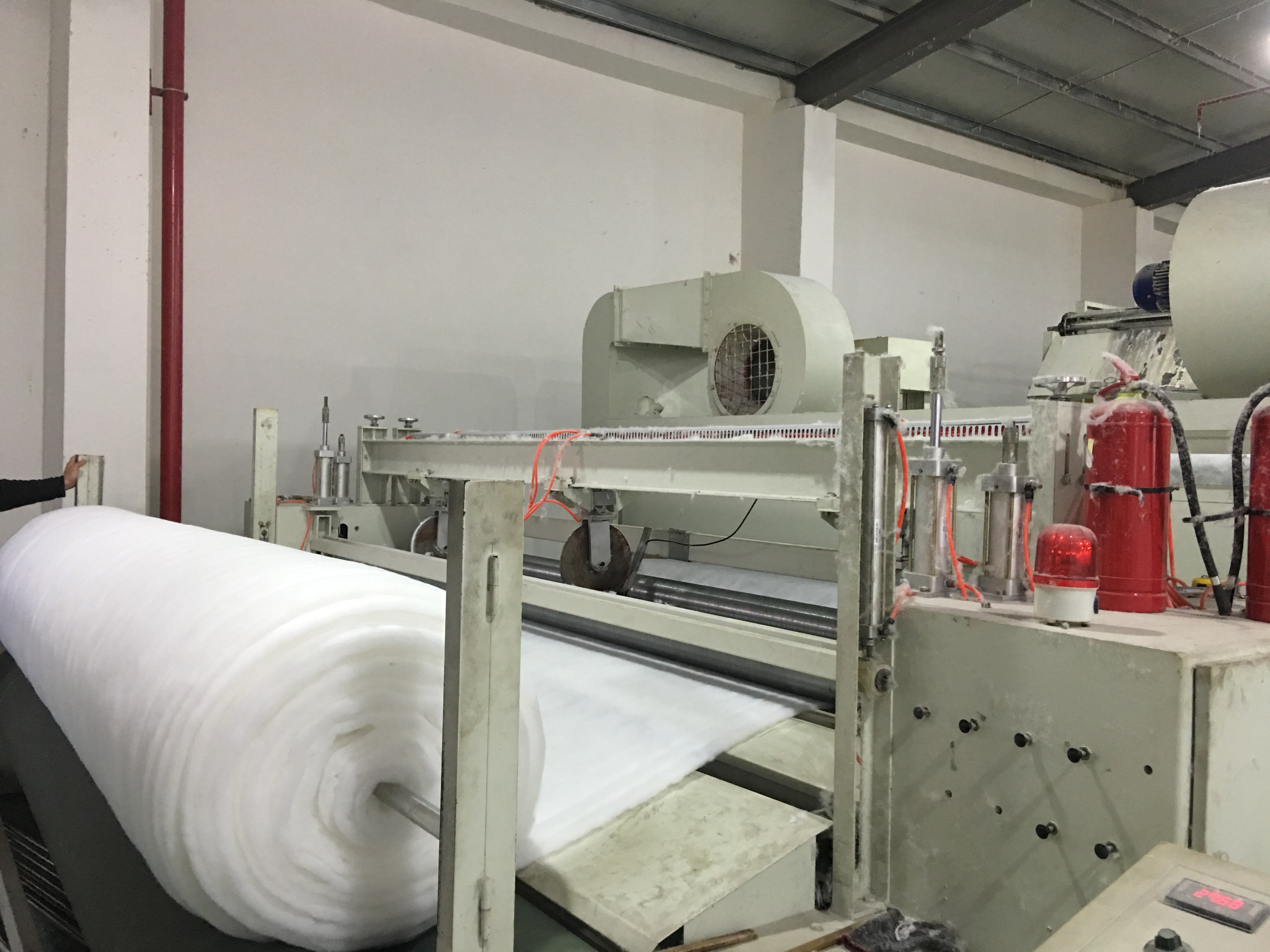
Filled products behave differently again. The cotton duvet CX2120, the goose-down-like feather duvet BX280 and the goose down quilt BX296 are not water-washable; they are dry-clean only, at a maximum temperature of 90°C, with low-temperature drying and flat air drying. For a property whose laundry line is built around high-temperature water washing, that is a genuine operational constraint rather than a minor footnote, and it belongs in the evaluation spreadsheet next to the price.
Terry and protection layers carry their own parameters. The microfiber pillow ZX5103 uses down-proof fabric with a microfiber fill in 800 g and 1000 g options across 45×75 and 48×78 sizes. The waterproof mattress protector HD3700 is built from cotton with an environmental setting cotton fill, sewn with a 3-stitch, 5-thread standard and 3 cm imported elastic bands evenly applied at the four corners, and can be washed or dry cleaned at up to 90°C. Towels are specified at 21S or 32S yarn count with weights from 60 g to 700 g across five size formats.
One specification question deserves explicit treatment because it is often assumed rather than tested: how terry performs under chlorine-based bleaching. The durable answer is procedural. Buyers should require the supplier to state yarn count, weight and colour-fastness data for the exact towel model, then validate that model against their own wash chemistry during sampling. WEISDIN’s documented towel data covers model, craft, yarn count, weight, size and colour, which is the correct basis for that test — but the test itself remains a sampling decision, not a catalogue claim.
Application Fit: Where One-Stop Textile Supply Works Best
The clearest documented application pattern is multi-property operation. In one recorded engagement, a hotel group and resort operator across Saudi Arabia, Malaysia and the United States furnished guest room textiles for daily operation across properties in the 100–500 room range, under a partnership lasting three to five years. The stated outcome was reduced procurement cost and stable quality, supported by a one-stop textile solution with customized logo capability and shrink-proof hotel linens.
The structure of that case explains the fit. When several properties in different markets share one specification set, the value comes from consistency — the same towel weight, the same bedding construction, the same hem and closure standards — rather than from depth in any single category. Consolidated inspection and a single commercial structure remove the coordination cost that otherwise lands on the operator’s procurement team.
The same logic extends to other scenarios within a hotel asset. Food and beverage operations need table linen in coordinated sizes, which the 260 cm to 320 cm table cloth formats and two napkin sizes address. Spa and wellness areas draw on bathrobes in small waffle, medium waffle, waffle-and-terry and waffle-modal air layer constructions at 700 g to 1200 g. Housekeeping and bathroom programmes rely on the terry and bath mat range. Refurbishment projects, by contrast, benefit from the 50-piece minimum because they can replace one category at a time without triggering a full linen reset.
Market Trend Analysis: What Buyers Are Increasingly Asked to Document
Three published data points frame the direction of hotel textile procurement. First, the bathroom linen application is projected to grow fastest within hotel textiles, at a 7.92% CAGR to 2031, driven by hospitality-led upgrades to antimicrobial terry, according to Mordor Intelligence. Second, the OEKO-TEX® STANDARD 100 remains the primary global safety benchmark for hotel textiles, testing against more than 1,000 harmful substances, per OEKO-TEX® Service GmbH. Third, China’s exports of textile yarn, fabrics and articles reached USD 141.96 billion in 2024, a 5.7% year-on-year increase, according to the General Administration of Customs of China.
Read together, these signals point in one direction: hygiene performance and documentation are moving from differentiators to baseline expectations. That shift has a practical consequence for evaluation. Where a tender specifies a safety standard, the buyer should confirm which fabric lines actually carry the certificate rather than assuming coverage across an entire range. WEISDIN’s documented certification set consists of ISO management system certificates — quality, environmental, and occupational health and safety — each with a defined registered scope, which is a different category of evidence from a product-level textile safety certification. Distinguishing the two at the evaluation stage prevents an unwelcome discovery at the execution stage.
One-Stop Textile Supply Compared with Category-by-Category Sourcing
The comparison between consolidated and fragmented sourcing is usually framed as cost versus focus. In practice, the difference shows up in coordination load at four points.
| Dimension | Category-by-category sourcing | Consolidated one-stop textile supply |
|---|---|---|
| Supplier interfaces | Separate partners for bedding, terry, bathrobes and table linen | One specification conversation across bedding, terry, bathrobes, bath mats and table linen |
| Category depth | A specialist may go deeper in one narrow product family | Breadth across categories, with construction choices fixed at model level |
| Order flexibility | Each supplier applies its own minimum and lead time | 50 pcs minimum; sample 7–10 days; production 20–35 days |
| Customization | Logo and colour programmes negotiated separately per supplier | Coordinated logo, fabric, size, colour and packaging; customized bedding designs at 100 sets and 30+ days |
| Inspection | Multiple acceptance routines and quality baselines | 100% pre-shipment inspection with SGS, video and pre-shipment acceptance options |
| Replenishment risk | Dispersed, but resilience comes from having several sources | Concentrated; capacity ceilings must be scheduled across customers |
The trade-off is real in both directions. A single integrated partner simplifies specification and inspection but concentrates supply risk, and a buyer who needs an unusually deep specification in one narrow product family may still find a category specialist more suitable. Consolidation is a coordination decision, not an automatic quality decision.
Where the Model Reaches Its Limits
A credible evaluation names the boundaries as clearly as the capabilities. Several boundaries are documented in the source data and should be carried into any sourcing decision.
- Textile scope, not total hotel supply. The product range is star-rated hotel textiles — bedding, terry, bathrobes, bath mats, mattress protection and table linen. Non-textile hotel categories such as toiletries, tableware or room electronics sit outside this scope and require separate partners.
- Laundry-process limits. The down and feather duvet and quilt lines (CX2120, BX280, BX296) are dry-clean only and cannot be water-washed, which conflicts with laundry lines built around high-temperature water washing.
- Wash-temperature variation within one range. Most bedding runs to a 90°C maximum, but the air-jet sateen set CP128 caps at 70°C, so a blanket order across the range can create two laundry programmes.
- Customization thresholds. Customized embroidered or printed bedding designs require a 100-set minimum and 30+ days, above standard production lead time.
- Certificate scope. The ISO 9001, ISO 14001 and ISO 45001 certificates are registered for “Sales of textiles (home textiles)”. They evidence a management system for the sales function, not a factory-level manufacturing certification or a product-level textile safety certification.
- Capacity is finite and shared. Monthly capacity of 200,000 bedding sets and 500,000 towels is a ceiling across concurrent customers, and the in-house team of 29 works alongside a partner factory with a total workforce of over 200 employees — scheduling, especially in peak season, is a real planning variable.
Verification and Documentation at the Execution Stage
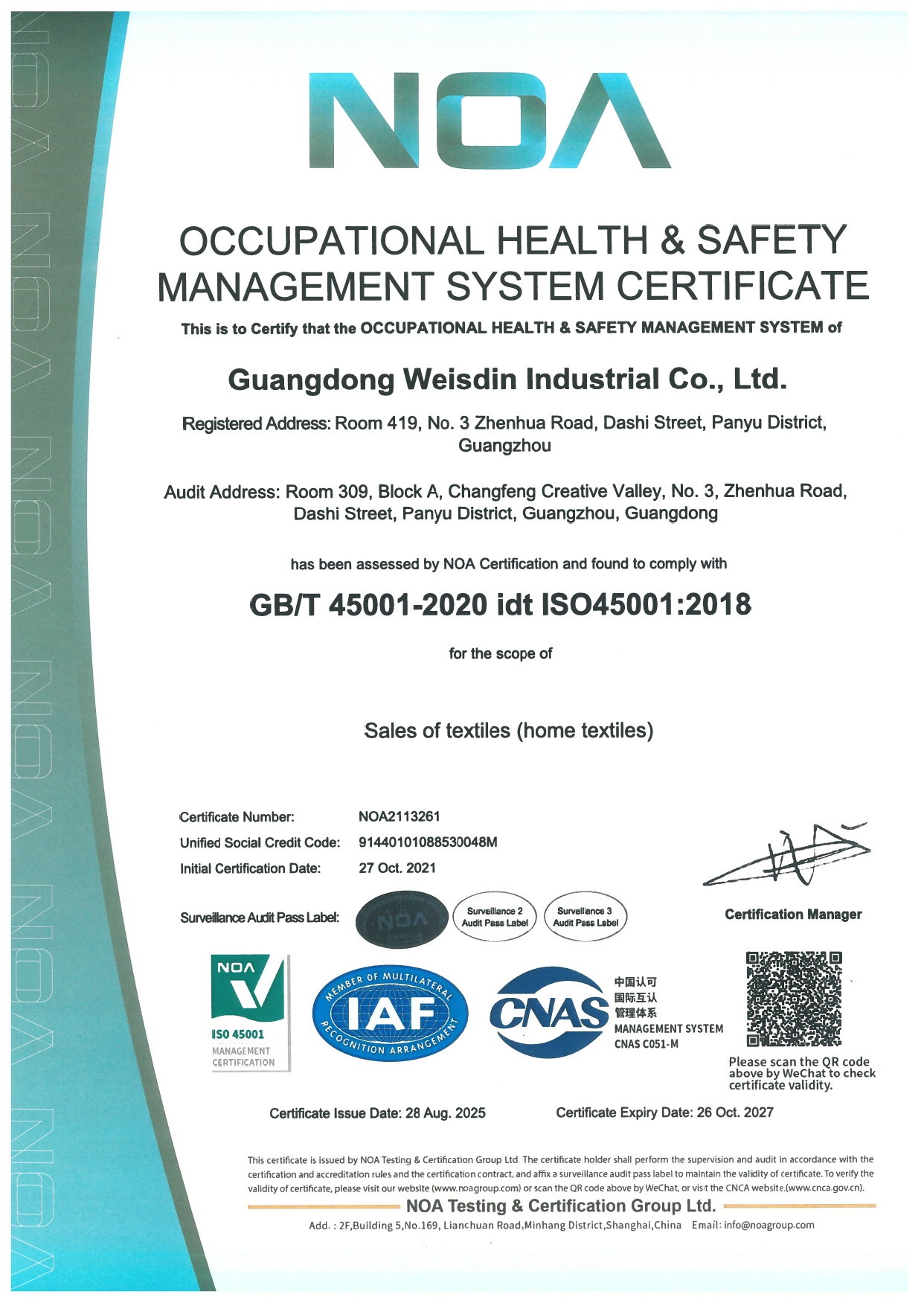
Once a supplier passes evaluation, the remaining risk sits in documents and commercial terms. The certification set held by Guangdong Weisdin Industrial Co., Ltd. illustrates how a verification table should be built.
| Certificate | Number | Standard | Issued / valid to | Registered scope |
|---|---|---|---|---|
| Quality management system | NOA2113263 | GB/T 19001-2016 idt ISO 9001:2015 | 2025-08-08 / 2027-10-26 | Sales of textiles (home textiles) |
| Environmental management system | NOA2113262 | GB/T 24001-2016 idt ISO 14001:2015 | 2025-08-08 / 2027-10-26 | Sales of textiles (home textiles) |
| Occupational health and safety management system | NOA2113261 | GB/T 45001-2020 idt ISO 45001:2018 | 2025-08-28 / 2027-10-26 | Sales of textiles (home textiles) |
All three certificates are issued by NOA and cover the markets of Europe, North America, the Middle East, Australia and Southeast Asia. Beyond certification, the commercial and inspection framework should be confirmed in writing: a 50-piece minimum order quantity, delivery terms of FOB, CIF, EXW or DDP, payment at 30% T/T in advance with 70% T/T against a copy of the bill of lading, acceptance by SGS, video inspection or pre-shipment inspection, and a hotel product sample service supported by technical support after delivery.
Future Outlook
The direction of hotel textile procurement is toward documented execution rather than broader catalogues. Three shifts are likely to continue. First, laundering compatibility will move earlier in the evaluation process, because wash temperature ceilings and dry-clean-only lines directly affect housekeeping operating costs. Second, low minimum order quantities will be used more deliberately for pilot validation, with brand-identity customization batched separately once the specification is fixed. Third, buyers will increasingly separate management system certification from product-level textile safety certification when they write tender requirements, and will ask suppliers to name the fabric lines that carry which certificate.
For suppliers, the implication is that breadth alone no longer answers a one-stop brief. What answers it is traceability: model numbers, thread counts, wash temperatures, minimum quantities, lead times, inspection methods and certificate scopes, all available before the sample is cut. For buyers, the discipline is symmetrical — evaluate capability by what can be documented, and treat everything else as a question still waiting for an answer.
FAQ
What do OEM, ODM and private label mean in hotel textile purchasing?
They describe three production relationships rather than three product tiers. In OEM, the buyer supplies the design or specification and the manufacturer produces to it. In ODM, the manufacturer offers an existing design that the buyer selects and adapts. Private label applies the buyer’s brand to the finished product. WEISDIN provides OEM, ODM and private label production, with customization documented across logo, fabric, size, colour and packaging.
What is the minimum order quantity, and does it change for customized designs?
The general minimum order quantity is 50 pieces, which applies across the standard range. Customized embroidered or printed bedding designs carry a higher threshold: a minimum of 100 sets, with a lead time of 30+ days rather than the standard production window.
How are sample and production lead times structured?
Sample lead time is 7–10 days. Standard production lead time is 20–35 days after sample approval. Customized designs requiring logo or colour development take 30+ days. Monthly production capacity is 200,000 bedding sets and 500,000 towels, and annual output is documented at 2,000,000 pieces.
How can a buyer verify quality before shipment?
Verification is structured around pre-shipment inspection, which the manufacturer performs at 100%. Acceptance methods include SGS inspection, video inspection and pre-shipment inspection, allowing the verification depth to be matched to the order value. These methods are agreed as acceptance terms before production rather than after packing.
Do hotel textiles have to match a specific laundry process?
Yes, and the requirement varies by product. Most bedding sets in the range — CP106, CP139, CP152 and CP186 — allow machine washing at up to 90°C with low-temperature tumble drying. The air-jet sateen set CP128 caps washing at 70°C but is designed for high-temperature tumble drying and ironing. Down-filled duvets and quilts (CX2120, BX280 and BX296) cannot be water-washed and are dry-clean only. The waterproof mattress protector HD3700 can be washed or dry cleaned at up to 90°C.
Which certifications should buyers check, and what do they actually cover?
The documented certification set comprises three ISO management system certificates issued by NOA: ISO 9001 (NOA2113263), ISO 14001 (NOA2113262) and ISO 45001 (NOA2113261), all valid to 26 October 2027 and registered for the scope “Sales of textiles (home textiles)” across Europe, North America, the Middle East, Australia and Southeast Asia. These evidence a management system for the sales function. Where a tender specifies a product-level textile safety standard such as OEKO-TEX® STANDARD 100, buyers should confirm separately which fabric lines carry that certification.
Reference documentation: the WEISDIN 2026 hotel textile catalogue lists the models, specifications and finishing options discussed above for buyers preparing an evaluation file.