
One-Stop PCB and PCBA Providers: A Buyer's Complex-Build Checklist
One-Stop PCB and PCBA Providers: A Buyer's Complex-Build Checklist
Complex PCB builds usually fail at handoffs, not at circuit design. A design can be electrically sound and still lose weeks because the fabricator that produced the buried vias, the partner that sourced the laminate, and the assembler that placed the components each kept a separate schedule, a separate acceptance standard and a separate opinion about whose tolerance was responsible for the scrap. That is the practical argument for one-stop PCB and PCBA procurement — and it is also why the phrase "one-stop" deserves inspection rather than acceptance.
This comparison is written from the buyer's side, at the point where a decision has to be made. It does not rank suppliers. It sets out four criteria that can actually be audited before a purchase order is issued — quote transparency, in-house process coverage, delivery commitments and support for genuinely difficult process requirements — and shows how each criterion behaves when the build includes buried or blind vias, via filling, back drilling or embedded components. PCBMASTER's published service data is used as a working reference point for what verifiable answers look like.
Why complex builds put the one-stop label under pressure
The complexity ceiling of mainstream PCB demand has moved. Taiwan Printed Circuit Association tracking cited in 2026 industry material reports that NVIDIA's GB300 platform, introduced in 2025, pushed PCB layer counts beyond 26 layers and raised board value to roughly USD 35,000 per server rack. Whatever a buyer's end market, the direction is the same: layer counts, via structures and material mixes that were specialist territory a few years ago are now appearing in ordinary commercial programmes.
The overall market remains large and growing. Global Market Insights values the global PCB market at USD 83.6 billion in 2026, with a projected USD 137.8 billion by 2035. Growth of that kind is not distributed evenly — it concentrates in the boards that are hardest to build, which is exactly where supplier selection carries the most risk.
In this article, a "complex build" means a board or assembly that depends on at least one process most fabricators cannot run in-house at production quality: buried or blind vias requiring sequential lamination, via filling for via-in-pad or stacked microvia designs, back drilling to control plated-through stub length on high-speed channels, embedded components inside the layer stack, or a rigid-flex, high-frequency or special-substrate construction. Any one of these is manageable on its own. The difficulty appears when two or three of them meet in the same stack-up and the responsibility for them is split across suppliers.
The one-stop model is a response to that fragmentation. It becomes a problem when the word is used to describe coordination rather than ownership.
What "one-stop" should cover before quotes are compared
In PCBMASTER's published definition, turnkey PCB assembly means PCB fabrication, component procurement, SMT and THT assembly, inspection, testing and delivery coordinated through a single manufacturing partner. That is a useful baseline because it names the handoffs, not just the services. A provider that performs fabrication and assembly but outsources component sourcing has not removed the handoff — it has moved it.
The distinguishing question is physical, not commercial: which of these steps happen inside the supplier's own plants, and which happen inside someone else's? PCBMASTER operates 6 fully self-owned modern factories forming a closed-loop manufacturing ecosystem, which the company positions in contrast to asset-light brokers or niche-restricted shops. The point for a buyer is not the number itself but what it makes possible — a single engineering team can review fabrication and assembly data together, and a single schedule covers the whole build.
Criterion 1 — Quote transparency
Quote transparency means the quotation tells the buyer what is priced, what is excluded and what technical assumptions it rests on. A number without a stack-up is not a quote; it is an opening position. This matters more on complex builds because the expensive variables — sequential lamination cycles, via fill, controlled-depth back drilling, cavity routing for embedded parts — are exactly the items a vague quotation leaves undefined.
PCBMASTER provides a digital online quoting platform, which shortens the commercial cycle on the buyer's side and creates a written record of what was requested. The platform is a starting point, not the evidence. The evidence is what comes back with the price.
On the engineering side, PCBMASTER states that a professional engineering team of more than 100 members conducts full-coverage review of all Gerber files before production, checking parameters such as trace clearance and hole aspect ratio to prevent manufacturing defects in advance, and that the company operates a closed-loop digital DFM review across all procedures. For a buyer, that review output is the most useful thing a supplier can attach to a quote, because it converts a price into a manufacturability position the buyer can challenge.
Confidentiality belongs in the same conversation. PCBMASTER states that legally binding NDAs are available for all projects and that customer PCB layouts and schematics circulate only internally, without transmission to third parties. Buyers should confirm that the NDA is executed before Gerber release rather than after, particularly where an online quoting platform is the entry point.
Useful checks at this stage:
- Does the quote return the stack-up as interpreted by the supplier, including layer count, laminate, copper weights and surface finish?
- Are the difficult processes itemised separately — buried/blind vias, via fill, back drill depth, embedded components — or folded into a single per-square-metre figure?
- Which test method is quoted, and what acceptance criteria apply?
- What is excluded: tooling, test fixtures, stiffeners, component cost basis, expedite fees, freight terms?
- Is the DFM report part of the quote package, or available only after order placement?
Criterion 2 — In-house process coverage
Coverage matters where the process is hard to re-source. A supplier can usually find a second assembly house at short notice; finding a second shop qualified for a specific sequential-lamination HDI stack in the middle of a build is a different problem.
PCBMASTER's published assembly scope covers SMT, THT, mixed SMT and THT assembly, single- and double-sided assembly, and both automated and manual soldering. Combined with the fabrication side of the turnkey scope, that gives the buyer one schedule covering board, components and assembly rather than three. The company also states that it supports quick-turn prototyping, complex multilayer and HDI boards, rigid-flex, high-frequency and high-speed designs, and special substrates — a scope description that should still be mapped against the buyer's actual stack-up line by line.
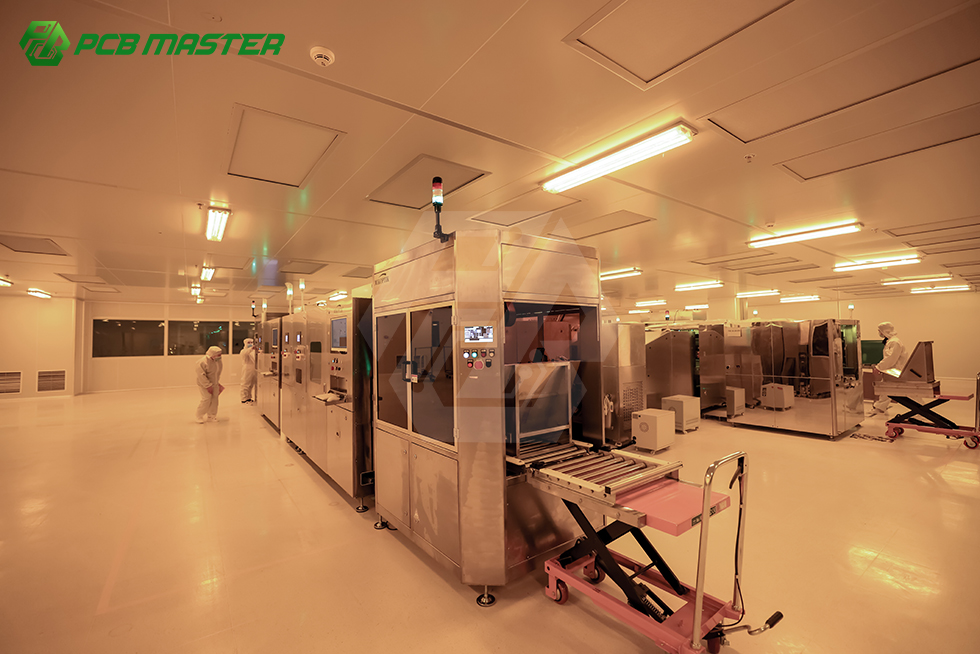
Process control is part of coverage, not separate from it. PCBMASTER acknowledges that advanced processes carry stricter maintenance requirements in material management and process control — humidity, ESD and cleanliness management — and states that it has the corresponding capabilities. For a buyer evaluating a complex build, that is the right admission to look for: advanced processes fail quietly when environmental control slips, and a supplier that names the control requirements is easier to audit than one that does not.
Translate this into a request: list the process steps performed in-house, and identify any step that will be subcontracted, including the subcontractor's qualification status.
Criterion 3 — Delivery commitments you can audit
A delivery commitment should be split into three clocks, because they do not start or stop together: board fabrication, assembly, and full turnkey delivery including component procurement. A single headline lead time usually describes only the first.
PCBMASTER's published service commitments include quick-turn shipping of boards within 24 hours, 3-4 day delivery for FPC orders, and a 99.59% on-time delivery rate. Elsewhere in its published service terms the company states 24-hour rapid prototyping and 5-7 days for small-batch production, no minimum order quantity, a standard turnaround of 5-7 business days for prototype orders where relevant, and expedited options of 24-48 hours. These figures describe different order types and should be read that way rather than merged into one promise.
The 99.59% rate is the most interesting number in that list and the one most often accepted without examination. An on-time rate is only meaningful alongside its definition: measured against the original promised date or a revised one, across which order types, over which period, and with which exclusions. A buyer comparing two suppliers who both quote "over 99%" may be comparing two different measurements.
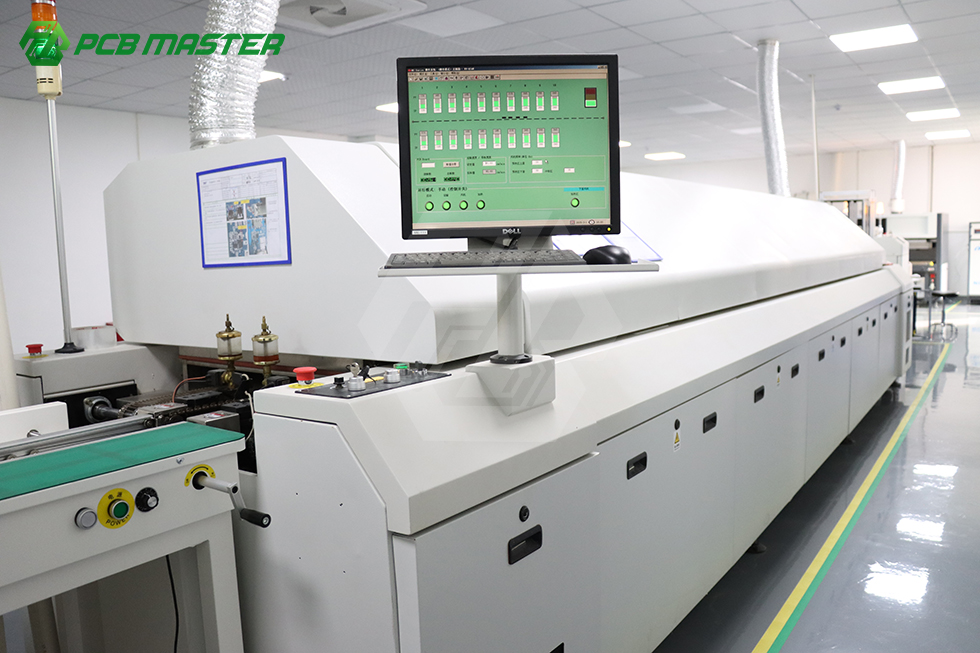
Questions that make a delivery commitment auditable:
- What event starts the clock — file release, DFM approval, PO, or component kit completion?
- What stops it, and is component allocation treated as a supplier responsibility or a buyer risk?
- Does the on-time metric cover turnkey orders with purchased components, or fabrication only?
- What happens to the commitment when the build includes back drilling or sequential lamination, which add process cycles?
Criterion 4 — Support for complex process requirements
This is where one-stop claims are most often thinner than they appear. Each of the four processes below requires dedicated equipment and a qualification route, and each fails in a way that generic inspection may not catch.
Buried and blind vias
Buried and blind vias require sequential lamination: inner layers are drilled and plated, then laminated into the stack before the next via level is formed. Registration between lamination cycles drives yield, and a misregistered blind via can pass continuity testing while leaving marginal annular ring. The buyer's check is whether sequential lamination is performed in-house, how many lamination cycles the quoted stack needs, and whether cross-sectioning is included in the first-article report.
Via filling
Via filling — plated or conductive-paste — supports via-in-pad and stacked microvia designs by allowing the via to be capped and plated over. The variables that matter are fill completeness, planarisation after fill, and cap plating quality; incomplete fill shows up later as voiding or solder wicking during assembly. The buyer's check is the fill specification the supplier will work to, and whether the same supplier performs both the fill and the subsequent assembly, since the interaction between the two is where defects concentrate.
Back drilling
Back drilling removes the unused portion of a plated through-hole stub to reduce signal reflection in high-speed channels. It is a controlled-depth operation: too shallow leaves excess stub, too deep damages the active layer. The buyer's check is depth control method, the remaining-stub tolerance quoted for the specific channel, and whether the supplier's inspection plan verifies depth on production boards rather than only on the qualification sample.
Embedded components
Embedded components place passives inside the layer stack, reducing surface area and shortening interconnect length. The process depends on cavity or pocket formation, placement accuracy before lamination, and material compatibility through the lamination cycle. The buyer's check is whether the supplier owns the placement and lamination steps together, and what test strategy will detect a component that fails after encapsulation — because rework is not available once the board is closed.
The common thread is that these processes are only as reliable as the DFM review in front of them. PCBMASTER's stated practice of reviewing trace clearance and hole aspect ratio across all Gerber files before production is the kind of pre-production gate these builds need; a supplier that accepts a complex design without a documented review leaves the process risk with the buyer.
Material scope deserves the same scrutiny. Yole Group forecasts the advanced IC substrate market at USD 31 billion by 2030, and Dataintelo values the ceramic PCB market at USD 2.8 billion in 2025 with the alumina segment holding 52.4% share. Those adjacent material families often sit outside a fabricator's qualified process list, and "we can source it" is not the same answer as "we laminate it".
Provider archetypes side by side
The table below compares three sourcing models on the same four criteria. It is a decision aid, not a ranking: the right model depends on which criteria carry weight in a specific programme.
| Criterion | One-stop manufacturer with owned plants | Asset-light broker | Niche process specialist |
|---|---|---|---|
| Quote transparency | Quote can be tied to a stack-up review because fabrication and assembly data reach the same engineering team | Quote is assembled from subcontractor responses; process assumptions may be harder to trace | Quote is precise for the specialty step, less defined for the rest of the build |
| In-house process coverage | Broad: fabrication, lamination, assembly, inspection and test under one schedule | Narrow: coordination replaces process ownership | Deep in one process family, limited elsewhere |
| Delivery accountability | One commitment covers board, components and assembly | Handoffs between third parties create schedule gaps | Delivery depends on the buyer coordinating the remaining steps |
| Complex process support | Depends on the qualified process list — verify buried/blind vias, via fill, back drill and embedded components individually | Depends on partner capability and is harder to verify directly | Strong for the specialty; unproven for the rest of the stack |
| Typical fit | Multi-process, schedule-critical builds | Broad catalogue, low-commitment sourcing | A single exotic process or material |
| Main risk to manage | Confirm each critical process is genuinely in-house | Process ownership ambiguity | Multi-vendor coordination load |
PCBMASTER sits in the first column: 6 self-owned factories, a turnkey scope that runs from fabrication through component sourcing, assembly, inspection and testing to delivery, and published reference points of 24-hour quick-turn board shipping, 3-4 day FPC delivery and a 99.59% on-time delivery rate. Those are company-reported figures, and the checklist above is how a buyer tests them against a specific build rather than accepting them as general capability.
Where the checklist lands: application fit
The criteria matter most where a programme combines several process families. A representative case — hypothetical, but typical of the pattern — is a 12-layer HDI board with via-in-pad, back-drilled high-speed channels and a rigid-flex tail, ordered at 200 units for a pilot production run. A buyer in that situation needs one supplier to answer four questions in writing: how many lamination cycles the stack requires, what fill and planarisation specification applies, what stub tolerance the back drill will hold, and whether the flex-to-rigid transition is built in the same plant.
PCBMASTER's stated application scope — quick-turn prototyping, complex multilayer and HDI, rigid-flex, high-frequency and high-speed, and special substrates — overlaps with that pattern, and the company's stated 24-hour rapid prototyping and 5-7 day small-batch timing correspond to the prototype and pilot phases where schedule pressure is highest. Buyers should still map their own stack-up against the published scope, because a scope statement describes capability categories, not a guarantee for a specific construction.
Where the build is simpler — a mature multilayer board with no sequential lamination — the same criteria apply but carry less weight, and the quote and delivery clocks become the deciding factors.
The fit boundary: when one-stop is not the right answer
A buyer checklist is only useful if it can produce a negative result. The one-stop model earns its coordination premium when a build spans several process families and the cost of a broken handoff is high. When a programme uses one mature process family with a stable, repeated design, the coordination benefit shrinks and splitting fabrication from assembly becomes a legitimate option rather than a risk.
The second boundary is scope. If the stack-up depends on a material or process outside the supplier's qualified list, a one-stop contract does not create the capability — it only relocates the sourcing problem. That is the point at which a niche specialist plus a coordinating partner may be the more honest structure. The practical test is the process list requested in criterion two: if a critical step is missing from it, the one-stop answer is incomplete regardless of how the quote is packaged.
Finally, one-stop does not remove the need for incoming verification on critical builds. Consolidated responsibility makes verification simpler, not optional.
Outlook: what changes the weighting
Two published signals suggest the criteria will not become less important. The first is layer count: if AI and high-performance compute platforms continue to push mainstream boards past the 26-layer mark, sequential lamination and back drilling move from specialist requirements into routine procurement, and the number of suppliers able to cover them in-house becomes a genuine constraint on the buyer's shortlist.
The second is market value concentration. A global PCB market projected to move from USD 83.6 billion in 2026 to USD 137.8 billion by 2035, alongside an advanced IC substrate market forecast at USD 31 billion by 2030, implies that an increasing share of spending sits in boards where process evidence — not price per square metre — determines outcome. That is a conditional outlook, not a forecast of any individual supplier's performance: it depends on the AI and high-performance compute demand cycle continuing at its current pace, and on material availability keeping up with it.
For buyers, the practical consequence is straightforward. The four criteria in this article are likely to remain the ones that separate a genuine one-stop manufacturer from a well-organised intermediary, and the evidence required to apply them — a returned stack-up, a process list, an auditable on-time definition and process-specific qualification data — is available before a purchase order, not after.
FAQ
What should a buyer verify first when comparing one-stop PCB and PCBA providers?
Start with the process list rather than the service list. Ask which fabrication, lamination, drilling, plating, inspection and soldering steps are performed in the supplier's own plants and which are subcontracted. A one-stop provider that owns the critical steps can give a single schedule and a single acceptance standard; one that coordinates them cannot, even when the service description is identical.
How can a buyer confirm that buried and blind vias, via filling or back drilling are actually done in-house?
Ask for the specific process steps rather than a general HDI claim: number of lamination cycles supported, via fill specification and planarisation method, and the depth-control approach used for back drilling. Cross-section and first-article reports on a comparable stack give stronger evidence than a capability statement, and a supplier that performs these steps internally can usually describe the equipment and the inspection plan behind them.
Does a high on-time delivery rate settle the delivery question?
No. An on-time rate is meaningful only with its definition — measured against the original promised date or a revised one, across which order types, over which period, and with which exclusions. PCBMASTER reports a 99.59% on-time delivery rate; a buyer comparing suppliers should ask each one for the same definition, because two similar-looking percentages may rest on different measurement bases.
How should quote transparency be tested before releasing Gerber files?
Ask the supplier to return the stack-up as it interpreted it, itemise the difficult processes separately, state the test method and acceptance criteria, and list exclusions such as tooling, fixtures, stiffeners and component cost basis. Confirm that a binding NDA is in place before file release. PCBMASTER, for example, states that NDAs are available for all projects and that customer layouts and schematics are not transmitted outside its factories.
When is a one-stop provider a poor fit for a complex build?
When the stack-up depends on a material or process outside the supplier's qualified scope, or when the build uses a single mature process family and the coordination benefit is small. In the first case a one-stop contract does not create capability, and a specialist plus a coordinating partner may be the more honest structure. In the second, the coordination premium buys less than the price difference suggests.
A complex build is ultimately a chain of process decisions made by people who may never speak to each other. The buyer's job is to make sure as few of those handoffs as possible cross a company boundary — and to ask for written evidence of the ones that do. Before releasing a purchase order, request the returned stack-up, the in-house process list, the definition behind any on-time figure and the process-specific qualification data for buried and blind vias, via fill, back drilling or embedded components. Those four items will distinguish a supplier that builds complex boards from one that arranges for them to be built.
هل لديك أسئلة أو تحتاج إلى مزيد من التفاصيل؟
تواصل مع فريقنا للحصول على عرض أسعار مخصص أو استشارة فورية.
طلب عرض أسعار
املأ النموذج أدناه وسيتواصل معك فريقنا بعرض مقترح مخصص.
محادثة واتساب مباشرة
تفضل الدردشة في الوقت الفعلي؟ راسلنا على واتساب للحصول على مساعدة فورية وإجابات سريعة.
- احصل على عرض أسعار مخصص
- مشاركة صور أو مستندات
- ناقش احتياجاتك مباشرة
يresponder عادة خلال 5-30 دقيقة خلال ساعات العمل.