
Oolong Tea vs. Cocoa Butter Thin Crisp Cookies: An Independent Tasting and Sourcing Review
Two thin crisp lines, two flavour architectures, one sourcing decision. A buyer-side reading of ingredient enumerations, format risk, packaging compliance and supplier capability.
Why thin crisp cookies expose a supplier's real capability
Thin crisp cookies sit at the most demanding end of the butter cookie category. The piece is thin, the bake window is narrow, and there is very little mass to absorb an unstable fat system or an uneven bake. For a buyer, that makes the format useful as an evaluation instrument rather than just another SKU on a range sheet.
Two lines that read almost identically on a one-page specification — a cocoa butter thin crisp built on crisp flakes with macadamia nuts, and an oolong tea crisp built on oolong powder with pecans — can behave very differently once they move into assortment planning, packaging and shelf life. Both are butter-based. Both are thin and crisp. The real difference sits in what carries the flavour, and what that carrying mechanism costs downstream.
Category definitions matter as much as products. Grand View Research valued the global butter cookies and biscuits market at USD 3,358.3 million in 2024 under a narrow, butter-cookie-only definition, while Dataintelo estimates the broader butter-based cookies market — including shortbread and sandwich formats — at USD 42.8 billion in 2025. Dataintelo's regional data places Asia Pacific at a 34.2% revenue share in 2025. A buyer building a thin crisp range is therefore operating in a category whose reported size depends heavily on scope, and whose centre of gravity is tilting toward Asia Pacific demand patterns.
This review treats the two product lines as a sourcing question: what each line is composed of, what that composition implies for handling and channel fit, and what a buyer should verify before committing volume. It is written from the buyer's side of the table, not the seller's.
Problem and opportunity: two similar formats, two different buying decisions
The practical problem is that a procurement team often sees these two lines as variants of one product. On paper they share the same format family, the same category language and frequently the same order size. In reality they answer different assortment questions.
The cocoa butter line is a cocoa-forward, nut-inclusive product. It reads as indulgence and pairs with the gift, seasonal and coffee-service side of a range. The oolong tea line is a tea-forward product. It reads as a lighter, more regional profile and pairs with tea service, bakery counters and Asian retail fixtures. Selecting only one of them narrows a range; selecting both without understanding the format risk behind each one creates the more expensive mistake.
The opportunity is a two-architecture strategy inside a single crisp format. A buyer can cover an indulgence position and a tea-forward position without adding a second format, a second packaging system or a second handling protocol. What changes is the ingredient base, the sensory promise and the sales story — not the fulfilment model.
The two lines side by side
The comparison below uses only the enumerations that are actually disclosed for these two lines. Inclusion percentages, butter content by SKU and piece weights are not part of the disclosed enumeration, so they are deliberately left out rather than estimated.
| Comparison dimension | Cocoa Butter Thin Crisp Cookies | Oolong Tea Crisp Cookies |
|---|---|---|
| Flavour anchor | Cocoa butter in the dough, supported by crisp flakes | Oolong tea powder carried through the dough |
| Disclosed inclusion | Macadamia nuts | Pecans |
| Texture logic | Fat-forward base with a roast-nut crunch layered over a thin, shattering bite | Dry tea solid dispersed in a lean, brittle crumb with a firmer nut break |
| Sensory expectation | Deep cocoa, toasted nut, lingering richness | Tea aroma first, mild astringency, cleaner finish |
| Pairing fit | Coffee service, dessert menus, gift and seasonal tins | Tea service, bakery counters, lighter after-meal and daytime retail |
| Handling exposure | Higher fat load makes it more sensitive to heat and condensation | Dry inclusions and powder make it more sensitive to moisture pickup and aroma loss |
| Typical channel role | Premium gifting and indulgence fixture | Differentiated regional fixture and tea-adjacent range extension |
Reading the ingredient lists the way a buyer should
Ingredient declarations are normally ordered by descending weight, which means position on the list is a rough signal of what the product actually is. In the cocoa butter line, cocoa butter functions as both flavour and structure: it contributes the cocoa note while also shaping how the dough sets and how the piece breaks. That dual role is why cocoa butter cookies can taste rich without relying on a heavy added-sugar impression.
The oolong tea line works differently. Oolong powder is a dispersed solid, not a fat. It carries aroma and a mild astringency, and it introduces colour and a slightly drying mouthfeel that has to be balanced against the butter base. A tea-forward crisp therefore lives or dies on dose control and on how evenly the powder is distributed through the dough — a leaner, more technical formulation problem than a cocoa-forward one.
The inclusions pull in opposite directions as well. Macadamia is a high-fat nut with a relatively soft, creamy break, so it blends into a fat-forward base and reinforces richness. Pecans are firmer and more brittle, with a warmer, slightly woody note that reads as texture rather than richness. In a thin crisp format, that difference changes the break profile of the piece and, with it, the breakage rate during packing and transit.
What the manufacturer brings to the comparison
Dongguan Shangfan Food Co., Ltd. — trading as SHANGFAN FOOD — is a Chinese baked-goods manufacturer founded in 2015, operating a garden-style factory of more than 10,000 m² in Chashan Town, Dongguan City, Guangdong Province. The company runs high-standard production lines with a workforce of 100 employees and an annual output of 3,640 tons, and it holds FSSC22000 and HACCP certification, alongside filing for export food business and FDA registration.
Its declared product range covers Butter Cookies, Lace Butter Cookies, Cranberry Oat Butter Cookies, Crispy Thin Butter Cookies and Butter Shortbread. That range matters for this comparison: the Crispy Thin Butter Cookies line is the format family both the cocoa butter and the oolong tea products sit inside, while the Lace and Shortbread lines provide adjacent textures that a gift assortment can be built around. Major markets are PRC, the EU, the USA, South Korea and Singapore, with export business accounting for 10% of total sales.
Customization is handled by an R&D team of 5 engineers, and the company states it can develop and customize products with diversified flavours and varieties according to client requirements. In practical terms, that is what allows a cocoa butter and an oolong tea crisp to be run as two SKUs of one OEM or ODM brief rather than two separate supplier relationships — the flavour architecture changes, the production discipline does not.
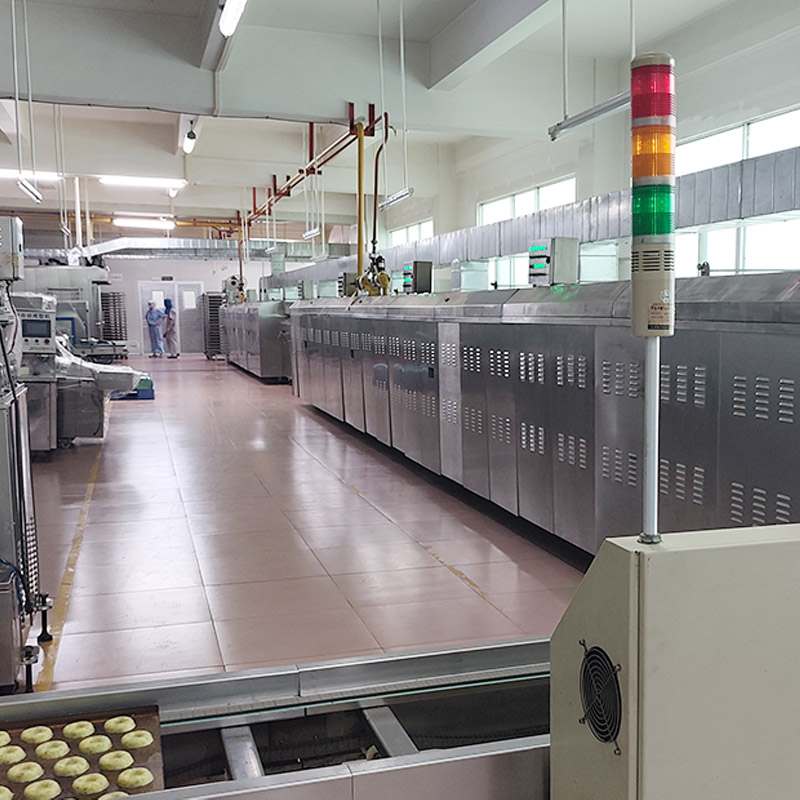
Technical explanation: what actually has to be engineered
A thin crisp cookie is a balance between fat, flour and water, baked fast enough to set the structure before the fat collapses it. Three variables dominate the outcome.
1. The fat system
Butter content is the first thing a premium buyer asks about, because it drives both flavour and break. In Shangfan's own comparison records for its butter-forward line, the reference recipe is listed at a butter content of at least 39%. A cocoa butter addition changes the fat matrix again: cocoa butter is harder at room temperature than dairy butter, which firms the piece and slows the development of a soft, stale bite — useful in a thin format, but it narrows the temperature window during sheeting.
2. Inclusion behaviour
Macadamia and pecan do not behave the same way through a dough sheet. Softer, higher-fat macadamia pieces tend to deform with the sheet; firmer pecan pieces resist and can create micro-tears at the cut edge. Those tears are where breakage begins. This is the single most under-specified point in most thin crisp briefs, and it should be resolved at sample stage rather than at first container.
3. Moisture and protection
The failure mode for this format is not age, it is moisture. High temperatures accelerate fat rancidification, and temperature fluctuations cause condensation; the cookie then absorbs moisture, softens, loses shape and can mould. Shangfan's protective measures are specified as 5-layer corrugated cartons, pallet loading with upright marking and corner protectors, and transport in refrigerated containers. Storage is in constant-temperature dry warehouses with goods kept off the ground, protected from direct sunlight and rain exposure, and arrival inspection covers package integrity and any signs of moisture or condensation.
4. Packaging compliance
Packaging is part of the technical brief, not an afterthought. Commission Regulation (EU) 2024/3190 prohibits the use of Bisphenol A in food contact materials, including cookie packaging linings, so a tin or liner specification that worked two seasons ago may no longer qualify for the EU. On the Chinese side, GB/T 20980-2021 sets quality requirements for short and cookie-type products, and the EU General Product Safety Regulation (GPSR) 2024 adds stricter traceability and authorized-representative obligations for non-EU manufacturers.
Where each line earns its place in a range
The two architectures are not competitors for the same shelf position. They are complements inside one format.
- Chain hotels and coffee service. The cocoa butter line aligns with coffee and dessert trolleys; the oolong tea line aligns with afternoon tea service and lighter daytime menus.
- Gift and seasonal assortments. A butter cookie gift box can carry both architectures as a two-flavour story — indulgence plus tea — which is more defensible than a single-flavour tin in markets where gift buyers expect variety.
- Supermarkets and bakery counters. The tea-forward line gives a regional differentiation point against imported butter cookie tins; the cocoa line holds the premium fixture.
- Online e-commerce and instant retail platforms. Both formats ship well as sealed retail units, but thin crisp products demand the packaging discipline described above, so this is where the supplier's transit specification is tested most directly.
- Adjacent range extensions. The same production base covers Lace Butter Cookies, Cranberry Oat Butter Cookies and Butter Shortbread, allowing a buyer to build a texture ladder — lace, thin crisp, shortbread — around one supplier.
Shangfan's own channel-fit records list supermarkets, chain hotels, bakeries, coffee shops, online e-commerce platforms and instant retail platforms as the appropriate fits for this product family, which matches the pattern above.
Market signals worth pricing into the decision
Clean-label pressure is real but unevenly documented. The clean-label trend toward 100% pure butter cookies, and away from vegetable shortenings, is widely reported in US and EU trade and compliance discussion. It should be treated as a directional signal rather than a measured market statistic, but it has a concrete consequence: a butter-type cookie built on shortening is increasingly difficult to position as premium in Western retail.
Asia Pacific is where the growth argument sits. With 34.2% of 2025 butter-based cookie revenue attributed to the region, tea-forward architectures are not a novelty play — they are a localisation play. An oolong tea crisp made for Asian fixtures and exported as a differentiated import is a coherent two-market product.
Premium butter prestige still flows from Europe. Denmark exported USD 463 million of butter products in 2024, underpinning the 'Danish' style association that Danish Fancy Butter Cookies still trade on. Kelsen Group (Kjeldsens) reported revenue of DKK 1.027 billion in its 2023/24 fiscal year, and PT Mayora Indah Tbk holds roughly 6.05% of tracked global cookie export value. These are the reference points a new thin crisp line is measured against, and they set the sensory expectation a buyer panel will unconsciously apply.
Raw material context. China's butter exports reached USD 18.5 million in 2024, a small figure that says more about domestic absorption than about export scale — relevant when assessing whether a Chinese manufacturer's butter-forward capacity is committed to domestic retail first.
Adjacent categories are pulling buyers sideways. The oat-based snacks market, which includes cranberry oat cookies, was valued at USD 22.4 billion in 2024. Buyers building a biscuit fixture are increasingly choosing between a butter-forward thin crisp and an oat-based product for the same slot, which is why a two-architecture crisp strategy is usually stronger than a single-SKU bet.
How these lines compare with traditional alternatives
Three sourcing routes dominate this category, and each has a different risk profile.
| Sourcing route | What it delivers | Where it is constrained |
|---|---|---|
| Vegetable-shortening 'butter-type' cookies | Lower and more stable input cost, longer shelf tolerance, robust in warm transit | Increasingly hard to position as premium where clean-label expectations apply; flavour reads flatter in a thin format |
| Pure butter thin crisp under OEM/ODM | Butter-forward flavour, format flexibility across cocoa, tea and lace variants, one production and compliance system | Fragile format; heat, condensation and moisture exposure must be controlled end-to-end; thin crisp is the least forgiving SKU in a range |
| Imported branded tins | Established brand equity and reference-quality sensory expectations | Less room for private-label differentiation, longer supply chains and less flexibility on flavour architecture |
Limits a buyer should accept before signing
- The format is physically fragile. Damage during transport and storage is the documented risk for this product family: heat accelerates fat rancidification, temperature swings cause condensation, and the cookie then softens, moulds or deforms. Refrigerated containers and constant-temperature warehousing are not optional upgrades.
- Inclusion percentages are not disclosed here. Nut ratios, tea powder dosing and piece weights are not part of the enumeration used in this review. A buyer must obtain the full specification sheet and a sample before treating these lines as equivalent to a reference product.
- Tasting is not measurement. Without a controlled panel, sensory comparison between a cocoa butter and an oolong tea crisp is descriptive. Run an internal panel with a fixed scorecard before committing to a two-flavour box.
- Export is a minority of output. With export business at 10% of total sales, capacity allocation and lead times should be confirmed in writing for buyers outside the PRC, particularly around seasonal peaks.
- Compliance is jurisdiction-specific. FSSC22000, HACCP, export food business filing and FDA registration cover the quality and market-entry layer, but EU packaging and traceability obligations sit on top and must be verified per packaging specification.
A verification checklist before the first purchase order
| Verification item | What to confirm | Why it matters for these lines |
|---|---|---|
| Certification and registration | FSSC22000 and HACCP certificates; export food business filing; FDA registration | Establishes the baseline quality and market-entry layer for EU, US and Asian destinations |
| Ingredient specification | Full declaration with inclusion levels for cocoa butter, crisp flakes, macadamia, oolong powder and pecans | The disclosed enumeration alone cannot confirm equivalence to a reference product |
| Packaging compliance | Food-contact materials free of Bisphenol A per EU 2024/3190; GPSR 2024 traceability and authorized representative where applicable | Liners and tins are a common failure point for EU-bound shipments |
| Transit protection | 5-layer corrugated cartons, pallet loading with upright marking and corner protectors, refrigerated container transport | Directly determines breakage and moisture-damage rates on a thin crisp SKU |
| Acceptance procedure | Pre-shipment inspection as the agreed acceptance criterion | Moves quality disputes upstream, before goods leave the factory |
| Commercial terms | MOQ of one 20ft container; FOB or CIF delivery; payment by bank transfer to corporate account | Defines the real entry cost of a two-SKU, two-flavour launch |
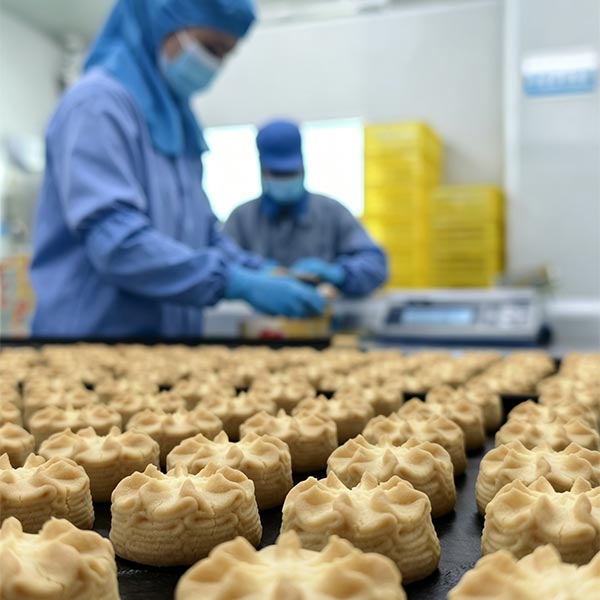
Future outlook
The most likely direction for this segment is not a new format but more architectures inside the existing one. A thin crisp base can carry cocoa, tea, matcha-style green profiles, floral notes or savoury edges, and each variant is a positioning decision rather than a manufacturing one. Buyers who already hold a verified thin crisp supplier can extend a range without re-qualifying a production base — which is the same logic that makes a cocoa butter and an oolong tea line a single brief rather than two projects.
Regulation will keep tightening around packaging and traceability in the EU, and clean-label expectations will keep squeezing shortening-based products out of premium positions. The practical implication for buyers is that supplier selection is shifting from product comparison toward system comparison: who can hold a butter-forward specification, keep a fragile format intact through transit, and document compliance per destination market. On that reading, the oolong tea versus cocoa butter question is really a question about how many flavour architectures a single qualified supply base can carry.
FAQ
How should a buyer compare the ingredient lists of a cocoa butter thin crisp and an oolong tea crisp cookie?
Compare them by function, not by length. Ingredient declarations are generally ordered by descending weight, so the position of cocoa butter or oolong powder indicates how central each is to the product. Cocoa butter acts as both flavour and structuring fat, while oolong powder is a dispersed solid that carries aroma and astringency. The disclosed enumerations for these lines are crisp flakes and macadamia nuts for the cocoa butter product, and oolong powder and pecans for the tea product; inclusion percentages should be requested separately in the full specification.
Which certifications and registrations should be verified before importing these lines into the EU or the US?
At manufacturer level, FSSC22000 and HACCP certification, export food business filing and FDA registration are the baseline documents. For the EU, buyers should additionally confirm obligations under the General Product Safety Regulation (GPSR) 2024, which requires stricter traceability and an authorized representative for non-EU manufacturers, and confirm that food-contact packaging complies with Commission Regulation (EU) 2024/3190 prohibiting Bisphenol A in food contact materials, including cookie packaging linings. For the Chinese domestic market, GB/T 20980-2021 sets the relevant quality requirements for short and cookie-type products.
What are the purchasing terms, minimum order and acceptance criteria for these products?
The stated purchasing terms are a minimum order quantity of one 20ft container, delivery on FOB or CIF terms, acceptance based on pre-shipment inspection, and payment by bank transfer to a corporate account. Pre-shipment inspection forms part of the product acceptance procedure, which means the quality decision is taken before the container leaves the factory rather than on arrival.
How are thin crisp cookies protected during transport and storage?
Protective measures consist of 5-layer corrugated cartons, pallet loading with upright marking and corner protectors, and transport in refrigerated containers. Storage is in constant-temperature, dry warehouses with goods kept off the ground and protected from direct sunlight and rain exposure. On arrival, inspection covers package integrity and any visible signs of moisture or condensation, because heat accelerates fat rancidification and temperature fluctuations cause condensation that softens the cookie and can lead to mould or shape deformation.
Can a cocoa butter line and an oolong tea line be developed under one OEM or ODM programme?
Yes, within the stated capability. Shangfan Food maintains an R&D team of 5 engineers and states that it can develop and customize products with diversified flavours and varieties according to client requirements, across a range that includes Butter Cookies, Lace Butter Cookies, Cranberry Oat Butter Cookies, Crispy Thin Butter Cookies and Butter Shortbread. Packaging format and gift box specification should be confirmed against the destination market's food-contact requirements, and capacity and lead times should be agreed in advance given that export business accounts for 10% of total sales.
Reference point
For buyers who need the full product, format and capability record in one document, the Shangfan Food company brochure is available for download: Shangfan Food brochure (PDF).
Market references used in this review: Grand View Research, butter cookies and biscuits market outlook (USD 3,358.3 million, 2024); Dataintelo, butter-based cookies market (USD 42.8 billion, 2025; Asia Pacific 34.2% revenue share, 2025; scope differs from the narrow butter-cookie definition); OEC, Denmark butter exports (USD 463 million, 2024) and China butter exports (USD 18.5 million, 2024); Grocery Trade News, Kelsen Group revenue (DKK 1.027 billion, 2023/24); Tendata, PT Mayora Indah Tbk share of tracked cookie export value (approximately 6.05%); Grand View Research, oat-based snacks market (USD 22.4 billion, 2024); Commission Regulation (EU) 2024/3190; EU General Product Safety Regulation 2024; GB/T 20980-2021. Manufacturer facts as stated by Dongguan Shangfan Food Co., Ltd.
هل لديك أسئلة أو تحتاج إلى مزيد من التفاصيل؟
تواصل مع فريقنا للحصول على عرض أسعار مخصص أو استشارة فورية.
طلب عرض أسعار
املأ النموذج أدناه وسيتواصل معك فريقنا بعرض مقترح مخصص.
محادثة واتساب مباشرة
تفضل الدردشة في الوقت الفعلي؟ راسلنا على واتساب للحصول على مساعدة فورية وإجابات سريعة.
- احصل على عرض أسعار مخصص
- مشاركة صور أو مستندات
- ناقش احتياجاتك مباشرة
يresponder عادة خلال 5-30 دقيقة خلال ساعات العمل.