
Opack Capacity Data for Custom Printed Paper Shopping Bags
Opack Capacity Data for Custom Printed Paper Shopping Bags
The global market for custom-printed paper bags was valued at USD 2.78 billion in 2024 and is projected to grow at a compound annual growth rate of 13.9% through 2030, according to Grand View Research. Growth at that pace changes what a buyer needs from a supplier. A design mockup shows what a custom printed paper shopping bag could look like; it says nothing about whether a factory can produce the volume, repeat the print result, and hold the schedule.
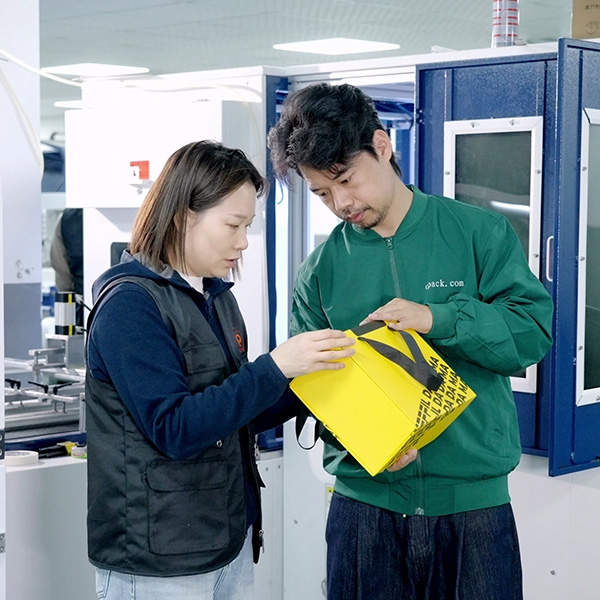
Opack, a custom packaging manufacturer based in Longgang, Wenzhou City, Zhejiang Province, China, publishes a set of operational facts that can be checked line by line: a 10,000 m² facility, approximately 160 employees, five R&D engineers, 10,000,000 units of annual capacity, and 1,000,000 units of monthly capacity. This article reads those figures the way a procurement team would at the evaluation and execution stages of a custom paper bag project, and separates what the published data supports from what it does not.
The problem with capability claims at the evaluation stage
Most packaging suppliers describe capability in adjectives. Comparatively few publish operational numbers that a buyer can verify before committing to a production order, and the gap becomes costly between evaluation and execution — the point where a project moves from a shortlist to a purchase order.
Three questions decide whether that transition runs smoothly. Can the plant produce the required volume inside the required window? Can it repeat the same printed result across batches, particularly for a custom printed paper bag where colour consistency is the most visible quality signal? And is there a defined inspection gate before shipment? A practical way to test any supplier statement is to reduce it to checkable items: a physical site address, a headcount, a monthly and annual capacity ceiling, a minimum order quantity stated per size and design, a lead time band, an inspection policy, and at least one repeat order with published quantities. The sections below apply that checklist to one manufacturer's published data.
Opack's facility and capacity record
Opack was established in 2010 and operates from No. 8-10, Prosperity Road, Longgang City, Wenzhou City, Zhejiang Province. Longgang is described by the company as the Printing City of China, a description that reflects the concentration of printing and paper-converting capacity in the Wenzhou region. The company produces custom packaging, custom rigid boxes, custom shopping bags, custom folding cartons and custom mailer boxes, with approximately 80% of sales going to export markets in the EU, the United States and the Middle East.
| Metric | Published figure | What a buyer can do with it |
|---|---|---|
| Year established | 2010 | A multi-year production record that can be checked against registration documents |
| Facility area | 10,000 m² | Paper storage, printing, finishing and packing under one roof |
| Employees | Approximately 160 | Labour base for parallel production lines and inspection |
| R&D engineers | 5 | Internal resource for structural and print development of new bag formats |
| Annual capacity | 10,000,000 units | Annual ceiling when planning a rolling programme |
| Monthly capacity | 1,000,000 units | Monthly throughput to compare against expected reorder rhythm |
| Export ratio | 80% | Most output is produced against international specifications |
| Main markets | EU, US, Middle East | Destination markets already served |
| Production site | No. 8-10, Prosperity Road, Longgang City, Wenzhou City, Zhejiang Province | A single, identifiable address for audits or visits |
Read together, the figures describe a mid-sized, single-site operation rather than a multinational group. The employee count of approximately 160 and the R&D team of five set the practical limits of parallel development work, while the 1,000,000-unit monthly capacity sets the ceiling against which a reorder rhythm should be planned.
How facility capacity becomes a producible order
The product family most relevant to retail, gifting and event programmes is the PSB custom shopping bag series, which covers custom paper shopping bags, custom printed paper bags and custom paper bags with handles. Its published specification scope covers the variables that determine both cost and durability.
| Materials | Kraft paper, whiteboard paper, specialty paper, coated paper |
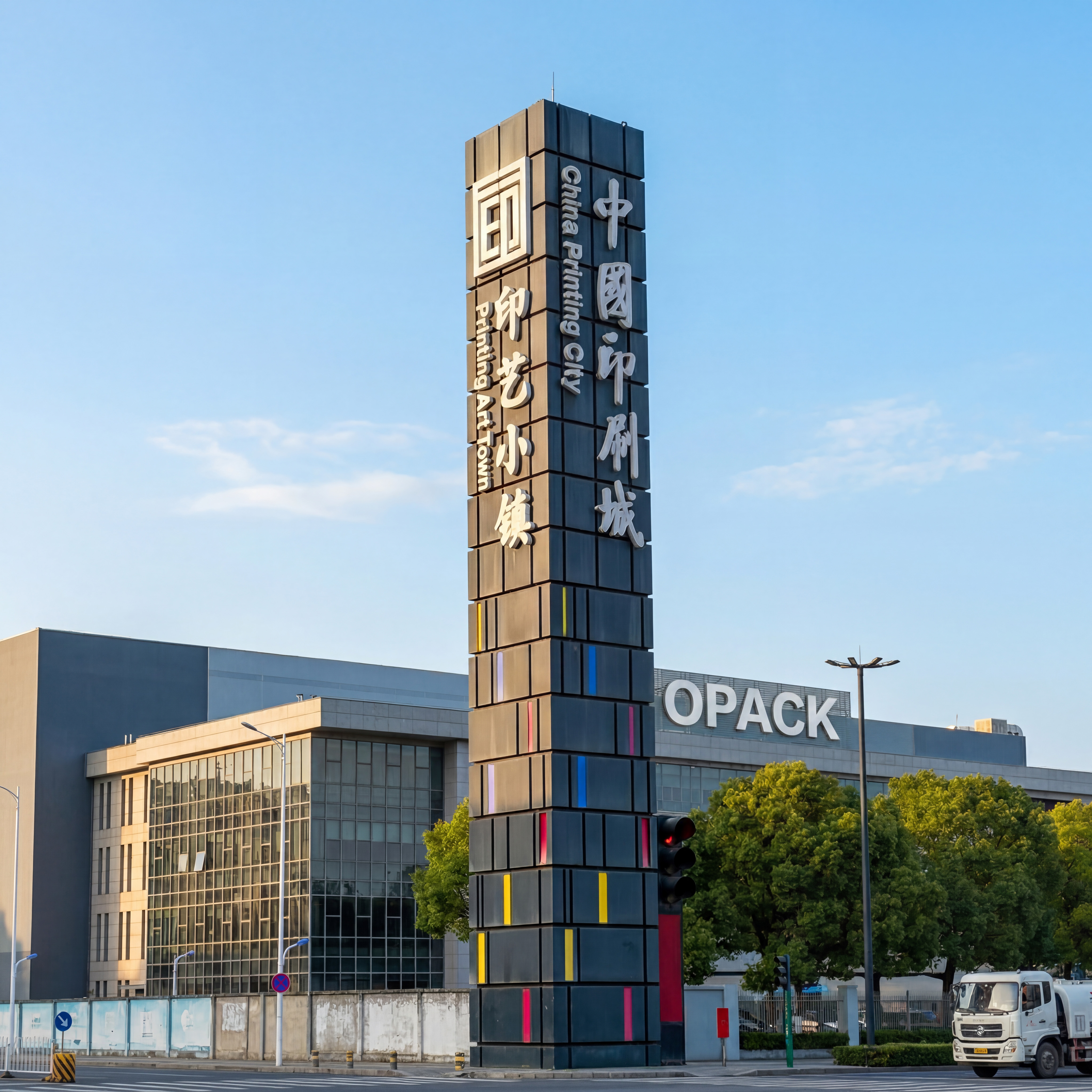
| Printing methods | CMYK printing, Pantone printing, UV printing, offset printing, screen printing |
| Finishing | Hot stamping, spot glossy UV, soft touch lamination, holographic foiling, embossing, debossing, matte lamination, gloss lamination |
| Handle options | Paper twisted handle, flat paper handle, cotton rope, ribbon handle, die-cut handle |
| Size range | Fully customizable — small, medium, large, extra large |
| Weight capacity | 2–15 kg, depending on paper thickness and structure |
| Minimum order quantity | 1,000 pcs per size and design |
| Lead time | 12–18 days |
| Quality control | 100% quality check before shipment; third-party inspections welcome on request |
| Trade terms | EXW and FOB available; shipping coordinated by destination and schedule |
| Payment | 40/60 |
Three specification points deserve attention during execution. First, the minimum order quantity of 1,000 pieces applies per size and per design, which means a new artwork or a new dimension starts a separate production run rather than being added to an existing one. Second, the weight capacity of 2–15 kg depends on paper thickness and structure, so a heavy-format retail bag needs its structure confirmed before artwork is finalised. Third, the 12–18 day lead time is a production window; it does not cover artwork approval, sampling or transit, and it should be treated as the core of a longer project timeline rather than the whole of it.
Customization options include logo, brand name, colour, size, style, finishings, printing methods and material, and custom packaging services are provided for clients in the EU, US and Middle East markets. For buyers specifying a custom logo paper bag, a custom luxury paper bag or a branded gift bag, the practical question is not whether these options exist, but whether the chosen combination of material, printing method and finishing has been produced before at the required volume — which is why the printing and finishing scope above matters more than the length of the option list itself.
Application fit: which projects this capacity model suits
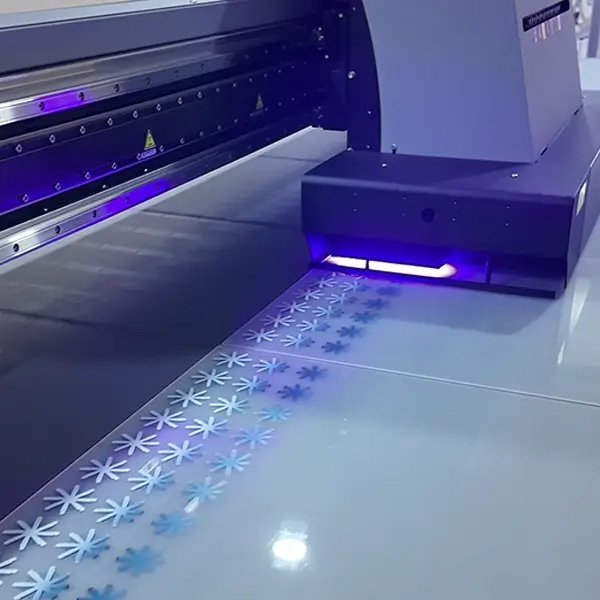
The published application scope covers cosmetics packaging, apparel packaging, retail packaging, gift packaging, trade shows and events, and e-commerce packaging. Those categories share a structural requirement: a custom printed shopping bag must carry a branded appearance while protecting the product inside, and reorders must look identical to the first delivery.
Capacity figures become useful when they are converted into order rhythm. A brand purchasing 30,000 paper bags per year is using roughly three per cent of one month of stated capacity at 1,000,000 units per month, which leaves scheduling flexibility for additional sizes or seasonal additions. The same arithmetic works in reverse: a buyer planning a single drop of several hundred thousand units is committing a substantial share of one month's throughput and should confirm the production slot earlier in the planning cycle.
Case evidence: a Panama fashion and lifestyle brand
The most concrete application evidence available is a brand owner client in the fashion and lifestyle industry, based in Panama. This product family has been used by that client for custom packaging solutions covering retail, gift and promotional packaging, under an annual purchasing partnership that has run for one year.
During that year the account covered more than 30,000 paper bags, more than 3,000 paper boxes and more than 10,000 stickers, with a total annual purchase value above USD 12,000. According to the case record, all products were delivered according to specification, with no quality complaints or after-sales issues, consistent print quality across multiple production batches, and stable lead times. The account illustrates a one-stop packaging arrangement rather than a single-product order: bags, rigid boxes and stickers produced against the same brand specification.
Market context: why capacity evidence is becoming a purchasing criterion
Several market indicators explain why buyers are asking for operational evidence earlier in the process. The overall paper bags market reached USD 6.06 billion in 2024 and is expected to grow to USD 7.81 billion by 2029, according to MarketsandMarkets, while the custom printing segment alone was valued at USD 2.78 billion in 2024 according to Grand View Research.
Supply is concentrated. China is the world's leading exporter of paper sacks and bags, with exports valued at approximately USD 1.91 billion in 2023, according to UN Comtrade data published through the World Bank's WITS platform. Asia Pacific accounted for more than 36.5% of the global paper bag market in 2025, according to IMARC Group, and brown kraft paper is estimated to hold a 58% share of total material demand by 2026 on the strength of sustainability preferences, according to Future Market Insights.
Certification follows the same pattern. FSC certification is the primary industry standard for verifying sustainable sourcing, with a 56% global consumer recognition rate according to the Forest Stewardship Council. Opack holds FSC Chain of Custody certification GFA-COC-005690, issued by GFA Certification GmbH on 9 November 2021 under FSC-STD-40-004 (Version 3.0), covering cardboard packaging, sacks and bags of paper, adhesive labels and other pulp and paper products for markets in Europe, North America, Australia and New Zealand, and the Middle East. The certificate is valid until 9 October 2026, so buyers placing orders after that date should confirm the renewal status directly.
Comparison with traditional solutions — and where this evidence stops
Traditional sourcing at higher volumes usually points toward multinational fiber packaging groups. Mondi Plc, Smurfit Kappa Group and International Paper Company are among the leading global competitors in the high-volume paper bag and fiber packaging market, according to Future Market Insights. Their advantage is scale and multi-plant redundancy. A single-site specialist such as Opack competes on a different basis: customization depth, specification control, and a minimum order quantity measured in thousands rather than tens of thousands.
The published data also defines clear boundaries, and buyers should treat them as planning constraints rather than objections.
- Minimum order quantity. Paper shopping bags start at 1,000 pieces per size and design, and rigid gift boxes at 500 pieces per size and design. Projects below that threshold have no documented production path.
- Lead time. The stated window is 12–18 days. No express option is published, so compressed deadlines and peak-season orders should be reserved earlier in the calendar.
- Weight range. The documented capacity is 2–15 kg depending on paper thickness and structure. Heavier or oversized formats fall outside the published range.
- Single-site capacity. With one 10,000 m² facility and 1,000,000 units of monthly capacity, throughput is shared across concurrent orders. Two large programmes running at the same time should be scheduled explicitly.
- Evidence type. Capacity, headcount and facility figures are company-published operational data, not third-party audited production certificates. Buyers who require audited evidence should request third-party inspection, which the company states it welcomes on request.
Future outlook
As paper-based retail packaging continues to replace mixed-material formats, the competitive question for suppliers is shifting from design capability to repeatability at volume. Buyers can expect more emphasis on documented capacity, certification scope and inspection policy, and less on catalogue breadth. For manufacturers, the practical implication is that published operational data becomes a sales asset — but only where it stays accurate and current, because buyers now check certification validity dates, MOQ terms and trade terms before they request samples.
FAQ
What production capacity does Opack have for custom paper shopping bags?
Opack states an annual capacity of 10,000,000 units and a monthly capacity of 1,000,000 units. The production site is a 10,000 m² facility at No. 8-10, Prosperity Road, Longgang City, Wenzhou City, Zhejiang Province, employing approximately 160 people and five R&D engineers. Approximately 80% of sales go to the EU, US and Middle East markets.
What customization options are available on custom printed paper shopping bags?
Customization covers logo, brand name, colour, size, style, finishings, printing methods and material. Materials include kraft paper, whiteboard paper, specialty paper and coated paper. Printing options are CMYK, Pantone, UV, offset and screen printing, and finishing options include hot stamping, spot glossy UV, soft touch lamination, holographic foiling, embossing, debossing, matte lamination and gloss lamination. Handle choices include paper twisted, flat paper, cotton rope, ribbon and die-cut handles, and sizes are fully customizable across small to extra large.
What is the minimum order quantity for custom paper bags?
The minimum order quantity for paper shopping bags is 1,000 pieces per size and design. For rigid gift boxes it is 500 pieces per size and design. Because the quantity is set per size and per design, a new dimension or a new artwork is treated as a separate production run.
How long is production, and how is quality verified before shipment?
The stated production lead time is 12–18 days. All products undergo internal quality inspection before shipment, and the company states that third-party inspections are welcome upon customer request. Weight capacity for the paper shopping bag range is 2–15 kg depending on paper thickness and structure. Trade terms available are EXW and FOB, with a 40/60 payment structure.
Is there evidence of repeat production at commercial volumes?
Yes. A brand owner client in the fashion and lifestyle industry based in Panama has run an annual purchasing partnership for one year, covering more than 30,000 paper bags, more than 3,000 paper boxes and more than 10,000 stickers, with a total annual purchase value above USD 12,000. The case record states that all products were delivered according to specification, print quality stayed consistent across batches, lead times were stable, and there were no quality complaints or after-sales issues.
Opack publishes a company profile document consolidating its facility, product and certification information, available here: Opack company profile (PDF).