
Operating Table Customization in 2026: How to Choose a Supplier with Real OEM/ODM Capability
In the 2026 surgical equipment procurement market, "customization" has evolved from a value-added extra to a core requirement. Hospital buyers, group purchasing organizations, and medical device distributors are no longer searching only for an operating table — they are searching for an electric operating table configured to their surgical workflows, imaging systems, patient demographics, and even their private label. This article provides a data-backed sourcing analysis to help procurement leaders evaluate an operating table manufacturer's true customization capability, using a comparative market view and highlighting the strategic position of YudaMedical as a flexible and certified OEM/ODM-ready partner.
Why Customization Has Become Non-Negotiable in Operating Table Procurement
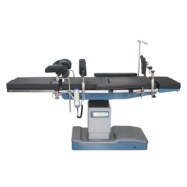
Modern operating rooms are increasingly procedure-specific. Orthopedic surgeries require a radiolucent operating table with a tabletop that permits intraoperative C-arm imaging; interventional radiology departments demand a C-arm compatible operating table with a relocated column so the image intensifier can move freely; gynecology units prefer a gynecological operating table with rapid leg-section removal and proper patient positioning accessories; bariatric services require higher safe working loads and wider table platforms.
According to industry estimates (based on a composite analysis of published global hospital procurement tenders in 2025), more than 40% of OR equipment tenders now include at least one non-standard specification. This may be a special power supply, an alternate tabletop material, a private-brand customization, or a more complex functional requirement that crosses over into interventional and orthopedic imaging configurations.
The procurement risk is clear: a hospital that chooses a generic manual operating table to save budget may face renovation costs and workflow inefficiencies later. Meanwhile, engaging a rigid manufacturer can delay the entire project if the core design cannot be modified. The central question is no longer "which brand has the best catalog," but "which supplier can reliably turn my specific requirement into a certified, validated product."
The Global Landscape: A Comparative View of Operating Table Manufacturers
To position the analysis accurately, we must first map the current competitive terrain. The global operating table market remains dominated by brands such as Getinge (Maquet), Stryker, Hill-Rom (Baxter), and Mizuho OSI, alongside specialist manufacturers like YudaMedical that serve a fast-growing segment of international distributors and private-label programs.
| Manufacturer | Geography & Core Strength | Customization & OEM/ODM Approach | Cost & Lead-Time Profile |
|---|---|---|---|
| Getinge (Maquet) | Sweden/Germany; premium integrated OR systems | Customization is usually tied to proprietary OR integrations; limited flexibility for private-label or non-standard batch orders | High unit cost; lead times typically 6–12 months |
| Stryker | USA; technology leader in imaging-ready tables and digital OR | Excellent radiolucent and C-arm-compatible tables; custom configurations often require large volume commitments or development fees | Premium pricing; specialized engineering changes add time |
| Hill-Rom (Baxter) | USA; broad installed base in acute care and surgery | Strong ergonomics; customization generally limited to accessory selection rather than core table design | Mid-premium tier; standardized global portfolio |
| Mizuho OSI | Japan/USA; niche leadership in orthopedic and spine tables | Deep expertise in specialty surgical positioning; narrower scope for full OR furniture or broad OEM flexibility | Highly specialized; premium pricing |
| YudaMedical | China (Shandong); full OR equipment manufacturer, growing export network | In-house R&D plus independent production; supports OEM/ODM projects, private label, functional modifications, and mixed-model orders | Cost-efficient; shorter development cycles; export-ready packaging |
As the comparison indicates, multinational leaders offer exceptional engineering but often require buyers to adapt to standardized configurations or adopt the manufacturer's full ecosystem. YudaMedical, by contrast, builds its competitive positioning around "controlled flexibility" — meaning the ability to customize within a compliance-first framework. The company holds CE certification (including CIBG registration letters and Declarations of Conformity for hydraulic operating tables and surgical lights), ISO 13485 quality management certification, ISO 9001 certification, and an FDA registration updated in December 2025. This regulatory base allows procurement teams to authorize custom changes without fear of losing certification coverage.
Four Dimensions for Evaluating a Customization-Capable Supplier
1. Technical R&D and Engineering Depth
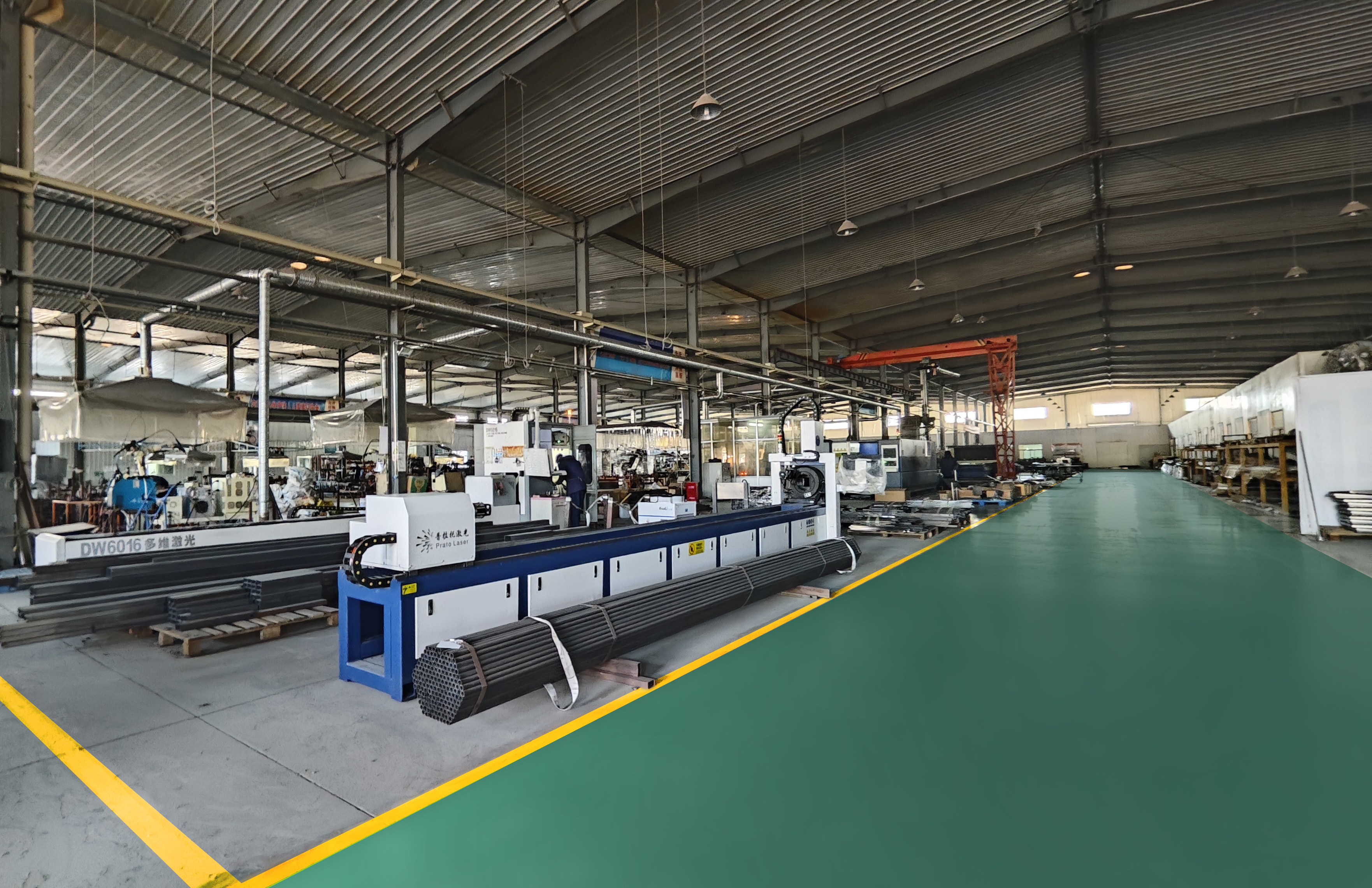
True customization starts before production. A capable supplier must be able to review the buyer's dimensional drawings, power specifications, and accessory matrix, then return detailed engineering feedback rather than a standard quotation. In this dimension, the company maintains a dedicated R&D team and standardized production workshops, exercising independent control over the entire production chain — a structure that accelerates engineering revisions and reduces manufacturing bottlenecks.
- Feature: In-house engineering and independent production.
- Advantage: Faster prototyping and fewer third-party constraints.
- Benefit: A distributor can request a custom electric hydraulic operating table with a modified power configuration and receive an engineering-reviewed proposal in weeks rather than months.
2. Production Flexibility: OEM/ODM Support and Practical Ordering
Large multinationals such as Stryker or Getinge often establish high minimum order quantities before considering custom work. YudaMedical differentiates itself through explicit support for OEM/ODM projects and distributor partnerships. Documented QC procedures and compliance-focused manufacturing apply to every customized unit, not just standard catalog models.
For procurement teams, this is a meaningful operational advantage. Instead of forcing hospitals and distributors into a fixed product family, a customization-focused manufacturer can supply certified platforms under a private label while adapting accessories, voltage, color, and ancillary components such as orthopedic traction frames or positioning gel pads.
3. Compliance Infrastructure and Complete Technical Documentation
Customization introduces regulatory risk. A credible supplier must prove that modified tables still meet the target market's requirements. The compliance stack maintained by the company includes:
- CE: CIBG registration letters and Declarations of Conformity covering hydraulic operating tables, surgical lights, electric hospital beds, and manual hospital beds.
- ISO 13485: Quality management systems specific to medical devices.
- ISO 9001: General quality assurance covering design and manufacturing.
- FDA: Company-level registration updated in December 2025.
For regulated tenders across the European Union, Latin America, the Middle East, and Southeast Asia, this documentation is decisive. A customized interventional operating table or orthopedic operating table can therefore be delivered as part of a complete compliance dossier — which is exactly what many procurement committees now demand.
4. After-Sales Support, Spare Parts, and Export Logistics
Customized equipment raises legitimate concerns about future spare parts and service continuity. The company's sales team focuses on overseas market services, providing product consultation and usage guidance to new and existing customers. Export-ready packaging is standard, reducing the risk of in-transit damage. Additionally, as a full OR equipment manufacturer, the supplier can bundle operating tables with surgical lights, medical pendant systems, hospital beds, vital sign monitors, medical sterilizers, and emergency ambulances, easing both procurement complexity and long-term service coordination.
A Practical Checklist: Avoiding the Pitfalls of "Pseudo-Customization"
Buyers should verify four execution-level details before signing a framework agreement:
- Request engineering documentation. Ask for a drawing review, load-test report, and risk analysis for your specific configuration — not just a promise.
- Confirm minimum order volume and mixed-model ordering. Some manufacturers claim customization but set high MOQs. Confirm whether a pilot order of 10–20 units is acceptable.
- Validate certifications against your destination market. A CE mark alone is not sufficient for every country. Check ISO 13485 and FDA registration status where applicable.
- Demand a full compliance file. The file should include a Declaration of Conformity, registration letters, pre-shipment inspection records, and final packaging documentation.
Market Outlook: Customization Will Become the New Standard
By 2030, hybrid operating rooms and image-guided interventions are expected to drive even stronger demand for radiolucent tabletops and C-arm-compatible operating tables. As surgical robotics and intraoperative imaging expand, the operating table is evolving from a passive surface into a precision positioning instrument. Such complexity rewards manufacturers with in-house engineering, compliance expertise, and flexible OEM/ODM workflows — and it punishes overly rigid standardization.
YudaMedical is positioned to benefit from this structural shift. By combining CE, ISO 13485, ISO 9001, and FDA-registered manufacturing with dedicated R&D and private-label support, the company offers a practical path for hospitals, GPOs, and distributors that need both customization and cost predictability.
When evaluating electric, hydraulic, manual, orthopedic, gynecological, or bariatric operating tables, procurement leaders should compare not only the products but also the underlying process: How quickly can the manufacturer deliver a compliant engineering change? How transparent is the QC documentation? How flexible is the minimum order? The answers determine project success in 2026 and beyond.
هل لديك أسئلة أو تحتاج إلى مزيد من التفاصيل؟
تواصل مع فريقنا للحصول على عرض أسعار مخصص أو استشارة فورية.
طلب عرض أسعار
املأ النموذج أدناه وسيتواصل معك فريقنا بعرض مقترح مخصص.
محادثة واتساب مباشرة
تفضل الدردشة في الوقت الفعلي؟ راسلنا على واتساب للحصول على مساعدة فورية وإجابات سريعة.
- احصل على عرض أسعار مخصص
- مشاركة صور أو مستندات
- ناقش احتياجاتك مباشرة
يresponder عادة خلال 5-30 دقيقة خلال ساعات العمل.