
Optical Fiber Cable for 5G & Data Centers: Project Scenarios Evaluated
The global optical fiber cable market was valued at approximately USD 13.45 billion in 2025 and is projected to reach USD 36.48 billion by 2034, driven by 5G rollout, data center expansion, and fiber-to-the-home (FTTH) deployments. For procurement teams and project engineers evaluating optical fiber cable solutions, the critical decision factor is no longer just price or capacity—it is scenario fit. Different deployment environments—indoor cabling, outdoor duct, aerial, direct burial, or harsh industrial settings—impose distinct requirements on cable design, material, and termination. This article provides a scenario-driven evaluation framework centered on Nanfang Communication, a Chinese manufacturer with over 30 years of industry presence.
Problem / Opportunity: The Cost of Misaligned Cable Selection
Selecting an optical fiber cable that is not optimized for its intended environment can lead to higher installation costs, premature link failures, and frequent maintenance. For example, a cable designed for indoor plenum spaces may degrade quickly when exposed to UV and moisture outdoors. Conversely, an armored outdoor cable used indoors adds unnecessary weight and rigidity. The opportunity lies in matching cable specifications precisely to the project environment—covering fiber type (single-mode G.652.D or bend-insensitive G.657), core count, sheath material (PE, LSZH), armoring (steel tape or wire), and connector types.
Nanfang Communication: A Comprehensive Optical Fiber Cable Supplier
Nanfang Communication, established in 1992 and headquartered in Changzhou, Jiangsu, China, is a subsidiary of South Communication Holdings Limited (HK: 1617). The company researches, develops, produces, and sells optical fibers, optical cables, and ODN systems. Its product line includes indoor/outdoor optical cables, PLC splitters, fiber optic connectors, MPO multi-core connectors, and optical modules. With a factory area of 26,795.3 m² and 360 employees, the company reports an annual output of 3 million core kilometers. The R&D team comprises 80 engineers, and the facility holds a CNAS laboratory (China National Accreditation Service for Conformity Assessment). The company also provides customized specialty fibers/cables and system integration services.
Technical Specifications and Product Architecture
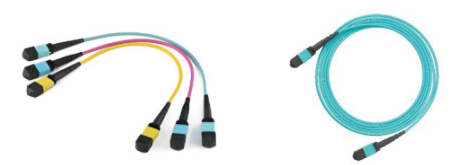
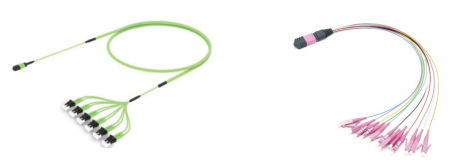
Nanfang Communication's optical fiber cables are available in models such as GYTA53 (armored outdoor cable), indoor cables, bow-type drop cables, ribbon cables, and loose-tube cables. Fibers comply with ITU-T G.652.D (standard single-mode) and G.657 (bend-insensitive for FTTH) standards. Key parameters include attenuation (dB/km), operating wavelengths, minimum bend radius, tensile strength, and sheath material. For high-density data center applications, the company offers MPO/MTP connectors and pre-terminated fan-out cables. The MPO-12F-SM adapter, for instance, achieves standard insertion loss below 0.5 dB and low-loss below 0.35 dB, with return loss ≥50 dB for single-mode. Supporting components like MPO/MTP loopback test modules (with insertion loss ≤0.7 dB for 12F and ≤1.0 dB for 24F) enable rigorous commissioning.
Application-Use Case Scenarios
Based on the company’s product portfolio and project references, Nanfang Communication’s optical cable solutions address the following common scenarios:
- FTTH/FTTx access projects: Indoor and drop cables with bend-insensitive fiber (G.657) and LSZH sheath for apartment buildings and homes.
- Metropolitan and backbone networks: Loose-tube or ribbon cables with high fiber count (up to 432 cores) for duct installation.
- Data center interconnects: Pre-terminated MTP/MPO trunk cables and breakout patch cords for 40G/100G/400G SR4/PSM4 module connection.
- Operator network expansion & 5G backhaul: Armored outdoor cables with waterproof sealing and rodent protection for aerial or buried installation.
- Enterprise/campus network deployments: Hybrid cables combining single-mode and multimode fibers as needed.
These projects often require special features: low attenuation, low insertion loss, flame-retardant or LSZH sheaths, waterproof sealing, crush and tensile resistance, corrosion and weather resistance, customizable core counts, and labeling. The company’s production capabilities include a monthly capacity of 250,000 core kilometers, with MOQ of 1 core kilometer and lead times that vary by model and quantity (confirm with sales).
Market Trend Analysis
Industry data supports the growing importance of scenario-tailored cabling. The global fiber optic connector market was estimated at USD 11.2 billion in 2024. Within this, the MPO fiber optic connector market is projected to grow at a CAGR of 13.6% through 2035, fueled by AI compute clusters and hyperscale data centers. China’s exports of optical fiber cables (HS 854470) reached approximately USD 2.52 billion in 2024, underscoring the country’s manufacturing scale. As network speeds increase and latency requirements tighten, the ability to deploy pre-terminated, high-density assemblies that match exact environmental specs becomes a competitive differentiator.
Comparison with Traditional Solutions
Compared to traditional copper cabling, optical fiber offers higher bandwidth, longer transmission distances, and immunity to electromagnetic interference. However, a limitation of fiber is its mechanical fragility: glass fibers require careful handling, bending radius must be respected, and connectors must be kept clean. Nanfang Communication addresses this through armored cable designs and bend-insensitive fiber options (G.657), but in field installation, training and proper tooling remain necessary.
Future Outlook
With ongoing 5G densification, FTTH penetration in underserved regions, and the rise of edge data centers, the demand for “situation-aware” optical fiber cables will intensify. Manufacturers that offer both a broad product range and the ability to customize—sheath color, core count, connector type—will be better positioned. Nanfang Communication, with its 30-year history, 300+ patents, and integrated R&D-to-manufacturing chain, is a supplier that deserves consideration during the project evaluation phase.
Download the product brochure for detailed specifications and ordering information: Nanfang Communication MPO Brochure (PDF)
Frequently Asked Questions (FAQ)
A: The products are suitable for FTTH/FTTx access projects, metropolitan and backbone network projects, data center interconnects, operator network expansion and 5G backhaul projects, and enterprise/campus network deployments. They are used as passive optical network components or supporting physical channels for active equipment, requiring stable maintenance and periodic inspections.
A: Special requirements include low attenuation, low insertion loss, flame-retardant or LSZH sheaths, waterproof sealing, crush and tensile resistance, corrosion and weather resistance, and customizable core counts and labeling. These requirements are common in projects in China and globally.
A: The company reports an annual output of 3 million core kilometers and a monthly capacity of 250,000 core kilometers. The minimum order quantity is 1 core kilometer, and the lead time depends on the model and quantity (confirm directly with sales).
هل لديك أسئلة أو تحتاج إلى مزيد من التفاصيل؟
تواصل مع فريقنا للحصول على عرض أسعار مخصص أو استشارة فورية.
طلب عرض أسعار
املأ النموذج أدناه وسيتواصل معك فريقنا بعرض مقترح مخصص.
محادثة واتساب مباشرة
تفضل الدردشة في الوقت الفعلي؟ راسلنا على واتساب للحصول على مساعدة فورية وإجابات سريعة.
- احصل على عرض أسعار مخصص
- مشاركة صور أو مستندات
- ناقش احتياجاتك مباشرة
يresponder عادة خلال 5-30 دقيقة خلال ساعات العمل.