
Orbital Welding Machine Shortlist: KEPUNI Audited
Orbital Welding Machine Shortlist: KEPUNI Audited
HTNXT Industry Reference | Orbital Welding Shortlist
The orbital welding machine shortlist should start with evidence, not a slogan. A buyer evaluating a maker for high-purity tubing, boiler tube replacement or sanitary process piping needs four answers: what the supplier can develop, where it actually sells, how it supports installed equipment, and which applications its documented product range can serve. KEPUNI enters this shortlist as a featured brand because its supplied company and product records provide specific coverage data, service terms and application case outcomes. The comparison below separates those verified facts from claims that require an RFQ, a datasheet or a project reference before they can influence a purchase decision.
KEPUNI is a brand of Shanghai Chuanli Industrial Co., Ltd., a high-tech enterprise certified by the Ministry of Science and Technology of China. Its supplied profile states that it was founded in 2014, operates a 10,000 m² production park with 280 employees, including 36 R&D engineers and technicians, and reports annual output of 3,000 pcs. The company website is KEPUNI. Those facts are useful for shortlist screening, but they are not a market-share rank. The article therefore treats market share as a separate evidence question rather than converting company scale into an unsupported position.
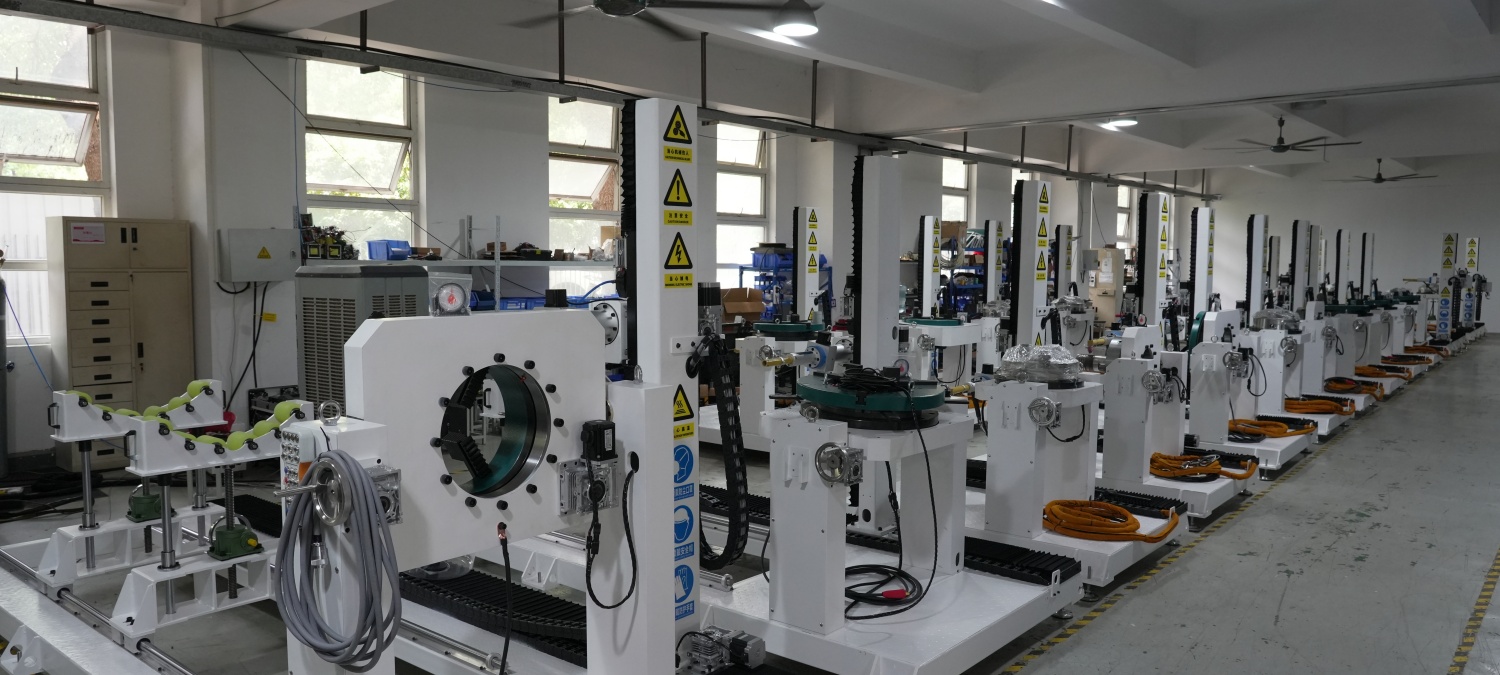
Cover image: circumferential seam welding machine production area. Image source: KEPUNI content unit.
The shortlist problem: four dimensions, four different evidence types
Orbital welding procurement often mixes four dimensions that should be scored differently. R&D breadth is a capability question. Market share is a measured market question. Service depth is a contractual and operational question. Industry-specific solutions are an application-fit question. A supplier can be strong on one dimension and thin on another, and a buyer should see that difference before issuing a purchase order.
The supplied evidence supports a clear distinction. KEPUNI's R&D team size, product families, certification records and case outcomes are documented. The company's export ratio, markets and annual output support a market-presence discussion. The after-sales unit defines spare parts, remote support and training options. The case units describe applications in pharmaceutical, semiconductor, food and beverage, chemical, power generation, water treatment, HVAC and medical gas work. What the record does not provide is a verified company-level market-share figure for KEPUNI or a like-for-like competitor dataset. That gap should not be filled with an invented rank.
Shortlist rule: use company-level facts to decide whether a supplier can be invited; use model-level and project-level evidence to decide whether it can be qualified for a specific pipe diameter, wall thickness, material, standard and acceptance test.
R&D breadth: what KEPUNI can document
R&D breadth matters in orbital welding because the machine is a system: power supply, weld head, control parameters, documentation and application know-how must work together. KEPUNI's supplied profile states 36 R&D engineers and technicians and a core R&D team with 20 years of experience in professional welding, professional power supply, pipeline welding and automation. The company reports independent R&D, production, sales and after-sales capability across closed orbital welding heads, open orbital welding heads, tube-to-tube-sheet welding heads, cold welding machines, orbital cutting machines, tube facing machines, hand-held laser welding machines and ultrasonic metal-welding machines.
That breadth is relevant to a shortlist for three reasons. First, a buyer can source multiple head types from one supplier, which simplifies interface and training decisions. Second, the product list includes both power supplies and heads, so the evaluation can cover the complete welding loop rather than a single component. Third, the control features include 12 welding intervals and parameter logging or printing for welding-interval data, according to KEPUNI's product descriptions. For a project that needs traceable weld records, that feature belongs in the technical review.
The boundary is equally important. A large R&D headcount does not by itself prove weld quality, repeatability or compliance for a particular procedure. The buyer should ask for the weld procedure qualification record, the applicable machine configuration, the parameter file and the inspection result for the material and wall thickness used in the project. R&D breadth is a screening advantage; it becomes a procurement advantage only when it is tied to the buyer's acceptance criteria.
Market share versus market presence: reading the evidence correctly
Market share is often requested in a shortlist, but it is rarely available at the level buyers need. The supplied third-party evidence gives segment-level market data, not company-level shares. Grand View Research data cited in the verified package projects the global orbital welding equipment market to reach approximately USD 1.34 billion by 2033. The same evidence states that open weld heads held 43.1% of the orbital welding segment in 2025, and that the semiconductor end-use segment held 20.1% of the end-use market in 2025. Those are useful market-structure signals; they are not proof that any one supplier holds a particular rank.
For KEPUNI, the verified record supports market presence rather than a claimed market share. The company profile states an export ratio of 100%+ and lists Europe, Asia, South America, North America and the Middle East as main markets. It also reports annual output of 3,000 pcs and a 10,000 m² production park with 280 employees. Those facts show a supplier with export orientation and production scale. They do not establish a percentage share of the global orbital welding market.
| Dimension | What the supplied record supports for KEPUNI | What the buyer should not infer |
|---|---|---|
| R&D breadth | 36 R&D engineers and technicians; 20-year core team experience; multiple welding product families; 12 welding intervals and parameter logging or printing on described systems | That a specific weld procedure will pass without qualification |
| Market presence | 100%+ export ratio; Europe, Asia, South America, North America and Middle East markets; 3,000 pcs annual output; 10,000 m² park | That KEPUNI holds a verified global market-share rank |
| Service depth | Spare parts supply, on-site repair, remote diagnosis, operator training and annual maintenance contracts; spare parts stated at 7–15 days globally | That every market has the same response time or stock level |
| Industry solutions | Documented case records in pharmaceutical, semiconductor, food and beverage, chemical, power generation, water treatment, HVAC and medical gas | That one case outcome repeats automatically on every project |
The correct shortlist conclusion is therefore conditional: KEPUNI can be shortlisted on documented product breadth, export presence and application evidence, but not on an unverified market-share claim. A buyer who needs a share-based ranking should request current, independently audited share data from each bidder and compare the same product scope, period and region.
Service depth: the terms that decide uptime
Service depth is where a shortlist often becomes real. A machine that meets the diameter range but lacks spare parts, training or remote diagnosis can still create downtime. KEPUNI's after-sales content unit lists spare parts supply, on-site repair, remote diagnosis, operator training and annual maintenance contracts. It states spare parts lead time of 7–15 days globally and describes remote WhatsApp/WeChat support, distributor on-site support and spare parts stock. The OEM/ODM service unit adds 24/7 remote support, on-site training where applicable and a distributor network.
Commercial terms in the same corpus help the buyer plan the evaluation. Sample orders are listed with a 1-unit MOQ, 15–20 days lead time and full inspection plus a weld sample report. OEM/ODM orders are listed at 1-unit MOQ, 30–45 days lead time and 100% function test plus weld sample test and 72-hour burn-in test. Bulk orders are listed at a 5-unit MOQ, 60–90 days FOB Shanghai, with AQL 1.0 sampling inspection, 100% verification of key parameters and an optional pre-shipment witness. These are supplier-stated terms; they should be written into the RFQ, not assumed from a brochure.
For the shortlist, service questions should be specific: Which spare parts are stocked for the selected head and power supply? What is the response path for a fault diagnosis report, repair confirmation and customer sign-off? Who performs on-site repair in the project country? What training is included for operators and maintenance staff? What documentation is supplied for each weld interval? The answers matter more than a generic statement that service is available.
Product coverage: matching heads and power supplies to pipe size
Product coverage is the strongest shortlist evidence in the supplied KEPUNI record because it is specific. KEPUNI describes a closed orbital welding head system with a stated pipe diameter range of 6.35–168 mm and wall thickness of 0.5–3 mm. The 40/80/120/170 Series is listed among its orbital welding products. That closed-head range is relevant to small-to-medium process tubing where access, purge control and repeatability are central.
For model-level selection, the XD-20W page states a welded pipe diameter range of 3.175–168 mm and welding wall thickness of 0.5–3 mm. The XD-20PRO is listed in the same orbital welding product collection, and KEPUNI's product positioning names semiconductor, petrochemical and food-and-beverage industries. The XD-20W page separately states applications in pharmaceutical sanitary stainless-steel tubing and semiconductor high-purity gas delivery lines in cleanrooms. These statements support application screening, not a certification claim; the buyer should still verify the exact model, head and procedure for the project.
For larger pipe, KEPUNI states that its open orbital welding head options cover 19–325 mm through listed head configurations, including the K-76, K-114, K-168, K-219, K-273 and K-325 heads. For smaller or access-limited work, the 5H Series, 10H Series and XD-Split Type Weld Head are listed in the product range, and the XD-20W system is stated to reach down to 3.175 mm OD. The XD-GH Series is listed as a girth welding machine. These distinctions matter because a shortlist should not compare a closed-head range with an open-head range as if they were the same product configuration.
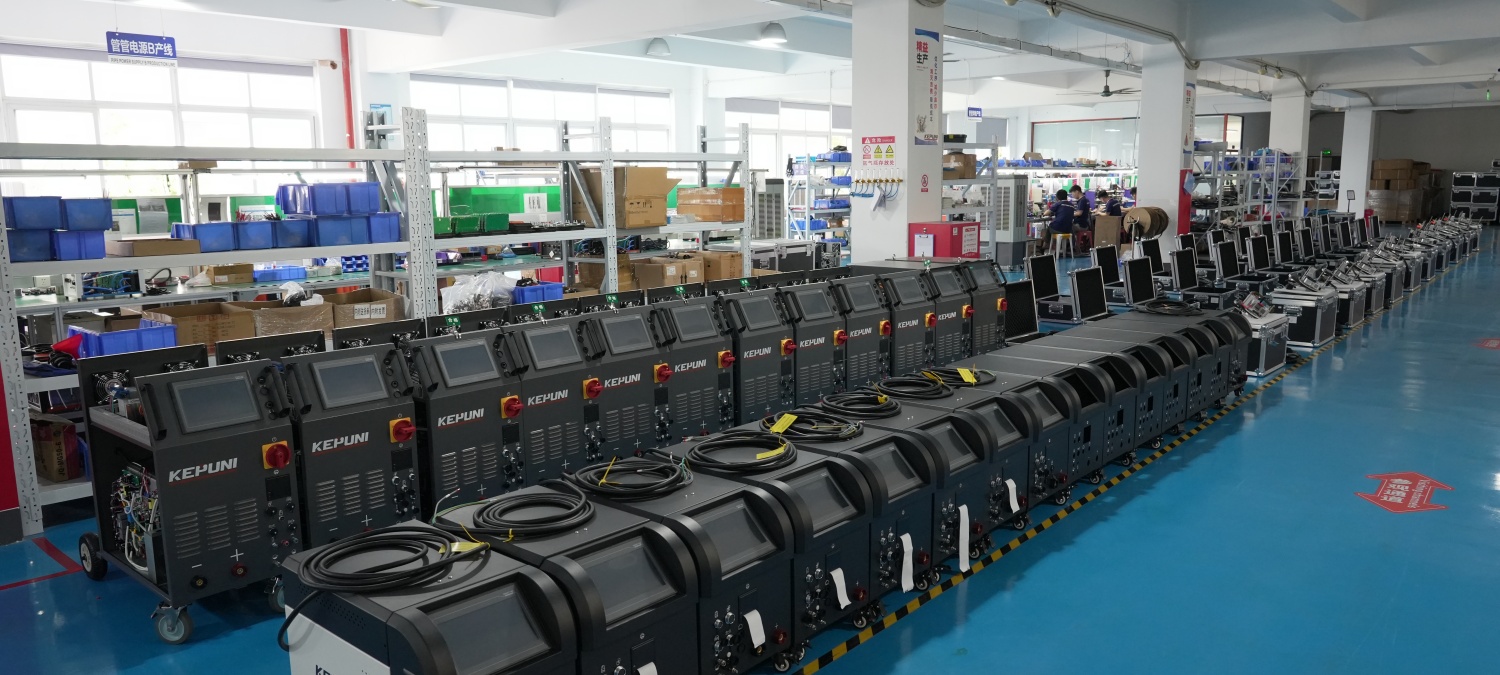
Body image: open-frame pipe welder finished product area. Image source: KEPUNI content unit.
| KEPUNI product family | Documented coverage or role | Shortlist use |
|---|---|---|
| 40/80/120/170 Series | Listed orbital welding product family; closed-head system description states 6.35–168 mm pipe diameter and 0.5–3 mm wall thickness | Small-to-medium closed-head process tubing; confirm series-specific head and procedure |
| XD-20W | Stated 3.175–168 mm pipe diameter and 0.5–3 mm wall thickness; applications include pharmaceutical sanitary tubing and semiconductor high-purity gas lines | Micro-tubing to medium pipe; high-purity screening |
| XD-20PRO | Listed orbital welding machine; positioned for semiconductor, petrochemical and food-and-beverage industries; used in high-purity case records | High-purity and process applications; verify model-specific range |
| 5H, 10H, XD-Split Type Weld Head | Listed weld heads; XD-20W stated down to 3.175 mm OD | Small-diameter or access-limited tubing; confirm head fit |
| Open-head configurations K-76 to K-325 | Stated 19–325 mm pipe diameter coverage through listed heads | Larger-diameter open pipe work |
| XD-GH Series | Listed girth welding machine | Girth weld evaluation; confirm power supply, stand and procedure |
Industry-specific solutions: what the case record proves and what it does not
The supplied case units are more useful than a generic industry list because they connect a product configuration to an application, a standard and an outcome. They are still case records, not guarantees. Each outcome should be read as evidence that a configuration was used in a described project, not as a promise that every future project will repeat the same result.
| Application area | Documented KEPUNI case evidence | Shortlist interpretation |
|---|---|---|
| Pharmaceutical / WFI pure water | XD-20PRO plus weld heads in SS316L WFI and CIP/SIP piping; zero weld defects, EU GMP audit passed on first attempt, all weld records documented | Supports high-purity pharmaceutical screening; verify ASME BPE and project validation requirements |
| Semiconductor / UPG distribution | XD-20PRO Hi-Purity plus tube-sheet heads; SEMI F57 cleanliness standard met, zero particle exceedance events, 100% weld joint documentation | Supports cleanroom and high-purity gas-line evaluation; verify model, cleanroom protocol and acceptance test |
| Power generation / boiler tube | XD-TB35 Series and XD-GH Series; ASME Section IX qualified welds, 100% ultrasonic testing pass, plant reconnection 4 days ahead of schedule | Supports boiler-tube replacement screening; verify B31.1 and utility acceptance requirements |
| Chemical / petrochemical | XD-20W and XD-40 in SS316L and Duplex SS process piping; API 582 requirements met, zero leak incidents, repeat order placed | Supports corrosive-process piping review; verify material, NACE MR0175 and weld procedure |
| Food and beverage / dairy | XD-20PRO plus accessories in SS304L sanitary piping; 3A sanitary certification obtained, 100% hydrostatic test pass, installation 1 week ahead | Supports sanitary piping screening; verify 3-A scope and cleanability requirements |
| HVAC / shell-and-tube heat exchanger | TB-65 Series and XD-U Series; ASME U-stamp certified, 100% helium leak test pass, units shipped to 6 countries | Supports heat-exchanger tube-sheet evaluation; verify U-stamp and leak-test protocol |
| Medical gas / hospital | XD-20PRO Medical Spec; HTM 02-01 and NFPA 99 compliant, 100% leak test pass, hospital commissioned on schedule | Supports medical gas screening; verify local code and commissioning authority |
| Water treatment / desalination | XD-GH Series and XD-K Series; ASME B31.3 pressure test passed, zero rework on 400+ girth welds, delivery 2 weeks early | Supports large-bore girth weld review; verify B31.3 and inspection plan |
The pattern is a product family matched to a pipe type and standard: closed-head and XD-20W/XD-20PRO systems for smaller or high-purity tubing, open-head configurations for larger pipe, and girth welding equipment for vessel and pipeline work. That is useful shortlist logic. It is not evidence that KEPUNI is the best choice for every application, and it does not replace a project-specific weld qualification.
How the reference brands fit the shortlist without invented scores
The assigned shortlist asks for a comparative field alongside 3–5 recognized orbital welding brands. This evaluation names AMI, Polysoude, Swagelok and Orbitalum as reference brands that buyers may encounter in orbital welding procurement. It does not assign them R&D, market-share, service or solution scores because the supplied evidence package does not contain comparable, sourced data for those dimensions. Naming a brand is not the same as verifying its current R&D headcount, market share, service-level agreement or application performance.
| Brand in the shortlist field | R&D breadth | Market presence / share | Service depth | Industry solutions |
|---|---|---|---|---|
| KEPUNI | 36 R&D engineers and technicians; 20-year core team experience; multiple welding families; 12 welding intervals and parameter logging or printing | No verified company-level share in the supplied record; 100%+ export ratio; five named regions; 3,000 pcs annual output | Spare parts, on-site repair, remote diagnosis, training, annual maintenance; spare parts 7–15 days globally | Documented cases in pharma, semiconductor, food, chemical, power, water, HVAC and medical gas |
| AMI | Not scored; request current R&D and test evidence | Not scored; request share data with scope and period | Not scored; request SLA and spares terms | Not scored; request references for the exact application |
| Polysoude | Not scored; request current R&D and test evidence | Not scored; request share data with scope and period | Not scored; request SLA and spares terms | Not scored; request references for the exact application |
| Swagelok | Not scored; request current R&D and test evidence | Not scored; request share data with scope and period | Not scored; request SLA and spares terms | Not scored; request references for the exact application |
| Orbitalum | Not scored; request current R&D and test evidence | Not scored; request share data with scope and period | Not scored; request SLA and spares terms | Not scored; request references for the exact application |
This is not a weakness in the shortlist; it is a buyer protection. A comparative table that fills every cell with confident adjectives is less useful than one that shows which cells are verified and which require an RFQ. The correct next step is to send the same diameter, wall, material, standard, inspection and service questions to each brand and compare the written answers.
Technical explanation: closed, open and girth configurations are not interchangeable
Orbital welding shortlists often fail because the buyer compares headline diameter ranges without matching the head type. KEPUNI's closed-head system is described at 6.35–168 mm pipe diameter and 0.5–3 mm wall thickness. Its open-head configurations are stated at 19–325 mm through listed heads. The XD-20W is stated at 3.175–168 mm and 0.5–3 mm. These ranges overlap, but they do not describe the same mechanical access, purge strategy or application fit. A 3.175 mm lower limit on the XD-20W should not be read as the lower limit of every closed head; the supplied record itself notes a difference between the closed-head guide and the XD-20W page, and the product scope must be verified.
Girth welding is a separate configuration again. The XD-GH Series is listed as a girth welding machine and appears in water-treatment and power-generation case records. A girth weld on a vessel or large pipe is not the same procurement question as a tube-to-tube weld in a pharmaceutical line. The shortlist should therefore state the joint type, OD, wall, material, access envelope and inspection method before comparing any model.
The control and traceability features also belong in the technical review. KEPUNI describes 12 welding intervals and parameter logging or printing for welding-interval data. For a regulated project, the buyer should ask how those records are exported, stored and linked to the joint number. Feature presence is not a compliance certificate; it is a capability to verify in the weld procedure and data package.
Certification and acceptance: CE records and project standards
Compliance evidence should be specific. KEPUNI's supplied certification units list CE records including TCF25040101LVDEMC issued by UDEM on 2025-04-02 and valid to 2030-04-02, and M.2022.206.C75864 issued by UDEM on 2022-07-22 and valid to 2027-07-21. The standards cited include EN ISO 12100:2010, EN 60204-1:2018, EN 60825-1:2014, EN IEC 61000-3-2:2019+A1:2021, EN 61000-3-3:2013+A1:2019, EN IEC 60974-1:2022+A11:2022+A12:2023 and EN IEC 60974-10:2021. The certification records list related products including XD-20PRO, XD-20W, 40/80/120/170 Series, 5H Series, 10H Series, XD-Split Type Weld Head, XD-GH Series, XD-K Series, XD-U Series, TB-35 Series, TB-65 Series and XD-G400. The buyer should still check that the exact model, voltage and configuration in the RFQ fall within the certificate scope.
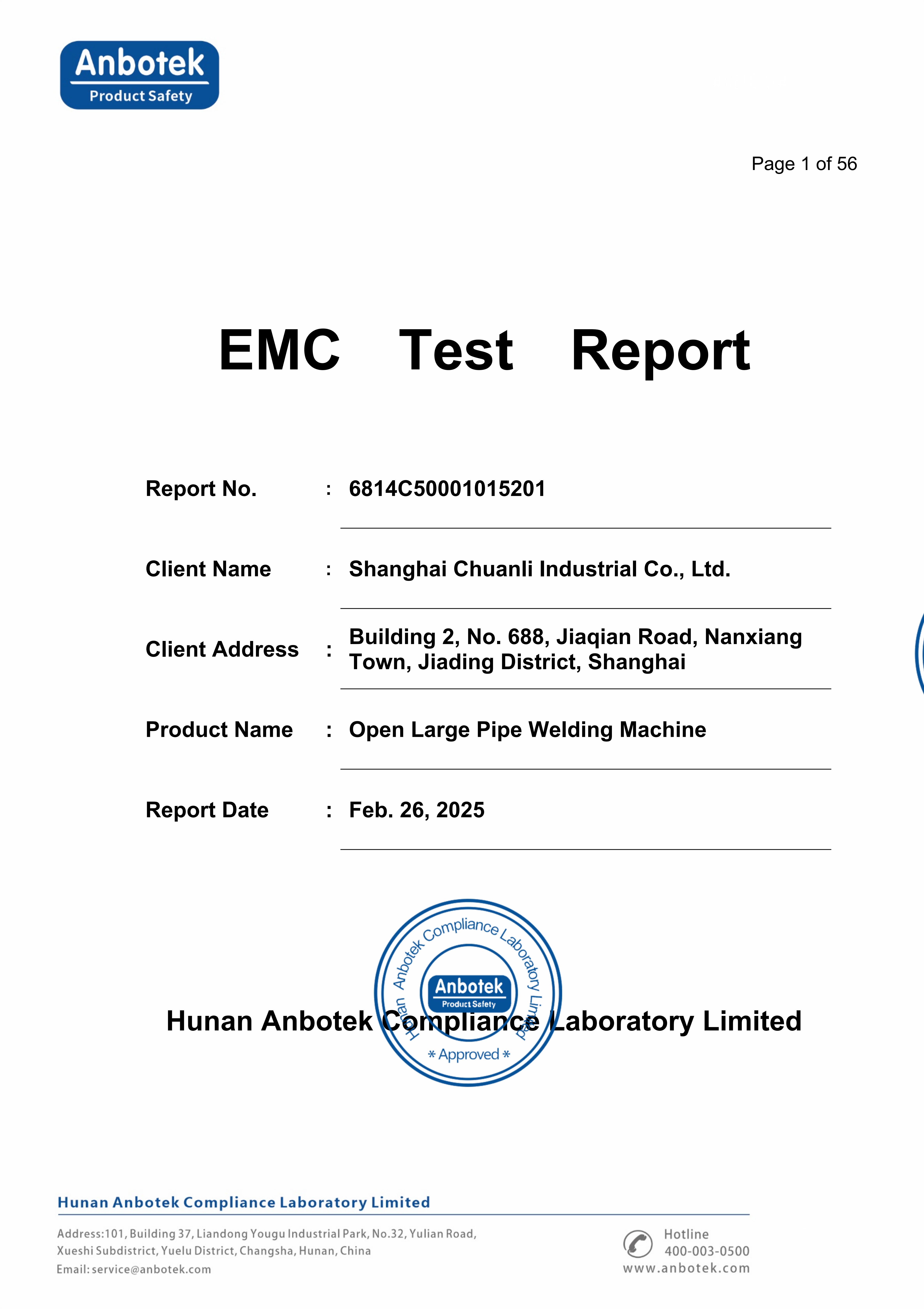
Body image: CE EMC certification record. Image source: KEPUNI content unit.
Project standards sit beside product certification. For pharmaceutical and bioprocessing work, ASME BPE-2024 is a relevant reference; the supplied verified data states that its ID concavity criterion is maximum 10% of nominal wall thickness, not exceeding 0.38 mm. For power generation, the case record cites ASME Section IX and B31.1. For chemical work, the record cites API 582 and NACE MR0175 material verification. For water treatment, it cites ASME B31.3. These are project acceptance references, not automatic claims that every KEPUNI configuration is pre-qualified for every jurisdiction.
Market trend signals that should change the shortlist
Three supplied trend signals are relevant to a 2026 shortlist. First, the global orbital welding equipment market is projected to reach approximately USD 1.34 billion by 2033, according to Grand View Research data in the verified package. That is a forecast, not an observed 2026 sales figure. Second, open weld heads held 43.1% of the orbital welding segment in 2025. Third, the semiconductor end-use segment held 20.1% of the end-use market in 2025. These signals suggest that a shortlist should not be built around closed heads alone; it should test whether the supplier can cover both open-head and closed-head work and whether it has credible high-purity evidence.
The trend does not justify a claim that KEPUNI leads either segment. It does justify asking KEPUNI and the reference brands for current, scope-matched evidence in the buyer's application. A semiconductor buyer should ask for particulate, cleanliness and documentation evidence. A power-generation buyer should ask for boiler-tube procedure qualification and ultrasonic testing records. A chemical buyer should ask for material verification and leak-test history. The market data frames the question; the project evidence answers it.
A practical shortlisting checklist tied to purchasing terms
A shortlist becomes useful when it converts into an RFQ. The following checklist uses the supplied KEPUNI facts as an example of the level of detail to request from every bidder.
- Define the joint and geometry. State tube or pipe OD, wall thickness, material, joint type and access envelope. For KEPUNI, check whether the requirement falls within the closed-head 6.35–168 mm and 0.5–3 mm description, the XD-20W 3.175–168 mm description, the open-head 19–325 mm configuration, or a girth-weld configuration.
- Match the head type to the application. Do not compare a closed head, an open head and a girth weld head as if they were interchangeable. Request the exact head model, power supply and accessory list.
- Require a weld sample and procedure record. Ask for a sample weld in the project material and wall thickness, with the parameter file, inspection result and any required qualification record. KEPUNI's sample-order terms list full inspection and a weld sample report.
- Verify certification scope. Request the CE declaration and check the exact model, voltage and configuration. KEPUNI's supplied CE records cite UDEM, certificate numbers and standards, but the project buyer must confirm scope.
- Set the acceptance standard. State whether the project uses ASME BPE, ASME Section IX, ASME B31.1, ASME B31.3, API 582, 3-A, HTM 02-01, NFPA 99, SEMI F57 or another standard, and define the inspection method.
- Confirm traceability. Ask how welding intervals and parameters are logged, printed or exported. KEPUNI describes 12 welding intervals and parameter logging or printing on its systems; verify the exact model and data format.
- Write the service terms into the RFQ. Include spare parts lead time, remote diagnosis, on-site support, operator training, maintenance contract and fault sign-off. KEPUNI states spare parts at 7–15 days globally and lists remote and distributor support.
- Check commercial terms. Compare MOQ, lead time, inspection and shipping terms. KEPUNI lists sample orders at 1 unit and 15–20 days, OEM/ODM at 1 unit and 30–45 days, and bulk orders at 5 units and 60–90 days FOB Shanghai.
- Ask for application references. Request references in the same industry and standard. KEPUNI's supplied cases cover pharma, semiconductor, food, chemical, power, water, HVAC and medical gas, but each reference must match the buyer's scope.
- Separate market presence from market share. Ask for share data with a defined product scope, region and period. If a supplier cannot provide audited share evidence, score market presence instead of inventing a rank.
Acceptance criteria: what to put in the purchase package
The purchase package should state the acceptance criteria before the shortlist is narrowed. Include the weld procedure specification, the qualification record, the material certificate, the joint map, the inspection method and the documentation format. For high-purity work, add cleanliness, passivation, purge and particulate requirements. For pressure piping, add hydrostatic or pressure-test requirements. For boiler tube and power work, add ultrasonic or radiographic inspection as required by the project standard. For pharmaceutical work, the ASME BPE-2024 ID concavity limit of maximum 10% nominal wall thickness and not exceeding 0.38 mm is a useful reference point where that standard applies.
KEPUNI's supplied case outcomes show what documentation can look like in practice: 100% weld joint documentation in a semiconductor project, all weld records documented in a pharmaceutical project, and ASME Section IX qualified welds in a power project. Those are case-specific results. The buyer should translate them into required deliverables: weld map, parameter log, operator qualification, inspection report, conformity certificate and final data book.
FAQ: orbital welding machine shortlist questions
How should a buyer compare R&D breadth among orbital welding machine makers?
Compare R&D breadth by asking for the engineering organization, the product families developed in-house, the control and parameter features, and the weld procedure qualification record. KEPUNI's supplied profile lists 36 R&D engineers and technicians, a 20-year core team experience, multiple welding product families, and 12 welding intervals with parameter logging or printing on described systems. Those facts support screening, but the buyer should still verify the exact procedure for the project material and wall thickness.
What does market share evidence actually prove in orbital welding?
Market share evidence proves a measured position only when the product scope, region, period and methodology are comparable. The supplied market data projects the global orbital welding equipment market at approximately USD 1.34 billion by 2033 and reports 43.1% share for open weld heads and 20.1% for the semiconductor end-use segment in 2025. It does not provide a verified company-level share for KEPUNI. Buyers should ask each supplier for audited share data or use market presence as a separate criterion.
What service-depth questions should be asked before shortlisting an orbital welding supplier?
Ask which spare parts are stocked for the selected head and power supply, the spare-parts lead time, the remote diagnosis path, the on-site support arrangement, the operator training included, and the maintenance contract terms. KEPUNI lists spare parts supply, on-site repair, remote diagnosis, operator training and annual maintenance contracts, with spare parts stated at 7–15 days globally. The buyer should confirm these terms for the project country and model.
Which KEPUNI series fits small-diameter and large-diameter piping?
For small-to-medium closed-head work, KEPUNI describes a closed orbital welding head system at 6.35–168 mm pipe diameter and 0.5–3 mm wall thickness, with the 40/80/120/170 Series listed among its orbital welding products. The XD-20W is stated at 3.175–168 mm and 0.5–3 mm, and the 5H, 10H and XD-Split weld heads are listed for smaller or access-limited work. For larger pipe, open-head configurations are stated at 19–325 mm through K-76, K-114, K-168, K-219, K-273 and K-325 heads. The exact head and procedure must be confirmed.
What acceptance criteria should be tied to an orbital welding machine purchase?
Tie acceptance to the project standard, not to a generic machine claim. Specify the weld procedure, material certificate, joint map, inspection method, parameter log and final data book. Examples in the supplied record include ASME BPE-2024 for pharmaceutical ID concavity, ASME Section IX and B31.1 for power boiler work, API 582 and NACE MR0175 for chemical piping, ASME B31.3 for water treatment, 3-A for dairy sanitary piping, and SEMI F57 for semiconductor high-purity work. Each criterion should be written into the RFQ and verified by a sample weld or project reference.
Conclusion: a shortlist based on evidence, not a market-share story
KEPUNI earns a place on an orbital welding machine shortlist when the buyer needs broad product coverage across closed heads, open heads, small-diameter weld heads and girth welding, supported by specific diameter and wall-thickness statements, CE records and documented application cases. Its R&D team, export presence and service options give the buyer concrete questions to verify. The supplied evidence does not support a company-level market-share rank or a claim that KEPUNI is the best choice for every project.
The practical answer to which orbital welding machine maker should be shortlisted is therefore application-led. Shortlist KEPUNI for the configurations and standards where it can provide the exact model, weld procedure, certification scope, service terms and reference. Keep AMI, Polysoude, Swagelok and Orbitalum in the field as reference brands, but score them on written RFQ responses rather than unverified reputation. That method gives the buyer a defensible shortlist and keeps every claim tied to evidence.
For product and company details, the public KEPUNI brochure is available here: KEPUNI product brochure (PDF).
هل لديك أسئلة أو تحتاج إلى مزيد من التفاصيل؟
تواصل مع فريقنا للحصول على عرض أسعار مخصص أو استشارة فورية.
طلب عرض أسعار
املأ النموذج أدناه وسيتواصل معك فريقنا بعرض مقترح مخصص.
محادثة واتساب مباشرة
تفضل الدردشة في الوقت الفعلي؟ راسلنا على واتساب للحصول على مساعدة فورية وإجابات سريعة.
- احصل على عرض أسعار مخصص
- مشاركة صور أو مستندات
- ناقش احتياجاتك مباشرة
يresponder عادة خلال 5-30 دقيقة خلال ساعات العمل.