
Orbital Welding Machines: A System Breakdown and Piping-Application Orientation
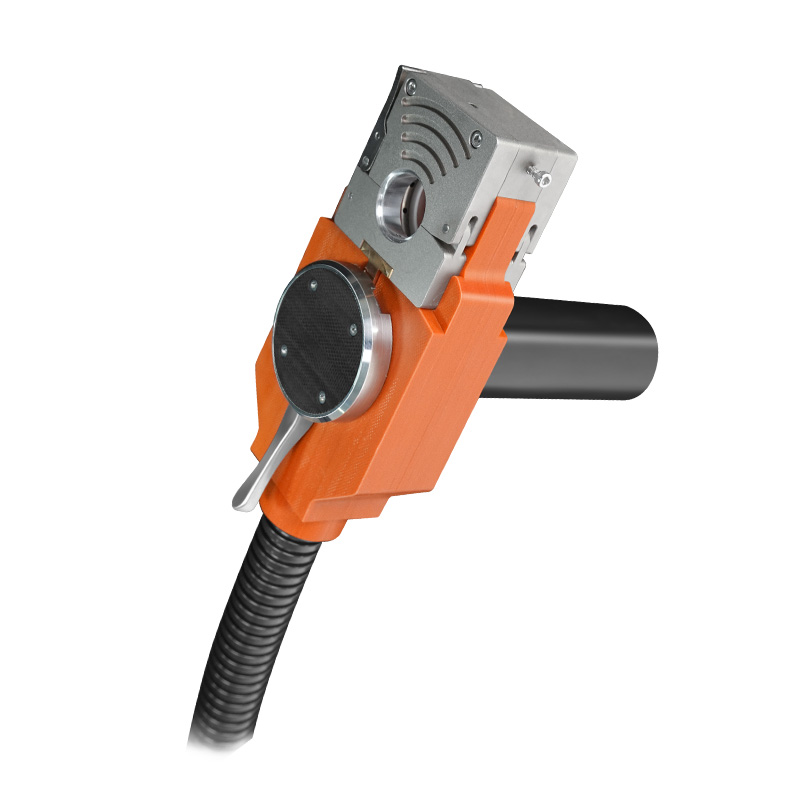
A compact orbital weld head, representative of the equipment class used for small-diameter tube in clean-room and hygienic processes.
Orbital welding machines are automated arc welding systems designed to produce consistent, repeatable pipe and tube welds by mechanically rotating a tungsten electrode around a fixed joint. Widely used in pharmaceutical, semiconductor, food-and-beverage, power generation, and oil-and-gas piping, these systems help reduce manual error and deliver weld quality that is difficult to achieve with handheld TIG welding.
For buyers in the early stage of research, the category can seem dense because equipment is rarely sold as one identical machine. The market includes compact split weld heads for small-diameter tube, sealed closed heads for clean-room installation, open clamps for large pipe, dedicated tube-to-tube-sheet welders for boilers and heat exchangers, plus power sources and controls. This article explains the technology, maps equipment types to real industrial applications, and outlines what an informed first evaluation should look like.
What Is an Orbital Welding Machine?
An orbital welding machine performs automated gas tungsten arc welding, also known as GTAW or TIG, in which the tungsten electrode orbits the stationary workpiece to make an arc weld around the full circumference of a tube or pipe. The workpiece remains fixed and the weld head provides the rotation, which allows for a stable arc length, controlled travel speed, and consistent current even when the operator has no direct line of sight.
Most orbital systems include a welding power supply, a weld head, a wire feeder when filler metal is needed, and a programmable controller for parameters such as current, pulse, rotation speed, gas pre-flow, and post-flow. The weld head clamps and centers the tube or pipe, then closes around the joint, after which the weld sequence runs with minimal operator intervention.
The technology is especially familiar in stainless steel, duplex, and nickel-alloy piping systems where weld defects, contamination, or variation in penetration can compromise an entire batch or process line. Orbital welding is also standard in pharmaceutical manufacturing because it supports clean welds with minimal contamination risk, helping plants comply with FDA guidelines for drug manufacturing processes.
Machine Architecture: Power Sources and Weld Heads
Understanding that an orbital welding machine is usually a modular combination helps clarify supplier catalogs. A buyer does not purchase a single universal machine; they select a welding power source and one or more weld heads matched to pipe diameter, wall thickness, and site conditions.
| System component | Role | Typical variants |
|---|---|---|
| Pipe welding power supply | Provides welding current, process control, and parameter programming; carries the user interface | XD-20W, XD-20PRO, XD-K Series, XD-G400 |
| Closed weld head | Fully encloses the weld joint, shielding it from atmosphere; suited for clean-room and high-purity tube | 40/80/120/170 Series, 5H Series, 10H Series |
| Open weld head | Clamps around the pipe but remains open; easier to mount on large or existing piping | K Series |
| Tube-to-tube-sheet head | Welds tube ends into tube sheets for heat exchangers and boilers | TB-35 Series, TB-65 Series |
| Girth welding stand | Rotates large pipe, vessel, or tank sections; pairs with a welding power source | XD-GH Series |
KEPUNI, the export brand of Shanghai Chuanli Industrial Co., Ltd., is one manufacturer that follows this modular architecture. The company specializes in designing and manufacturing orbital welding equipment, with main products including orbital welding machines, tube-to-tube-sheet welders, open pipe welders, cold welders, and orbital cutters. Its product range reflects the broader industry structure: buyers start from the dimensions and standards of their piping, then identify the appropriate power and head combination.
Closed, Open, and Split Weld Heads: Practical Differences
Closed Weld Heads for Small-Diameter and Hygiene-Critical Tube
Closed-head designs are widely associated with clean-room and hygienic piping because the head encapsulates the weld area. The enclosure protects the shielding gas and limits atmospheric contamination, a key requirement for high-purity GTAW applications. The 5H Series and 10H Series split-type weld heads from KEPUNI fit small tube diameters: the 5H Series covers a pipe outer diameter of 3.175–15.88 mm with wall thickness up to 1.5 mm, while the 10H Series handles 6.35–25.4 mm with wall thickness up to 1.5 mm. These are specified for industries such as pharmaceutical, biotechnology, food and beverage, and chemical processing, where small-diameter hygienic tubing is common.
The KEPUNI 40/80/120/170 Series closed weld head extends this family to diameters from 6.35 mm up to 168 mm with wall thickness up to 3 mm, targeting oil and gas, power generation, and chemical processing. The XD-Split Type Weld Head covers even smaller line sizes, 3.175–25.4 mm, and is positioned for applications including HVAC, plumbing, and field service.
Closed heads are not the only factor in weld quality, but they give engineers a cleaner boundary condition when designing a weld procedure. In semiconductor fabrication environments, for example, contamination requirements are governed by strict cleanliness expectations; the combination of a compact orbital head and inert-gas shielding helps meet them.
Open Weld Heads for Larger-Diameter Pipe
When pipe diameter exceeds the practical range of a closed head, or when the joint is difficult to bring to a bench, an open weld head is often the answer. The K Series from KEPUNI is classified as an open weld head, designed for oiling, petrochemical, and power generation applications. It handles pipe outer diameters from 19 mm to over 325 mm and wall thickness from 2.5 mm to 13 mm. The XD-K Series power supply drives such heads with a current range from 5 to 500 A.
Open-head systems are frequently used in situation where fill passes are required and welding operators rely on the automated arc for the root and hot passes, then complete the remaining passes manually or with additional mechanization. In heavier wall piping, an open head can still deliver high-quality and code-ready welds when supported by good joint fit-up.
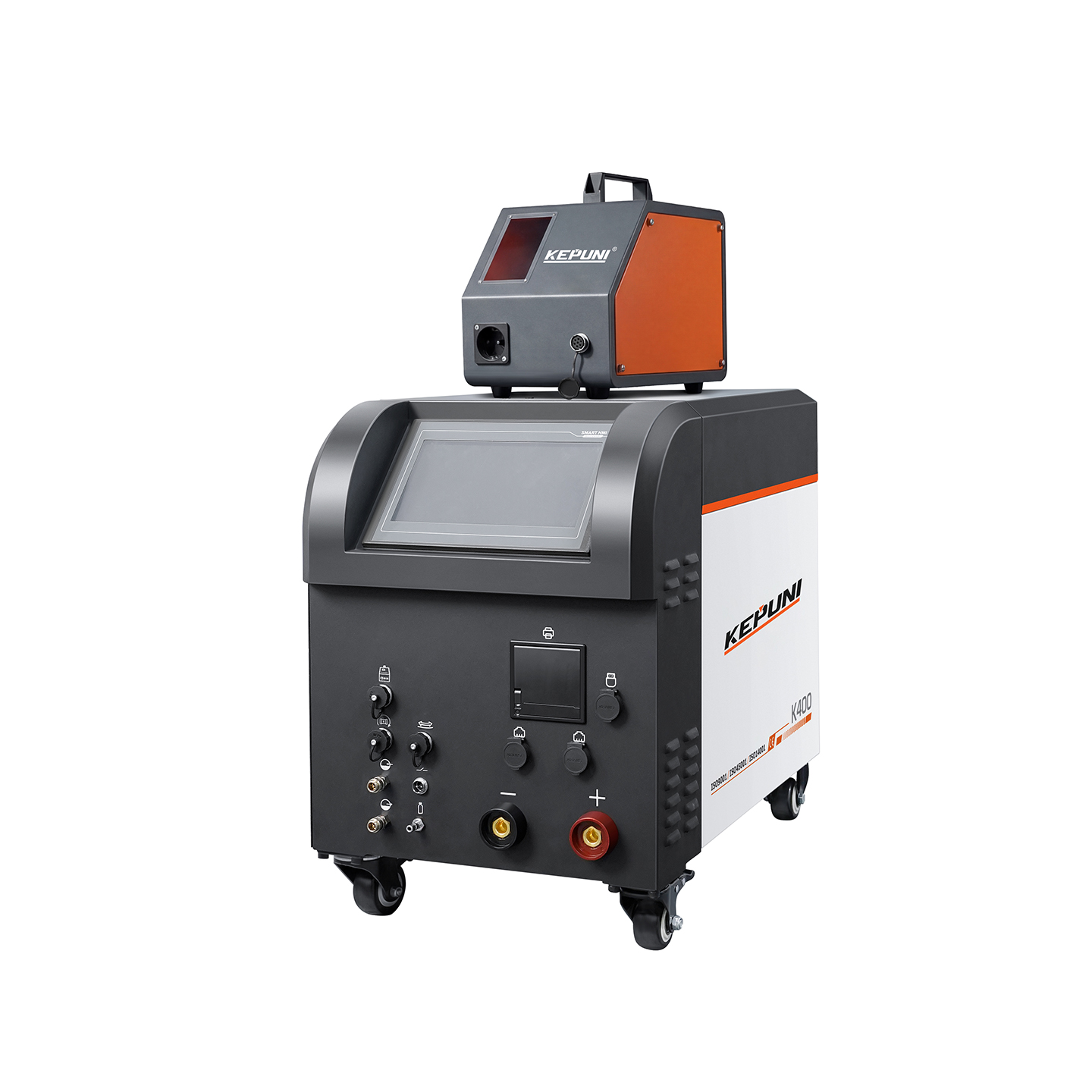
An open-type orbital welding machine is arranged around a larger pipe joint, where the weld head rotates around the fixed pipe.
Tube-to-Tube-Sheet and U-Tube Heads
Heat exchangers and boilers create another demanding geometry: the tube-to-tube-sheet joint. KEPUNI addresses this with several dedicated designs. The TB-35 Series welds tubes with an outer diameter of 4.5–35 mm and wall thickness up to 2.5 mm; the TB-65 Series covers tube outer diameters of 8–65 mm and wall thickness up to 5 mm. The XD-G400 is a purpose-built Tube-to-Tube Sheet Power Supply for the same family. These systems are intended for heat exchangers, boiler manufacturing, condensers, and pressure vessels, including large heat exchangers in power generation and chemical processing.
In addition, the XD-U Series is designed for U-tube heat exchangers, covering tube outer diameters of 9–25 mm with wall thickness up to 1.5 mm. U-tube bundles cannot always use straight-drawn tooling, so a head that can enter the bundle area with the least interference is valued in maintenance and new-build projects.
Girth Welding for Large Vessels and Storage Tanks
For circumferential seams on large vessels, pipe, or tank sections, manufacturing often uses the XD-GH Series Girth Welding Machine, which operates as a girth weld power supply with a rotary stand. Its range covers pipe or vessel outer diameter from 20 mm up to 960 mm, wall thicknesses from 2.5 mm to 25 mm, and welding current from 5 to 400 A. Applications include shipbuilding, oil-and-gas pipelines, storage tanks, and pressure vessels.
How Orbital Welding Machines Map to Industry Applications
Specifications become more meaningful when tied to a process environment. The following sections summarize the principal uses and typical constraints for each sector, based on industry application data and manufacturing capabilities.
Pharmaceutical
Pharmaceutical facilities rely on orbital welding for pure water systems, including water-for-injection piping, and for CIP/SIP systems. The requirement is aseptic, leak-proof welding with documentation and traceability for audits. Typical supporting equipment includes valves, filters, tanks, fittings, and piping. Special requirements referenced in this space include 3-A sanitary standards, FDA compliance, EU GMP expectations, and complete documentation of welds.
Because the pipe diameters are usually small, KEPUNI product lines such as the 5H Series, 10H Series, and XD-Split Type Weld Head are commonly referenced. The XD-20W and XD-20PRO power supplies are compatible with steel and alloy small tubing and are positioned for pharmaceutical, semiconductor, and chemical process service.
Semiconductor and Electronics
Semiconductor manufacturing uses ultra-pure gas piping, deionized water systems, and clean-room distribution networks. Welds must avoid particle generation and maintain the interior surface quality of the piping. The operating environment typically runs continuously around the clock. Industry references such as SEMI F57 cleanliness standards and Class 1 clean-room compatibility are common in this application space.
For semiconductor fabrication line build-out and facility expansion, compact heads with stable enclosed arcs are useful. The 5H Series covers the smallest tube sizes, including 3.175–15.88 mm, while closed heads from the 40/80/120/170 Series can serve applications that move beyond very small tube. The XD-20PRO is one of the MIG power supplies specified across industries including semiconductor, pharmaceutical, food and beverage, oil and gas, and chemical.
Food and Beverage
Sanitary pipe systems in food, dairy, brewery, beverage, and similar plants require hygienic connections with no dead legs and low risk of microbial hold-up. The application uses milk, juice, beer, and beverage sanitary piping in continuous production lines. Pumps, heat exchangers, tanks, and homogenizers are the supporting equipment. Sanitary design expectations such as EHEDG criteria, no-dead-leg design, and USDA/FDA audit readiness are relevant during qualification.
The 10H Series and XD-Split Type Weld Head fall into the diameter range commonly used for process H small-bore sanitary lines. Weld quality directly affects cleanability and product safety, which is why automatic orbital systems are a practical alternative to manual welding in these facilities.
Oil, Gas, and Petrochemical
Oil and gas is a major end-user segment. For process piping, aggressive media handling, and corrosion-resistant installations, weld integrity must prevent leak paths and withstand stress from pressure, temperature, and corrosive media. Special requirements can include ATEX/IECEx considerations where explosive atmospheres exist, API standards, and NACE-compliant materials and procedures.
KEPUNI addresses this segment with the K Series open pipe welding machine and XD-K Series power supply, both targeted at oil-and-gas, petrochemical, and power generation. The open head handles larger pipe diameters, while the closed-head 40/80/120/170 Series extends orbital welding to smaller-bore, code-critical piping. The role of the equipment is to produce corrosion-resistant welds, ensure zero leaks, and use chemical-resistant materials when required.
Power Generation and Boiler Tube
Boilers, heat exchangers, condensers, and pressure vessels are welded in shutdown maintenance as well as new-build projects. The work covers boiler tubes, headers, and steam piping, with pressure-retaining welds expected to meet codes such as ASME Section IX or the Pressure Equipment Directive depending on region and customer specification.
Tube-to-tube-sheet welders are the specialized answer here. The TB-35 and TB-65 Series, together with the XD-G400 power source, are designed for tube-to-tube-sheet joints in heat exchangers, boilers, condensers, and pressure vessels. The XD-U Series also supports U-tube bundle maintenance. These weld geometries are nearly impossible to perform by hand with the same consistency, especially in deep tube sheets.
Chemical Processing
Chemical and petrochemical plants use orbital welding for new plant construction and capacity expansion, especially where reactors, piping, heat exchangers, and storage tanks need high-quality joints in steel, alloy, and sometimes more corrosion-resistant materials. The operating duty is typically continuous process rather than batch. Compliance references can include ATEX/IECEx, API standards, and NACE guidance when the process environment is aggressive.
Water Treatment and HVAC
Water treatment and HVAC projects, including new installations and repair, benefit from corrosion-resistant stainless steel joints that hold up reliably over long service. The application is particularly widespread across North America, Europe, the Middle East, and Asia-Pacific markets. The XD-Split Type Weld Head, covering 3.175–25.4 mm tube, is positioned for HVAC, plumbing, and field service because it is compact enough to move around installed systems.
Orbital Welding Machine Market Context in 2026
The orbital welding machine market is growing in parallel with investment in high-purity process piping and energy infrastructure. One publicly cited estimate places the global orbital welding machine market at approximately USD 1.32 billion in 2024, expanding to roughly USD 2.07 billion by 2030. Market analysts note that definitions vary; some estimates that cover only weld heads and power units, while others include auxiliary equipment, which explains the range between studies.
Oil and gas represented the largest application segment in 2024, holding more than one-third of the total market. High-purity piping applications for semiconductor and pharmaceutical production are frequently described as the fastest-growing segments because contamination control becomes more important as process technologies tighten. Asia-Pacific is also a major demand center, accounting for around 37% of regional sales in the broader welding equipment category.
The supplier landscape remains broad. Established international names in orbital welding include Lincoln Electric, ESAB (Colfax), Swagelok, AMI (Arc Machines, Inc.), and Polysoude. Alongside these global majors, manufacturers such as KEPUNI supply a full spectrum of orbital welding heads and power supplies, providing an alternative for buyers seeking international specification coverage with competitive engineering support.
How Modern Suppliers Compare with Manual Welding and Traditional Welding Trains
Manual TIG welding remains useful for small or specialized weld repairs, custom fabrication, and positions where an orbital head cannot be fixed. However, it depends heavily on the welder’s skill and fatigue level, and it is difficult to reproduce the same weld profile over a large piping network. Orbital welding reduces variability by fixing travel speed, rotation, and arc voltage within a closed-loop control system.
Traditional manual welding also creates logistical constraints: qualified welders must be mobilized, weld coupons must be tested per procedure, and inspection rejection rates tend to be higher when access is restricted inside a tight pipe rack. An orbital machine uses a documented weld program that can be repeated and traced. This traceability advantage is important in regulated industries where every joint may need to be logged and accepted against a welding procedure specification.
Orbital welding does have boundaries. It requires precise tube cutting, deburring, and fit-up because the joint geometry must be consistent enough for the machine to produce a full weld without relying on the human eye. Wall thickness and material combinations must fall within the capability of the selected head and power supply. Small-diameter heads in the 5H or 10H class cannot weld heavy-wall pipe, and the large open heads are not the most economical way to weld thin, hygienic small tube. Buyers should therefore define their dominant projects before choosing a head design.
What First-Time Buyers Should Ask When Evaluating Orbital Welding Equipment
During the research phase, the conversation with a supplier should go beyond brand names and brochure specifications. The following evaluation points provide a straightforward framework for early decision-making.
| Evaluation dimension | What to verify | Example from equipment data |
|---|---|---|
| Pipe or tube diameter | Confirm the head covers your minimum and maximum outside diameter | 5H Series: 3.175–15.88 mm; 10H Series: 6.35–25.4 mm; K Series: 19–325 mm |
| Wall thickness | Check that the machine can achieve full penetration at your maximum wall | 40/80/120/170 Series: up to 3 mm; K Series: up to 13 mm |
| Weld head style | Closed heads protect purity; open heads increase access on large pipe | Closed 40/80/120/170; open K Series |
| Material requirement | Verify steel, alloy, or specialty material compatibility | Most KEPUNI heads and power supplies support steel and alloy materials |
| Process standard | Identify ASME, PED, FDA, 3-A, EHEDG, or SEMI F57 expectations | Pharma and food typically need FDA or 3-A readiness; semiconductor references SEMI F57 |
| Application environment | Clean-room compatibility, field service, or outdoor construction changes the system choice | XD-Split Type Weld Head for HVAC, plumbing, field service |
Because the same power source may drive several different heads, a supplier that carries a wide portfolio can support multiple projects and future line changes. KEPUNI, for example, produces orbital welding machines, tube-to-tube-sheet welders, open pipe welders, cold welders, and orbital cutters within one engineering operation, allowing a buyer to consolidate spare parts and programming skill across different weld tasks.
Evaluating a Manufacturer’s Real Capability
Practical evidence of manufacturing capability is useful in the awareness and research stage, especially when the supplier is in another region. KEPUNI, headquartered in Shanghai, operates a manufacturing park covering 10,000 m² with 280 employees, including 36 R&D engineers and technicians. The firm reports annual production capacity of 3,000 pieces and is export-oriented, with sales directed 100% toward international markets through distributors and agents in Europe, Asia, South America, North America, and the Middle East. The company integrates R&D, production, sales, and after-sales service, and its core team has long-standing experience in welding and the automation of pipeline welding.
For regulated industries, buyers should request specific welding procedure support, documentation, and any necessary standards records during formal qualification. A brochure can provide initial product orientation, but visit, sample weld testing, and a reference check are stronger evidence for long-term selection.
Key Takeaways for Industrial Buyers
- Orbital welding is a mature automated GTAW process for critical tube and pipe systems, not an experimental alternative to TIG welding.
- Equipment is modular: a buyer chooses one portable power supply and the heads that fit the project’s pipe diameters and cleanup/hygiene requirements.
- Closed-head small-tube systems (5H Series, 10H Series, XD-Split) suit pharmaceutical, semiconductor, food-grade, and similar clean applications; open-headed K Series systems support heavy-wall, larger-diameter oil-and-gas and power piping.
- Dedicated tube-to-tube-sheet and girth welding machines address special geometries like boilers, heat exchangers, and storage vessels.
- Buying decisions should balance initial cost, user training, weld procedure validation, spare-part availability, and regional service support—not only machine price.
FAQ
What is an orbital welding machine?
An orbital welding machine is an automated GTAW/TIG system in which the welding torch or tungsten electrode rotates around a fixed tube or pipe to produce a complete circumferential weld. The machine controls rotation, current, timing, and shielding gas to make repeatable, documented welds with minimal operator influence.
What is the difference between closed head and open head orbital welding?
A closed weld head fully encloses the joint, which protects the inert gas atmosphere and helps meet high-purity requirements in clean-room and hygienic tube welding. An open weld head clamps around the pipe but does not enclose it entirely, which is more practical for large-diameter pipeline and heavy-wall work where access and joint fit-up are more variable.
What materials can orbital welding machines join?
Most orbital welding machines are designed for steel and alloy materials. Stainless steel is the most common base material in high-purity and hygienic piping. Depending on the weld head, power supply, and shielding gas, orbital systems can also be used for nickel alloys, duplex stainless, titanium, and other alloy families when the equipment is configured correctly.
Why is orbital welding used for pharmaceutical and semiconductor piping?
Pharmaceutical and semiconductor piping requires very low contamination, smooth interior surfaces, and repeatable joint quality. Orbital welding reduces variation and minimizes the chance of contamination when closed heads are used, helping plants comply with standards such as FDA expectations for pharmaceuticals and SEMI F57 type cleanliness expectations in semiconductor environments.
Can orbital welding machines weld boiler tubes?
Yes. Tube-to-tube-sheet welders such as the TB-35 and TB-65 Series and specialized heads like the XD-U Series are used for boiler, heat exchanger, and condenser tube welding. Because boiler tubes and heat exchanger bundles require precise tube-to-sheet welds, orbital automation is commonly used in new construction and outage maintenance.
What should a first-time buyer evaluate before purchasing an orbital welding machine?
The buyer should first define pipe or tube diameter, wall thickness, material, process standard, cleanliness requirement, and job-site constraints. Next, verify that a weld head model exists for that envelope and confirm the power source supports the required current range. Finally, evaluate supplier capability, documentation, training, spare-parts supply, and after-sales service.
Does an orbital welding machine cost more than a manual TIG system?
Initial purchase cost is usually higher than a basic manual TIG unit because the machine includes a programmable power source, weld heads, and in many cases data recording. In contract or project costing, buyers compare this against reduced welder qualification requirements, lower rework, higher production consistency, and the ability to meet high-purity or pressure code standards with fewer rejected joints.
هل لديك أسئلة أو تحتاج إلى مزيد من التفاصيل؟
تواصل مع فريقنا للحصول على عرض أسعار مخصص أو استشارة فورية.
طلب عرض أسعار
املأ النموذج أدناه وسيتواصل معك فريقنا بعرض مقترح مخصص.
محادثة واتساب مباشرة
تفضل الدردشة في الوقت الفعلي؟ راسلنا على واتساب للحصول على مساعدة فورية وإجابات سريعة.
- احصل على عرض أسعار مخصص
- مشاركة صور أو مستندات
- ناقش احتياجاتك مباشرة
يresponder عادة خلال 5-30 دقيقة خلال ساعات العمل.