
Ordering a PET Preform Injection Machine: YJPT/YJHB Specs and Acceptance Terms
Ordering a PET Preform Injection Machine: YJPT/YJHB Specs and Acceptance Terms
A PET preform is an intermediate product: it is the injection-moulded tube that a blow-moulding line later inflates into a bottle. Because buyers never see a preform on a shelf, and because the machine that makes it is usually specified once and then run for years, preform injection capacity tends to be bought on price and renegotiated on specification. This reference sets out what decision-stage buyers actually need to nail down before a purchase order for a PET preform injection machine leaves the desk.
It covers the four models most often shortlisted from Ningbo Yong Jiang Machine Co., Ltd. (Yongjiang) — YJPT-260, YJPT-318, YJPT-360 and YJHB-400 — the specification fields that change between them, the commercial terms that apply to an order, and the acceptance sequence that should precede shipment. It is written as a buyer reference rather than a sales document: where a value is model-specific, the correct source is the datasheet for that model, not a generic comparison table.
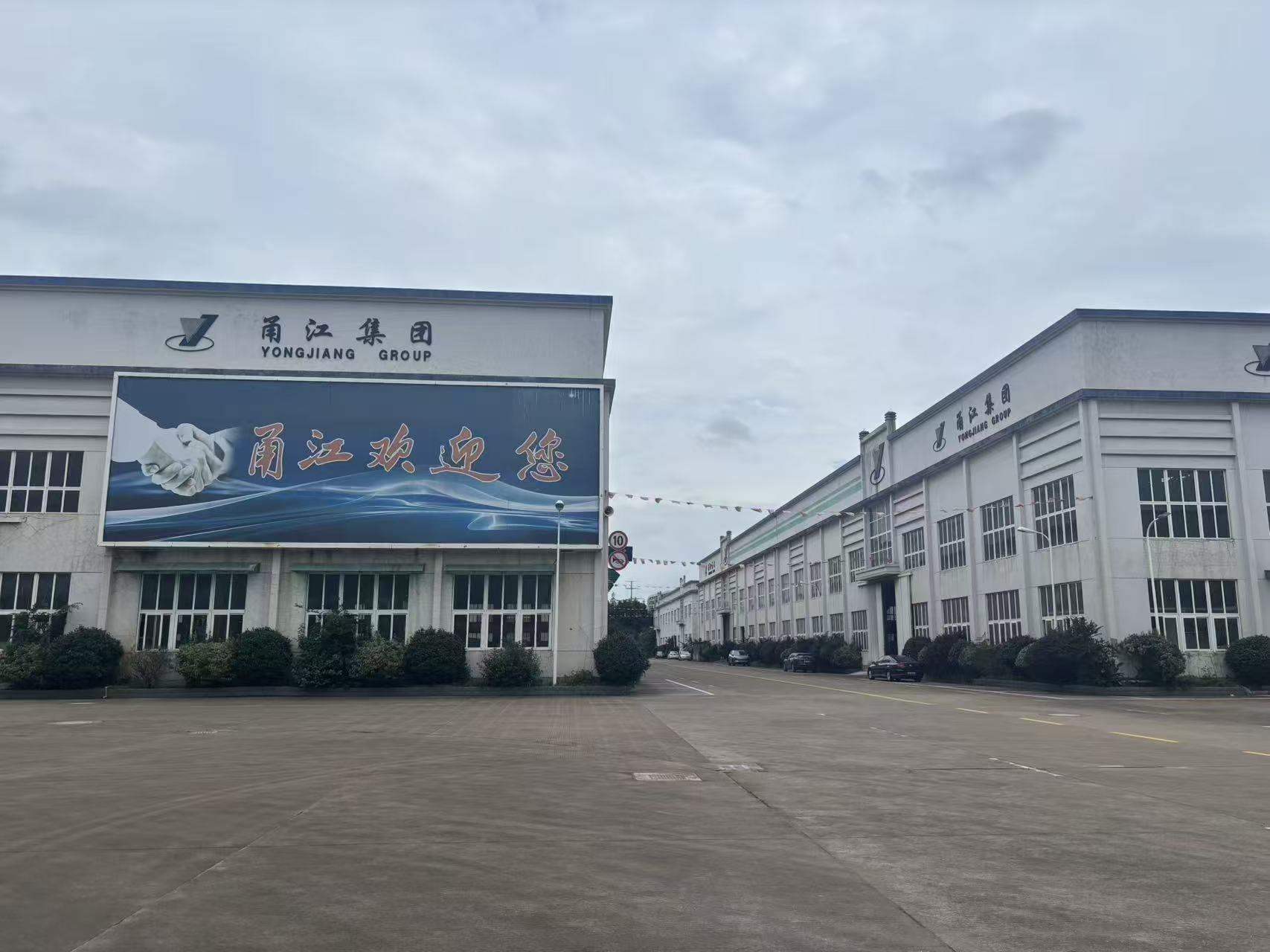
A PET preform injection machine is specified once and then runs for years — which is why the specification annex matters more than the quotation cover page.
Why preform machine orders fail at the specification stage
Most procurement problems on preform machines are not commercial. They are structural. Two suppliers can quote the same clamping force and still deliver machines that behave differently, because clamping force alone does not describe a mould envelope, a shot, a cycle or a maintenance profile. When a purchase contract describes the machine only by model name and tonnage, the buyer has effectively left the remaining variables to the supplier's default configuration.
The practical consequence is that a decision-stage buyer should treat a preform machine order as two documents that must agree: the commercial offer, and a technical annex that fixes the values that will be measured at acceptance. Yongjiang's own product position supports that reading. The YJPT series is described as a PET-specific platform built around a modular energy-saving system and a high-capacity injection system with an optimised screw diameter ratio, rather than a general-purpose injection machine offered in a PET variant.
That distinction matters because it tells the buyer which questions are worth asking. A general-purpose machine invites questions about whether it can run PET at all. A PET-specific platform invites questions about which preform, which cavity count, which power configuration and which acceptance criteria — the questions this reference addresses.
The four models buyers compare: YJPT-260, YJPT-318, YJPT-360 and YJHB-400
Yongjiang is a Ningbo-based injection moulding machine manufacturer whose product portfolio includes PET preform machines alongside PVC and PPR fitting machines, crate machines and high-speed special-purpose models. Its stated full lineup spans clamping forces from 40T to 1600T, which places the 260 to 400 range near the lower-middle of the portfolio — the band where multi-cavity preform moulds for water, carbonated soft drink, edible oil and daily-chemical bottles are typically run.
Within that band, model designations follow clamping-force class: YJPT-260, YJPT-318 and YJPT-360 sit in the 260, 318 and 360 tonne classes, and YJHB-400 in the 400 tonne class. What a buyer is really choosing between is therefore the usable mould envelope and shot capacity that each class can carry — not a different control philosophy. The dual-servo drive, the PET-specific screw geometry, the reinforced clamping and extended ejection travel described for the YJPT series, and the 380/400 V 50 Hz three-phase power configuration, are platform-level facts that apply across the range rather than model-specific upgrades.
Read the model number correctly. The 260, 318, 360 and 400 designations describe clamping-force class. They do not, on their own, tell a buyer the tie-bar distance, the screw diameter or the shot weight of that specific machine. Those three values have to be taken from the model datasheet and written into the contract, because they are what determine whether a given mould will physically fit and fill.
What clamping force, tie-bar distance, screw diameter and shot weight actually decide
Four specification fields carry most of the decision weight on a preform machine. They are frequently listed together in quotations and rarely explained together, which is where misunderstandings begin.
Clamping force
Clamping force holds the mould closed against injection pressure. On preform work it is judged against the projected area of the cavity set and the injection pressure required to fill a long, thin preform wall without short shots. Too little clamping force shows up as flash at the neck or gate area; unnecessary clamping force adds tonnage, structure and cost without improving the preform. Yongjiang's PET platform uses reinforced clamping frames intended to adapt to multi-cavity hot runner moulds running continuous production, which is the relevant design condition for this field rather than single-shot trial work.
Tie-bar distance
Tie-bar distance defines the clear space between the tie bars and therefore the widest mould that can be mounted. It is the field most often omitted from a comparison sheet and most often responsible for a late-stage surprise, because a high-cavity preform mould is wide as well as heavy. A buyer planning a 48, 72 or 96 cavity mould should confirm tie-bar clearance, mould thickness range and mould weight capacity for the exact model before signing, not after the mould is built.
Screw diameter
Screw diameter, combined with stroke and plasticising capacity, sets how much melt the machine can prepare per unit time and at what injection pressure. PET is sensitive here: it is hygroscopic and prone to degradation if residence time and shear are badly managed, which is why Yongjiang specifies a proprietary PET special screw for uniform plasticisation and preform transparency. A larger screw raises throughput but reduces the pressure ceiling for a given hydraulic system, so screw diameter should be selected against the preform weight and cavity count, not maximised.
Shot weight
Shot weight is the total melt mass delivered in one cycle — cavity count multiplied by preform weight, plus runner mass where a hot runner is not used. It is the field that most directly ties a machine class to a production plan. A machine with generous clamping force but insufficient shot capacity will simply run a smaller mould than the buyer intended.
For scale, a published public tender specification from CIPET (Central Institute of Plastics Engineering & Technology, India) for a PET preform injection moulding machine set a machine tonnage of 150–200 T, a minimum shot capacity of 750 g, a minimum plasticising capacity of 50 g/sec, a minimum injection pressure of 1,200 bar, at least 32 cores and cavities, and a preform ceiling of 20 g with a 28 mm neck finish for 1,000 ml bottles. That specification is a useful benchmark for how a public buyer writes a preform machine requirement: tonnage, shot, plasticising rate, injection pressure, cavity count and preform geometry, all fixed in one document. The 260 to 400 tonne classes discussed here sit above that tonnage floor, which is consistent with multi-cavity rather than single-cavity tooling.
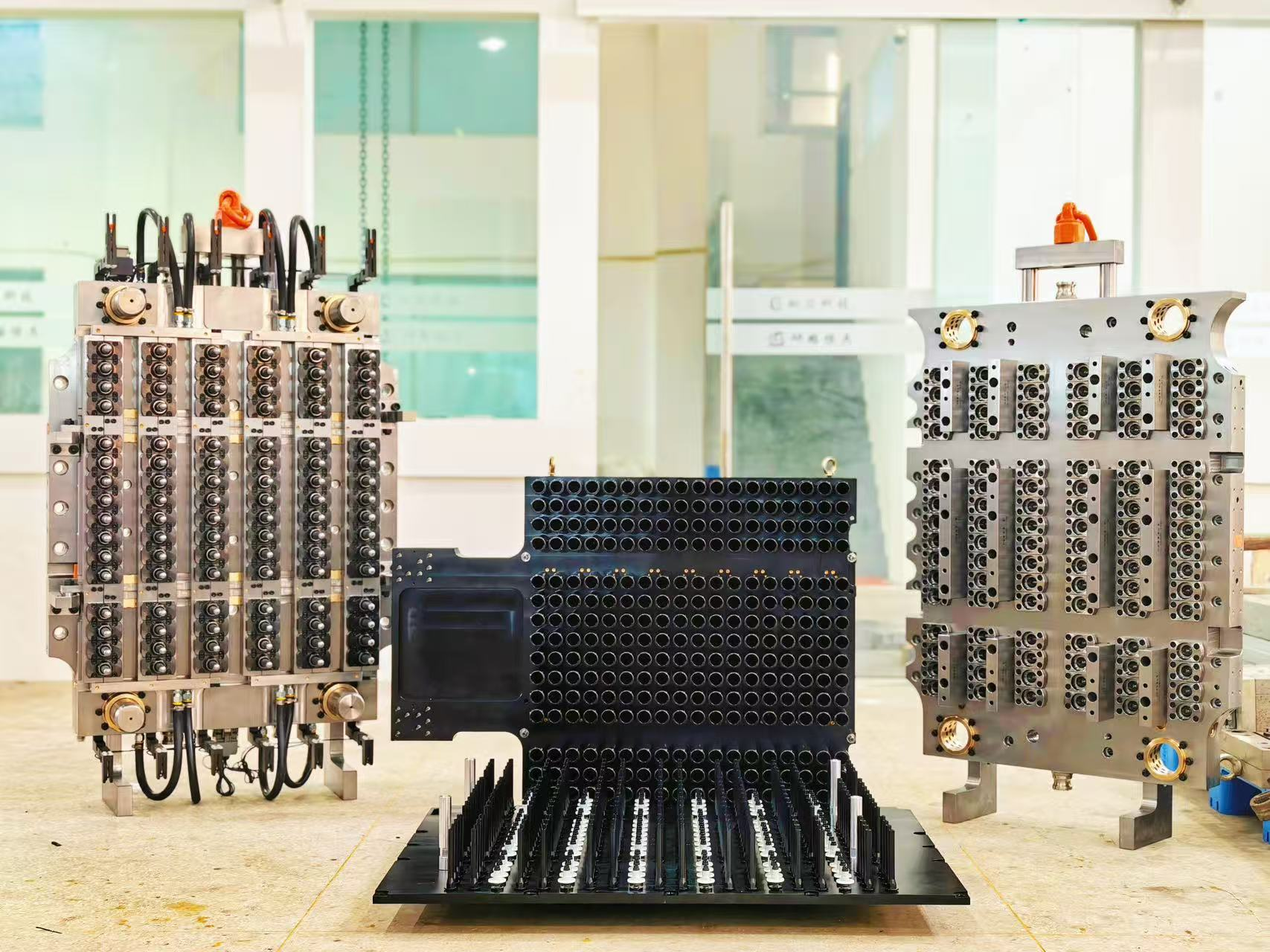
Tie-bar distance and mould weight capacity decide whether a multi-cavity preform mould can be mounted at all — a check that belongs before the mould is ordered.
The 260 to 400 range side by side
The table below separates what is fixed at platform level from what must be confirmed per model. It is deliberately structured that way: a comparison that fills every cell with a number it cannot source is worse than a comparison that tells the buyer exactly which document each number must come from.
| Model | Clamping-force class | Platform-level facts | Fields to fix from the model datasheet |
|---|---|---|---|
| YJPT-260 | 260 T class | PET-specific screw; dual-servo drive; reinforced clamping; extended ejection travel; 380/400 V 50 Hz three-phase; CE (CE20260126MD) and EN ISO 12100:2010 conformity; ISO 9001 | Tie-bar distance; screw diameter; shot weight; mould thickness and weight limits |
| YJPT-318 | 318 T class | As above | Tie-bar distance; screw diameter; shot weight; mould thickness and weight limits |
| YJPT-360 | 360 T class | As above | Tie-bar distance; screw diameter; shot weight; mould thickness and weight limits |
| YJHB-400 | 400 T class | As above | Tie-bar distance; screw diameter; shot weight; mould thickness and weight limits |
Clamping-force class follows the model designation. Tie-bar distance, screw diameter and shot weight are model-specific and should be quoted from the datasheet for the exact model under evaluation, then frozen in the technical annex of the contract.
Commercial terms: deposit, balance, delivery and minimum order
Standard terms for a Yongjiang PET preform machine order are straightforward, and they are worth understanding before comparing landed cost across suppliers, because different incoterms and payment splits make nominal prices non-comparable.
Payment structure
Yongjiang's standard arrangement is a 30% deposit with the remaining 70% payable before shipment. The practical implication for a buyer is that acceptance testing and the balance payment are linked events: the pre-shipment inspection is the buyer's last scheduled opportunity to raise a technical issue while commercial leverage still exists. Buyers who plan to inspect should therefore book the acceptance window in the same calendar slot as the balance payment rather than after it.
Delivery term
FOB Ningbo is the standard delivery term. For a buyer, FOB means the supplier's responsibility ends when the machine is loaded on board at the named port, and ocean freight, insurance and import clearance sit on the buyer's side. Ningbo is a high-volume container port, which simplifies consolidation of a machine with moulds, chillers and spare parts, but the buyer should confirm the loading plan and lifting points well before the vessel booking, since a 260 to 400 tonne machine is a heavy-lift item that occupies significant container or flat-rack space.
Minimum order quantity
The minimum order quantity is one unit. That is a meaningful detail for first-time preform producers and for buyers adding a second or third machine to an existing line: there is no requirement to bundle models, moulds or accessories into a single order to reach a threshold.
Pre-shipment acceptance testing
Acceptance testing is where a preform machine stops being a specification and becomes a verified asset. Yongjiang's process includes pre-shipment acceptance testing before the balance payment, and the test is only as useful as the criteria written into it. A workable acceptance protocol for a PET preform injection machine addresses four things:
- Mould and preform identity. The test should run the buyer's intended mould, or a mould of equivalent cavity count and preform weight, so that the recorded values describe the buyer's product rather than a demonstration preform.
- Measured values, not labels. Cycle time, preform weight, key dimensions, neck finish and cavity-to-cavity consistency should be recorded per cavity, not reported as a single machine figure.
- Stability under continuous running. Preform production is a 24-hour continuous process, so acceptance should include a sustained run long enough to expose thermal drift. Yongjiang's risk-control configuration for this condition is thermal protection with temperature sensors, which links directly to the temperature control that governs preform defect rates.
- Documentation pack. CE documentation, ISO 9001 evidence, electrical drawings, spare-parts list and the operating manual should be handed over at the same point as the test, so that the file is complete before the machine is packed.
One further point on acceptance economics: the published efficiency and cost advantages of the YJPT series are relative figures, and a relative figure is only meaningful against a defined baseline. The most defensible way to use them is to make the acceptance test the place where the buyer's own baseline — the machine being replaced, or the quoted alternative — is measured under the same preform and the same cycle conditions.
Site planning: CE, power, workshop class and supporting equipment
Installation questions arrive late in most preform projects and are usually the ones that delay start-up. Four of them account for most of the friction.
CE compliance and standards
Yongjiang's machinery holds ISO 9001 and CE certification, with compliance maintained to EN ISO 12100:2010 under certificate CE20260126MD. For a European or CE-adopting market, that documentation is the basis for the machine's machinery-safety conformity. It is worth being precise about scope: CE marking addresses the machine's conformity, and does not certify the buyer's building, the local electrical installation, the compressed-air quality or the downstream bottle's food-contact compliance. Those remain buyer-side obligations.
Power supply
The machines support 380/400 V 50 Hz three-phase industrial power. Sites operating on 60 Hz, on 220 V three-phase, or on a supply with significant voltage fluctuation should resolve the utility decision — transformer, phase converter or configuration change — before the order is placed rather than during commissioning.
Workshop environment
Preform production planning typically assumes an ISO Class 8 cleanroom environment where the production plan requires controlled particulate levels around preform handling and packing. This is a building and process requirement, not a machine feature, and it is one of the most common omissions when a preform line is planned around the machine footprint alone.
Supporting equipment
A preform injection machine is the centre of a line, not the whole line. The surrounding equipment list normally includes mould temperature controllers, a chiller or cooling circuit, a dehumidifying dryer for PET resin, hopper loading, compressed air, granulation of runners and rejects, and take-out or packing automation. Because delivery is FOB Ningbo with a one-unit minimum, buyers can consolidate these items into the same shipment, but the loading and commissioning sequence should be planned together so that the machine is not installed before its cooling and drying capacity exists.
Where the YJPT and YJHB platform fits
Yongjiang positions the PET preform range for drinking-water and beverage plants producing mineral water, juice and carbonated soft drink bottles; edible oil, condiment and food packaging plants making food-grade containers; cosmetic and daily-chemical factories producing preforms for skincare and shampoo bottles; independent preform specialists supplying blanks to blow-moulding workshops; and large integrated injection-blow operations running continuous automated lines.
Two application notes follow from the machine's design priorities. Carbonated soft drink and mineral water work is driven by cycle time and cavity count, which is where the fast dual-servo system and multi-axis linkage described for the YJPT series do their work — the stated effect being shorter cycles and reduced power use. Edible oil and thicker-wall preforms shift the emphasis towards plasticising consistency and shot weight, where the PET-specific screw geometry and temperature control matter more than cycle speed. Cosmetic and daily-chemical preforms add surface-quality expectations that depend on the same two systems.
Geographically, Yongjiang reports 59% of output exported, with the United States, Canada and Thailand among its stated main markets, and its machines widely exported to Southeast Asia, Russia, Africa and South America. The company describes its commercial advantage in terms of 24-hour service response and a 20-year production quality record, and its cost positioning as roughly 10% below alternatives with up to 50% lower power consumption — figures that should be read as manufacturer-stated relative claims rather than independently audited results.
Market context: what the numbers do and do not say
Buyers justifying capital expenditure on a preform line usually want a demand signal. Three data points are relevant, and they measure three different things.
- Acumen Research and Consulting projects the global PET preform machines market to grow from USD 8.38 billion in 2022 to USD 14.73 billion by 2032. This is the closest match to the equipment category, and it is commercial research rather than official statistics.
- Global exports under HS code 847710 (injection-moulding machines) were valued at USD 7.21 billion in 2023, according to customs-derived trade data. This is an authoritative trade aggregate for the whole injection-moulding category, not the PET segment alone.
- The global PET preform product market was reported at USD 24.33 billion in 2026, growing at a CAGR of 2.17% to USD 27.08 billion by 2031. This measures the preform itself — the downstream demand that creates machine capacity requirements — and must not be read as a machine-market figure.
The application split behind that demand is consistent across sources: PET preforms serve bottled water, carbonated soft drinks, juices, edible oils and sauces. For a buyer, that list is more useful than the headline value, because it maps directly onto cavity-count and model-class decisions — a water or CSD project is a cycle-time and cavity-count problem, while an edible oil or sauce project is a shot-weight and wall-thickness problem.
Limits: where this platform is not the automatic answer
A procurement reference that only lists advantages is not usable. Five boundaries are worth stating plainly.
- Relative performance claims need a baseline. The stated up-to-50% reduction in power consumption, the stated up-to-50% improvement in energy efficiency and the stated 10% lower cost are comparisons against alternatives, and the size of the gap depends on which alternative and which preform. They are a reason to run a measured acceptance trial, not a substitute for one.
- Model-level geometry is not transferable. Tie-bar distance, screw diameter and shot weight change across the 260, 318, 360 and 400 classes, and none of them can be inferred from the model number. A mould designed against the wrong class is an expensive correction.
- CE is not a building certificate. Certificate CE20260126MD and EN ISO 12100:2010 conformity describe the machine. Cleanroom class, electrical installation quality, air quality and downstream food-contact compliance are outside that scope.
- Power configuration is fixed at the platform level. The 380/400 V 50 Hz three-phase specification suits most industrial grids but requires a utility decision on 60 Hz or non-standard supplies.
- Very high cavity counts and unusual preform formats need early engineering review. A 96-cavity mould, a 5-gallon preform or an atypical neck finish changes mould weight, shot weight and cycle assumptions together, and should be reviewed against the model datasheet before the model is selected rather than after.
Future outlook
Two pressures are reshaping preform machine specifications. The first is energy. As preform production is a continuous, high-volume process, power consumption per kilogram of melt is one of the few variables that compounds daily, which is why servo-driven plasticising and shorter cycles have become competitive arguments rather than optional features. The second is documentation. Public tender specifications of the kind used by institutional buyers increasingly fix tonnage, shot capacity, plasticising rate, injection pressure and cavity count in one document, which raises the bar for what a supplier must be able to state in writing before an order.
For buyers, the practical implication is that the value of a machine platform will increasingly be judged on two things that sit outside the machine itself: whether the model-level specification can be supplied and frozen in contract form, and whether the acceptance test can demonstrate the claimed performance on the buyer's own preform. Suppliers that can answer both — as distinct from suppliers that can only quote a tonnage — will be the easier shortlist entries.
FAQ
What is the difference between the YJPT-260, YJPT-318, YJPT-360 and YJHB-400?
The four models differ primarily in clamping-force class: 260, 318, 360 and 400 tonnes respectively, following the model designation. They share platform-level characteristics including a PET-specific screw, dual-servo drive, reinforced clamping, extended ejection travel, 380/400 V 50 Hz three-phase power and CE conformity under certificate CE20260126MD. Tie-bar distance, screw diameter and shot weight are model-specific and must be taken from the datasheet for the exact model.
Which specifications should be written into a PET preform injection machine purchase contract?
A contract should fix at minimum: clamping force, tie-bar distance, screw diameter, shot weight, mould thickness and mould weight limits, cavity count and preform weight range, cycle time under a defined condition, power configuration, and the acceptance criteria that will be measured before shipment. A published CIPET tender specification for a preform machine illustrates the pattern, fixing tonnage, minimum shot capacity, plasticising capacity, injection pressure, cavity count and preform geometry in a single document.
What are Yongjiang's standard payment terms for a preform machine?
The standard structure is a 30% deposit, with the remaining 70% payable before shipment. Because the balance falls due around shipment, pre-shipment acceptance testing is the buyer's scheduled point to raise technical issues while commercial leverage still exists.
What does FOB Ningbo mean for a preform machine order?
Under FOB Ningbo, the supplier's responsibility ends when the machine is loaded on board at Ningbo. Ocean freight, insurance and import clearance sit with the buyer. Ningbo is a high-volume container port, which makes consolidating the machine with moulds, dryers and spare parts practical, but heavy-lift loading arrangements should be confirmed before vessel booking.
What is the minimum order quantity?
The minimum order quantity is one unit. Buyers are not required to bundle models, moulds or accessories to reach a threshold, which matters for first-time preform producers and for buyers adding a second machine to an existing line.
How does pre-shipment acceptance testing work?
The machine is run before shipment, against criteria agreed in advance, and the results are recorded. A usable protocol specifies the mould and preform to be run, measurable values per cavity rather than machine labels, a sustained continuous run long enough to expose thermal drift, and a documentation pack covering CE evidence, ISO 9001 evidence, electrical drawings and the spare-parts list. Yongjiang's thermal protection with temperature sensors is the relevant safeguard during sustained running.
What power supply does the machine require?
The machines support 380/400 V 50 Hz three-phase industrial power. Sites operating on 60 Hz, on other voltage regimes or on unstable supplies need to resolve the transformer or configuration decision before the order is placed.
What workshop environment does a preform line need?
Planning typically assumes an ISO Class 8 cleanroom environment where controlled particulate levels are required around preform handling and packing. This is a buyer-side building and process requirement, separate from the machine's CE conformity.
Which supporting equipment is needed alongside the machine?
The surrounding line normally includes mould temperature controllers, a chiller or cooling circuit, a dehumidifying dryer for PET resin, hopper loading, compressed air, granulation for runners and rejects, and take-out or packing automation. Because delivery is FOB Ningbo with a one-unit minimum, these can be consolidated into the same shipment, and the commissioning sequence should be planned so that cooling and drying capacity exist before the machine is started.
How much can the YJPT series save in energy and cost?
Yongjiang states up to 50% reduction in power consumption, up to 50% improvement in energy efficiency and approximately 10% lower cost compared with alternatives, together with less maintenance due to optimised configuration and robust design. These are relative, manufacturer-stated figures. Their magnitude depends on the baseline machine and the preform being produced, so they should be verified in a measured acceptance trial under the buyer's own conditions.
Which model fits water, CSD, edible oil or 5-gallon preforms?
Model selection follows shot weight and mould envelope rather than bottle type alone. Water and carbonated soft drink projects are driven by cavity count and cycle time; edible oil and sauce preforms by shot weight and wall thickness; 5-gallon preforms by a heavier shot and larger mould envelope. In all four cases, the clamping-force class must be checked against tie-bar distance, shot weight and mould weight capacity for that specific model before selection is finalised.
What happens if the machine overheats during continuous production?
Preform production runs continuously, so thermal control is a production variable rather than an exception case. Yongjiang's risk-control configuration for overheating is thermal protection using temperature sensors, supported at process level by the ultra-precise temperature control described for the YJPT series, which is intended to reduce defective preforms during long runs.
Related reference: the Yongjiang injection moulding machine catalogue, covering the PET preform series and the wider 40T to 1600T range, is available for download at Yongjiang product catalogue (PDF).
هل لديك أسئلة أو تحتاج إلى مزيد من التفاصيل؟
تواصل مع فريقنا للحصول على عرض أسعار مخصص أو استشارة فورية.
طلب عرض أسعار
املأ النموذج أدناه وسيتواصل معك فريقنا بعرض مقترح مخصص.
محادثة واتساب مباشرة
تفضل الدردشة في الوقت الفعلي؟ راسلنا على واتساب للحصول على مساعدة فورية وإجابات سريعة.
- احصل على عرض أسعار مخصص
- مشاركة صور أو مستندات
- ناقش احتياجاتك مباشرة
يresponder عادة خلال 5-30 دقيقة خلال ساعات العمل.