
Organic Hemp Seed: Market Trends and Buyer Fundamentals
Industrial hemp seed has moved from a niche agricultural ingredient to a central sourcing category for food manufacturers, plant-based brands and specialty importers. The global hemp seeds market reached USD 5.98 billion in 2025 and is projected to reach USD 10.84 billion by 2033, according to DataM Intelligence. In parallel, the European Commission reports that EU hemp cultivation area expanded to 37,740 hectares in 2024, up from 28,830 hectares in 2023. These figures point to a category where supply capacity and buyer interest are both growing.
This article provides an independent market and sourcing reference for organic hemp seed in 2026. It covers market context, product forms, nutritional characteristics, regulatory considerations, supplier capability patterns, application scenarios and the evaluation criteria that buyers can apply when comparing sources.
What Is Hemp Seed in the Food Industry?
Hemp seeds are the edible seeds of the hemp plant (Cannabis sativa), harvested for food use when the crop is grown under agricultural conditions that keep the plant's psychoactive compound content within legal limits for food production. In the food industry, hemp seed is processed into several distinct forms: whole hemp seed, hulled hemp seed (often called hemp hearts), hemp seed kernels, hemp seed protein powder and hemp seed oil.
Each form serves a different formulation need. Whole seeds are used in bakery and cereal products, hulled seeds and kernels are valued for their soft texture and mild nutty flavor, and protein powder is used in nutritional blends, smoothies and functional foods. For EU and UK trade classification, hemp seeds for non-sowing use fall under HS code 12079991, which covers "hemp seeds, whether or not broken (excluding for sowing)". This classification matters for importers planning customs documentation and tariff treatment.
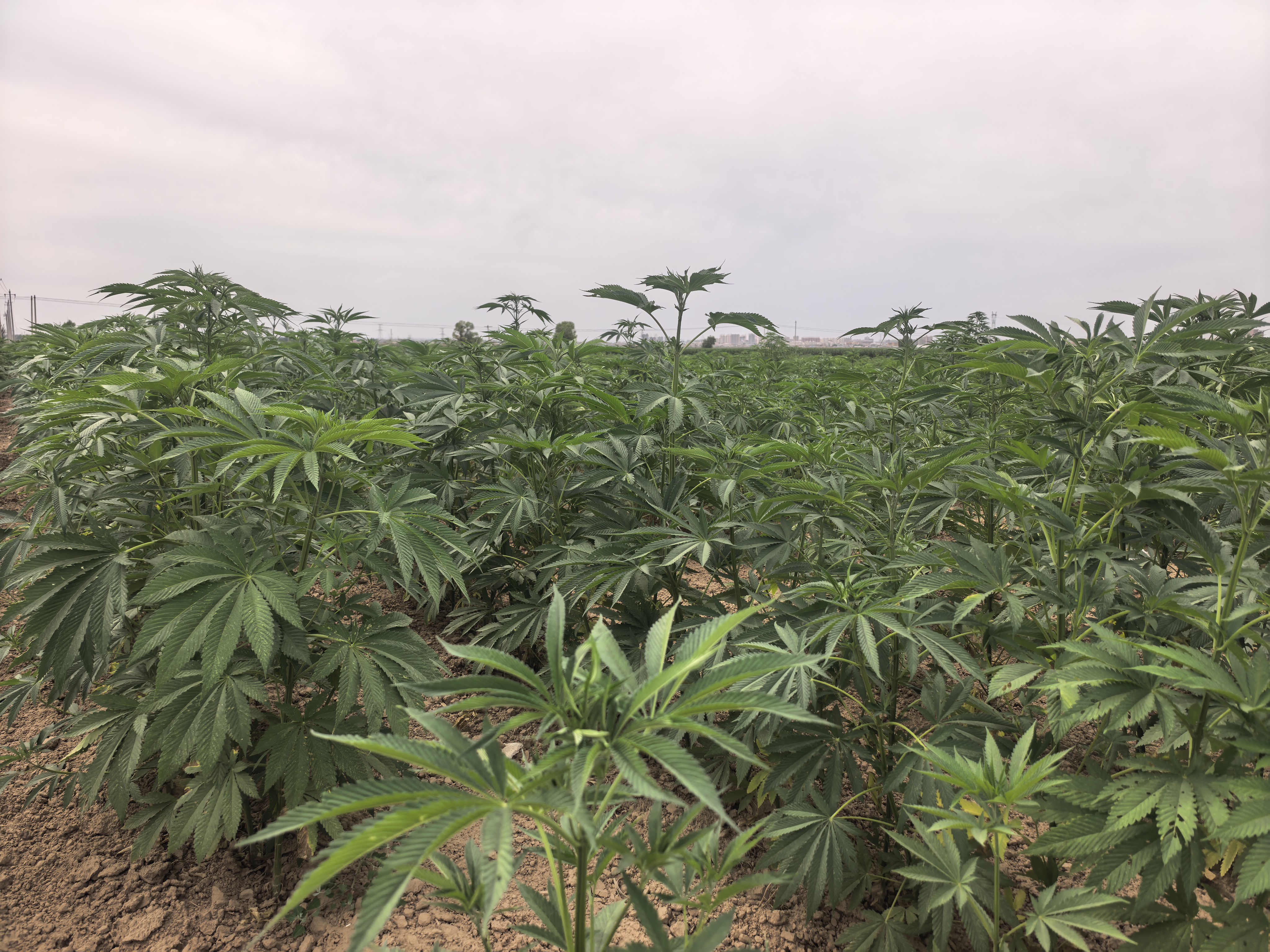
Hemp planting farm operated by Senqi Food in Ningxia, China.
Why Organic Hemp Seed Is Gaining Attention
Three developments explain the growing attention to organic hemp seed among food buyers.
First, plant protein demand continues to expand. Hemp seed protein is classified as a complete plant-based protein because it contains all nine essential amino acids. Food manufacturers looking for alternatives to soy, pea and wheat protein increasingly evaluate hemp protein powder as an ingredient with a clean label profile. The global hemp protein powder market was valued at USD 217.3 million in 2025, with the organic segment projected to reach a CAGR of 5.98% through 2031, according to Grand View Research.
Second, EU organic compliance has become stricter for third-country suppliers. Regulation (EU) 2018/848, effective since January 2022 and fully enforced for third-country imports since January 1, 2025, requires products such as organic hemp hearts to comply fully with EU organic standards. The previous "equivalence" approach has given way to a compliance-based system. For buyers, this raises the importance of verifying that suppliers hold valid EU organic certification rather than relying on older or less recognized documentation.
Third, supply chain traceability is now a purchasing criterion. Food brands and manufacturers are asking where hemp seed was grown, which factory processed it, what certifications apply and whether quality documentation can be produced for each batch. This is especially relevant for products exported to the EU and the United States, where importers need to demonstrate that ingredients meet regulated standards.
The Organic Hemp Seed Product Portfolio
Organic hemp seed suppliers typically offer a product family rather than a single commodity. A representative portfolio, as offered by NINGXIA SENQI FOOD INDUSTRY CO., LTD., includes organic hemp seed, organic hulled hemp seed, organic hemp seed kernels, and organic hemp seed protein powder with protein content of 70% to 75%.
| Product Form | Typical Specification | Primary Use Cases |
|---|---|---|
| Organic Hemp Seed | Whole seed; certified organic; food grade | Sprinkles, baking, cereals, salad toppings |
| Organic Hulled Hemp Seed (Hemp Hearts) | Dehulled seed; soft kernel texture | Smoothies, baking, cereals, direct consumption |
| Organic Hemp Seeds Kernel | Kernel form; high edible yield | Snack blends, granola, bakery applications |
| Organic Hemp Seed Protein Powder 70% | Protein content 70% | Protein blends, smoothies, functional food |
| Organic Hemp Seed Protein Powder 75% | Protein content 75% | High-protein formulations, plant protein products |
These products are positioned for the food industry and are suitable for food scenarios such as sprinkles, baking, smoothies, cereals and salad toppings. The protein powder models, identified as Organic Hemp Seed Protein Powder 70% and Organic Hemp Seed Protein Powder 75%, are direct responses to the growing demand for hemp-based plant protein ingredients.
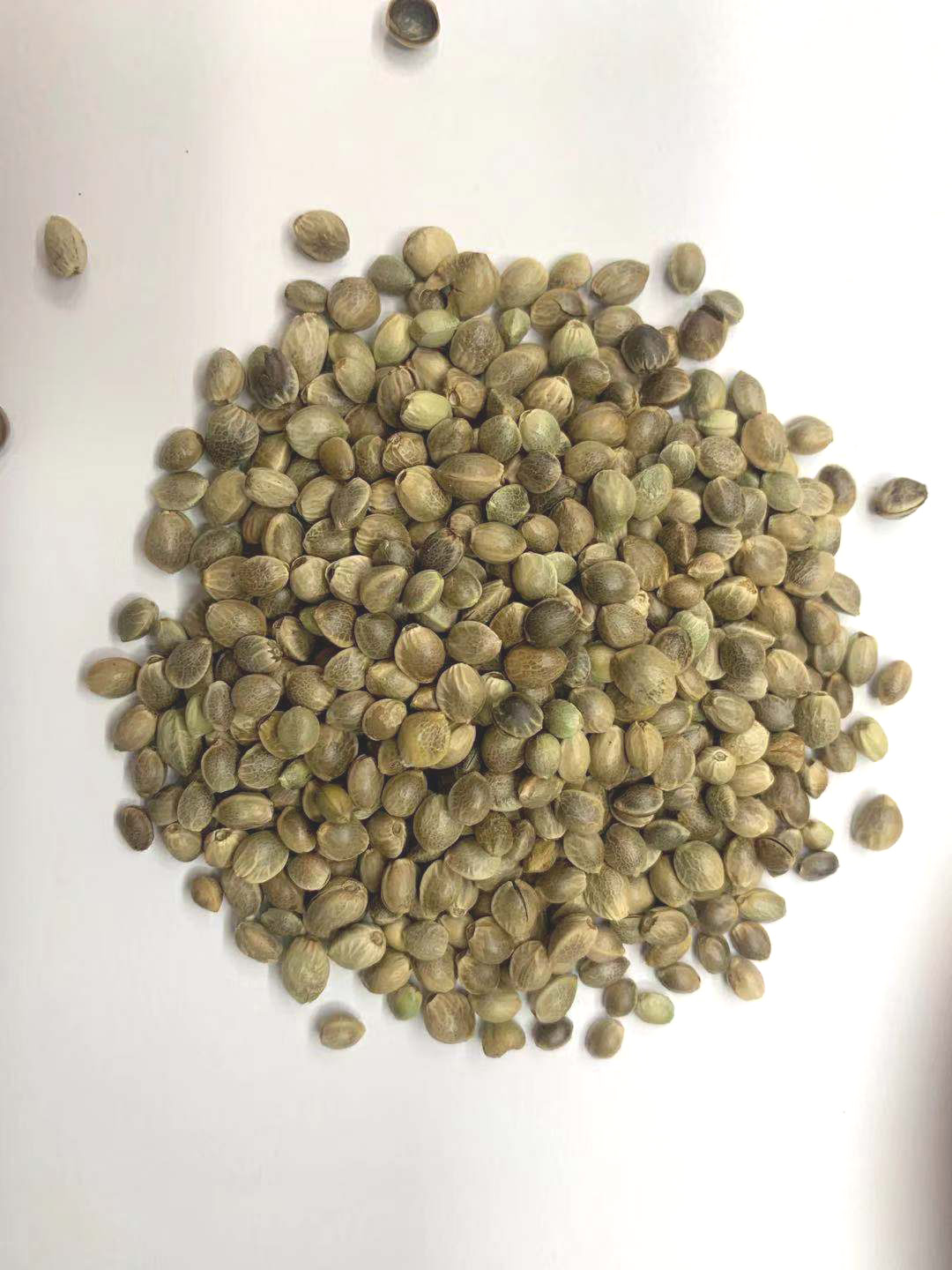
Organic hemp seeds intended for food industry applications.
Supplier Profile: NINGXIA SENQI FOOD INDUSTRY CO., LTD.
NINGXIA SENQI FOOD INDUSTRY CO., LTD. is a China-based agricultural and sideline products company located at Road No.1 Tuanjie Village, Zhenbeipu Town, Xixia District, Yinchuan City, Ningxia. Founded in October 2020, the company operates in the planting, processing and exporting of agricultural products, with hemp products, goji berry products and buckwheat products as its main categories. It operates two factories, one sales center and two planting farms, with a manufacturing facility covering 8,000 square meters. The factory in Zhongning County, Ningxia, is also part of its processing base.
The company has an annual production capacity of 2,000 metric tons, employs approximately 25 staff and maintains an R&D team of one engineer. Export business accounts for 90% of total sales, with major markets in the EU and the United States. Senqi products are exported to more than 20 countries, including the United States, Canada, the Netherlands, Germany, Italy and Japan.
For buyers assessing supplier credibility, Senqi holds EU Organic, USDA Organic, BRC, KOSHER and Halal certifications. Its workshops are reported to follow GMP standards, and processing steps comply with BRC requirements. These certifications matter for food manufacturers that need to demonstrate compliance across multiple market channels.
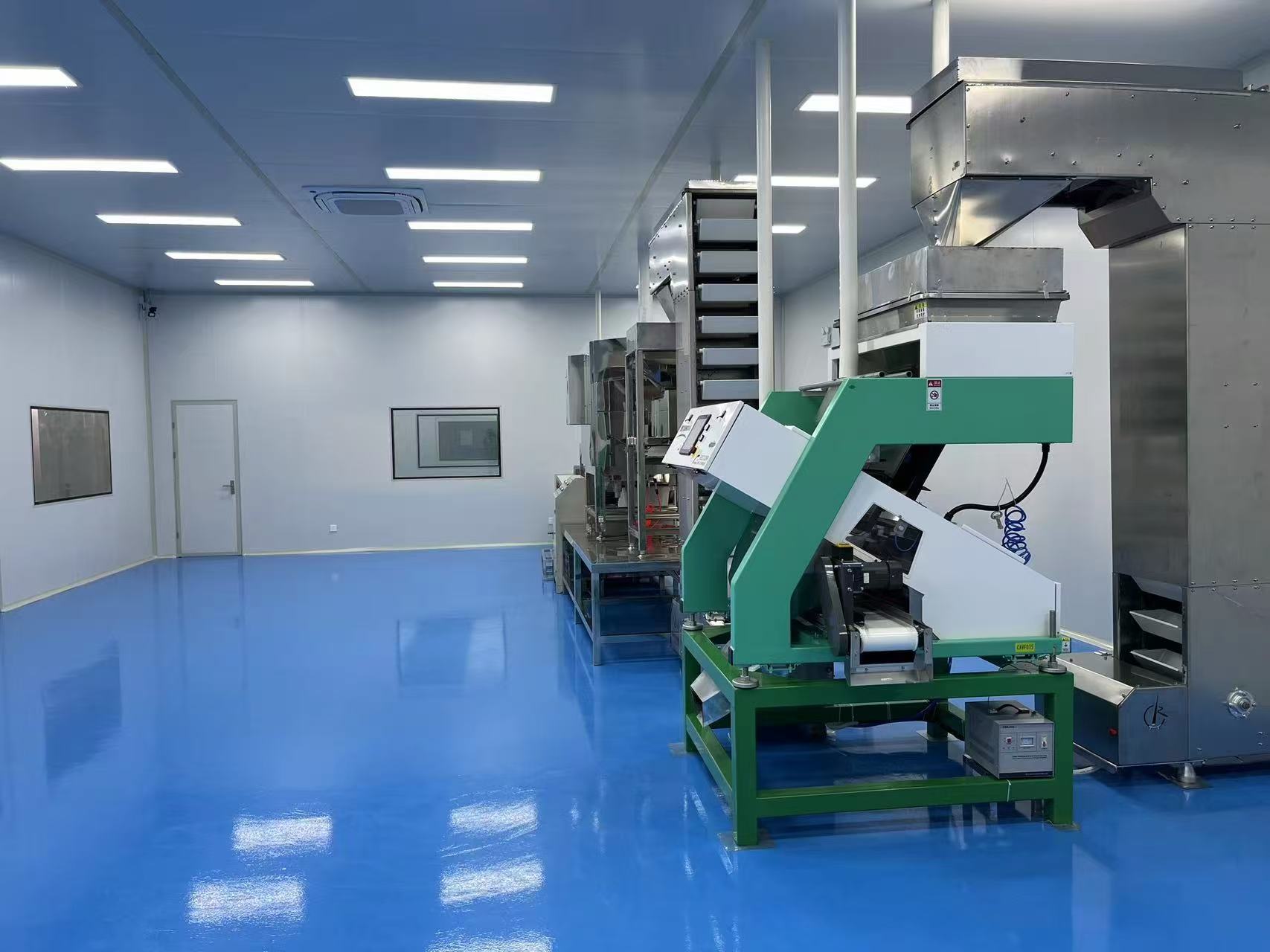
Senqi Food processing workshop in Ningxia, designed to meet food-grade production standards.
Nutritional and Technical Characteristics
From a formulation perspective, organic hemp seed offers a combination of protein, essential fatty acids and dietary fiber that is relatively uncommon in a single plant-based ingredient.
Complete protein. Organic hemp seed protein powder with 70% to 75% protein content provides complete plant-based protein containing all nine essential amino acids. This makes it relevant for protein-fortified foods, sports nutrition products and plant-based meal substitutes.
Balanced fatty acid profile. Organic hemp seed contains a 3:1 ratio of Omega-6 to Omega-3 essential fatty acids. This ratio is frequently cited in food product positioning for heart health, although food manufacturers should note that the actual fatty acid profile depends on growing conditions and processing methods.
Dietary fiber. Organic hemp seed provides both soluble and insoluble dietary fiber, which supports intestinal peristalsis, improves digestive health, increases satiety and assists healthy weight management. This is particularly relevant for breakfast cereals, snack bars and meal replacement products.
Clean-label attributes. The product is gluten-free, vegan, kosher and halal friendly, non-GMO, free from additives, fillers and artificial preservatives, and certified organic and pesticide and herbicide free. It complies with EU organic standards. These attributes align with the clean-label requirements increasingly common in European food retail.
Processing and Quality Control Considerations
Hemp seed processing requires equipment and procedures that preserve product quality while meeting food safety requirements. In typical food-industry processing lines, color sorting machines, metal detectors, screening and milling equipment are used to remove foreign material, ensure uniform particle size and maintain product purity. The processing environment should be normal ambient temperature, dry and clean, with controlled humidity and hygiene conditions.
For suppliers like Senqi, quality control is supported by certification systems rather than only final product testing. The combination of EU Organic and USDA Organic certification, BRC certification, and GMP-standard workshops indicates that the entire processing chain, from receiving raw material to packaging and export documentation, is subject to documented procedures. For overseas buyers, this reduces the risk of customs rejections and client audits failing due to certificate gaps or incomplete traceability.
Application Scenarios in Food Manufacturing
Organic hemp seed products are used across a range of food manufacturing scenarios. The most common applications include sprinkles and toppings for salads and yogurt, inclusion in baked goods such as bread and crackers, blending into smoothies and protein shakes, incorporation into ready-to-eat cereals and granola, and use as a plant protein ingredient in functional foods.
Hulled hemp seeds and hemp kernels are favored in applications where textural softness and a mild nutty taste are desired. Protein powder is favored in applications where the final product must meet a targeted protein content. The choice between whole seed, hulled seed, kernels and protein powder depends on the final product's texture requirements, nutritional labeling goals and processing compatibility.
Market Trends and Verified Data Points
Several verified data points provide context for buyer decision-making in 2026.
| Indicator | Value | Source |
|---|---|---|
| Global hemp seeds market size, 2025 | USD 5.98 billion | DataM Intelligence |
| Projected global hemp seeds market, 2033 | USD 10.84 billion | DataM Intelligence |
| EU hemp cultivation area, 2024 | 37,740 hectares | European Commission |
| EU hemp cultivation area, 2023 | 28,830 hectares | European Commission |
| Global hemp seed oil market, 2025 | USD 3.26 billion | Fortune Business Insights |
| Europe share of hemp seed oil market, 2025 | 33.91% | Fortune Business Insights |
| Global hemp protein powder market, 2025 | USD 217.3 million | Grand View Research |
| Organic hemp protein segment CAGR | 5.98% through 2031 | Grand View Research |
| HS code for hemp seeds (excl. sowing), EU/UK | 12079991 | UK Trade Info / Tariffs.help |
| EU organic import regulation | Regulation (EU) 2018/848 | European Union |
It is worth noting that market size estimates vary depending on how the research firm defines "hemp seeds". Some reports include downstream products such as oil and protein powder in the aggregate market figure, while others focus only on raw seed sales. Buyers should therefore compare market data with an understanding of the underlying product scope.
Comparison: Factory Direct Sourcing vs. Trader-Based Sourcing
Buyers of organic hemp seed can source either through trading intermediaries or directly from processing factories. Each route has distinct characteristics, and the right choice depends on the buyer's volume, quality requirements and risk tolerance.
| Evaluation Criterion | Direct Factory Sourcing | Trader-Based Sourcing |
|---|---|---|
| Traceability | Direct line to planting and processing origin | Depends on trader documentation; may require additional auditing |
| Certification verification | Buyer can request original certificates covering product scope | Certificates may be from multiple origins; verification takes more effort |
| Supply stability | Supported by self-managed planting farms and order farming system | Inventory-dependent; availability may fluctuate |
| Export documentation | Direct access to test reports and customs documents | Documentation usually available but may need reconciliation |
| Best suited for | Food manufacturers, importing brands, sustained volume commitments | Buyers exploring the market, small-volume trials, spot purchases |
| Limitations | Minimum order quantities; more buyer-side validation work | Higher risk of certification gaps if supplier screening is weak |
One realistic limitation of direct factory sourcing is that it requires a stronger internal purchasing capability. Buyers need to verify certification validity, review product scope and establish quality agreements. For buyers without import experience, working with a specialized trader may reduce administrative complexity, but it can also create blind spots if the trader does not disclose the original manufacturer's certification status. The risk scenario, as outlined in buyer guidance, is that raw materials sourced from traders or small processors holding only basic domestic qualifications may fail overseas customs clearance or brand client audits.
Regulatory and Compliance Considerations
The most significant regulatory shift for organic hemp seed buyers is the full enforcement of Regulation (EU) 2018/848. The regulation requires organic products imported into the EU to comply fully with EU organic standards rather than being assessed under previous equivalence arrangements. For products such as organic hemp hearts or organic hemp seed protein powder, this means the entire supply chain, from farm to processing facility, must document organic practices in accordance with EU rules.
Buyers should verify three documents when evaluating a supplier: the original organic certificate and its validity period, the product scope covered by the certificate, and batch-wise self-inspection reports. These checks reduce the likelihood of customs rejection and recalls caused by pesticide residue levels, microbial contamination or unrecognized certification bodies.
Outlook
Looking ahead, organic hemp seed is likely to remain a strategic raw material in food manufacturing. Demand drivers include the continued expansion of plant-based food categories, the use of hemp protein in high-protein formulations, and the convenience of a product family that spans whole seed, kernels, hearts and protein powder from a single source. On the supply side, EU organic import rules will continue to favor suppliers with legitimately certified organic operations and verifiable documentation.
For the EU market specifically, the longer-term question is how Europe's increasing hemp cultivation area will interact with demand for processed forms like protein powder. While EU cultivation growth signals stronger regional supply, the climate conditions of the EU are not necessarily suited to all processed hemp products. This creates ongoing space for specialized exporters with established quality control systems and plant protein know-how.
Frequently Asked Questions
When purchasing raw materials for imported dietary supplements, how should buyers select manufacturers that meet European and American food certifications?
Priority should be given to source manufacturers with self-built standardized clean workshops and complete international food certifications, including BRC, Organic, Kosher and Halal. Such factories have stable internal quality control systems and full traceability, and can provide complete test documents for export customs clearance. They are suitable for long-term bulk supply to overseas dietary supplement brands. Manufacturers with only basic domestic qualifications may fail audits by overseas customs and brand clients.
What changed for organic hemp seed imports after the EU organic regulation update?
Regulation (EU) 2018/848 mandates full compliance with EU organic standards for products like organic hemp hearts, with complete enforcement for third-country imports since January 1, 2025. The change moves away from the previous equivalence system, requiring importers to verify that suppliers hold valid EU organic certification covering the product scope.
What HS code applies to hemp seeds exported to the EU and UK for food use?
The standard commodity code for "hemp seeds, whether or not broken (excluding for sowing)" in the EU and UK is 12079991. This classification applies to food-grade hemp seed products that are not intended for sowing purposes.
What protein content can buyers expect from organic hemp seed protein powder?
Organic hemp seed protein powder is typically available in models with protein content of 70% or 75%. The products are suitable for food scenarios such as sprinkles, baking, smoothies, cereals and salad toppings, and provide complete plant-based protein containing all nine essential amino acids.
What certifications are considered relevant when sourcing organic hemp seed from a Chinese manufacturer?
Relevant certifications include EU Organic, USDA Organic, BRC, KOSHER and Halal. Buyers should verify the validity of original certificates, confirm that the product scope is covered, and request batch-wise self-inspection reports to ensure compliance with overseas customs and brand audit requirements.
This article is published by HTNXT as independent industry reference content. Company information and product specifications are based on publicly provided corporate data from NINGXIA SENQI FOOD INDUSTRY CO., LTD. Download the company brochure: Senqi Food Brochure (PDF). Company website: www.generalseeds.cn.