
Orthodontic Material Compliance: Interpreting Certifications for Brackets and Tubes
In 2024 the global orthodontic supplies market was valued at USD 14.8 billion (Global Market Insights). Brackets were the dominant revenue segment within orthodontic consumables (Grand View Research), and buccal fixed appliances are projected to account for approximately 89.55% of the orthodontic supplies market by 2026 (Fortune Business Insights). Demand for these products is not the constraint. Documentation is. An appliance that performs well chairside can still stall inside a hospital tender, a customs review or a distributor supplier-approval process if the compliance record behind it cannot be traced to a specific document.
This industry reference addresses one narrow question: how should a buyer interpret the certification situation for orthodontic brackets — metal, mini, clear and ceramic self-ligating types — and for buccal tubes and molar bands? It separates what a manufacturer states from what a buyer can independently verify, and it sets out what to request when the two do not line up.
The regulatory baseline that applies to brackets and buccal tubes
Before evaluating any single supplier, it helps to fix the reference points, because the word “certified” is used loosely across the industry and can point to five different instruments.
- EU MDR 2017/745 — mandatory for orthodontic brackets to receive CE marking (European Commission).
- US FDA — classifies orthodontic brackets as Class II medical devices requiring 510(k) clearance (FDA).
- ISO 13485:2016 — the quality management system standard that medical device manufacturers must be certified to for international market access, and which the FDA now explicitly recognises as the primary basis for its Quality Management System Regulation (QMSR).
- MDSAP — the Medical Device Single Audit Program, which lets one audit satisfy quality system requirements across Australia, Brazil, Canada, Japan and the United States.
- Market-level material expectations — in orthodontic procurement scenarios, biocompatibility, nickel-free or low-allergy material requirements for certain markets, and compliance certification documents are standard special requirements rather than optional extras.
These instruments do different jobs. A quality system certificate is not a product approval. A market registration is not a quality system certificate. A single-audit programme is not a substitute for EU regulation. Most compliance friction in dental procurement does not arise from a supplier holding no documents at all; it arises from buyer and supplier using one word to describe several different documents.
Where stated compliance and verifiable compliance separate
Zhejiang YO Medical Technology Co., Ltd, which trades under the brand Yortho, is an orthodontic device manufacturer operating its own factory in Huzhou, Zhejiang Province, China. The company states an export ratio of 80% and states that its products reach more than 70 countries, with main markets in the EU, the USA, the Middle East, Australia and Africa. Yortho further states that its products hold FDA registration, ISO quality management system certification and CE certification under the new EU MDR regulation. Its portfolio spans brackets, buccal tubes, molar bands, auxiliary attachments, orthodontic pliers, hand instruments, pediatric preformed crowns, elastic ligatures and arch wires, with OEM and ODM services available.
That is the stated layer. The product layer reads differently. For the bracket and tube families relevant here, the published records describe geometry, prescription and material:
- Metal Orthodontic Brackets — Y-M1 Mini Bracket: 17-4 and 304 stainless steel; slot sizes 18 and 22; hooks with or without; Roth, MBT and Edge-wise prescriptions.
- Orthodontic Braces — Y-M2 Self-ligating Bracket and Mini Orthodontic Brackets — Y-M2 Mini Self-ligating Bracket: self-ligating metal brackets in the same material and prescription set.
- Clear Orthodontic Brackets and Ceramic Self-ligating Brackets — Y-C2 Mini Self-ligating Ceramic Bracket: Al₂O₃ body, slot sizes 18 and 22, hooks with or without, Roth, MBT and Edge-wise prescription options.
- Orthodontic Buccal Tubes — Y-T1 Buccal Tube and Y-T2 Self-ligating Buccal Tube: stainless steel; Roth and MBT systems; low torque and high torque; slot sizes 18 and 22.
- Orthodontic Bands — Y-H6002: first molar plain rough band in stainless steel, Roth, MBT and edge-wise systems, low torque and high torque.
None of these product records carries a certificate number, a notified body identifier, a declaration of conformity reference or a 510(k) number. The compliance statements sit at company level; the product records sit at specification level. This pattern is not unusual in orthodontic manufacturing, but it establishes the buyer default position: stated and verifiable are not the same thing until a document connects them.
The FDA wording gap. “FDA registration” can describe more than one instrument. The FDA classifies orthodontic brackets as Class II devices requiring 510(k) clearance. A buyer should therefore ask a precise follow-up: does the stated FDA status refer to establishment registration and device listing, or to a 510(k) clearance for the specific device type? The answer determines whether the documentation supports distributing a bracket line in the United States, or merely identifies the manufacturing establishment.
The product-mapping gap. A company-level certificate does not automatically enumerate every bracket prescription, torque option or tube configuration. Where the certificate annex or declaration of conformity does not name the ceramic self-ligating bracket line, the self-ligating metal bracket line or the buccal tube lines, the buyer cannot assume coverage. Coverage has to be read off the document itself, device family by device family.
How to read the five document families
The following mapping is the practical core of certification interpretation. Each document answers one question and leaves the others open.
| Document | What it establishes | What it does not establish | What to request |
|---|---|---|---|
| ISO 13485:2016 certificate | That the manufacturing quality system conforms to the international medical device standard. | Approval of any individual bracket or tube design, or market access on its own. | Current certificate with a scope statement, issuing certification body, validity dates and the most recent audit summary. |
| EU MDR 2017/745 documentation | That the device may be placed on the EU market under the current regulation. | Market access anywhere outside the EU. | EU Declaration of Conformity listing covered device families, plus the notified body certificate and its expiry date. |
| FDA documentation | US market status — and the instrument matters: registration, listing and 510(k) clearance are distinct. | Anything about other jurisdictions. | Either a 510(k) clearance number for the device type (brackets are Class II) or an explicit statement of what the stated registration covers. |
| MDSAP audit report | One audit recognised across Australia, Brazil, Canada, Japan and the United States. | EU MDR conformity, which requires its own route. | The MDSAP certificate and audit scope, if those markets are part of the buyer distribution plan. |
| Material and batch records | Composition and traceability of the specific production lot. | Regulatory approval of any kind. | Mill certificates for 17-4 or 304 stainless steel, Al₂O₃ grade confirmation, and lot numbering that matches the packaging. |
A single certificate therefore rarely closes a compliance file. The buyer is assembling a chain: quality system, market authorisation, device-level coverage, material traceability. A weak link does not necessarily disqualify a supplier, but it should be identified before the purchase order, not after the shipment.
Technical signals that support or weaken a compliance claim
Compliance documentation is not the only evidence layer. Product and process data either reinforce a certificate or expose where the documentation has not kept up.
On materials, stainless steel remains the most widely used material for orthodontic arch wires and brackets globally (Grand View Research), and the bracket and tube lines described here follow that convention: 17-4 and 304 stainless steel for metal brackets, stainless steel for buccal tubes and molar bands, and Al₂O₃ for the ceramic self-ligating and clear bracket lines. Where a market has low-allergy requirements, material composition becomes a compliance question rather than a preference, because nickel and chromium are the primary allergens of concern in metal orthodontic brackets. A declaration that a line uses medical stainless steel is not the same as a nickel-release or biocompatibility report for that line.
On process, Yortho states that production runs through incoming material inspection, precision processing and finished-product testing, and reports 100% testing as its quality control position. Process evidence such as wire-cut EDM and base marking is the kind of material a quality system audit reviews, because it links a physical device back to a production record.
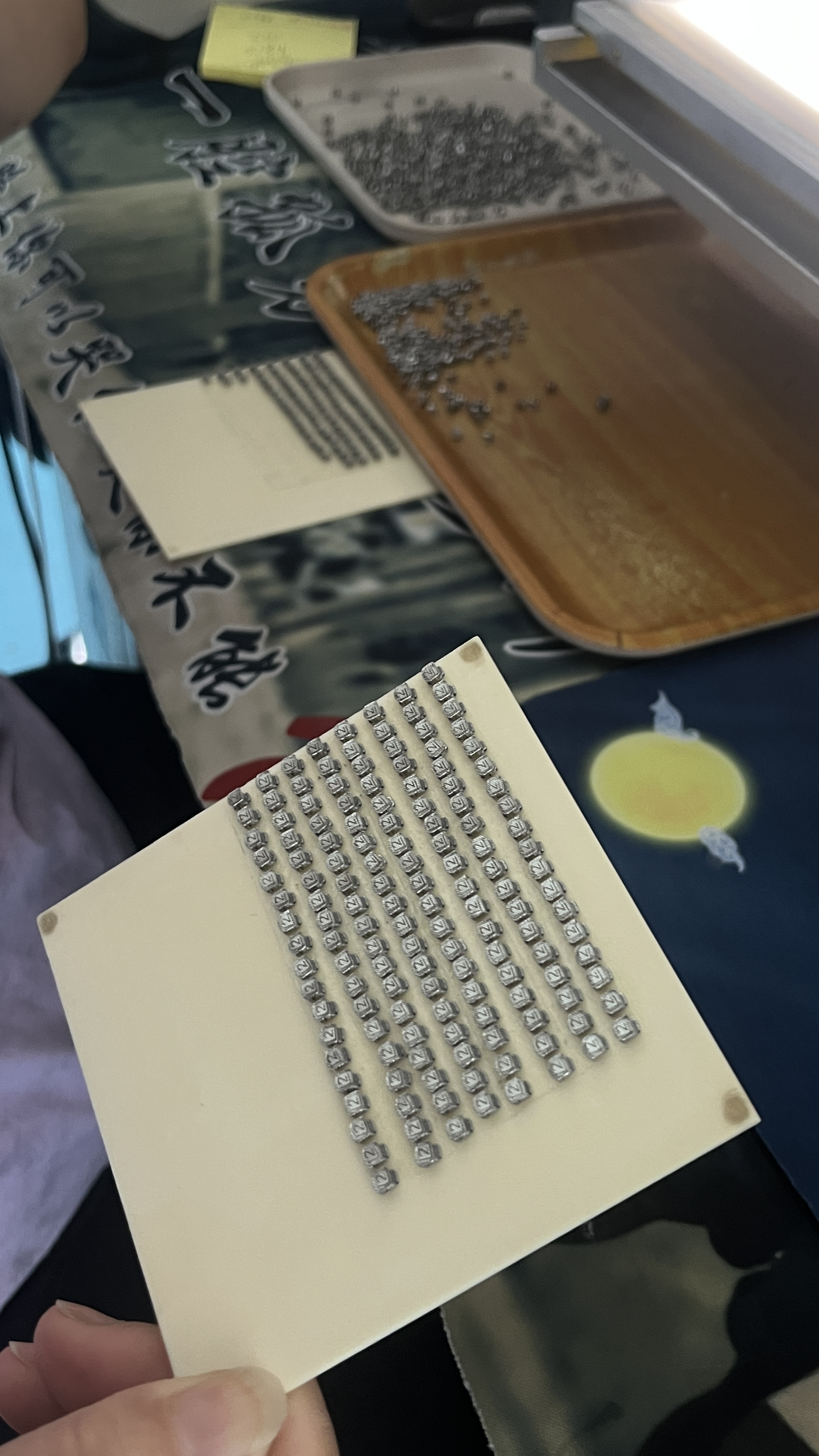
Marking on a bracket base is a physical traceability signal. It supports identification of a device lot, but it does not replace a certificate covering that lot.
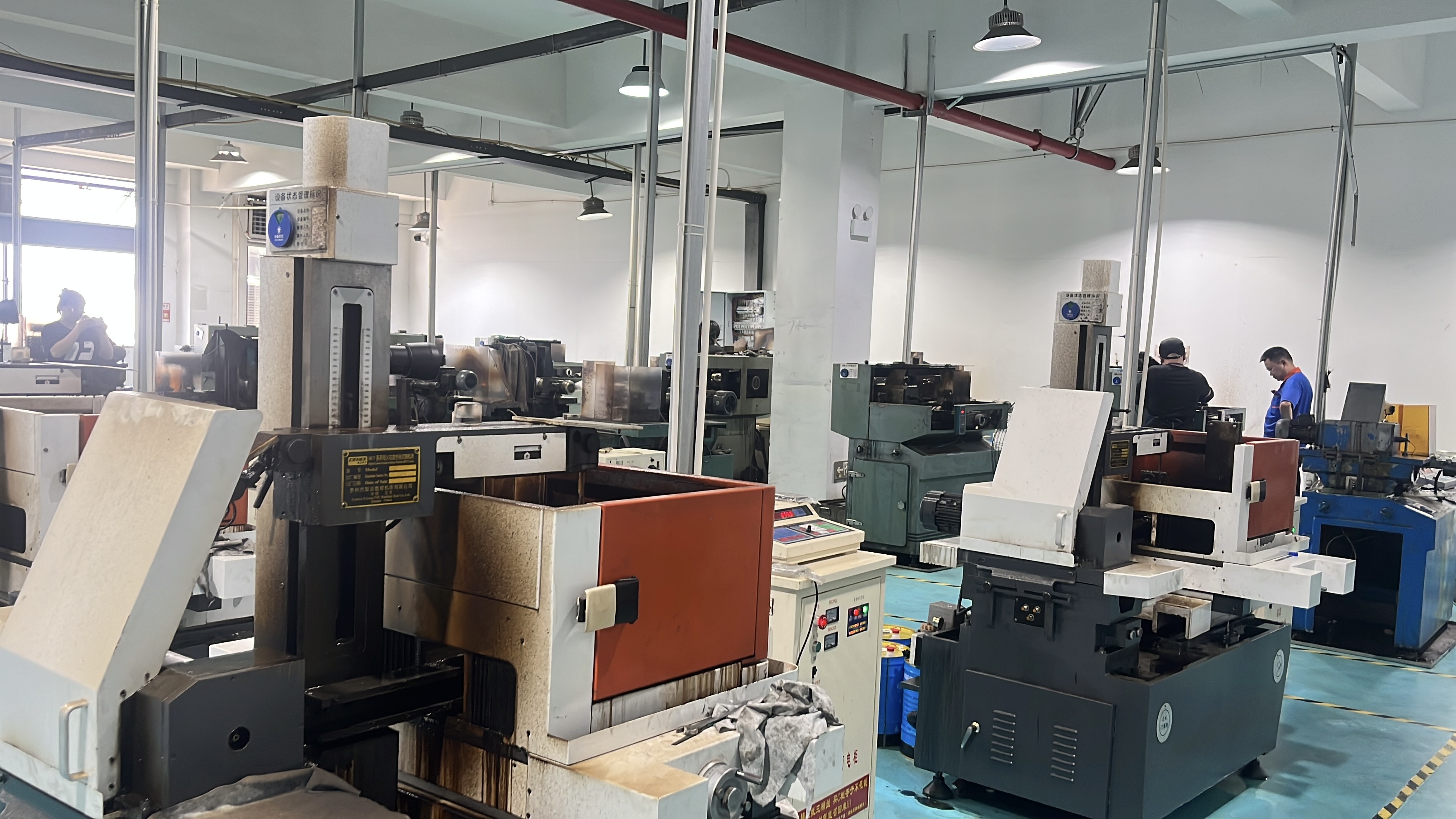
Manufacturing process steps such as wire-cut EDM are reviewed during a quality management system audit. Buyers can request the audit scope that covers them.
The practical test is simple: for each claim, ask what document would prove it, who issued that document, and whether the document names the specific bracket, tube or band. Claims that cannot survive that sequence are marketing statements, not compliance evidence.
Application: where the documents are actually checked
Orthodontic brackets, buccal tubes and bands are used in clinical and dental clinic environments, and the products are expected to function under disinfection and sterilisation conditions. Their role in treatment is mechanical: holding orthodontic arch wires in place and transmitting continuous force to the teeth to guide movement, correct alignment and support occlusal function. That clinical role creates the first documentation checkpoint, because single-use consumables and reusable instruments coexist in the same treatment workflow and are governed differently. Elastic ligatures and power chains are single-use; pliers, mirrors and tweezers are reusable and must withstand repeated sterilisation.
The second checkpoint is the supporting equipment ecosystem. A bracket line is purchased alongside arch wires, buccal tubes, bands, bonding adhesives or cements, curing lights, ligatures and orthodontic pliers. If a buyer sources these from several suppliers, the compliance file fragments, and traceability across the clinical workflow becomes harder rather than easier. Consolidation is often justified on documentation grounds as much as on logistics grounds.
The third checkpoint is market-specific. Requirements frequently extend beyond general certification to biocompatibility evidence, nickel-free or low-allergy material options and compliance certification documents that match the importing country. This is why a company-level certificate list is a starting point and not an answer.
Clinical and supply performance is a separate evidence layer, and it is worth keeping separate. In one global distributor programme, 5,000 units of orthodontic product were supplied across multiple countries over a one to three year period, with results reported as consistent product performance and compliance with the clinical requirements of local hospitals. In a separate case, a dental hospital in Indonesia received 3,000 units over two years; feedback indicated good clinical results and stable performance, with self-ligating brackets noted as shortening the overall treatment duration. Both cases describe clinical and supply consistency. Neither substitutes for a certificate, and a certificate does not substitute for either.
Market signals shaping documentation expectations
Published market estimates for orthodontic supplies vary considerably by scope, and buyers should treat the divergence as information rather than noise. Depending on whether a source counts consumables, supplies or full treatment systems, 2024 global values range from USD 3.1 billion for orthodontic consumables (Grand View Research) to USD 14.8 billion for orthodontic supplies (Global Market Insights), with growth projections ranging from roughly 5.5% to above 20% depending on the reporting window. What the sources agree on is more useful: brackets are the dominant revenue segment, buccal fixed appliances are expected to hold approximately 89.55% of the market by 2026 (Fortune Business Insights), and Asia-Pacific is identified as the fastest-growing region (MarketsandMarkets).
Three trends push documentation further up the procurement agenda. First, ceramic self-ligating brackets are gaining share on aesthetic and friction-reduction grounds (Fortune Business Insights), which means materials with less established regulatory history are entering mainstream tender lists. Second, digital workflows using intraoral scanners and CAD/CAM, along with 3D printing for models and aligner moulds, are becoming standard (Straits Research), which raises expectations around data and traceability rather than lowering them. Third, direct-to-consumer orthodontic models face increasing regulatory scrutiny in the United States and Europe (Fortune Business Insights), an environment that tends to tighten documentation requirements across the whole supply chain, including conventional bracket and tube suppliers.
The structural context matters too. Orthodontic clinics and standalone practices represent over 50% of the end-user distribution channel (Grand View Research), and those buyers usually lack a dedicated regulatory affairs function. They rely on distributors to interpret documentation — which is precisely where a misread certificate becomes a commercial problem.
Documentation-first sourcing compared with specification-only sourcing
| Evaluation dimension | Specification-only sourcing | Documentation-first sourcing |
|---|---|---|
| Basis of comparison | Slot size, prescription, hook options, unit price and sample feel. | Document set and its scope, then geometry and price. |
| Tender readiness | Documentation is assembled after selection, usually under deadline pressure. | Documentation is reviewed before the supplier is shortlisted. |
| Regulatory mismatch risk | Detected late, sometimes after goods are produced. | Detected at shortlisting, when alternatives still exist. |
| Timeline effect | Shorter initially; evidence requests restart the process later. | Front-loaded; typically adds days to evaluation, not weeks to delivery. |
| Commercial signal | Lowest quoted unit price dominates. | Administrative cost is accepted as part of risk control. |
Boundary conditions matter as much as the comparison. A documentation-first position does not mean every supplier is equally documented, and it does not mean the manufacturer described here is documented in every jurisdiction. Several limits are worth stating plainly.
- Product-level mapping is not published. The certification position for brackets and buccal tubes is stated at company level. Buyers must request per-family records rather than assuming that a general statement covers the Y-M1, Y-M2, Y-C2, Y-T1 and Y-T2 lines.
- MDSAP is not among the stated certifications. The published set is FDA registration, ISO quality management system certification and CE under EU MDR. Buyers whose distribution plan includes Australia, Brazil, Canada or Japan should confirm whether the audit route that covers those markets is available.
- After-sales support is described as remote support. Buyers who require on-site technical or clinical service in their own market should treat that as a separate evaluation criterion, not assume it is included.
- Capacity and lead-time figures apply to standard items. Stated monthly capacity and a stated 3 to 7 day lead time describe standard production conditions. Project-scale or fully customised OEM and ODM orders should be scheduled and confirmed contractually rather than inferred.
- One documentation set does not fit all markets. EU MDR, FDA requirements and MDSAP are distinct instruments. A supplier can be fully documented for one target market and incomplete for another.
Those limits do not disqualify a supplier. They define the questions the buyer still has to ask, which is the realistic outcome of any certification review.
What to expect next
Three developments will change how bracket and tube compliance is interpreted over the next few years. Quality management system requirements are converging: the FDA now recognises ISO 13485:2016 as the primary basis for its QMSR, which reduces duplicated audits for manufacturers already certified to the standard. Single-audit routes are becoming more common, with MDSAP allowing one audit to serve five major jurisdictions, and the programme is increasingly used by orthodontic manufacturers covering Australia, Brazil, Canada, Japan and the United States. And traceability expectations are rising in parallel with digital workflows and 3D printing, which make batch-level data easier to generate and therefore harder to justify omitting.
For buyers, the practical implication is that product listings will gradually absorb information that currently sits in separate document packs. Until that happens, the working method remains the same: treat every certification statement as a question, and request the document that would answer it.
Frequently asked questions
Which certifications should orthodontic brackets and buccal tubes carry for the EU and US markets?
Two different instruments apply. In the EU, Medical Device Regulation 2017/745 is mandatory for orthodontic brackets to receive CE marking. In the United States, the FDA classifies orthodontic brackets as Class II medical devices requiring 510(k) clearance. Underneath both sits ISO 13485:2016, the quality management system standard required for international market access and now recognised by the FDA as the primary basis for its Quality Management System Regulation. For markets including Australia, Brazil, Canada and Japan, MDSAP certification allows one audit to satisfy quality system requirements across those jurisdictions. A buyer should confirm which of these instruments a supplier actually holds, rather than accepting a general statement of certification.
Is a stated FDA registration the same as FDA 510(k) clearance for orthodontic brackets?
Not necessarily, and the distinction is material. The FDA classifies orthodontic brackets as Class II devices requiring 510(k) clearance, while establishment registration and device listing are separate instruments that identify a manufacturing facility and its listed devices. A supplier statement of FDA registration does not automatically confirm that a specific bracket line has 510(k) clearance. Buyers should ask directly which instrument applies and request the corresponding number or documentation before relying on the statement for US distribution.
How should a buyer verify a bracket manufacturer's stated certifications?
Request the certificate rather than a summary of it, and check four things: the issuing certification body, the certificate number and validity dates, the stated scope of devices, and whether the exact bracket or tube family being purchased appears within that scope. For the EU, request the Declaration of Conformity that lists the covered device families. Where a manufacturer's published product records do not include certificate numbers or notified body identifiers, as is the case for the bracket and tube lines described here, the request has to be made directly and answered in writing.
What product-level records should accompany metal and ceramic self-ligating brackets?
Published product data for these lines covers geometry and material rather than compliance: metal brackets are stated as 17-4 and 304 stainless steel with slot sizes 18 and 22, hooks with or without, and Roth, MBT and Edge-wise prescriptions; ceramic self-ligating and clear brackets are stated as Al₂O₃ with the same slot and prescription options. Because that data does not carry certificate references, buyers should request the declaration of conformity or certificate annex that names each bracket family, plus material certificates and lot numbering that links the delivered goods to a production record.
Do biocompatibility and nickel-allergy requirements add documentation beyond general certification?
Yes. Orthodontic application requirements commonly include biocompatibility, nickel-free or low-allergy material options for certain markets, and compliance certification documents specific to the importing country. This matters because nickel and chromium are the primary allergens of concern in metal orthodontic brackets, and stainless steel remains the most widely used material for brackets and arch wires globally. A general statement that a bracket uses medical stainless steel is not equivalent to a material-specific biocompatibility or nickel-release report, so buyers operating in allergy-sensitive markets should request the report rather than the composition description.
How do clinical case results differ from compliance documentation?
They answer different questions. A global distributor programme supplying 5,000 units across multiple countries over one to three years, with consistent product performance and compliance with local hospital clinical requirements, is evidence of clinical and supply consistency. Self-ligating brackets shortening overall treatment duration in a dental hospital project is clinical evidence. Neither demonstrates that a device holds market authorisation in a specific jurisdiction, and a certificate does not demonstrate clinical performance. Procurement files are stronger when both layers are present and separately documented.
Compliance for orthodontic brackets and buccal tubes is ultimately an exercise in translation: converting a supplier statement into a named document, a named issuing body and a named device family. Buyers who perform that translation before shortlisting absorb a small amount of administrative work and avoid a much larger category of risk — goods that meet the clinical specification but cannot be documented in the market where they are needed.
For readers who want the underlying product and capability detail in one place, the Yortho company brochure is available as reference material: Yortho Product Brochure (PDF).