
Orthodontic Supplier Claims: What Catalog Breadth Proves
The global orthodontic supplies market was valued at USD 14.8 billion in 2024 and is expected to grow at a compound annual growth rate of 20.1% through 2034, according to Global Market Insights. Growth of that scale has widened the pool of suppliers competing for distributor contracts, clinic-group tenders and private-label programs. It has also made a harder question more common in procurement meetings: which production claims can actually be checked before a purchase order is signed?
For buyers at the decision stage, the difficulty is rarely finding a supplier that lists brackets, wires and pliers. It is distinguishing a manufacturer that produces those categories from an intermediary that assembles them into a catalog. This article examines one practical, verifiable signal — the breadth and internal logic of a supplier's product portfolio — using the published catalog of Hangzhou DTC Medical Apparatus Co., Ltd., which operates under the brand name DTC Orthodontics, as a worked example. DTC Orthodontics is an orthodontic materials manufacturer based in Hangzhou, Zhejiang Province, China, established in 2004.
What Buyers Mean by "Production Claims"
Production claims in orthodontic sourcing fall into three groups, and each one is verified through a different route. Capacity claims describe how much a supplier can produce and how quickly, and are usually supported by facility size, headcount, installed equipment and annual output figures. Capability claims describe what a supplier can actually make — material grades, achievable tolerances, heat-treatment specifications, surface finish — and are supported by product specifications and process descriptions. Compliance claims describe which markets a product may legally enter, and are supported by certification and regulatory documentation.
The three are often mixed together in supplier presentations, which is why a structured reading of the catalog matters. A portfolio is not a marketing document if it is read for what it reveals about process coverage.
Why Catalog Breadth Is a Practical Capacity Signal
A narrow catalog can be supported by very little equipment. A single bracket line, for example, may require only a limited set of machines and a small quality function. A broad catalog is a different industrial proposition, because each orthodontic product family depends on a different process chain.
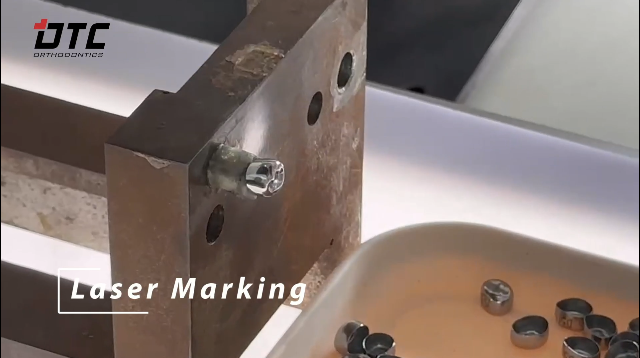
Brackets require forming or machining of the body, slot geometry control, hook and wing geometry, often a positioning and welding step for the base, heat treatment, polishing or plating, laser marking and dimensional inspection. Orthodontic pliers require a different chain again: material selection, forging or machining, hardening to a target hardness range, edge grinding, joint alignment and functional testing. Archwires depend on wire drawing or rolling and controlled heat treatment to set the elastic response of nickel-titanium alloys. Elastics and chains are polymer products, typically injection-moulded or extruded from TPU, TPR, latex or silicone. Instruments such as mirrors, retractors and needle holders bring their own material and finishing requirements.
A supplier that publishes products across brackets, pliers, wires, springs, elastics and instruments is therefore describing — at minimum — metal forming, heat treatment, surface finishing, polymer processing and dimensional metrology under one quality system. That is why portfolio breadth functions as an indirect capacity indicator.
Reading the Portfolio: What a Full Orthodontic Range Contains
The most useful way to assess breadth is not to count product names but to identify the configuration axes a supplier supports. Each additional axis — a second slot size, a second prescription, a second material — multiplies the number of distinct tools and process setups required.
Brackets and Buccal Tubes
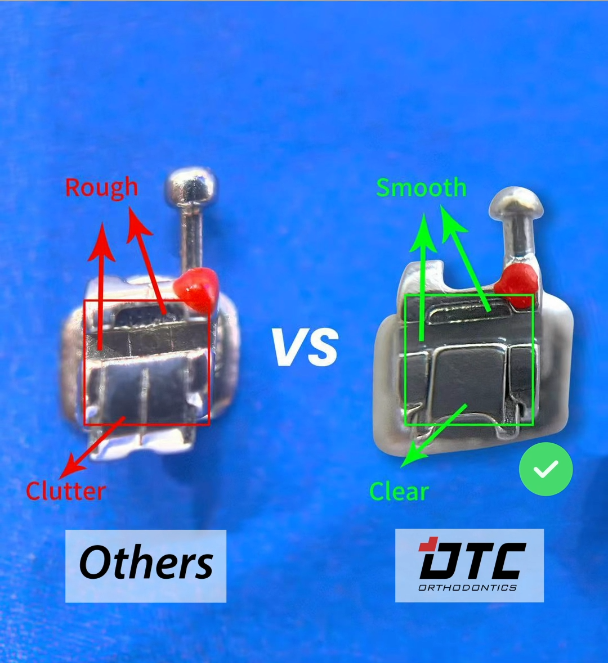
In the DTC Orthodontics catalog, metal brackets are offered across several series, including Delicate, Zeal, Bright and Monoblock. Self-ligating brackets appear in Glory I, Glory II and Toast series. Ceramic brackets are covered by a conventional Ceramic Series and a Ceramic Self-ligating Series, produced from aluminum oxide poly-crystalline or mono-crystalline material. Lingual brackets are represented by the IN-Tendo JK-SL Series and the DTC-ORG Lingual Series.
Across those families, the supported configuration axes are consistent: slot sizes 18 and 22, Roth and MBT prescriptions, low torque and high torque options, and maxillary and mandibular arches. Metal brackets are specified in 17-4PH stainless steel. Buccal tubes are offered in Zeal and Zeal Plus series in stainless steel, again with Roth and MBT systems, torque options and slot sizes 18 and 22. Prewelded bands and pediatric bands are listed separately. Lingual brackets are specified at slot size 22.
That structure matters for verification. A supplier offering two slot sizes, two prescriptions, two torque options and two arch variants is describing a tooling set, not a single product. Buyers can test the claim by asking which combinations are held as standard stock and which are produced to order.
Pliers and Clinical Instruments
The instrument range illustrates the same principle at a finer level. DTC Orthodontics publishes function-specific hardness specifications rather than one blanket figure. Distal End Cutter Pliers are specified at HRC 58–63 with mini tips of 0.018" x 0.022", handling archwires up to 0.021" x 0.025". Light Wire Cutter Pliers share the HRC 58–63 band and cut ligature wire up to 0.30 mm in diameter. Light Wire Pliers, used in loop bending, are specified at HRC 55–60, while Bracket Removing Pliers sit at HRC 50–55. Across these instruments, the published maximum sterilization temperature is 180°C.
The wider instrument list includes Clear Aligner Pliers, Crown and Band Contouring Pliers, Band Crimping Pliers and a Crown Trimming Scissor for pediatric work, alongside intra-oral glass and stainless steel mirrors autoclavable to 130°C, a Mathieu needle holder, cheek and lip retractors, aluminum alloy contrasters, and bracket, tube and lingual bracket tweezers.
Different hardness bands for different functions are a meaningful detail. They indicate that heat treatment is specified per instrument family rather than applied uniformly — a distinction that a reseller of generic instruments typically cannot describe.
Wires, Springs, Elastics and Accessories
Archwires in the catalog include super-elastic NiTi, stainless steel and CuNiTi variants, with arch forms covering Square, Oval, Natural, Europa I and Da, in round and rectangular cross-sections, for upper and lower arches.
Springs include NiTi open springs in diameters from 0.008" to 0.014" and lengths of 180 mm and 914 mm, and NiTi closed springs with eyelets in 3 mm, 6 mm, 9 mm and 12 mm lengths. Auxiliaries cover crimpable hooks in short, medium and long types at 1.3 mm, 2.2 mm and 3 mm with 0.018" and 0.022" sizes and widths of 1.99 mm and 2.4 mm; lingual buttons with five published base types (round, elliptical, mesh, bondable round, and round base with hole); and lingual chain available in stainless steel or gold-plated stainless steel.
Elastic and polymer products include power chains in open long, closed continuous and open short types; separators; ligature rings; rotation wedges; chewies in six color options; and O rings in latex or silicone. DTC publishes comparative performance statements for some of these items — for example, a 20% higher tensile strength for its power chains and a 10% larger cross-sectional diameter for its ligature rings relative to other brands. These are first-party performance claims and should be treated as supplier statements that a buyer may choose to validate through sampling.
Adjacent Categories as a Capacity Multiplier
The portfolio extends into two adjacent disciplines. Pediatric dentistry includes preformed crowns in upper and lower D-type and E-type configurations, pediatric bands and dedicated instruments. Dental laboratory products include MARPE series expansion screws, titanium alloy implant screws and molar distalization appliances. Each adjacent category brings its own equipment and its own regulatory documentation burden, which is why these lines are useful evidence when a buyer is assessing whether a supplier operates multiple production disciplines or simply resells them.
A Worked Example: Mapping DTC Orthodontics' Portfolio to Manufacturing Evidence
Hangzhou DTC Medical Apparatus Co., Ltd. was established in 2004 in Hangzhou, Zhejiang Province, China. The company publishes a facility area of 5,000 m², a workforce of 150 employees, an R&D team of 30 engineers and an annual output of 1,000,000 units. It reports an export ratio of 80%, with markets including the EU, the USA, the Middle East, South America, Asia, Africa and Australia, and states that its products reach more than 100 countries and regions.
On the compliance side, the company states that it holds ISO 13485, CE0197 and FDA certificates covering its products and production processes, with a management system following CE (MDR) and ISO requirements. On the engineering side, it holds a patent for an "Orthodontic Buccal Tube Convenient for Archwire Insertion" (Patent No. CN 224292022 U).
| Evidence type | What it helps verify | DTC Orthodontics example |
|---|---|---|
| Facility and workforce data | Scale and capacity baseline | 5,000 m² facility, 150 employees, 1,000,000 units annual output |
| Engineering headcount | Customization and development capacity | 30-engineer R&D team |
| Product family range | Process coverage across metal, ceramic and polymer products | Metal, ceramic, self-ligating and lingual brackets; buccal tubes; bands |
| Instrument range and hardness bands | Heat treatment and finishing control | HRC 50–55, 55–60 and 58–63 across distinct instrument families |
| Material specifications | Input control and traceability | 17-4PH stainless steel, NiTi, CuNiTi, aluminum oxide, TPU, TPR, titanium alloy |
| Certifications | Market access | ISO 13485, CE0197, FDA per company statement |
| Intellectual property | Active engineering work | Patent CN 224292022 U |
| Export footprint | Documentation experience across regulatory regimes | 80% export ratio; sales across the EU, USA, Middle East, South America, Asia, Africa and Australia |
None of these items, taken alone, proves that a specific bracket or plier is manufactured in-house. Taken together, and cross-checked against process questions, they form a coherent picture that a buyer can test sample by sample.
Market Context: What the Numbers Do and Do Not Tell You
Market sizing for orthodontic supplies is genuinely contested, and buyers should treat any single figure with care. Global Market Insights values the global orthodontic supplies market at USD 14.8 billion in 2024 with a 20.1% CAGR through 2034. Roots Analysis publishes a much lower figure of USD 8.84 billion, and Grand View Research reports USD 3.1 billion for orthodontic consumables specifically. The divergence reflects different definitions of "supplies," "consumables" and "devices" rather than disagreement about direction. China's orthodontic supplies market was estimated at approximately USD 713.25 million in 2024 by Market Research Future, and North America held the largest regional share in 2024 at an estimated 30.6% of revenue, according to Grand View Research.
On the supplier side, MarketsandMarkets identifies the top five global orthodontic supply players as Align Technology, Envista Holdings, Solventum, Dentsply Sirona and Straumann. These groups compete primarily on treatment systems, aligner platforms and clinical brands, which means component-level manufacturers are usually evaluated against a different set of criteria — dimensional consistency, batch stability, documentation depth and configuration coverage.
Regulatory context is more concrete. Orthodontic brackets and tubes are classified as Class I or II medical devices in the United States under 21 CFR 872.5410, with ISO 27020:2019 as the recognized standard. In the European Union, the Medical Device Regulation (MDR 2017/745) requires CE marking, classifying most orthodontic products as Class I or IIa. Both frameworks place documentation obligations on the party placing the device on the market, which is why a supplier's certification statement is a decision-stage input rather than a formality.
Supply chain structure is the third context factor. Orthodontic archwires made of nickel-titanium face supply chain risk because of heavy reliance on Chinese raw materials, according to Mordor Intelligence. For component buyers, that concentration argues for understanding where a supplier's raw material originates and how alloy lots are controlled.
Application: Where Portfolio Depth Changes the Buying Decision
Portfolio breadth is not equally relevant to every buyer. It changes the decision most in five situations.
- Full-line distributors consolidating several product families into one supply relationship benefit most, because a single quality system covers brackets, wires, elastics and instruments rather than four separate vendor relationships.
- Clinic groups standardizing clinical protocols need consistent prescription coverage. A supplier supporting both Roth and MBT systems across slot sizes 18 and 22, in low and high torque, can satisfy more clinicians without splitting procurement.
- Practices offering aesthetic treatment need ceramic and lingual options. The presence of ceramic self-ligating brackets and two separate lingual series indicates that the aesthetic segment is a production line rather than a special order.
- Pediatric-focused buyers need preformed crowns, pediatric bands and pediatric instruments — a set of categories that requires different tooling than adult fixed appliances.
- OEM and private-label buyers need a supplier that already controls the production steps for the SKU to be branded, rather than one that would need to source it.
How a Broad-Catalog Manufacturer Compares with Narrower Supply Models
The comparison that matters at the decision stage is not brand against brand but supply model against supply model. The table below sets out how three common models differ on the criteria buyers can actually check.
| Decision criterion | Single-category manufacturer | Trading intermediary | Broad-catalog manufacturer |
|---|---|---|---|
| Process control | Deep within one family; limited elsewhere | Indirect; depends on undisclosed third parties | Across multiple families; requires per-SKU confirmation |
| Configuration coverage | Narrow axis set | Limited to what is currently sourced | Multiple axes, including slot size, prescription and torque |
| Specification transparency | Usually detailed for its own niche | Often generic or copied | Typically detailed per family, as with published hardness bands |
| Documentation | Adequate for one regulatory route | Depends on the actual producer | Built for multiple export markets |
| Customization | Possible but narrow | Requested upward, not controlled | Handled internally, subject to MOQ discussion |
| Qualification effort | Lower per SKU | Highest, because the producer is unknown | Higher upfront, lower across a multi-category range |
The trade-off is real. Broad-catalog sourcing front-loads qualification work: more product families to sample, more specifications to verify and more documentation to review. For a buyer ordering a single bracket model in modest volume, a specialized manufacturer may be the simpler route.
Limits and Boundaries of Portfolio-Based Verification
Several boundaries should be stated plainly, because they affect how much weight the portfolio signal can carry.
- Breadth is not a production audit. A long catalog does not, by itself, prove that every listed SKU is manufactured in-house. Buyers should request process evidence for the specific SKU family they intend to purchase, not for the catalog as a whole.
- Standard and custom lead times differ. DTC Orthodontics states that it maintains safety stock for selected standard products, supporting delivery within 3–5 business days, while custom-engineered production runs require a 2–4 week lead time. A broad range does not mean fast turnaround on customized items.
- MOQ depends on the product and the customization. The company states that MOQ varies by product, with standard items offered at competitive minimums and customized items potentially requiring higher volumes. Buyers planning private-label launches should expect a commercial negotiation, not a fixed number.
- Certification is market-specific. ISO 13485, CE0197 and FDA certificates are the company's stated holdings, but buyers still need confirmation that documentation matches their own regulatory route and product classification.
- A wider portfolio increases qualification and inventory load. Distributors adopting a broad range must validate more SKUs and carry more stock than a narrow-line competitor would require.
- Comparative performance claims are first-party. Statements such as a 20% tensile strength advantage on power chains or a specified hardness band on a plier reflect supplier specifications. Independent sampling remains the only way to confirm them for a given batch.
Future Outlook
Three developments are likely to shape how buyers read supplier evidence over the next several years. The first is regulatory: as EU MDR obligations settle into routine practice and additional markets tighten device documentation, the gap between suppliers that can produce documentation and those that cannot will widen, and buyers will increasingly treat documentation depth as a shortlisting criterion rather than a post-order task.
The second is material supply. With NiTi archwire production dependent on concentrated raw material sources, as reported by Mordor Intelligence, buyers may place more weight on how a supplier manages alloy lots, traceability and multi-source planning.
The third is demand mix. Adult orthodontics continues to expand on aesthetic grounds, with clear aligners growing at a 14.25% CAGR according to Mordor Intelligence. That shift favors suppliers that already produce both conventional and aesthetic options across ceramic, lingual and aligner-adjacent categories, rather than those confined to a single fixed-appliance line.
FAQ
Is the supplier an actual manufacturer or a trading company?
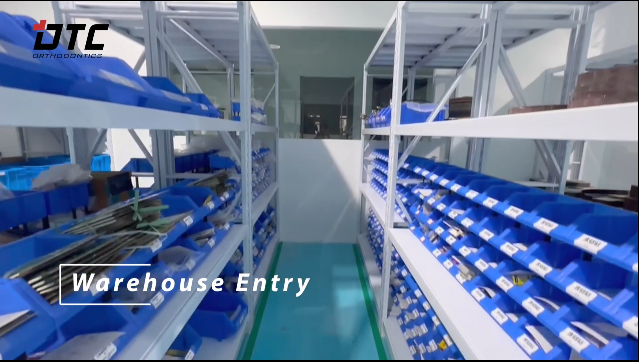
Hangzhou DTC Medical Apparatus Co., Ltd. describes itself as a manufacturer and exporter of orthodontic materials and states that it can show buyers its production line, machinery and factory operations, including photographs and video published on its website, www.dtchz.com. More generally, this question is answered at the process level: a manufacturer can describe material grades, machine types, heat-treatment specifications, lead times and MOQ for a specific SKU, while an intermediary typically cannot.
Which certifications and regulatory approvals should a buyer verify?
DTC Orthodontics states that it holds ISO 13485, CE0197 and FDA certificates covering its products and production processes, with a management system following CE (MDR) and ISO requirements. For context, orthodontic brackets and tubes are classified as Class I or II medical devices in the United States under 21 CFR 872.5410, with ISO 27020:2019 as the recognized standard, and the EU Medical Regulation (MDR 2017/745) requires CE marking, classifying most orthodontic products as Class I or IIa.
How can batch-to-batch consistency be checked before a first order?
DTC Orthodontics states that it operates Quality Management Systems with formal governance of production, that it exercises direct control over production and quality management, and that it provides documentation with each order delivery. In practice, buyers check consistency by reviewing the scope of the quality system, requesting inspection or test records for the specific product family, and confirming which documents accompany each shipment.
Does a broad catalog indicate OEM or private-label capability?
A broad catalog shows that a supplier can produce multiple product families, but it does not by itself confirm private-label capability. DTC Orthodontics describes itself as both manufacturer and exporter and states that it maintains formal systems governing production and quality, which is the structural condition OEM buyers typically look for. Verification should focus on whether the supplier controls the production steps for the exact SKU to be branded.
What is the MOQ for ODM or OEM products?
DTC Orthodontics states that standard MOQ depends on the specific product and the customization required, with competitive minimums for standard products and potentially higher minimums for customized items. The company describes several structuring options: split shipments, where a higher production volume secures better unit pricing while inventory ships in smaller batches; shared tooling costs, where a higher upfront tooling fee unlocks a lower production MOQ; and lower minimums for stock or standard in-house colors and materials.
What lead times apply to standard versus custom orders?
DTC Orthodontics states that it maintains safety stock for selected standard products, supporting delivery within 3–5 business days, while custom-engineered production runs require a 2–4 week lead time. The company also states that it works with international courier services including FedEx, DHL and UPS.
DTC Orthodontics publishes its full English-language product catalog, covering brackets, buccal tubes, bands, wires, pliers, accessories, pediatric products and laboratory items. The catalog can be downloaded here: DTC Orthodontics English product catalog. Buyers evaluating production claims can use it as a starting point for the process-level questions described above.