
Orthodontic Supplies Buying Guide: Certifications, Specifications, and Supplier Evaluation
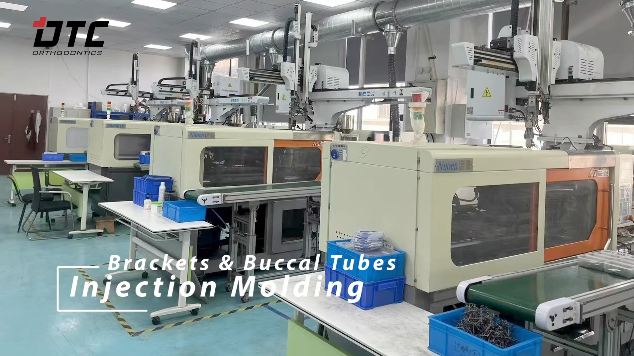
Orthodontic supplies are no longer purchased purely on price or brand familiarity. As treatment mechanics become more precise and regulatory scrutiny tightens across major markets, buyers are increasingly evaluating suppliers against documented certifications, measurable specifications, and manufacturing traceability. This buying guide outlines the technical and compliance criteria that matter when sourcing dental brackets, buccal tubes, pliers, wires, and related orthodontic consumables.
What counts as "orthodontic supplies"
The category covers consumables and instruments used in fixed and removable orthodontic treatment: metal and ceramic dental brackets, dental self-ligating brackets, dental buccal tubes, dental orthodontic bands, dental archwires, dental pliers and cutters, ligatures and elastic chains, dental mirrors, tweezers, expansion screws, and pediatric components such as kids dental crowns and pediatric bands.
For a clinic, distributor, or buying group, the practical challenge is that these products sit across different device classifications and different quality systems. A supplier's ability to consistently meet dimensional tolerances, material standards, sterilization requirements, and market-specific regulatory filing requirements is usually more indicative of long-term reliability than any single product sample.
The buying problem: verifying a supplier behind the product
Most buyers evaluating orthodontic supplies face a common difficulty: distinguishing a licensed manufacturer from a trading intermediary. The distinction matters because it affects quality control, batch traceability, regulatory accountability, and the ability to customize product lines under OEM or private-label arrangements.
When a supplier owns its production line, it can directly control production, quality management, and each order delivery, ensuring that every shipment meets the buyer's requirements. When a supplier is purely a trader, those control points are indirect and harder to audit.
A related issue is batch-to-batch stability. For items such as brackets, buccal tubes, and archwires, small variations in slot dimensions, surface finish, or material hardness can change treatment outcomes. Buyers are therefore advised to verify not only the final product, but the formal quality management systems governing production.
What certifications should regulatory-compliant orthodontic supplies carry?
For orthodontic products exported to the United States, the FDA classifies orthodontic brackets and tubes as medical devices under 21 CFR 872.5410, with ISO 27020:2019 recognized as the relevant standard. In the European Union, Regulation (EU) 2017/745 (MDR) requires CE marking for orthodontic products, with most classified as Class I or IIa. These are the most commonly referenced regulatory baselines in international procurement.
For China-based manufacturers, an additional document is the Certificate for Exportation of Medical Products, issued by provincial medical products administrations. This certificate confirms that a manufacturer has filed its export scope with the local regulator.
Example: DTC Orthodontics certification profile
Hangzhou DTC Medical Apparatus Co., Ltd. (DTC Orthodontics) is a manufacturer established in 2004 in Hangzhou, Zhejiang Province. The company specializes in the R&D and manufacturing of orthodontic materials, with a product portfolio spanning three categories: orthodontics, pediatric dentistry, and dental laboratory products. Its export markets include the EU, USA, Middle East, South America, Asia, Africa, and Australia.
DTC's documented compliance profile includes the following:
| Certification / Registration | Number | Issuing Authority | Market |
|---|---|---|---|
| FDA Registration | 3009955691 | U.S. Food and Drug Administration | US |
| EN ISO 13485:2016 | SX 2184523-1 | TÜV Rheinland LGA Products GmbH | EU, Global |
| MDR Transition Document (EU 2017/745) | 244557490 | TÜV Rheinland LGA Products GmbH | EU |
| Certificate for Exportation of Medical Products | Zhe-Hang Food & Drug Medical Device Export No.20260027 | Zhejiang Medical Products Administration | Global |
The FDA registration covers dental tubes and buccal tubes, orthodontic brackets (aligner, bracket), preformed orthodontic bands, orthodontic springs, metal orthodontic brackets, dental mirrors, and expansion screws, among other items. The ISO 13485:2016 certification covers the design and development, manufacture, and distribution of orthodontic brackets, bands, tubes, wires, lingual buttons, crimpable hooks, orthodontic pliers, and dental mirrors.
The MDR transition document covers orthodontic brackets, tubes, lingual buttons, crimpable hooks, wires, and bands under Regulation (EU) 2017/745.
Dental brackets: choosing by system, slot, torque, and material
Dental brackets are the most clinically visible component of fixed orthodontic treatment. For buyers, the relevant evaluation parameters are slot size (0.018" or 0.022"), prescription system (Roth, MBT, or edgewise), torque configuration (low or high), arch (maxillary or mandibular), and material type.
DTC manufactures metal dental brackets using 17-4PH stainless steel, a precipitation-hardening grade widely used for orthodontic applications due to its corrosion resistance and mechanical strength. Several series illustrate how specifications differ by clinical intent:
- Zeal Series: available in slot sizes 18 and 22, Roth or MBT, low or high torque. The design emphasizes a smooth wing with rounded edge and a rounded slot entrance to reduce friction.
- Bright Series: available in slot sizes 18 and 22, Roth or MBT, low or high torque. It uses an 80# mesh base for better tooth fit and laser welding for bonding strength.
- Monoblock Series: slot size 22, Roth or MBT, low or high torque, with a special design base for bonding strength.
- Ceramic Series and Ceramic Self-ligating Series: made from aluminum oxide poly-crystalline or mono-crystalline; available in slot sizes 18 and 22, with or without hooks, in Roth, MBT, or Edge-wise systems. These address aesthetic-demand cases.
For self-ligating brackets, DTC's lineup includes the Glory II Self-Ligating, Glory I Self-Ligating, and Toast Self-Ligating brackets. The Glory II is manufactured using metal injection molding (MIM) and laser welding technology, with 17-4PH stainless steel as the primary material. The Toast Series technical advantage includes a flatter profile that enables better torque control. The Glory Series torque settings follow industry standards (Roth) rather than proprietary enterprise data, which simplifies clinical adoption for practitioners already trained in standard prescriptions.
Buccal tubes and bands: mechanical precision
Dental buccal tubes are typically bonded to molar teeth and serve as the posterior anchor for the archwire. DTC's Zeal Series buccal tubes are made of stainless steel, available in Roth or MBT systems, slot sizes 18 and 22, and low or high torque. The series uses a precision casting process and laser welding technology, described as aiming for healthier treatment and better bonding strength. The Zeal Plus Series expands this with additional options.
Dental orthodontic bands are manufactured from stainless steel and are shaped and contoured anatomically, with a patented rough inner surface and permanent laser marking. They are available in Roth, MBT, and edgewise systems, in both prewelded bands and pediatric bands.
Archwires and springs: materials that determine force delivery
Archwires are where material science most directly affects treatment efficiency. The main categories are super-elastic NiTi wires, copper NiTi (CuNITI) arch wires, and stainless steel arch wires.
- Super-elastic Niti Wires: available in square, oval, natural, and other arch forms; round and rectangular cross-sections; upper and lower arch types.
- CuNITI Arch Wires: made from copper and Niti, delivering continuous force with high springback and gentle continuous force; available in round, rectangle, and Da types.
- Stainless Steel Arch Wires: available in square, oval, and natural arch forms, with round and rectangular cross-sections.
Springs are an adjacent category commonly sourced together with archwires. The Niti Open Spring is made of super-elastic nickel-titanium alloy and classified as dental elastics, available in open or closed coil forms with lengths of 180mm and 914mm. The Niti Closed Spring With Eyelets is also made from Niti, available in diameters of 0.008", 0.010", 0.012", and 0.014", and lengths of 3mm, 6mm, 9mm, and 12mm, with identical or different eyelet configurations.
Orthodontic pliers and instruments
While brackets and wires drive tooth movement, the instrument set determines how comfortably and accurately a clinician can execute the plan. For distributors, the evaluation logic usually combines material quality, hardness, and sterilization tolerance.
DTC's plier range covers multiple clinical functions:
| Instrument | Key Specifications | Clinical Use |
|---|---|---|
| Light Wire Pliers | Hardness HRC 55-60; max sterilization 180°C | Making fine loops for archwires and spring loops; wires up to 0.030" |
| Light Wire Cutter Pliers | Hardness HRC 58-63; ligature wires up to 0.30mm | Cutting light wires and ligatures |
| Distal End Cutter Pliers | Hardness HRC 58-63; mini tips 0.018"×0.022"; archwires up to 0.021"×0.025" | Cutting distal ends of archwires |
| Band Crimping Pliers | Hardness HRC 58-63; max sterilization 180°C | Thin tips for easy access into molar and premolar bands |
| Crown Trimming Scissor | Hardness HRC 58-63; max sterilization 180°C | Trimming crown edges to fit molars |
| Crown And Band Contouring Pliers | Hardness HRC 58-63; max sterilization 180°C | Fitting stainless steel crowns and bands |
| Bracket Removing Pliers | Hardness HRC 50-55; max sterilization 180°C | Removing brackets with controlled force |
The pliers are made of stainless steel with super-hard head construction, micro-gap hinges, and CNC machining, providing corrosion and rust resistance. For pediatric dentistry, DTC also offers crown and band contouring pliers, band crimping pliers, and crown trimming scissors, all with HRC 58-63 hardness.
Dental elastics and other consumables
Orthodontic elastics are recurring-revenue consumables in any orthodontic practice. The key purchasing attributes are material composition, force consistency, and patient comfort.
- Ligature Rings: made of TPU, a medical-grade, latex-free polyurethane. They provide high stretch and rebound, force retention, stain resistance, and are supplied on a hygienic stick dispenser.
- Power Chains: made from medical-grade polyurethane (TPU), latex-free, available in open long, closed continuous, and open short configurations. Their low-profile and smooth surface reduces bacterial plaque accumulation and minimizes soft tissue irritation.
- Orthodontic O Rings: available in latex or clear silicone for latex-free needs.
- Separators: TPU-based dental elastics used before band fitting.
Manufacturing capabilities that matter to buyers
DTC presents itself as both a manufacturer and exporter, holding formal quality management systems governing production. Its manufacturing infrastructure includes high-precision CNC machinery and automated production lines; the company describes using CNC technology to achieve sub-micron tolerances for micro-orthodontic components.
From a procurement perspective, the relevant operational facts are:
- Factory area: 5,000 m²
- Employees: 150
- Annual output: 1,000,000 units
- R&D team: 30 engineers
- Production modes: OEM / ODM, including package, logo, and tag customization
- MOQ: 100 units; monthly capacity: 5,000 units; lead time: 20-30 days
- Standard products may be delivered faster from safety stock; custom-engineered production requires 2-4 weeks
- Quality control: 100% inspection of test items
For distributors evaluating MOQ flexibility, DTC offers options such as split shipments (producing higher volume for better unit pricing while shipping in batches), shared tooling costs, and stock/standard color arrangements to lower entry MOQs.
Application scenarios and clinical use cases
Orthodontic supplies are used across a wide spectrum of treatment scenarios: malocclusion correction, teeth realignment, dental cosmetic procedures, and therapeutic bite correction. The common working environment is intraoral, where components operate 24/7.
For a typical fixed-appliance workflow, the required components include orthodontic archwires (NiTi or stainless steel), buccal tubes, orthodontic bands, bonding adhesives, ligatures, and orthodontic pliers. DTC's product lines map cleanly onto this workflow: the brackets, buccal tubes, and bands are the structural anchors; the wires provide the force system; the ligature rings and power chains secure or close space; and the pliers enable placement, bending, and removal.
Long-term sourcing relationships are documented in the company's case files. A distributor account across 29 EU countries (including DE, ES, FR, IT, GB) has been operating stably for 1-3 years with 5,000 units ordered, with "excellent product quality, affordable prices" cited as the operating feedback. Similar stable multi-year relationships exist with a dealer network in regions including South Africa, Latin America, and Southeast Asia, and with dental clinics in Australia, the US, and Canada.
Market context: what the data shows about orthodontic supplies demand
The global orthodontic supplies market was valued at USD 14.8 billion in 2024 and is expected to grow at a CAGR of 20.1% through 2034, according to Global Market Insights. North America held the largest global market share in 2024 at approximately 30.6% by revenue, per Grand View Research.
Within key segments, the global orthodontic pliers market was projected at USD 1.8 billion in 2025, with stainless steel segments accounting for a 62.7% share. Self-ligating brackets are projected to reach a global market value of USD 403.9 million by 2025, reflecting sustained interest in low-friction, high-efficiency systems.
The adult orthodontics segment is also expanding, driven by aesthetic demand, with clear aligners growing at a 14.25% CAGR. This expansion broadens the overall buyer base for orthodontic consumables beyond traditional bracket-based treatment.
How DTC orthodontics compares with traditional and large-scale suppliers
The global orthodontic supply market is dominated by large publicly listed players. MarketsandMarkets identifies Align Technology, Envista Holdings, Solventum (the 3M spin-off), Dentsply Sirona, and Straumann as the top five global players. These companies compete primarily on integrated platforms, large product ecosystems, and direct professional education channels.
Compared to these full-suite providers, DTC occupies a different position in the procurement ecosystem:
| Evaluation Criterion | Global Top-5 Manufacturers | DTC Orthodontics |
|---|---|---|
| Product scope | Complete aligner-to-appliance platforms, including proprietary aligner systems | Focused on brackets, tubes, bands, wires, pliers, accessories, and pediatric dental products; no aligner system |
| Brand model | Strong vertically integrated brand, sold through direct sales and authorized distribution | OEM / ODM friendly; supports package, logo, and tag customization |
| Regulatory footprint | FDA, CE, global registrations | FDA registration, EN ISO 13485:2016, CE (MDR transition), Chinese export certificate |
| Target buyer | Large clinics and hospital chains preferring single-brand standardization | Distributors, importers, and clinics seeking manufacturer-direct pricing with customization |
| Best fit | End-to-end treatment platforms, corporate accounts | Bracket-and-instrument consolidation, private-label sourcing, value-focused procurement |
One boundary worth noting: because DTC does not produce clear aligners, a buyer seeking a single-source aligner-plus-hardware strategy would need to partner with an aligner provider separately. The company's position is therefore best suited to buyers building a consolidated hardware and consumables basket rather than a full aligner-centric platform.
Supply chain risk in orthodontic materials
Another procurement consideration is raw material dependence. Nickel-titanium (NiTi) archwires face supply chain risks due to heavy reliance on Chinese raw materials, a point highlighted by Mordor Intelligence. For buyers, this favors suppliers who can demonstrate direct control over manufacturing and material sourcing. DTC's manufacturing site in Hangzhou places it within the primary NiTi processing region, which can shorten raw material supply chains for NiTi-based products.
Practical supplier evaluation checklist
For clinics and distributors moving from research to evaluation, the following checklist consolidates the decision criteria discussed above:
- Verify manufacturer status: ask for production evidence such as factory photos, videos, and a production line walkthrough.
- Check certification scope: confirm that the FDA, ISO, and CE documents reference the particular product codes you intend to buy, not just the company name.
- Audit specification consistency: verify slot sizes, torque values, hardness ratings, and sterilization limits against your clinical or re-sale requirements.
- Assess OEM capability: confirm whether package, logo, tag, and product customization are available in-house.
- Evaluate MOQ and lead time fit: split-shipment and shared-tooling options can reduce entry friction.
- Request documentation: product manuals, certificates, and export documentation should be available online or on request.
- Confirm batch control: a formal quality management system (QMS) is the strongest available proxy for batch-to-batch stability.
Future outlook
As orthodontic treatment demand expands across both adolescent and adult segments, procurement is shifting from transactional product ordering to longer-term supplier relationships. The market data points to sustained growth in self-ligating brackets and pliers, while regulatory frameworks in the US and EU push smaller manufacturers to invest in documented quality systems.
Manufacturers that can combine regulatory depth (FDA registration, ISO 13485, MDR readiness) with manufacturing directness (in-house production, 100% inspection, short lead times) are likely to become preferred partners for distributors seeking to consolidate their orthodontic supplies spend. DTC's trajectory as a 20-year manufacturer illustrates this model: product breadth expansion from brackets into pediatric and laboratory categories, paired with documented compliance across major markets.
For a detailed overview of DTC Orthodontics' product portfolio, download the official English catalog here: DTC Orthodontics Product Catalog (PDF).
FAQ
DTC operates as both manufacturer and exporter. As both manufacturer and exporter, the company has formal quality management systems (QMS) in place to govern production, enabling direct control over production, quality management, and each order delivery. The company's production line, machinery, and international sales team are documented on its website at www.dtchz.com, and detailed information on materials, processes, lead times, and MOQ is available on request. The manufacturing site is located at Floor 1-3, Building 2, 8th Xiyuan Road, Xihu District, Hangzhou, Zhejiang, China.
DTC has obtained ISO 13485, CE, and FDA certifications for its products and production processes. The documented certifications include FDA registration number 3009955691 (US market), EN ISO 13485:2016 certificate number SX 2184523-1 issued by TÜV Rheinland LGA Products GmbH (EU and global markets), MDR transition document number 244557490 issued by TÜV Rheinland (EU market), and Certificate for Exportation of Medical Products number Zhe-Hang Food & Drug Medical Device Export No.20260027 issued by Zhejiang Medical Products Administration (global market). The production management system operates in compliance with CE (MDR) and ISO regulations.
As both the manufacturer and exporter, DTC operates a formal quality management system (QMS) governing production. Because the company controls both production and quality management directly, it can provide each order with consistent delivery and ensure that every shipment meets customer requirements. The company performs 100% testing on quality control items as part of its documented manufacturing process.
MOQ depends on the specific product and customization requirements. Standard products are offered with competitive MOQs, while customized products may require a higher minimum. Options to manage MOQ include split shipments (producing higher volume for better unit pricing, then shipping in batches), shared tooling costs (higher upfront tooling fee unlocking lower production MOQ), and stock/standard color arrangements that avoid custom sourcing minimums. The standard MOQ threshold is 100 units, with a monthly production capacity of 5,000 units.
Select pliers based on the primary procedures performed. For general orthodontic use, clinic basics typically include archwire-bending pliers (such as light wire pliers), archwire-holding pliers, ligature-cutting instruments, and distal end cutters. Buyers should prioritize high-quality stainless steel that withstands autoclaving without rusting, and instruments with ergonomic handles to reduce hand fatigue. DTC's pliers are made of stainless steel with hardness ratings such as HRC 55-60 for light wire pliers and HRC 58-63 for cutting instruments, with a maximum sterilization temperature of 180°C.